


Hanoi (Hà Nội) is the capital of Vietnam, a city of about 8.85 million people on the Red River in the north, and the country’s political centre for most of the past thousand years, since it was founded as Thang Long in 1010. Hanoi city (Ha Noi) is Vietnam’s second-largest city after Ho Chi Minh City and the main gateway to Ha Long Bay, Ninh Binh and Sapa, so most trips to northern Vietnam start and end here. Non-stop flights from 6 Indian cities land at Noi Bai International Airport, about 30 km from the city centre.
This Hanoi travel guide for anyone planning to travel to Hanoi from India covers where the city is, how it became the capital, what it is known for, when to go, how to get there and around, where to stay, what to eat, how many days to plan, and what a trip costs from India. The key facts are:
| Fact | Detail |
|---|---|
| Country | Vietnam |
| Status | Capital of Vietnam |
| Founded | 1010, as Thang Long; renamed Hanoi in 1831 |
| Location | Red River Delta, northern Vietnam |
| Area | About 3,359 km² |
| Population | About 8.85 million (2025) |
| Administrative units | 126 wards and communes (51 wards, 75 communes) since 2025 |
| Airport | Noi Bai International (HAN), about 30 km from the city centre |
| Flight time from India | About 3 hours (Kolkata) to 5 hours (Mumbai), non-stop |
| Best months | October–November and March–April |
| Visa | Vietnam e-visa, US$25 (₹2,375) single entry, up to 90 days |
| Currency and time | Vietnamese dong (VND); UTC+7, 1 hour 30 minutes ahead of India |
| UNESCO | Imperial Citadel of Thang Long (World Heritage, 2010); Creative City of Design (2019) |
| Visitors (2025) | About 33.7 million, including about 7.8 million international visitors |
Each of these facts is expanded in the sections that follow, from the city’s location to a 3-night budget.


Where Is Hanoi?
Hanoi is in northern Vietnam, on the Red River about 1,150 km north of Ho Chi Minh City in a straight line (about 1,700 km by road), and within 2.5 hours of Ha Long Bay and 1.5–2 hours of Ninh Binh by road. Hanoi sits in the Red River Delta, the flat, fertile plain that has fed northern Vietnam for centuries, with the mountains of the north-west rising beyond it towards Sapa.
That position makes the city the natural base for the north: Ha Long Bay lies to the east, Ninh Binh’s limestone valleys to the south, and the rice terraces of Sapa to the north-west. Most travellers spend their first and last nights in Hanoi and fit the other stops in between. The distances that matter are:
| From Hanoi to | Distance | Time |
|---|---|---|
| Ha Long Bay | 170 km | About 2.5 hours by expressway |
| Ninh Binh | 93 km | 1.5–1.75 hours by car |
| Sapa | 314 km | About 5 hours by car, 8 hours by overnight train |
Ha Long Bay is the trip most travellers add first, and it works as a day cruise or an overnight stay on the water.

Why Hanoi Is Vietnam’s Capital: Name and History
Hanoi has been Vietnam’s capital since 1976 and was the seat of most Vietnamese dynasties from 1010, when Emperor Ly Thai To moved his court here and named the city Thang Long, meaning “ascending dragon”.
The Vietnam capital moved south to Hue in 1802 under the Nguyen dynasty, and in 1831 Emperor Minh Mang gave the city its present name, Hà Nội, meaning “river interior”. Hanoi became the capital of the Democratic Republic of Vietnam in 1945, the capital of the North in 1954, and the capital of reunified Vietnam in 1976. The key dates are:
| Year | Event |
|---|---|
| 1010 | Thang Long becomes the capital of the Ly dynasty |
| 1802 | Capital moves to Hue under the Nguyen dynasty |
| 1831 | Emperor Minh Mang renames the city Hanoi |
| 1902 | Hanoi becomes the capital of French Indochina |
| 1945 | Ho Chi Minh declares independence at Ba Dinh Square |
| 1976 | Hanoi becomes capital of the reunified Socialist Republic of Vietnam |
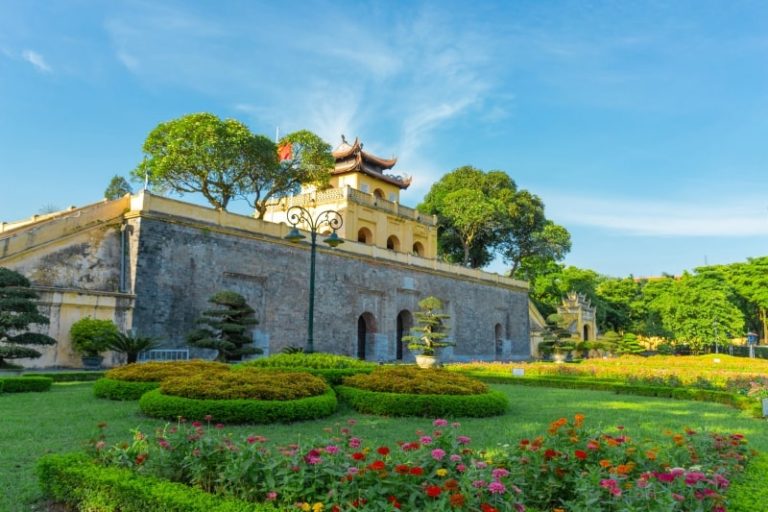
The old royal court still stands at the heart of the city: the Imperial Citadel of Thang Long, a UNESCO World Heritage Site since 2010, shows how far back Hanoi’s role as capital goes.

What Hanoi Is Known For
Hanoi is known for its historic Old Quarter, traditionally called the “36 streets”, its lakeside temples, the Temple of Literature, the Ho Chi Minh Mausoleum, and some of Vietnam’s best street food. The main highlights are:
| Highlight | Where | Best for |
|---|---|---|
| Old Quarter | Hoan Kiem | Walking, street food, shopping |
| Hoan Kiem Lake and Ngoc Son Temple | Hoan Kiem | Early-morning walks, first evening |
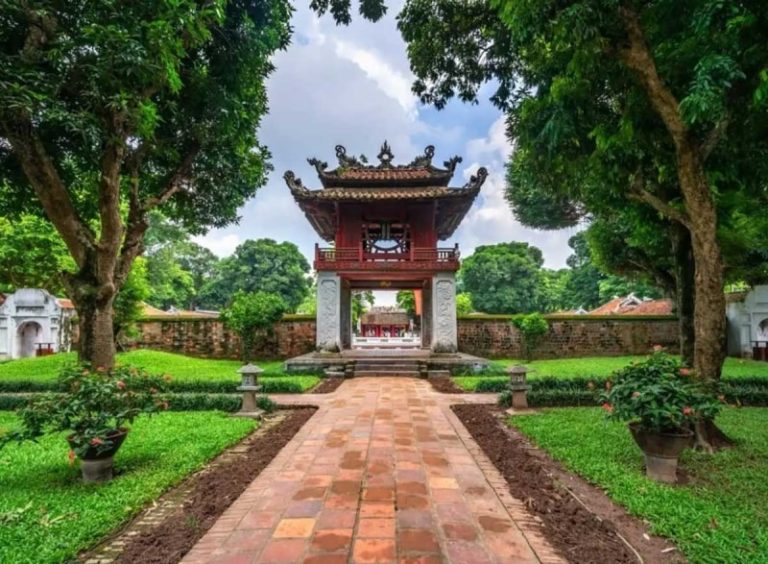
| Temple of Literature | Dong Da | History, Confucian architecture |
| Ho Chi Minh Mausoleum and One Pillar Pagoda | Ba Dinh | Modern history |
| Imperial Citadel of Thang Long | Ba Dinh | UNESCO heritage |
| Hoa Lo Prison | Hoan Kiem | War and colonial history |
| West Lake and Tran Quoc Pagoda | Tay Ho | Sunset, quieter cafés |
| Water puppet show | Hoan Kiem | Families, evening culture |
| Hanoi Train Street | Old Quarter edge | Photos, cafés by the railway |
| Street food | Old Quarter | Pho, egg coffee, vegetarian versions |
| Craft villages | Outskirts (Bat Trang, Van Phuc) | Pottery and silk, half-day trips |
Each highlight has its own guide, and opening hours, ticket prices and the time needed at each sight are compared in one place in the guide to the places to visit in Hanoi. The narrow lane where trains pass between the houses has its own guide to Hanoi Train Street, with the train times and the rules for visitors.





When to Go to Hanoi
The most comfortable months in Hanoi are October–November and March–April, with daytime highs of about 24–30°C, while summer (May–September) is hot and wet, and winter (December–February) is cool and grey. The seasons compare as follows:
| Season | Months | Temperature (min–max) | Rain | What to expect |
|---|---|---|---|---|
| Spring | Feb–Apr | 15.8–28°C | 20–105 mm/month | Mild, often drizzly and overcast in Feb–Mar |
| Summer | May–Sep | 24.4–34°C | 165–275 mm/month | Hot, humid, heavy showers |
| Autumn | Oct–Nov | 18.8–29.8°C | 60–155 mm/month | Dry, clear, the most pleasant season |
| Winter | Dec–Jan | 14.1–22.2°C | About 20 mm/month | Cool, grey, a jacket is needed |
Hanoi has 4 distinct seasons, unlike the south of Vietnam, so the month of travel changes the trip more than in most Asian cities. Travellers with flexible dates can check the rain, temperature and festivals for each month in the guide to the best time to visit Hanoi. The autumn months are covered month by month in the guides to weather Vietnam in October and weather in Hanoi Vietnam in November.

How to Get to Hanoi
Hanoi airport, Noi Bai International (HAN), has non-stop flights from 6 Indian cities, Delhi, Mumbai, Kolkata, Bengaluru, Hyderabad and Ahmedabad, taking about 3 to 5 hours, and the airport is about 30 km (40–60 minutes) from the city centre. The routes compare as follows:
| From | Airlines | Flight time |
|---|---|---|
| Delhi | Vietnam Airlines, Vietjet, IndiGo, Air India | About 4h–4h35 |
| Mumbai | Vietnam Airlines, Vietjet, Akasa Air, IndiGo (since 25 Oct 2026) | About 4h15–5h05 |
| Kolkata | IndiGo | About 2h40–3h05 |
| Bengaluru | Vietnam Airlines | About 4h35–4h45 |
| Hyderabad | Vietnam Airlines | About 4h05–4h25 |
| Ahmedabad | Vietjet; Vietnam Airlines from 3 Nov 2026 | About 4h15–4h40 |
Travellers from Chennai, Kochi and other Indian cities without a non-stop service usually connect through Delhi or Mumbai, or through a Southeast Asian hub such as Bangkok or Singapore. International flights arrive at Terminal 2 of Noi Bai, and from there 4 options cover the 30 km into the city:
| Airport to city centre | Price | Time |
|---|---|---|
| Bus 86 (to Hoan Kiem Lake and Hanoi Railway Station) | 45,000 VND (₹160) | 50–70 minutes, every 25–30 minutes, about 5:30 AM–10 PM |
| Grab car (4 seats) | 200,000–300,000 VND (₹700–₹1,055) | 40–60 minutes |
| Airport taxi | 250,000–400,000 VND (₹875–₹1,405) | 40–60 minutes |
| Private car (4–7 seats) | 350,000–800,000 VND (₹1,230–₹2,805) per car | 40–60 minutes |
Indian passport holders need a visa for Vietnam, and the e-visa costs US$25 (₹2,375) for a single entry. The visa is best sorted before flights are booked, and the Vietnam visa guide for Indian travellers walks through the 7 application steps on the official portal. Travellers still choosing a departure city can compare airlines, routes and the best airport to land at in the guide on how to go to Vietnam from India.
Getting Around Hanoi
The easiest ways to get around Hanoi are Grab cars and bikes, metered taxis, and walking in the Old Quarter, while 2 metro lines and a city bus network cost under 20,000 VND (₹65) a ride. The options are:
- Grab and taxis: Grab works across the whole city and shows the fare before the ride, which makes it the simplest choice for visitors.
- Metro: Line 2A runs from Cat Linh to Ha Dong, and the elevated section of Line 3 runs from Nhon to Cau Giay, opened on 8 August 2024, with the underground section to Hanoi Railway Station expected by the end of 2027. Single tickets cost 9,000–19,000 VND (₹30–₹65) in cash, a 40,000 VND (₹140) day pass covers both lines, and Line 3 runs from 5:30 AM to 10:00 PM.
- City buses: most routes cost about 8,000–9,000 VND (₹30).
- Cyclo: a slow way to see the Old Quarter, with the fare agreed before setting off.

Hanoi is also the starting point for the rest of the country, and the fastest way out depends on the distance: the main stops in the north are within a few hours by road, while everywhere from Hue southwards is quicker by domestic flight from Noi Bai.
| To | Fastest way |
|---|---|
| Ha Long Bay | Expressway, about 2.5 hours |
| Ninh Binh | Car, 1.5–1.75 hours |
| Sapa | Car (about 5 hours) or overnight train |
| Hue, Da Nang, Hoi An, Nha Trang, Da Lat, Ho Chi Minh City, Phu Quoc | Domestic flight |
Ninh Binh makes the easiest day trip from the capital, and the 5 ways to get from Hanoi to Ninh Binh by car, bus and train are compared in a separate guide, while the guide on how to get from Hanoi to Ha Long Bay compares the expressway, limousine buses and seaplane.
Where to Stay in Hanoi: Areas Compared
First-time Hanoi visitors should stay in the Old Quarter or around Hoan Kiem Lake, where most sights are within walking distance, while West Lake suits a quieter stay and Ba Dinh suits business trips. The areas compare as follows:
| Area | Best for | Typical stay |
|---|---|---|
| Old Quarter | First visit, street food, nightlife | Boutique hotels, guesthouses, dorms from about 200,000 VND (₹700) a night |
| Hoan Kiem and French Quarter | Comfort, walkable sights | 4- and 5-star hotels near the Opera House, such as Sofitel Legend Metropole and Hilton Hanoi Opera |
| West Lake (Tay Ho) | Quiet, lakeside, families | Resort-style hotels such as InterContinental Hanoi Westlake |
| Ba Dinh and Kim Ma | Business, near the Mausoleum | High-rise hotels such as Lotte Hotel Hanoi |
The right area also depends on budget and travel style, and the guide to the best areas to stay in Hanoi compares each one in more detail. Specific properties, from boutique Old Quarter hotels to lakeside 5-star stays, are compared in the guide to hotels in Hanoi.

Food, Nightlife and Shopping in Hanoi
Hanoi’s food, nightlife and shopping are concentrated in and around the Old Quarter, where street-food stalls, Ta Hien beer street, the weekend night market and Dong Xuan Market are all within walking distance of Hoan Kiem Lake. Most of it can be reached on foot from the lake, so a single evening can combine dinner, the walking street and the night market.
What to Eat in Hanoi
The dishes to try first in Hanoi are pho, bun cha, cha ca and egg coffee, with a street bowl of pho costing about 35,000–40,000 VND (₹125–₹140), and vegetarians can ask for “chay” versions at Buddhist and vegetarian restaurants. The main dishes are:
- Pho: rice-noodle soup with beef or chicken, eaten at any time of day.
- Bun cha: grilled pork with rice noodles and herbs, and not a vegetarian dish.
- Cha ca: turmeric-fried fish with dill, a Hanoi speciality.
- Egg coffee: coffee topped with whipped egg yolk, about 25,000–50,000 VND (₹90–₹175) a cup.

The Old Quarter has a dish on almost every corner, and the guide to Hanoi food shows which ones to try first and where locals eat them. Vegetarian travellers have more choice than the pork-heavy menus suggest, and the guide to vegetarian restaurants in Hanoi covers everything from Buddhist kitchens to modern cafés. For familiar flavours after a few days of noodles, the Indian restaurants in Hanoi offer North and South Indian menus close to the Old Quarter.
Where to Go Out at Night in Hanoi
Hanoi’s nightlife centres on the Old Quarter: Ta Hien beer street, the Hoan Kiem Lake walking street from 7 PM Friday to midnight Sunday, and the weekend night market running from Hang Dao Street to Dong Xuan Market, with quieter bars around West Lake. The main spots are:
- Ta Hien beer street: draught beer on low plastic stools, busiest in the evening.
- Hoan Kiem Lake walking street: street performances on weekend evenings, suited to families.
- Old Quarter night market: Friday to Sunday from about 7 PM, with souvenirs and snacks.
- West Lake: quieter bars and cafés away from the Old Quarter crowds.
Bars, rooftop spots and late-night streets are covered in more detail in the guide to Hanoi nightlife, which helps plan a night out by mood and budget.
Where to Shop in Hanoi
The best places to shop in Hanoi are Dong Xuan Market and the weekend night market for bargains, Hang Gai Street for silk, and Bat Trang village for pottery, while popular gifts include o mai (preserved fruit), lotus tea and silk scarves. The main places are:
- Dong Xuan Market: the largest wholesale market in the Old Quarter, open during the day.
- Hang Gai Street: silk, scarves and ready-made ao dai.
- Bat Trang pottery: sold in the village itself and in Old Quarter shops.
- Gifts: o mai on Hang Duong Street, and West Lake lotus tea in May–June.

Bargaining is normal at markets, while shops and malls have fixed prices. What to buy and where to find it, from markets to malls, is set out in the guide to shopping in Hanoi.
How Many Days Do You Need in Hanoi?
Plan 2–3 days for Hanoi itself, then add a day each for Ha Long Bay and Ninh Binh, since most North Vietnam trips from India spend 5–7 nights with Hanoi as the base. A Hanoi itinerary by length of stay looks like this:
| Stay | What fits | Best for |
|---|---|---|
| 2 days | The main sights around Hoan Kiem Lake and Ba Dinh | Short city stop |
| 3 days | Adds West Lake, museums or a craft village | First visit |
| 5–7 nights | Hanoi as a base for Ha Long Bay, Ninh Binh and Sapa | Full North Vietnam trip |
2 days cover the main sights around Hoan Kiem Lake and Ba Dinh, and a third day leaves time for West Lake, the museums or a craft village. Hanoi is usually 1 stop on a longer route, and the cities to visit in Vietnam guide shows which ones to pair with it. Vietnamtour.in’s itineraries combine the city with Ha Long Bay and Ninh Binh, and the 9 day Vietnam tour packages are the usual length for a route from Hanoi to the south.
Ho Chi Minh City · Mekong Delta · Phu Quoc · Da Nang · Hoi An · Hanoi · Sapa · Ninh Binh · Halong Bay

Hanoi · Halong Bay · Da Nang · Hoi An · Ho Chi Minh City · Mekong Delta

Siem Reap · Ho Chi Minh City · Mekong Delta · Da Nang · Hoi An · Hanoi · Sapa · Halong Bay
Ho Chi Minh City · Mekong Delta · Da Nang · Hoi An · Hanoi · Sapa · Halong Bay
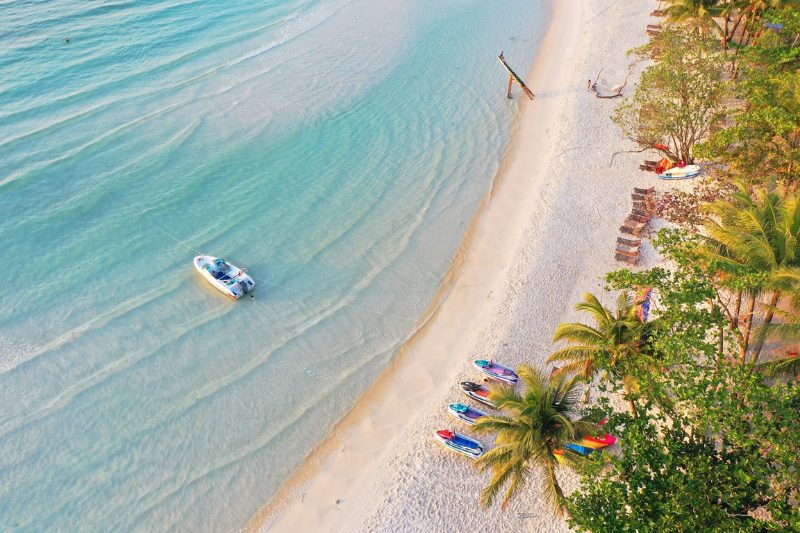
Hanoi · Halong Bay · Phu Quoc · Ho Chi Minh City · Mekong Delta

Hanoi · Ninh Binh · Halong Bay · Da Nang · Hoi An

Hanoi · Ninh Binh · Sapa · Halong Bay
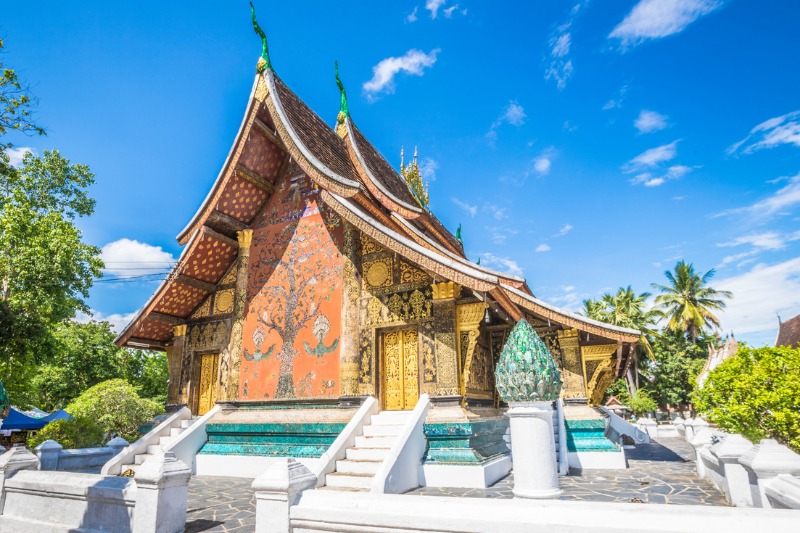
Siem Reap · Ho Chi Minh City · Mekong Delta · Da Nang · Hoi An · Hanoi · Ninh Binh · Halong Bay · Luang Prabang

Ho Chi Minh City · Mekong Delta · Phu Quoc · Da Nang · Hanoi · Halong Bay · Sapa

Hanoi · Halong Bay · Da Nang · Hoi An · Phu Quoc · Ho Chi Minh City · Mekong Delta · Siem Reap
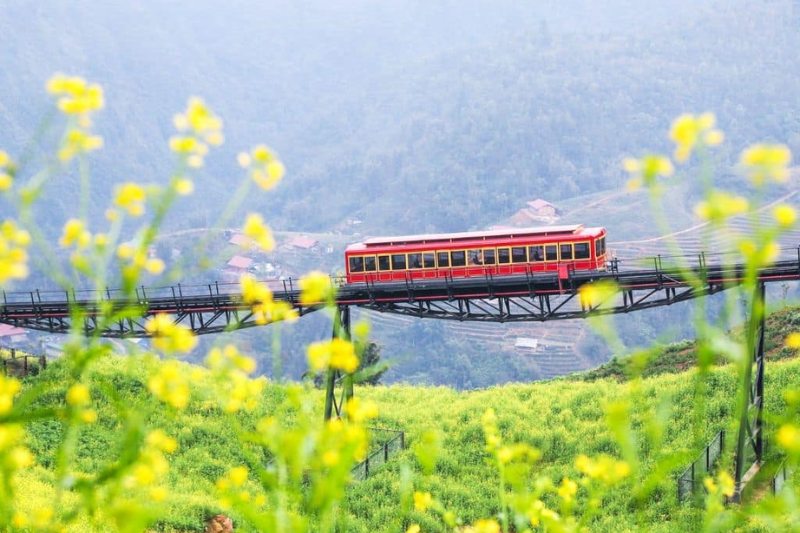
Hanoi · Sapa · Halong Bay · Da Nang · Hoi An
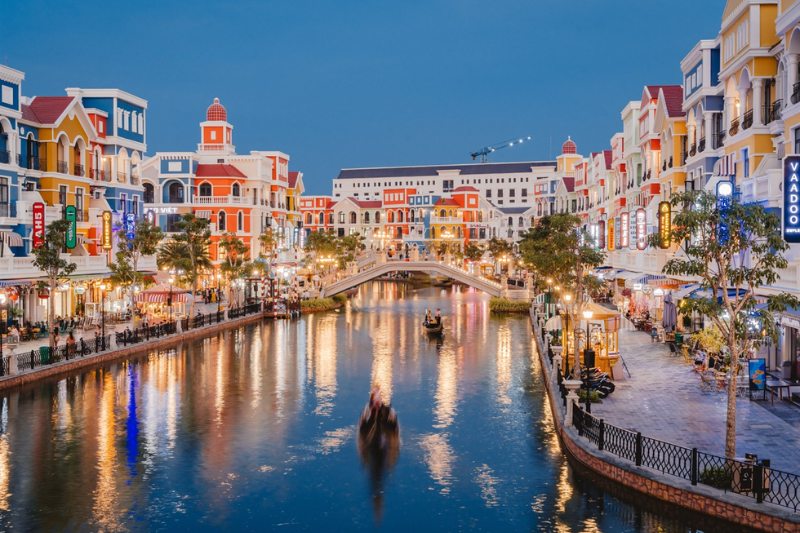
Hanoi · Ninh Binh · Halong Bay · Phu Quoc
How Much Does a Hanoi Trip Cost?
A 3-night Hanoi trip from India costs about ₹38,000–43,000 per person on a budget, ₹51,000–67,000 mid-range, and ₹79,000–1,11,000 for luxury, including return flights from Delhi, the Vietnam e-visa, hotel, sightseeing and food, based on 2 adults sharing a room. The costs break down as follows:
| Item | Budget | Mid-range | Luxury |
|---|---|---|---|
| Return flights Delhi–Hanoi | ₹27,500–29,000 (low-cost, early booking) | ₹29,000–38,000 (typical fares) | ₹38,000–41,500 (full-service, peak dates) |
| Vietnam e-visa (single entry) | ₹2,375 (US$25) | ₹2,375 | ₹2,375 |
| Hotel, 3 nights (room shared by 2) | ₹3,300–5,500 (guesthouse or 3-star, up to about 1,000,000 VND a room per night) | ₹8,800–9,600 (4-star, about 1,600,000–1,750,000 VND a room per night) | ₹15,100–27,500 (5-star, about 2,750,000–5,000,000 VND a room per night) |
| Airport transfers, both ways | ₹330 (bus 86) | ₹735–1,100 (Grab car, shared by 2) | ₹1,280–2,930 (private car, shared by 2) |
| Sightseeing tickets | ₹990–1,135 (5–6 sites) | ₹1,355–1,500 (same sites + water puppet show) | ₹1,720–1,870 (same sites + VIP water puppet seat) |
| Food, 4 days | ₹2,930–4,395 (street food, 200,000–300,000 VND a day) | ₹7,325–11,720 (restaurants, incl. Indian and vegetarian, 500,000–800,000 VND a day) | ₹17,580–29,305 (hotel and fine dining, 1,200,000–2,000,000 VND a day) |
| Local transport, 3 days | ₹440 (metro day pass and walking) | ₹1,650–2,745 (Grab rides) | ₹3,295–5,495 (Grab cars all day) |
| Total per person | About ₹38,000–43,000 | About ₹51,000–67,000 | About ₹79,000–1,11,000 |
Adult ticket prices; children 1–1.4 m pay less, and children under 1 m enter free. ₹1 ≈ 273 VND and US$1 ≈ ₹95. Prices checked October 2026. Not included: travel insurance and shopping.
Flights and hotels make up most of the cost and rise around Christmas, New Year and Tet. Return fares from Kolkata average slightly less than from Delhi (about ₹30,400 against ₹32,800), and fares from Mumbai slightly more (about ₹34,100). Longer trips that combine Hanoi with Ha Long Bay, Sapa or the south change the total considerably, and the Vietnam per person budget is broken down by trip length and departure city in a separate guide.
FAQs about Hanoi
Indian travellers planning Hanoi most often ask about its history as the capital, what its name means, whether it is worth visiting, vegetarian food and day trips.
Was Ho Chi Minh City (Saigon) ever the capital of Vietnam?
Yes, Saigon was the capital of the Republic of Vietnam (South Vietnam) from 1955 to 1975. Hanoi has been the capital of the whole country since reunification in 1976.
What does “Hanoi” mean?
Hanoi (Hà Nội) means “river interior” or “between rivers”, the name Emperor Minh Mang gave the city in 1831. Its earlier name, Thang Long, means “ascending dragon”.
Is Hanoi worth visiting?
Yes, Hanoi combines Vietnam’s best-preserved old town, major historic sites and famous street food, and it is the base for Ha Long Bay, Ninh Binh and Sapa. 2 to 3 days cover the city itself before heading out to the rest of the north.
Is Hanoi good for vegetarian travellers?
Yes, Hanoi has many Buddhist vegetarian restaurants, and most cafés can make meat-free dishes on request (ask for “chay”). Asking for no fish sauce helps, since it is used in many sauces and broths.
Can you visit Ha Long Bay as a day trip from Hanoi?
Yes, Ha Long Bay is about 2.5 hours from Hanoi by expressway, so a day cruise works, though an overnight cruise gives more time on the water. Most day trips leave Hanoi in the early morning and return in the evening.
Planning a Hanoi Trip
Hanoi suits culture, food and first-time trips to Vietnam, with October–November and March–April as the most comfortable months, when the air is dry and mild enough for long walks through the Old Quarter. The city also works as the base for the north, since Ha Long Bay, Ninh Binh and Sapa are all within a few hours by road, and domestic flights link it to Da Nang, Ho Chi Minh City and Phu Quoc.
The part that takes work is the sequence: how many nights to stay in the city, which days go to Ha Long Bay or Ninh Binh, and which domestic flight carries the trip south. Vietnamtour.in, part of Seni World Travel, is 1 of the Vietnam tour operators in Hanoi working only with Indian travellers, and has arranged that for more than 428,000 Indian travellers since 2015, with local experts in Vietnam and a team in Delhi. The best Vietnam tour packages from India start in Hanoi, and travellers who want a beach to finish can add a Phu Quoc island tour package from India.
- Hanoi HQ: Floor 4, Bao Anh Building, 62 Tran Thai Tong, Cau Giay, Hanoi
- Delhi: A 10/1 Gujrawala Town Part 1, Main G T Karnal Road, Delhi 110009
- India hotline: +91 88502 95722
- Vietnam / WhatsApp: +84 948 333 087
- Email: [email protected]
Share the travel dates, group size and departure city in the form below for a customizable Hanoi itinerary.