Ngoc Son Temple is a 19th-century temple set on Jade Islet in the middle of Hoan Kiem Lake, in the heart of Hanoi’s Old Quarter. Reached by crossing the red The Huc Bridge, it honours both Van Xuong De Quan, the deity of literature, and General Tran Hung Dao, the hero who defeated the Mongol invaders — a rare pairing of learning and military strength.
The temple opens daily from 7 AM, closing at 7 PM on weekdays and 10 PM on weekends, with an entrance fee of 50,000 VND (about ₹179) and free entry for children under 16. Inside, a series of ceremonial gates, the Pen Tower, and the Tran Ba Pavilion each carry their own meaning, while several more attractions sit within a short walk around the lake.
This guide covers the temple’s history, location, opening hours and fees, its evening “Mystical Night” tour, how to get there, what to see inside, nearby attractions, and practical tips for Indian travelers planning a visit.
The Long-Standing History Of Ngoc Son Temple
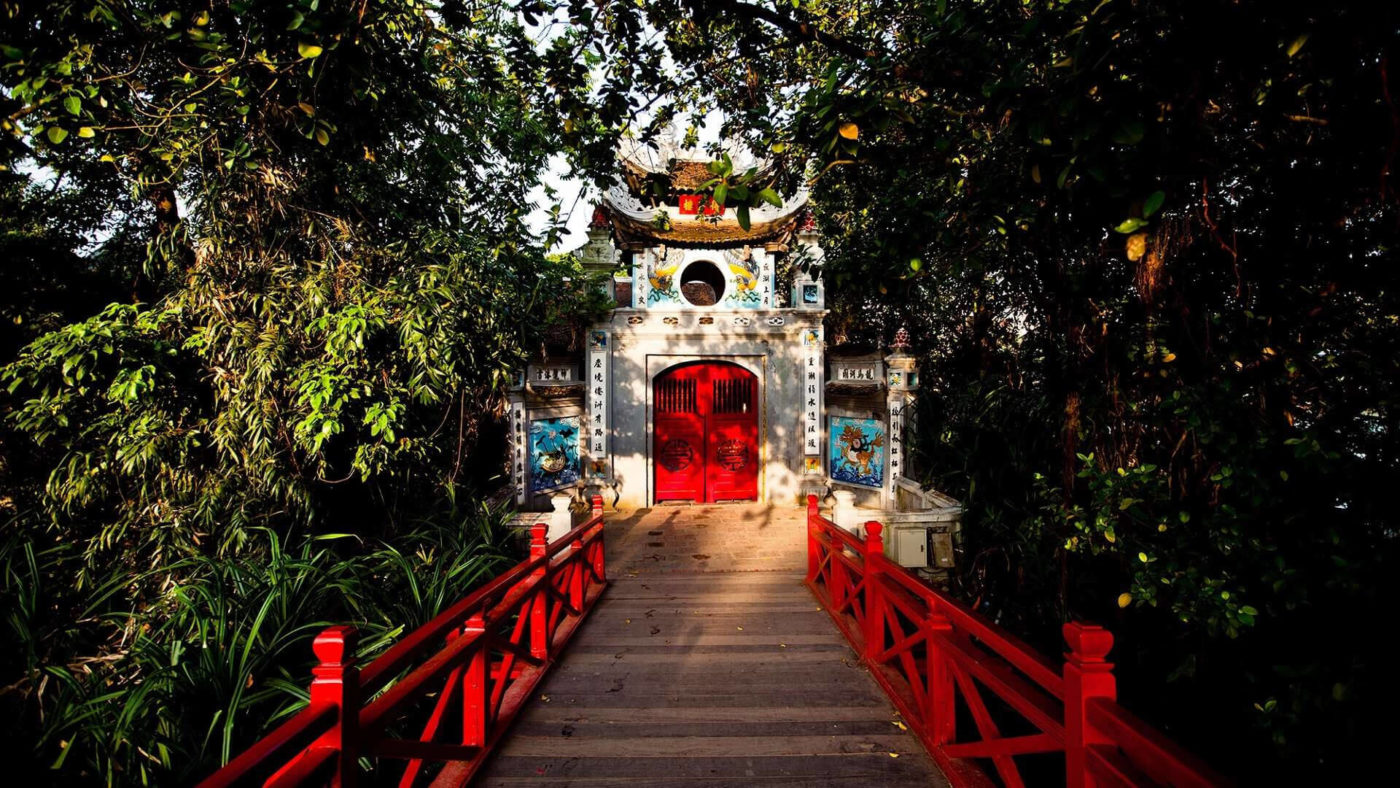
Ngoc Son Temple dates back to the 19th century and honours two figures at once: a deity of learning and a national war hero. According to the stelae at the site, construction began in autumn 1841. The temple worships Van Xuong De Quan (Wenchang Dijun), the Taoist god of literature who is believed to bring fortune to scholars, alongside General Tran Hung Dao (1231–1300), the commander who defeated the Mongol invaders in the 13th century.
Together these two figures represent a balance of intellectual wisdom and military strength, the twin pillars Vietnamese culture associates with national character. This is why the temple is dedicated to scholarship and heroism rather than to Buddhist practice alone, even though it began life as a pagoda.
The temple still works as an active place of worship today. Students come to pray for success before major exams, while elders and families light incense for peace and good fortune, particularly around the Lunar New Year.
In 1865, the Confucian scholar Nguyen Van Sieu led the renovation that shaped the complex seen today, adding Tran Ba Pavilion, the Pen Tower, and The Huc Bridge over Hoan Kiem Lake. The Vietnamese Government recognised it as a Special National Relic site in 2013.
Location
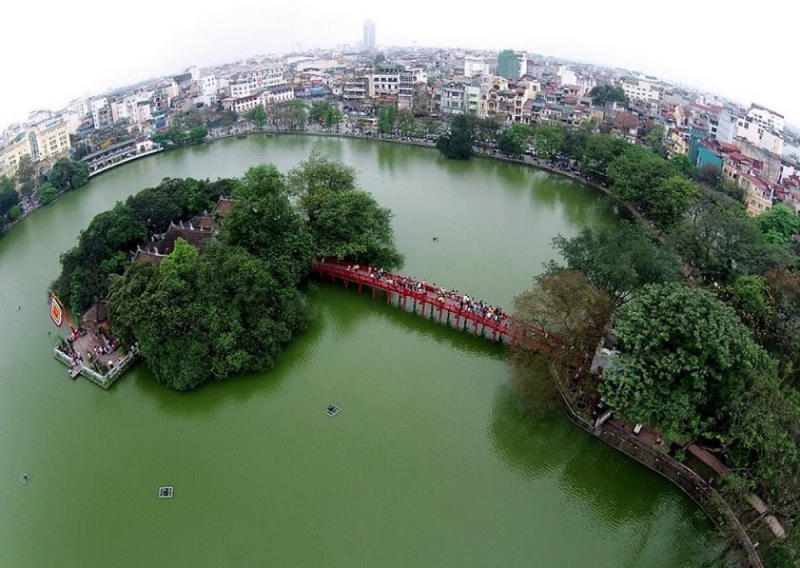
Ngoc Son Temple lies on Dinh Tien Hoang Street, Hoan Kiem District, Hanoi. More specifically, it is situated on Jade Islet, a hillock Northeast of Hoan Kiem Lake. From the lake, you need to cross The Huc Bridge to reach the temple.
Opening Time And Entrance Fee
Ngoc Son Temple is open daily from 7 AM. It closes at 7 PM on weekdays and stays open until 10 PM from Friday to Sunday and on public holidays, so the later weekend hours let you see The Huc Bridge and the temple lit up over Hoan Kiem Lake at night.
The entrance fee is 50,000 VND per person (about ₹179), and children under 16 enter free. This rate has applied since 1 January 2024, set by the Hanoi Heritage Site Management Board.
Admission is also waived on a few special days each year, including Vietnam’s Cultural Heritage Day on 23 November and the first two days of the Lunar New Year (Tet). Bring cash, as the ticket counter does not accept cards.
For an evening visit, the temple runs a separate after-dark experience called “Ngoc Son – Mystical Night,” which is ticketed apart from daytime admission.
“Ngoc Son – Mystical Night”: The Temple’s Evening Tour
“Ngoc Son – Mystical Night” is an after-dark experience run by the Hanoi Heritage Site Management Board, combining live-action staging, light art, and 3D mapping projected onto the temple itself. Launched in early 2024, the show is built on real historical records and the legends tied to the site, performed in the exact spots where those events are set.
The program unfolds in five parts, each staged at a different structure inside the complex:
- The blessing of sacred words, performed at the Pen Tower;
- The ritual welcoming the spirit of heaven and earth, staged at The Huc Bridge and Dac Nguyet Lau Gate;
- The legend of King Le Loi returning the sword, re-enacted on the lake in front of Tran Ba Pavilion, with a dragon boat and the Golden Turtle rising from the water to receive the sacred blade;
- A peace-prayer ceremony, held inside the main shrine;
- A visit to the preserved Hoan Kiem turtle specimen, closing the tour.
Three sessions run each evening, starting at 7 PM, 8 PM, and 9 PM. Tickets are priced separately from daytime admission: 159,000 VND (about ₹568) for adults and 99,000 VND (about ₹354) for students, with free entry for children under 6. Sessions and dates vary by season, so confirm the current schedule before you go.
How To Get There
You can reach Ngoc Son Temple four ways: on foot, by motorbike, by taxi or Grab car, or by public bus. Walking is easiest if you are already near Hoan Kiem Lake. A motorbike suits independent travel around Hanoi, while a taxi or Grab car works better for a larger group.
Additionally, you can consider several available buses that pass by Hoan Kiem Lake, like No. 36, 08, 14, and 31. From the nearby bus stop, it takes about 5 minutes to walk to the Temple of Jade Mountain.
What To See In Temple Of Jade Mountain
The Huc Bridge
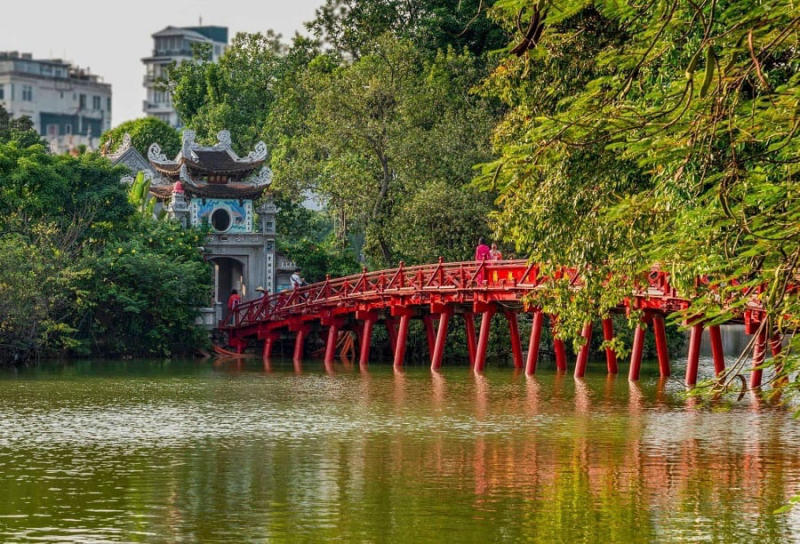
The Huc Bridge is the symbol of Ngoc Son Temple and its only entrance, a curved wooden bridge painted vivid vermilion red that links the lake shore to Jade Islet. The name “The Huc” means “where the morning sunlight rests,” so an early-morning visit catches the bridge in full sun and cool breezes.
Nghi Mon Gate
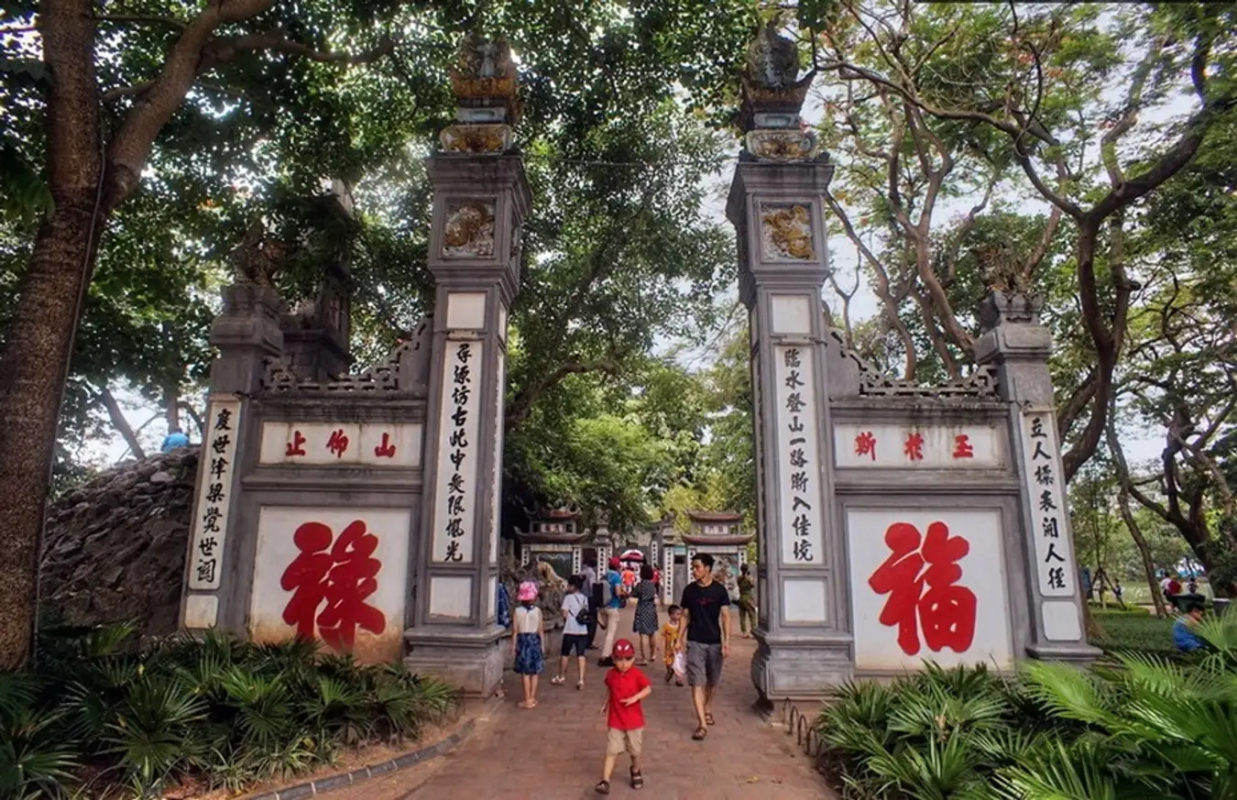
Nghi Mon Gate is the entrance to the main complex of Ngoc Son Temple. It includes 2 columns and walls decorated with dedicated Chinese letters.
Stepping inside, you can see a 28-meter-tall Pen Tower, which was built under the reign of King Tu Duc. On the tower, you will find the words “Ta Thanh Thien,” aiming to express respect for the contributions of Trinh Lords towards Vietnamese literature.
Long Mon Ho Bang Gate
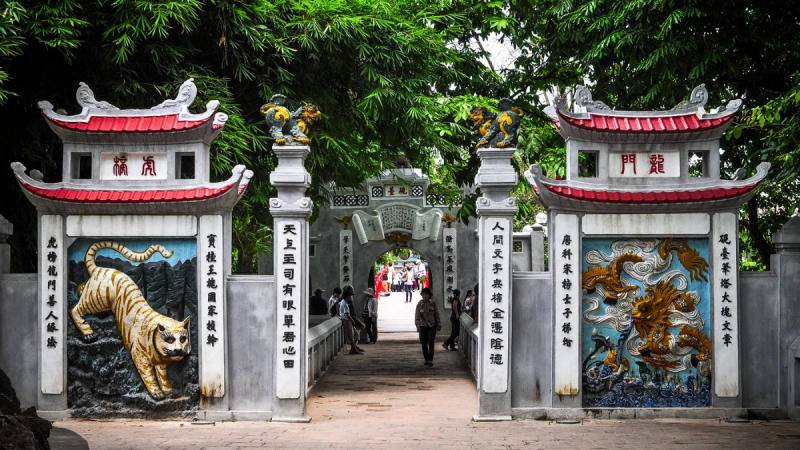
Long Mon Ho Bang Gate is the second ceremonial gate inside Ngoc Son Temple, built with two columns and side walls like Nghi Mon Gate. It carries more elaborate carvings, with a white tiger on the left and a dragon on the right, symbolizing exam success and good wishes for scholars.
Dai Nghien Gate
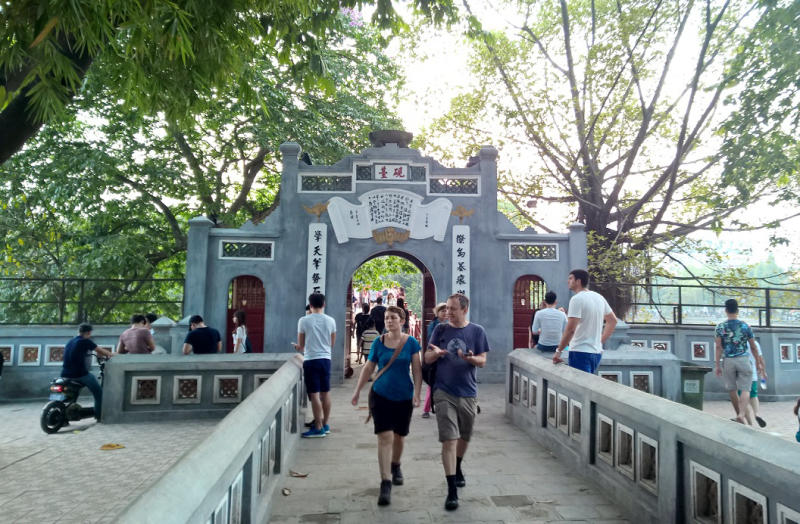
Dai Nghien Gate is the ink-slab gate of Ngoc Son Temple, named for the blue-stone ink pot carved on top of it. On the 5th day of the 5th lunar month, the rising sun casts the shadow of the Pen Tower onto this pot; the gate also bears a famous poem written in just 64 Chinese characters.
Dac Nguyet Lau Gate
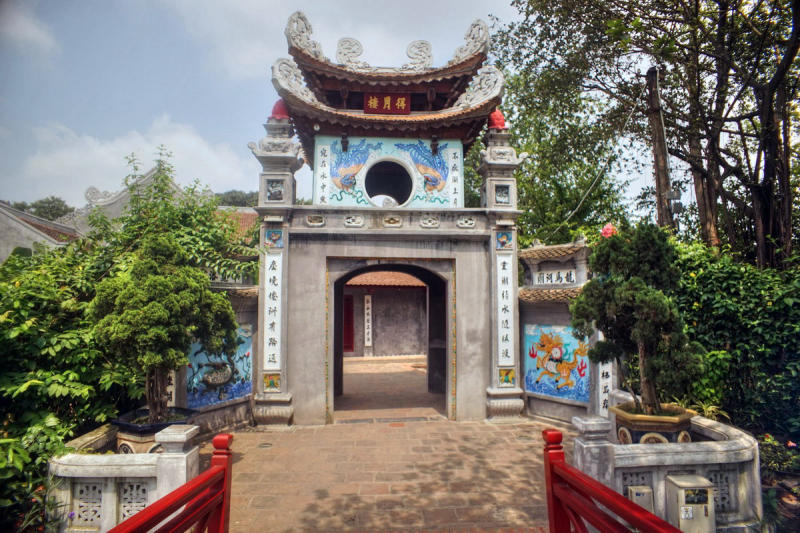
Dac Nguyet Lau Gate, also called the “Moon Gazing Pavilion,” is the ticket gate of Ngoc Son Temple, a two-story structure shaded by an old banyan tree. A round window decorated with dragons and phoenixes faces the lake, and this is where you collect your entrance ticket before crossing in.
Tran Ba Pavilion
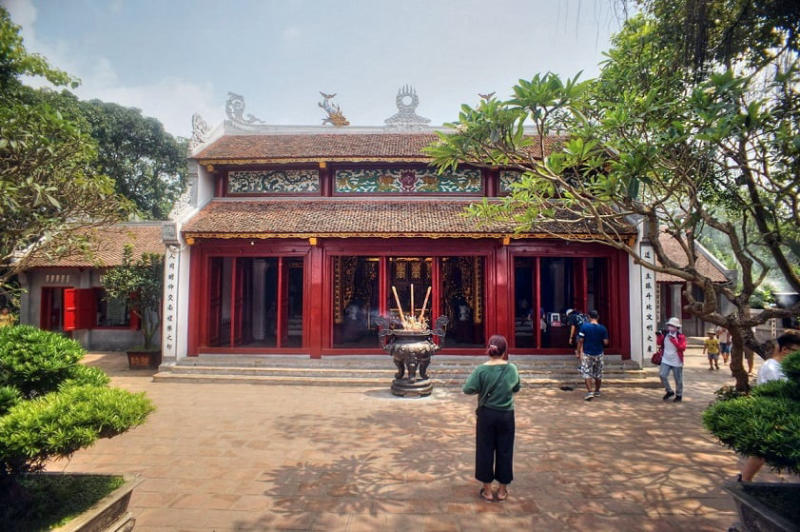
Tran Ba Pavilion is the guard pavilion at the south of Ngoc Son Temple, built to symbolically shield Vietnamese cultural life and tradition from harmful influences. It has a two-layer roof supported by eight columns made of wood and stone.
Attractions Nearby
Five major attractions sit within a 10-minute walk of Ngoc Son Temple, all inside the Hoan Kiem area. Each one pairs naturally with a temple visit to fill a half-day on foot in central Hanoi:
- Hanoi Old Quarter: It is an iconic symbol of Hanoi’s Capital, featuring a range of lively streets, historical landmarks, and mouth-watering cuisine. You can come here to find several special souvenirs for your relatives and friends.
- St. Joseph’s Cathedral: This is the oldest church in Hanoi, impressing visitors with unique architecture and priceless historical values.
- Hanoi Opera House: It is one of the most stunning examples of French architecture in Vietnam. Here, you can find classical art shows such as chamber music, ballet, and opera.
- Thang Long Water Puppet Theater: This theater serves audiences with amazing displays of enchanting tales and controlling puppets.
- Dong Xuan Market: It is located on the right of the Hanoi Old Quarter, one of Vietnam’s most long-standing traditional markets. Coming here, you will have a chance to experience the daily activities of the locals.
Tips When Visiting Outstanding Spots In Ngoc Son Temple
- Be respectful to all worshipping areas during your visit time;
- Bring cash to pay for the entrance ticket (credit card is not accepted);
- Wear polite clothing;
- Keep quiet and take off your footwear while visiting inside the worshipping areas;
- Go to local guides for detailed instructions (contact Vietnamtour.in).
Following these simple courtesies lets you take in the centuries of history and spiritual meaning that make Ngoc Son Temple more than just a stop on a Hanoi itinerary.
Conclusion
This guide has walked you through a complete visit to Ngoc Son Temple — its centuries of history, the structures inside, and the attractions nearby. A temple devoted to both wisdom and heroism, it rewards a slow, mindful visit more than a quick photo stop. For a smoother trip, you can explore the Vietnam tour packages designed by local travel experts.
OTHER ATTRACTIONS IN HANOI






ITINERARIES WITH NGOC SON TEMPLE
Hanoi · Sapa · Halong Bay
Hanoi · Ninh Binh · Halong Bay · Da Nang · Hoi An · Ho Chi Minh City · Mekong Delta
Ho Chi Minh City · Mekong Delta · Phu Quoc · Da Nang · Hanoi · Ninh Binh · Halong Bay