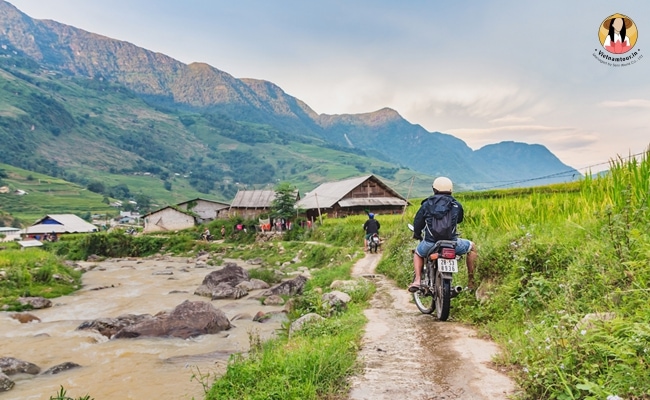
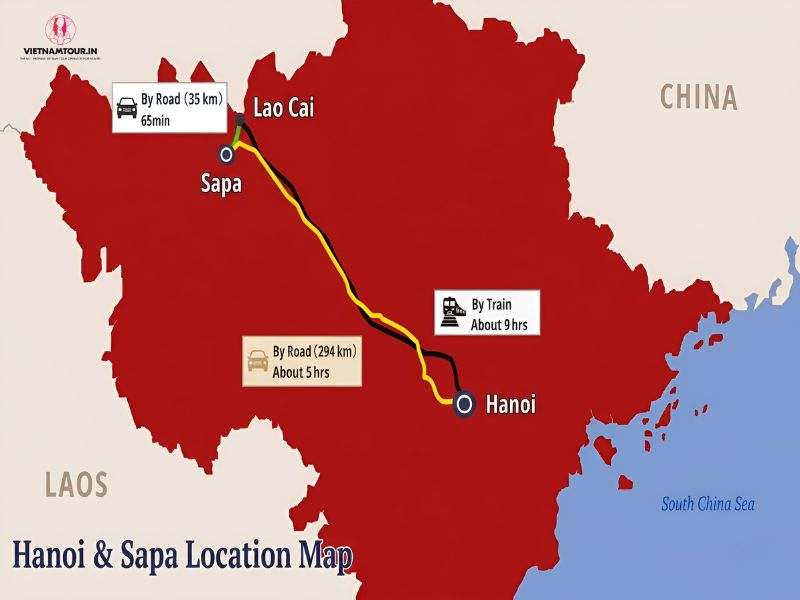
Hanoi is 314 km from Sapa by road and 290 km by rail, with travel time ranging from 5 hours by private car to 8 hours by overnight train. In 2026, Indian travelers use 4 transport modes to reach Sapa from Hanoi — the overnight train, the sleeper bus, a private car transfer, and a guided tour package — with costs ranging from ₹879 to ₹14,828 depending on the mode and group size.
Hanoi to Sapa Transport Comparison: Cost, Duration, and Best Fit for Indian Travelers
The overnight train is the most popular option among Indian tourists at ₹1,790–₹7,448 per person, while the private car is the fastest at 5 hours door-to-door. The 4 transport modes cover the Hanoi to Sapa distance at different costs, speeds, and comfort levels — each mode is suited to a different type of Indian traveler.
| Transport Mode | Duration | Cost per Person (INR) | Cost per Person (VND) | Best For |
|---|---|---|---|---|
| Overnight Train | 8 hrs + 45 min transfer* | ₹1,790 – ₹7,448 | 519,000 – 2,160,000 VND | Families, couples |
| Sleeper Bus | 5–6 hrs (direct to Sapa) | ₹879 – ₹1,862 | 255,000 – 540,000 VND | Solo, budget |
| Private Car | 5 hrs (door-to-door) | ₹7,586 – ₹14,828 per car | 2,200,000 – 4,300,000 VND per car | Groups, elders |
| Guided Tour Package | Flexible | ₹3,750 – ₹6,250/day | — | First-time visitors |
The best departure point from Hanoi is Hanoi Railway Station (Ga Hà Nội) at 120 Lê Duẩn, Hoàn Kiếm, for train travelers, and My Dinh Bus Station for sleeper bus travelers. Private car passengers depart directly from their Hanoi hotel. No direct flight operates between Hanoi and Sapa — all 4 transport modes are overland. The overnight train — the most booked option among Indian travelers — runs up to 3 departures per night, with schedules and cabin types detailed below.
Hanoi to Sapa Overnight Train: Schedules, Costs, and Cabin Types
The Hanoi–Lao Cai route has 3 overnight trains: SP1 (21:35), SP3 (22:00), and SP7 (22:40), all arriving at Lao Cai station between 05:15 and 06:25 the following morning. Not all 3 trains operate every day — the schedule varies by date, and Indian tourists check availability for their specific travel date on dsvn.vn before booking. Lao Cai station is 38 km from Sapa town — train travelers complete the journey with a shared bus transfer (₹200, 45 minutes) or a private taxi (₹400–₹500) to reach Sapa town center. The 8-hour overnight journey is comparable in duration to India’s Rajdhani Express routes — Indian travelers accustomed to overnight train travel on Indian Railways find the format familiar.
Vietnam Railways (DSVN) — SP1, SP3, and SP7:
Vietnam Railways sells sleeper berths on all 3 trains through dsvn.vn or the hotline 1900 0109, with advance booking up to 60 days before departure. As of April 2026, seated carriages are no longer available on the Hanoi–Lao Cai route — only sleeper berths are sold. SP3 also carries private luxury carriages operated by Chapa Express and Sapaly Express — details on these premium options are below.
| Cabin Type | Berths | Price per Person (INR) | Price per Person (VND) | Best For |
|---|---|---|---|---|
| 4-berth sleeper — upper tier | 4 | ₹1,790 | 519,000 VND | Budget travelers |
| 4-berth sleeper — lower tier | 4 | ₹1,872 | 543,000 VND | Indian families |
| 4-berth VIP sleeper — upper tier | 4 | ₹1,859 | 539,000 VND | Comfort upgrade |
| 4-berth VIP sleeper — lower tier | 4 | ₹1,941 | 563,000 VND | Comfort upgrade |
| 2-berth private sleeper | 2 | ₹2,434 | 706,000 VND | Couples, privacy |
Luxury Carriages on SP3 (Private Operators):
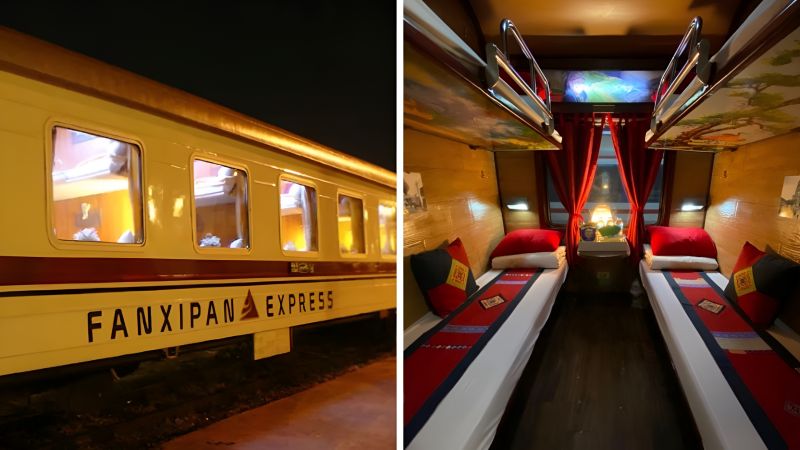
SP3 carries private luxury carriages operated by Chapa Express and Sapaly Express, offering wood-panelled cabins, soundproofed compartments, reading lights, and onboard food service at a higher price point than DSVN standard berths. Cabin prices from these operators range from ₹1,655 to ₹7,448 per person (480,000–2,160,000 VND) depending on the cabin class, with premium suite cabins available at higher rates. Indian travelers interested in a luxury overnight train experience book directly through each operator’s website — availability and pricing for these premium cabins are not always reflected on dsvn.vn.
Which Train Cabin Is Best for Indian Families Traveling Hanoi to Sapa?
The 4-berth sleeper cabin on Vietnam Railways (SP1 or SP7) is the most practical option for Indian families traveling from Hanoi to Sapa, at ₹1,790–₹1,941 per person. Indian families choose the 4-berth sleeper for 2 specific reasons: booking all 4 berths in one cabin delivers full cabin privacy at ₹7,160–₹7,764 total; and the lower-tier berths provide easier access for children and elders during the 8-hour overnight journey.
Indian families wanting a higher-comfort option book a luxury cabin on SP3 (Chapa Express or Sapaly Express) at ₹1,655–₹7,448 per person — these private operators offer upgraded bedding, soundproofed cabins, and onboard food service that DSVN standard berths do not provide.
How to Book Hanoi to Sapa Train Tickets from India
Indian passport holders book Hanoi to Sapa train tickets through the official Vietnam Railways website (dsvn.vn) or its authorized online portal. The 4-step booking process uses a consistent format:
- Select departure date and cabin type on the booking platform
- Enter Indian passport number — mandatory for all foreign nationals on Vietnam Railways
- Pay via international credit card, debit card, or PayPal
- Receive the e-ticket as a PDF — print or show on mobile at Hanoi Railway Station (Ga Hà Nội), 120 Lê Duẩn, Hoàn Kiếm
Indian tourists book 3–4 weeks in advance for standard travel periods and 4–6 weeks ahead for the Diwali and Christmas windows, when sleeper berths sell out first. Hanoi Railway Station is 3 km from the Hanoi Old Quarter — arrive at least 30 minutes before the scheduled departure (SP1 at 21:35, SP3 at 22:00, or SP7 at 22:40). Indian travelers who find train berths sold out on their preferred dates use the sleeper bus as a same-route alternative departing the same evening.
Hanoi to Sapa by Bus: Sleeper Bus Options, Costs, and Departure Points
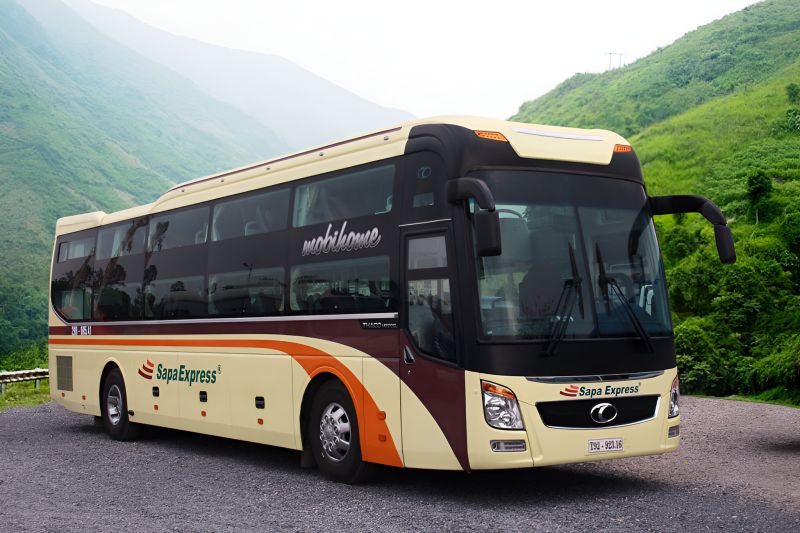
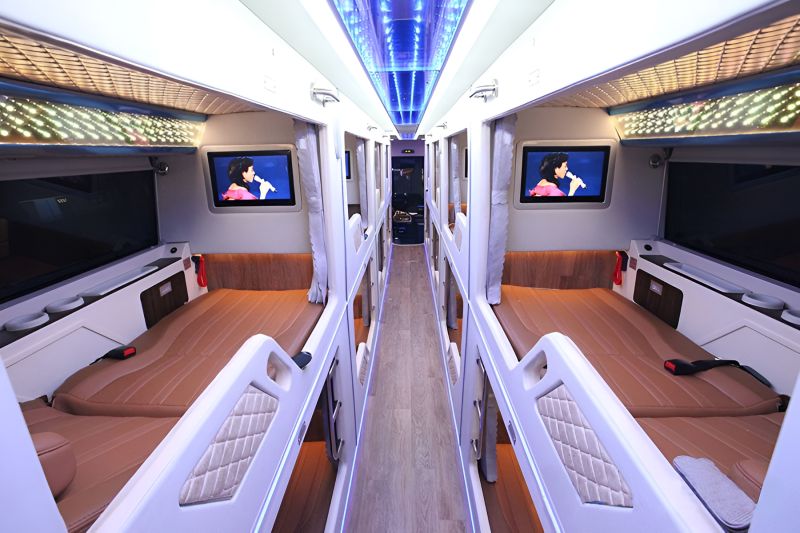
Sleeper buses from Hanoi to Sapa depart My Dinh Bus Station, cover the route in 5–6 hours directly to Sapa town center, and cost ₹879–₹1,862 (255,000–540,000 VND) per person. 3 operators Indian travelers use on this route are Sapa Go, Grouptour, and Hung Thanh — all 3 operate licensed overnight services with semi-sleeper or full-sleeper seats. Departure times from My Dinh Bus Station are 9:00 PM, 10:00 PM, and 11:00 PM. Unlike the overnight train, sleeper buses drop passengers directly at Sapa town center — no 38 km Lao Cai-to-Sapa transfer is required.
Is the Hanoi to Sapa Bus Safe for Indian Tourists?
Yes, sleeper buses on the Hanoi to Sapa route are safe for Indian tourists under 2 conditions. The first condition is choosing one of the 3 licensed operators listed above — all operate government-registered services with maintained vehicles. The second condition is avoiding June through August, when Tram Ton Pass carries an active landslide risk.
Budget operators offering prices below ₹300 use older vehicles on the same mountain road — this price threshold is the practical warning signal for Indian travelers comparing fares. Night buses arriving in Sapa before sunrise — between 3:00 AM and 4:00 AM — require a hotel that accepts late-night arrivals. Indian travelers on the 11:00 PM bus pre-book accommodation and confirm a 24-hour check-in before departure.
Hanoi to Sapa Sleeper Bus vs. Overnight Train: Which Is Better for Indians?
The sleeper bus arrives directly in Sapa town center — eliminating the 38 km Lao Cai-to-Sapa transfer that all train passengers navigate at 6:00 AM. For Indian travelers who prioritize uninterrupted sleep, the bus is the weaker option: Tram Ton Pass switchbacks at 1,900 m elevation cause sustained motion throughout the 5–6 hour journey, and berths on shared buses offer less legroom and no cabin privacy compared to a 4-berth sleeper cabin on the train.
The overnight train suits Indian families and couples who value the sleeper cabin experience — a lockable 4-berth compartment, flat berths for children, and a smoother rail ride that allows continuous sleep. Indian travelers prone to motion sickness on mountain roads choose the train for this reason. The bus suits solo travelers and budget groups who accept the comfort trade-off for a faster, transfer-free arrival. Indian families traveling with elders or young children who need door-to-door service without overnight travel consider a private car transfer as a third option.
Hanoi to Sapa Private Car Transfer: Cost, Duration, and What’s Included
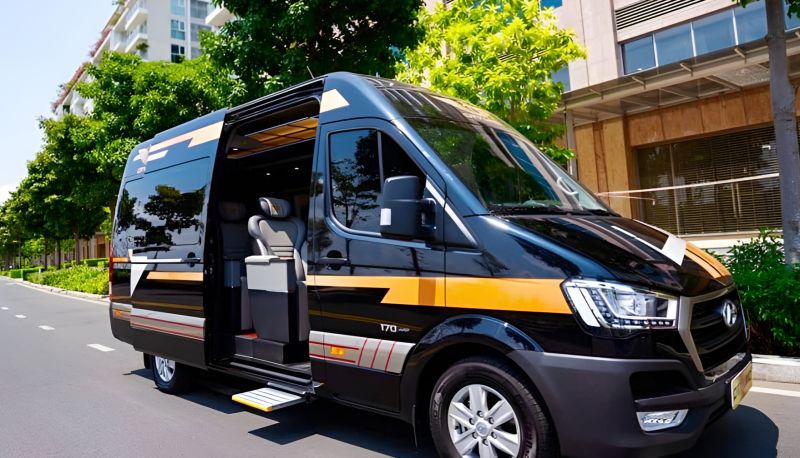
A private car transfer from Hanoi to Sapa takes 5 hours, with hotel pickup at 5:00 AM in Hanoi and arrival in Sapa by 10:00 AM — giving travelers a full first day in the mountains. The 5-hour drive follows a route similar in distance and terrain to the Mumbai–Pune Expressway extended to Mahabaleshwar — Indian travelers familiar with Western Ghats driving conditions find the Tram Ton Pass road comparable. Hanoi to Sapa private car rates vary by vehicle size, from ₹7,586 (2,200,000 VND) for a 4-seater sedan to ₹14,828 (4,300,000 VND) for an 11-seat Limousine — all rates are quoted per car, not per person. All vehicle types include an English-speaking driver, hotel-to-hotel pickup and drop, road tolls, and fuel — no additional charges apply with reputable operators.
| Vehicle Type | Capacity | Hanoi to Sapa (INR) | Hanoi to Sapa (VND) |
|---|---|---|---|
| Sedan (4-seater) | 4 pax | ₹7,586 | 2,200,000 VND |
| MPV (7-seater) | 7 pax | ₹8,276 | 2,400,000 VND |
| Minibus (16-seater) | 16 pax | ₹13,103 | 3,800,000 VND |
| Limousine (9-seater) | 9 pax | ₹13,103 | 3,800,000 VND |
| Limousine (11-seater) | 11 pax | ₹14,828 | 4,300,000 VND |
Indian families with elders or young children choose a private car for one primary reason: door-to-door service eliminates the 6:00 AM Lao Cai station transfer that train travelers navigate after an 8-hour overnight journey. Private car passengers arriving directly at the Sapa hotel at 10:00 AM have the full first day available for trekking or Fansipan — unlike train travelers who reach Sapa town center around 7:30 AM after completing the Lao Cai transfer.
Hanoi to Sapa Private Car vs. Train: Which Is Better for Indian Tourists?
A private car is better for Indian families with elders, young children, or heavy luggage. Elders who cannot climb into upper train berths and families with car seats for toddlers find the private car the only practical option — the sedan or MPV accommodates mobility limitations and bulky luggage that sleeper cabins cannot.
The overnight train is better for solo travelers and couples who value the mountain rail experience — waking up to dawn light over the Lao Cai valley is a highlight that private car passengers miss entirely. Train travelers also sleep on flat berths for 8 hours instead of sitting upright in a car seat for 5 hours, making the train the stronger option for travelers who prioritize rest quality over arrival convenience.
How Much Does a Hanoi to Sapa Private Car Cost for a Group of 4 Indians?
A Hanoi to Sapa 4-seater sedan costs ₹7,586 (2,200,000 VND) per car — ₹1,897 per person when 4 travelers split the fare. At ₹1,897 per person, the 4-seater private car is comparable to a DSVN 4-berth sleeper (₹1,790–₹1,941) but includes the door-to-door convenience detailed in the comparison above.
Indian travel groups of 7 traveling in a 7-seater MPV reduce the per-person cost to ₹1,182 — below the DSVN 4-berth sleeper price, making the 7-seater the most cost-efficient private car option for larger Indian travel groups. Indian wedding groups or family reunions of 9–11 travelers book a Limousine at ₹13,103–₹14,828 (3,800,000–4,300,000 VND) per vehicle, reducing the per-person cost to ₹1,348–₹1,456 while traveling together in a single vehicle. All private car pricing from reputable operators includes tolls and fuel — Indian travelers confirm this inclusion at booking to avoid post-journey charges. Indian tourists who prefer a single booking covering transport, accommodation, trekking, and meals together explore a Hanoi to Sapa tour package as an all-inclusive alternative.
Hanoi to Sapa Tour Packages for Indian Tourists: 2-Day, 3-Day, and 4-Day Options
A 3-day Hanoi to Sapa tour package costs ₹14,000 per person, covering overnight train transport, accommodation, a local trekking guide, and 2 meals per day. Tour packages are the most practical option for Indian tourists visiting Sapa for the first time — transport, trekking routes, and meal arrangements are pre-organized in a single booking, removing all logistics from the journey. The 3 package tiers available in 2026 are structured as follows:
- 2-day package ₹7,000+ per person: overnight train transport + 1-day trekking with local guide + 1-night homestay in a village near Sapa town
- 3-day package ₹14,000+ per person: overnight train transport + 2 full trekking days + 2-night accommodation (1 Sapa hotel, 1 village homestay) + Fansipan cable car option
- 4-day package ₹15,300+ per person: overnight train transport + 3 trekking days + Muong Hoa Valley full route + village overnight stays across multiple H’Mong communities
Indian group tours with 8 or more travelers reduce the per-person cost by ₹3,000–₹5,000 compared to private packages. A tour package saves ₹4,000–₹7,000 per person against booking each component — train, guide, accommodation, and transfers — independently. Indian tourists combining Sapa with other Vietnam destinations explore the Vietnam tour packages to plan a complete multi-city itinerary.
Hanoi to Sapa Tour Package Including Fansipan: What Does It Cost for 2 People?
A 2-person, 3-day Hanoi to Sapa tour package, including Fansipan, costs ₹28,000–₹42,000 total, or ₹14,000–₹21,000 per person. The package price covers 6 inclusions: overnight train tickets for 2 passengers, 2 nights of accommodation (1 Sapa hotel room, 1 village homestay), an English-speaking trekking guide for 2 full days, Fansipan cable car tickets for both travelers, 4 meals across the 3 days, and all local transfers between Lao Cai station, Sapa town, and trekking trailheads.
The Fansipan cable car alone costs ₹2,400 for 2 people at standard retail price — the package absorbs this cost within the total, making the Fansipan inclusion cost-neutral compared to booking independently.
Is a Sapa Tour Package Worth It for Indian Families vs. Independent Travel?
A Sapa tour package is worth it for Indian families with children, elders, or first-time Vietnam travelers; independent travel suits experienced travelers who have visited similar highland destinations in India or Southeast Asia — such as Munnar, Coorg, or Darjeeling. 3 specific reasons a package is better for Indian families traveling from Hanoi to Sapa are:
- First, trekking routes into Sapa’s ethnic minority villages — including Ta Van and Lao Chai — require a registered local guide by regulation. Hiring a guide independently costs ₹1,500–₹2,500 per day per group; a tour package absorbs this guide fee.
- Second, vegetarian meal requests are pre-arranged by the tour operator for the full duration — village homestays and trail-side restaurants confirm vegetarian preparation in advance when notified through the tour operator, which individual travelers cannot guarantee.
- Third, altitude adjustment at Sapa’s 1,500 m elevation is managed by the guide — rest schedules on Day 1 are built into the tour itinerary, reducing the risk of mild altitude symptoms affecting trekking on Day 2.
A family of 4 saves ₹16,000–₹28,000 total by booking a 3-day package compared to arranging train tickets, guides, accommodation, meals, and transfers independently at individual retail prices. Indian travelers planning a broader Sapa travel guide itinerary that includes Fansipan, Muong Hoa Valley, and village treks find these details covered comprehensively in the destination guide. The timing of the Hanoi to Sapa journey — particularly which months align with India’s holiday calendar and Sapa’s rice terrace season — determines both the trekking conditions and the availability of tour packages.
Best Time to Travel from Hanoi to Sapa for Indian Tourists

September to November is the best time to travel from Hanoi to Sapa, with golden rice terraces, dry roads on Tram Ton Pass, and daytime temperatures between 15°C and 22°C. Indian tourists traveling from September to November see Sapa’s most photographed landscape — the rice terraces in full harvest color — under clear skies and stable road conditions. The table below gives a month-by-month breakdown of temperature, road conditions, and alignment with India’s holiday calendar.
| Month | Avg Temp (°C) | Road Condition | Indian Holiday Alignment |
|---|---|---|---|
| Jan–Feb | 5–15 | Dry, cold | — |
| Mar–Apr | 10–20 | Good for trekking | Holi (March) |
| May | 15–22 | Warm, early rains | — |
| Jun–Aug | 18–25 | ⚠️ Heavy rain, landslide risk | Avoid |
| Sep–Oct | 15–22 | ✅ Peak — golden terraces | Navratri, Dussehra, Diwali |
| Nov | 12–18 | ✅ Good — clear skies | Diwali tail |
| Dec | 5–12 | Cold, dry | Christmas |
Indian tourists planning around the Dussehra and Diwali windows in October and November book Sapa at peak season — road conditions on Tram Ton Pass at 1,900 m are stable, and daylight hours support full trekking days. June through August brings the heaviest monsoon rainfall on the Tram Ton Pass road, with landslide risk that affects both bus and private car journeys — this is the one period to avoid the Hanoi to Sapa overland route.
December through February suits Indian tourists who want to experience frost and cold mountain mornings in Sapa. Sapa nights drop to 0–5°C from December through February — heavy layering is required, and the landscape shifts from golden terraces to winter mist. Regardless of travel month, Indian tourists confirm a set of practical preparations — from visa and SIM card to packing and altitude awareness — before departing Hanoi for Sapa.
7 Things Indian Tourists Must Know Before Traveling from Hanoi to Sapa
Indian tourists confirm 7 practical facts before departing for Sapa to avoid common logistical problems on arrival. These 7 points cover the areas where Indian travelers most frequently encounter preventable delays or costs on the Hanoi to Sapa route.
- Vietnam e-Visa covers all provinces, including Lao Cai (Sapa’s province) — no separate provincial permit is required. Apply at evisa.gov.vn. Processing takes 3 business days. The 2026 fee is USD 25 (approximately ₹2,100) for single-entry.
- The 2026 exchange rate is ₹1 ≈ 290 VND. Sapa town has ATMs within walking distance of Sapa Market. Exchange INR to VND in Hanoi before departure — exchange rates in Hanoi are consistently better than rates available in Sapa town.
- A Viettel SIM provides 4G coverage throughout Sapa valley and on most trekking routes. A Viettel tourist SIM with 10–30 GB data costs ₹350–₹500. Purchase at Hanoi Noi Bai Airport or in the Hanoi Old Quarter before the overnight journey — SIM availability in Sapa town is limited to a small number of vendors.
- The overnight train arrives at Lao Cai station — not Sapa town. Pre-book the Lao Cai–Sapa transfer through the same train booking platform used for the ticket — this eliminates waiting at Lao Cai station at 6:00 AM for unbooked services. Transfer options and costs are detailed in the Hanoi to Sapa Overnight Train section above.
- Sapa nighttime temperatures drop to 15–18°C even in August. Pack at least 1 warm layer regardless of travel month. Travel in December through February requires a heavy jacket — nighttime temperatures reach 5°C and drop to 0°C in frost conditions on Fansipan-facing slopes.
- Sapa town has restaurants serving Indian-friendly vegetarian food. Village homestays prepare vegetarian meals on advance request — notify the tour operator or homestay host at least 24 hours before arrival to confirm vegetarian preparation.
- Sapa sits at 1,500 m above sea level — comparable to Munnar (1,600 m) and lower than Mussoorie (2,000 m) or Ooty (2,240 m). Indian tourists traveling from sea-level cities such as Mumbai, Chennai, and Kochi experience mild altitude adjustment on arrival. Mild symptoms — headache, fatigue, reduced appetite, and disrupted sleep — affect a portion of first-time visitors in the first 24 hours. 3 prevention steps reduce symptom onset: hydrate with 3 litres of water on the travel day, avoid alcohol for 24 hours after arriving in Sapa, and rest in the afternoon of arrival. Sapa pharmacies stock acetazolamide (Diamox) over the counter — Indian travelers who carry a supply from home confirm dosage with a physician before departure.
Indian tourists spending additional nights in Hanoi before or after Sapa can access the Hanoi travel guide to plan their city itinerary.
Frequently Asked Questions: Hanoi to Sapa for Indian Tourists
Is It Safe to Travel from Hanoi to Sapa by Overnight Train?
Yes, the Hanoi to Sapa overnight train is safe for Indian tourists. Vietnam Railways operates the Hanoi–Lao Cai route as a government service with an established international safety record. 2 conditions maximize safety and comfort: book a 4-berth or 2-berth sleeper cabin on DSVN trains, or a luxury cabin on the SP3 tourist train; and confirm that the cabin locks from the inside — Indian families travel in full privacy in a 4-berth sleeper with an interior bolt.
Can Indian Tourists Travel to Sapa Without a Tour Guide?
Yes, Indian tourists travel to Sapa town independently without a guide. Sapa town center, Fansipan Cable Car, Sapa Market, and Cat Cat Village entrance are fully accessible without a registered guide. The 1 regulated exception is trekking into ethnic minority villages — trekking routes into Ta Van and Lao Chai are restricted to visitors with a registered local guide; independent trekking into these villages is prohibited, and fines apply. Google Maps functions in Sapa with a downloaded offline map — download the Sapa offline map in Hanoi before departure, where the Hanoi Old Quarter provides reliable 4G connectivity.
How Many Days in Sapa Is Enough for Indian Tourists?
2 nights and 3 days is the minimum for Indian tourists; 3 nights gives a complete Sapa experience. A 2-night itinerary covers 1 full trekking day in Muong Hoa Valley or Ta Van Village and 1 Fansipan cable car day. A 3-night itinerary adds 1 additional village trek and 1 local market morning — giving Indian travelers time to visit the Saturday Bac Ha Market or the Sapa Saturday night market. A 1-night Sapa trip misses trekking entirely — not recommended given the journey distance from Hanoi.
What Is the Cheapest Way to Travel from Hanoi to Sapa?
The sleeper bus is the cheapest way to travel from Hanoi to Sapa at ₹879–₹1,862 (255,000–540,000 VND) per person one-way. Sapa Go and Hung Thanh operate the cheapest reliable departures from My Dinh Bus Station at 9:00 PM and 10:00 PM nightly. The 3 cheapest Hanoi to Sapa transport options in order of price are: (1) sleeper bus at ₹879–₹1,862 per person; (2) DSVN 4-berth sleeper train (upper tier) at ₹1,790 per person; (3) DSVN 2-berth private sleeper at ₹2,434 per person. Booking 3–5 days in advance reduces the bus fare by ₹100–₹200 compared to same-day booking.
Does the Hanoi to Sapa Train Have Food?
No, DSVN standard sleeper carriages on the Hanoi to Sapa route have no dining car — this applies to DSVN berths on SP1, SP3, and SP7. Platform vendors board at Hanoi Railway Station before departure and sell packaged food and drinks until approximately 10:30 PM — vegetarian options are limited at this point. The train makes a 10-minute stop at Yen Bai station at around 1:00 AM, where platform vendors sell rice dishes and snacks. Indian travelers on the 8-hour journey carry dry snacks, fruit, and at least 1 litre of bottled water from Hanoi — purchasing these from Old Quarter convenience stores before reaching the station gives the widest vegetarian selection. The private luxury carriages on SP3 (Chapa Express, Sapaly Express) offer onboard food and drink service through cabin staff.