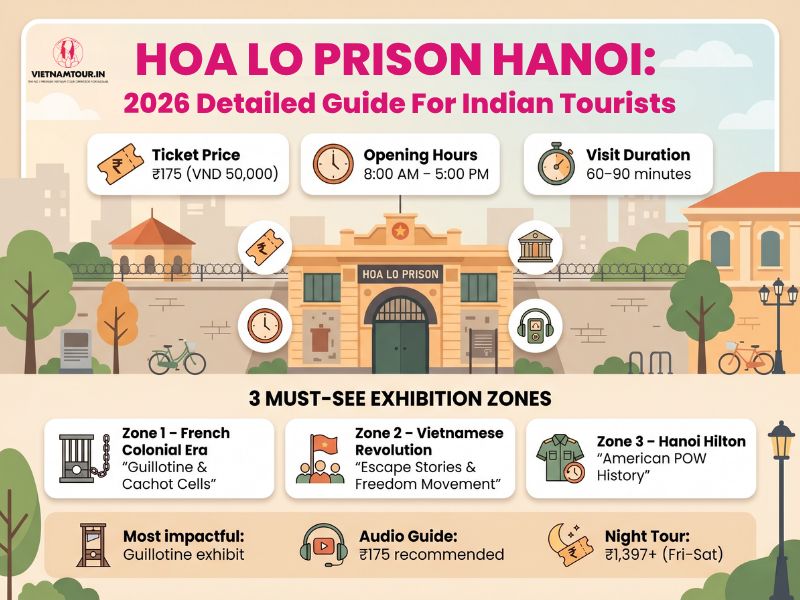
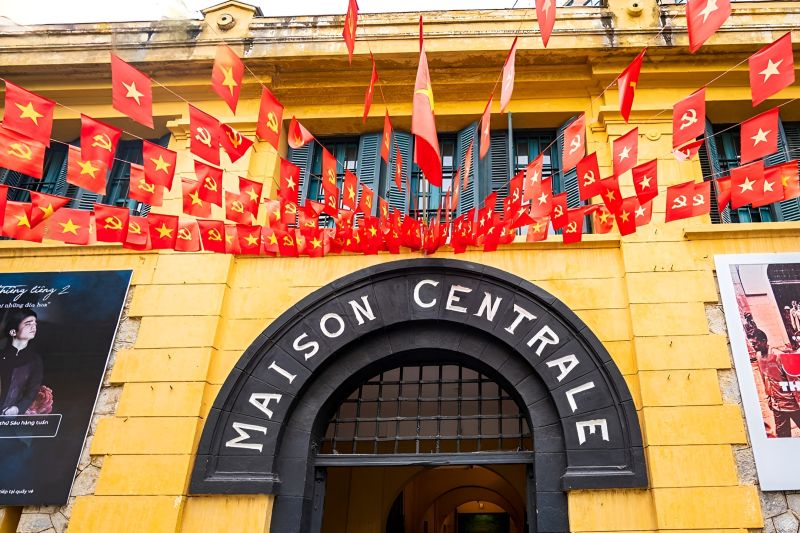
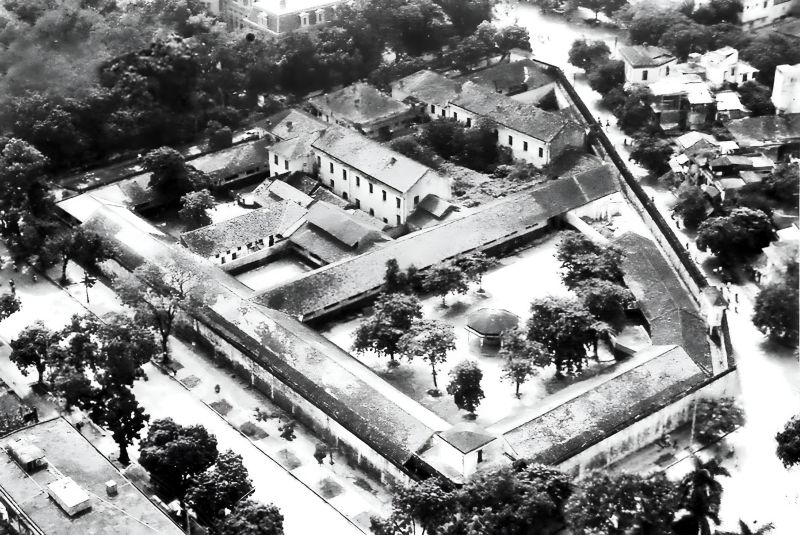
Hoa Lo Prison is the only historical site in Hanoi that carries two completely separate identities. The French colonial administration built Hoa Lo Prison in 1896 as ‘Maison Centrale’ to imprison Vietnamese revolutionaries fighting for independence. Decades later, American pilots shot down by North Vietnam renamed the facility the ‘Hanoi Hilton’ — a sardonic nickname that became one of the most recognised phrases from the Vietnam War. Today, the preserved southern wing at 1 Hoa Lo Street, Hoan Kiem District, operates as a museum with an entry cost of ₹175 (VND 50,000). The Hoa Lo Prison is open every day of the year. Indian tourists typically spend 60–90 minutes exploring the inside of Hoa Lo.
This Hoa Lo Prison Hanoi guide from Vietnamtour.in will cover the 3 exhibition zones, ticket price in INR, opening hours, audio guide, Night Tour pricing, and how to build Hoa Lo into a half-day colonial heritage walk in Hanoi.
Hoa Lo Prison and the “Hanoi Hilton” — What Makes This Site Unique in Hanoi
Hoa Lo Prison is unique because it holds 2 distinct historical identities within a single structure: a French colonial detention facility for Vietnamese independence fighters from 1896 to 1954, and an American POW centre from 1964 to 1973.
The name ‘Hoa Lo’ translates to ‘fiery furnace’ or ‘hell’s hole’ in Vietnamese. The area surrounding Hoa Lo Prison was historically a pottery village where kilns fired ceramic stoves, and Hoa Lo Street retained that craft name. The French selected this land in 1896 to build their Indochina-wide detention centre, officially calling it “Maison Centrale” — a deliberately neutral term for what became one of the most feared prisons in Southeast Asia.
In 1993, the Vietnamese government demolished most of the original Hoa Lo 12,000 sq m complex for the Hanoi Tower development. The preserved 2,434 sq m portion was recognised as a national historical monument by Vietnam’s Ministry of Culture in 1997. The museum holds a 4.5-star rating across more than 21,000 Google reviews.
For Indian visitors, Hoa Lo Prison is one of the few historical sites in Southeast Asia approached with genuine prior emotional context. Vietnamtour.in’s 10+ years of experience serving the Indian market confirms that familiarity with shared colonial struggles leads Indian guests to spend 30% more time in the French-era section compared to other international demographics. Our local experts, who understand the emotional weight of freedom struggles like those in India, curate this visit to highlight these profound structural parallels.
French Colonial Era at Hoa Lo Prison — Vietnamese Revolutionaries Under French Indochina Rule (1896–1954)
The French built Hoa Lo between 1896 and 1901, designed to hold 450–500 inmates. By the 1930s, Hoa Lo Prison held over 2,000 prisoners — nearly 4.5 times its intended capacity.
The official name Maison Centrale (“Central House”) of Hoa Lo masked what the structure actually was: a maximum-security facility designed to neutralise Vietnamese anti-colonial resistance through incarceration, physical punishment, and execution. The walls stand approximately 4 metres high and 0.5 metres thick, topped with broken glass and electrified barbed wire. Prison records show that the colonial administration used the facility primarily for Vietnamese political dissidents — individuals organising or agitating against French Indochina rule.
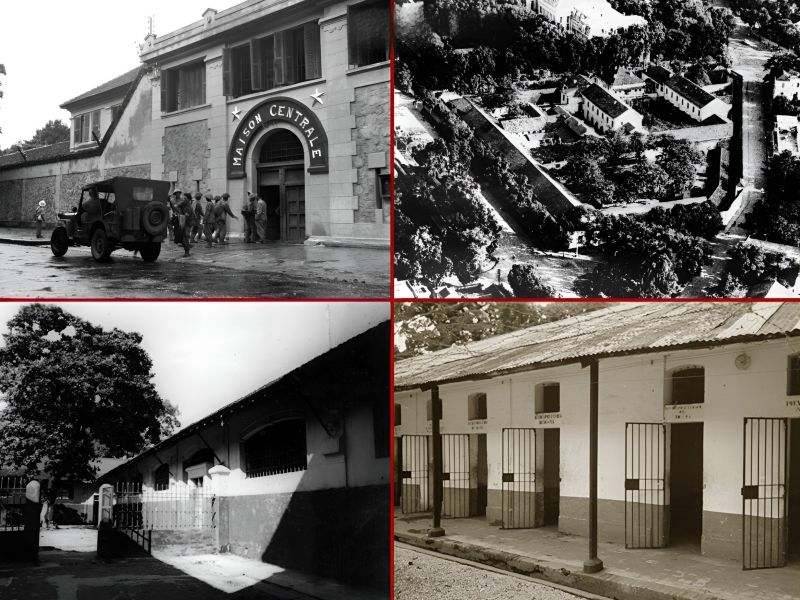
Notable prisoners from this era include Nguyen Thai Hoc, leader of the 1930 Yen Bai Uprising, and Hoang Van Thu. Five General Secretaries of the Vietnam Communist Party — including Le Duan, Truong Chinh, and Do Muoi — were all held inside Hoa Lo at different points during the French period. The conditions documented in museum exhibits show extreme overcrowding, leg irons in permanent stocks, deliberate malnutrition, and isolation cells designed to psychologically break political prisoners.
India was under British colonial rule during these same decades (1896–1947). The experience of colonial incarceration for political dissidents is a direct parallel — Indian visitors recognise the pattern of colonial incarceration for political dissidents immediately, without needing further explanation.
The Guillotine and Cachot Cells — What the French Left Behind
The guillotine used for executions at Hoa Lo is displayed in the museum and is one of the most-photographed exhibits on-site. The French colonial administration used this guillotine for the execution of Vietnamese prisoners sentenced to death. The guillotine display and the Cachot (solitary confinement) cells are consistently cited by visitors as the most impactful stops in the museum.
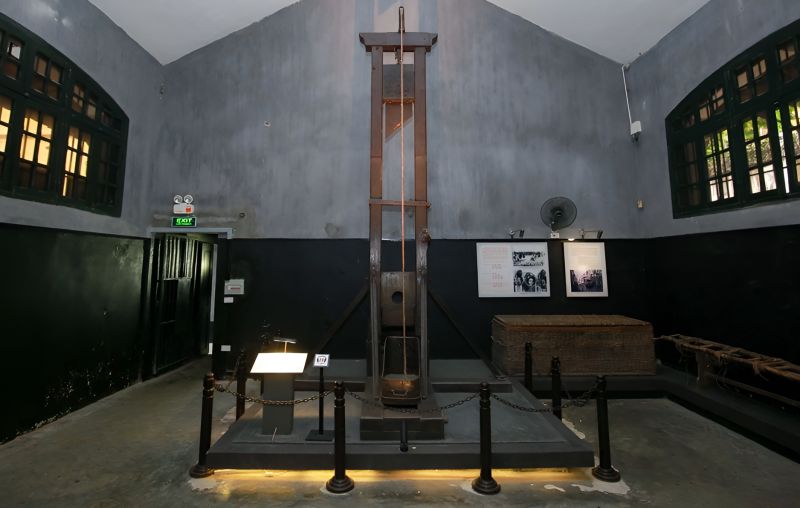
The “Cachot” cells — isolation or solitary confinement chambers — are extremely small by any standard. Visitors can physically enter and stand inside to understand their scale. Both the guillotine display and the Cachot cells are consistently cited by visitors as the most impactful stops in the French-era section of the museum.
The 1945 Mass Escape — Vietnamese Prisoners Break Out of Hoa Lo
In March 1945, a group of Vietnamese prisoners escaped through the prison’s sewer system — a documented act of resistance that the museum presents with maps and photographs. A separate escape attempt on Christmas Night 1951 saw 17 death-sentenced prisoners attempt the same route; only 5 succeeded. Both escapes are central to the museum’s narrative framing of Hoa Lo as a site not only of suffering, but of Vietnamese resistance and survival. The 1945 escape in particular is presented as evidence that the French, despite their resources, could not fully contain Vietnamese revolutionary spirit.
The “Hanoi Hilton” — American POWs at Hoa Lo Prison During the Vietnam War (1964–1973)
From August 5, 1964, to March 31, 1973, Hoa Lo Prison held American Air Force and Navy pilots captured over North Vietnam. The American prisoners named the prison the ‘Hanoi Hilton’ as deliberate irony. The official Vietnamese account and American POW testimonies both exist in historical records, and the museum presents these perspectives to provide a complete view of Zone 3
The North Vietnamese government’s official position was that American prisoners were treated humanely under the Geneva Conventions. The museum presents this account in detail. American POW testimonies document systematic torture, isolation, sleep deprivation, and forced participation in propaganda activities. Both the official Vietnamese account and American POW testimonies exist in historical records. The museum presents the Vietnamese government’s perspective, and visitors benefit from approaching Zone 3 with awareness of that institutional framing. India maintained a Non-Aligned position during the Vietnam War, which allowed Indian visitors to engage with both sets of documentation without a partisan framework.
Famous Prisoners at Hoa Lo — John McCain and Other Notable American POWs
John McCain, held at Hoa Lo Prison from 1967 to 1973, is the most internationally recognised prisoner associated with the Hanoi Hilton. McCain, a US Navy pilot shot down over Hanoi on October 26, 1967, later served as a US Senator for Arizona and ran as the Republican Presidential candidate in 2008. John McCain’s original flight suit is displayed in Zone 3 of the museum exhibits.
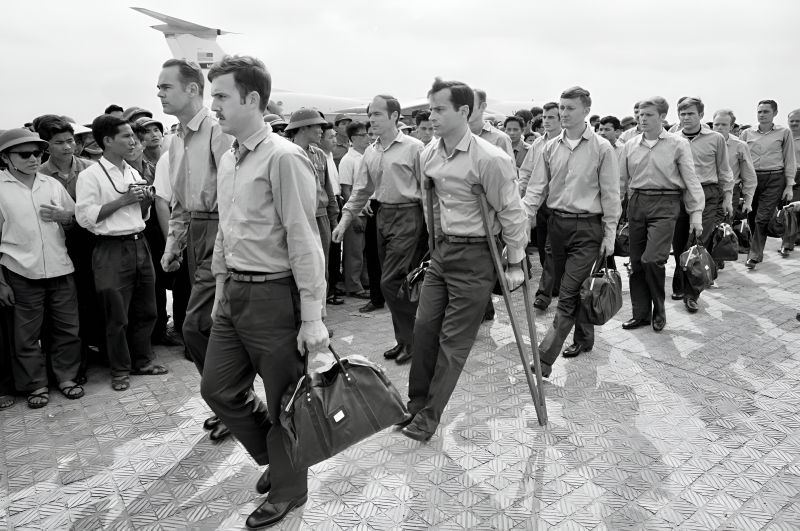
3 other notable American prisoners held at Hoa Lo are documented in the museum’s exhibits:
-
Douglas Peterson was imprisoned at Hoa Lo and later became the first United States Ambassador to Vietnam after diplomatic normalisation in 1995, a transition from prisoner to diplomat in the same country.
-
Jeremiah Denton gave a televised press conference during captivity in which he blinked the word “TORTURE” in Morse code, communicating his treatment to US naval intelligence while appearing to endorse his captors’ narrative.
-
James Stockdale was the highest-ranking American POW at Hoa Lo and later ran as Ross Perot’s Vice Presidential candidate in the 1992 US election.
The “Zoo,” “Heartbreak Hotel,” and Other POW Sections Within Hoa Lo
American POWs gave informal names to 3 distinct sections of the Hoa Lo prison compound: “Heartbreak Hotel” for the intake area, “Little Vegas” for the main cellblock, and “The Zoo” for a separate annex used during peak detention years. Understanding this naming geography helps visitors contextualise the Zone 3 exhibits, which reference these designations. Not all sections are physically accessible — only the preserved 2,434 sq m southern wing remains open.
Hoa Lo Prison Timings — Opening Hours and Best Time to Visit
Hoa Lo Prison is open from 8:00 AM to 5:00 PM every day, including Vietnamese public holidays and weekends. The last entry is at 4:30 PM. Some visitor reports indicate a possible midday closure between 11:30 AM and 1:30 PM on certain days — arriving before 11:00 AM eliminates this risk of missing entry due to potential midday closures.
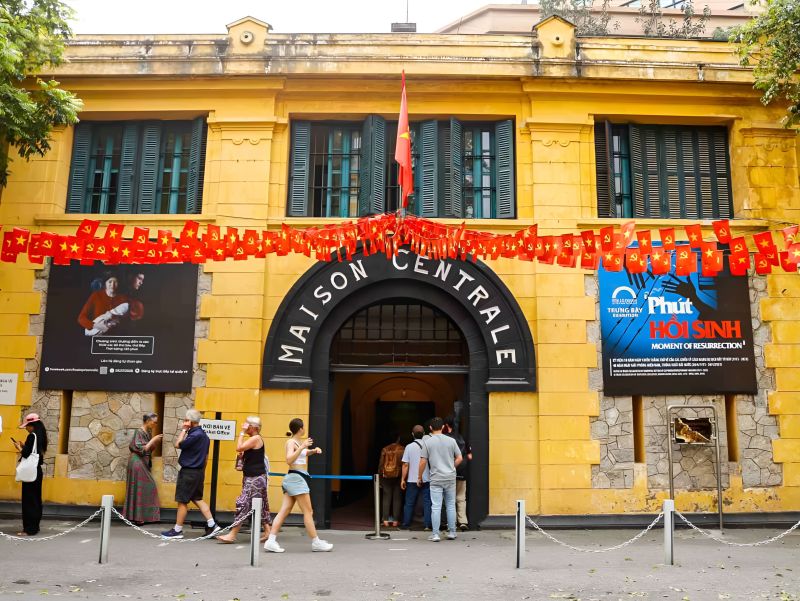
The best visiting window is a weekday morning between 8:00 AM and 10:00 AM. Friday afternoons are consistently the busiest period, peaking at approximately 2:00 PM based on Google Popular Times data. Plan 60 to 90 minutes for a standard self-guided visit; allow up to 2 hours with the audio guide.
The Night Tour — “Đêm Thiêng Liêng” (Sacred Night) — runs on Friday and Saturday evenings from 7:00 PM to 9:00 PM. The Night Tour programme rotates through three themed performances focusing on the revolutionary spirit and female prisoners. Each Night Tour session concludes with signature tea and desserts made from the prison’s historical Terminalia Catappa tree.
Hoa Lo Prison Ticket Price in INR — Entrance Fee and Concessions (2026)
The standard adult entrance fee at Hoa Lo Prison is VND 50,000 (₹175) per person as of 2026. This price covers the full self-guided daytime visit across all 3 exhibition zones. No booking is required — purchase at the on-site counter, cash preferred.
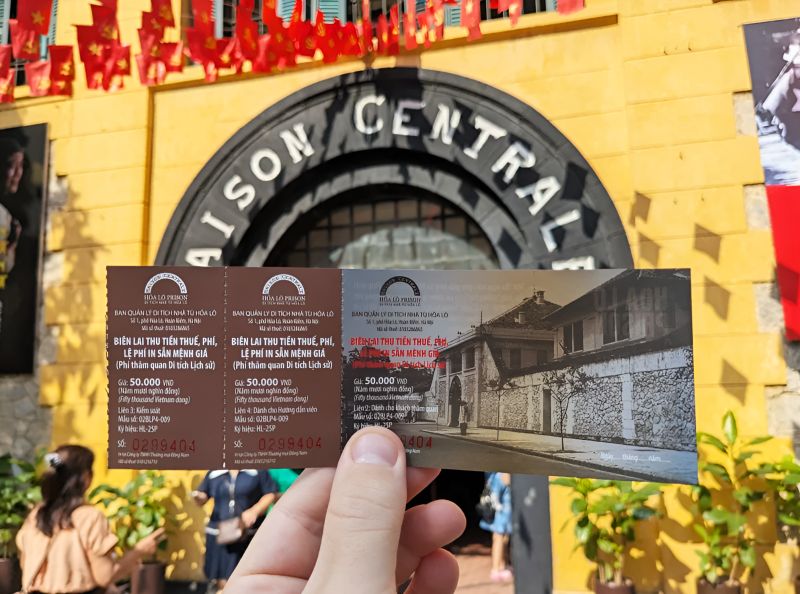
The complete pricing structure is as follows:
-
Adults (15 years and older): VND 50,000 (₹175)
-
50% concession at VND 25,000 (~₹89) applies to: seniors aged 60 and above, students with a valid student ID, people with severe disabilities, and individuals under social welfare policies
-
Free admission applies to: children under 16 years old, people with extremely severe disabilities, veterans, members of the National Prison Contact Board and anti-French resistance liaison committee, and individuals formally recognised as having contributed to the revolution
The Night Tour is separately priced and covered in full below. At ₹175, Hoa Lo is among the most affordable historical museums in Southeast Asia — the Taj Mahal charges foreign visitors ₹1,100, making Hoa Lo approximately one-sixth of that price for comparable historical depth. According to a 2026 price audit by Vietnamtour.in, this remains the most cost-effective heritage experience in Hanoi for our Indian clients, offering immense educational value for less than ₹200.
3 Exhibition Zones Inside Hoa Lo Prison Museum — What to See on Your Visit
The museum organises its content across 3 exhibition zones visited in chronological order: Zone 1 covers the French colonial period (1896–1954), Zone 2 covers the Vietnamese independence movement, and Zone 3 covers the American POW period (1964–1973). All exhibit signage is available in English.
Zone 1 — French Colonial Prison Exhibits (1896–1954)
Zone 1 covers the entrance hall, original prison architecture, and the physical evidence of colonial-era imprisonment. 4 key exhibits define the zone:
-
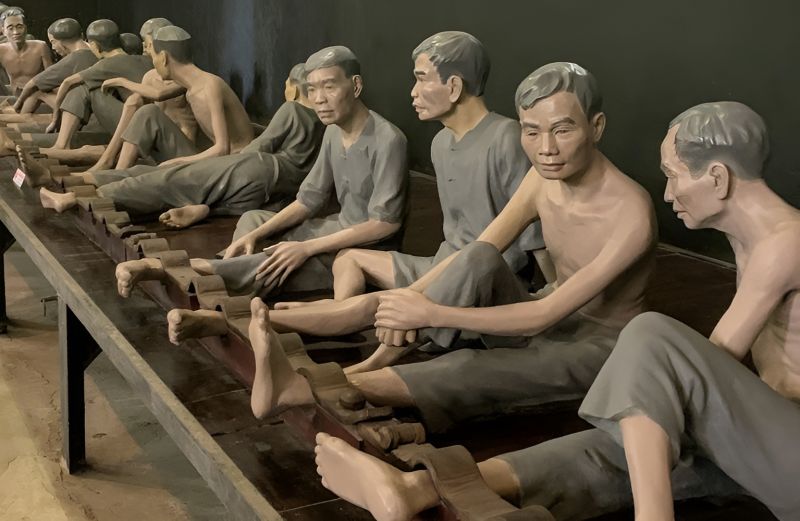
Leg irons and stocks — the original restraints used to chain prisoners in communal cells, displayed with documentation showing groups of 10 to 12 chained per length
-
Replica cells showing overcrowding — and they demonstrate how cells were built for 10 to 15 prisoners held 40 to 50 during the 1930s–1950s
-
The guillotine — the execution machine used at the prison, preserved in original condition; the most-photographed object in the museum
-
Cachot isolation cells — the small, solitary confinement cells that visitors can physically enter and stand inside
Photography is permitted throughout Zone 1. Flash restrictions apply to specific exhibits and are marked on-site. The cachot cells provide the most dramatic natural lighting in the museum.
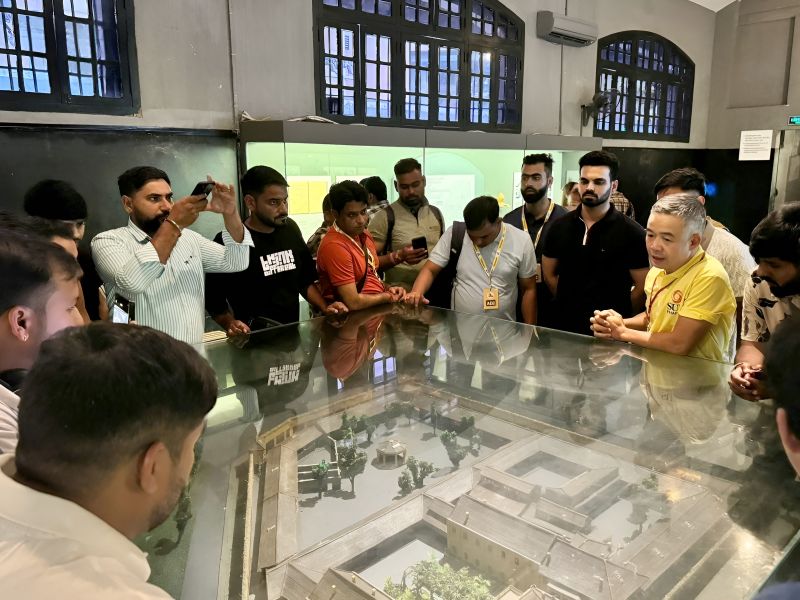
Zone 2 — Vietnamese Independence Movement Exhibits
Zone 2 reframes Hoa Lo from a site of suffering into what the museum explicitly calls a “school of revolution.” The exhibits document how prisoners maintained political organisation, educated fellow inmates in revolutionary theory, and preserved their resistance networks inside the prison walls.
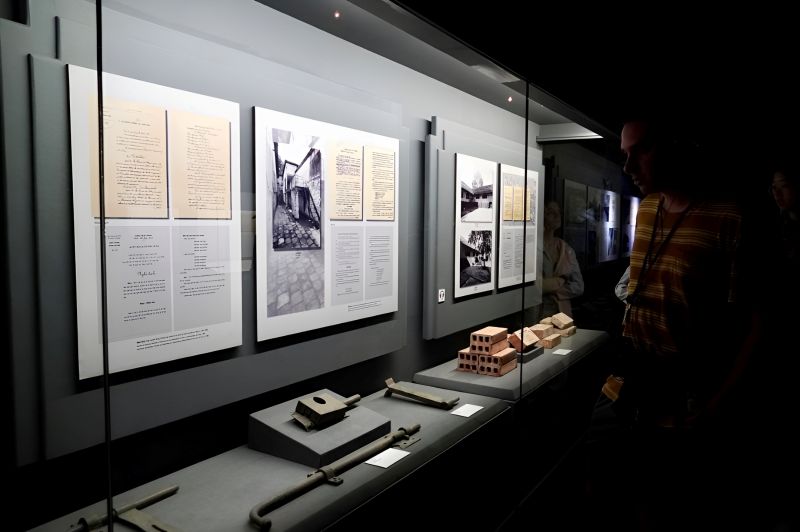
Zone 2 covers the biographies of prominent prisoners who led independent Vietnam, 1945 and 1951 escape attempts with maps and photographic documentation, and the broader context of the Vietnamese independence movement from 1930 through 1954. The leaders imprisoned here by France went on to shape modern Vietnam in the same pattern that Indian freedom fighters imprisoned by Britain shaped independent India — a structural parallel that Indian visitors recognise immediately and that gives Zone 2 a particular weight for this audience.
Zone 3 — American POW Exhibits (“Hanoi Hilton” Section)
Zone 3 covers the 1964–1973 period and is the most internationally recognised section of the museum. 4 categories of exhibits define the zone:
-
Personal artefacts — John McCain’s flight suit is the most prominent individual item; additional POW personal effects are displayed alongside it
-
Photographic documentation — official and documentary photographs from the 1964–1973 detention period
-
Propaganda materials — North Vietnamese documentation produced during the POW period, including filmed press conferences and printed materials
-
Reconstructed cells — physical reproductions of the detention areas used during the American POW period
The museum presents the North Vietnamese government’s official account of POW treatment throughout Zone 3. A gift shop and café are located after Zone 3 at the museum exit.
Photography Rules, Audio Guide, and Night Tour at Hoa Lo Prison — Practical Visit Information
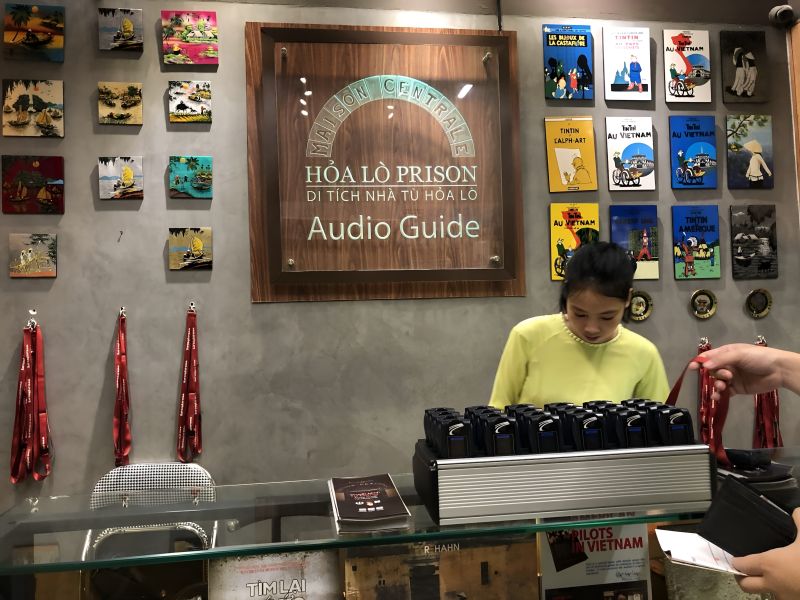
Photography is permitted throughout most of Hoa Lo Prison at no additional charge. An audio guide in English is available for approximately ₹175 (VND 50,000) per headset. The Night Tour (“Đêm Thiêng Liêng”) runs on Friday and Saturday evenings from 7:00 PM to 9:00 PM.
-
Photography rules: No additional photography fee applies for standard daytime visits. Specific exhibits carry “no flash” restrictions — these are marked on-site. Tripods are not permitted inside. The best photography spots are the Cachot cells (which have striking natural light), the guillotine display, and the Zone 3 POW flight suit exhibits.
-
Audio guide: Available in 8 languages, including Vietnamese, Chinese, Korean, English, French, German, and Spanish. Cost is approximately ₹175 (VND 50,000) per headset — verify the current price at the ticket counter. The full audio tour runs approximately 60 minutes and covers all 3 zones. The guide is rented at the ticket counter upon entry. For solo Indian tourists, the audio guide is the strongest recommendation in this entire article — exhibit signage alone is insufficient for a complete understanding of the French-era section, where the historical context is dense, and the English translations are functional but sparse.
Night Tour — “Đêm Thiêng Liêng” (Sacred Night)
The Hoa Lo Night Tour runs on Friday and Saturday evenings from 7:00 PM to 9:00 PM, lasting 2 hours. The programme rotates 3 themed performances:
-
Night 1 — “Sáng ngời tinh thần Việt” (Shining Vietnamese Spirit): VND 399,000 (~₹1,397) per person — re-enacts daily prison life during the French colonial period
-
Night 2 — “Sống như những đóa hoa” (Living Like Flowers): VND 399,000 (~₹1,397) per person — focuses on Vietnamese women revolutionaries imprisoned at Hoa Lo
-
Night 3 — “Lửa thanh xuân” (Fire of Youth): VND 499,000 (~₹1,747) per person — the most elaborate of the 3 productions, covering the full arc of revolutionary imprisonment and resistance
The Night Tour price applies equally to adults and children. The programme suits visitors aged 10 to 75. Each tour ends with souvenir gifts, including tea and desserts made from the prison’s last remaining Terminalia Catappa tree — a detail specific to Hoa Lo with no parallel to any other Vietnam museum. Night Tour tickets typically sell out 1 to 2 months in advance, especially during peak Indian travel windows like Diwali or summer holidays. To ensure our guests don’t miss this exclusive experience, Vietnamtour.in provides dedicated 24/7 support and early booking assistance, drawing on our status as a trusted local expert with a 99% satisfaction rate on TripAdvisor.
For a complete overview of historical and cultural attractions that pair with Hoa Lo, see our guide to places to visit in Hanoi.
Hoa Lo Prison Location — Address and 4 Ways to Get There from Hanoi Old Quarter
Hoa Lo Prison is at 1 Hoa Lo Street, Tran Hung Dao Ward, Hoan Kiem District, Hanoi, 1.2 km from the Hanoi Old Quarter and 1 km from Hoan Kiem Lake. On-site parking is available at the entrance.
4 transport options connect the Old Quarter to Hoa Lo:
-
Walking (free): 1.2 km, approximately 15 minutes; the most common approach for tourists near Hoan Kiem Lake, passing through the French Quarter
-
Grab a car or taxi (VND 15,000–25,000 / ₹45–₹90): 5 to 7 minutes from most central Hanoi hotels; Grab is recommended by unlicensed operators
-
Public bus (VND 8,000 / ₹29 per ride): Lines 02, 09, 32, 38, and 40 stop within walking distance — the lowest-cost option available
-
Cyclo from the Old Quarter: Available from the Old Quarter; the cyclo is itself a colonial-era transport form that connects contextually with the site
The prison is 850 m from St. Joseph’s Cathedral and 900 m from the Hanoi Opera House.
Combining Hoa Lo Prison with Hanoi’s Heritage Circuit — A Half-Day Historical Walk for Indian Tourists
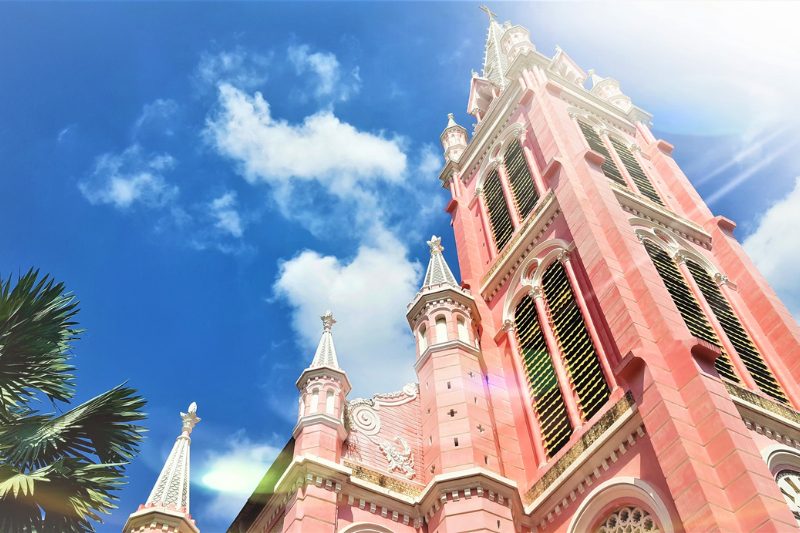
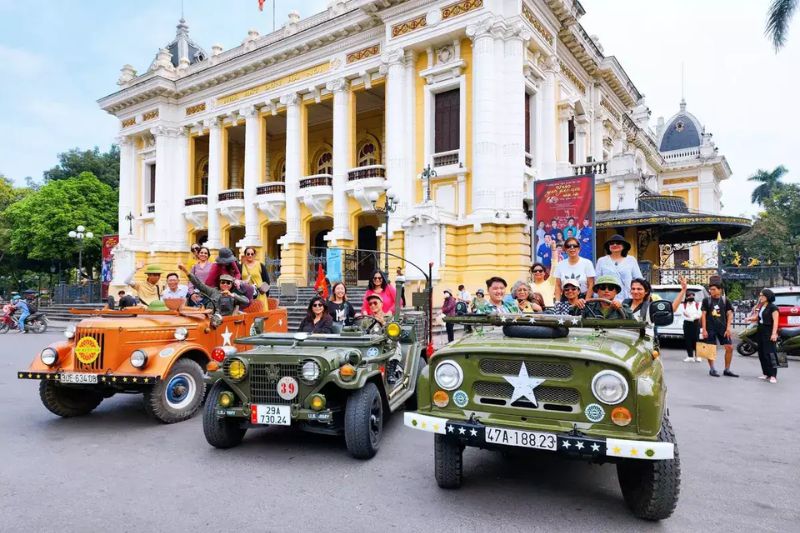
Hoa Lo Prison pairs naturally with St. Joseph’s Cathedral (850 m away), the Hanoi Opera House (900 m), and the French Quarter into a half-day colonial heritage circuit. Both Hoa Lo and St. Joseph’s Cathedral were built during the French colonial period — one as an instrument of control, the other as an expression of colonial religious administration. The 850 m walk between them passes through the Hoan Kiem area and takes under 12 minutes. The Hanoi Opera House, 900 m from Hoa Lo, is modelled on the Paris Opéra Garnier and is the clearest single architectural statement of French colonial ambition in Hanoi.
Suggested half-day sequence for Indian tourists:
-
8:00 AM — Arrive at Hoa Lo Prison (90 minutes, including audio guide)
-
10:00 AM — Walk through the French Quarter
-
10:30 AM — Hanoi Opera House exterior and surrounds
-
11:00 AM — Hoan Kiem Lake as the morning’s natural endpoint
This sequence covers Hanoi’s colonial history in a single morning and fits comfortably into a 2-night Hanoi itinerary — ideal for Indian tourists visiting during Diwali break or summer holidays when time is limited. For a full sightseeing plan covering all major areas and historical districts, the Hanoi travel guide provides the complete route with neighbourhood-by-neighbourhood detail.
Frequently Asked Questions — Hoa Lo Prison for Indian Tourists
Is Hoa Lo Prison open on Indian public holidays like Diwali and Holi?
Yes. Hoa Lo Prison is open every day of the year, including Diwali, Dussehra, Holi, and all Indian national public holidays. The museum operates from 8:00 AM to 5:00 PM on Vietnamese public holidays as well. Arriving before 10:00 AM is the most reliable strategy for avoiding peak crowds.
Is the Hoa Lo Prison audio guide free or paid?
The audio guide is a paid add-on at approximately VND 50,000 (~₹175) per headset and is not included in the standard entrance ticket. It is available in English, French, Vietnamese, and Chinese at the ticket counter and runs for approximately 60 minutes. It is the recommended option for solo Indian tourists — the French colonial section in particular requires contextual narration that signage alone does not provide.
How long does it take to visit Hoa Lo Prison?
A standard self-guided daytime visit covering all 3 exhibition zones takes 60 to 90 minutes. Visitors taking the audio guide or spending extended time in Zone 3 should allow up to 2 hours. The Night Tour runs separately for 2 hours from 7:00 PM to 9:00 PM.
What is the cheapest way to get to Hoa Lo Prison from Hanoi Old Quarter?
Walking is free — the Old Quarter is 1.2 km away, approximately 15 minutes on foot. Public bus lines 02, 09, 32, 38, or 40 cost VND 3,000 (~₹11) per ride. A Grab motorcycle costs VND 6,000 to 12,000 (~₹22 to ₹45). A Grab car costs VND 15,000 to 25,000 (~₹45 to ₹90).
Can Indian tourists visit Hoa Lo Prison without a guide?
Yes. Hoa Lo Prison is self-guided by default, and all exhibit signage is available in English. The audio guide is the recommended option for independent visitors. Foreign groups requiring a guided tour pay 500,000 VND (₹1800) (for a group with 1-5 people, 1,000,000 VND (₹3600) for a group with 6-10 people, or 100,000 VND (₹360) per person for a group above 11 people. Group tours must be arranged in advance via hoalo.vn.
OTHER ATTRACTIONS IN HANOI