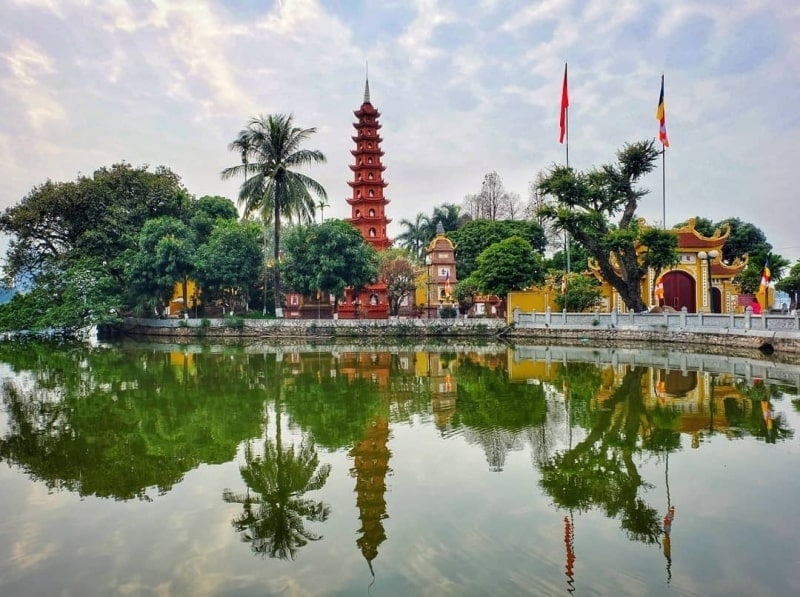
Tran Quoc Pagoda is the oldest Buddhist pagoda in Hanoi, built over 1,500 years ago in the 6th century under the reign of King Ly Nam De. Sitting on a small islet in West Lake, about 5 kilometres (3.1 miles) from the city centre, the pagoda preserves some of the most significant religious and historical values in Vietnam, and remains a symbol of Hanoi’s Buddhist heritage today.
For Indian travellers, Tran Quoc Pagoda holds a special connection: its sacred Bodhi tree was a gift from Dr. Rajendra Prasad, the first President of India, grown from a cutting of the original tree at Bodh Gaya. The pagoda is home to 6 main architectural structures, including the striking 11-storey Bao Thap stupa and a hall regarded as housing one of the most beautiful Buddha statues in the country.
This guide covers the history of Tran Quoc Pagoda, its architecture, exact location, opening hours, how to get there, and practical travel tips. It opens daily from 7:30 AM to 11:00 AM and 1:30 PM to 5:00 PM, with free entry for all visitors.
History of Tran Quoc Pagoda
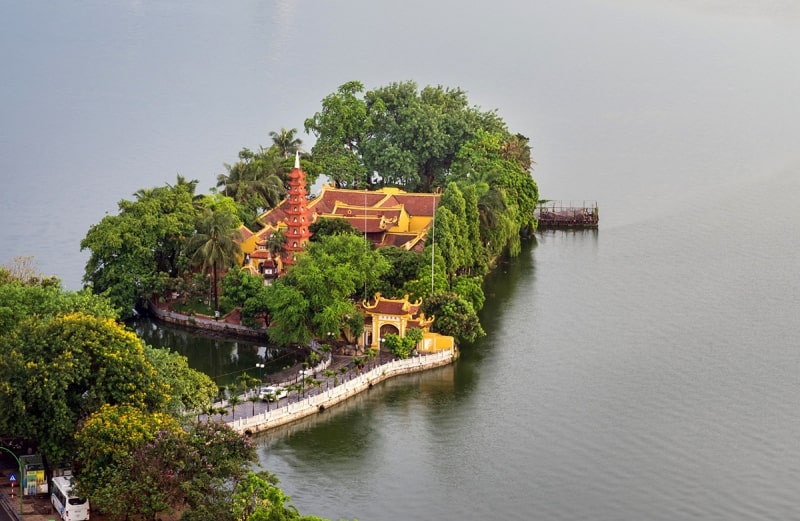
Tran Quoc Pagoda, originally called Khai Quoc Pagoda, was built in the 6th century (around 541–545 CE) under the reign of King Ly Nam De. Originally, the pagoda was laid on the bank of the Red River (Song Hong) and then moved to the Kim Ngu Islet for reconstruction in the 17th century. The name “Tran Quoc Pagoda” appeared under the reign of King Le Kinh Tong, meaning “National Defense”.
During the Tran Dynasty, the pagoda served as a major centre of Buddhism in northern Vietnam, and it remains a religious symbol of Hanoi today. With its long-established history, Tran Quoc Pagoda ranks among the most famous pagodas in Vietnam.
Architecture of Tran Quoc Pagoda
Tran Quoc Pagoda’s architecture consists of 6 main structures, arranged from front to back according to traditional Vietnamese Buddhist temple layout: Bao Thap, Tien Duong, Nha Thieu Huong, Thuong Dien, Nha Bia, and the Bodhi tree.
Bao Thap (11-Storey Stupa)
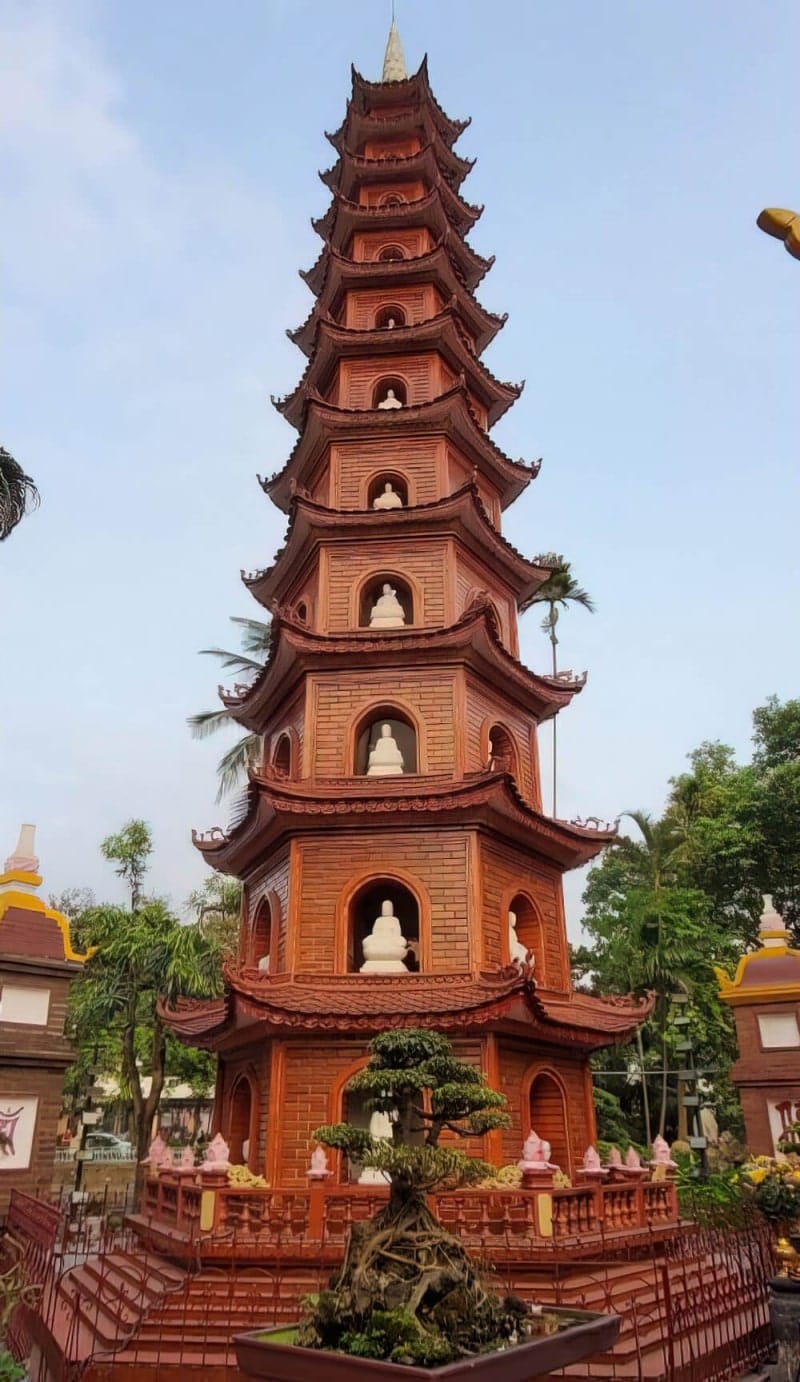
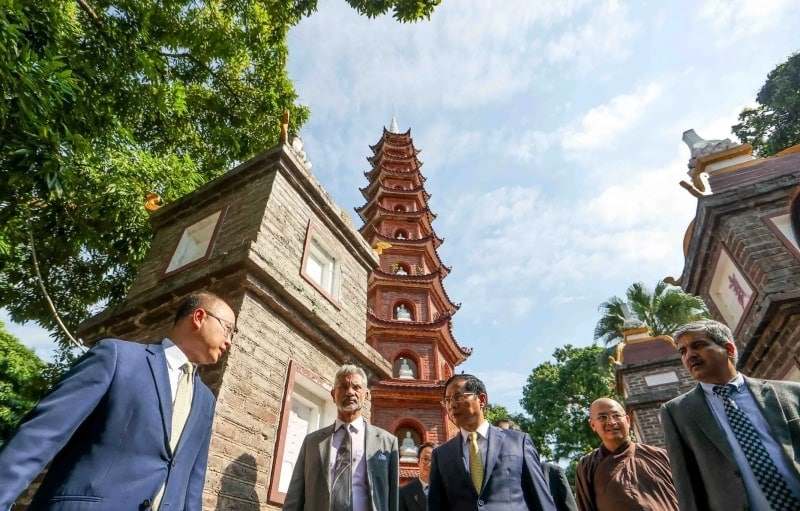
Bao Thap is an 11-storey stupa that stands at the centre of Tran Quoc Pagoda. Each of its doorways frames a gemstone statue of Amitabha Buddha, set among finely carved decorative details.
Tien Duong (The Front House)
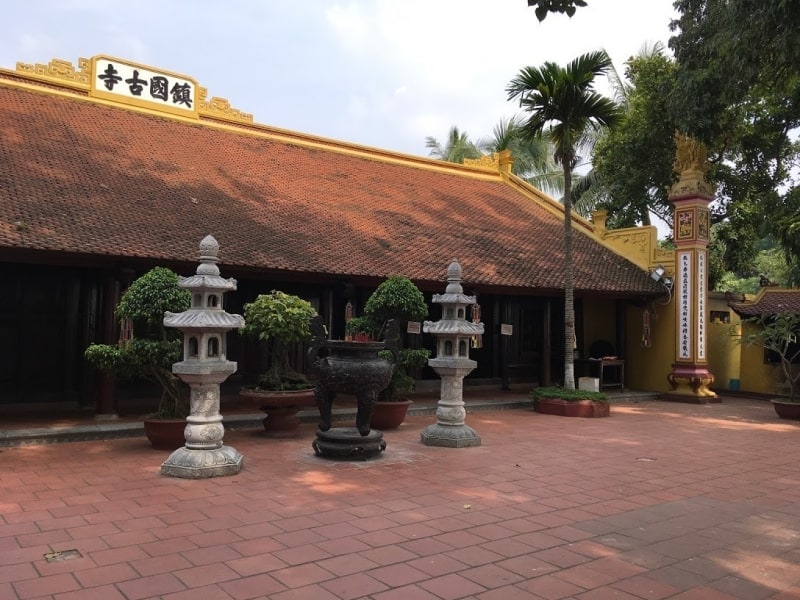
Tien Duong, the Front House, houses several Buddhist statues, the most notable being the Shakyamuni Buddha statue. Carved entirely from wood and finished in glossy gold paint, this statue is regarded as one of the most beautiful Buddha statues in Vietnam.
Nha Thieu Huong (Incense Burning House)
Nha Thieu Huong is the incense-burning house of Tran Quoc Pagoda, where visitors light incense and make offerings. These rituals honour higher realms and express prayers for good fortune.
Thuong Dien (The Upper House)
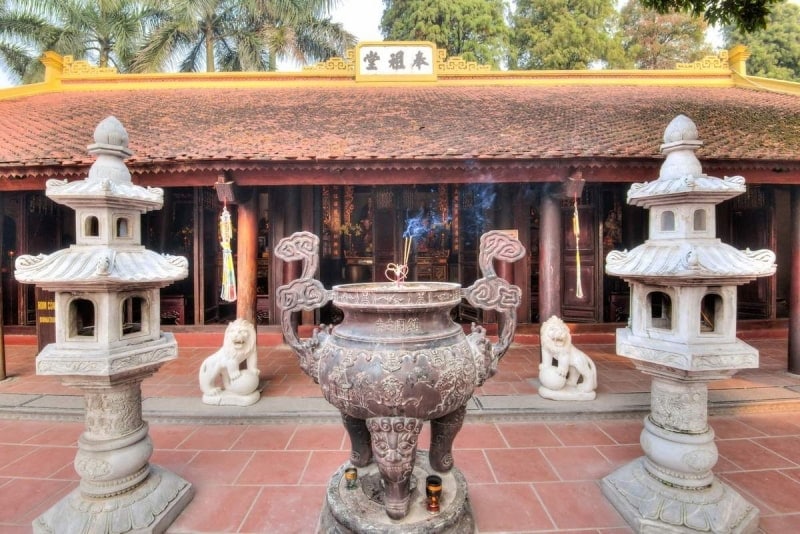
Thuong Dien is the main sanctuary of Tran Quoc Pagoda, where the principal Buddha statues are worshipped. Its ancient layout and vividly coloured decorations mark its historical and architectural significance.
Nha Bia (The Stele House)
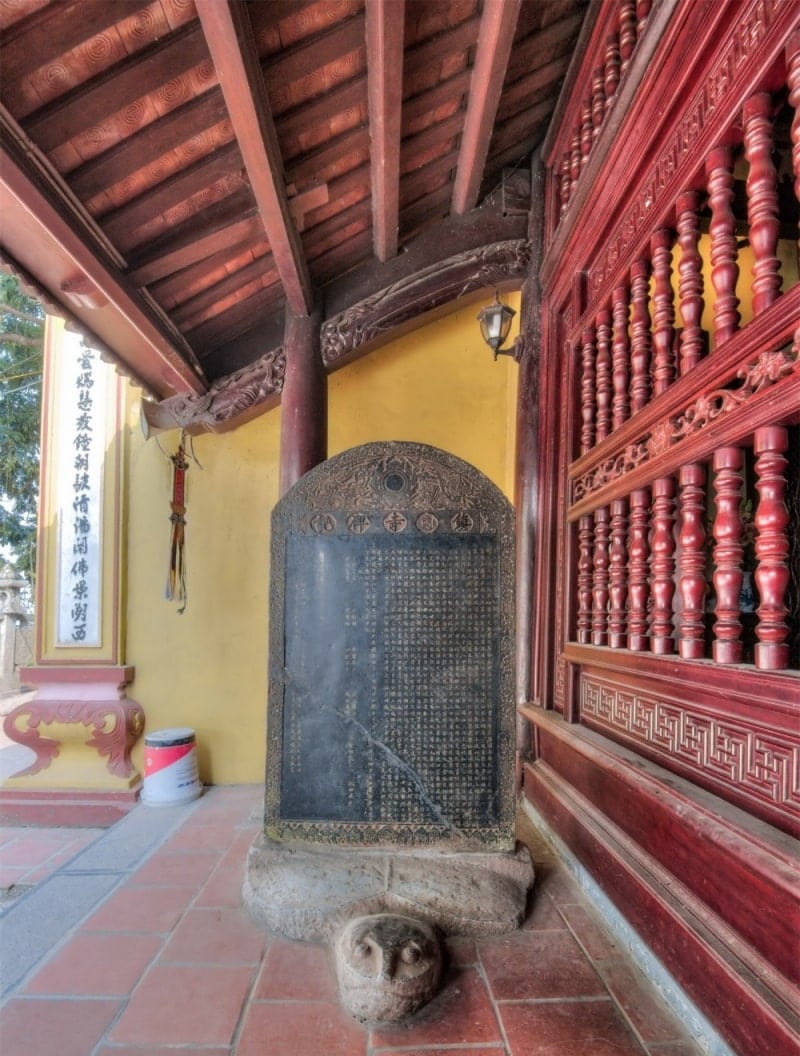
Nha Bia, the Stele House, holds 14 stone steles engraved with poems by renowned scholars in Vietnamese history. It stands behind Thuong Dien, to the left of the bell tower and opposite the patriarch’s hall, and its steles record the key milestones of Tran Quoc Pagoda across successive dynasties.
The Bodhi tree – a gift from India’s former President Rajendra Prasad
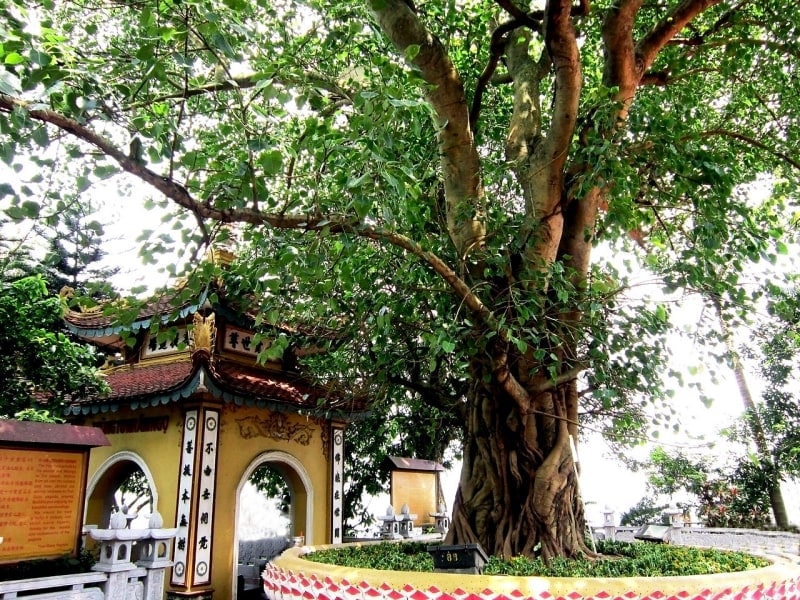
The Bodhi tree at Tran Quoc Pagoda was a gift from Dr. Rajendra Prasad, the first President of India, during his state visit to Vietnam in 1959. It was grown from a cutting of the original Bodhi tree at Bodh Gaya, the site in India where Shakyamuni Buddha is said to have attained enlightenment. For Indian visitors, it stands as a living symbol of the cultural and spiritual ties between India and Vietnam.
Location
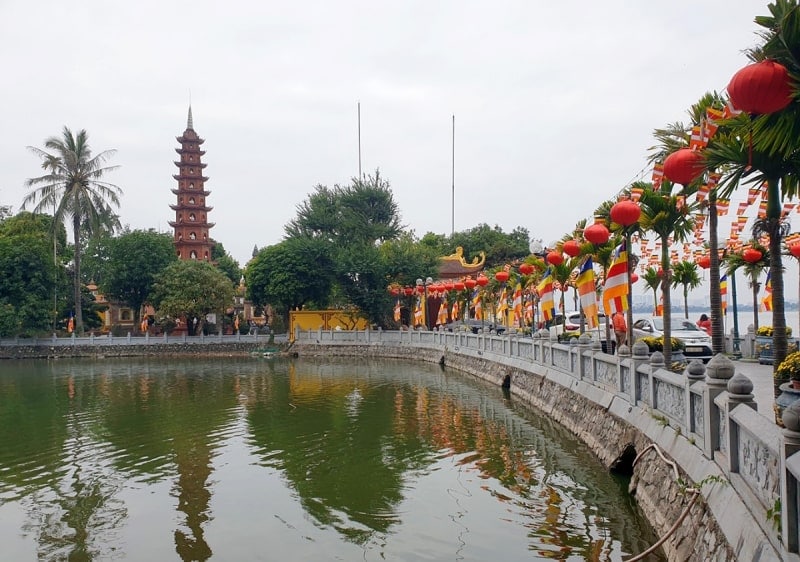
Tran Quoc Pagoda sits on a small islet in West Lake, in Tay Ho District, about 5 kilometres (3.1 miles) from Hanoi’s city centre. You can enter through its main gate at No. 46, Thanh Nien Street.
Opening Time
Tran Quoc Pagoda opens daily in two sessions, from 07:30 AM to 11:00 AM and 01:30 PM to 05:00 PM, with free entry for all visitors. On the 1st and 15th days of each lunar month and major festival days, the pagoda stays open all day. These full moon, new moon, and festival days are the best times to visit, when the pagoda hosts a range of religious activities.
Tet is an especially rewarding time to visit Tran Quoc Pagoda for the fullest experience of Vietnamese traditions and festivals.
How to Get There
- By bus: Bus No. 50 stops directly in front of the pagoda gate. Bus routes No. 31, 41, 55A, 55B, and 58 stop at An Duong bus stop, a 5-minute walk away. From Hanoi Old Quarter, the bus takes about 35 minutes to cover the 3.3 kilometres (2 miles).
- By taxi: Booking a taxi is the most convenient way to reach Tran Quoc Pagoda. You can catch any taxi on the street or book one through a ride-hailing app such as Grab or Be. From the Old Quarter, the ride takes about 13 minutes over 3.5 kilometres (2.2 miles).
- By motorbike: Renting a motorbike lets you ride freely around West Lake to the pagoda, about 12 minutes from the city centre. You can also book a Grab or Be bike if you prefer not to drive.
Travel Tips
- Visit during annual festivals such as Tet and Buddha’s Birthday to experience the pagoda’s fullest religious significance.
- Behave with respect at any point in the pagoda
- Bring cash for unexpected activities or incidents
- Have a proper Tran Quoc Pagoda dress code, with pants and long sleeves
- Remember to take off hats or shoes when visiting the worshipping shrines
- Book a Vietnam tour package with a local guide for detailed commentary during your visit.
- If you would like to explore more of the city’s sacred sites, see our guide to the 7 Best Temples in Hanoi.
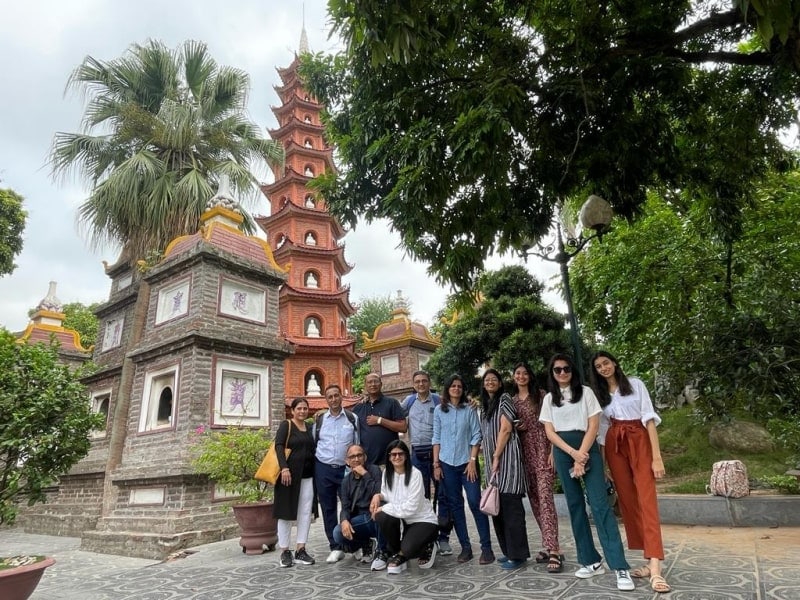
This guide has walked you through everything for your trip to Tran Quoc Pagoda, from its 1,500-year history to the practical tips for visiting today. Although you don’t need to pay any Tran Quoc Pagoda entrance fee, let’s bring some cash in case to join other activities. To explore other interesting destinations in Hanoi, you can refer to our Vietnam tour packages for more interesting customizable ititneraries.
OTHER ATTRACTIONS IN HANOI