
The best time to visit Vietnam from India is November to April, when dry conditions line up across at least 2 of Vietnam’s 3 climate zones at once. February to April is the only stretch when all 3 regions are dry together, which is why many guides shorten the answer to spring, while November to April remains the widest window and the best season to visit Vietnam from India for a 2-region route.
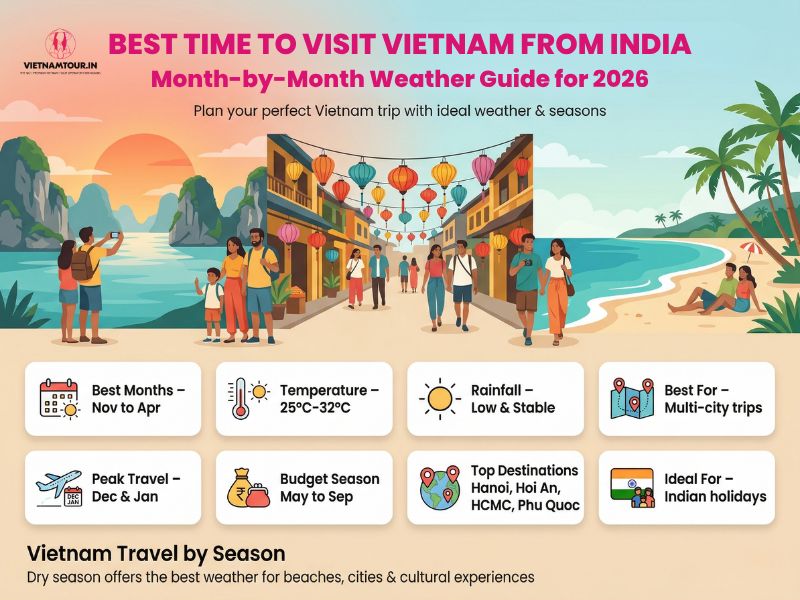
- November to April: best overall for combined north-to-south trips.
- May to September: cheaper and greener, and the best window for the central coast.
- October and November: the best months for Hanoi and the north, and the months to skip on the central coast.
Season is the first decision in any Vietnam travel plan, so this guide from Vietnamtour.in covers the 3 climate zones in Vietnam, all 12 months with temperature and rainfall, the best months for beaches, Halong Bay and trekking, travel styles, holiday dates, the worst months by region and what to pack.
Vietnam’s 3 Climate Zones: Best Time by Region
North Vietnam peaks October to April, Central Vietnam February to August, and South Vietnam December to April, so the best time to visit Vietnam depends on which region the route covers.
| Region | Cities | Dry season | Wet season | Best months | Avoid |
|---|---|---|---|---|---|
| North | Hanoi, Ninh Binh, Halong Bay, Sapa | Oct–Apr (Hanoi 60 mm a month or less Nov–Mar) | May–Sep (Hanoi 165–275 mm a month) | Oct–Nov, Mar–Apr | Jun–Aug |
| Central | Hue, Da Nang, Hoi An | Feb–Aug (Da Nang 20–115 mm a month) | Sep–Dec, Hue into Jan (Da Nang Oct ~650 mm) | Feb–May | Oct–Nov |
| South | Ho Chi Minh City, Mekong Delta, Phu Quoc | Dec–Apr (HCMC 50 mm a month or less) | May–Nov (HCMC Sep ~325 mm; Phu Quoc Aug ~545 mm) | Dec–Mar | Jun–Sep for islands |
Best Time to Visit North Vietnam
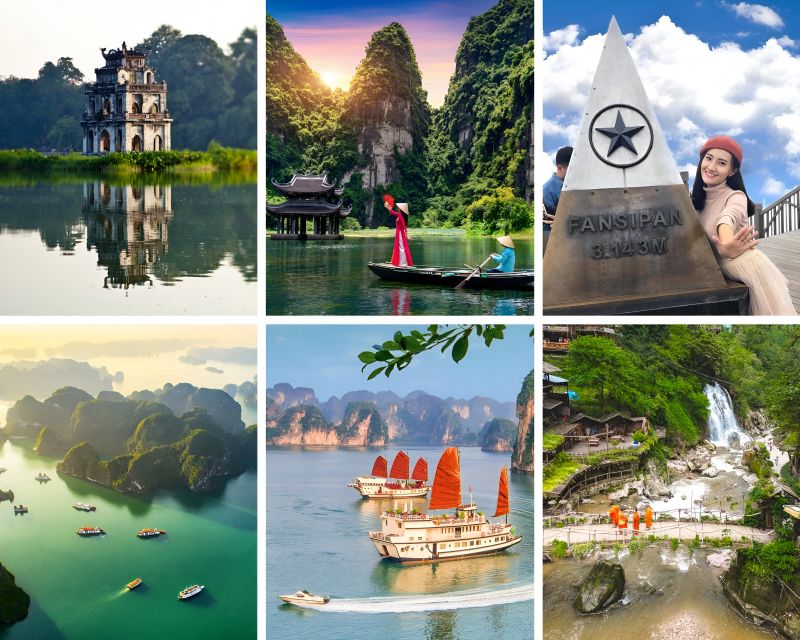
The best time to visit North Vietnam is October to November and March to April, when Hanoi sits at 18–30°C and the summer rains have eased. November and March are the driest of the 4 months, at about 60 mm and 35 mm in Hanoi, while October still records about 155 mm but brings the clearest skies of the autumn. December to February turns cool and often grey, with Hanoi at 14–22°C and frequent drizzle, while nights in Sapa can approach freezing. Typhoons reach the north mainly between July and October. Ninh Binh shares the same northern pattern, so the best time to visit Ninh Binh lines up with a Hanoi and Halong Bay route.
Best Time to Visit Central Vietnam
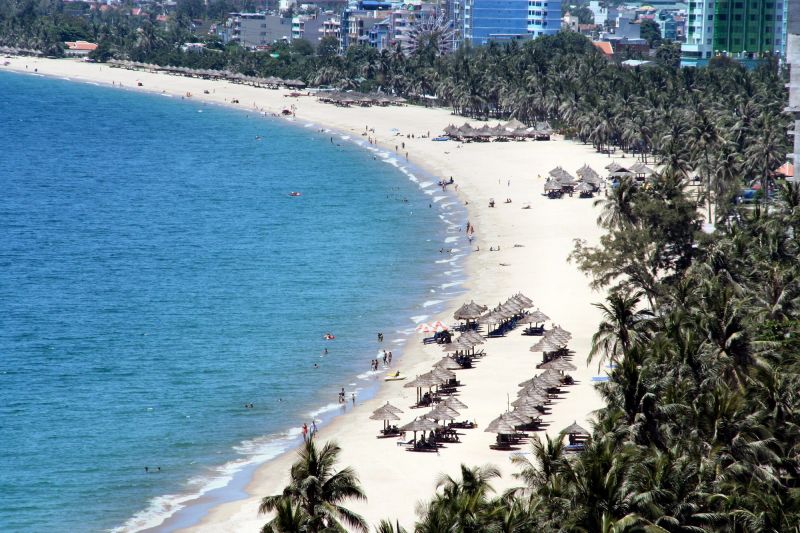
The best time to visit Central Vietnam is February to May, when Da Nang records 20–85 mm of rain a month against roughly 650 mm in October and 430 mm in November. Those 4 months combine sightseeing weather with a usable beach on the central coast. June to August stays dry but hot, with highs of 34–35°C. Hue is consistently wetter than Da Nang in every month, which pushes the best time to visit Hue towards the drier first half of the year. The storm and flood season runs from September into early December, and Hoi An’s riverside streets can flood in October and November, so the best time to visit Hoi An sits well clear of those months.
Best Time to Visit South Vietnam

The best time to visit South Vietnam is December to March, when Ho Chi Minh City gets 5–50 mm of rain a month, falling to 5–15 mm from January to March, with highs of 32–34°C. Those months combine dry weather with the least oppressive heat of the year, which is also the best time to visit Ho Chi Minh City for full sightseeing days. April is the hottest month, with highs near 35°C, and the rainy season runs May to November with short, heavy afternoon storms. The best time to visit Mekong Delta river towns follows the same dry season, and Phu Quoc is at its best from December to March and its wettest in August. Typhoons are rare in the south and mostly fall between mid-October and December.
Routes that continue into neighbouring countries follow a similar calendar: the best time to visit Cambodia and the best time to visit Laos both fall in the November to April dry season.
Best Time to Visit Vietnam by Month
March and April are the best months to visit Vietnam overall, followed by February and November, while October and November are the worst months for Central Vietnam. The best month to visit Vietnam from India depends on which regions the route covers, and the table below sets the 3 main cities side by side.
| Month | Hanoi (North) | Da Nang (Central) | Ho Chi Minh City (South) |
|---|---|---|---|
| January | 14–20°C · 20 mm | 19–25°C · 85 mm | 22–32°C · 15 mm |
| February | 16–22°C · 20 mm | 20–26°C · 25 mm | 23–33°C · 5 mm |
| March | 18–24°C · 35 mm | 22–28.5°C · 20 mm | 24–34°C · 10 mm |
| April | 22–28°C · 105 mm | 24–31°C · 35 mm | 26–35°C · 50 mm |
| May | 24–32°C · 165 mm | 25–34°C · 85 mm | 25–34.5°C · 220 mm |
| June | 26–34°C · 265 mm | 26–35°C · 90 mm | 25–33°C · 310 mm |
| July | 26–34°C · 255 mm | 25.5–34.5°C · 85 mm | 24–33°C · 295 mm |
| August | 26–33°C · 275 mm | 25–34°C · 115 mm | 24–32.5°C · 270 mm |
| September | 25–32°C · 245 mm | 24–32°C · 310 mm | 24–32°C · 325 mm |
| October | 22–30°C · 155 mm | 23–30°C · 650 mm | 24–32°C · 265 mm |
| November | 19–26°C · 60 mm | 22–28°C · 430 mm | 23–32°C · 115 mm |
| December | 15–22°C · 20 mm | 20–25°C · 215 mm | 22–32°C · 50 mm |
Nightly low to daytime high and monthly rainfall; Climates to Travel, 1991–2020 averages.
January
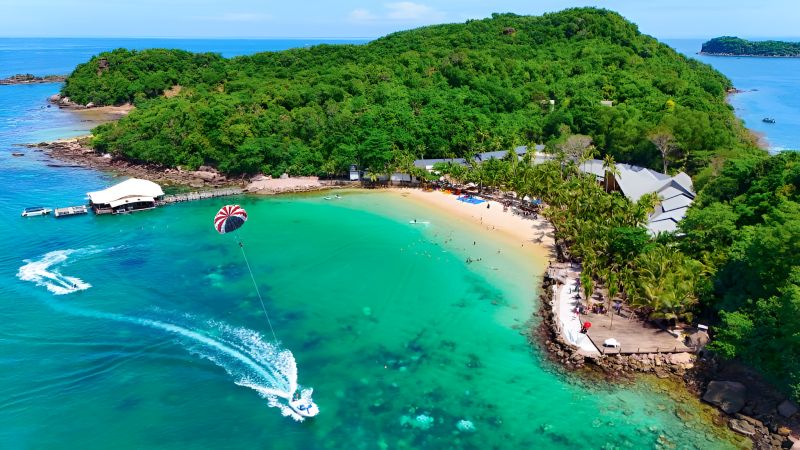
January is a southern beach month in Vietnam, with Ho Chi Minh City at 22–32°C and only about 15 mm of rain. Phu Quoc and the Mekong Delta are dry, and Hanoi is at its coolest at 14–20°C, often under grey skies. Da Nang still records about 85 mm over 12 days, so the central coast lags behind, which is why Vietnam in January works best as a southern trip. Republic Day on 26 January falls in the driest stretch of the southern season.
February
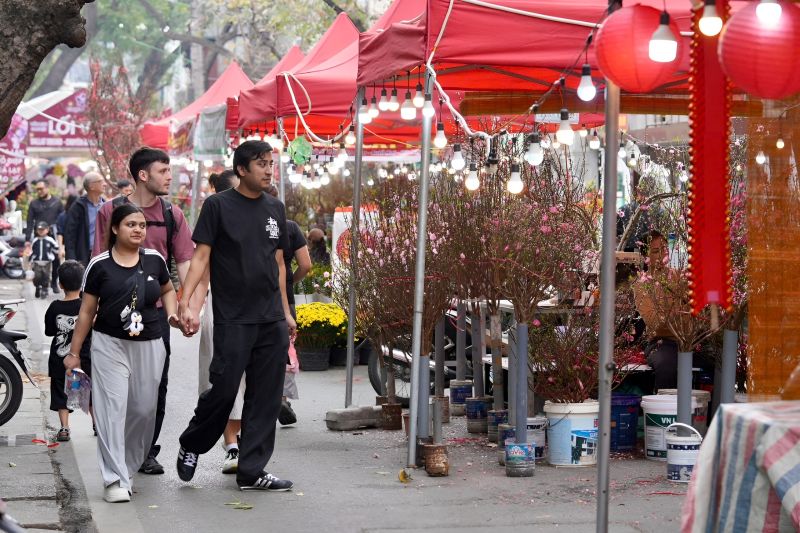
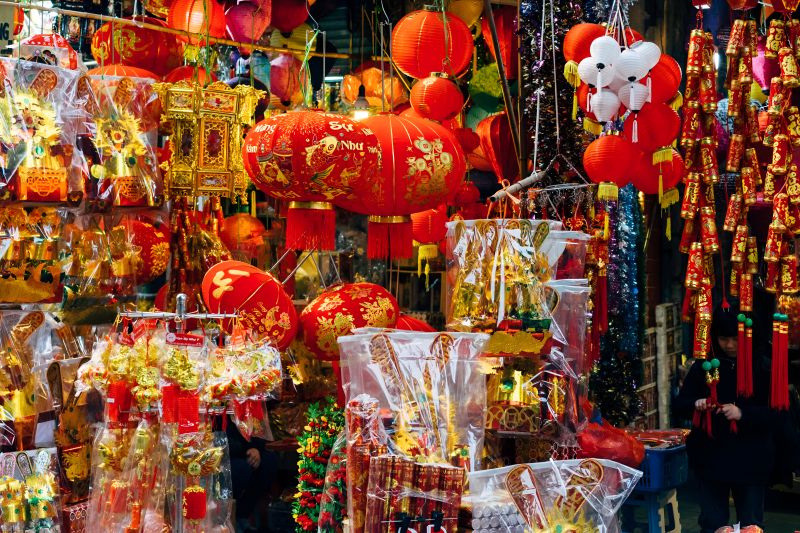
February is the driest month of the year in Ho Chi Minh City, at about 5 mm, and the first dry month on the central coast at about 25 mm in Da Nang. Hanoi warms slightly to 16–22°C. Tet, the Vietnamese Lunar New Year, falls on 6 February 2027, bringing flower markets to Hang Luoc Street in Hanoi and Nguyen Hue Flower Street in Ho Chi Minh City, along with lion dances across the country, so Vietnam in February pairs dry southern weather with the biggest festival of the year.
March
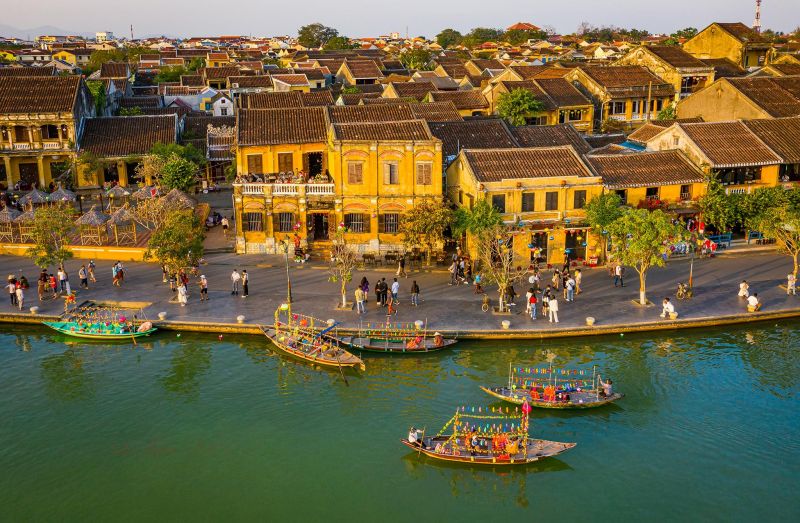
March is one of the 2 best months to visit Vietnam, with all 3 regions dry: 35 mm in Hanoi, 20 mm in Da Nang and 10 mm in Ho Chi Minh City. The beach season opens in Da Nang and Hoi An, and Sapa’s blossom season brings good trekking temperatures. Halong Bay is the weak point of Vietnam in March, with drizzle on about 14 days and only 1.5 hours of sun a day. Holi falls on 22 March 2027.
April
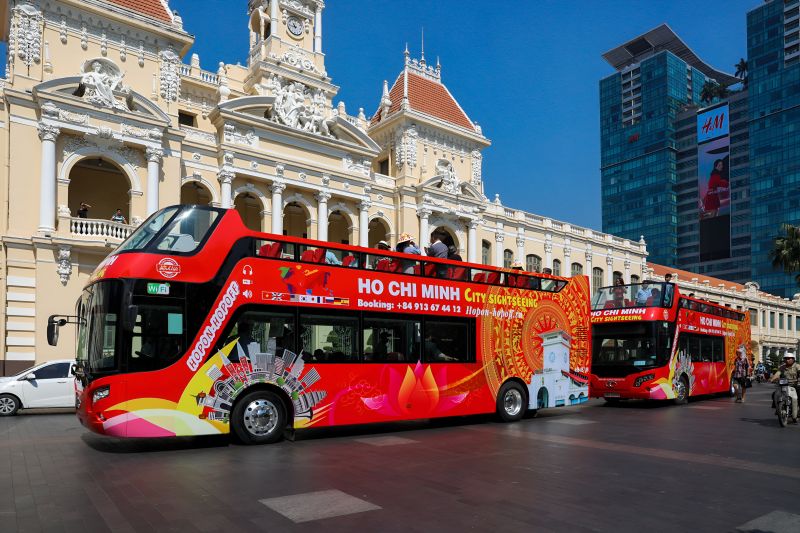
April is the most balanced month across Vietnam, though showers return to Hanoi at about 105 mm and Ho Chi Minh City reaches its yearly peak heat near 35°C. Da Nang and Hoi An are at their best, with 35 mm of rain and a warming sea. Sapa is green and mild, and the Reunification Day holiday on 30 April fills southern beach towns with domestic travellers. Vietnam in April suits travellers who want the central coast at its driest before the summer heat builds.
May
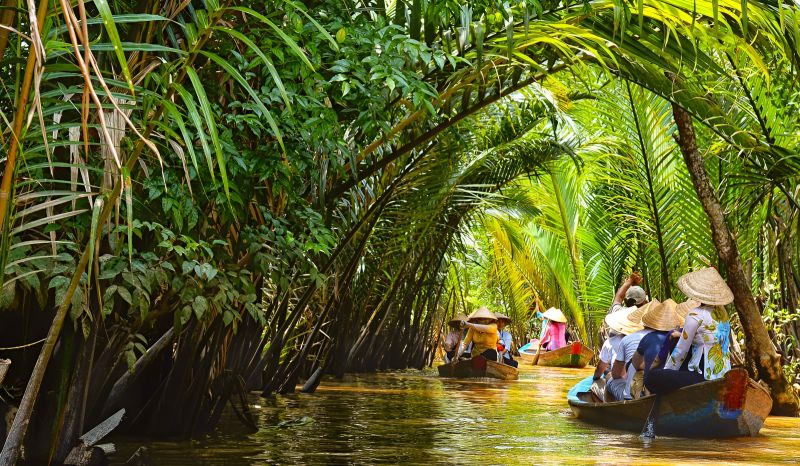
May opens the southern rainy season, with about 220 mm in Ho Chi Minh City, while the central coast stays dry at about 85 mm in Da Nang. Hanoi turns hot and humid at 24–32°C with 165 mm of rain. Sapa sits at about 16–22°C and the terraces are filled with water for planting. Vietnam in May marks the start of the green, lower-cost season in the north and south, and the central beaches take over as the reliable option.
June

June suits the central coast and the northern mountains, with Da Nang at about 90 mm and Sapa at a mild 18–23°C. Ho Chi Minh City records about 310 mm and Phu Quoc about 415 mm, so the southern islands are past their season. Hanoi is hot at 26–34°C. Vietnam in June also fits the long Indian school break, which makes Da Nang, Hoi An and Sapa the practical pairing for a family trip.
July
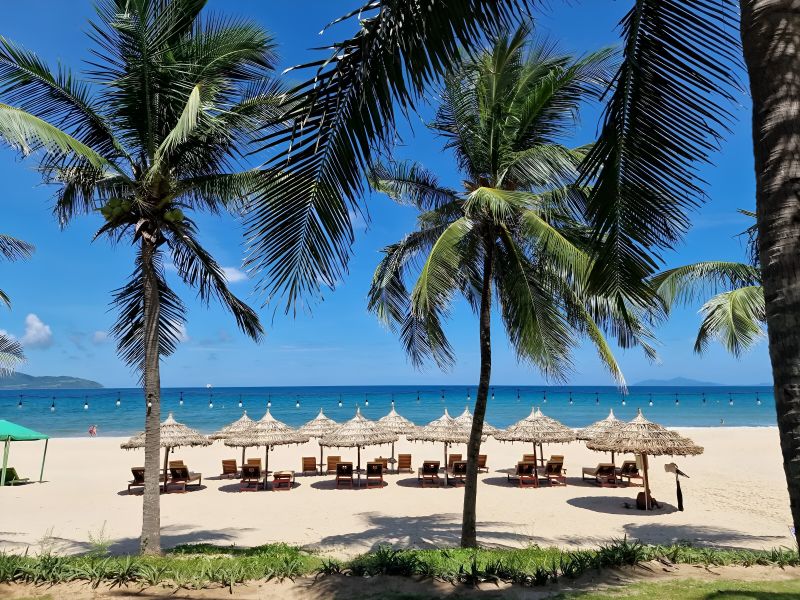
July is the peak beach month on Vietnam’s central coast, with Da Nang recording about 85 mm of rain and around 8 hours of sunshine a day. The north is at its wettest and most humid, with Hanoi at 26–34°C and 255 mm, and Halong Bay enters its main typhoon window. The south sees about 295 mm in short afternoon storms, which still leaves mornings usable for city sightseeing, so Vietnam in July is best built around Da Nang and Hoi An.
August

August keeps the central coast dry at about 115 mm in Da Nang, while the north and south record 270–275 mm each. Phu Quoc is at its wettest of the year at about 545 mm. Storm risk in the Gulf of Tonkin peaks between July and October, so Halong cruises need flexible dates. Independence Day on 15 August makes Vietnam in August work best as a central-coast trip.
September
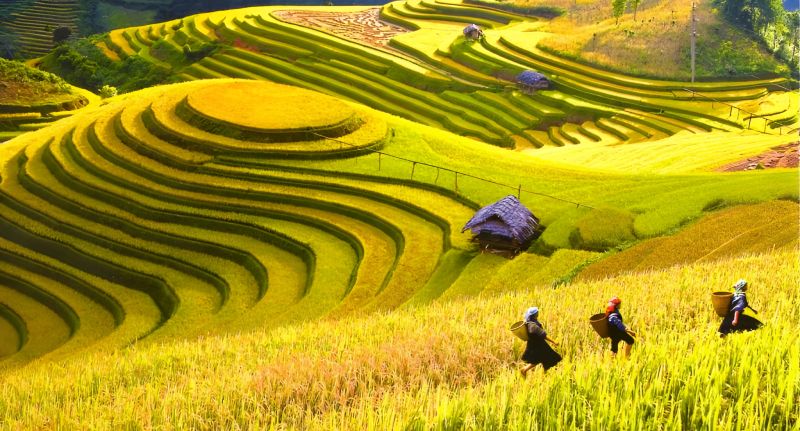
September is a transition month in Vietnam: Da Nang’s rains begin at about 310 mm, while Hanoi eases to 245 mm with 25–32°C days. The rice harvest turns the terraces of Sapa and Mu Cang Chai gold from roughly mid-September to early October, at about 16–22°C, the main reason to plan September in Vietnam around the north. Ho Chi Minh City is at its wettest of the year at about 325 mm, though the rain still arrives mostly in the afternoon.
October
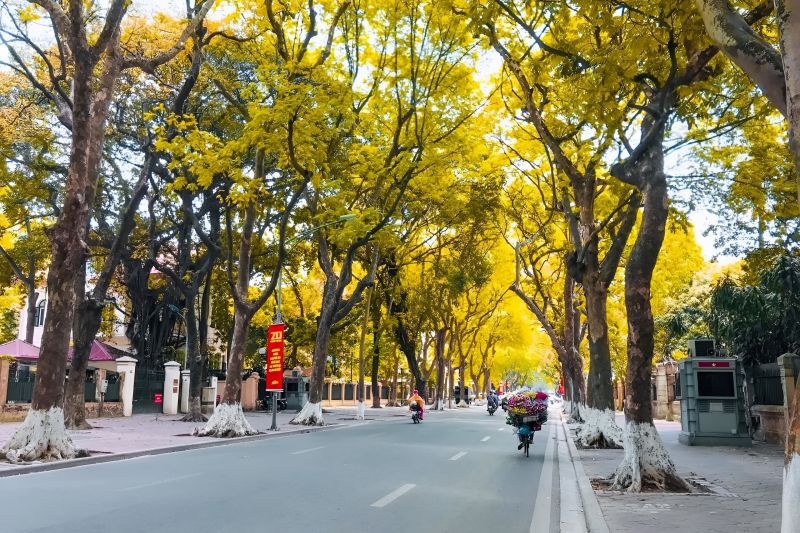
October is the best month in northern Vietnam and the worst on the central coast, where Da Nang records about 650 mm of rain. Hanoi turns clear and mild at 22–30°C, which is the city’s classic autumn window, while Hoi An carries a real flood risk, so Vietnam in October is a northern trip. Dussehra falls on 20 October 2026 and 9 October 2027, both of which suit a northern route rather than a central one.
November
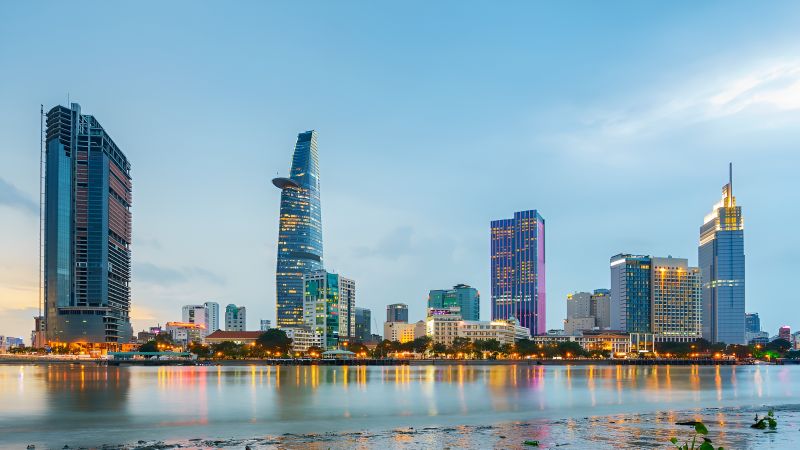
November is cool and dry in the north, with Hanoi at 19–26°C and about 60 mm of rain, but it is the second wettest month in Da Nang at about 430 mm. The south is in transition at about 115 mm in Ho Chi Minh City. Diwali falls on 8 November 2026 and 29 October 2027, which points Vietnam in November trips north rather than to the central coast in both years.
December

December is dry in the north and south but still wet in the centre, with Hanoi at 20 mm, Ho Chi Minh City at 50 mm and Da Nang at about 215 mm. Hanoi turns properly cool at 15–22°C, and Phu Quoc enters its best stretch. Christmas and New Year make Vietnam in December the peak international demand weeks of the year across the country.
Best Time for Beaches, Halong Bay and Trekking
Phu Quoc and the central beaches sit on opposite monsoons, so between them Vietnam has a dry beach from December to August; September to November is the gap.
| Destination | Best months | Avoid | Why |
|---|---|---|---|
| Hanoi | Oct–Nov, Mar–Apr | Jun–Aug | Mild, lower rain, less humidity |
| Halong Bay | Mar–May, Oct–Nov | Jul–Oct storms | Calmer seas, fewer cancellations |
| Sapa | Mar–May, Sep–Nov | Dec–Jan | Clear trekking, autumn harvest |
| Hoi An and Da Nang | Feb–Aug | Oct–Nov | Dry, sunny, calm sea |
| Nha Trang | Jan–Aug | Oct–Nov | Longest dry beach season |
| Ho Chi Minh City | Dec–Apr | Jun–Sep | Dry; April hottest |
| Mekong Delta | Dec–Apr | Sep–Oct | Dry roads, clear rivers |
| Phu Quoc | Dec–Mar | Jun–Sep | Calm west coast, dry |
Best Time for Vietnam Beaches
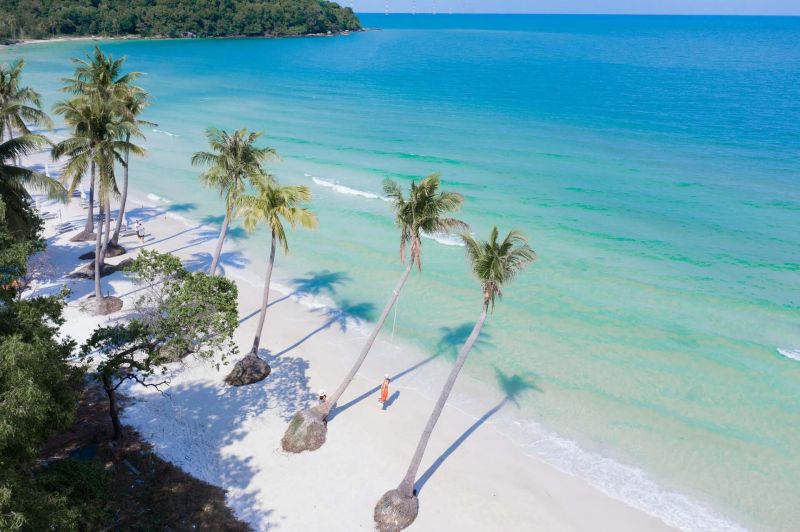
Phu Quoc is best from December to March and Nha Trang from January to August, so the 2 beach seasons overlap from January to March. Phu Quoc records about 60 mm in December and about 545 mm in August, while Nha Trang drops to about 15 mm in February and climbs to 300–330 mm in October and November. The sea off Da Nang warms from about 24°C in February to 29.5°C between June and September, which is why the central coast peaks when the islands do not. Sea conditions decide most island days, and the best time to visit Phu Quoc for boat trips and snorkelling is the calm December to March stretch.
Best Time for a Halong Bay Cruise
March to May and October to November are the best months for a Halong Bay cruise, because typhoons reach the Gulf of Tonkin mainly from July to October. The storm window runs from late May to early November, with the peak in mid-summer. March brings only about 40 mm of rain but just 1.5 hours of sun a day, while April has about 90 mm with 3 hours of sun and a sea warming from 22°C to 27.5°C by May. Authorities suspend cruise departures when a storm is forecast, so trips between July and October need flexible dates.
Best Time for Sapa and the Northern Mountains
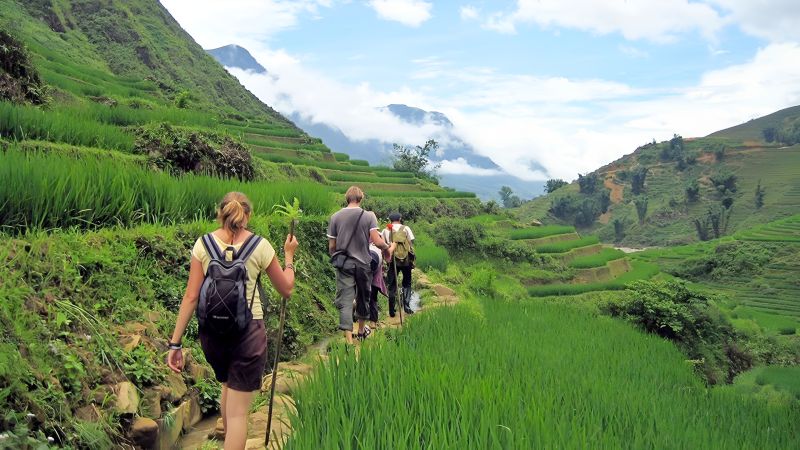
March to May and September to November are the best months for trekking in Sapa, with the rice harvest turning the terraces gold from roughly mid-September to early October. Sapa sits at about 11–18°C in March and 16–22°C in September, and the wettest months are June to August at 410–465 mm. December and January bring lows of 6–7°C and heavy clouds, which makes them the weakest window for mountain views. The terraced valleys around Sapa are at their most photogenic in that harvest window.
Best Time to Visit Vietnam by Travel Style
The best time to visit Vietnam changes with the type of trip: December to April for honeymoons, March to April or June for families, May to September for budgets, and March to May or September to November for trekking.
| Travel style | Best months | Why |
|---|---|---|
| Honeymoon | Dec–Mar (Phu Quoc), Feb–May (Hoi An, Da Nang) | Dry beaches, mild evenings |
| Family with children | Mar–Apr, or June | Dry, not yet peak heat; June fits the school break |
| Budget | May–Sep | Low season in the north and south |
| Trekking and adventure | Mar–May, Sep–Nov | Clear mountain views, harvest season |
| First north-to-south trip | Feb–Apr | The only window with all 3 regions dry |
- Honeymoon: trips work best when the beach leg sits inside the island’s dry season, which points to Phu Quoc between December and March or Hoi An and Da Nang from February to May.
- Family: the best time to visit Vietnam from India with family is March to April, or June, when school holidays line up with dry weather in Da Nang and Hoi An. Most Vietnam family tour packages pair those 2 towns with Hanoi, and the practical side of traveling to Vietnam with family is simplest when the weather is settled.
- Budget: travellers get the most from May to September, when the north and south are in low season while the central coast stays dry.
- Trekking and first trips: trekkers should target the shoulder months, and first-time north-to-south itineraries belong from February to April.
Best Time to Visit Vietnam from India by Holiday and School Break
Dussehra, Diwali, Christmas and New Year, Holi and the May–June school break all fall inside a good window somewhere in Vietnam. The best time to go to Vietnam from India usually follows the holiday calendar, so each break below is matched to the region with the best weather that week.
| Holiday or break | Next dates | Where it works | Watch out |
|---|---|---|---|
| Dussehra | 20 Oct 2026 · 9 Oct 2027 | North: Hanoi, Sapa, Halong | Central flood season |
| Diwali | 8 Nov 2026 · 29 Oct 2027 | North, and the south from late November | Central wettest; south still rainy in late October |
| Christmas and New Year | 25 Dec 2026 – 1 Jan 2027 | South, and the north for cool weather | Peak demand; central still wet |
| Republic Day | 26 Jan 2027 | South: Ho Chi Minh City, Phu Quoc | Central still showery |
| Holi | 22 Mar 2027 | All 3 regions | Halong skies often grey in March |
| Ugadi and Gudi Padwa | 7 Apr 2027 | All 3 regions | Ho Chi Minh City hottest in April |
| Vishu and Tamil New Year | 14–15 Apr 2027 | All 3 regions | Ho Chi Minh City hottest in April |
| Summer school break | May–Jun 2027 | Da Nang, Hoi An, Nha Trang, Sapa | South and Phu Quoc rainy |
| Independence Day | 15 Aug 2027 | Central coast | Halong storm season |
The length of the break shapes the route as much as the weather. A trip of under a week fits a Vietnam 6 day tour package built around one region, a week off suits a Vietnam tour package for 7 days or an 8 days Vietnam tour package across 2 regions, and the full north-to-south route usually needs a Vietnam 10 days tour package. For a 2-week school break, the Vietnam 15 days trip cost from India rises or falls mostly with the season chosen.
Diwali on 8 November 2026 points north rather than to the central coast, which is the logic to apply when comparing Diwali tour packages to Vietnam.
4 Vietnamese peaks also change prices and availability:
- Tet 2027 begins on Saturday 6 February; many family-run shops and restaurants close for the first days and domestic transport sells out.
- Reunification Day and Labour Day on 30 April and 1 May fill beach towns with domestic travellers.
- National Day on 2 September is a public holiday that fills domestic flights and beach towns.
- Christmas and New Year bring the year’s peak international demand, although 1 January is the only public holiday in that stretch.
Worst Time to Visit Vietnam
The worst time to visit Vietnam depends on the region: June to August in the north, October to November on the central coast, and June to September on the southern islands.
- North Vietnam, June to August. Hanoi averages around 30°C with highs of 33–34°C and 255–275 mm of rain a month, with high humidity across the delta.
- Central Vietnam, October to November. Da Nang records about 650 mm in October and 430 mm in November, roughly 1,080 mm across the 2 months, while Hue reaches about 755 mm in October alone.
- Southern islands, June to September. Phu Quoc takes 415–545 mm a month with a rough sea, although city trips in Ho Chi Minh City still work around afternoon storms.
The central storm season runs roughly from September to early December, and Halong Bay cruises are suspended on storm-warning days, mainly between July and October. Outside these windows there is no bad time to visit Vietnam, only the wrong region for the month.
What to Pack: Vietnam’s Weather Compared to Delhi, Mumbai and Chennai
Hanoi’s winter feels like a mild North Indian winter, Ho Chi Minh City feels like Mumbai outside the monsoon, and Da Nang has Chennai-style coastal humidity.
- Hanoi: January sits at 14–20°C and is often drizzly rather than crisp, so a light jacket and layers cover December to February.
- Ho Chi Minh City: Mumbai’s monsoon is heavier and shorter, at about 2,200 mm concentrated from June to September, while Ho Chi Minh City receives about 1,930 mm a year, most of it spread across May to November. A compact umbrella is enough for most afternoons.
- Da Nang: the coast stays humid year-round and its wet season runs September to December, so quick-dry clothes and sandals travel better than heavy fabrics.
FAQs about the Best Time to Visit Vietnam
What are the best months to visit Vietnam?
March and April are the best months to visit Vietnam, followed by February and November. February to April is the only stretch with all 3 regions dry at the same time. November suits the north and south but not the central coast, where Da Nang records about 430 mm of rain.
What is the best time to visit Vietnam from India with family?
March to April, or June, is the best time to visit Vietnam from India with family. Both windows line up with school holidays and dry weather in Da Nang and Hoi An, and March to April also keeps Hanoi mild before the summer heat.
What is the temperature in Vietnam in October?
The temperature in Vietnam in October ranges from about 22–30°C in Hanoi and 23–30°C in Da Nang to 24–32°C in Ho Chi Minh City. Sapa is cooler at about 14–19°C and Phu Quoc warmer at about 25–31°C. Da Nang is also at its wettest in October, at about 650 mm, so the warmth comes with heavy rain on the central coast.
Is December or January better for visiting Vietnam?
January is the better of the 2 months for a full-country trip, mainly because Central Vietnam dries out. Da Nang drops from about 215 mm in December to about 85 mm in January. Hanoi is also slightly cooler in January at 14–20°C, and the month sits after the Christmas and New Year demand peak.
Can you visit Vietnam during Tet?
Yes, but Tet 2027 on 6 February changes how the country works for about a week. Many family-run restaurants and shops close for the first days of the holiday, and domestic flights, trains and buses sell out well in advance. Resorts, hotels and major attractions stay open throughout.
What is the cheapest time to visit Vietnam?
May to September is the cheapest time to visit Vietnam, because it is low season in both the north and the south. Central Vietnam stays dry through most of that period, so Da Nang and Hoi An give the best combination of price and weather. The trade-off is heat and humidity in Hanoi and afternoon storms in the south.
Do Indian passport holders need a visa for Vietnam?
Yes. Indian passport holders need an e-Visa, which costs US$25 (₹2,375) for single entry on the government portal, takes about 3 working days and allows stays of up to 90 days. A multiple-entry e-Visa costs US$50 (₹4,750), and the full process is set out under Vietnam visa for Indian passport holders. Direct flights link several Indian cities with Hanoi and Ho Chi Minh City, and seats go early around Diwali, Christmas and Tet, which is when the Vietnam trip cost from India climbs fastest.
Plan Your Vietnam Trip Around the Best Time to Visit
The best time to visit Vietnam is November to April for a trip covering 2 regions, narrowing to February to April when all 3 regions are dry at once. The worst time to visit Vietnam is region-specific: June to August in the north, October and November on the central coast, and June to September for the southern islands.
The awkward part is that most trips have fixed dates. A week in October is a northern trip, not a Hoi An beach trip, and a week in July is the reverse. That is why the best time to travel to Vietnam from India is usually settled by matching the route to the dates. Vietnamtour.in, part of Seni World Travel and a Tripadvisor Travelers’ Choice winner from 2023 to 2025, has rearranged routes around that problem for more than 428,000 travellers from India since 2015, with local experts in Hanoi and a team in Delhi. Browse the Vietnam tour packages, or share travel dates in the form below for a customizable route matched to the season rather than the other way round.