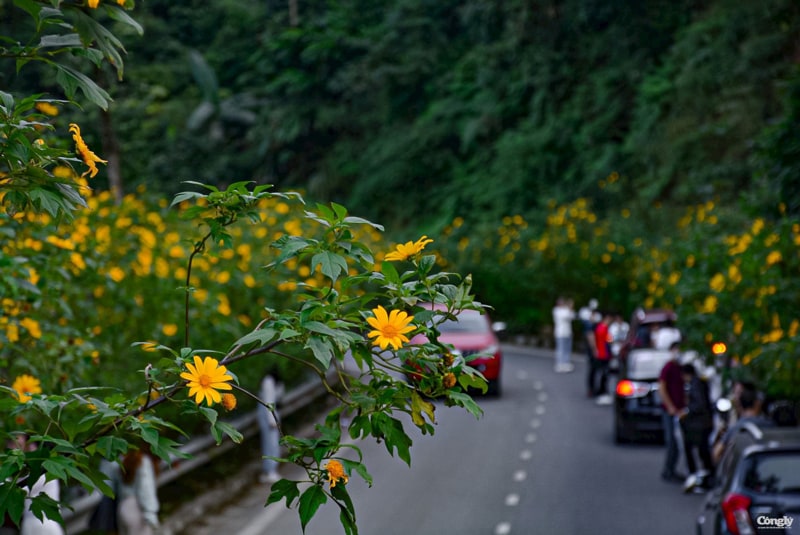
Ba Vi National Park is one of the most beautiful natural escapes near Hanoi, loved for its cool mountain air, deep green forests and peaceful atmosphere. Only about 1.5 hours’ drive from the city centre, the park on Ba Vi Mountain brings a feeling of freshness and calm that is hard to find anywhere else near the capital — along with French colonial ruins, sacred mountain temples and seas of clouds at dawn.
Ba Vi National Park at a glance (updated November 2026)
- Location: on Ba Vi Mountain, about 50–60 km west of central Hanoi — around 1.5 hours by car.
- Peaks: King Peak (Đỉnh Vua, 1,296 m), Tan Vien Peak (1,227 m) and Ngoc Hoa Peak (1,131 m).
- Entrance fee: 60,000 VND (≈ ₹220) per adult, 20,000 VND (≈ ₹73) per student and 10,000 VND (≈ ₹37) per child.
- Opening hours: about 7:00 AM–5:30 PM in summer and 7:30 AM–4:30 PM in winter, every day.
- Best time: October to April for cool, dry weather; wild sunflowers bloom from late October to early December.
- Highlights: the French church ruins, cactus greenhouse, Thuong Temple, Uncle Ho Temple on King Peak, and cloud views at sunrise.
Where Is Ba Vi National Park?
Ba Vi National Park lies on the Ba Vi mountain range, about 50–60 km west of central Hanoi, stretching from the Ba Vi area of Hanoi into the former Hoa Binh province (now part of Phu Tho province). The park was established in 1991 and covers roughly 9,700 hectares of forest. The range is famous for its three peaks: King Peak (1,296 m), Tan Vien Peak (1,227 m) and Ngoc Hoa Peak (1,131 m).
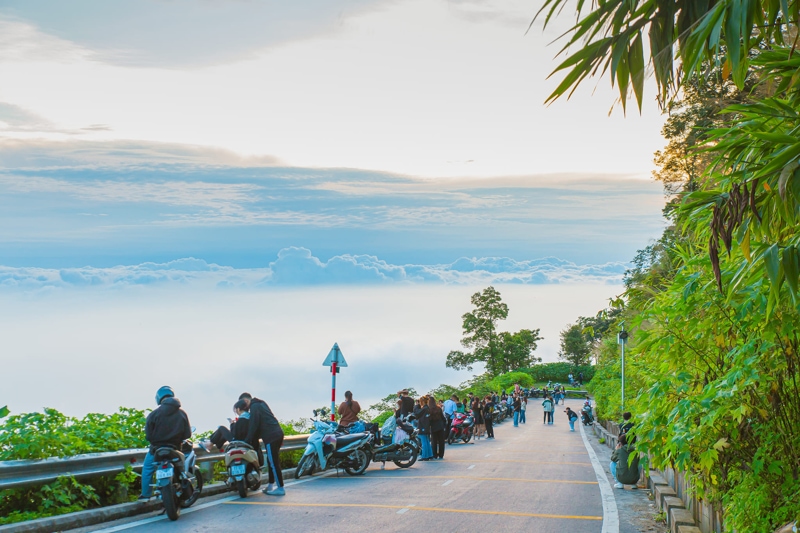
The road climbs through the forest past numbered altitude points — cốt 400, cốt 600, cốt 800 and cốt 1100 — where you find campsites, ruins and temples. At the top, the air is several degrees cooler than in Hanoi.
Nature, history and culture all come together here: ancient forests, the remains of French colonial buildings and sacred shrines. Ba Vi, Vietnam is increasingly popular with local and international visitors looking to escape the city for fresh air, light trekking and photography.
10 Unmissable Attractions In and Around Ba Vi National Park
First-time visitors are often surprised by the mix of wild forest, colonial ruins and sacred temples in one large park. Here are the places you should not miss.
Ba Vi Church Ruins
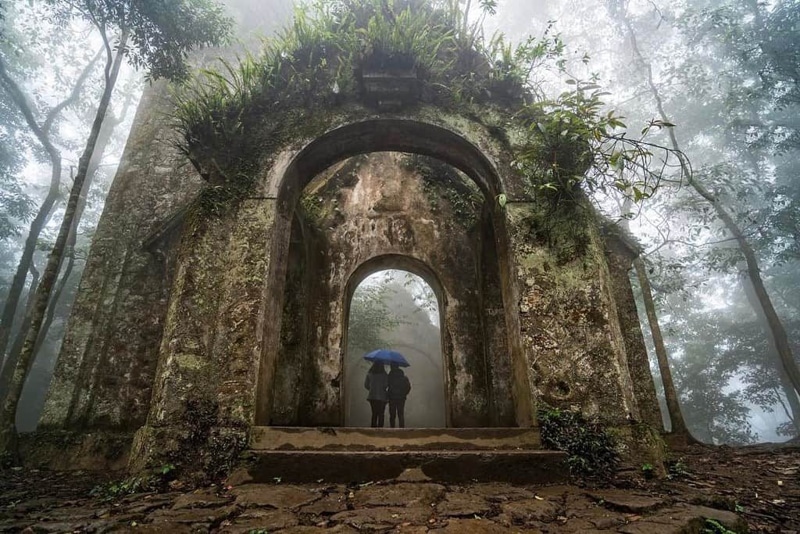
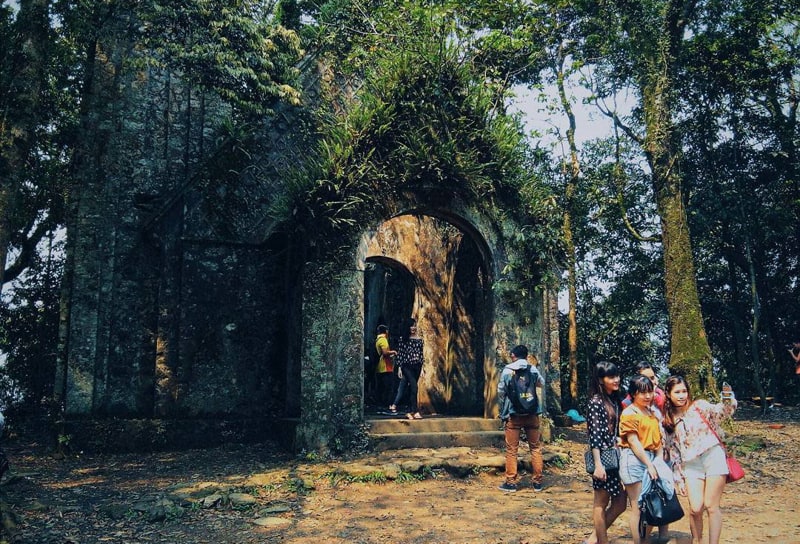
The Fallen Church (Nhà thờ đổ), hidden deep in the forest at around 800 m altitude, has an eerie, romantic beauty. Its stone walls are covered in green moss, many arches have collapsed, and light filters through the cracks. Built by the French in the early 20th century, it is now one of the most photographed spots in Ba Vi, especially when mist drifts through the trees.
Ba Vi Cactus Garden
The large dome-shaped greenhouse of the cactus garden, about 1 km past the park gate, is one of the park’s most popular photo spots. It displays around 1,200 cacti and succulents from many climates, arranged along winding paths under a glass roof. Entry is about 10,000 VND (≈ ₹37) per person.

Ancient French Villas Relic Site
Around 200 ruins from the French period are scattered across the mountain, mainly around the 600 m level, including a former summer resort, an orphanage and a political prison. Although only foundations, walls and door frames remain, they still show typical colonial architecture. Moss, vines and sunlight through the branches create a mysterious atmosphere, like discovering a lost village in the forest.
Thuong Temple: The Place to Worship Saint Tan Vien
Thuong Temple (Đền Thượng) stands near the top of Tan Vien Peak and is dedicated to Tản Viên Sơn Thánh, the mountain god of the Son Tinh legend who protects the land from floods. The path is a long flight of stone steps through old forest, quiet and solemn. At the top, you will feel the cool air and see distant mountains. Many visitors come here to pray for peace and enjoy the stillness.
Uncle Ho Temple (Ho Chi Minh President Temple)
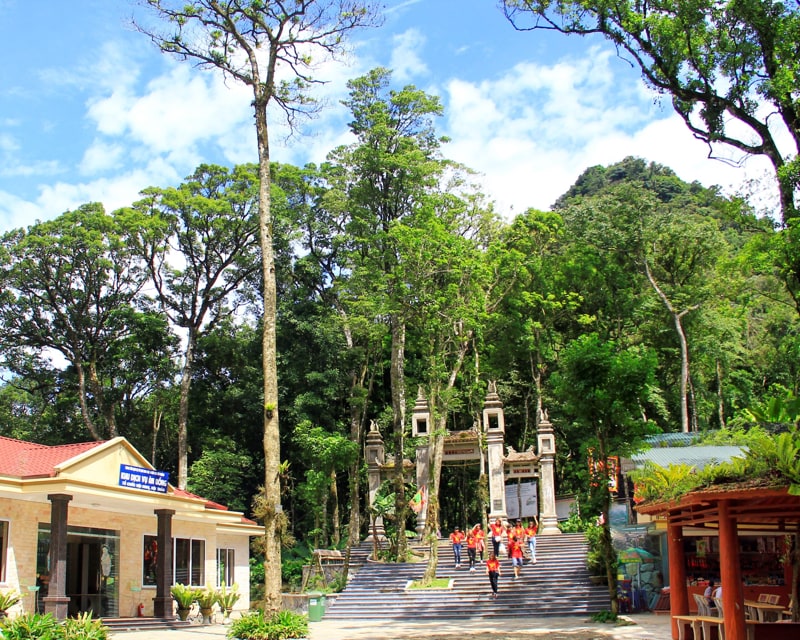
On the summit of King Peak (1,296 m) stands a temple dedicated to President Ho Chi Minh, built from 1999, with the Bao Thien Tower nearby. You reach it by climbing several hundred stone steps from the 1,100 m parking area. Visitors offer incense and enjoy the quiet atmosphere of the forest, and on clear days the views across the mountains are superb.
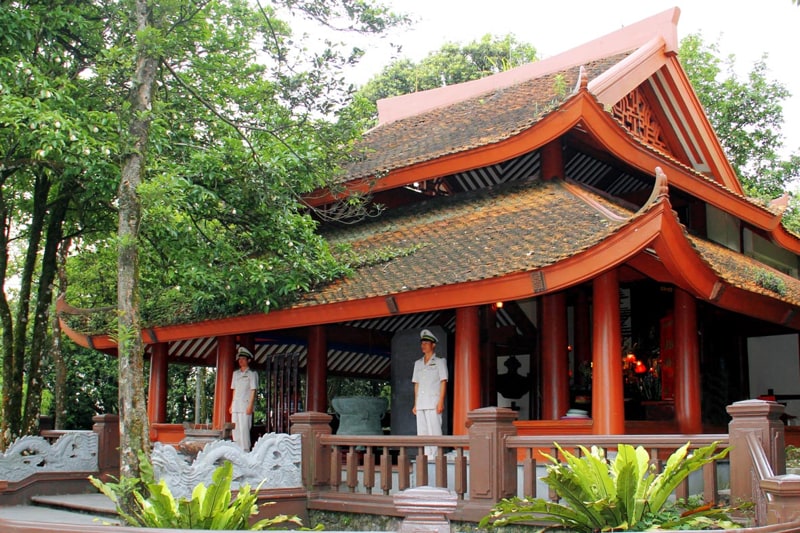
King Peak (Đỉnh Vua)
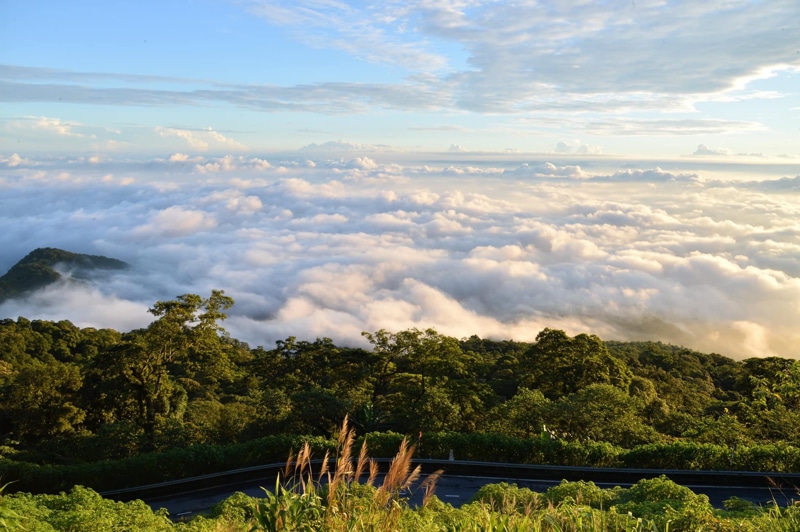
At 1,296 m, King Peak is the highest point of Ba Vi and the best viewpoint in the park. It is often windy and cool, especially early in the morning or late in the afternoon. On clear days, you can see the Da River winding through the valley to the west, distant mountains and the plains towards Hanoi. On cold, humid mornings, a sea of clouds often fills the valleys below — a favourite sight for photographers.
Tien Sa Lake Ecological Area
Tien Sa Lake lies at the foot of Ba Vi Mountain, with a wide water surface, open lawns and a pleasant climate. It is ideal for picnics, camping, boating or walking around the lake, and is popular with families and groups at weekends.
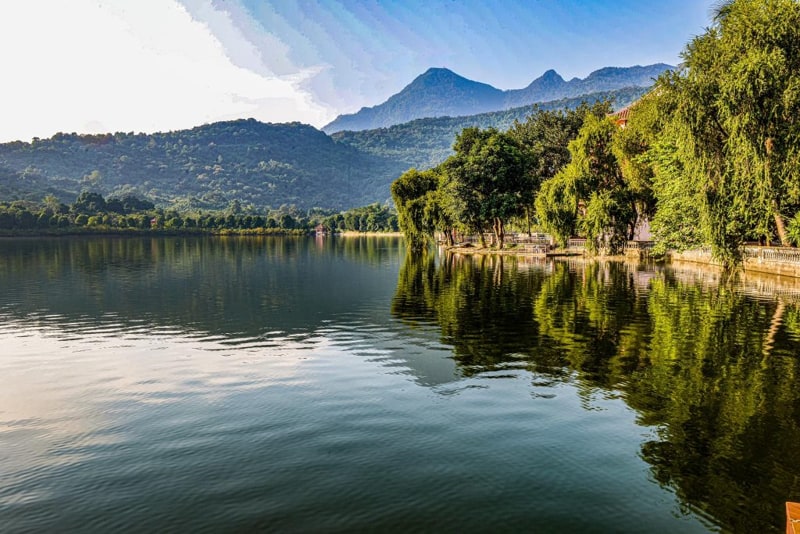
A small entrance fee applies; check the current price at the gate.
Ao Vua
Ao Vua is a large tourist area at the foot of the mountain with a waterfall, pools, a water park, rides and play areas, popular with families with young children. It is open about 7:00 AM–7:00 PM. Tickets cost about 150,000 VND (≈ ₹549) per adult and 100,000 VND (≈ ₹366) per child, covering most rides and pools.
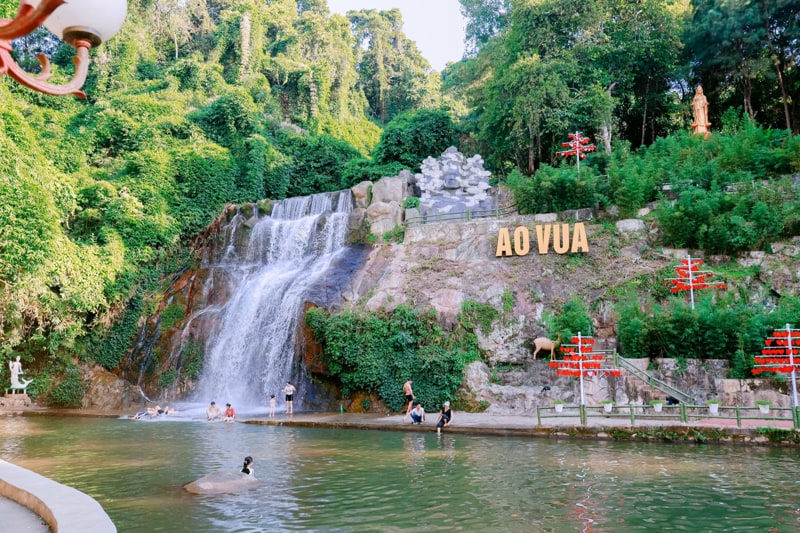
Vietnam Ethnic Culture & Tourism Village
Near Dong Mo Lake, about 40 km west of central Hanoi and on the way to Ba Vi, the Vietnam National Village for Ethnic Culture and Tourism is a “miniature Vietnam”, where the traditions, architecture and daily life of Vietnam’s 54 ethnic groups are recreated across a huge area.
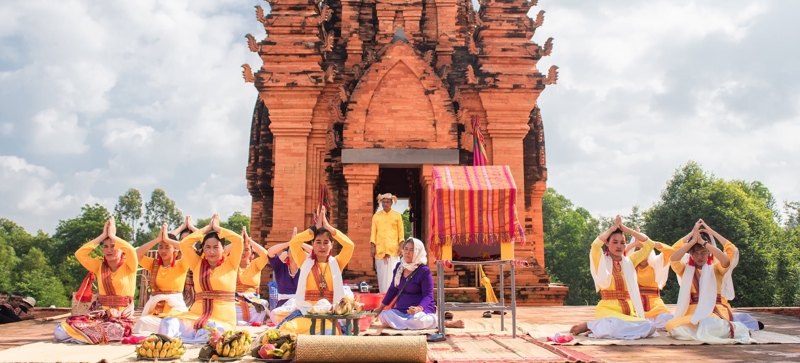
You can watch traditional performances, see stilt houses and communal halls, and learn about local customs without travelling to remote regions — great for families and anyone interested in culture. Entry costs about 30,000 VND (≈ ₹110) per adult and 10,000 VND (≈ ₹37) per student; bus 107 runs here from Kim Ma in Hanoi.
Thien Son Suoi Nga
Thien Son Suoi Nga is a tourist area of about 450 hectares in a valley of the Ba Vi range, surrounded by forest, streams, waterfalls and lakes. It is popular in summer for bathing in natural streams and pools. Highlights include Cong Troi Waterfall and the Ha Son, Trung Son and Ngoan Son zones. Entry costs about 250,000 VND (≈ ₹916) per person; children under 1 m enter free.
Best Time to Visit Ba Vi National Park
The best time to visit Ba Vi National Park is from October to April, when the weather is cool and dry; wild sunflowers bloom from late October to early December, and cloud views are best on cold, humid winter mornings. You can visit all year round, but each season offers something different.
Opening Hours and Ticket Price
Ba Vi National Park is open every day, including public holidays.
- Opening hours: about 7:00 AM–5:30 PM in summer and 7:30 AM–4:30 PM in winter.
- Entrance fee: 60,000 VND (≈ ₹220) per adult, 20,000 VND (≈ ₹73) per student, 10,000 VND (≈ ₹37) per child, and 30,000 VND (≈ ₹110) for seniors and people with disabilities (with ID).
- Parking: small extra fees for cars and motorbikes, depending on where and how long you park.
Best Time to Visit
- October – December: cool, clear and dry, with golden wild sunflowers (Mexican sunflowers, dã quỳ) covering the hills from late October to early December — the busiest and most photogenic season.
- January – April: cold to mild, often misty; the best chance of a sea of clouds at sunrise.
- May – September: hot and humid in Hanoi, so Ba Vi’s cooler forests are a popular summer escape; expect afternoon rain and slippery paths.

For Indian travellers, the Diwali holidays (8 November 2026; 29 October 2027) fall right in the wild sunflower season. For month-by-month weather in the capital, see our guide to vietnam hanoi weather.
How to Get to Ba Vi National Park
Ba Vi National Park is about 50–60 km from central Hanoi; the easiest way is a private car via the Thang Long Avenue (about 1.5 hours), while buses are cheaper but slower.
Taxi or Private Car
For families and groups, a private car with driver is the most comfortable option. You do not need to find the way or worry about parking, and the driver can take you up the mountain road to each attraction. A full day from Hanoi usually costs from about 1,000,000 VND (≈ ₹3,663) per car, depending on vehicle size and itinerary.
Motorbike
If you are an experienced rider, you can ride along Thang Long Avenue or National Road 32, about 1.5–2 hours depending on your starting point. You need a valid driving licence: Vietnam recognises International Driving Permits issued under the 1968 Vienna Convention, so check that your permit qualifies before renting. The mountain road is steep and winding, so ride carefully.
Bus
The cheapest option is the city bus. From My Dinh bus station, take bus 74 to Son Tay, then bus 110 (Son Tay – Da Chong) to near the park ticket gate. It takes about 2.5–3 hours each way, and you will need a taxi or motorbike taxi to go up the mountain.
Useful Tips When Visiting Ba Vi National Park
- It is cooler on the mountain than in Hanoi, so bring a light jacket, especially in the early morning or late afternoon.
- Wear trekking shoes or sneakers with good grip for stone steps and forest paths.
- Bring water and snacks if you plan to climb to the temples on the peaks.
- Vegetarian food options in the park are limited, so carry snacks; most restaurants near the gate serve local chicken, meat and vegetables.
- Try Ba Vi’s famous dairy products — fresh milk, yogurt and milk sweets (bánh sữa) — a vegetarian-friendly local speciality. For more souvenir ideas, see what to buy in hanoi.
- Keep the forest clean, do not litter, and keep noise down.
- Back in the city, end your day with a sunset walk by the lakes in hanoi, especially hanoi west lake.
- For a sea of clouds, go early and check the weather; clouds usually form on cold, humid mornings.
- Avoid days of heavy rain, when forest paths and the mountain road become slippery.
Want a private day trip from Hanoi to Ba Vi with a driver, guide and Indian or vegetarian lunch? Share your travel dates below.
FAQs About Ba Vi National Park
How far is Ba Vi National Park from Hanoi?
About 50–60 km west of central Hanoi, around 1.5 hours by car or 2.5–3 hours by bus.
How much is the Ba Vi National Park entrance fee?
60,000 VND (≈ ₹220) per adult, 20,000 VND (≈ ₹73) per student and 10,000 VND (≈ ₹37) per child.
Can I visit Ba Vi National Park in one day?
Yes. A day trip from Hanoi can cover the cactus garden, the church ruins, Thuong Temple and King Peak; stay overnight if you want to see the sunrise clouds.
What is the highest peak in Ba Vi?
King Peak (Đỉnh Vua) at 1,296 m, topped by the Uncle Ho Temple.
When do wild sunflowers bloom in Ba Vi?
From late October to early December, with the best colour usually in November.
Ticket prices, opening hours and transport details in this guide were last checked in November 2026.
Conclusion
Ba Vi National Park is well worth a day — or a night — away from Hanoi when you want a cooler, quieter place. The mountain forests, early morning mist and moss-covered ruins create a relaxing atmosphere that few places near the capital can offer.
If you want a trip that is planned to your taste without the hassle of arranging everything yourself, our team can help as your travel agent for vietnam, combining Ba Vi with Hanoi, Ha Long Bay and more in a vietnam tours package.