The 8 best villages in Sapa are Cat Cat, Ta Van, Lao Chai, Ta Phin, Sin Chai, Y Linh Ho, Giang Ta Chai and Ban Ho, home to the Black Hmong, Red Dao, Giay and Tay communities in the valleys around Sapa town in Lao Cai province, northern Vietnam. Cat Cat is 3 km from the town centre and the easiest to visit, the Muong Hoa Valley villages of Y Linh Ho, Lao Chai, Ta Van and Giang Ta Chai sit 7–12 km south-east on the classic trekking route, Ta Phin is 12 km north-east, and Ban Ho is the most remote at about 30 km. Entry runs from free to 150,000 VND (₹550).
This guide from Vietnamtour.in covers each Sapa village in Vietnam with its location, distance, entry fee, the people who live there and what to do, plus how to combine the villages by day, where to stay, and tips for visiting respectfully.
The 8 villages in Sapa at a glance:
| # | Village | Distance from Sapa town | People | Entry (2026) | Best for |
|---|---|---|---|---|---|
| 1 | Cat Cat | About 3 km south-west | Black Hmong | 150,000 VND (₹550) | Short walk, waterfall, crafts |
| 2 | Ta Van | About 10–12 km south-east | Giay, Hmong, Red Dao | 75,000 VND (₹275), Lao Chai–Ta Van route | Homestays, herbal baths |
| 3 | Lao Chai | About 7–9 km south-east | Black Hmong, Giay | 75,000 VND (₹275), same route ticket | Rice terraces, trekking |
| 4 | Ta Phin | About 12 km north-east | Red Dao, Black Hmong | 40,000 VND (₹145) | Embroidery, herbal baths |
| 5 | Sin Chai | About 5–7 km west, past Cat Cat | Black Hmong | No separate fee reported | Quiet trek, weaving |
| 6 | Y Linh Ho | About 7 km south | Black Hmong | Free | Start of the valley trek |
| 7 | Giang Ta Chai | About 12–14 km south-east, near Ta Van | Red Dao | Free | Bamboo forest, waterfall |
| 8 | Ban Ho | About 30 km south-east | Tay | Free | Remote valley, warmer climate |
Fees are the 2026 adult rates, converted at ₹1 ≈ 273 VND; children pay about half, and the villages themselves are free to walk through where no ticket point is set up.
Cat Cat Village – The Most Famous Village In Sapa
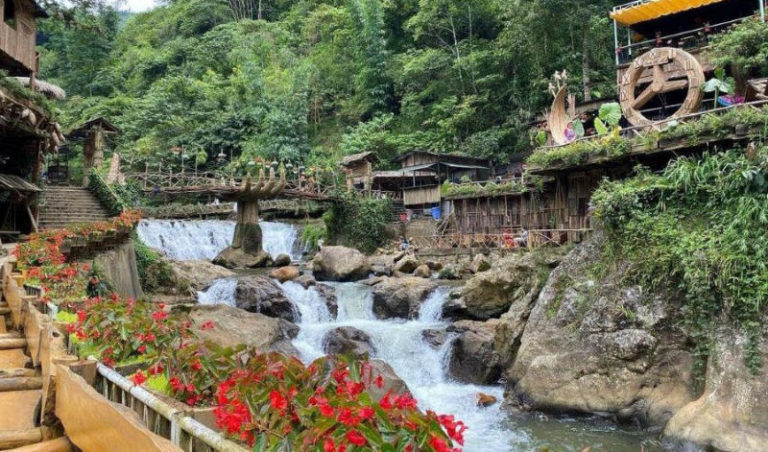
Cat Cat Village is the most famous village in Sapa, a Black Hmong village about 3 km south-west of the town centre, with a paved trail past wooden houses, a waterfall, craft stalls and dance shows. It is the only village within walking distance of town, which makes it the first stop for most visitors and the easiest for families and older travellers.

The practical details are:
- Location: Sa Pa ward, about 3 km south-west of the town centre
- Entrance fee: 150,000 VND (₹550) adult; about 70,000–80,000 VND (₹255–₹295) child
- Getting there: 30–45 minutes on foot downhill, or 10 minutes by taxi or motorbike
- Time needed: 2–3 hours
The trail drops from the gate past brocade shops and costume rental to the stream, where folk music and dance shows play near the waterfall, and climbs back up the other side. The walk back to town is steep, so most visitors take a taxi from the lower gate.
Ta Van Village
Ta Van Village is the main homestay village in Sapa, about 10–12 km south-east of the town in the Muong Hoa Valley, home to Giay, Black Hmong and Red Dao families among wide rice terraces. It is the usual end point of the classic Y Linh Ho – Lao Chai – Ta Van trek, and the place most visitors choose to spend a night in a village.

The practical details are:
- Location: Ta Van commune, south-east of Sapa town
- Entrance fee: 75,000 VND (₹275) adult on the Lao Chai–Ta Van route, covering both villages
- Getting there: 30 minutes by car, or the end of a 4–6 hour trek from Y Linh Ho
- Time needed: Half a day, or 1 night in a homestay
Ta Van has the widest choice of homestays and family-run lodges in Sapa, a Red Dao herbal bath in most of them, and cafés with valley views.
Lao Chai Village
Lao Chai Village is a Black Hmong and Giay village about 7–9 km south-east of Sapa town, known for some of the widest rice terraces in the Muong Hoa Valley and for the Ancient Rock Field on the way to Ta Van. It sits between the slopes of the Hoang Lien Son range, and the 3 km walk from Lao Chai to Ta Van along the stream is the easiest trek in the valley.

The practical details are:
- Location: Ta Van commune, in the upper Muong Hoa Valley
- Entrance fee: 75,000 VND (₹275) adult, the same ticket as Ta Van
- Getting there: 20–30 minutes by car, or 2–3 hours on foot from Y Linh Ho
- Time needed: 2–3 hours
Grilled stream fish and sticky rice are served at the village eateries, and vegetarian travellers can ask for sticky rice, corn and greens without fish sauce. The valley’s terraces, the rock field and the trekking routes are set out in the guide to the Muong Hoa Valley.
Ta Phin Village
Ta Phin Village is a Red Dao and Black Hmong village about 12 km north-east of Sapa town, known for handmade embroidery, brocade and the Red Dao herbal bath. Mountains and rice terraces surround the village, and it is quieter than the Muong Hoa Valley because it lies on the other side of town.

The practical details are:
- Location: North-east of Sapa town, about 30 minutes by car
- Entrance fee: 40,000 VND (₹145) adult; 20,000 VND (₹75) child
- Getting there: Car or motorbike, or a trek through Ma Tra village
- Time needed: 2–3 hours, or overnight
Visitors watch Red Dao women embroider and dye fabric, buy bags and scarves straight from the makers, and try the herbal bath made from forest leaves. Fair prices for embroidered goods and the bargaining norms are explained in the guide to what to buy in Sapa.
Sin Chai Village
Sin Chai Village is the largest Black Hmong village around Sapa, about 5–7 km west of the town centre beyond Cat Cat, reached by the only road that runs through Cat Cat and along the mountainside. It sees far fewer visitors than Cat Cat, and the Sapa – Cat Cat – Sin Chai trek of about 7 km is 1 of the quietest walks near town.

The practical details are:
- Location: West of Sapa town, beyond Cat Cat Village
- Entrance fee: No separate fee reported in 2026; the usual route passes through Cat Cat’s ticketed area
- Getting there: On foot through Cat Cat, or by motorbike or car
- Time needed: Half a day on foot
The Black Hmong of Sin Chai still grow and weave hemp and dye it with indigo, and visitors can watch the process in the houses along the path. Corn wine and corn cakes are the local specialities.
Y Linh Ho Village
Y Linh Ho Village is a small Black Hmong village about 7 km south of Sapa town on the slopes above the Muong Hoa Valley, free to visit and the usual starting point of the classic Y Linh Ho – Lao Chai – Ta Van trek. It sees mainly trekkers, and the path down from the village opens up some of the widest views of the valley’s terraces.

The practical details are:
- Location: Ta Van commune, on the slopes south of Sapa town
- Entrance fee: Free
- Getting there: Car or motorbike to the trailhead, then on foot
- Time needed: 1–2 hours, or the full 4–6 hour trek to Ta Van
The road and trail are rough and steep in places, so shoes with good grip matter more than distance, especially after rain.
Giang Ta Chai Village
Giang Ta Chai Village is a Red Dao village in the Muong Hoa Valley about 2 km beyond Ta Van, known for its bamboo forest, a small waterfall and a suspension bridge over the stream. It is free to visit and much quieter than Ta Van, which makes it a popular overnight stop on 2-day treks.

The practical details are:
- Location: Ta Van commune, south-east of Ta Van village across the Muong Hoa stream
- Entrance fee: Free
- Getting there: On foot from Ta Van, or by car on the valley road
- Time needed: 2–3 hours, or 1 night
Red Dao cooking here includes sticky rice, bamboo shoots and rice wine, and homestays can prepare vegetarian meals with notice.
Ban Ho Village
Ban Ho Village is the most remote of the villages in Sapa, about 30 km south-east of the town at the end of the Muong Hoa Valley, home mainly to Tay families and noticeably warmer, at about 18–25°C. The village sits where the Muong Hoa and other mountain streams meet, among terraces and stilt houses, and sees few day visitors because of the long drive.

The practical details are:
- Location: Ban Ho commune, about 30 km south-east of Sapa town
- Entrance fee: Free
- Getting there: About 1 hour by car or motorbike on the valley road
- Time needed: A full day, or 1–2 nights in a lodge
Ban Ho suits travellers with 3 or more days in Sapa who want a quieter valley, and the lodges here are among the most secluded places to stay in the region.
How to Visit the Villages in Sapa by Day
The 8 villages in Sapa group into 3 day trips: Cat Cat and Sin Chai on foot from town, the Muong Hoa Valley villages of Y Linh Ho, Lao Chai, Ta Van and Giang Ta Chai on a trek, and Ta Phin or Ban Ho by car. The sapa villages combine as follows:
| Day | Villages | How |
|---|---|---|
| Half day | Cat Cat (and Sin Chai for walkers) | On foot from town; taxi back |
| Full day | Y Linh Ho, Lao Chai, Ta Van | 4–6 hour trek, car pickup at Ta Van |
| Overnight | Ta Van and Giang Ta Chai | Homestay night in the valley |
| Half or full day | Ta Phin or Ban Ho | Car with driver |
Cat Cat is the easiest of the sapa villages to add to any day, and its history, dance show times and photo spots are covered in the guide to Cat Cat Village. The villages fit around the other sights of the area, from the Fansipan cable car to the Silver Waterfall Sapa and the glass bridge Sapa on O Quy Ho Pass, and the full list of sights is in the guide to the places to visit in Sapa. The photo park of Moana Sapa Vietnam, 1–1.5 km from the Stone Church, fits on the same half day as Cat Cat.
Where to Stay: Village Homestays or Sapa Hotels
Village homestays in Ta Van, Lao Chai and Giang Ta Chai put travellers among the terraces for sunrise, while hotels in Sapa town keep the Stone Church, restaurants and the Fansipan train within walking distance. Many travellers split the stay, with 1 night in a village homestay and 1–2 nights in a Sapa village hotel or town hotel.
Homestays range from simple shared rooms to private bungalows with hot water and heating, and most include dinner with the family; the family homes and lodges in Ta Van and nearby villages are compared in the guide to the best Sapa homestays. Hotels and resorts on the edge of town add valley views, pools and heated rooms, and they are compared in the guide to Sapa hotels and resorts. The wider travel guide to Vietnam Sapa covers the town, the transfer from Hanoi and how many days to plan.
Tips When Visiting Villages in Sapa
Visiting the villages in Sapa is easiest with walking shoes, warm layers, cash, a local guide on the longer routes, and respect for local customs. The tips that matter most are:
- Wear comfortable clothes and trekking shoes with grip, as village paths are steep and muddy after rain.
- Carry water, snacks and a warm layer, since valley treks run 4–6 hours and evenings are cool all year.
- Check the weather and avoid long treks on heavy rain days from June to August.
- Hire a licensed local guide for the Muong Hoa and Ta Phin routes, where the trails split and are not signposted.
- Ask before photographing people, dress modestly in houses, and avoid giving sweets or money to children.
- Carry small Vietnamese dong notes for village fees, drinks and crafts, as cards are rarely accepted.
Local food in the villages leans on pork, stream fish and corn, and the dishes worth trying in town, including vegetarian options, are covered in the guide to the must try Sapa foods.
Plan Your Sapa Village Trip with Vietnamtour.in
The villages in Sapa reward travellers who mix a short walk to Cat Cat with a full-day valley trek and a night in Ta Van or Giang Ta Chai, timed for the green or golden terraces. The parts that catch most Indian travellers out are the steep paths, the unmarked trails and finding vegetarian or Jain food in the villages. Vietnamtour.in has planned Vietnam trips for more than 428,000 Indian travellers since 2015, and every Sapa Vietnam tour package can include a guided village trek with a homestay night and Indian or Jain meals arranged in advance. Longer routes with Hanoi and Ha Long Bay are listed among the Vietnam tourism packages.
To plan the villages around your own dates, share the travel dates, group size and departure city in the form below. A Vietnamtour.in expert will match the trek to your fitness and the rice season, book a licensed guide, and arrange vegetarian or Jain meals in each of the villages in Sapa.
RELATED ARTICLES