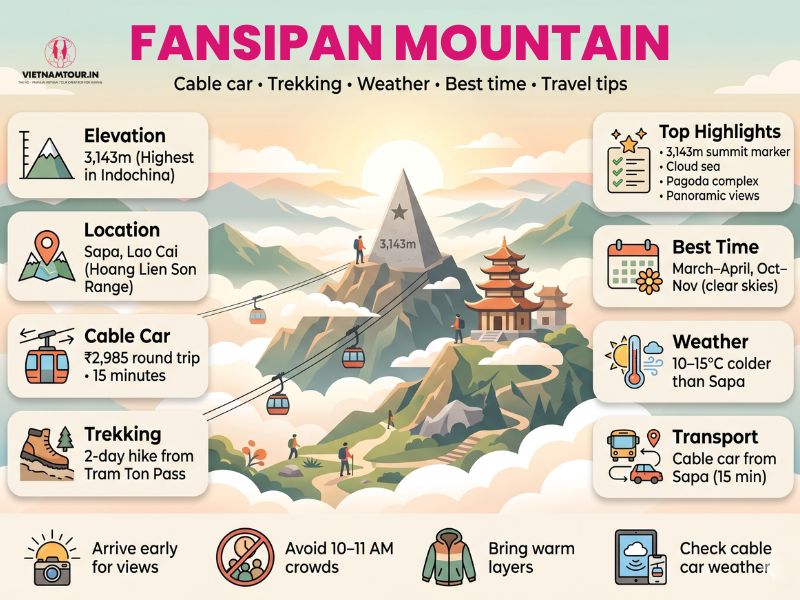
Fansipan Mountain is the highest peak in Indochina at 3,143 metres (10,312 feet), located in the Hoang Lien Son Range of Lao Cai Province, 9 km southwest of Sapa town. Fansipan Mountain is accessible to Indian tourists through 2 routes: the Sun World Fansipan Legend cable car (₹2,985 round trip, 15-minute ride) or the classic 2-day trek from Tram Ton Pass (₹3,500 to ₹18,000 depending on package tier).
The Fansipan guide below covers elevation and geography first, then Fansipan weather month-by-month as the gate-keeper of every access decision, followed by the Sun World Fansipan Legend cable car (₹2,985 round-trip adult fare, 15-minute ascent, 7:30 AM–5:30 PM operating hours), the 2 trekking routes with mandatory licensed guide requirement, the Sapa to Fansipan day trip and 4-tier tour package options, the 3,143m summit experience (sunrise, cloud sea, 15-storey Bich Van Thien Tu pagoda), 7 non-negotiable points Indian tourists confirm before the visit, the best-time verdict — March, April, October, and November as the 4 clearest months — and 5 frequently asked questions covering visa, cost, fitness, elderly safety, and minimum days needed in Sapa.
Fansipan Mountain Elevation, Location, and Its Status as the Highest Peak in Indochina
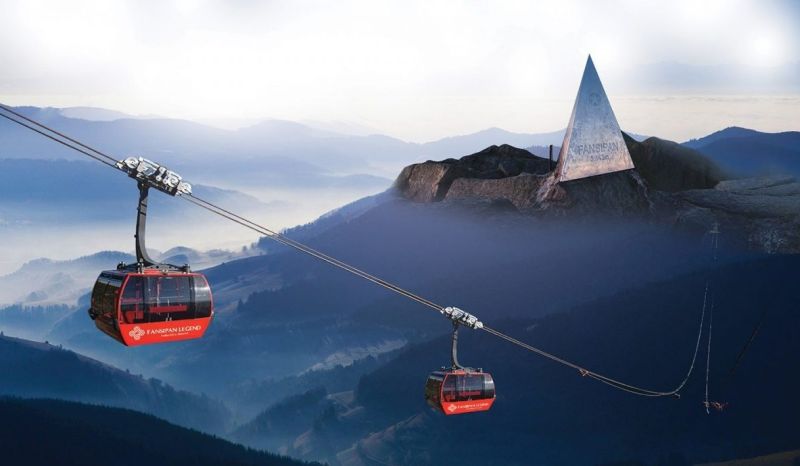
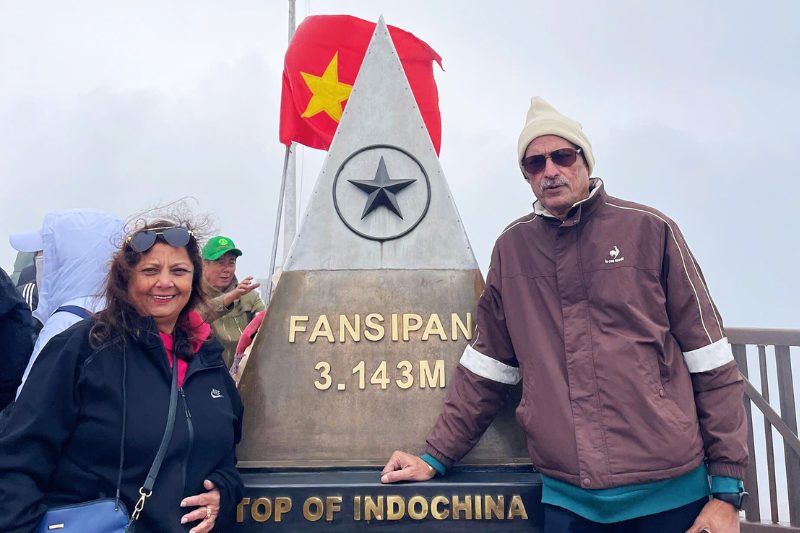
Fansipan Mountain stands at 3,143 metres (10,312 feet) by the original 1909 French Indochina survey, later revised to 3,147.3 metres by Vietnam’s Department of Survey and Mapping; the 3,143 m marker remains the figure engraved on the official summit pillar visited by tourists today. Fansipan sits inside the Hoang Lien Son Range on the border of Lao Cai Province and Lai Chau Province in northwest Vietnam, and holds the official geographic classification as the Highest Peak in Indochina.
“Indochina” in this classification refers to the mainland Southeast Asian land mass of Vietnam, Laos, and Cambodia — the 3 countries that together made up French Indochina between 1887 and 1954. Fansipan Mountain outranks Phou Bia in Laos (2,819 metres) and Phnom Aural in Cambodia (1,813 metres), placing Fansipan 324 metres above the next highest Indochina peak.
Fansipan Mountain sits 9 km southwest of Sapa town centre as the crow flies, and the Sapa–Fansipan cable car station serves as the primary access point for 95% of Indian tourists visiting the summit.
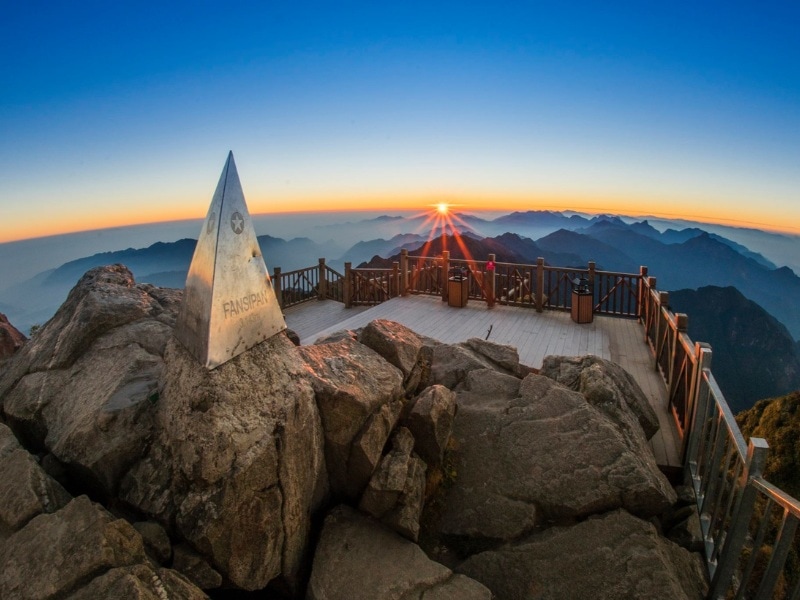
The Fansipan summit complex contains 5 structures accessible to visitors — the Bich Van Thien Tu Buddhist pagoda (15 storeys, Vietnam’s highest pagoda), the 360-degree observation platform, the official 3,143m elevation marker, the cloud sea viewing deck, and the summit-station food counter.
Fansipan Mountain sits in altitude terms closer to the Indian Western Ghats (Anamudi at 2,695 metres) than to the Himalayas — the elevation is demanding but does not require acclimatization protocols like Ladakh or Everest Base Camp.
Hoang Lien Son Range
The Hoang Lien Son Range runs 180 km along the Vietnam–China border in the far northwest of Vietnam and anchors Fansipan Mountain as its highest point.
The Hoang Lien Son Range contains 7 distinct vegetation zones stacked by elevation — subtropical lowland forest (below 700 metres), evergreen broadleaf forest (700 to 1,700 metres), mixed broadleaf-coniferous forest (1,700 to 2,400 metres), temperate coniferous forest (2,400 to 2,800 metres), rhododendron subalpine zone (2,800 to 3,000 metres), dwarf bamboo grassland (3,000 to 3,100 metres), and exposed summit rock (above 3,100 metres, comprising the final 43-metre ridge to the 3,143 m summit pillar).
The temperature on the Hoang Lien Son Range drops 6°C for every 1,000 metres of vertical gain — a critical planning number for Indian tourists packing for the Fansipan ascent.
Vertical Gain from Sapa Town to Fansipan Summit
The horizontal distance from Sapa town centre to the Fansipan summit is 9 km, and the vertical gain from Sapa town (1,650 metres elevation) to the Fansipan summit (3,143 metres) is 1,493 metres.
Cable car users cover the full 9 km horizontal distance and the 1,493-metre vertical gain in a single 15-minute gondola ride from the Sun World Fansipan Legend lower station.
The 2-day Fansipan trek from Tram Ton Pass covers the same 1,493-metre vertical gain on foot, starting at 1,900 metres elevation at the Tram Ton Pass trailhead.
The vertical gain of 1,493 metres in 15 minutes (cable car) versus 14 km on foot (trek) is the single variable that determines which route fits which Indian traveller profile.
Fansipan Mountain Weather by Month
The Fansipan summit temperature runs 10°C to 15°C colder than Sapa town at any given hour, and the Fansipan summit sits in a separate weather system from the Sapa valley below. Fansipan Mountain weather decides access before cost or route preference for every Indian tourist planning the ascent.
Fansipan weather splits into 4 operational windows for Indian tourists — the dry clear window (March, April, October, November), the early monsoon cloud-sea window (May, June), the peak monsoon window (July, August, September), and the winter sub-zero window (December, January, February).
The Sun World Fansipan Legend cable car operates 345 to 350 days per year, closing only for 15 to 20 high-wind days concentrated in December and January.
Fansipan trekking conditions vary far more sharply by season than cable car conditions — monsoon trail conditions carry leech exposure and zero summit visibility, while winter trekking requires sub-zero camping gear and crampons.
Monsoon Season (May–September)
Fansipan Mountain receives 400 to 600 mm of rainfall per month at high elevation between May and September, according to Vietnam Meteorological and Hydrological Administration (NCHMF) station data, transforming the classic Tram Ton trekking trail into slick mud and exposed-root terrain with active leech zones.
Fansipan trekking during monsoon carries clear injury risk — summit visibility drops to zero on 7 out of every 10 monsoon days, and the final 3 km fixed-rope section becomes treacherous when wet.
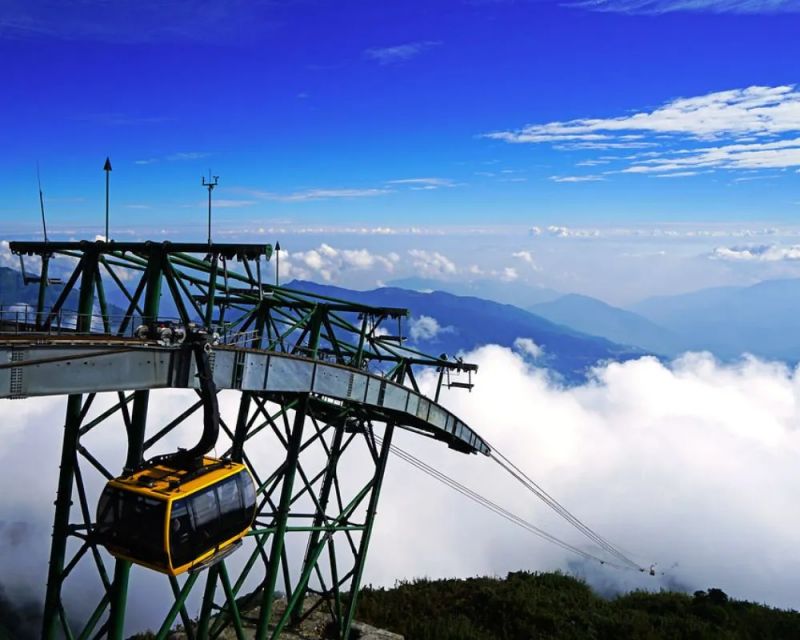
The Sun World Fansipan Legend cable car operates normally throughout the monsoon months because the gondola cabins are fully enclosed and the 3-rope suspension system handles heavy rain without wind-closure.
The upside of visiting Fansipan in the monsoon season is the cloud sea effect — the cloud layer sits at 2,000 to 2,500 metres on most early mornings between May and September, meaning cable car passengers crest above the cloud layer during the 15-minute ascent and reach a summit floating on a white sea below.
Indian tourists visiting Fansipan between May and September encounter 4 to 6 days per month with clear summit visibility before 10:00 AM.
Winter (December–February)
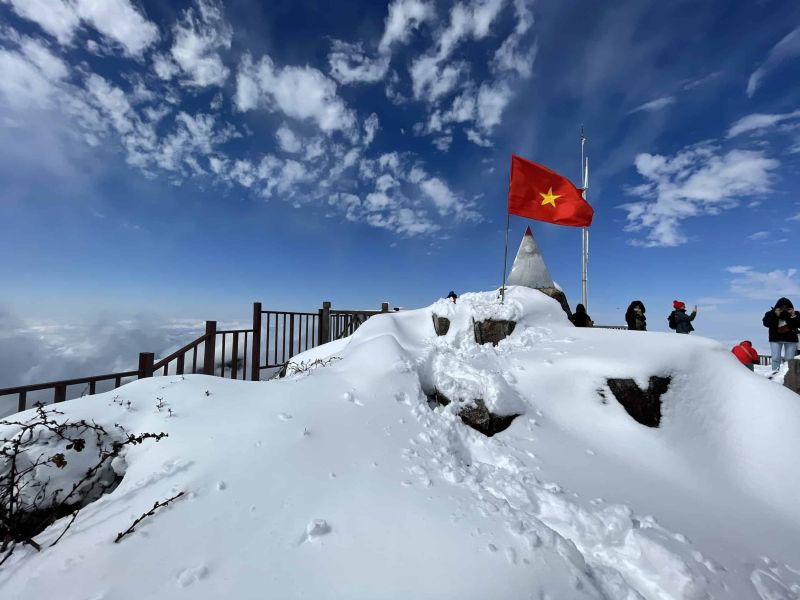
Fansipan summit temperatures between December and February drop to -5°C with wind chill, and Fansipan records the highest snow probability of any tourist-accessible peak in Vietnam during these 3 winter months.
Fansipan snowfall events occur 2 to 5 times per winter on average and draw heavy Vietnamese and Chinese tourist crowds when forecast snowfall at the Fansipan summit creates a rare tropical-Asia spectacle.
The Sun World Fansipan Legend cable car continues operating through winter but records its highest wind-closure risk during December and January, with 10 to 15 of the annual 15 to 20 closure days concentrated in these 2 months.
Mandatory winter gear for Fansipan summit visits includes 3 clothing layers (thermal base, insulating mid-layer, waterproof shell), insulated gloves, and closed waterproof shoes. Thermal jacket rental at the upper cable car station runs ₹150 to ₹250 per hour for Indian tourists who arrive under-prepared.
Fansipan trekking during December, January, and February is not recommended for first-time Indian trekkers because the Tram Ton trail requires crampons, sub-zero camping gear, and cold-weather trekking experience beyond standard recreational hiking in India.
Fansipan Legend Cable Car
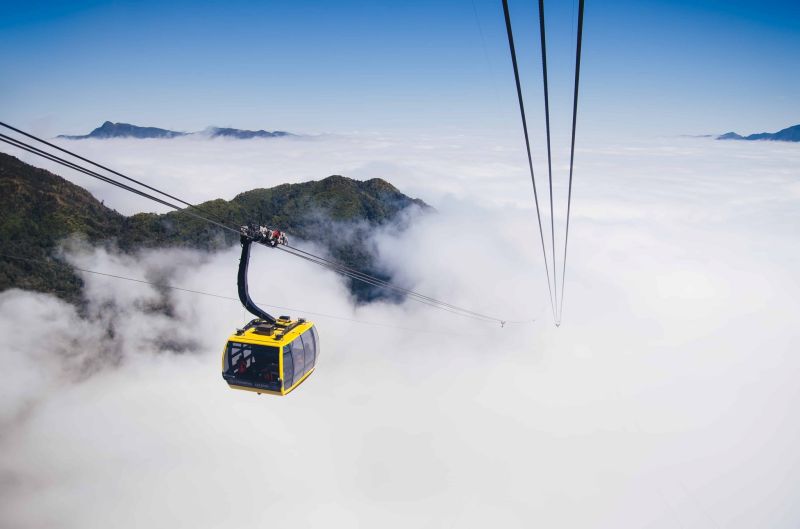
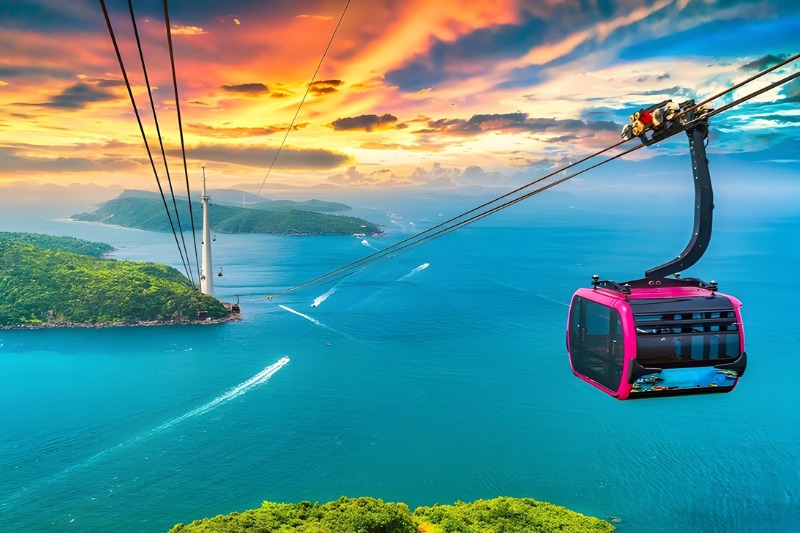
The Sun World Fansipan Legend cable car is the world’s longest 3-rope cable car system at 6,292 metres in total length and holds 2 Guinness World Records — longest 3-rope cable car and greatest elevation difference of a non-stop 3-rope cable car at 1,410 metres.
The Sun World Fansipan Legend cable car operates as the fastest access route from Sapa town to the Fansipan summit at 15 minutes one way.
Sun World — a major Vietnamese integrated tourism operator running cable car resorts at Ba Na Hills (Da Nang), Ha Long Bay, and Phu Quoc — built the Fansipan Legend cable car in 2016 at a cost of USD 200 million and operates the system year-round with 33 to 35 passenger gondolas on rotation.
The total Fansipan cable car experience runs 4 to 5 hours from Sapa town departure to Sapa town return, including the 15-minute ascent, a 2 to 3 hour summit exploration window, and the 15-minute descent.
Sun World Fansipan Legend official pricing for 2026 (VND primary, INR in parentheses — exchange rate 1 INR ≈ 285 VND, rounded to nearest ₹5):
| Ticket Type | VND | INR (≈) |
|---|---|---|
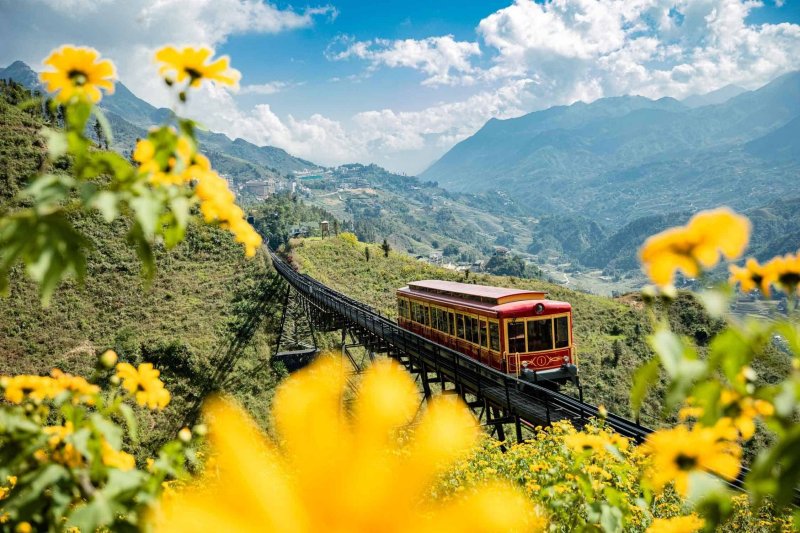
| Cable Car Round Trip — Adult (above 1.3 m) | 850,000 VND | ₹2,985 |
| Cable Car Round Trip — Child (1.0–1.3 m) | 550,000 VND | ₹1,930 |
| Cable Car Round Trip — Child (under 1.0 m, with paying adult) | Free | Free |
| Muong Hoa Funicular Round Trip (standalone) | 200,000 VND | ₹700 |
| Full Experience Pass (cable car + funicular + lunch buffet) | 1,250,000 VND | ₹4,385 |
| Thermal Jacket Rental (per hour, upper station) | 45,000–75,000 VND | ₹150–₹250 |
Children under 1.0 metre in height ride the Fansipan cable car free of charge with a paying adult. Children above 1.3 metres in height pay the full adult Fansipan cable car rate.
The Muong Hoa funicular round trip carries a flat 200,000 VND (₹700) rate for all ages because the funicular operates as a short summit-complex transfer between the upper cable car station and the Bich Van Thien Tu pagoda plaza.
Cable Car Operating Hours, Booking Methods, and Queue Management for Indian Tourists
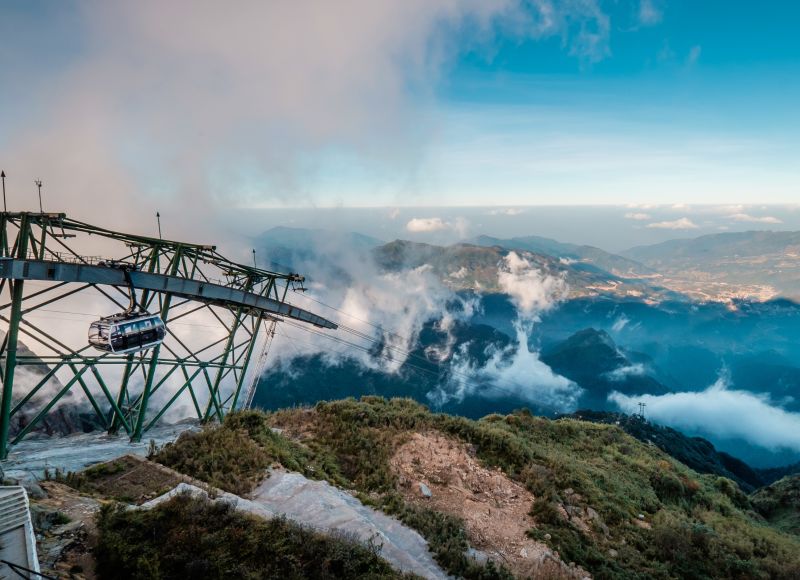
Sun World Fansipan Legend cable car operates daily from 7:30 AM to 5:30 PM year-round, with the last ascending gondola departing the lower station at 5:00 PM and the last descending gondola leaving the upper station at 5:30 PM.
Cable car booking for Indian tourists happens through 2 channels — walk-in purchase at the Sun World ticket counter inside the Fansipan Legend base complex, or online pre-booking through the Sun World website and mobile app, with Visa, Mastercard, and major international credit cards accepted at both channels.
The queue length at the Sun World Fansipan Legend lower station varies sharply by day and time — Tuesday, Wednesday, and Thursday between 7:30 AM and 10:00 AM carry the lowest queue volumes of the week.
Peak queue windows occur during Vietnamese public holidays and Tet (late January to early February), when Indian tourists face 45 to 90 minutes of queue time at the main ticket counter.
Arriving at the Sun World Fansipan Legend lower station before 8:30 AM minimises queue exposure on all non-holiday days.
Inside the Gondola and Summit Complex
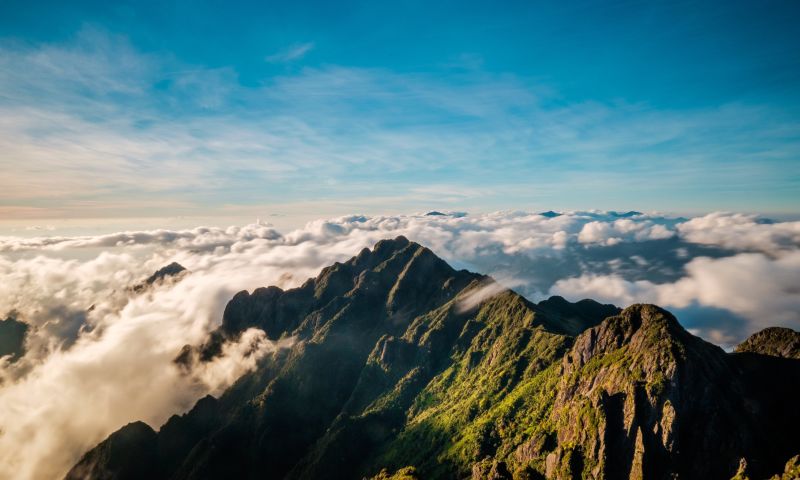
Each Sun World Fansipan Legend gondola seats 33 to 35 passengers standing, operates on a continuous 15-minute ascent with no mid-station stops, and passes through 3 distinct elevation zones visible through the panoramic glass — the cloud forest (1,650 to 2,400 metres, dense evergreen canopy with visible stream beds), the rocky alpine zone (2,400 to 2,900 metres, exposed granite and rhododendron scrub), and the open summit ridge (2,900 to 3,143 metres, bare rock and dwarf bamboo).
The Fansipan summit complex contains 5 primary visitor structures — the Bich Van Thien Tu pagoda (15 storeys, Vietnam’s highest Buddhist pagoda), the official elevation marker engraved “3,143m”, the 360-degree observation platform, the cloud sea viewing deck on the western ridge, and the summit-station food counter.
Reaching the Bich Van Thien Tu pagoda plaza from the upper cable car station requires either a 600-granite-step climb (free, 20 to 30 minutes at summit altitude) or the Muong Hoa funicular (200,000 VND / ₹700 round trip standalone, or bundled inside the 1,250,000 VND / ₹4,385 full experience pass).
Travellers with elderly family members or young children should budget for the funicular upgrade — the 600-step climb at 3,000-metre-plus elevation triggers breathlessness even in fit first-time visitors.
Hot drinks and light snacks at the summit food counter are priced 25,000 to 60,000 VND (₹80 to ₹200) per item, payable in Vietnamese Dong cash only. Thermal jacket rental at the upper cable car station runs 45,000 to 75,000 VND (₹150 to ₹250) per hour because Fansipan summit temperatures sit 10°C to 15°C lower than Sapa town temperatures year-round.
Fansipan Trekking
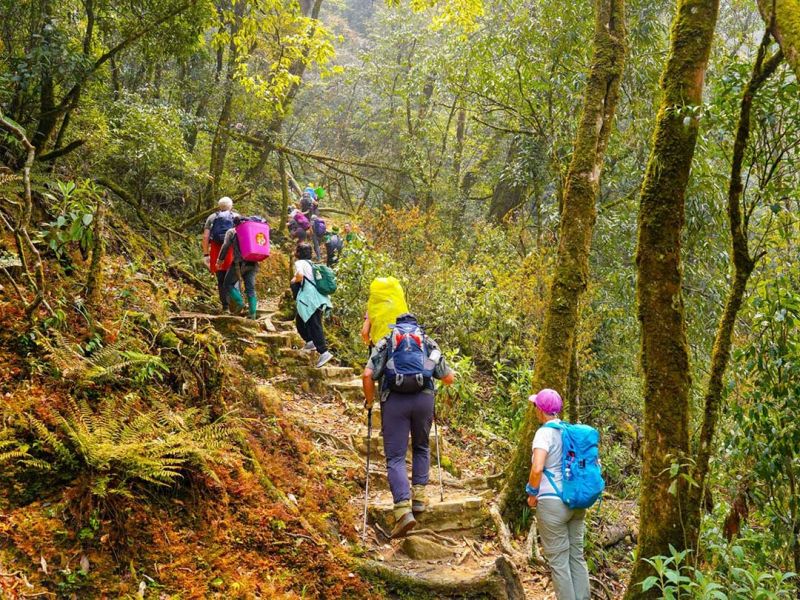
Fansipan trekking offers 2 official trail options for Indian tourists prioritizing the summit as a physical achievement — the Classic Tram Ton Route (14 km one way, 2 days and 1 night on the mountain, Moderate-to-Hard difficulty) and the Full Sin Chai Route (19 km one way, 3 days and 2 nights on the mountain, Hard difficulty).
The Classic Tram Ton Route remains the dominant choice for Indian tourists because the Tram Ton trailhead starts at 1,900 metres elevation, skipping the first 300 metres of vertical gain that the Sin Chai Route includes.
The Sin Chai Route starts at Sin Chai village (1,260 metres elevation) and covers 5 additional kilometres of lower-altitude cloud forest before joining the classic trail near the 2,200-metre waypoint.
Trekking Difficulty
Fansipan trekking grades as Grade 4 (Hard) on the standard Vietnam trekking difficulty scale, and the Fansipan trek sits closest in physical demand to the Kedarnath trek (16 km one way, 1,500 metres vertical gain) or the Valley of Flowers approach from Ghangaria in the Indian Himalayas.
Fansipan trekking is significantly easier than the Everest Base Camp trek (130 km round trip, 3,300 metres vertical gain, 12 to 14 days) and does not require formal altitude acclimatisation protocols because the Fansipan summit sits below the 3,500-metre threshold where multi-day acclimatisation schedules begin.
The 4 specific challenges on the Fansipan Classic Route are sustained 40° to 60° gradient across the final 3 km of approach, continuous root-and-mud terrain across the middle 8 km, altitude fatigue setting above 2,700 metres, and overnight camp temperatures of 5°C to 10°C in spring and autumn or below zero in winter.
Fansipan trekking does not require technical climbing skills because fixed ropes are installed across all steep sections of the final approach. Indian tourists with moderate fitness who can comfortably complete a 15 km flat walk and have hill-walking experience can attempt the Fansipan Classic Route.
Trekking Permit, Mandatory Guide, and Cost Breakdown in INR
Fansipan trekking requires a licensed Vietnamese mountain guide by law; solo trekking is prohibited, and the guide-mandatory rule is enforced at the Tram Ton and Sin Chai trailhead checkpoints by Hoang Lien National Park rangers.
Hoang Lien National Park entry fee for Fansipan trekking is 150,000 VND (₹500) per person, paid at the trailhead checkpoint.
The full Fansipan trekking cost breakdown for the 2-day Classic Route runs across 5 line items at 2026 rates:
| Cost Line Item | VND | INR (≈) |
|---|---|---|
| Hoang Lien National Park entry fee (per person) | 150,000 VND | ₹500 |
| Licensed mountain guide (per group of 2–4, per day, 2 days) | 600,000–900,000 VND | ₹2,100–₹3,150 |
| Mountain hut accommodation (per person, 1 night, 2,800m hut) | 200,000–300,000 VND | ₹700–₹1,050 |
| Meals on trail (per person, 4 meals across 2 days) | 200,000–350,000 VND | ₹700–₹1,225 |
| Porter support (optional, per porter, 2 days) | 600,000–900,000 VND | ₹2,100–₹3,150 |
| Total per person (without porter) | 1,030,000–1,560,000 VND | ₹3,500–₹5,300 |
Indian tourists booking Fansipan treks independently through the Sapa central market face 3 safety gaps that become critical above 2,700 metres: no trekking insurance covering mountain rescue costs (which run ₹15,000 to ₹40,000 per evacuation), no pre-trek gear verification against the actual summit temperature forecast, and no satellite emergency communication when mobile signals drop to zero above 2,500 metres on the Tram Ton trail.
Sapa to Fansipan Day Trip and Tour Package Options for Indian Tourists in 2026
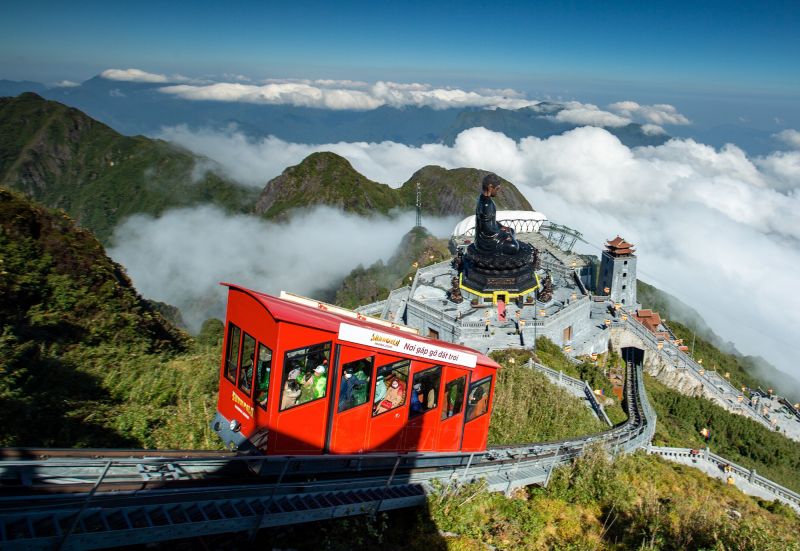
Indian tourists structure their Sapa to Fansipan visit in 2026 through 3 format choices — a self-arranged cable car day trip from Sapa town (1,195,000 to 1,325,000 VND / ₹4,185 to ₹4,635 per person), a guided cable car day tour (1,570,000 to 2,140,000 VND / ₹5,500 to ₹7,500 per person), or a multi-day trekking package (1,430,000 to 5,140,000 VND / ₹5,000 to ₹18,000 per person depending on tier).
Fansipan Mountain typically anchors a 3-day to 4-day Sapa itinerary for Indian tourists, combining Fansipan with Cat Cat Village, Muong Hoa Valley, Ta Phin Village, and Sapa central market. The cable car half-day format leaves the afternoon free for Sapa town exploration, giving Indian travellers a full-day return window to Sapa town after the summit visit.
Sapa sits 320 km from Hanoi, and most Indian tourists arrive by overnight sleeper train or private car transfer. For all Hanoi-to-Sapa transport options with current INR pricing, the Hanoi to Sapa travel guide lays out the full comparison across sleeper trains, limousine van, and private car transfer.
Indian tourists building a multi-city Vietnam itinerary that spans Sapa, Ha Long Bay, Hoi An, and the Mekong Delta face a specific coordination gap at the Sapa leg: domestic flight availability from Hanoi to Da Nang or Ho Chi Minh City fills faster than the Sapa hotel check-out window closes, meaning tourists who self-arrange Sapa first and attempt to book onward domestic flights second frequently find the preferred departure dates gone. The Fansipan cable car half-day format — finishing by noon — creates an afternoon departure window that requires a Hanoi overnight before the southbound domestic flight, adding an unplanned hotel night.
Self-Arranged Cable Car Day Trip from Sapa
A self-arranged Fansipan cable car day trip from Sapa runs on a 4-step timeline that gets Indian tourists from Sapa town to the Fansipan summit and back by noon.
Step 1 runs from 7:00 AM to 7:45 AM — breakfast in Sapa town and 2 km taxi or shuttle transfer to the Sun World Fansipan Legend lower station. Step 2 runs from 7:45 AM to 9:00 AM — ticket purchase, queue, and 15-minute cable car ascent to the upper station. Step 3 runs from 9:00 AM to 11:00 AM — summit exploration covering the 3,143 m elevation marker, 360-degree observation platform, Bich Van Thien Tu pagoda, and cloud sea viewing deck. Step 4 runs from 11:00 AM to 12:00 PM — cable car descent, shuttle back to Sapa town, and lunch in Sapa central area.
The self-arranged Fansipan cable car day trip budget for Indian tourists in 2026 totals 1,195,000 to 1,325,000 VND (₹4,185 to ₹4,635) per person (VND primary, INR in parentheses):
| Cost Line Item | VND | INR (≈) |
|---|---|---|
| Cable car round-trip (adult) | 850,000 VND | ₹2,985 |
| Muong Hoa funicular round-trip | 200,000 VND | ₹700 |
| Sapa↔Fansipan base shuttle (return) | 50,000–80,000 VND | ₹175–₹280 |
| Breakfast in Sapa + summit snacks | 70,000–120,000 VND | ₹245–₹420 |
| Thermal jacket rental (1 hour) | 25,000–75,000 VND | ₹85–₹250 |
| Total per person (full pass route) | 1,195,000–1,325,000 VND | ₹4,185–₹4,635 |
Indian tourists who skip the Muong Hoa funicular and climb the 600 granite steps to Bich Van Thien Tu pagoda on foot cut the base cost to 850,000 VND (₹2,985) for the cable car round trip alone — total day trip then runs 995,000 to 1,125,000 VND (₹3,485 to ₹3,935) per person, including breakfast, snacks, and jacket rental.
The afternoon free window between 1:00 PM and 6:00 PM opens up 3 common Sapa add-on options — Sapa central market browsing, Cat Cat H’mong village visit, and Muong Hoa Valley rice terrace viewpoint.
Guided Sapa–Fansipan Tour Packages
Guided Sapa-to-Fansipan tour packages for Indian tourists in 2026 are split across 4 price tiers covering both cable car day tours and multi-day trekking experiences:
| Tier | Format | VND Range | INR Range (≈) | What’s included |
|---|---|---|---|---|
| Tier 1 — Cable Car Day Tour (Standard) | Half-day, English-speaking guide, cable car, lunch | 1,570,000–1,860,000 VND | ₹5,500–₹6,500 | Hotel pickup, cable car, English guide, lunch buffet, drop-off |
| Tier 2 — Cable Car Day Tour (Premium) | Half-day, full-experience pass, vegetarian/Jain menu | 1,860,000–2,140,000 VND | ₹6,500–₹7,500 | Tier 1 + Muong Hoa funicular, premium lunch, dietary customisation |
| Tier 3 — Trekking Package (2D1N Classic) | 2-day Tram Ton trek, licensed guide, hut, meals | 2,860,000–3,710,000 VND | ₹10,000–₹13,000 | Park fee, guide, hut, meals, gear check, insurance |
| Tier 4 — Trekking Package (3D2N Sin Chai + Summit) | 3-day Sin Chai route + cable car descent | 4,280,000–5,140,000 VND | ₹15,000–₹18,000 | Tier 3 + porter, satellite phone, cable car descent ticket |
Indian tourists exploring the broader Sapa region alongside Fansipan — including the Sapa Glass Bridge, Rong May, Silver Waterfall (Thac Bac), Love Waterfall, Ta Phin village, and Heaven’s Gate viewpoint — find a full overview in the places to visit in Sapa guide.
Fansipan Summit Experience
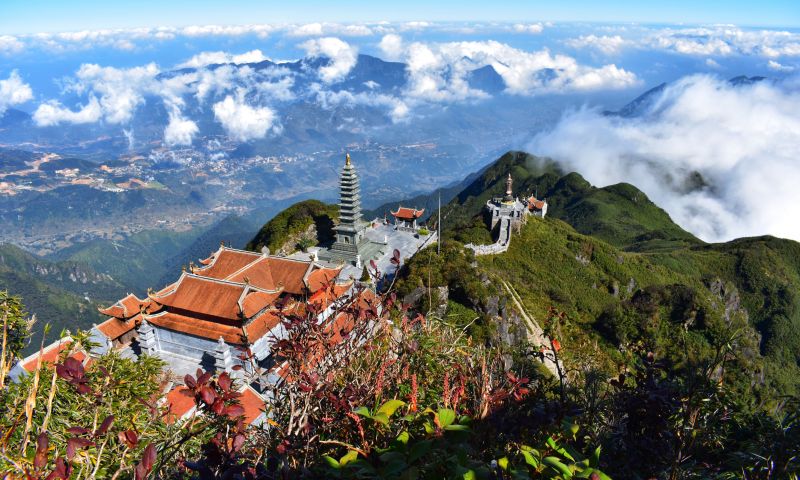
The Fansipan summit experience at 3,143 metres centres on 3 distinct attractions that define the final 2 to 3 hours Indian tourists spend at the top — sunrise over the Hoang Lien Son Range, the cloud sea phenomenon (Biển Mây) most commonly visible October to March, and the 15-storey Bich Van Thien Tu Buddhist pagoda that holds the title of Vietnam’s highest pagoda.
Fansipan sunrise occurs between 5:15 AM in June and 6:30 AM in December, and Fansipan sunrise is accessible only to trekkers who have overnighted at the 2,800-metre mountain hut on the classic Tram Ton Route — the Sun World Fansipan Legend cable car does not begin operations until 7:30 AM. The visual Fansipan sunrise sequence begins with a thin orange band spreading across the eastern horizon, followed by 15 to 20 minutes of golden light sweeping down the ridgelines toward the Muong Hoa Valley below, and finishing with full daylight revealing the cloud sea floor beneath the summit.
The Fansipan cloud sea (Biển Mây) forms when the Muong Hoa Valley cloud layer settles at 2,000 to 2,500 metres, and the Fansipan summit breaks cleanly above the cloud top. The cloud sea effect appears most commonly during October, November, December, January, February, March, and early monsoon May to June mornings.
Fansipan cloud sea conditions are not guaranteed on any single day, and the Sun World Fansipan Legend cable car cabin serves as an ideal vantage point to photograph the cloud sea during the ascent because the gondola crests above the cloud layer roughly halfway through the 15-minute ride.
Bich Van Thien Tu pagoda (built 2016, 15 storeys tall, Vietnam’s highest Buddhist pagoda) sits 600 granite steps above the upper cable car station, and Bich Van Thien Tu is reachable by the Muong Hoa funicular (200,000 VND / ₹700 standalone or bundled in the 1,250,000 VND / ₹4,385 full experience pass).
Bich Van Thien Tu pagoda architecture follows Vietnamese-Chinese Mahayana Buddhist design with curved upturned eaves, red-and-gold colour palette, and multi-tiered prayer halls — the design carries strong visual familiarity for Indian Hindus and Indian Buddhists because the underlying iconography (seated Buddha figures, lotus thrones, protective dragon-serpent motifs) traces back to Indian Buddhist sculptural traditions that travelled through China into Vietnam.
Fansipan is one of the multiple mountain destinations that define Vietnam’s northern landscape — for a broader overview of mountain regions across Vietnam, including Ba Na Hills, Langbiang Mountain, and the Ha Giang Dong Van Karst Plateau, the Vietnam mountains guide lays out the full geographic picture.
7 Things Indian Tourists Must Know Before Visiting Fansipan Mountain in 2026
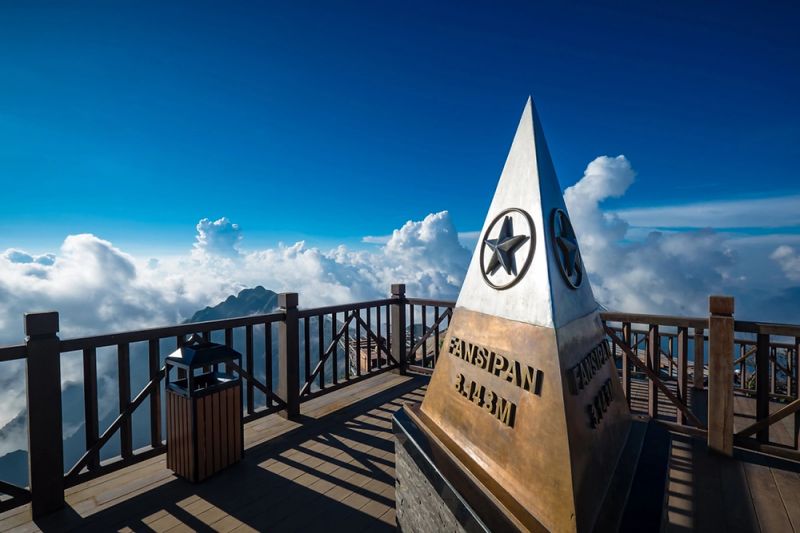
Indian tourists visiting Fansipan Mountain in 2026 plan around 7 non-negotiable factors — altitude sickness management, mandatory thermal layering, cable car wind-closure risk, Vietnamese Dong cash for summit stalls, optimal photography timing, child height pricing thresholds, and weak summit SIM connectivity.
- Altitude sickness above 2,500 metres. Fansipan trekkers above 2,500 metres report headache, nausea, and fatigue in 15% to 20% of cases, and altitude sickness management at Fansipan runs through 2 protocols — descend 300 to 500 metres immediately if symptoms appear, and hydrate with 3 to 4 litres of water per day above 2,000 metres. Diamox (acetazolamide) is available at Sapa pharmacies at 45,000 VND (₹150) for a 10-tablet strip for travellers with a confirmed altitude sensitivity history.
- Thermal layers are mandatory year-round. Fansipan summit runs 10°C to 15°C colder than Sapa town at every hour of every day, and visitors require a minimum of 3 clothing layers on the summit year-round — a thermal base layer, an insulating mid-layer, and a waterproof outer shell. Winter Fansipan visits (December, January, February) require a down jacket and thermal socks in addition to the 3-layer baseline.
- Cable car wind closure affects 15 to 20 days per year. Sun World Fansipan Legend cable car closes operations 15 to 20 days per year due to high winds, and cable car closure risk peaks between December and January. Confirm cable car operational status by checking the Sun World Fansipan Legend Facebook page or Instagram account between 6:00 AM and 7:00 AM on the day of the visit before making the 2 km transfer from Sapa town.
- Summit stalls accept Vietnamese Dong cash only. The Fansipan summit food counter and all summit-station retail stalls accept only Vietnamese Dong cash; international credit cards, Indian Rupees, and US Dollars are not accepted at summit stalls. The Sun World Fansipan Legend lower ticket counter accepts international Visa and Mastercard for cable car tickets, but travellers should carry 140,000 to 280,000 VND (₹500 to ₹1,000) in cash for summit spending.
- Photography window peaks between 8:00 AM and 9:30 AM. Fansipan summit photography conditions peak between 8:00 AM and 9:30 AM before cloud build-up obscures the ridgeline and observation platform views. Standard smartphone cameras achieve publication-quality Fansipan summit photos in landscape mode with HDR enabled — professional camera equipment is not necessary for the Fansipan visit.
- Child pricing tiers hinge on the 1.0m and 1.3m height marks. Sun World Fansipan Legend applies 3 child pricing tiers strictly by height — under 1.0 metre rides free with a paying adult, 1.0 to 1.3 metres pays the child rate of 550,000 VND (₹1,930) round trip, and above 1.3 metres pays the full adult rate of 850,000 VND (₹2,985). Strollers and child prams are inaccessible beyond the lower cable car station because the upper station and summit complex involve stairs and uneven cobblestone surfaces.
- Summit SIM connectivity is weak to non-existent. Fansipan summit connectivity runs weak to zero signal across all Vietnamese carriers (Viettel, Vinaphone, Mobifone) due to the 3,143-metre altitude and the surrounding granite rock mass. Download offline Google Maps of the Sapa-Fansipan region in advance, and a Vietnam local tourist SIM card purchased in Hanoi or Sapa (60,000 to 120,000 VND / ₹200 to ₹400 for a 30-day data package) delivers stronger base-station connectivity than international roaming on Indian SIM cards during the Sapa town portion of the trip.
Best Time to Visit Fansipan for Indian Tourists
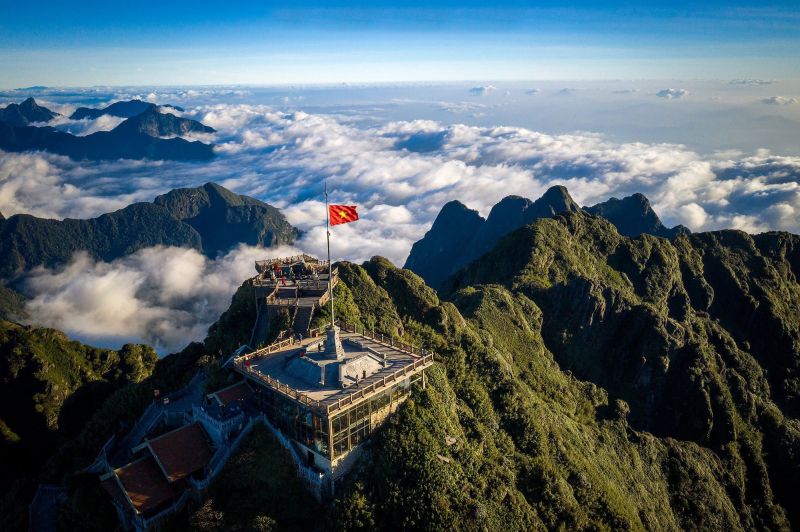
The best time to visit Fansipan Mountain for Indian tourists is March, April, October, and November — the 4 months when Fansipan summit visibility exceeds 70% of daylight hours, the Sun World Fansipan Legend cable car operates with zero wind-closure risk, and the Tram Ton trekking trail runs dry and leech-free.
The Fansipan March-to-April peak carries a distinct draw: wild rhododendron bloom across the 2,800 to 3,000 metre subalpine zone, visible both from the cable car gondola and along the upper Tram Ton trekking trail.
The Fansipan October-to-November peak aligns directly with the Indian festive travel window — Diwali typically falls in late October or early November, and post-monsoon Indian school holidays open a 2 to 3 week travel window that coincides with Fansipan’s clearest visibility of the year.
Month-by-month Fansipan verdict for Indian tourists (2026):
| Month | Verdict | Primary Reason |
|---|---|---|
| January | Avoid | -5°C wind chill, highest cable car wind-closure risk |
| February | Avoid | Cold, damp, low summit visibility |
| March | Good | Dry, rhododendron bloom begins, cloud sea common |
| April | Best | Dry, peak rhododendron bloom, warmer temperatures |
| May | Fair | Early monsoon cloud-sea window, occasional rain |
| June | Mixed | Cloud sea peaks; full monsoon begins late month |
| July | Avoid trekking | Peak monsoon rainfall (400–600 mm); cable car still operates |
| August | Avoid trekking | Peak monsoon, leech-active trails; cable car still operates |
| September | Fair | Monsoon tapers in late month, visibility improves |
| October | Best | Dry window opens, Diwali alignment, visibility >70% |
| November | Best | Dry, warm, Indian school-holiday window |
| December | Mixed | Clear early month; high wind-closure risk late month |
Indian tourists targeting the October-November Diwali window should book Sun World Fansipan Legend cable car tickets and Sapa accommodation 3 weeks ahead because the post-Diwali window coincides with the peak Vietnamese domestic travel season, and Sapa hotels fill to 90%+ occupancy between November 1 and November 15.
For a full month-by-month breakdown of weather conditions, rainfall averages, temperature ranges, and festival calendar across Sapa town as the base for any Fansipan visit, the best time to visit Sapa guide extends the picture to the full Sapa region.
Frequently Asked Questions — Fansipan Mountain for Indian Tourists
Is the Fansipan Cable Car Safe for Elderly Indian Tourists and People with Heart Conditions?
Yes, the Sun World Fansipan Legend cable car is safe for elderly Indian tourists and people with stable heart conditions because the gondola cabins are fully enclosed, the ride is smooth with no sudden elevation drops, and the 15-minute ascent requires zero physical exertion from passengers.
The Fansipan summit complex itself involves uneven cobblestone surfaces, 600 granite steps to reach the Bich Van Thien Tu pagoda, and a 30 to 60-minute walking loop across the observation platforms. Travellers with mobility limitations stay at the upper cable car station’s accessible viewing deck, which delivers full 360-degree views without the summit-complex walking circuit.
Indian tourists with uncontrolled hypertension, recent cardiac events within 6 months, or severe respiratory conditions should consult their doctor before any ascent above 3,000 metres because the Fansipan summit sits at an elevation where reduced oxygen partial pressure affects cardiovascular stress levels.
Is a Visa Required for Indian Tourists to Visit Fansipan Mountain?
Yes, Indian passport holders require a Vietnam e-visa to enter Vietnam and visit Fansipan Mountain — the Vietnam e-visa for Indian tourists costs USD 25 (₹1,600 to ₹2,000) for a 90-day single-entry or multiple-entry permit.
No separate Fansipan-specific permit is required for cable car visitors beyond the Sun World Fansipan Legend ticket itself. Fansipan trekkers pay a Hoang Lien National Park entry fee of 150,000 VND (₹500) at the Tram Ton or Sin Chai trailhead checkpoint, included inside all guided trekking packages.
Indian passport holders apply for the Vietnam e-visa entirely online through the official portal — the step-by-step application process, required documents, processing time, and port-of-entry rules for Indian applicants are covered in the Vietnam visa guide for Indian travellers.
How Many Days Does an Indian Tourist Need in Sapa to Visit Fansipan?
Indian tourists need 1 full day in Sapa for a Fansipan cable car visit (4 to 5 hours total, completed by noon with the afternoon free for Sapa town exploration) or a minimum 3-night Sapa stay for a Fansipan trekking expedition (1 arrival and acclimatisation night, 1 overnight at the 2,800-metre mountain hut, and 1 recovery night after descent).
The cable car half-day format is the standard Indian tourist choice because the Sun World Fansipan Legend cable car delivers the full 3,143-metre summit experience in a single morning, leaving the afternoon open for Cat Cat Village, Sapa central market, or Muong Hoa Valley visits.
Fansipan trekking requires a minimum 3-night Sapa commitment because the 2-day Classic Route involves 1 arrival and acclimatisation night in Sapa town, 1 overnight at the 2,800-metre mountain hut, and 1 recovery night back in Sapa town after descent.
What Is the Cheapest Way for Indian Tourists to Reach the Fansipan Summit?
The cheapest way for Indian tourists to reach the Fansipan summit is the Sun World Fansipan Legend cable car round-trip ticket priced at 850,000 VND (₹2,985) per adult — the single lowest entry cost for any route to the 3,143-metre Fansipan summit.
The 2-day to 3-day Fansipan trekking alternative carries zero cable car fee but totals 1,030,000 to 1,560,000 VND (₹3,500 to ₹5,300) per person across 4 mandatory cost components — licensed guide fee, Hoang Lien National Park entry fee, mountain hut accommodation, and meals on trail.
The Fansipan cable car delivers higher value per hour for time-limited Indian itineraries (4 to 5 hours total from Sapa town and back), while the Fansipan trek rewards multi-day travellers prioritising the physical summit achievement over time efficiency.
Indian tourists prioritising the Buddhist pagoda and buffet experience on top of the summit visit select the 1,250,000 VND (₹4,385) full experience pass, which bundles the cable car, the Muong Hoa funicular, and a lunch buffet at the upper station.
Can Indian Tourists Complete the Fansipan Trek Without Prior Trekking Experience?
No, Indian tourists with zero prior trekking experience should not attempt the Fansipan trek as their first multi-day mountain expedition, but the Fansipan Classic Route is achievable for Indian tourists with moderate baseline fitness and prior hill-walking experience.
Fansipan trekking requires zero technical climbing skills because fixed ropes are installed across all steep sections of the final approach — the challenge is sustained cardiovascular endurance rather than technical mountaineering.
Indian tourists comfortable completing a 15 km flat walk in a single day, with at least 2 prior weekend hill-walks in the Western Ghats or Aravalli ranges, can attempt the Classic Tram Ton Route with a licensed guide and porter support.
Indian tourists with unmanaged diabetes, uncontrolled hypertension, knee or ankle injuries, or asthma that is not fully controlled on medication should not attempt the Fansipan trek.
The recommended progression for first-time Indian mountain visitors is to attempt the Fansipan cable car first, observe personal response to altitude at 3,143 metres during the 2 to 3 hour summit window, and consider the Fansipan trek on a return Vietnam trip after altitude confirmation.