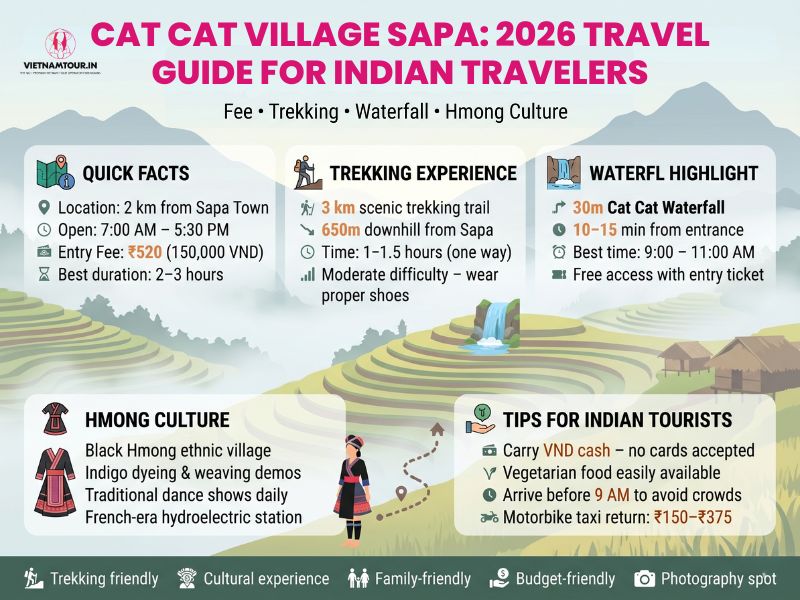
Cat Cat Village is a traditional Black Hmong settlement located 2 km southwest of Sapa Town, open daily from 7:00 AM to 5:30 PM with an entrance fee of ₹540 (150,000 VND) per person. Cat Cat combines a 30-metre waterfall on the Muong Hoa Stream, live weaving and indigo dyeing demonstrations, traditional Hmong dance performances, a French colonial-era hydroelectric station, and a 3 km trekking trail through rice terraces — all accessible within a single entrance ticket.
This guide covers the entrance fee, opening hours, the 30-metre Cat Cat Waterfall, 4 cultural experiences (weaving, indigo dyeing, dance, the French hydroelectric station), the 3 km trekking trail from Sapa Town, homestay options, the best season to visit, and 5 practical tips for Indian tourists in 2026.
Indian tourists visiting Cat Cat Village can complete the experience as a 2-to-3-hour half-day trip from Sapa Town or extend it into an overnight homestay with a Black Hmong family at ₹1,500 to ₹3,000 (400,000 to 800,000 VND) per person per night. Cat Cat Village is sometimes labelled a tourist village in English-language reviews — the article below documents what is original (Black Hmong weaving, the French colonial hydroelectric station, the 30-metre waterfall on the Muong Hoa Stream) versus what is commercial infrastructure added for visitors, so Indian tourists can decide for themselves.
Cat Cat Village Location
Cat Cat Village is a traditional Black Hmong settlement established in the late 19th century, located 2 km southwest of Sapa Town in the Muong Hoa Valley, Lao Cai Province, at an altitude of approximately 900 metres above sea level. The village sits within the Muong Hoa Valley landscape — a terraced agricultural valley that forms part of the broader Hoang Lien Son mountain range in northwestern Vietnam.
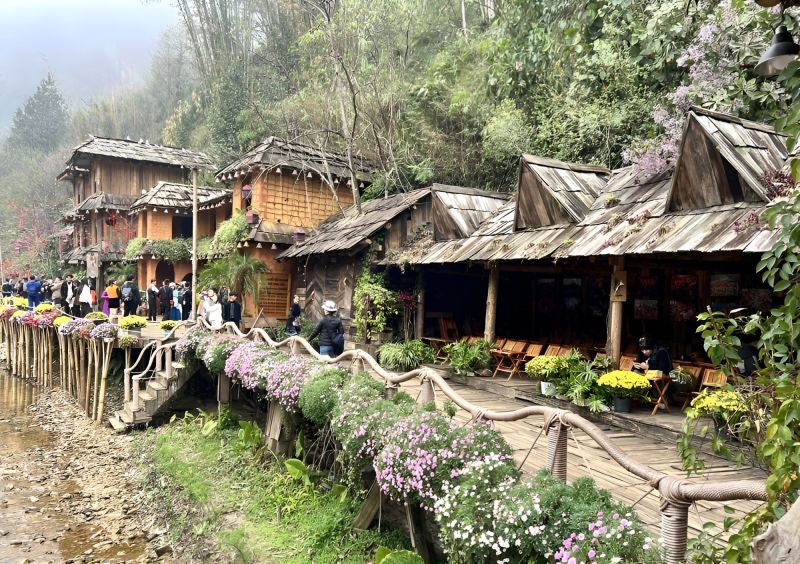
The Black Hmong are a subgroup of the Hmong ethnic minority distinguished by their indigo-dyed clothing — the deep blue-black fabric produced by hand in Cat Cat Village gives the Black Hmong their name. The village name “Cat Cat” derives from a local Hmong term referring to the sound of water cutting through stone along the Muong Hoa Stream that runs through the settlement.
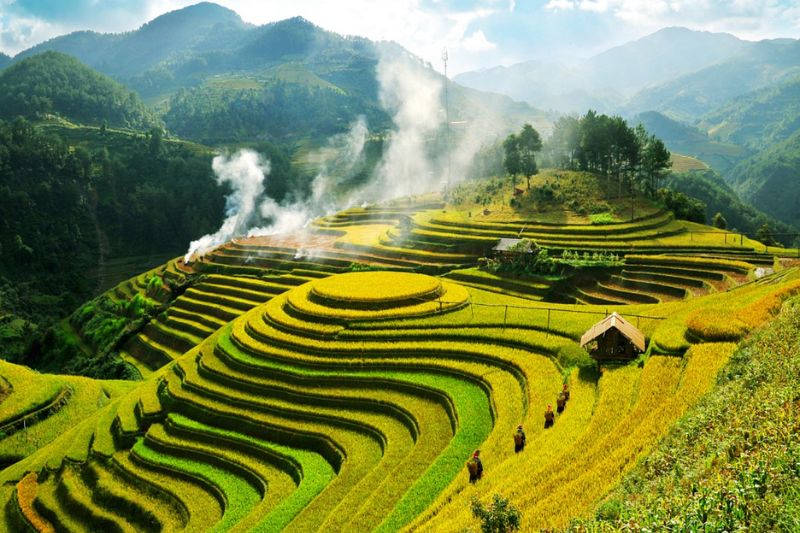
Cat Cat Village occupies a position in Vietnamese highland culture comparable to Khonoma in Nagaland — a living ethnic village where traditional craft, agricultural practice, and daily community life remain intact and accessible to visitors. The Muong Hoa Valley surrounding Cat Cat Village was recognised by UNESCO in 1977 as part of the broader Hoang Lien Son landscape, and the terraced rice fields extending from the village down the valley floor are among the most photographed in northern Vietnam.
Cat Cat Village Entrance Fee
The entrance fee for Cat Cat Village is ₹540 (150,000 VND) per person, and the village is open daily from 7:00 AM to 5:30 PM, including weekends and Vietnamese public holidays. Tickets are purchased at the gate at the trailhead — there is no advance online booking for individual visitors. The Cat Cat Waterfall admission is included in the single entrance ticket, with no additional charge to access the waterfall within the village grounds.
| Category | Fee (INR) | Fee (VND) |
|---|---|---|
| Adult (general admission) | ₹540 | 150,000 VND |
| Cat Cat Waterfall (included) | ₹0 | 0 VND |
| Children 1m – 1.4m in height | ₹250 | 70,000 VND |
| Children under 1m | Free | Free |
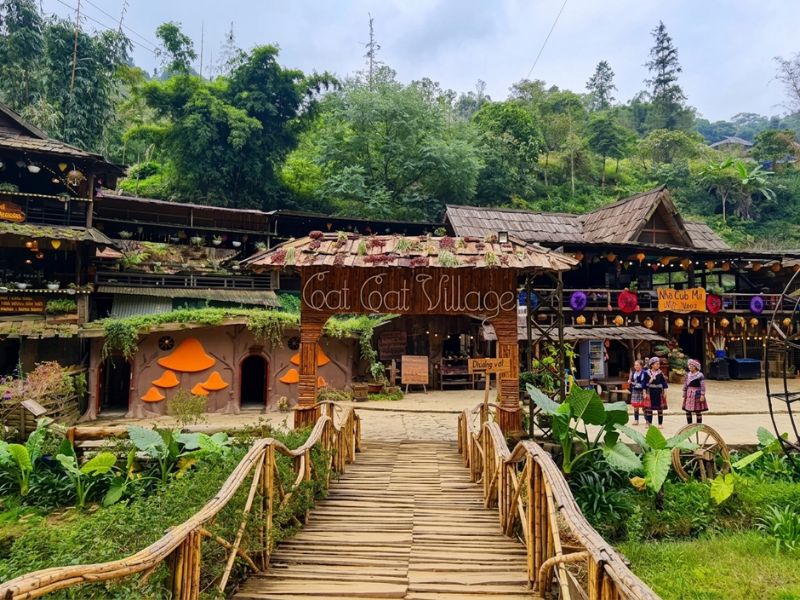
Group pricing for organised tour groups is negotiated directly through licensed tour operators rather than at the gate. The Cat Cat Village entrance fee of ₹540 (150,000 VND) is valid as of 2026. Indian tourists should verify the current rate at the gate on the day of visit, as seasonal adjustments occur.
Cat Cat Waterfall
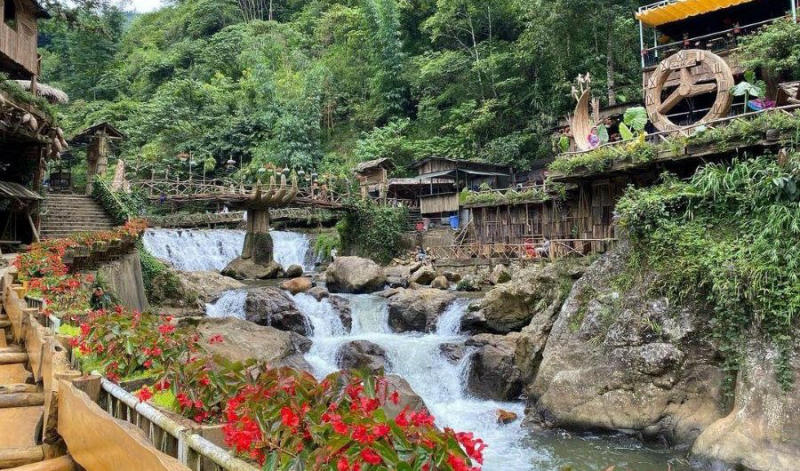
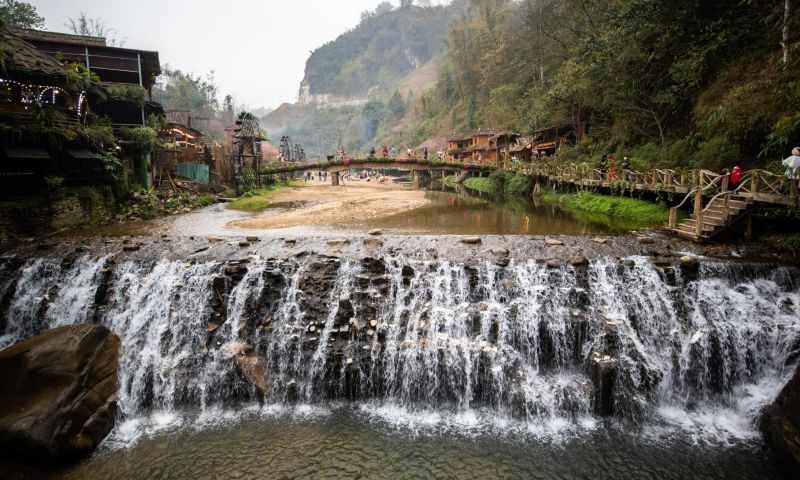
Cat Cat Waterfall is a 30-metre cascade located inside Cat Cat Village on the Muong Hoa Stream, accessible with the village entrance ticket at no additional charge. The waterfall is approximately 800 metres from the village entrance gate along the main trail — a 10 to 15 minute walk from the ticket booth, following stone steps that descend toward the stream.
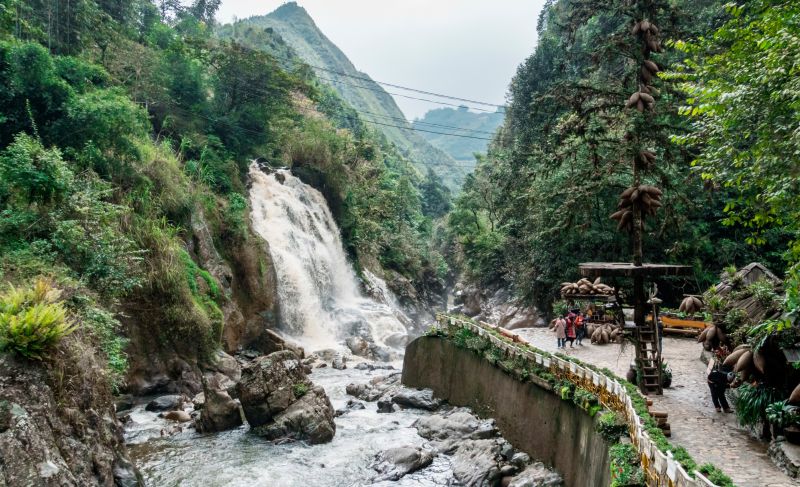
Cat Cat Waterfall is the defining unique attribute of Cat Cat Village compared to other Black Hmong settlements in the Sapa area — it is smaller than Silver Waterfall (Thac Bac) located 12 km from Sapa Town, but is the only waterfall in Sapa accessible directly from inside an ethnic village without a separate entrance fee or additional hike. The best viewpoint for Cat Cat Waterfall is the wooden footbridge immediately adjacent to the cascade — the wooden footbridge provides an unobstructed view of the full 30-metre drop and the surrounding forest canopy.
Swimming at Cat Cat Waterfall is not permitted. The best light for photographing Cat Cat Waterfall is between 9:00 AM and 11:00 AM, when direct morning sunlight reaches the cascade through the forest canopy — afternoon cloud cover frequently develops in the Muong Hoa Valley from 2:00 PM onward, reducing contrast and colour in waterfall photography.
4 Cultural Experiences at Cat Cat Village
Cat Cat Village contains 4 distinct cultural experiences within the single entrance ticket: traditional Hmong weaving and indigo fabric dyeing demonstrations, open-air dance and music performances, a French colonial-era hydroelectric station, and the opportunity to purchase handmade Hmong textiles directly from village artisans.
Traditional Hmong Weaving and Indigo Fabric Dyeing Demonstrations
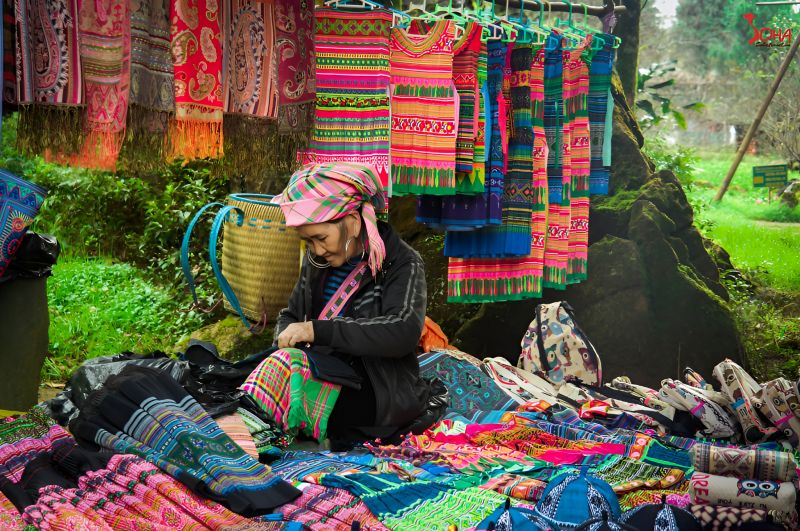
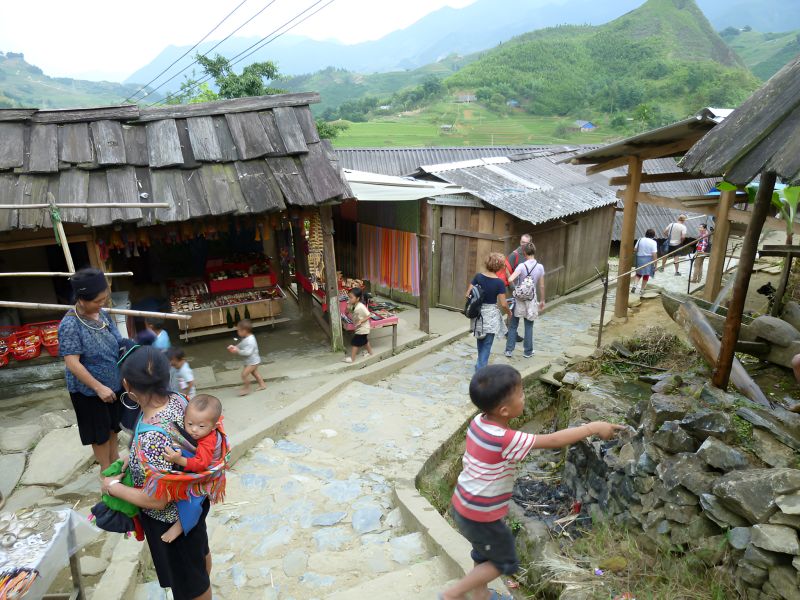
Black Hmong women at Cat Cat Village demonstrate traditional hand-loom weaving and indigo fabric dyeing, which are the primary handicraft traditions of the Black Hmong ethnic group. Visitors observe live demonstrations along the main village trail — weavers work on floor-mounted hand looms producing patterned fabric in geometric designs, while indigo dyeing stations show the full process from raw indigo plant material to the finished deep blue-black cloth that gives the Black Hmong their name.
Finished textiles, including bags, scarves, and clothing, are available for purchase directly from the artisans at Cat Cat Village, with prices ranging from ₹375 to ₹2,250 (100,000 to 600,000 VND) depending on the item. Participation in dyeing demonstrations is available at selected stations along the Cat Cat Village trail for a small additional fee — negotiate the amount directly with the artisan before participating. The Cat Cat Village indigo dyeing process is comparable in technique to natural dyeing traditions familiar to Indian tourists from Rajasthan’s artisan villages — both use plant-based dyes applied through repeated immersion and oxidation to achieve deep colour saturation in natural fabric.
Traditional Hmong Dance and Music Performances at the Open-Air Amphitheater
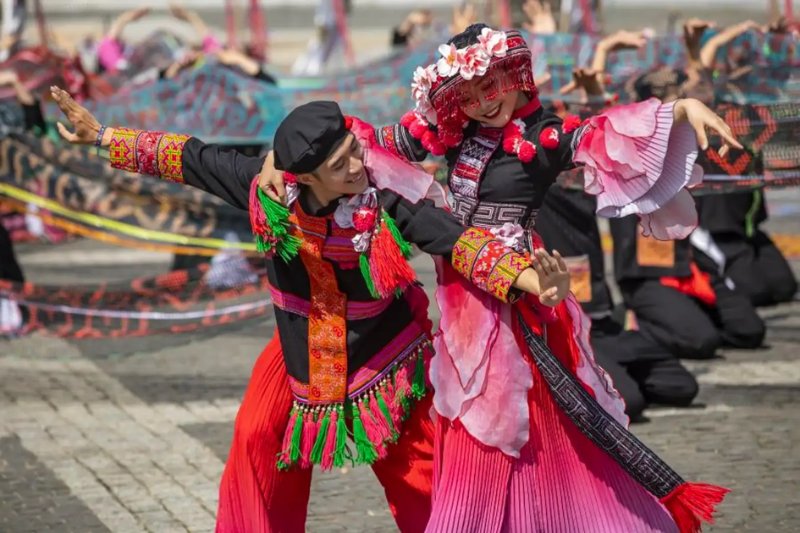
Cat Cat Village has a permanent open-air amphitheater where Black Hmong performers present traditional music and dance shows for visitors throughout the day. Performances at the amphitheater run at intervals during peak visiting hours — at approximately 9:30 AM, 11:00 AM, and 2:00 PM — with each show lasting approximately 20 to 30 minutes.
Instruments used in Cat Cat Village performances include the đàn môi (jaw harp), the khèn (bamboo mouth organ), and traditional Hmong drums. Dance performances feature coordinated group movements in full Black Hmong traditional costume. Photography and video recording of performances at the Cat Cat Village amphitheater is permitted without restriction.
The French-Era Hydroelectric Station on the Muong Hoa Stream
A French colonial-era hydroelectric power station, built in the early 20th century during France’s occupation of Indochina, still stands on the Muong Hoa Stream inside Cat Cat Village and is included in the village trail at no additional charge. The station was constructed by French colonial administrators who developed Sapa as a highland resort town from 1903 onward — the hydroelectric infrastructure powered the French settlement at Sapa Town and represents one of the few intact examples of French colonial industrial construction remaining in the northern highlands.
The Cat Cat Village hydroelectric station is the rare historical attribute that distinguishes Cat Cat Village from all other Hmong settlements in the Muong Hoa Valley — no other accessible ethnic village in Sapa contains a colonial-era industrial structure of this age and condition. The stone walls of the station are largely intact, the original machinery is visible through the station walls, and the stream channel that powered the turbines remains active alongside the hydroelectric station.
Modern Installations
Modern installations at Cat Cat Village include a rainbow slide, photo swings, and Instagram-style backdrops added between 2019 and 2024 — these sit alongside the traditional attractions and are clearly demarcated from the original village core. Indian tourists travelling with children frequently include the rainbow slide in their visit; tourists prioritising authentic ethnic culture can bypass these installations and stay on the lower trail toward the waterfall and weaving stations. The rainbow slide is signposted from the main trail and operates during village opening hours from 7:00 AM to 5:30 PM.
Cat Cat Village Trekking Trail
The Cat Cat Village trekking trail is a 3 km route starting from Sapa Town centre, descending into the Muong Hoa Valley through rice terraces before reaching the village gate at approximately 900 metres elevation — a drop of 650 metres from Sapa Town’s elevation of 1,550 metres. The one-way trekking time from Sapa Town to Cat Cat Village gate is 1 to 1.5 hours at a comfortable walking pace. The trail difficulty is moderate for the average Indian tourist — the descent involves stone-paved paths with steep sections, and the return uphill journey from Cat Cat Village to Sapa Town is significantly more demanding than the descent.
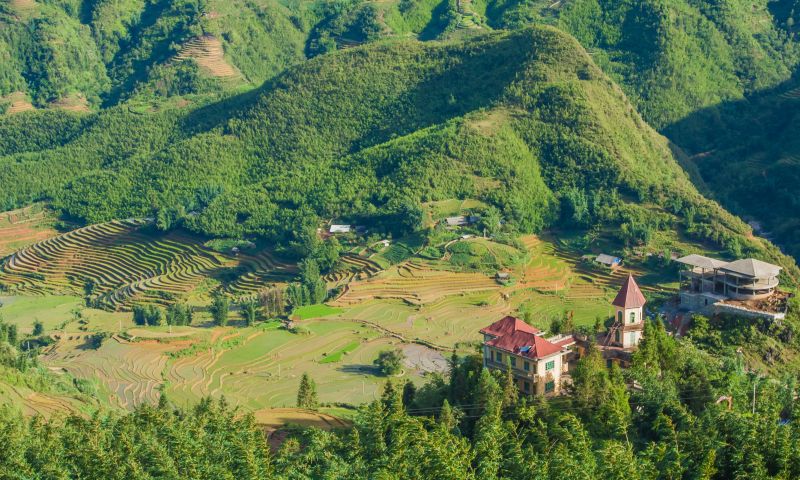
The standard Cat Cat Village trekking route runs: Sapa Market (start) → Rice Terrace Path → Village Gate → Cat Cat Waterfall → Cultural Zone → Return by motorbike taxi or on foot back to Sapa Town. Footwear recommendation: closed-toe shoes with grip — sandals are unsafe on the Cat Cat Village trail stone steps, particularly in wet conditions from June through August.
Trekking Route, Elevation Change, and Duration for Indian Tourists
The Cat Cat Village trekking route from Sapa Town covers 3 km one way with a 650-metre elevation descent, divided into 3 segments with distinct terrain at each stage.
| Segment | Distance | Duration |
|---|---|---|
| Sapa Market → Rice Terrace Path entry | 0.5 km | 10 min |
| Rice Terrace Path → Village Gate | 1.8 km | 45–55 min |
| Village Gate → Waterfall + Cultural Zone | 0.7 km | 20–25 min |
The Cat Cat Village trekking trail begins at Sapa Market on Cau May Street — the trailhead is signposted from the market perimeter. Indian tourists arriving in Sapa directly from Hanoi by overnight train should allow one full day of acclimatisation in Sapa Town before trekking to Cat Cat Village — at 1,550 metres elevation, mild altitude headaches are possible for visitors arriving from low-altitude Indian cities, including Mumbai, Delhi, and Chennai.
Guided vs. Self-Guided Trekking
Indian tourists can trek to Cat Cat Village independently without a guide, as the trail is well-marked with directional signs in English, but hiring a local Hmong guide at ₹1,400 to ₹2,400 (400,000 to 700,000 VND) for a half-day significantly enhances the cultural context of the visit. The Cat Cat Village trail does not require route-finding skill — the path from Sapa Market to the village gate follows a single well-trodden stone route with no significant junctions.
Local Hmong guides for the Cat Cat Village trek are available through Sapa Town tourism offices, hotel desks, and guesthouse reception desks — booking the morning before the trek is sufficient outside peak season. What a guide adds beyond navigation: real-time explanation of rice terrace farming cycles, introduction to Hmong households along the trail, and context for the cultural demonstrations inside Cat Cat Village that English signage alone does not provide. Solo trekking risk on the Cat Cat Village trail increases in the rainy season from June through August — the trail becomes muddy and slippery after rain, and guide accompaniment is recommended during this period.
Cat Cat Hmong Village Homestay
Cat Cat Village offers homestay accommodation with Black Hmong families, allowing Indian tourists to sleep in traditional wooden stilt houses, share meals cooked over an open fire, and participate in daily village life for one to two nights. Cat Cat Village is the closest Hmong settlement to Sapa Town with road access, making Cat Cat the most practical entry point for Indian tourists experiencing a Vietnamese ethnic village homestay for the first time — the 2 km distance from Sapa Town means emergency access to town services is available throughout the stay.
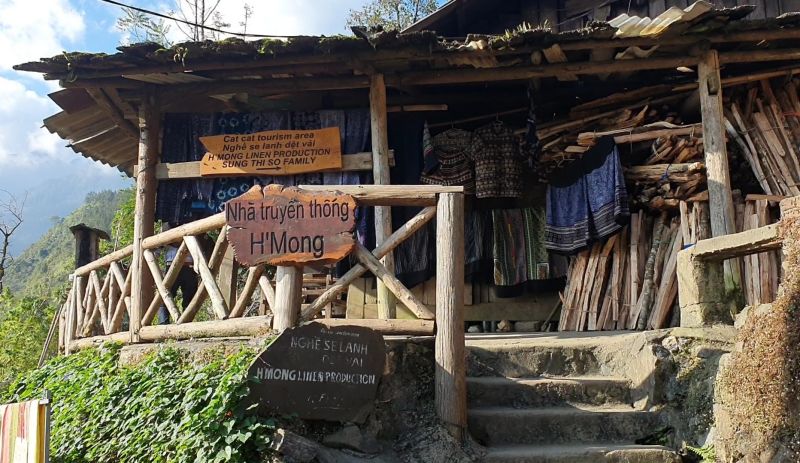
What a Cat Cat Hmong Homestay Includes
A Cat Cat Village homestay includes a shared bedroom in a traditional wooden stilt house, two meals — dinner and breakfast — and access to the host family’s daily agricultural and craft activities during the stay. Sleeping arrangements in Cat Cat Village homestays are shared-room format in most properties, with mattresses on wooden platform beds covered by handwoven Hmong blankets. Private rooms are available at selected Cat Cat Village homestays at a higher price point — confirm private room availability at the time of booking.
Bathroom and Electricity at Cat Cat Homestays
Cat Cat Village homestays provide a basic wet bathroom with a cold-water shower and a squat toilet, plus electricity and phone-charging stations for guest use in all properties. Hot water is available at a limited number of upgraded properties only — confirm hot-water availability at the time of booking, particularly for visits between December and February when night temperatures drop to 0 to 10 °C.
Vegetarian Food for Indians at Cat Cat Village
Meals at Cat Cat Village homestays are cooked by the host family and served communally, featuring rice, stir-fried seasonal vegetables, tofu, and corn. Hmong village cooking is naturally vegetarian-friendly, making Cat Cat Village an ideal stay for Indian tourists with specific vegetarian or Jain dietary requirements. Indian tourists with specific dietary requirements beyond standard vegetarian should notify the Cat Cat Village homestay host at least one day in advance.
Homestay Cost, Booking Process, and Availability for Indian Tourists
Cat Cat Village homestay costs ₹1,500 to ₹3,000 (400,000 to 800,000 VND) per person per night, including dinner and breakfast, bookable through Sapa Town guesthouses, local operators, or online platforms including Booking.com. The per-person cost at Cat Cat Village homestays is at the lower end of the Sapa homestay market — the 2 km proximity to Sapa Town makes it accessible without the logistical complexity of more remote village stays.
Advance booking for Cat Cat Village homestays is recommended at least 3 to 5 days before arrival during Indian festival travel windows — October and November (Dussehra and Diwali season) coincide with peak golden rice terrace season in the Muong Hoa Valley, creating high demand for all Sapa accommodation. March and April (Holi season) also fill Cat Cat Village homestay capacity early. Booking platforms with Cat Cat Village homestay listings include Booking.com and local Sapa operators who bundle the homestay with village entrance and trekking.
Cat Cat Village Day Trip vs. Overnight Stay
A day trip to Cat Cat Village is the better option for Indian tourists on a 2-day Sapa itinerary, while the overnight homestay is the better option for Indian tourists with 3 or more nights in the Sapa region — the deciding factor is total time available, not cost. Both formats give access to the same waterfall, weaving demonstrations, and trekking trail; the overnight stay adds dinner, breakfast, and the after-dark cultural rhythm of a working Black Hmong village.
| Day Trip | Overnight Stay | |
|---|---|---|
| Duration | 2–5 hours | 1–2 nights |
| Cost (INR) | ₹540 entrance + transport | ₹1,500–₹3,000/person/night (incl. meals) |
| Best for | First-time Sapa visitors, tight itineraries | Cultural immersion, longer Sapa stays |
| Booking needed | No (pay at gate) | Yes — 3–5 days in advance in peak season |
Indian tourists planning a broader Sapa experience often combine Cat Cat Village with other ethnic villages in the valley — the Muong Hoa Valley contains Ta Van, Ban Ho, and Lao Chai villages within trekking distance, each with distinct ethnic community profiles. A guide to villages in Sapa covers the full valley village circuit with comparative entry requirements and cultural attributes for each settlement.
For Indian travelers who prefer a fully organised itinerary including Cat Cat Village, trekking, and cultural experiences arranged in advance, Sapa tour packages for Indians bundle entrance fees, licensed guides, transport from Hanoi, and homestay accommodation into a single INR-denominated booking with no on-the-ground currency handling required.
Best Time to Visit Cat Cat Village for Indian Tourists
The best time for Indian tourists to visit Cat Cat Village is September to November, when rice terraces in the Muong Hoa Valley reach peak golden colour before the autumn harvest. This September to November window also aligns with peak booking demand from Indian travellers during Dussehra and Diwali holidays, when Vietnamtour.in schedules the highest volume of Sapa departures, combining Cat Cat Village with Muong Hoa Valley trekking.
| Season | Condition for Indian Tourists |
|---|---|
| Sep – Nov | Golden rice terraces, clear skies, ideal trekking — book early; peak season |
| Dec – Feb | Cold (0–10 °C at night), fog, occasional snow at elevation — fewer crowds; warm layers essential |
| Mar – May | Water-filled terraces with mirror reflections, flowering peach trees, pleasant temperatures — Holi timing ideal |
| Jun – Aug | Green terraces, rainy season — trail muddy, leeches on trekking path; not recommended for Cat Cat trekking |
Golden Rice Season (September to November): The best time to visit Cat Cat Village is from September to November, when the rice terraces in the Muong Hoa Valley reach a peak golden colour before harvest. This period offers the most stable weather for trekking and photography in Sapa.
Winter and Spring at Cat Cat Village (December to May): From December to February, Cat Cat Village experiences cold temperatures and fog, requiring warm layers for visitors. From March to May, the Muong Hoa Valley terraces are flooded with water, creating mirror-like reflections that are ideal for Indian tourists visiting during the Holi season.
Rainy Season Warning (June to August): The rainy season in Cat Cat Village runs from June to August, making the trekking trails slippery and prone to leeches. Photography conditions for the Cat Cat Waterfall reduce due to heavy afternoon cloud cover during these months.
The golden terrace season at Cat Cat Village from September through November coincides with the driest and most stable weather window in Lao Cai Province.
How to Reach Cat Cat Village from Sapa Town and from Hanoi
Indian tourists reach Cat Cat Village by a 15-minute motorbike taxi from Sapa Town, or by a 9 to 10-hour overnight journey from Hanoi combining a sleeper train, a minibus, and a final motorbike taxi or 30-minute walk. Cat Cat Village sits 2 km from Sapa Town and 350 km from Hanoi.
Sapa Town to Cat Cat Village
Cat Cat Village is 2 km from Sapa Town centre and can be reached in 15 to 20 minutes by motorbike taxi for ₹150 to ₹375 (40,000 to 100,000 VND) one way, 10 minutes by private car, or 30 to 45 minutes on foot via the trekking trail.
| Option | Duration | Cost (INR) |
|---|---|---|
| Walking (trekking trail) | 30–45 min | Free |
| Motorbike taxi (xe ôm) | 15–20 min | ₹150–₹375 (40,000–100,000 VND) one way |
| Private car/taxi | 10 min | ₹300–₹560 (80,000–150,000 VND) one way |
Walking to Cat Cat Village from Sapa Town is the scenic option — the trail descends through rice terraces and is downhill in the direction of Cat Cat Village. The return journey on foot is a steep 650-metre climb that most Indian tourists find physically demanding. After a full day of village walking, the motorbike taxi fare between Cat Cat Village and Sapa Town is ₹150 to ₹375 (40,000 to 100,000 VND), depending on the time of day — negotiate the fare before departing.
A private car or taxi suits Indian families travelling with elderly members or young children.
Cat Cat Village Day Trip from Hanoi
Indian tourists can reach Cat Cat Village from Hanoi in approximately 9 to 10 hours total — 8 hours by overnight sleeper train from Hanoi to Lao Cai station, then a 45-minute minibus transfer to Sapa Town, followed by a 15-minute motorbike taxi or a 30-minute walk to Cat Cat Village gate. Overnight trains from Hanoi to Lao Cai depart from Hanoi Railway Station (Ga Hà Nội) with multiple daily services — soft sleeper class costs ₹1,200 to ₹1,750 (350,000 to 500,000 VND) per berth in a 4-berth cabin. The Lao Cai station to Sapa Town shared minibus costs ₹150 (40,000 VND) per person and departs from Lao Cai station throughout the day to meet arriving trains.
Total INR cost estimate for a Cat Cat Village day trip from Hanoi: train (₹1,200 to ₹1,750) + Lao Cai–Sapa minibus (₹150) + Cat Cat Village entrance (₹540) + local transport (₹150 to ₹375) = ₹2,040 to ₹2,815 per person, excluding meals. For a complete breakdown of all transport options, including buses and private cars from Hanoi, the dedicated guide to getting from Hanoi to Sapa covers all routes with current 2026 pricing.
5 Things Indian Tourists Must Know Before Visiting Cat Cat Village
Cat Cat Village is straightforward to visit independently, but five practical details significantly improve the experience for Indian tourists:
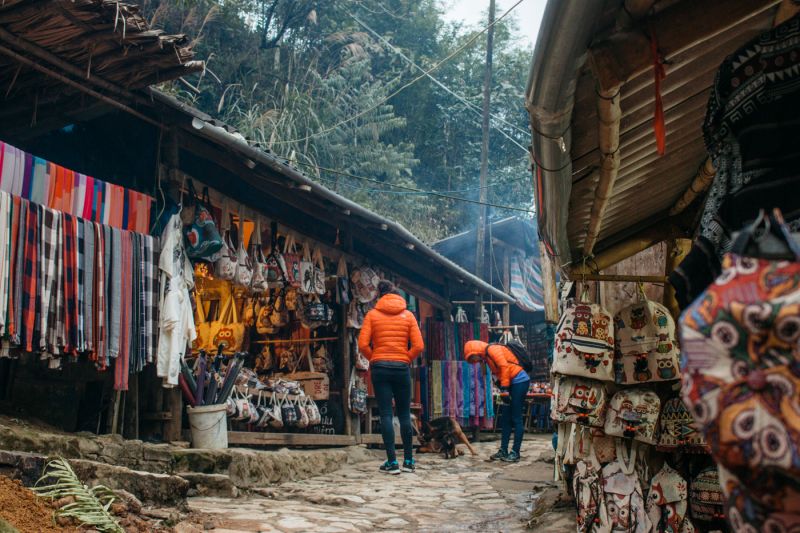
- Wear proper footwear for the waterfall trail. The stone steps descending to Cat Cat Waterfall are steep and become slippery after rain — closed-toe shoes with grip are essential. Sandals and flip-flops are unsafe on the wet stone sections of the Cat Cat Waterfall trail and increase the risk of ankle injury on the descent to the waterfall.
- Carry cash in VND only. The Cat Cat Village ticket gate and all vendors inside the village accept Vietnamese Dong exclusively — no card payments, no INR, and no USD are accepted at the entrance or at artisan stalls. The nearest ATM is in Sapa Town; withdraw VND before starting the walk to the village.
- Arrive before 9:00 AM for the quietest experience. Organised tour groups from Sapa Town hotels arrive at Cat Cat Village gate consistently after 9:30 AM. Indian tourists who arrive at or before 9:00 AM access the waterfall, cultural demonstrations, and trekking trail ahead of the main crowd and photograph the village without group congestion.
- Ask permission before photographing Hmong villagers. Black Hmong community members — particularly elderly women and children — are not public performers outside the designated amphitheater space. A refusal to be photographed should be respected immediately. At craft demonstration stations, artisans generally permit photography of the weaving and dyeing process.
- Vegetarian food is available without special arrangement. Hmong village meals at Cat Cat Village homestays naturally consist of rice, steamed corn, stir-fried vegetables, tofu, and fresh herbs — all vegetarian by default. Indian tourists staying overnight should confirm dietary preferences with the homestay host at least one day in advance; restaurant vendors near the Cat Cat Village entrance gate sell grilled corn and vegetable rice dishes that contain no meat, no seafood, and no animal-derived sauces — suitable for Indian vegetarians as served.
Frequently Asked Questions: Cat Cat Village for Indian Tourists
Is Cat Cat Village Worth Visiting from Sapa?
Yes — Cat Cat Village is worth visiting from Sapa because it combines a 30-metre waterfall, live cultural demonstrations, a French colonial structure, and a scenic rice terrace trek within a single ₹540 entrance ticket, making it the most complete single-ticket heritage experience in the Sapa area. Indian tourists seeking a less visited alternative to Cat Cat Village will find Ta Van or Ban Ho villages further into the Muong Hoa Valley with significantly lower visitor volume — Cat Cat Village is the most accessible and therefore the busiest Hmong settlement near Sapa, with peak visitor volume on Saturday and Sunday mornings.
Can Indian Tourists Visit Cat Cat Village Without a Guide?
Yes — Indian tourists can visit Cat Cat Village independently without a guide because the trail from Sapa Town is clearly marked with directional signs in English, the entrance gate is visible from the main road, and English-language information boards are placed throughout the village cultural zone. A local Hmong guide adds cultural depth to the craft demonstrations and amphitheater performances at Cat Cat Village, but is not required for navigation or entry. Independent visitors complete the Cat Cat Village circuit without assistance daily.
How Many Hours Do You Need at Cat Cat Village?
Indian tourists need 2 to 3 hours at Cat Cat Village to cover the waterfall, cultural demonstrations, and the main trail loop at a comfortable pace. Budget 3.5 to 4 hours if trekking the full distance from Sapa Town on foot one way — the 1 to 1.5 hour descent to the village adds significantly to total time. A full day trip from Sapa Town including the trek down, village exploration, lunch at the village, and a motorbike taxi return runs 4 to 5 hours in total.
What Is the Cheapest Way to Reach Cat Cat Village from Sapa Town?
The cheapest way to reach Cat Cat Village from Sapa Town is walking — the 2 km trekking trail from Sapa Market is free, takes 30 to 45 minutes, and passes through rice terrace scenery that is itself a major visual attraction of the Sapa visit. The return journey from Cat Cat Village to Sapa Town on foot involves a steep 650-metre uphill climb — most Indian tourists walk down to the village and take a motorbike taxi back to Sapa Town at ₹150 (40,000 VND), combining the free scenic descent with the practical paid return.
Is There Vegetarian Food Available at Cat Cat Village for Indian Tourists?
Yes — vegetarian food is available at Cat Cat Village because Hmong cuisine naturally features rice, steamed corn, stir-fried seasonal vegetables, tofu, and fresh herbs that are suitable for Indian vegetarians without modification. Restaurant vendors near the Cat Cat Village entrance gate serve grilled corn, vegetable rice plates, and fresh fruit from 7:30 AM onward. Indian tourists staying overnight at a Cat Cat Village homestay should notify the host family of vegetarian requirements at least one day before arrival — homestay families prepare meals on request and standard Hmong cooking accommodates vegetarian needs with no ingredient substitution required.
Conclusion
Cat Cat Village delivers all 4 attributes promised at the top of this guide — the 30-metre waterfall, the 3 km trekking trail through Muong Hoa rice terraces, Black Hmong weaving and indigo dyeing, and the French colonial hydroelectric station — within a single ₹540 (150,000 VND) entrance ticket, 2 km from Sapa Town. The village is the natural starting point of any Sapa itinerary before continuing deeper into the Muong Hoa Valley.
Indian tourists who want Cat Cat Village, trekking, and Sapa’s other highland experiences arranged as a single INR-priced package can explore Vietnamtour.in’s Sapa itineraries for Indian travelers. Vietnamtour.in — the No.1 premium Vietnam tour operator for Indians — has served 428,000+ Indian travellers across 46,000+ tours since 2015, with Sapa and Muong Hoa Valley routes among the most booked northern Vietnam experiences.