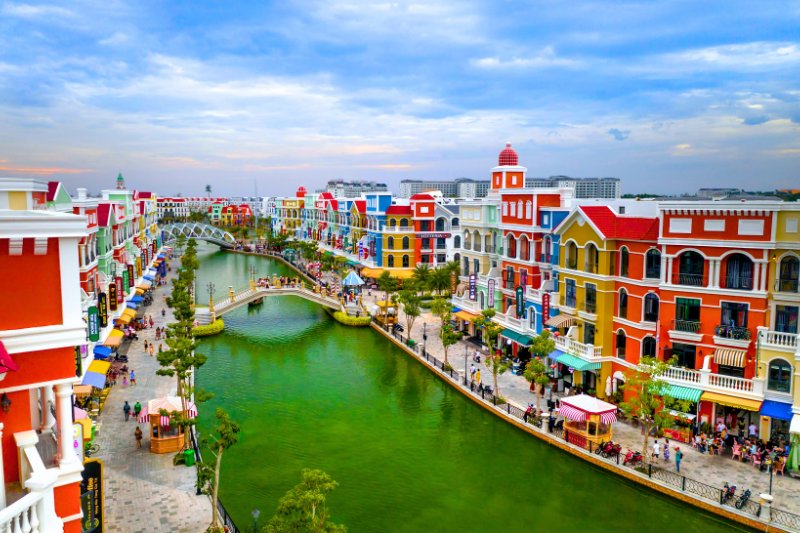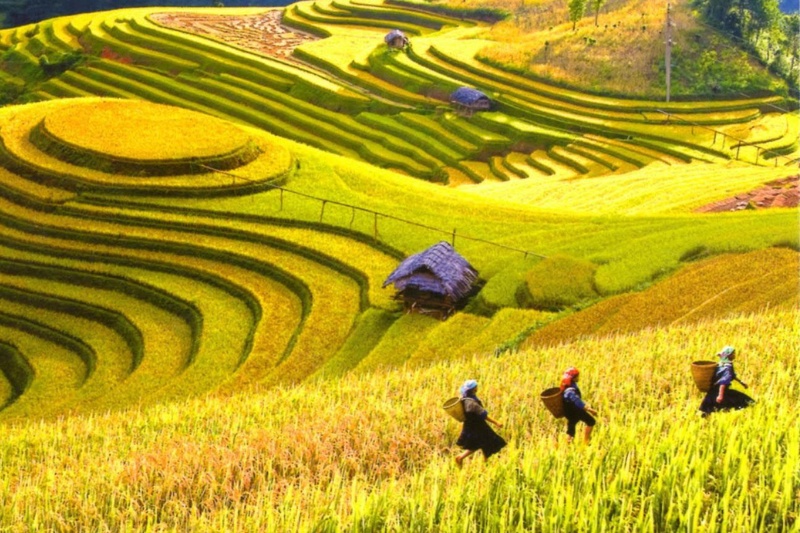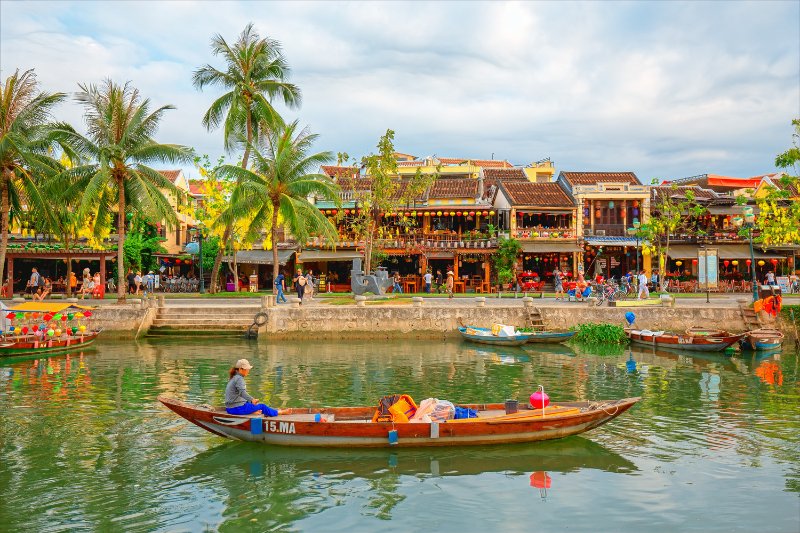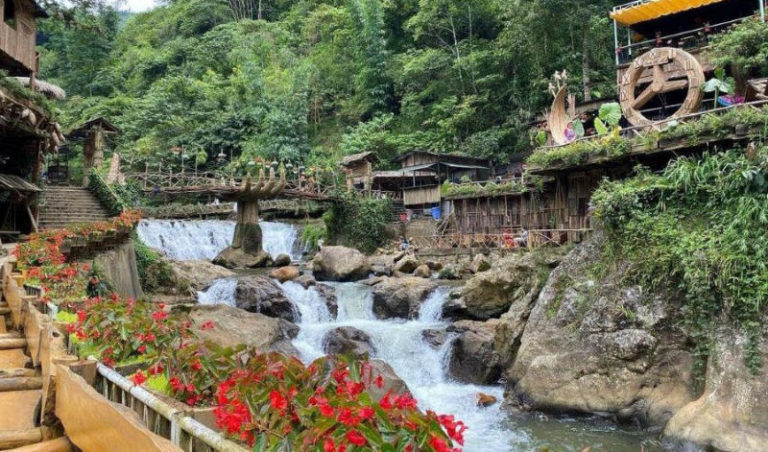

The misty town of Sapa – the hidden pearl of North West Vietnam – is famous for its majestic landscape, intriguing ethnic culture and cool climate. It is also a go-to destination for food lovers. From salmon hotpot and black chicken to bamboo-tube rice and seven-colour sticky rice, Sapa food is shaped by the mountains and the H’mong, Dao, Tay and Giay people who live here. Use our ultimate Sapa food guide to know what to eat, where to eat it and which dishes suit Indian and vegetarian travellers.
Sapa food at a glance (updated November 2026)
- Sapa is in Sa Pa ward, Lao Cai province, in the mountains of north-west Vietnam, and its food is built on cold-water fish, free-range meat, forest vegetables and sticky rice.
- The 10 must-try Sapa foods are salmon or sturgeon hotpot, “armpit” pig, thang co, mountain vegetables, grilled skewers, black chicken, smoked buffalo, com lam, seven-colour sticky rice and tao meo wine.
- Vegetarian-friendly picks include stir-fried mountain vegetables, com lam, seven-colour sticky rice, and grilled corn and sweet potatoes.
- Sapa has Indian restaurants such as Ganesh Indian Restaurant (3 Thac Bac Street, about 150,000–300,000 VND / ≈ ₹549–1,099 per person) and Bollywood Spices (22 Muong Hoa Street).
- The Sapa night market on N1 Street, in the town centre, is the easiest place to try grilled street food, mainly on Friday to Sunday evenings.
What Food Is Sapa Famous For?
Sapa is famous for salmon and sturgeon hotpot, black chicken, “armpit” pig, thang co, smoked buffalo, com lam (bamboo-tube rice), seven-colour sticky rice, fresh mountain vegetables, grilled street food and tao meo wine. The cool mountain climate lets farmers raise cold-water fish and grow vegetables found in few other parts of Vietnam, while the ethnic minority communities keep cooking methods such as smoking meat over the kitchen fire and cooking rice inside bamboo.
The table below sums up the best food in Sapa and which dishes work for vegetarian travellers:
| Sapa dish | What it is | Vegetarian? |
| Salmon / sturgeon hotpot | Sour hotpot with locally farmed cold-water fish | No |
| Thit lon cap nach | Roasted free-range small pig | No |
| Thang co | H’mong horse meat stew | No |
| Mountain vegetables | Stir-fried chayote shoots, cai meo and wild greens | Yes (ask for no fish sauce) |
| Grilled street food | Skewers, corn, sweet potatoes, eggs | Partly |
| Black chicken | Small black-skinned local chicken | No |
| Smoked buffalo | Buffalo meat dried over the kitchen fire | No |
| Com lam | Sticky rice cooked in bamboo tubes | Yes |
| Seven-colour sticky rice | Sticky rice coloured with forest leaves | Yes |
| Tao meo wine | Rice wine infused with wild mountain apples | Yes (alcoholic) |
1. Salmon Sour Hotpot – a perfect option for cold days
If you’re travelling to Sapa in winter, there is no better way to get away from the cold weather than a steaming salmon hotpot – one of the best foods in Sapa.
Sapa began farming salmon and sturgeon in its cold mountain streams in the mid-2000s, and the fish has since become a local specialty. Restaurants serve it as raw slices, salads, grilled fillets and fried dishes, but the sour hotpot (lau ca hoi chua) is the favourite because of the cold weather. The broth is cooked with tomato, pineapple and dill, and you dip fresh fish, herbs and mountain vegetables into it at the table.

Where to eat salmon hotpot in Sapa:
- King Salmon Restaurant: 15A Le Van Tam Street; 8:00 am – 11:00 pm; about 150,000–600,000 VND (≈ ₹549–2,198) per person.
- Hoa Dao Restaurant: 48 Le Van Tam Street; 10:00 am – 10:00 pm; about 80,000–176,000 VND (≈ ₹293–645) per person.
- Hotpot Center: 71 Xuan Vien Street; 9:00 am – 10:00 pm; about 99,000–249,000 VND (≈ ₹363–912) per person.

2. Pig “Theft Armpit” (Thit Lon Cap Nach) – an authentic Sapa local food
When it comes to Sapa specialties, Thit lon cap nach or pig “theft armpit” (pigs small enough to be carried under the arm to market) is one of the most famous dishes. In Sapa, these small pigs roam freely and find food in the forests and hills, so the pork is sweet and firm, unlike pork in other areas.
The dish is usually roasted whole or grilled over charcoal to create crunchy skin and a fragrant flavour. Locals like to serve it with tao meo wine, made from a wild mountain apple that grows around Sapa.

Where to eat: Roasted armpit pig is on the menu at most local restaurants along Xuan Vien, Thach Son and Le Van Tam streets, and is sold by the skewer at the Sapa night market.
3. Thang Co (Horse Meat Stew) – a typical Sapa street food
Literally “soup cooked in a big pan”, Thang Co is one of the most famous dishes of the H’mong ethnic minority. Traditionally, it was only served at markets, special events and festivals. Today, it is on the menus of many Sapa restaurants. It is made of horse meat, offal and bones stewed with local spices such as cardamom, star anise and ginger. The ingredients may surprise you, but many travellers who try it like its strong, spicy aroma.

Where to eat:
- Thang Co A Quynh: 15 Thach Son Street; 9:00 am – 11:00 pm. The restaurant also serves salmon hotpot.
- O Quy Ho Restaurant: 8 Thach Son Street; 7:00 am – 11:00 pm.
4. Fresh Mountain Vegetables – Sapa’s unique specialties
Thanks to its cool weather all year round, Sapa grows a plethora of fresh vegetables, and many can’t be found anywhere else in Vietnam. Besides temperate vegetables such as cabbage, cauliflower, broccoli, chayote and garlic shoots, Sapa is home to unique greens such as cai meo (H’mong mustard greens), wild ferns and black mushrooms. They are boiled, stir-fried with garlic or added to hotpots.
This is one of the easiest Sapa local foods for vegetarian travellers. Stir-fried chayote shoots (su su xao toi) and cai meo are on almost every restaurant menu; just ask the staff to cook them without fish sauce, oyster sauce or meat stock.

5. Grilled Street Food at the Sapa Night Market
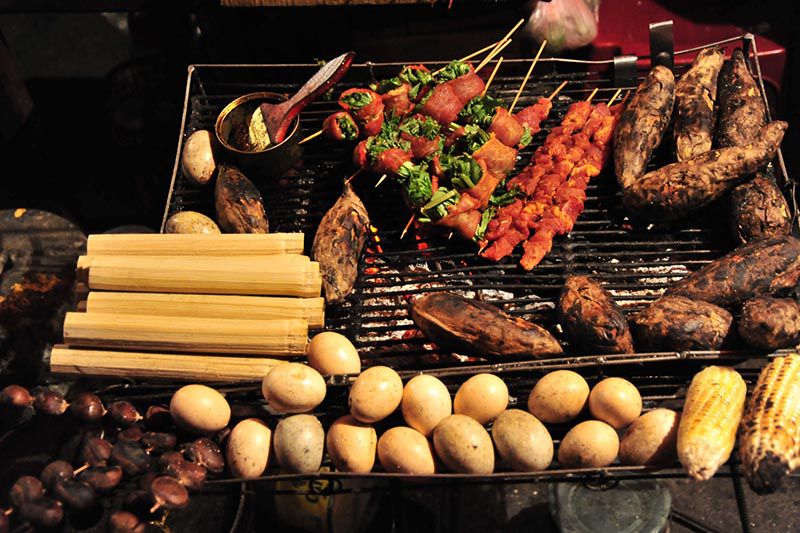
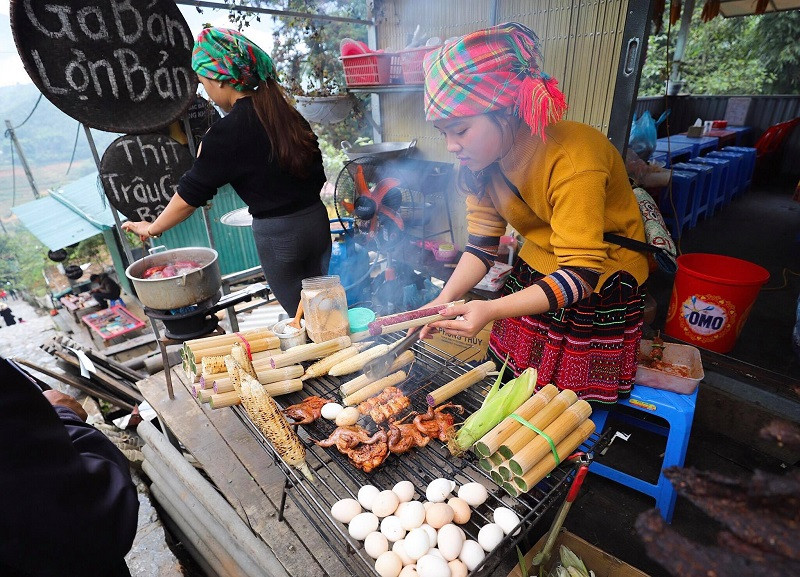
One of the fun things to do in Sapa at night is strolling past the charcoal grills and trying all kinds of grilled food, from pork and chicken skewers to grilled eggs, corn, sweet potatoes and com lam. Grilled vegetables wrapped around meat, and mushrooms, are also common.
The easiest place to try it is the Sapa night market on N1 Street in the town centre. It mainly runs on Friday, Saturday and Sunday evenings, from around 4–6 pm to 10 pm. Small grill stalls also set up around the town centre on other evenings.


6. Sapa Black Chicken
Your Sapa culinary discovery could not be complete without trying black chicken (ga den) – a popular dish of the region. These small chickens have black skin and bones and, like the armpit pigs, roam freely in the hills, so their meat is firm and sweet. Sapa black chicken is fried, steamed or stewed with medicinal herbs, but it is at its best grilled with honey over charcoal. Locals consider the herbal stew a nourishing tonic, which is why black chicken is one of the most sought-after dishes in the region.

Where to eat: Black chicken is served at most local restaurants in Sapa, including Hoa Dao Restaurant (48 Le Van Tam Street), and grilled black chicken is sold at the night market.
7. Smoked Buffalo (Thit Trau Gac Bep)
Smoked buffalo, locally known as “thit trau gac bep”, is a specialty of the north-west mountains. Strips of buffalo meat are seasoned with chilli, ginger and mac khen (wild pepper), then hung above the kitchen fire to dry. This traditional method let ethnic families keep meat for months, and the smoke gives it a unique flavour. You can eat it as a snack with beer or rice wine, and it is a popular food gift from Sapa.

Where to eat or buy: Smoked buffalo is served in local restaurants and sold vacuum-packed in shops around Sapa market and the town centre. Note that it is beef-family meat (buffalo), which many Hindu travellers prefer to avoid.
8. Com Lam (Bamboo-Tube Rice) – a famous Sapa street food
Com lam is sticky rice cooked in a bamboo tube over charcoal, and it is a favourite of locals and tourists alike. The rice is soaked in stream water, packed into fresh bamboo tubes and grilled until the inner skin of the bamboo wraps around it, giving it a light, sweet fragrance. Eat it with salted roasted sesame or peanuts, or with chicken and pork skewers.

Where to eat: Com lam is sold at almost every grill stall in Sapa and at the night market on N1 Street. With sesame salt, it is a filling vegetarian snack.
9. Seven-Colour Sticky Rice – a beautiful dish in Sapa
Travelling around Sapa, you may come across the stunning seven-colour sticky rice (xoi bay mau). This eye-catching dish is a traditional food of the ethnic groups of the northern mountains, such as the Tay, Nung and Giay, who make it for festivals and believe it brings good luck. All the colours come from natural leaves, flowers and roots from the forest, giving the dish a gentle, natural flavour. It is a great vegetarian choice.

10. Tao Meo Wine – an authentic drink of the H’mong people
While Lao Cai is famous for many kinds of local wine, such as Bac Ha corn wine, Sapa is best known for tao meo wine. This drink is made by soaking tao meo, a small wild mountain apple that grows on the Hoang Lien Son range, in rice wine. It tastes sweet and slightly sour, and is a nice treat on a cold evening. Bottles of tao meo wine and tao meo syrup make popular souvenirs.

Vegetarian and Indian Food in Sapa
Yes, Indian and vegetarian travellers can eat well in Sapa: the town has a few Indian restaurants, several vegan cafes, and many local dishes that are naturally vegetarian.
- Ganesh Indian Restaurant: 3 Thac Bac Street; 10:00 am – 10:00 pm; about 150,000–300,000 VND (≈ ₹549–1,099) per person; vegetarian and vegan options.
- Bollywood Spices: 22 Muong Hoa Street; 9:00 am – 11:00 pm; about 100,000–400,000 VND (≈ ₹366–1,465) per person; paneer curries and North Indian dishes.
- Sapa Cloudy Vegetarian Restaurant: 10 Hoang Lien Street.
- Thong Dong Vegan Kitchen & Cafe: 8B Hoang Dieu Street.
- Tree Vegan Kitchen: Ta Van Giay village, handy if you trek through Muong Hoa Valley.
- Van Sam Restaurant: 2nd floor of Hoang Lien Cable Car Station at Sun World Fansipan Legend, with vegetarian options.
Jain travellers should tell the restaurant in advance that they need food without onion, garlic, potato or other root vegetables. When you travel with us, we can pre-arrange Indian or Jain meals in Sapa.
Tips for Enjoying Sapa Food
- Check the meat: Thang co is horse meat, and smoked buffalo and many hotpots contain beef-family meat or pork. Ask before ordering if you avoid any of these.
- Say “an chay” (vegetarian) and “khong nuoc mam” (no fish sauce) to get vegetarian versions of local dishes.
- Eat the hotpot in the cool months: From November to February, evenings in Sapa can drop below 10°C, perfect for hotpot and grilled food.
- Agree the price first at night-market stalls and for fish sold by weight in hotpot restaurants.
- Go easy on rice wine: Tao meo and corn wine are stronger than they taste.
Food is only one part of the trip. Combine your meals with the places to visit in sapa, such as Fansipan, Cat Cat village and Muong Hoa Valley. Nearby, the rong may glass bridge on O Quy Ho Pass and the hilltop moana sapa are popular photo stops. See all sapa attractions in our destination guide.
If you prefer a ready-made plan, our sapa tour vietnam options include local food stops, vegetarian-friendly meals and Indian restaurants. Tell us your dates and food preferences below.
FAQs About Sapa Food
What food is Sapa famous for?
Sapa is famous for salmon and sturgeon hotpot, black chicken, “armpit” pig, thang co, smoked buffalo, com lam bamboo-tube rice, seven-colour sticky rice, mountain vegetables and tao meo wine.
What is Sapa black chicken?
Sapa black chicken is a small, free-range local chicken with black skin and bones, usually grilled with honey over charcoal or stewed with medicinal herbs.
Is there Indian food in Sapa?
Yes. Ganesh Indian Restaurant on Thac Bac Street and Bollywood Spices on Muong Hoa Street serve Indian dishes with vegetarian options.
Can vegetarians find food in Sapa?
Yes. Try stir-fried mountain vegetables, com lam, seven-colour sticky rice, grilled corn and sweet potatoes, or eat at vegan cafes such as Sapa Cloudy and Thong Dong.
Where is the Sapa night market?
The Sapa night market is on N1 Street in the town centre and mainly opens on Friday to Sunday evenings until about 10 pm.
Restaurant addresses, opening hours and prices in this guide were last checked in November 2026 and may change.
Try all these must-eat Sapa foods to get the full flavour of the mountains. Get more inspiration from our Sapa travel guides, and plan your holiday in this misty town with a vietnam trip package from india by Vietnamtour.in.
RELATED ARTICLES