The best places to visit in Cambodia are Angkor Wat and the temples of Siem Reap, the Royal Palace and history museums of Phnom Penh, the islands of Koh Rong off Sihanoukville, the countryside of Battambang and the coast of Kampot and Kep. Most first-time visitors need 5 to 7 days to see these Cambodia tourist places, and the country is easy to combine with Vietnam, since Phnom Penh is only a 1-hour flight or 6 to 7 hours by bus from Ho Chi Minh City.
Travelling to Cambodia combines history, culture, nature and spirituality, and for Indian travellers it has a special connection: Angkor Wat was built as a Hindu temple to Vishnu, and the Archaeological Survey of India helped restore it. This guide lists the most worthwhile Cambodia tourist attractions and things to do in Cambodia by region, as a ready-made Cambodia sightseeing plan, with 2026 entry fees, a 5-day itinerary and practical tips.

The table below shows the main regions, what each is known for and how many days to allow.
| Region | Top places | Days to allow |
|---|---|---|
| Siem Reap | Angkor Wat, Bayon, Ta Prohm, Tonle Sap Lake | 2–3 days |
| Phnom Penh | Royal Palace, Silver Pagoda, Tuol Sleng, markets | 1–2 days |
| Sihanoukville and islands | Otres Beach, Koh Rong, Koh Rong Samloem | 2–3 days |
| Battambang | Bamboo train, Wat Banan, Phnom Sampeau | 1–2 days |
| Kampot and Kep | Bokor Hill Station, Kep Crab Market | 1–2 days |
| North and east | Preah Vihear, Sambor Prei Kuk, Mondulkiri | 2–4 days |
Angkor Wat & Siem Reap: The Heart of Khmer Civilization
Siem Reap is the first place to visit in Cambodia for almost every traveller, because it is the gateway to the Angkor Archaeological Park, a UNESCO World Heritage Site covering more than 400 km² of Khmer temples. An Angkor Pass costs USD 37 for one day, USD 62 for three days and USD 72 for seven days in 2026, and children under 12 enter free. Buy it only from the official Angkor Enterprise ticket office, website or app.
The Largest Religious Monument in The World: Angkor Wat
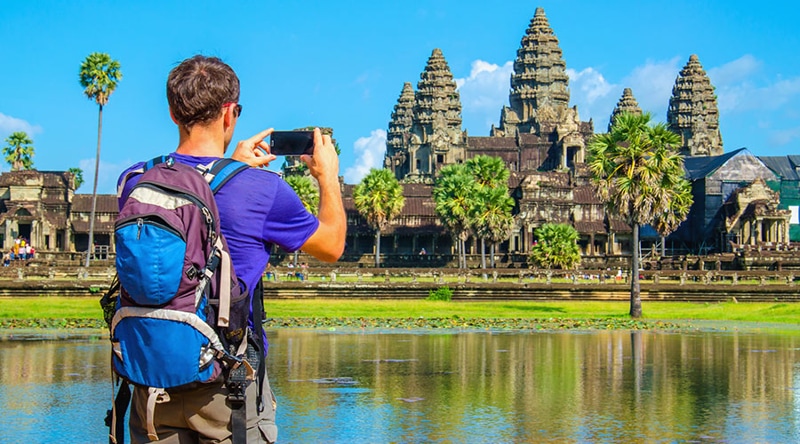
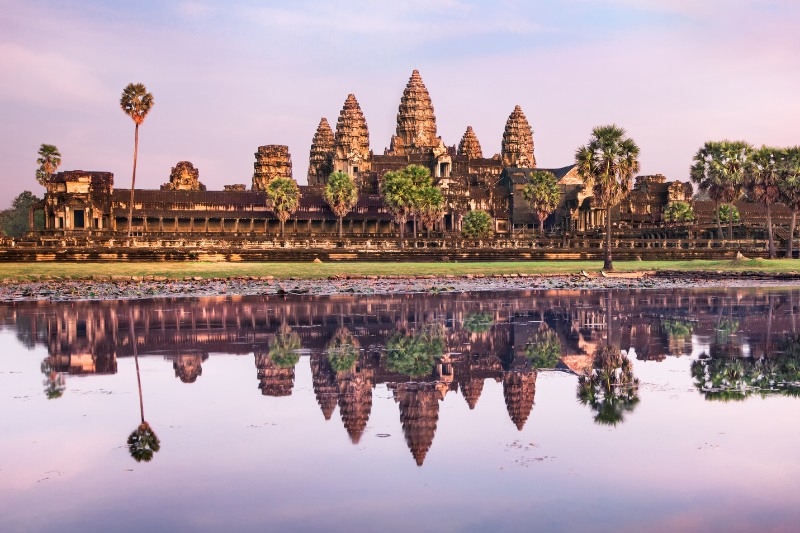
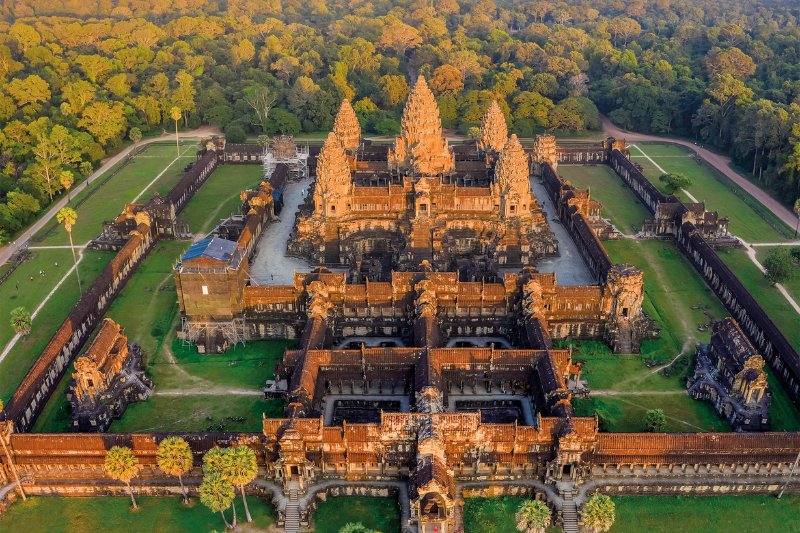
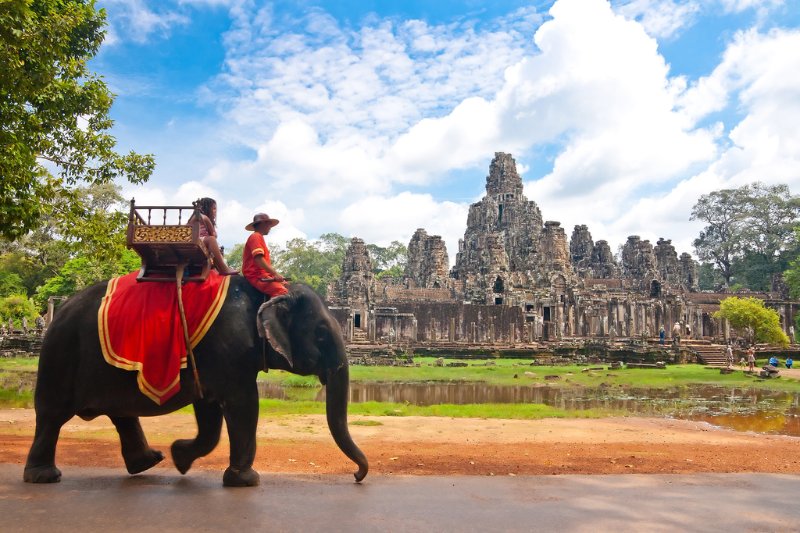
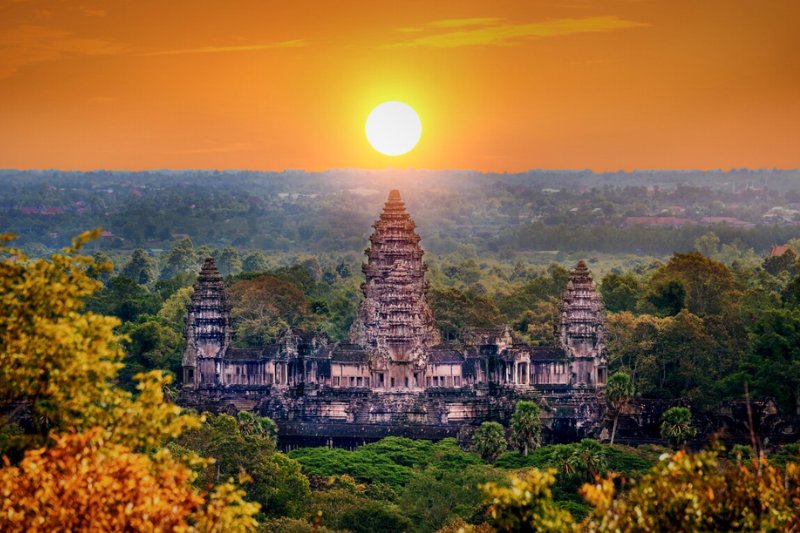
Angkor Wat is the world’s largest religious monument, built in the early 12th century by King Suryavarman II as a Hindu temple dedicated to Vishnu, and it is the national symbol shown on Cambodia’s flag. It was later converted into a Buddhist temple and is a testament to the architectural achievements of the Khmer Empire, with superbly proportioned towers and more than 600 m of bas-reliefs, including the Churning of the Ocean of Milk from the Hindu epics.
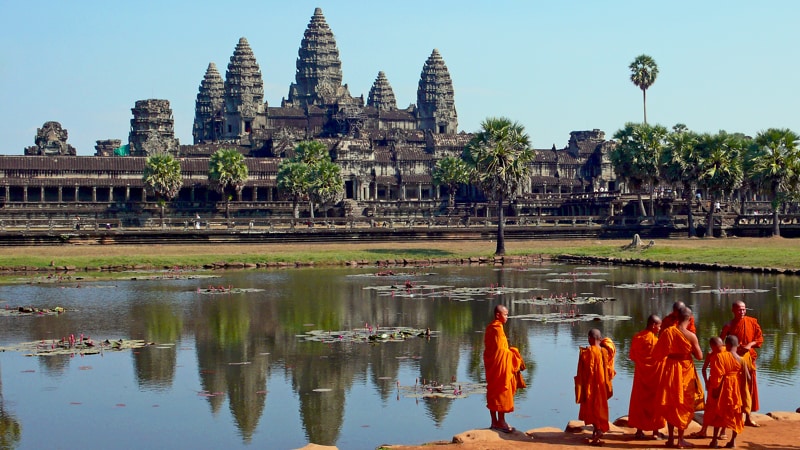
For Indian visitors, the link to home is strong: the Archaeological Survey of India worked on the restoration of Angkor Wat from 1986 to 1993. Seeing the sun rise over the five towers is a once-in-a-lifetime experience; the temple opens at 5 AM for sunrise, and you need a valid Angkor Pass even at that hour. Wear clothes that cover your shoulders and knees, as guards refuse entry to the upper level otherwise.
Angkor Thom and Bayon Temple
Angkor Thom is a walled royal city of 9 km² just north of Angkor Wat, and at its centre stands the Bayon Temple, famous for more than 200 giant smiling stone faces. The faces are believed to represent wisdom and compassion, and the Bayon is one of the most photographed tourist places in Cambodia.

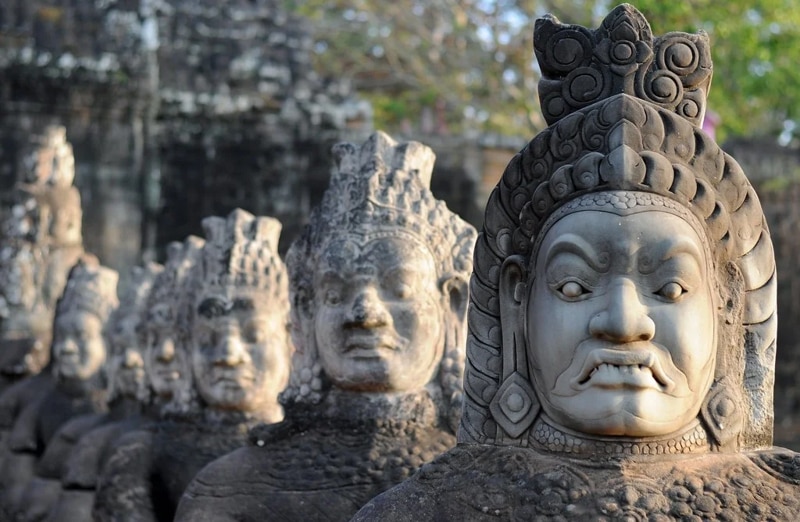
Enter Angkor Thom through the South Gate, lined with stone gods and demons pulling a naga serpent, then continue to the Baphuon temple and the Terrace of the Elephants, all within walking distance of the Bayon.
Ta Prohm Temple
Ta Prohm, east of Angkor Thom, is the “jungle temple” where giant silk-cotton and fig trees grow through the stone galleries, and since 2003 it has been conserved by the Archaeological Survey of India. Unlike most temples at Angkor, it was deliberately left partly in the grip of the forest, creating a beautiful and eerie backdrop that is one of the most photographed sights in Angkor.

Go early in the morning, before the tour groups arrive, and follow the wooden walkways, which protect both visitors and the fragile structures.
Siem Reap: More than Just the Temples
Siem Reap town is the base for visiting Angkor, 6 km to the north, with hotels for every budget, Indian restaurants and an evening Apsara dance scene. You can unwind in coffee shops, walk the Old Market, or sample Khmer food along Pub Street; our guide to cambodia nightlife covers the best bars, night markets and shows.

Because it combines ancient heritage with modern comforts, Siem Reap is the best place to start a trip to Cambodia, especially for first-time visitors.
Tonlé Sap Lake and Floating Villages
Tonlé Sap is the largest freshwater lake in Southeast Asia, about 15 km south of Siem Reap, and its floating villages rise and fall with water levels that change by several metres between seasons. The tonle sap lake is best known for houses, schools and markets built on stilts or floating rafts.

A boat trip to Kampong Phluk or Kampong Khleang shows stilted homes, flooded forests and open-lake views. The water is highest from September to November, the best time to see the flooded forest by boat.
Phnom Penh: History, Culture, and Modern Life
Phnom Penh, Cambodia’s capital, is the second essential stop after Siem Reap, combining the Royal Palace, riverside boulevards, busy markets and the memorials of the Khmer Rouge years. It sits where the Tonle Sap River meets the Mekong, and most sights are within a 15-minute tuk-tuk ride of the riverfront.
The Royal Palace and The Silver Pagoda
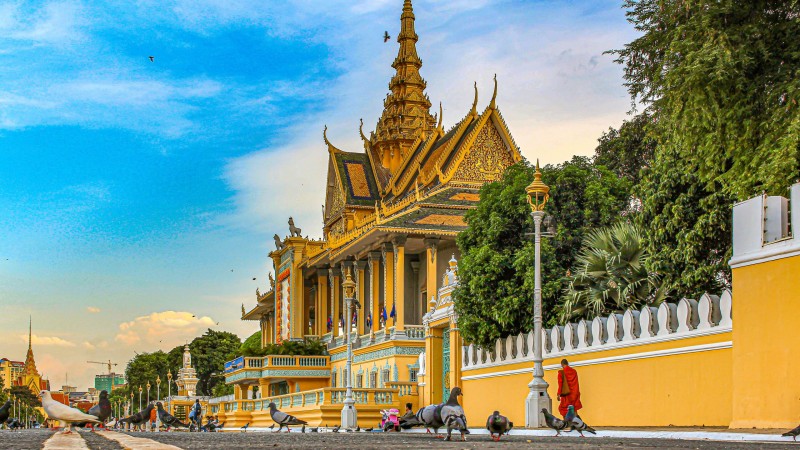
The Royal Palace, on Sisowath Quay facing the river, is the home of Cambodia’s king, and its Silver Pagoda is floored with more than 5,000 silver tiles. Both feature traditional Khmer architecture with golden spires, set in manicured gardens, and entry costs about USD 10.

The Silver Pagoda also houses an emerald Buddha and a life-size gold Buddha set with diamonds. Shoulders and knees must be covered, and the palace closes for a lunch break, so plan a morning or late-afternoon visit.

Tuol Sleng Genocide Museum and Killing Fields
Tuol Sleng (S-21), a former school turned prison, and the Choeung Ek Killing Fields, 15 km south of the city, are memorials to the victims of the Khmer Rouge regime of 1975 to 1979. Entry is a few US dollars each, and the audio guides are highly recommended.

Visiting these places helps travellers understand how strong the Khmer people are and how far Cambodia has come since. Both sites are emotionally intense, so many families with young children skip them.
Central Market and Russian Market
Phsar Thmei (Central Market), built in 1937 under a yellow Art Deco dome, and the Russian Market (Tuol Tom Poung) are Phnom Penh’s two best markets for souvenirs, silk and street food. The Central Market is an architectural landmark where you can watch everyday city life.

The Russian Market is busier, with narrow alleys, handicrafts, silk scarves and food stalls selling authentic Cambodian street food. Bargain politely and pay in US dollars or riel. If you continue to Vietnam, our list of what to shop in vietnam helps you save luggage space for coffee and silk from Hoi An.

Wat Phnom and the Independence Monument
Wat Phnom is the hilltop temple that gave Phnom Penh its name, and the Independence Monument, built in 1958, marks Cambodia’s independence from France in 1953. The monument is lit up at night and makes a striking photo stop, while Wat Phnom offers a short climb and a peaceful break from the city.

Sihanoukville and Cambodia’s Best Islands
Sihanoukville, about 230 km south-west of Phnom Penh, is Cambodia’s main beach town and the ferry port for Koh Rong and Koh Rong Samloem, the country’s most beautiful islands. The expressway from Phnom Penh has cut the drive to about 2.5 hours. Our guide to cambodia beaches compares every stretch of the coast.
Sihanoukville: A Beach Resort City
Sihanoukville has a long coastline of beachfront resorts, and Otres Beach and Independence Beach are the best for swimming and sunsets. The fine sand and open sea views are ideal for an evening stroll.

The town itself has seen heavy construction in recent years, so most travellers stay on Otres Beach or go straight to the islands. Upscale resorts have infinity pools and ocean views, which make good backdrops for holiday photos.
Koh Rong: Dramatic White Sand and Turquoise Waters
Koh Rong, about 45 minutes by fast ferry from Sihanoukville, is Cambodia’s best-known island, with white-sand beaches, turquoise water and glowing bioluminescent plankton after dark. Wooden piers, long beaches and jungle-covered hills welcome visitors as they arrive.

Long Set Beach and Sok San Beach are the quietest stretches. Swimming at night to see the plankton glow is one of the most unique experiences in Cambodia, best on moonless nights.
Koh Rong Samloem: Tranquil Beauty and Luxurious Island Escapes
Koh Rong Samloem, south of Koh Rong, is the quieter island, with Saracen Bay’s calm water and boutique resorts that suit couples and families. It has fewer bars and more beachfront villas, palm-lined sand and clear water.

Whether you want a relaxing holiday or a romantic escape, Koh Rong Samloem offers a slow pace and beachfront accommodation, and it is one of the best beach destinations in Cambodia.
Battambang: Unique Landmarks and Countryside Wonders
Battambang, Cambodia’s second-largest city, sits in the north-west about 3 hours by road from Siem Reap, and it is known for French colonial streets, rice-field countryside and hilltop temples. It is one of the best places to visit in Cambodia to see rural life away from the crowds.
Bamboo Train (Norry)
The bamboo train, or “norry”, is a bamboo platform on wheels that runs along a short stretch of track through rice fields outside Battambang. The original route closed in 2017, and the current tourist line operates on a new section of track, but the ride is still simple, fun and full of countryside views.

Along the way you pass open farmland and rice fields, with plenty of stops for photos.
Wat Banan
Wat Banan is an 11th-century Khmer hilltop temple about 25 km south of Battambang, reached by a stairway of 358 steps, with five towers often compared to a small Angkor Wat. The climb is steep but well worth it for the views over green fields and hills.

Phnom Sampeau and the Bat Caves
Phnom Sampeau, about 12 km south-west of Battambang, is a limestone hill with temples, caves and a nightly bat exodus, when millions of bats stream out of a cave at dusk. The hilltop gives panoramic views over the plains.

The hill also has memorials to the Khmer Rouge period, so a visit combines natural beauty with history. Arrive by 5:30 PM to find a good spot at the foot of the hill.
Battambang Old Town with Colonial Architecture
Battambang’s Old Town, along the Sangker River, has some of Cambodia’s best-preserved French colonial shophouses, ideal for a walking tour or cycling. Broad streets and quiet cafés reflect the city’s history as a trading centre.

Kampot and Kep
Kampot and Kep, on Cambodia’s south coast near the Vietnamese border, combine a riverside town, the Bokor mountain and a small seaside resort, about 3 to 4 hours by road from Phnom Penh. Kep is only about 30 km from the Ha Tien border crossing to Vietnam, close to Phu Quoc.
Bokor Mountain and Bokor Hill Station
Bokor Hill Station, at about 1,000 m in Preah Monivong (Bokor) National Park, was built by the French in the 1920s as a cool mountain retreat, and its abandoned church and old hotel are now popular photo spots. Fog often drifts over the plateau, giving the area an atmospheric feel.

Kep Crab Market and Kep National Park
Kep Crab Market is famous for fresh crab cooked with Kampot green pepper, and Kep National Park behind the town has an 8 km walking loop with sea views. Fishermen bring their catch by boat straight to the market stalls.

For vegetarian travellers, the pepper farms around Kampot are the better visit: Kampot pepper has protected geographical indication status, and farm tours explain how it is grown.
Northern – Eastern Cambodia: Grand and Remote Sites
Northern and eastern Cambodia have two more UNESCO World Heritage Sites, Preah Vihear and Sambor Prei Kuk, plus the green hills of Mondulkiri, all far from the main tourist trail. Reaching them takes time, but they show a bigger and wilder side of the country.
Preah Vihear Temple
Preah Vihear is an 11th-century Hindu temple dedicated to Shiva, built on a 525 m cliff in the Dangrek Mountains and listed by UNESCO in 2008. It is about 4 to 5 hours by road from Siem Reap, and the views from the cliff edge over the plains are breathtaking.

Sambor Prei Kuk
Sambor Prei Kuk, near Kampong Thom, is a pre-Angkor temple city from the 7th century, listed by UNESCO in 2017, with more than 100 brick temples in the forest. It is quiet and shaded, and its octagonal towers carry some of the earliest Hindu carvings in Cambodia.

Mondulkiri
Mondulkiri, in the far east, is a highland province of rolling hills, waterfalls and forest, best known for the Bousra Waterfall and ethical elephant sanctuaries. It is about 6 to 7 hours by road from Phnom Penh, so allow at least two nights.
How To Reach Cambodia From India And Vietnam
There are few direct flights from India to Cambodia, so most Indian travellers fly via Bangkok, Singapore, Kuala Lumpur or Ho Chi Minh City, and many combine Cambodia with Vietnam on one trip. Indian passport holders need a visa: the e-visa and visa on arrival both cost USD 30 for a 30-day stay, and an online e-Arrival card must be completed before flying in.
From Vietnam, the main routes are a 1-hour flight from Ho Chi Minh City to Phnom Penh or Siem Reap, a 6 to 7-hour bus from Ho Chi Minh City to Phnom Penh, a Mekong boat from Chau Doc, or the Ha Tien border near Phu Quoc to Kep. Our guide on how to travel to cambodia from vietnam compares each option.
Best Time To Visit Places In Cambodia
The best time to visit Cambodia is from November to February, when the weather is dry and relatively cool at 25 to 30°C; March to May is very hot, and June to October is the rainy season. See our month-by-month guide on the best time to visit cambodia.
If you are combining Cambodia with Vietnam around Diwali, check the vietnam weather in october and the temperature of vietnam in november, as central Vietnam is rainy at that time while the south and Cambodia are drying out.
A Suggested Itinerary through the Best Places to Visit in Cambodia
Five days are enough to see the highlights of Cambodia: two in Siem Reap, one in Battambang, one in Phnom Penh and one on the south coast.
- Days 1 and 2 – Siem Reap: sunrise at Angkor Wat, Angkor Thom, the Bayon and Ta Prohm, plus a Tonle Sap boat trip and an Apsara dance show.
- Day 3 – Battambang: the bamboo train, Wat Banan and the bat exodus at Phnom Sampeau.
- Day 4 – Phnom Penh: the riverfront, Royal Palace, Silver Pagoda and Independence Monument.
- Day 5 – Kampot and Kep: Bokor Hill Station and a relaxed afternoon by the sea in Kep.
This sample itinerary can be customised for different travel styles and durations. Most Indian travellers continue into Vietnam afterwards: our cambodia and vietnam tour packages link Siem Reap and Phnom Penh with Ho Chi Minh City and the Mekong Delta, while vietnam and laos tour packages cover the wider Indochina route.
FAQs About Places To Visit In Cambodia
What is the most famous place in Cambodia?
Angkor Wat in Siem Reap is the most famous place in Cambodia, the world’s largest religious monument and the symbol on the national flag.
How many days are enough for Cambodia?
Five to seven days are enough for the main Cambodia tourist places: Siem Reap, Phnom Penh and either the islands or Battambang and Kampot.
Is Cambodia good for Indian vegetarian travellers?
Yes. Siem Reap and Phnom Penh have several Indian restaurants and many Khmer dishes can be made vegetarian, though you should ask for no fish sauce or prahok (fermented fish paste).
Plan Your Cambodia And Vietnam Trip
Visit Cambodia once to admire its ancient temples, royal palaces and quiet islands, and you will want to come back. Since Cambodia and Vietnam share a border, many Indian travellers add a few days in Vietnam: see our list of places in vietnam to visit, choose a vietnam tour package 6 nights 7 days or vietnam holiday packages 10 days, or book a vietnam land package if you already have your international flights.
To combine the places to visit in Cambodia with Vietnam in one route, share your travel dates, group size and departure city in the form below. A Vietnamtour.in expert will plan the flights or border crossing, Angkor tickets, hotels and vegetarian or Jain meals in both countries.