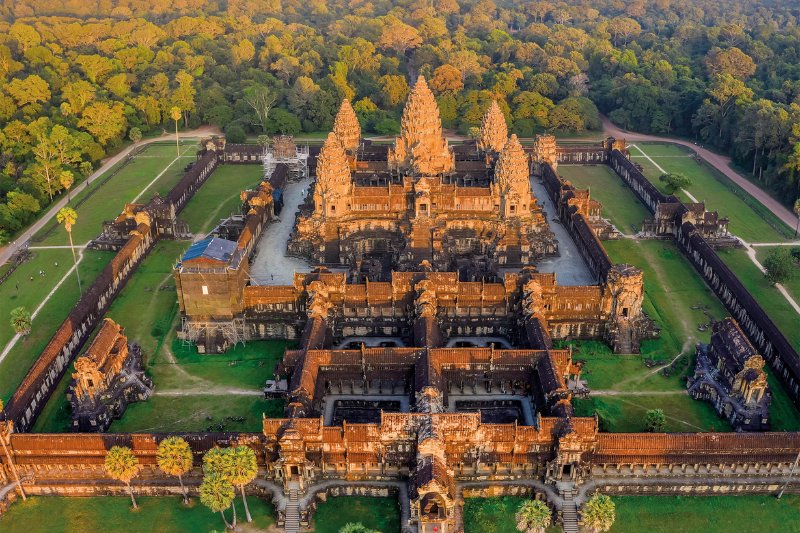
November to February is the best time to visit Cambodia, when temperatures range from 21°C–31°C (70°F–88°F), humidity holds at 65–72%, and all major attractions, including Angkor Wat, remain fully accessible. This 4-month window aligns directly with India’s peak winter holiday calendar — covering Diwali, Christmas, New Year, and Republic Day — making it the most convenient period for flight bookings and group departures from Delhi, Mumbai, and Bangalore.
This guide covers Cambodia weather month-by-month, peak season crowd levels at Angkor Wat, vegetarian food availability for Indian travelers, INR cost breakdowns by season, and a Cambodia–Vietnam combined itinerary timing — drawing on Vietnamtour.in’s operational data across 46,000+ guest tours since 2015.
Cambodia Has 2 Seasons That Determine When to Visit
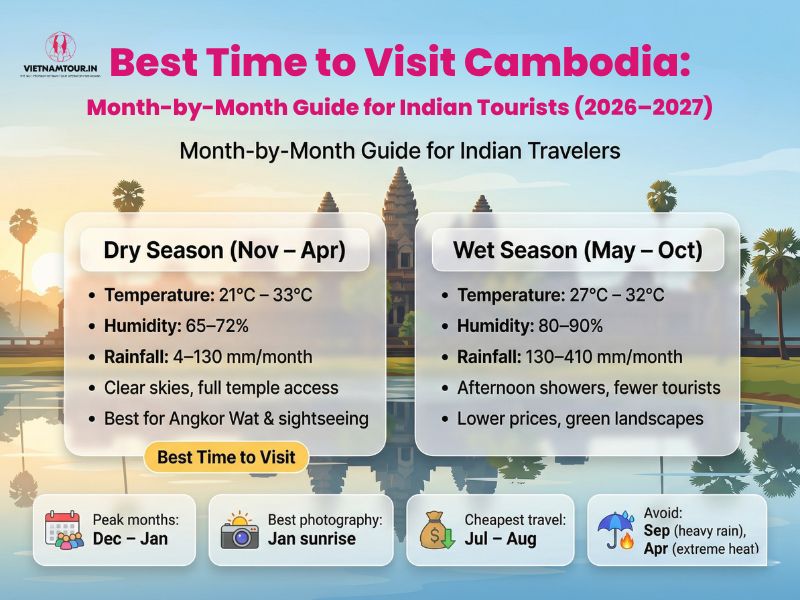
Cambodia’s climate divides into 2 seasons. These 2 seasons control temple accessibility, road conditions, hotel pricing, and daily visitor numbers at Angkor Archaeological Park.
The dry season in Cambodia runs from November to April. The northeast monsoon delivers low humidity (65–72%), minimal rainfall (4–50 mm/month), and clear skies across all 3 primary tourist destinations: Siem Reap, Phnom Penh, and the coastal islands of Sihanoukville.
The wet season in Cambodia runs from May to October. The southwest monsoon delivers 80–90% humidity and 130–410 mm of monthly rainfall concentrated in August and September, which account for 75% of Cambodia’s total annual precipitation.
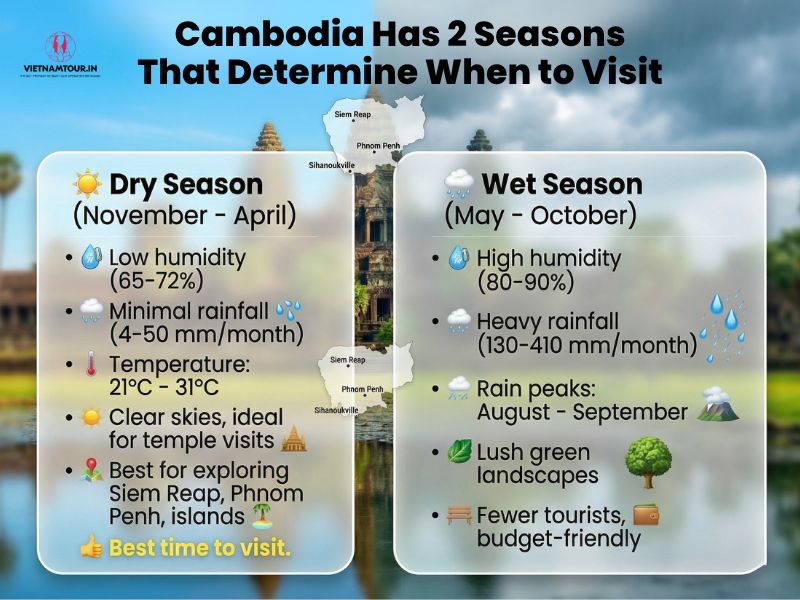
Cambodia Seasonal Climate and Cost Comparison for Indian Travelers
| Period | Months | Temp (°C / °F) | Humidity | Mid-range hotel/night | Angkor crowd |
|---|---|---|---|---|---|
| Cool dry | Nov–Feb | 21–31°C / 70–88°F | 65–72% | ₹4,500–₹12,000 | Peak (Dec–Jan: 3,500–4,000/day) |
| Hot dry | Mar–Apr | 28–40°C / 82–104°F | 70–78% | ₹3,500–₹6,000 | Moderate |
| Early monsoon | May–Jul | 26–34°C / 79–93°F | 80–88% | ₹2,800–₹4,500 | Low (under 1,500/day in Jul) |
| Peak monsoon | Aug–Oct | 25–32°C / 77–90°F | 85–90% | ₹2,800–₹4,500 | Lowest (annual minimum in Sep) |
Within the dry season, 2 sub-periods apply: a cool dry period from November to February (21°C–31°C) suitable for full-day temple walking, and a hot dry period from March to April (28°C–40°C / 82°F–104°F) that requires temple visits to be scheduled between 5:00 AM and 9:00 AM to avoid heat exhaustion.
Cambodia Weather by Month
Cambodia’s 12 months produce 3 distinct travel conditions — cool dry, hot dry, and monsoon — each delivering a different combination of weather comfort, crowd density, and pricing for Indian visitors.
November in Cambodia
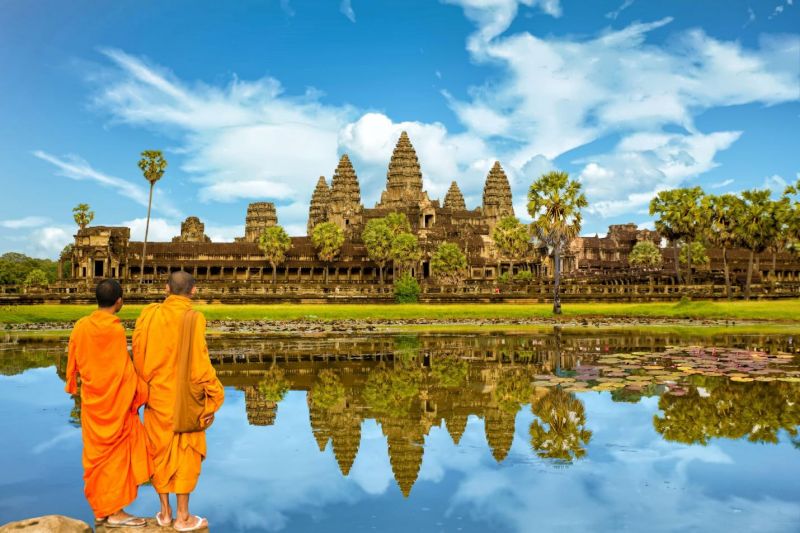
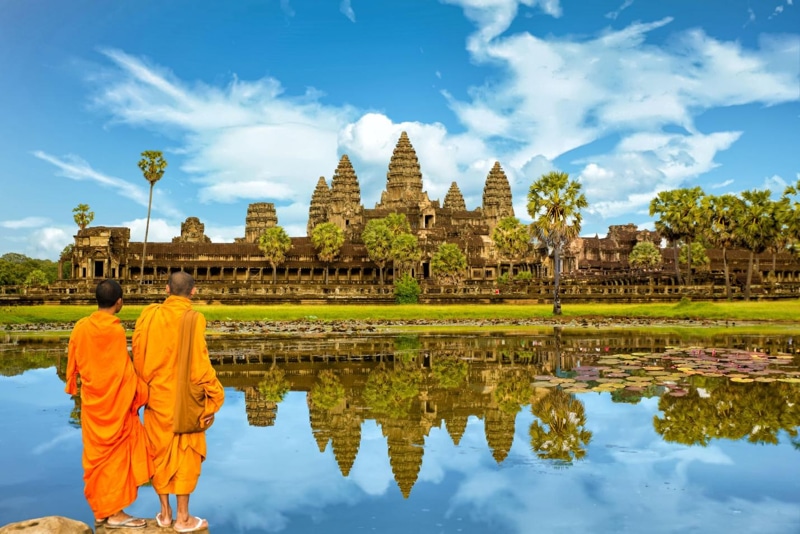
November delivers the best weather-to-cost ratio of any month on the Cambodia calendar. Temperatures range from 24°C–31°C (75°F–88°F) with low humidity following the monsoon’s end. Angkor Wat’s moats remain full from wet-season rains, producing reflection pool photography conditions while peak-season crowds have not yet arrived. Daily international ticket sales at Angkor run at 2,500–3,500 — 30–40% below December peak levels, according to Angkor Enterprise figures. Mid-range hotels in Siem Reap average ₹4,500–₹12,000 per night. November combines post-rain greenery with pre-peak pricing — no other month on the calendar offers this combination simultaneously.
December in Cambodia
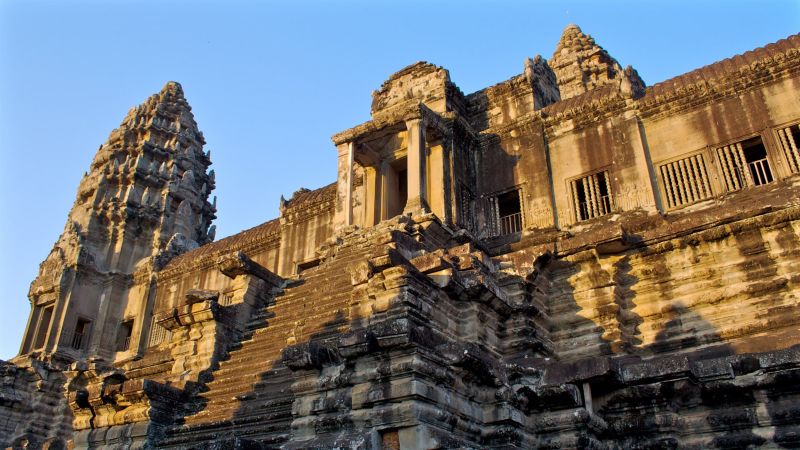
December is peak season in Cambodia, with the highest visitor volume and the most comfortable walking temperatures of the year. Christmas, New Year, and Indian winter school holidays produce the highest visitor concentration at Angkor Wat, with 3,500–4,000 international tickets sold daily, according to Angkor Enterprise annual figures. Temperatures range from 21°C–30°C (70°F–86°F). Mid-range hotels average ₹6,500–₹12,000 per night. Book flights and accommodation 60–90 days in advance for December travel from India.
January in Cambodia
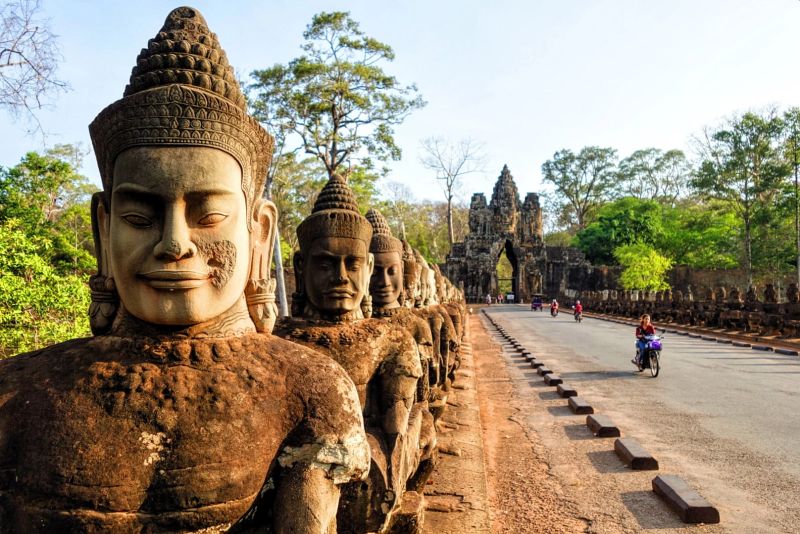
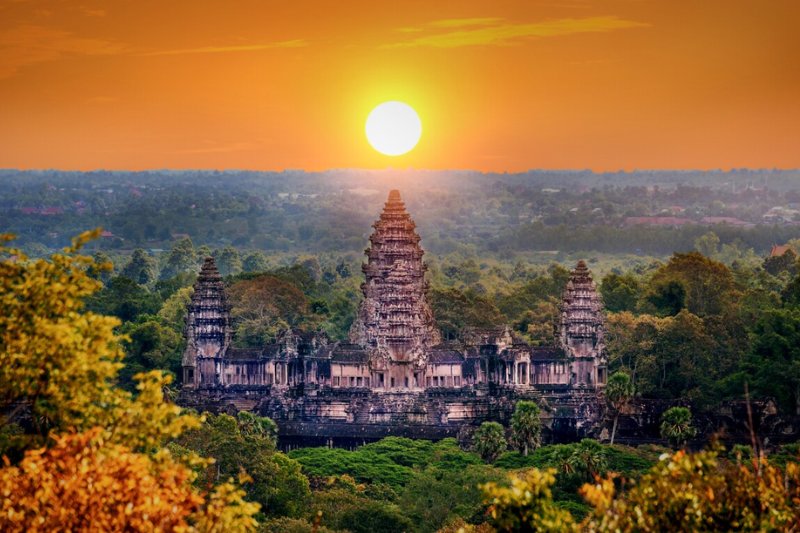
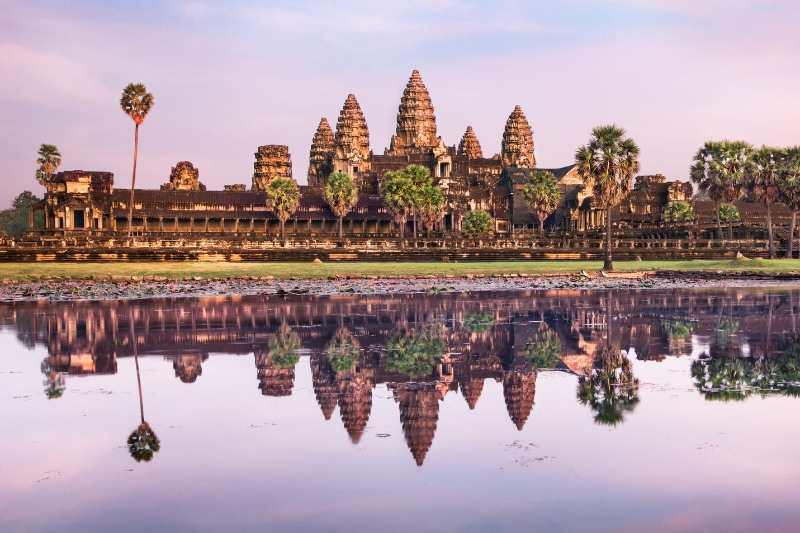
January records Cambodia’s lowest temperatures at 22°C–28°C (72°F–82°F) and the highest annual sky clarity at Angkor Wat — making it the single best month for sunrise photography. Sunrise occurs at 6:32–6:35 AM, the latest of any month, producing the clearest morning photography conditions of the year: clear skies, low humidity, and a reflection pool that mirrors all 5 central towers at dawn. Annual visitor volume at Angkor peaks in January. Indian travelers planning Republic Day week travel (January 26) find January optimal for weather, with flight and hotel bookings required 90 days in advance.
February in Cambodia
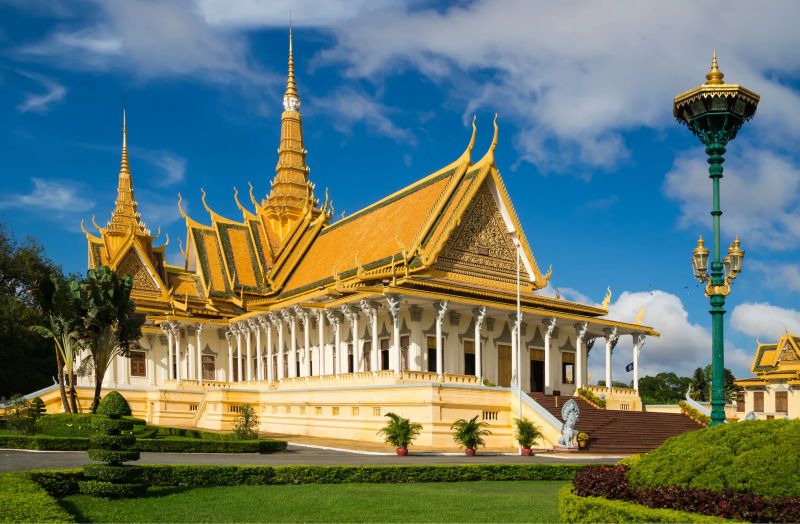
February delivers excellent weather at 22°C–30°C (72°F–86°F) with 15–20% fewer visitors than January’s peak — the lowest crowd level within the 4-month dry season window. Chinese New Year produces localized Angkor crowd surges for 3–5 days. February is the last comfortable month before heat begins building toward March.
March in Cambodia
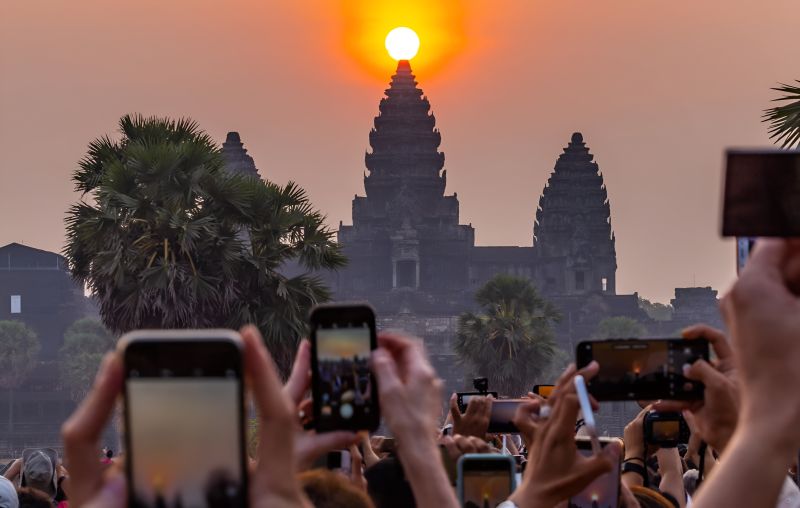
March opens the hot dry period at 28°C–35°C (82°F–95°F) across Siem Reap and Phnom Penh, but delivers a unique astronomical event that no other month can replicate. The spring equinox on March 20–21 produces a rare solar alignment at Angkor Wat: the sun rises directly behind the central tower — an orientation Cambodia’s 12th-century architects encoded into the temple’s east-facing design. Western tourist numbers decline significantly in March, and mid-range hotel rates drop to ₹3,500–₹6,000 per night, 40–50% below December peak.
April in Cambodia
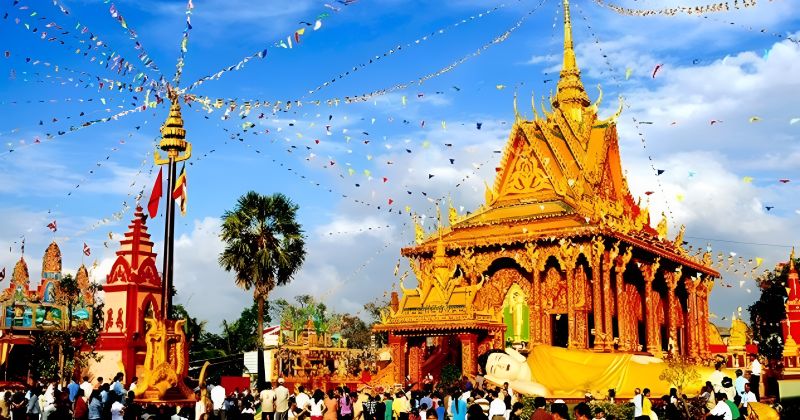
April is Cambodia’s hottest month at 35°C–40°C (95°F–104°F), but also the month of Cambodia’s largest domestic festival — Khmer New Year on April 13–16. Temple exploration is limited to 2 practical windows: 5:00 AM–9:00 AM and 4:00 PM–6:00 PM. April coincides with Indian school holidays, making it a high-demand booking month despite temperatures reaching 35°C–40°C with 70–78% humidity (effective heat index above 50°C). Book temple sunrise tours in advance — guide availability tightens sharply during Khmer New Year.
May in Cambodia
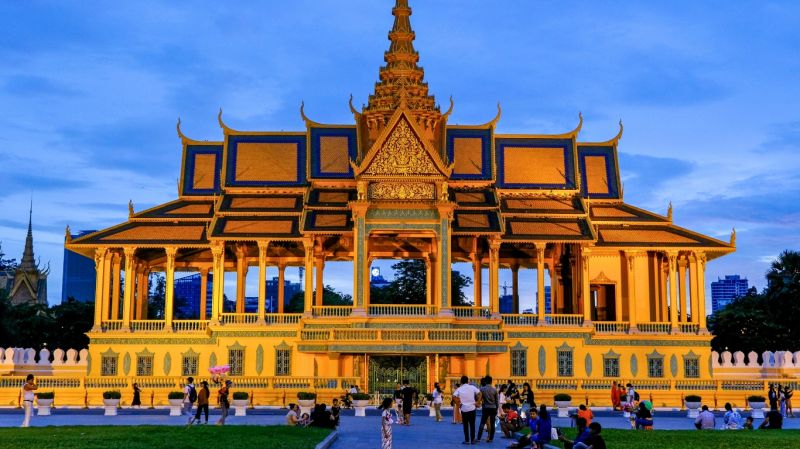
May marks the monsoon’s start. Hotel rates drop 30–40% from peak season, and morning temple conditions remain viable with predictable afternoon rain. Afternoon showers begin — typically 1–2 hours daily from 2:00 PM onward — leaving mornings clear for temple visits. Siem Reap’s surrounding rice paddies turn green for the first time since October. May is viable for experienced travelers comfortable with variable weather; it is not recommended for first-time visitors who require weather reliability.
June in Cambodia
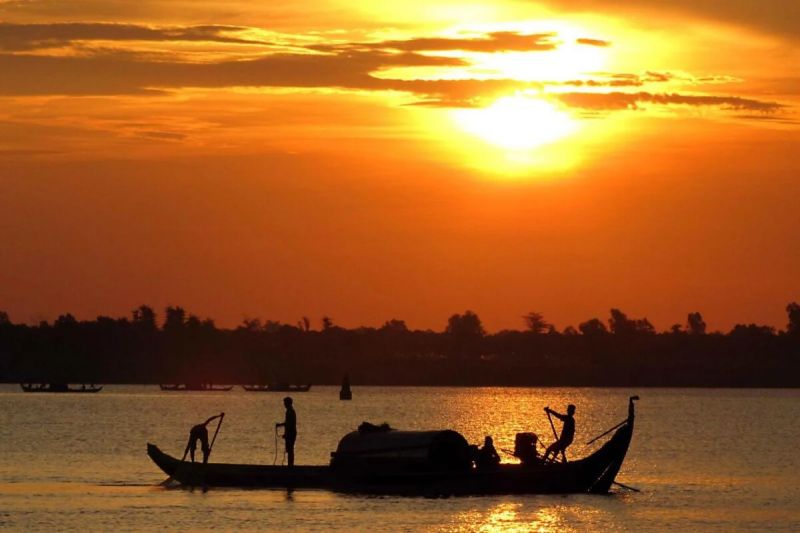
June delivers the first full monsoon month — humidity reaches 80–90% and hotel rates fall to their lowest annual levels, averaging ₹2,800–₹4,500 per night for mid-range properties in Siem Reap. Daily ticket sales at Angkor drop to under 2,000, compared to 4,000 in December — transforming the sunrise experience from crowded to quiet. Morning temple visits remain manageable: rain typically arrives after 2:00 PM. Tonle Sap Lake begins its seasonal expansion during June, rising from its dry-season area of 2,500 km² (see “Monsoon Season” section for full lake-level data).
July in Cambodia
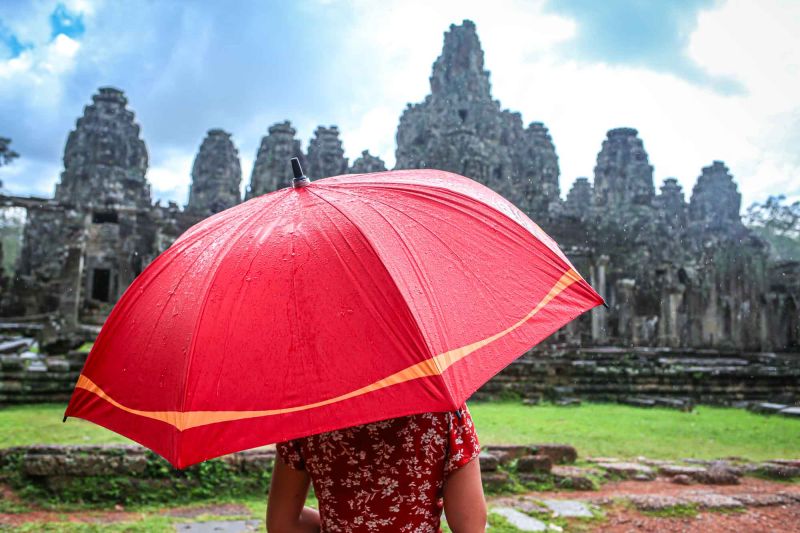
July is the most manageable monsoon month for Indian tourists, based on Vietnamtour.in’s operational records across 46,000+ guest tours since 2015. Morning conditions remain clear and daily ticket sales at Angkor fall below 1,500 — a 63% reduction from peak levels. Indian travelers familiar with Kerala-style rainfall will find July’s predictable 1–2 hour afternoon showers easy to navigate, according to Mr. Anthony, Cofounder of Vietnamtour.in. Mid-range hotel rates average ₹2,800–₹4,500 per night.
August in Cambodia
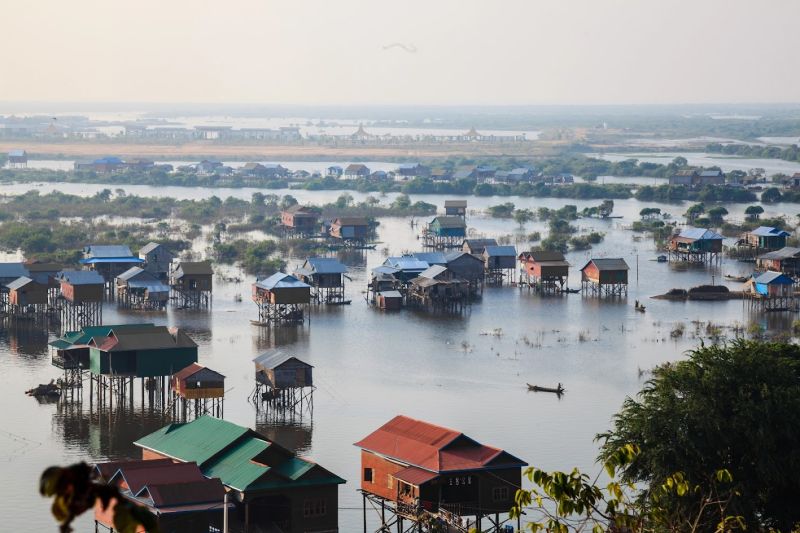
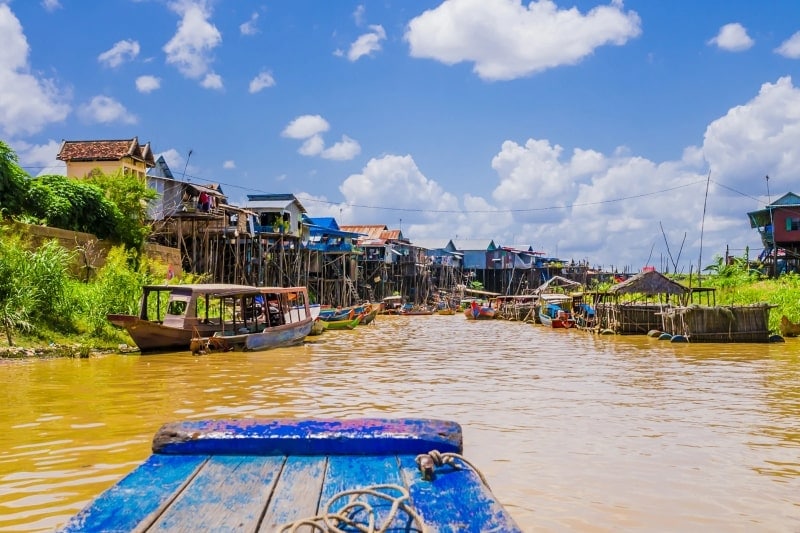
August records Cambodia’s second-highest monthly rainfall at approximately 185 mm, with elevated flood risk in rural lowland areas — urban Siem Reap and Phnom Penh remain accessible throughout. Tonle Sap Lake approaches its wet-season maximum, filling floating villages including Chong Kneas and Kampong Phluk to maximum capacity. Hotel rates remain at annual lows. Rural routes in Mondulkiri, Ratanakiri, and Kampong Thom require local operator guidance due to road flooding.
September in Cambodia
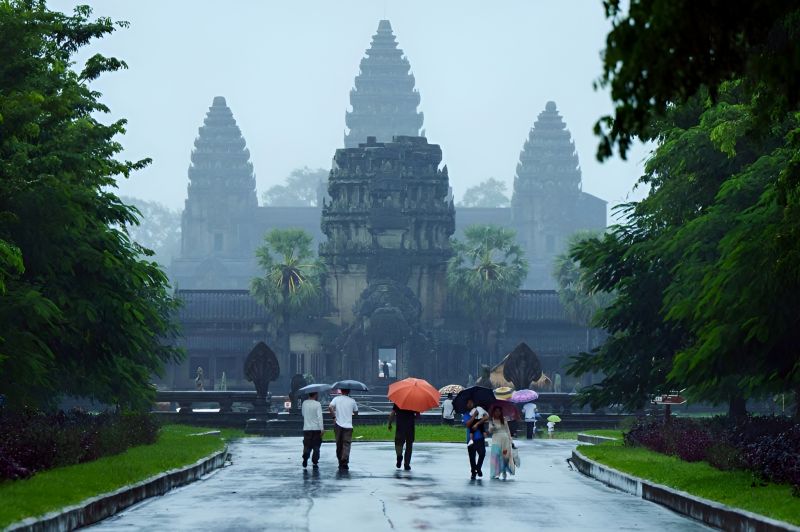
September records Cambodia’s highest monthly rainfall at 215 mm — the wettest month of the year — and is not recommended for first-time Indian visitors. Flood risk affects Siem Reap outskirts and rural routes in Mondulkiri and Kampong Thom provinces. Angkor Wat itself remains open, but surrounding archaeological park roads become unreliable, and remote temples — including Beng Mealea (77 km from Siem Reap) — develop muddy access paths that close to standard vehicles. Visitor numbers at Angkor reach their annual minimum. Budget-focused travelers accept these conditions for 50–60% hotel discounts and zero queues.
October in Cambodia
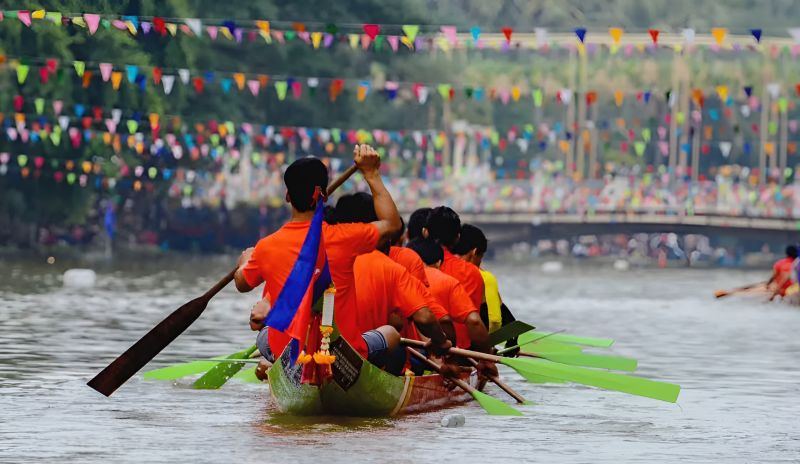
October is a transitional month — rainfall decreases from September’s peak, hotel prices begin rising, and Cambodia’s largest national festival arrives. The Water Festival (Bon Om Touk), held on the full moon of October or November, draws 1 million+ domestic spectators to traditional boat racing on the Tonle Sap River in Phnom Penh — the single most compelling reason to visit Phnom Penh outside the standard dry season window. Late October marks the beginning of the pre-peak hotel price increase as the dry season approaches.
Dry Season in Cambodia
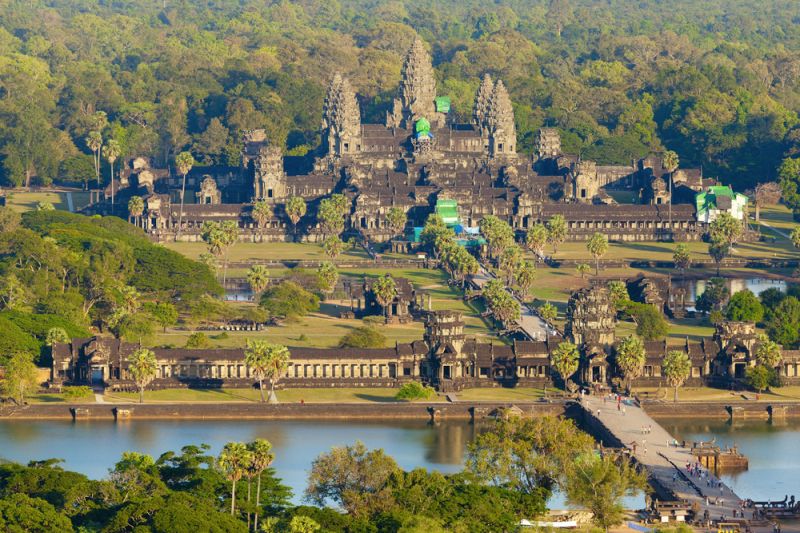
November to February is the 4-month window where all 3 primary Cambodian destinations — Siem Reap, Phnom Penh, and Sihanoukville — operate under optimal conditions simultaneously.
Siem Reap: All 91 temples within Angkor Archaeological Park are accessible. Sunrise photography conditions peak in December and January. Remote temples, including Banteay Srei (35 km from Siem Reap) and Beng Mealea (77 km), remain fully accessible by standard road.
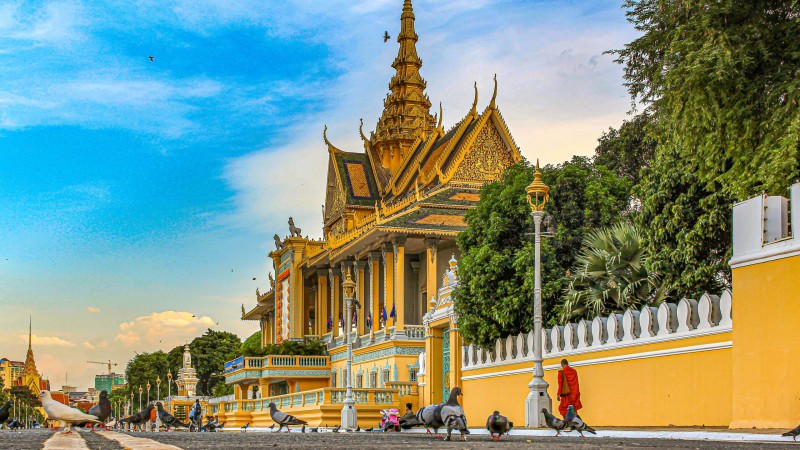
Phnom Penh: Viable year-round at 25°C–32°C (77°F–90°F) in the dry period. November to February brings the most comfortable conditions for the Royal Palace complex and the riverside promenade.
Sihanoukville and Coastal Islands: November to April only. Boat transfers to Koh Rong and Koh Rong Samloem are suspended during the monsoon due to high seas and Cambodia Maritime Department safety regulations. The beach and island experience requires dry season timing.
The dry season in Cambodia is suitable for almost all Indian travelers, with one specific exception: those visiting during the hot dry period (March–April). During this time, temperatures reach 28°C–40°C (82°F–104°F), and Vietnamtour.in operations schedule temple visits exclusively between 5:00 AM and 9:00 AM to prevent heat exhaustion.
Monsoon Season in Cambodia
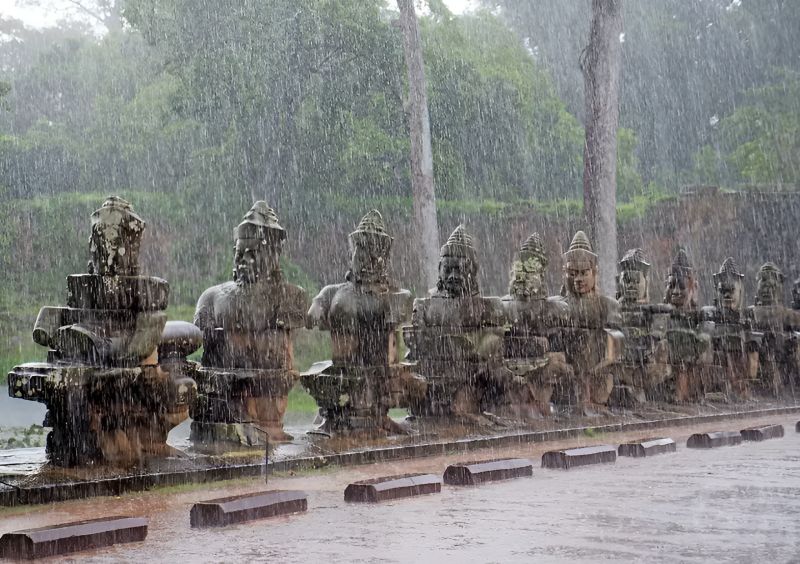
Cambodia’s monsoon delivers a structurally different rain pattern from India’s — and this difference makes it more manageable than most Indian travelers expect. Unlike Kerala’s continuous multi-day downpours, Cambodia’s monsoon produces predictable afternoon showers — typically 1–2 hours starting at 2:00 PM — leaving mornings consistently clear for temple visits. This pattern makes June and July workable for Indian travelers who arrive prepared.
3 documented reasons Indian tourists choose monsoon Cambodia:
- Cost reduction: Mid-range hotel rates drop to ₹2,800–₹5,000 per night — 55–60% below December peak pricing for equivalent properties in Siem Reap.
- Zero queues at Angkor Wat: Daily ticket sales fall below 1,500 during peak monsoon months versus 3,500–4,000 in peak dry season — a 57–63% reduction that transforms the sunrise experience at the northern reflection pool from crowded to private.
- Tonle Sap Lake at maximum: The lake expands to 16,000 km² during the monsoon, versus 2,500 km² in dry season — a 540% area increase — creating floating village experiences at Chong Kneas and Kampong Phluk that are impossible to replicate during dry season visits.
2 risks apply to monsoon travel in Cambodia:
- Flash flooding closes rural roads in Mondulkiri, Ratanakiri, and Kampong Thom from August to October.
- Certain Tonle Sap boat tours suspend operations from August to October due to current strength and operator safety protocols.
Best Time to Visit Angkor Wat
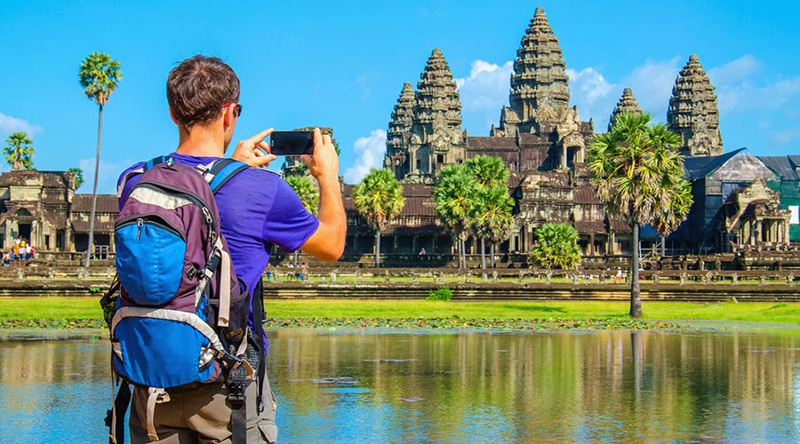
The best time to visit Angkor Wat is November to February, arriving by 4:30 AM to secure a position at the northern reflection pool before tour buses arrive at 5:30 AM.
Sunrise time and sky conditions by month — based on Siem Reap astronomical data and on-ground visitor records:
| Month | Sunrise time | Sky clarity | Reflection pool |
|---|---|---|---|
| November | 5:55 AM | High | Full (post-monsoon) |
| December | 6:15 AM | Highest | Full |
| January | 6:32–6:35 AM | Highest | Full |
| February | 6:25 AM | High | Moderate |
| March | 6:00 AM | Moderate | Low |
| April | 5:35 AM | Moderate | Lowest |
| May–October | 5:30–5:45 AM | Variable | Full (Aug–Oct) |
The northern reflection pool at Angkor Wat produces the iconic mirror image of all 5 central towers. Both pool water level and sky clarity align simultaneously only in December and January — the 2 optimal months for this shot. The principle is identical to Taj Mahal sunrise photography: arriving 45 minutes before sunrise determines whether the shot is achievable.
March 20–21 solar alignment: The equinox produces the only moment of the year when the sun rises directly aligned behind Angkor Wat’s central tower — a solar event the temple’s 12th-century Khmer architects encoded into its east-facing orientation. This alignment has no equivalent at any other time of the year.
Cambodia Peak Season
Angkor Archaeological Park welcomed 955,131 international visitors in 2025, generating $44.7 million in ticket revenue, according to the official annual report from Angkor Enterprise released on 1 January 2026. Daily ticket sales follow 3 distinct tiers:
| Tier | Daily tickets | Months | Booking lead time |
|---|---|---|---|
| Peak | 3,500–4,000 | Dec–Jan | 90 days |
| Shoulder | 2,500–3,500 | Nov, Feb–Mar | 60 days |
| Low | Under 1,500 | Jun–Sep | 14–30 days |
Indian group tours of 10+ passengers require vegetarian meal pre-arrangement with Siem Reap hotels, a minimum of 14 days before peak-season arrival and 7 days before off-peak arrival. Jain meal arrangements (no root vegetables) require a minimum of 30 days’ advance notice year-round, as no Siem Reap restaurant offers this as a standard menu item.
Indian holiday calendar alignment with Cambodian seasons:
- Diwali (Oct–Nov): Aligns with shoulder season — moderate crowds, post-monsoon greenery.
- Christmas + New Year (Dec): Peak season — book 90 days ahead.
- Republic Day week (Jan 26): Peak season cool-dry — best weather, highest demand.
- Holi (Mar): Hot dry period start — fewer Western tourists, lower hotel rates.
- Indian school summer holidays (Apr–May): Hot dry → early monsoon — extreme heat in April, manageable in May.
Best Time to Visit Cambodia from India
Flights from India to Cambodia connect via Bangkok (BKK), Kuala Lumpur (KUL), or Singapore (SIN), with a total travel time of 6–9 hours. Some seasonal direct charters from Delhi (DEL) operate to Siem Reap International Airport (SAI) during peak winter season (Nov–Feb) — confirm availability with carriers at booking time. Standard routings serve Phnom Penh International Airport (PNH) and Siem Reap International Airport (SAI).
Flight price variation by season: Peak season fares (December–January) run 40–60% above monsoon season equivalents. A ₹16,000–₹25,000 round-trip fare in July becomes ₹35,000–₹45,000 for the same routing in December.
Cambodia visa for Indian travelers in 2026 — 2 options:
- e-Visa (recommended): USD 30 (₹2,850) via the official government portal at evisa.gov.kh. Processing time: 3 business days. Third-party websites charge USD 36–42 including service fees — the official portal at USD 30 is the lowest-cost option. Valid 30 days, single-entry, extendable once.
- Visa on Arrival: USD 30 (₹2,850) cash at Phnom Penh, Siem Reap, and Sihanoukville airports. Processing time: 15–30 minutes on arrival. Valid 30 days, single-entry.
The Cambodia e-Arrival Card (CeA) is mandatory for all air arrivals starting September 2024. It is free, submitted online within 7 days before arrival at the Cambodia e-Arrival portal, and produces a QR code for immigration presentation.
Booking lead times by season:
| Season | Flight | Hotel | e-Visa |
|---|---|---|---|
| Peak (Dec–Jan) | 90 days | 60–90 days | 30 days |
| Shoulder (Nov, Feb–Mar) | 60 days | 30–45 days | 14 days |
| Monsoon (Jun–Sep) | 21–30 days | 7–14 days | 7 days |
Indian travelers planning multi-country trips can review the Vietnam visa for Indian travelers page for combined Cambodia + Vietnam visa planning.
Cambodia and Vietnam Weather Comparison
November to February provides optimal weather in Cambodia and Vietnam simultaneously. This 4-month alignment makes it the only window where a combined Cambodia–Vietnam itinerary operates without weather compromise in either country.
| Month | Cambodia | North Vietnam (Hanoi) | Central Vietnam (Hoi An) | South Vietnam (HCMC) |
|---|---|---|---|---|
| Nov | Cool dry, ideal | Cool dry, ideal | Late wet, manageable | Dry start, ideal |
| Dec | Peak cool dry | Cool, comfortable | Dry, ideal | Dry, ideal |
| Jan | Coolest, ideal | Coldest (15–20°C) | Dry, ideal | Dry, ideal |
| Feb | Cool dry, ideal | Cool, transitioning | Dry, ideal | Dry, ideal |
The standard combined itinerary for Indian tourists runs 8 days in Cambodia and 6 days in Vietnam, operating as a single circuit exiting via Bangkok or Kuala Lumpur. Indian tourists planning this circuit can review Vietnam tour packages from India for combined Cambodia–Vietnam itineraries with INR pricing and vegetarian meal arrangements.
Vegetarian Food in Cambodia by Season
Siem Reap has 20+ vegetarian-friendly restaurants, with Indian-specific options concentrated near Pub Street and the Old Market area. 3 pure-vegetarian Indian restaurants operate year-round in Siem Reap: Modiji’s (100% meat-free Gujarati menu, the only pure-veg Indian restaurant in the city), Curry Walla (North Indian with dedicated vegetarian section), and Lotus Dosa Corner (South Indian, vegetarian and non-vegetarian).
Vegetarian availability changes across 3 seasonal conditions:
- Peak season (Nov–Feb): Food markets at Pub Street Night Market and Old Market expand to maximum size, producing the widest variety of vegetarian street food — including vegetable amok curry, tofu stir-fry, and fresh fruit plates. Indian vegetarian travelers find the highest restaurant density and operating hours during this period.
- Hot season (Mar–Apr): Outdoor market hours contract from 8:00 PM to 10:00 PM due to heat. Restaurant air conditioning becomes essential. Carry snacks for Angkor Wat temple days, as the single on-site food area within the park charges 3–4× Siem Reap street prices.
- Monsoon (May–Oct): Local vegetable supply reaches its annual peak as farms produce maximum output. Fresh vegetable quality in Khmer dishes improves during the monsoon. Restaurant prices drop 20–30% alongside hotel rates.
Jain food is not available as a standard menu item at any Siem Reap restaurant. Advance arrangement through a tour operator, at least 30 days before arrival, is required for no-root-vegetable meal preparation.
Cambodia Budget Planning by Season
| Cost item | Peak (Dec–Jan) | Shoulder (Nov, Feb–Mar) | Monsoon (Jun–Sep) |
|---|---|---|---|
| Round-trip flight ex-IND | ₹35,000–₹45,000 | ₹25,000–₹35,000 | ₹16,000–₹25,000 |
| Mid-range hotel/night | ₹6,500–₹12,000 | ₹4,500–₹8,000 | ₹2,800–₹4,500 |
| Daily food (Indian veg) | ₹1,200–₹1,800 | ₹1,000–₹1,500 | ₹800–₹1,300 |
| Tuk-tuk daily | ₹1,500–₹2,500 | ₹1,200–₹2,000 | ₹1,000–₹1,500 |
Angkor Archaeological Park pass pricing is fixed year-round with no seasonal variation: 1-day pass $37 (₹3,515), 3-day pass $62 (₹5,890, valid any 3 days within 10 days), 7-day pass $72 (₹6,840, valid any 7 days within 30 days). The 3-day pass at ₹1,963 per day provides the best per-day value and covers the full Angkor circuit — Angkor Wat, Bayon, Ta Prohm, Preah Khan, and Banteay Srei — without requiring consecutive-day visits. Children under 12 enter free with passport proof.
Currency note: INR figures in this guide are converted at 1 USD = ₹95, the working rate Vietnamtour.in applies for India-bound 2026–2027 itineraries. Live exchange rates may vary ±2% on the day of booking.
What Is the Worst Time to Visit Cambodia?
September and April are the most challenging months for first-time Indian visitors, based on Vietnamtour.in’s operational benchmarks. In September, Cambodia records its highest rainfall (215 mm), creating flood risks for rural temples like Beng Mealea. In April, temperatures peak at 35°C–40°C (95°F–104°F), making physical exertion dangerous between 10:00 AM and 4:00 PM. Budget-focused travelers can still benefit from 50% hotel discounts in September if they accept the weather risks, according to Mr. Anthony, Cofounder of Vietnamtour.in.
Travelers who benefit from visiting Cambodia in these 2 months:
- Budget-focused Indian travelers visit in September for 50% hotel discounts and zero queues at Angkor Wat.
- Indian travelers specifically interested in Cambodian cultural festivals visit in April for Khmer New Year — 3 days of boat racing, traditional games, and water ceremonies with no equivalent experience at any other time of year.
Cambodia Destination Guide by Season
Siem Reap is best from November to February. All 91 Archaeological Park temples are accessible. Road conditions to Banteay Srei (35 km) and Beng Mealea (77 km) are reliable. Sunrise photography conditions peak in December and January.
Phnom Penh is viable year-round. The Water Festival (Bon Om Touk) in October or November draws 1 million+ domestic spectators to traditional boat racing on the Tonle Sap — Cambodia’s largest national festival and the single most compelling reason to visit Phnom Penh outside standard dry season timing.
Sihanoukville and Koh Rong islands are suitable from November to April only. Small boat transfers to Koh Rong and Koh Rong Samloem are suspended during the monsoon due to high seas and safety regulations.
Kep and Kampot from November to February are ideal for seafood and Kampot pepper farm tours. Kampot pepper — recognized as a Geographical Indication product by Cambodia — is harvested fresh from December to February, producing a culinary experience directly relevant to Indian travelers familiar with Kerala pepper cultivation.
How to Plan a Cambodia Trip from India
January trip: Book flights by October 1st. Apply Cambodia e-Visa at evisa.gov.kh by December 15th. Submit the free Cambodia e-Arrival Card within 7 days before departure date. Book Angkor sunrise tuk-tuk driver by December 20th. Confirm vegetarian meal pre-arrangement with hotel by December 1st.
April trip (Khmer New Year): Book flights by February 1st. Confirm vegetarian meals with hotels by March 1st. Carry USD 100–150 in small denominations ($1 and $5 bills) — ATM networks in Siem Reap experience cash shortages during the April 13–16 national holiday. Schedule all Angkor temple visits between 5:00 AM–9:00 AM. Pack SPF 50+ sunscreen and a portable cooling towel.
July–August trip: Purchase travel insurance with monsoon coverage and medical evacuation clause by departure date. Pack a lightweight waterproof jacket — monsoon rain arrives in short 1–2 hour bursts with high winds, making umbrellas ineffective. Buy Angkor pass online at angkorenterprise.gov.kh at least 3 days before arrival to skip on-site queues. Book Siem Reap hotel with flexible cancellation policy minimum 14 days before arrival.
Frequently Asked Questions About the Best Time to Visit Cambodia
Is Cambodia worth visiting in the rainy season?
Yes, Cambodia is worth visiting in the rainy season. The rainy season delivers 3 measurable advantages: hotel rates drop 30–50%, daily Angkor ticket sales fall below 1,500 versus 4,000 in peak season, and Tonle Sap Lake reaches its 16,000 km² maximum area — a natural phenomenon unavailable during dry season.
Which month is the cheapest to visit Cambodia from India?
July and August are the cheapest months to visit Cambodia from India. Round-trip flights from India average ₹16,000–₹25,000. Mid-range hotel rates average ₹2,800–₹4,500 per night, 55–60% below December peak pricing for equivalent properties in Siem Reap.
Is Cambodia safe for Indian tourists during monsoon?
Yes, Cambodia is safe for Indian tourists during the monsoon in Siem Reap city and Phnom Penh urban areas. Rural routes in Mondulkiri, Ratanakiri, and Kampong Thom provinces require local operator guidance from August to October due to road flooding.
Can Indian tourists find vegetarian food in Cambodia?
Yes, Indian travellers can find vegetarian food in Cambodia. Siem Reap has 20+ vegetarian-friendly restaurants. Pure-vegetarian Indian options include Modiji’s (Gujarati, 100% meat-free) and Lotus Dosa Corner (South Indian) near Pub Street. Jain food requires 30 days advance arrangement through a tour operator.
How many days is enough for Cambodia?
5 days in Cambodia is enough to cover 3 core experiences: Angkor Wat complex including sunrise and the small Angkor circuit (2 days), Phnom Penh Royal Palace and genocide memorials (1 day), and a visit to a Tonle Sap Lake floating village (1 day), with 1 travel day. A 7-day Cambodia itinerary adds Banteay Srei, Beng Mealea, and Kampot.
When Indian Tourists Should Choose Cambodia, Vietnam, or Both
The decision of when and where to travel depends on 3 priorities. Travelers prioritising temple-focused heritage experience choose Cambodia for 5–7 days anchored by Angkor Wat. Travelers prioritising landscape and cuisine diversity choose Vietnam for 10–14 days across 8 UNESCO sites. Travelers wanting both choose a combined circuit during the November–February alignment window when both countries operate at optimal weather.
Is Cambodia Better Than Vietnam for Indian Tourists?
Vietnam is generally better for first-time Indian tourists due to its 8 UNESCO sites and superior vegetarian density. Cambodia is ideal for a focused 5-day religious experience at Angkor Wat. Mr. Max Nguyen, Director of Sales at Vietnamtour.in (specialising in Indian tourist itineraries since 2015 across 46,000+ guest tours), notes that the choice depends on traveler interest in landscape diversity versus concentrated historical exploration.
For Indian tourists, a Cambodia tour offers a 5–7 day focused experience anchored by Angkor Wat, the world’s largest religious monument covering over 500 acres. Overall trip cost in Cambodia is typically 20–30% lower than in Vietnam for equivalent hotel quality. Vegetarian restaurant density is limited outside Siem Reap, but Mr. Anthony (Cofounder of Vietnamtour.in, 10+ years experience) and his team arrange verified veg and Jain meals with a “home-cooked taste” for Indian guests.
For Vietnam, Indian travellers can enjoy a comprehensive 10–14 day experience across the North, Central, and South regions, each offering distinct landscapes and 8 UNESCO World Heritage Sites. Compared to Cambodia, Vietnam provides wider vegetarian variety, including dedicated Indian restaurants in Hanoi, Hoi An, and Ho Chi Minh City.
First-time Southeast Asia visitors from India produce better value from Vietnam — the diversity of landscape, cuisine, and UNESCO heritage delivers more variety per day of travel. Return travelers add Cambodia for the concentrated, unrepeatable experience of Angkor Wat at sunrise — a sight with no comparable alternative elsewhere in the region.
Vietnam and Cambodia combination tour packages from Vietnamtour.in are structured specifically for Indian tourists — with INR pricing, vegetarian and Jain meal arrangements, and departures from Delhi, Mumbai, and Bangalore. Indian travelers can also explore things to do in Cambodia for activity planning beyond timing decisions.