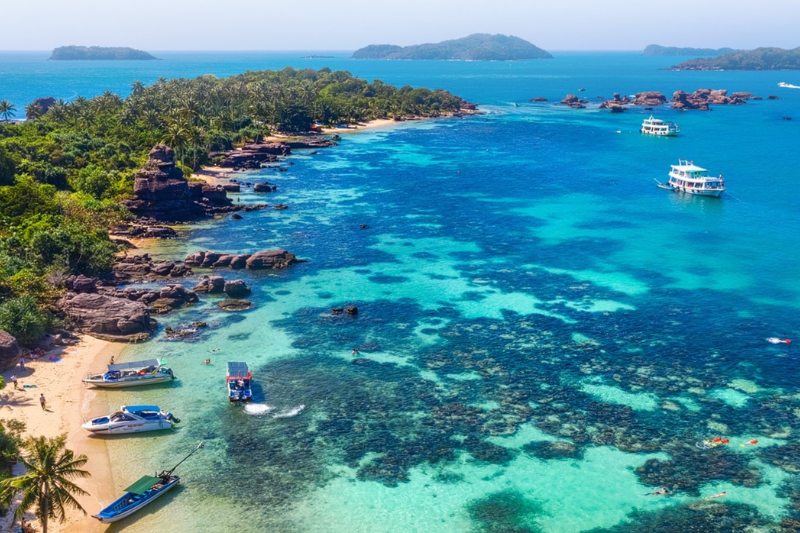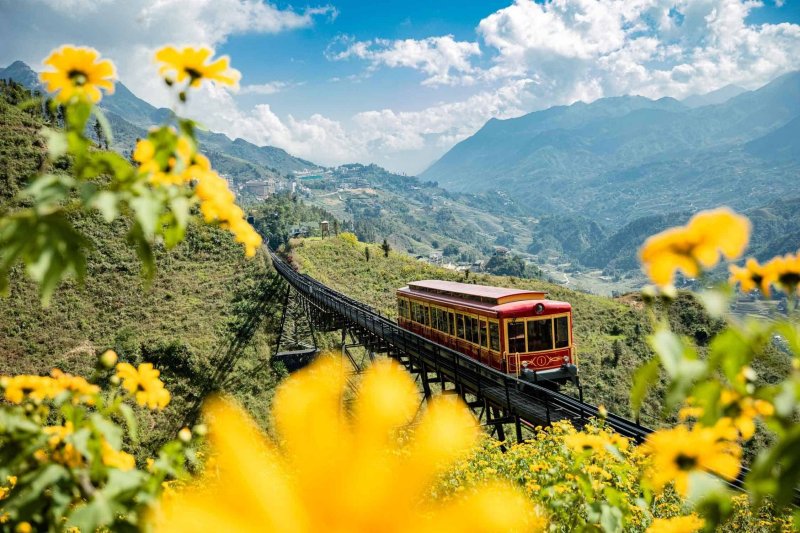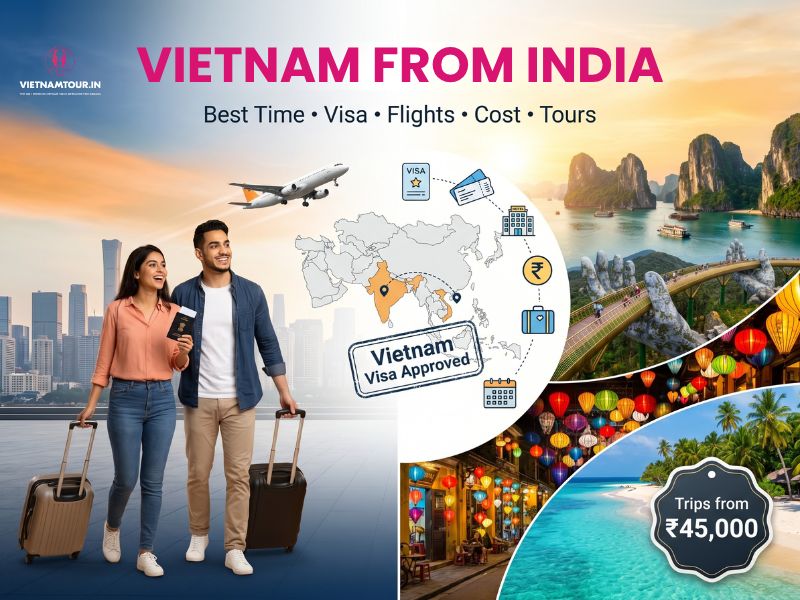
Vietnam is a Southeast Asian country situated 4,000 km east of India, offering Indian travellers a tropical climate, 8 UNESCO World Heritage sites, and the most affordable beach-plus-culture combination in the region. Direct flights to Vietnam operate from 6 Indian cities, the Vietnam e-visa processes in 3 business days at ₹2,100 (USD 25), and a complete Vietnam trip costs start at ₹45,000 per person for 5 nights all-inclusive.
This guide about Vietnam to Indian journey covers the five decisions Indian travellers face in sequence: the best time to visit Vietnam (October to March for most regions), Vietnam visa requirements (the e-visa is the recommended option for Indian passport holders), flight routes from India to Vietnam (6 direct departure cities), Vietnam trip cost breakdown (₹45,000–250,000 across budget tiers), and Vietnam tour package options (4-night group circuits to 12-night luxury private tours). Vietnam is accessible from India year-round, with the best Vietnam travel window for most Indian tourists falling between October and March.
Best Time to Visit Vietnam from India: Month-by-Month Weather and Season Guide
The best time to visit Vietnam from India is between October and March, when temperatures across most regions of Vietnam stay between 18°C and 28°C with low humidity and minimal rainfall. The October to March 6-month dry-season window aligns naturally with 3 of India’s main travel periods — Diwali holidays, Christmas–New Year, and the post-monsoon school break — making October to March the dominant travel season for Indian tourists planning a Vietnam trip.
Vietnam’s geography produces 3 distinct climate zones running north to south, each with its own optimal travel window. Indian travellers planning multi-region Vietnam itineraries (Hanoi + Hoi An + Ho Chi Minh City) identify the overlapping window where all destinations deliver good weather simultaneously — typically December through March.
North Vietnam Best Travel Season: October to March for Indian Tourists
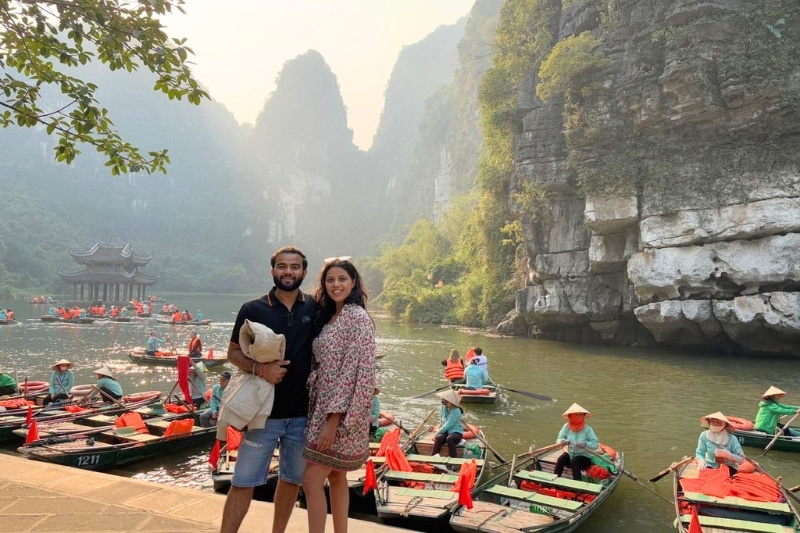
North Vietnam — covering Hanoi, Ha Long Bay, Sapa, and Ninh Binh — delivers the best weather for Indian tourists between October and March. Temperatures in North Vietnam during the October to March window range from 15°C to 25°C, with low humidity and clear visibility for Ha Long Bay cruises. December and January are the coolest months in North Vietnam at 15–20°C, suiting Indian travellers from northern cities (Delhi, Chandigarh) who find the climate familiar; Indian travellers from southern India (Bengaluru, Chennai) pack light woollens for evening wear in North Vietnam.
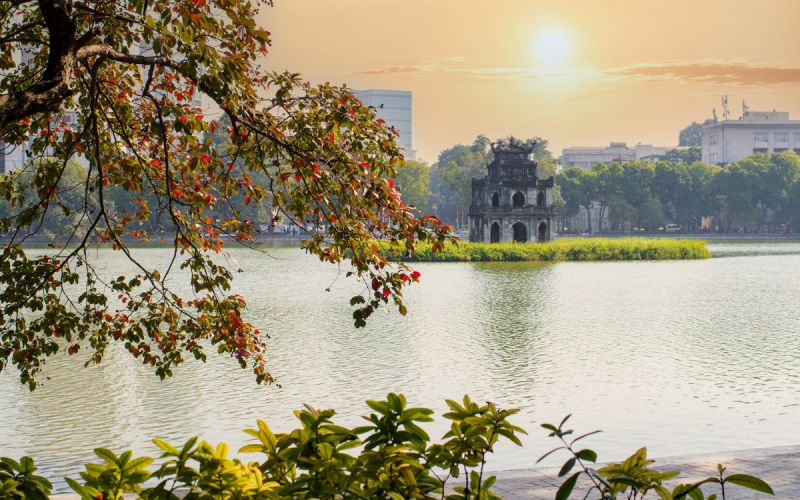
April through September is North Vietnam’s hot and humid season, with temperatures climbing to 32–38°C and frequent thunderstorms reducing Ha Long Bay cruise quality. Indian travellers avoid July and August on the North Vietnam circuit — July and August are the wettest months with typhoon risk affecting Halong Bay sailings, and many cruise operators issue last-minute cancellations during the July to August window.
Central and South Vietnam Best Season: November to April
Central Vietnam (Da Nang, Hoi An, Hue) and South Vietnam (Ho Chi Minh City, Phu Quoc, Mekong Delta) deliver the best dry-season weather between November and April. Temperatures across Central and South Vietnam range from 24°C to 32°C during the November to April window, with sunshine, calm seas for beach activities, and minimal rainfall.
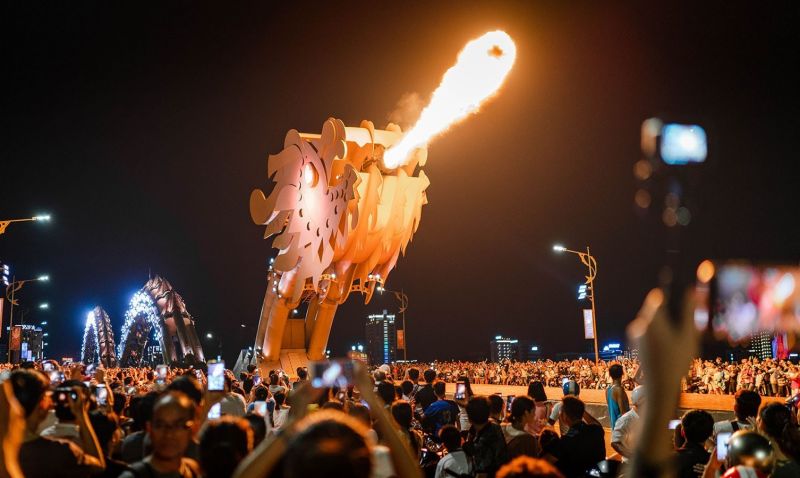
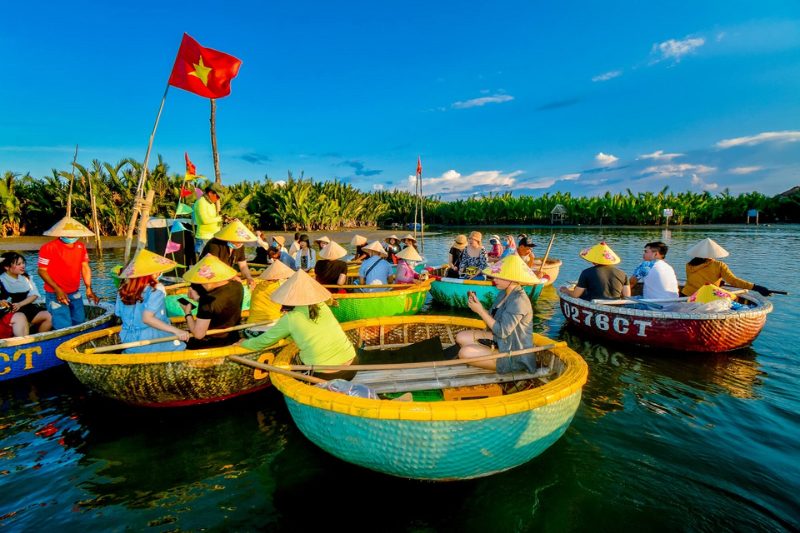
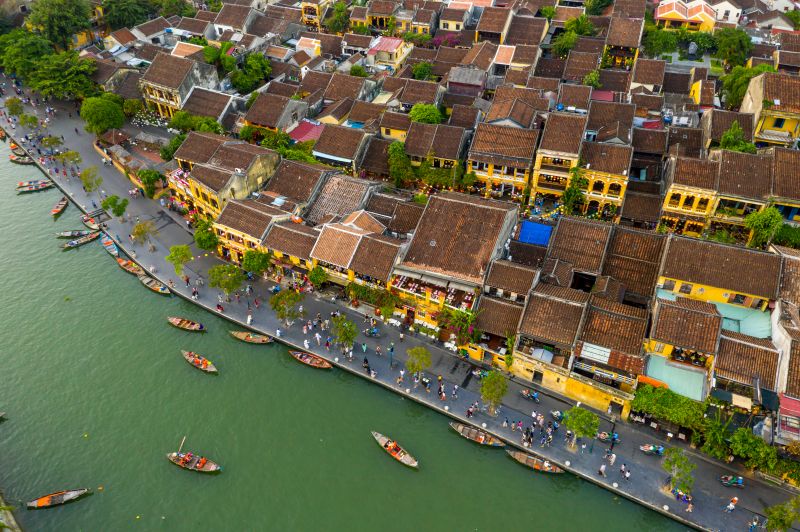
Central Vietnam runs a different monsoon timeline than the rest of the country — Hoi An and Hue experience the heaviest Central Vietnam rainfall in October and November, with annual flooding in Hoi An’s Ancient Town affecting alley access for hours or days at a time. Indian travellers planning a Hoi An visit aim for January through April rather than the late-year window.
South Vietnam’s wet season runs from May through October, with daily afternoon thunderstorms that typically last 1–2 hours. South Vietnam thunderstorms affect city sightseeing minimally but disrupt Phu Quoc beach activities and Mekong Delta day trips.
Vietnam Travel During Indian Holidays: Diwali, Christmas, and Summer School Breaks
Indian holiday timing aligns with Vietnam’s seasonal patterns in mixed ways — some Indian holiday periods deliver excellent Vietnam travel conditions while others coincide with regional monsoons that limit experience quality.
Diwali (October–November) is excellent for North Vietnam but risky for Hoi An. Hanoi and Ha Long Bay enter the dry season in October, delivering 22–28°C temperatures and sunny days. Hoi An and Hue, however, are at peak flood risk during October–November, with the Thu Bon River regularly inundating the Ancient Town. Indian Diwali travellers choose the North Vietnam circuit or wait until late November for Central Vietnam visits.
Christmas–New Year (late December to early January) is ideal for the full Vietnam country circuit. All 3 Vietnam regions deliver good weather simultaneously, making the Christmas–New Year window the best for Indian travellers wanting to cover Hanoi + Hoi An + Ho Chi Minh City on a single trip. The Christmas–New Year window is also the highest-demand period for Vietnam travel — flight fares and hotel rates run 30–40% above shoulder-season pricing, and Indian travellers lock bookings 8–10 weeks in advance.
Indian summer school holidays (May–June) coincide with Vietnam’s hot pre-monsoon and early wet seasons. Vietnam beach destinations (Phu Quoc, Da Nang) remain enjoyable with daily sunshine and warm sea temperatures averaging 28°C. North Vietnam circuit destinations become uncomfortably hot at 33–38°C, with Halong Bay cruise quality declining. Indian families travelling in May–June weigh the Vietnam itinerary toward Da Nang, Phu Quoc, and Ho Chi Minh City rather than the North Vietnam circuit.
Peak Season vs. Off-Season Vietnam: Price Difference in INR for Indian Travelers
Peak-season Vietnam travel costs Indian tourists 25–40% more than shoulder-season travel for identical itineraries. A 7-night mid-range Vietnam trip during Christmas–New Year peak runs ₹95,000–1,15,000 per person, while the same Vietnam package in March or September shoulder season costs ₹70,000–85,000 — a saving of ₹20,000–30,000 per person.
3 peak periods drive the price premium on the India to Vietnam route. Christmas–New Year (December 20 to January 5) is the highest Vietnam peak, with combined Indian winter holiday demand and international Christmas traffic competing for the same inventory. Indian summer school holidays (May 25 to June 25) drive a secondary Vietnam peak. Tet (Vietnamese New Year, late January or early February) is the third Vietnam peak — Indian travellers visiting Vietnam during Tet face closed restaurants, reduced tour services, and 20–30% premium hotel rates.
Booking outside the 3 Vietnam peak windows consistently saves Indian travellers ₹15,000–30,000 per person on equivalent trips.
Vietnam Visa for Indian Citizens: E-Visa, Visa on Arrival, and 2026 Requirements
Indian citizens require a visa to enter Vietnam — the Vietnam e-visa is the recommended option, with approval in 3 business days at a cost of ₹2,100 (USD 25). Vietnam offers Indian passport holders 3 visa pathways: e-visa applied online before travel, Visa on Arrival (VOA) requiring a pre-arranged approval letter, and embassy visa (rarely used by tourists). The Vietnam e-visa system covers 90-day single-entry stays and is the standard choice for 95% of Indian leisure travellers.
The Vietnamese government’s e-visa system was extended to all Indian passport holders in August 2023, removing the previous Visa on Arrival friction for most Indian tourists. Indian travellers no longer need agent intermediaries or approval letters — the Vietnam e-visa application is fully online through the official Vietnam Immigration Department portal.
Vietnam E-Visa for Indian Passport Holders: Application Steps and Processing Time
The Vietnam e-visa for Indian passport holders is processed in 3 business days for USD 25 (₹2,100), and is valid for 90 days from the chosen entry date with single-entry permission. The Vietnam e-visa application runs entirely online at the official portal evisa.xuatnhapcanh.gov.vn — Indian travellers avoid third-party agent websites that charge 2–3 times the official fee.
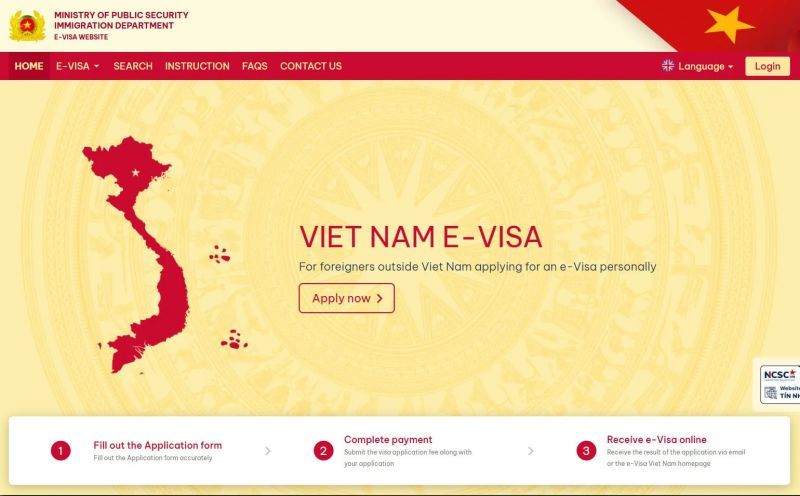
The 5-step Vietnam e-visa application process for Indian passport holders:
-
Upload a passport bio-page scan.
-
Upload a passport-size photo at 4×6 cm with a white background and JPEG format under 2MB.
-
Complete the application form, including planned entry date, exit date, and entry port (Hanoi, Da Nang, or Ho Chi Minh City).
-
Pay the USD 25 fee using an Indian credit or debit card.
-
Receive the approved Vietnam e-visa by email within 3 business days.
The approved Vietnam e-visa must be printed and carried with the Indian passport at immigration on arrival. The complete Vietnam e-visa application process for Indian passport holders — including document checklist, photo specifications, and common rejection reasons — is covered in detail in the e-visa for Indian passport holders guide.
Indian travellers planning multi-country Indochina trips covering Vietnam, Laos, and Cambodia file 3 separate e-visas — and timing them in parallel rather than sequentially saves 7–10 days of pre-departure waiting. Vietnamtour.in handles Vietnam, Laos, and Cambodia e-visa coordination as part of its Indochina specialist booking workflow, with Mr. Sagnik, Country Manager (India), managing parallel filings for Indian travellers extending Vietnam into a Cambodia–Laos circuit.
Vietnam Visa on Arrival for Indians: How It Works and Entry Ports
Vietnam Visa on Arrival (VOA) for Indian citizens requires a pre-arranged approval letter obtained from an authorised agent before departure, plus a stamping fee paid in USD cash at the Vietnamese airport. Vietnam VOA is available only at Vietnam’s 3 international airports — Hanoi (HAN), Ho Chi Minh City (SGN), and Da Nang (DAD) — not at Vietnam’s land borders.
2 costs apply to the Vietnam VOA for Indian travellers. The Vietnam VOA approval letter from an authorized agent costs USD 18–35 (₹1,500–2,900) depending on processing speed and agent fees. The Vietnam VOA stamping fee at the Vietnamese airport is USD 25 (₹2,100) for a single entry, paid in cash. Total Vietnam VOA cost for Indian travellers runs USD 43–60 (₹3,600–5,000), making Vietnam VOA more expensive than the direct e-visa option.
Vietnam VOA suits Indian travellers entering through one of the 3 international airports who prefer paying on arrival, but the Vietnam e-visa is faster, cheaper, and more flexible for the same eligibility.
Vietnam Visa Fees for Indians in 2026: Full Cost Table in USD and INR
| Visa Type | Fee (USD) | Fee (INR) | Validity |
| E-visa Single Entry | USD 25 | ₹2,100 | 90 days |
| E-visa Multiple Entry | USD 50 | ₹4,150 | 90 days |
| VOA Approval Letter | USD 18–35 | ₹1,500–₹2,900 | Pre-arrival |
| VOA Stamping Fee | USD 25 | ₹2,100 | At airport |
| Urgent E-visa (1 day) | USD 50 | ₹4,150 | 90 days |
The e-visa Single Entry at ₹2,100 is the standard choice for Indian leisure tourists. Multiple Entry suits business travellers or Indians combining Vietnam with Cambodia or Laos and re-entering Vietnam mid-trip. Urgent E-visa processing is available for last-minute departures with a 1-business-day turnaround at the higher fee of ₹4,150.
Documents Required for a Vietnam Visa Application from India
Indian travellers need 5 documents for the Vietnam e-visa application:
-
A passport with a minimum of 6 months’ validity from the planned entry date and at least 2 blank pages.
-
Passport-size photo at 4×6 cm dimensions on a white background, JPEG format, maximum 2MB.
-
Confirmed flight booking with both arrival and return/onward tickets.
-
At least one hotel booking confirmation covering the first night of the Vietnam stay.
-
Completed online application form, including planned entry date, exit date, and chosen port of entry.
The Vietnam e-visa passport photo must show the full face with no headwear (except religious headwear that does not obscure facial features), no glasses, neutral expression, and a white background. Indian travellers using printed photos taken at studios request digital files; in addition, the Vietnam e-visa system requires a digital upload.
Bank statements and invitation letters are not required for the standard Vietnam e-visa application for Indian travellers; bank statements and invitation letters are sometimes requested for the older paper visa process, but do not apply to Vietnam e-visa submissions.
Flights from India to Vietnam: Direct Routes, Airlines, Duration, and Airfare in INR
Direct flights from India to Vietnam are available from Delhi, Mumbai, Bengaluru, Chennai, Hyderabad, and Kolkata, with flight durations ranging from 4 hr 30 min to 6 hr 20 min. 6 airlines operate India to Vietnam routes: IndiGo, Air India, Vietnam Airlines, Vietjet Air, Air Asia, and Thai Airways (connecting via Bangkok). Direct India to Vietnam services concentrate on the Delhi–Hanoi, Delhi–Ho Chi Minh City, Mumbai–Ho Chi Minh City, and Kolkata–Hanoi corridors.
Delhi to Vietnam Direct Flights: Airlines, Duration, and Cheapest Fare in INR
Delhi to Vietnam direct flights are operated by IndiGo, Air India, Vietnam Airlines, and Vietjet Air. Delhi–Hanoi takes 5 hr 30 min on IndiGo and Air India direct services. Delhi–Ho Chi Minh City takes 5 hr 45 min on Vietnam Airlines and IndiGo. Delhi to Vietnam round-trip fares run ₹28,000–42,000 in the shoulder season and ₹38,000–55,000 during Christmas–New Year peak.
IndiGo offers the most competitive Delhi to Vietnam pricing on the route, with frequent promotional fares falling below ₹28,000 round-trip when booked 90–120 days in advance. Vietnam Airlines includes 23 kg checked baggage in the base fare on the Delhi to Vietnam route, while IndiGo and Vietjet charge separately for holding luggage. Delhi travellers carrying multiple suitcases compare all-in fare totals rather than base Delhi to Vietnam prices alone.
Mumbai to Vietnam Flights: Airlines, Travel Time, and INR Airfare
Mumbai to Vietnam direct flights cover Mumbai–Ho Chi Minh City (5 hr 45 min) on Vietnam Airlines, Vietjet Air, and IndiGo. Mumbai–Hanoi runs as a connecting service via Bangkok or Singapore on Thai Airways and Singapore Airlines, taking 8–10 hours total. Mumbai to Vietnam round-trip fares run ₹30,000–45,000 in shoulder season and ₹40,000–58,000 during peak periods.
Vietjet Air consistently offers the lowest base fares on the Mumbai–Ho Chi Minh City route, with promotional pricing reaching ₹26,000–32,000 round-trip during 90+ day advance booking windows. Mumbai travellers are planning a Hanoi-focused flight via Ho Chi Minh City, direct, then take a 2-hour domestic flight north. The total Mumbai to Hanoi cost via this routing is often lower than a Mumbai–Hanoi connecting fare.
Flights to Vietnam from Bengaluru, Chennai, Hyderabad, and Kolkata
Bengaluru to Vietnam runs on connecting services via Singapore or Bangkok on Singapore Airlines and Thai Airways, taking 8–10 hours total at fares of ₹24,000–38,000 round-trip. Chennai to Vietnam offers direct service on Air Asia and Vietjet Air, with a 4 hr 30 min flight time at ₹18,000–30,000. The Chennai to Vietnam direct route is the shortest and cheapest direct route from any Indian city to Vietnam.
Hyderabad to Vietnam runs as a connecting service via Bangkok or Singapore at ₹26,000–38,000 round-trip with 8–10 hour total journey time. Kolkata to Vietnam offers direct service on Air Asia and Vietnam Airlines, with a 3 hr 30 min flight time at ₹18,000–28,000 round-trip. Kolkata’s geographic proximity to Vietnam makes Kolkata the second-cheapest Indian gateway after Chennai.
Indian travellers based in tier-2 cities (Pune, Ahmedabad, Kochi) without direct Vietnam service price connecting fares from both the nearest direct-service hub and the cheapest gateway (Kolkata or Chennai) before booking.
Hanoi vs. Ho Chi Minh City vs. Da Nang: Which Airport Should Indians Fly Into?
Indian travellers fly into Hanoi for North Vietnam circuits, Ho Chi Minh City for South Vietnam and beach trips, and Da Nang for Central Vietnam-focused itineraries. The Vietnam airport choice depends on the planned itinerary, rather than fare alone — flying into the wrong Vietnam gateway adds 1–2 hours of internal Vietnam travel and ₹2,500–6,000 in domestic flight costs.
Hanoi (HAN) suits Indian travellers focused on Ha Long Bay, Sapa, Ninh Binh, and the cultural depth of northern Vietnam. Ho Chi Minh City (SGN) suits Indian travellers focused on the Mekong Delta, Phu Quoc beaches, and Cu Chi Tunnels, plus those building Vietnam–Cambodia combined trips. Da Nang (DAD) suits Indian travellers whose primary interest is Hoi An, Hue, and the central Vietnam beaches. Da Nang is the smallest of the 3 international Vietnam gateways, but eliminates the need for a domestic transfer to reach the central region.
Indian travellers covering all 3 Vietnam regions in one trip typically fly into Hanoi and out of Ho Chi Minh City (or vice versa), avoiding backtracking.
Vietnam Trip Cost from India: Complete Budget Breakdown per Person in INR
A Vietnam trip from India costs between ₹45,000 and ₹75,000 per person for 5 nights on a mid-range budget, inclusive of flights, accommodation, meals, activities, and local transport. The Vietnam trip total scales with 3 variables: trip duration (5, 7, or 10 nights), accommodation tier (budget, mid-range, or luxury), and departure city (Kolkata and Chennai are cheapest, Bengaluru and Hyderabad most expensive due to connecting flights).
For a full itemised breakdown of Vietnam trip expenses — including accommodation tiers, local transport costs, and activity fees — the average trip cost in Indian Rupees calculator covers all budget levels.
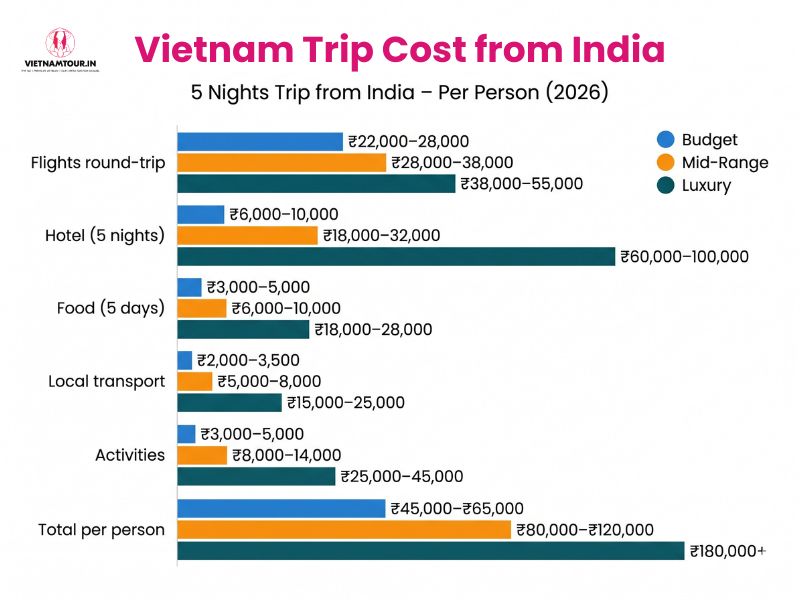
Vietnam Trip Cost for 5 Days from India: Budget, Mid-Range, and Luxury in INR
| Cost Category | Budget (₹) | Mid-Range (₹) | Luxury (₹) |
| Flights round-trip | 22,000–28,000 | 28,000–38,000 | 38,000–55,000 |
| Hotel (5 nights) | 6,000–10,000 | 18,000–32,000 | 60,000–100,000 |
| Food (5 days) | 3,000–5,000 | 6,000–10,000 | 18,000–28,000 |
| Local transport | 2,000–3,500 | 5,000–8,000 | 15,000–25,000 |
| Activities | 3,000–5,000 | 8,000–14,000 | 25,000–45,000 |
| Total per person | ₹45,000–₹65,000 | ₹80,000–₹120,000 | ₹180,000+ |
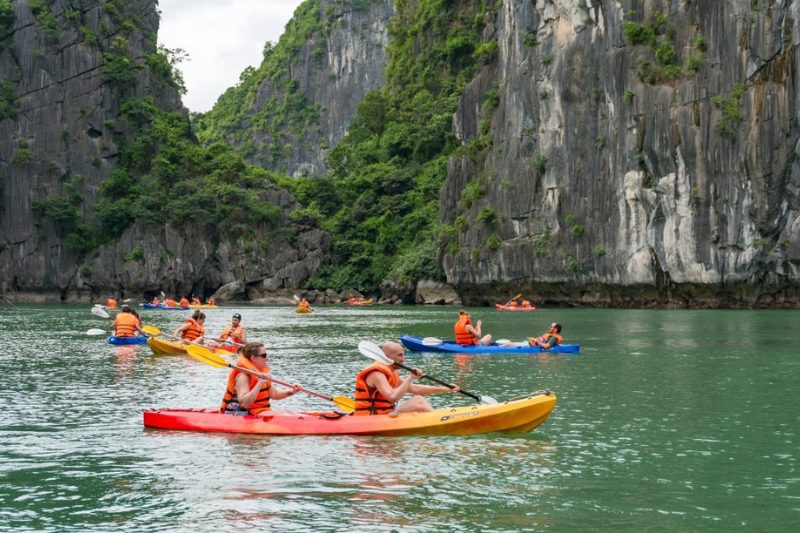
The Budget tier for a 5-day Vietnam trip covers 2-star or 3-star hotels, mostly street food and budget restaurants, ride-hailing apps for all transport, and self-guided sightseeing. The Mid-Range tier covers 3-star or 4-star hotels, mixed restaurant dining including 1–2 Indian restaurant meals, private transfers for major movements, and 2–3 paid activities (Ha Long Bay cruise, cooking class). The Luxury tier covers 4-star or 5-star resorts, fine dining, private cars throughout, and premium experiences (private cruise cabin, helicopter transfer).
Vietnam Trip Cost for 7 Nights and 10 Nights: Extended Stay Breakdown in INR
A 7-night Vietnam trip from India costs ₹65,000–1,10,000 per person on a mid-range budget, while a 10-night Vietnam trip costs ₹85,000–1,40,000. The Vietnam trip cost-per-day decreases as trip duration increases — 5-night mid-range Vietnam trips average ₹16,000–24,000 per day, 7-night Vietnam trips drop to ₹9,300–15,700 per day, and 10-night Vietnam trips drop further to ₹8,500–14,000 per day. The fixed Vietnam flight cost (₹28,000–38,000) gets amortised across more days, lowering the daily average.
The 7-night duration is the most popular Vietnam trip for Indian travellers. The 7 nights is sufficient to cover either North Vietnam (Hanoi + Ha Long Bay + Sapa or Ninh Binh) or a North–Central combination (Hanoi + Ha Long Bay + Hoi An), without requiring extensive annual leave.
The 10-night duration unlocks the full North–Central–South Vietnam circuit covering Hanoi, Ha Long Bay, Hoi An, and Ho Chi Minh City — the 10-night Vietnam itinerary is recommended for first-time visitors who want to see the country’s full diversity in a single trip.
Hidden Costs Indians Must Budget for Before Visiting Vietnam
7 hidden costs consistently appear in Indian Vietnam trip budgets that first-time travellers underestimate.
-
Travel insurance for the duration of the Vietnam stay costs ₹800–2,500 per person, depending on coverage tier and is recommended for all international travel.
-
The Vietnam visa fee of ₹2,100 (₹4,150 for urgent processing) is fixed regardless of trip duration.
-
Vietnam airport transfers add ₹600–1,400 at each end of the trip if not included in the package.
-
A local Vietnam SIM card with adequate data costs ₹400–700 for 7 days on Viettel or Mobifone.
-
Vietnam tipping norms expect 10% at sit-down restaurants and ₹50–100 per day for tour guides, totalling ₹2,000–4,000 across a typical trip.
-
Vietnam’s UNESCO entry fees stack quickly — Hoi An Ancient Town pass (₹450–600), Ha Long Bay cruise entry (₹800–1,200), My Son Sanctuary (₹500), Hue Imperial City (₹700) — totalling ₹2,500–4,000 across a typical 7-night cultural circuit.
-
Currency exchange spread between USD–VND and INR–VND adds 2–4% loss versus official rates, equivalent to ₹400–800 on a ₹20,000 cash budget.
Vietnam Tour Packages from India: Options, Inclusions, and Prices in INR
Vietnam tour packages from India start at ₹35,000 per person for a 4-night group tour and go up to ₹250,000 per person for a luxury private circuit. 5 Vietnam tour package categories cover the full Indian travel market: standard duration packages (5-night and 7-night), honeymoon packages, family holiday packages, group tours, and luxury private circuits. All-inclusive Vietnam packages from India cover round-trip flights, accommodation, daily breakfast, transfers, guided activities, and visa coordination support.
Indian travellers looking for ready-made Vietnam itineraries browse the full range of Vietnam tour packages from India — from 4-night group circuits to 12-night luxury private tours — with departure options from Delhi, Mumbai, and Bengaluru, and dedicated Indian-tourist features including vegetarian and Jain meal coordination, Hindi-speaking guides on request, and INR pricing throughout.
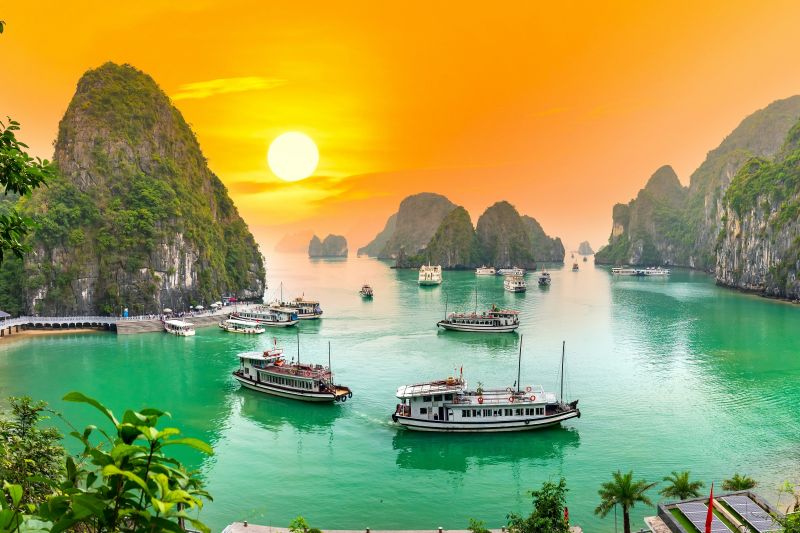
5-Night and 7-Night Vietnam Tour Packages from India: Inclusions and INR Price
The 5-night Vietnam package from India costs ₹45,000–85,000 per person on a twin-sharing basis and typically covers Hanoi (2 nights) + Ha Long Bay (1 night cruise) + Hoi An or Ho Chi Minh City (2 nights). 5-night Vietnam package inclusions cover round-trip flights from Delhi, Mumbai, or Bengaluru, 3-star or 4-star hotel accommodation, daily breakfast, all airport and intercity transfers, English-speaking guides at major sites, and a 1-night Ha Long Bay cruise with full meals.
The 7-night Vietnam package from India costs ₹65,000–110,000 per person twin-sharing and extends coverage to Hanoi (2 nights) + Ha Long Bay (1 night) + Da Nang/Hoi An (2 nights) + Ho Chi Minh City (2 nights). The 7-night Vietnam duration delivers the most popular Indian tourist circuit and allows for both northern heritage and southern beach experiences on a single trip.
Group rates on 7-night Vietnam packages apply for 6 or more Indian passengers booking together, dropping the per-person price by ₹5,000–10,000.
Vietnam Honeymoon Packages from India: Best Destinations and Cost in INR
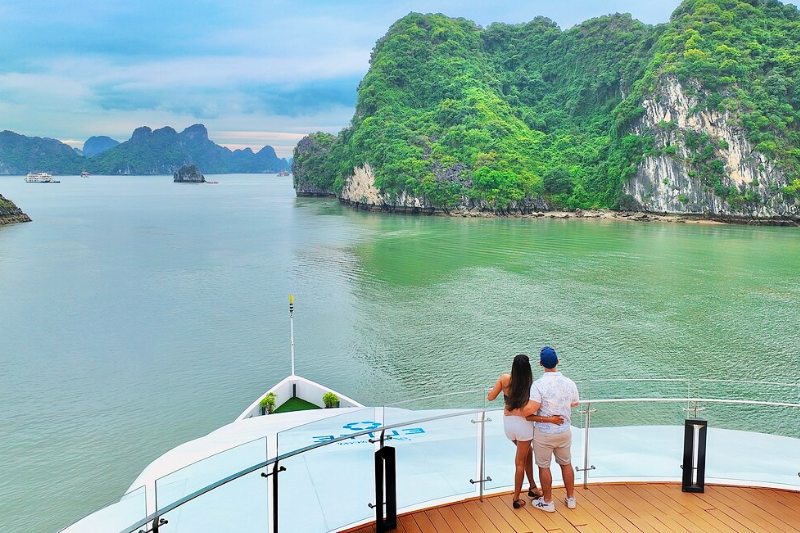
Vietnamese honeymoon packages from India cost ₹85,000–180,000 per couple (₹42,500–90,000 per person) for 6–8 night durations. The most popular Vietnam honeymoon destinations for Indian couples are Ha Long Bay (private cabin overnight cruise), Hoi An (lantern-lit Ancient Town evenings and An Bang Beach), and Phu Quoc (overwater bungalows and beachfront 5-star resorts).
Standard Vietnam honeymoon package inclusions cover candlelit dinners on Ha Long Bay cruise decks, in-room flowers and welcome amenities at hotels, private transfers throughout, and at least one couple’s spa treatment. Premium Vietnam honeymoon packages include private balcony cabins on Ha Long Bay overnight cruises, beachfront villa stays in Phu Quoc, and helicopter transfers from Da Nang Airport to Hoi An.
Indian honeymoon travellers book Vietnam honeymoon packages 10–12 weeks in advance for Christmas–New Year and Valentine’s Day windows when premium room categories sell out fastest.
Vietnam Family Holiday Packages for Indians: Child-Friendly and Vegetarian Options
Vietnam family holiday packages for Indian families of 4 (2 adults + 2 children under 12) cost ₹220,000–350,000 total for 7-night durations. Vietnam family package child discount typically runs 30–50% on the land package portion for children under 12, with flights priced at child fare (approximately 75% of adult fare).
Vietnam family package inclusions cover hotels with family rooms or interconnecting rooms, vegetarian and Jain meal coordination across all hotels and partner restaurants, kid-friendly activities (Vinpearl Land in Phu Quoc, Sun World Ba Na Hills in Da Nang, water puppet shows in Hanoi), and pace-adjusted itineraries with shorter daily activity windows.
Most Vietnam family packages do not have minimum age restrictions for children, though Ha Long Bay overnight cruises typically require children to be at least 4 years old. Indian families with infants under 2 request specific cruise operator confirmation before booking the Vietnam family package.
Vietnam Group Tour Packages from India: Per Person Cost and Departure Cities
Vietnam group tour packages from India cost ₹38,000–75,000 per person for 5–7 night durations. Vietnam group tours operate on fixed departure dates from Delhi, Mumbai, Bengaluru, and Chennai with minimum group sizes of 8–12 passengers, delivering 15–25% lower per-person pricing than equivalent private Vietnam tours.
Standard Vietnam group tour inclusions match private tour content (flights, hotels, transfers, breakfast, guided activities) but operate on a fixed itinerary without customization flexibility. Vietnam group tours suit Indian travellers comfortable with shared experiences, families, happy meeting other Indian families during the trip, and budget-conscious travellers prioritizing cost savings.
Vietnam group tour departure cities run on rotation rather than on every date — Delhi and Mumbai have weekly Vietnam group tour departures during peak season, while Bengaluru and Chennai operate fortnightly.
Vietnam Luxury Tour Packages from India: Private Circuits and Premium Experiences
Vietnam luxury tour packages from India cost ₹1,50,000–2,50,000 per person for 7–12 night durations. Vietnam luxury packages operate as fully private circuits with dedicated English-speaking guides, private vans or sedans throughout, and 4-star or 5-star resort accommodation across all stops.
Vietnam luxury package inclusions cover private balcony cabins on Ha Long Bay overnight cruises (rather than shared cabins), beachfront villa or pool villa stays in Phu Quoc, helicopter transfers between Da Nang Airport and Hoi An, private dining experiences with Vietnamese chefs, and access to UNESCO sites outside standard tourist hours.
Indian luxury travellers booking Vietnam packages independently face fragmented coordination across premium hotel categories, private guide quality, and Indian-diet meal arrangements at fine-dining venues. Vietnamtour.in’s premium itinerary team, led by Mr. Anthony (Co-founder & CMO), handles 5-star resort vetting, private English-speaking guide selection, and Jain or pure-vegetarian arrangements at fine-dining venues for Indian luxury buyers. The team’s premium-segment record covers TripAdvisor Best of the Best 2023 recognition and 428,000+ Indian travellers served since 2015.
Vietnam Travel Tips for Indian Tourists: Food, Safety, Currency, and Connectivity
Vietnam travel tips specific to Indian tourists cover 4 critical on-ground details that generic travel guides miss: vegetarian food availability, safety considerations for Indian passport holders, currency and payment options, and SIM card or eSIM connectivity. The 4 Vietnam travel tips consistently determine whether an Indian Vietnam trip runs smoothly or hits friction upon arrival.
Vegetarian and Indian Food in Vietnam: Restaurants and Dishes by City
Vietnam has growing Indian restaurant availability in tourist cities, with a concentration in 4 main Indian-tourist destinations. Hanoi Old Quarter has 5–6 Indian restaurants serving North Indian, South Indian, and pure vegetarian options at ₹600–1,200 per meal. Tandoor Indian Restaurant and Namaste Hanoi are the most established Hanoi Indian restaurants. Ho Chi Minh City District 1 has 8+ Indian restaurants concentrated in the Pham Ngu Lao backpacker zone and the central business district. Da Nang has 3–4 Indian restaurants, primarily along the My Khe Beach strip. Hoi An has 2 Indian restaurants in the Ancient Town and An Bang Beach areas.
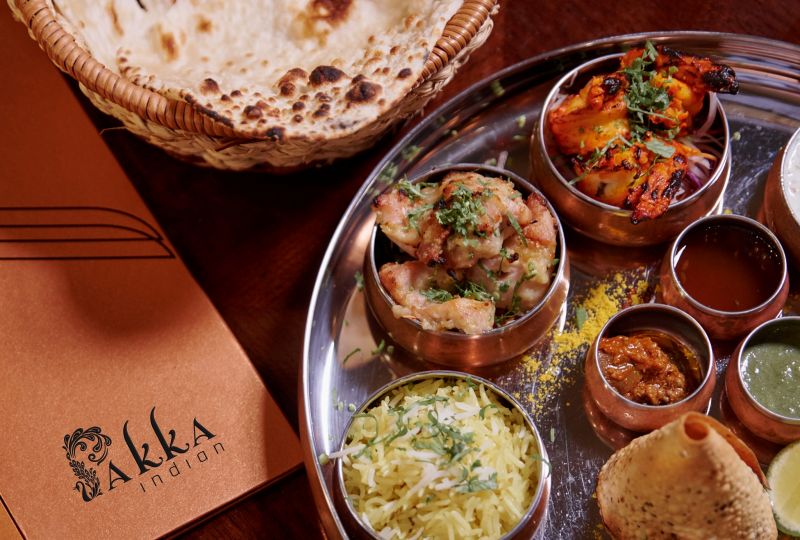
Vegetarian-friendly Vietnamese dishes accessible to Indian travellers include vegetable pho (request without meat broth — say “khong thit”), banh xeo (vegetable pancake), com tam chay (vegetarian broken rice), and fresh spring rolls (goi cuon chay). Grocery options for Indian travellers wanting to cook include Big C, Coopmart, and Lotte Mart in major Vietnamese cities, all stocking basic Indian spices, lentils, and rice.
Indian travellers with strict Jain or pure-vegetarian requirements need restaurant arrangements that go beyond standard Indian-restaurant lists — no-onion, no-garlic, and root-vegetable-free preparations require advance kitchen briefings. Ms. Huyen Tran, Director of Operations at Vietnamtour.in, runs Indian-chef-led restaurant partnerships across Hanoi, Hoi An, Da Nang, and Ho Chi Minh City that handle Jain dietary protocols at package-included rates — a system built on 10+ years of Indian market experience and over 1,900+ verified 5-star TripAdvisor reviews from Indian travellers.
Beyond Indian restaurants, understanding Vietnamese cuisine helps Indian travellers identify vegetarian-safe dishes and street food options across all of Vietnam’s regions.
Is Vietnam Safe for Indian Tourists? Safety Rating and Common Scam Alerts
Vietnam is safe for Indian tourists overall, ranking in the top 30 safest countries for international travel on the Global Peace Index. Major Vietnam tourist zones — Hanoi Old Quarter, Hoi An Ancient Town, Da Nang beachfront, Ho Chi Minh City’s District 1 — have low petty crime rates and visible tourist police presence.
3 scam types target tourists in Vietnam, and Indian travellers should stay aware of all 3:
-
Vietnam taxi scams involve unmetered taxis quoting inflated fares, particularly outside major hotels and at airports. Indian tourists prevent Vietnam taxi scams by using Grab or Vinasun (the licensed metered taxi operator) rather than street-hailed taxis.
-
Vietnam motorbike bag-snatching occurs occasionally in Ho Chi Minh City, where riders grab phones or bags from pedestrians walking near the road. Indian tourists keep bags on the inside shoulder away from traffic and avoid using phones near the curb.
-
Vietnam restaurant menu scams involve some street vendors charging tourists 2–3 times the local rate by displaying menus only after the meal. Indian tourists confirm Vietnam restaurant prices before ordering.
Areas requiring extra care in Vietnam include the Nha Trang beach strip after midnight, and isolated alley areas of any city after 22:00 — Indian solo female travellers report the main Vietnam tourist zones as comfortable but recommend ride-hailing rather than walking after dark.
Currency Exchange and Payment Options for Indians in Vietnam
The Vietnamese Dong (VND) is Vietnam’s only accepted currency for street purchases, taxis, and small businesses. The 2026 INR to VND exchange rate sits at ₹1 ≈ 280–310 VND, with most banks and exchange counters operating in this band. The best Vietnam exchange rates are at airport bank counters (Vietcombank, BIDV) and city banks; airport kiosks operated by exchange brokers (rather than banks) and hotel exchange desks run 3–5% worse than the market rate.
ATM availability is excellent in major Vietnamese cities — Vietcombank, BIDV, ACB, and Sacombank ATMs accept Indian debit cards (Visa, Mastercard) with withdrawal limits of VND 5–10 million per transaction (₹17,000–34,000). International credit cards are accepted at 4-star and 5-star Vietnam hotels, large restaurants, and major tour operators.
UPI is not accepted in Vietnam as of 2026 — Indian travellers cannot use Google Pay, PhonePe, or Paytm at any merchant in Vietnam. RuPay cards work at select Vietnam ATMs but not at point-of-sale terminals; Indian travellers carry Visa or Mastercard credit/debit cards rather than relying on RuPay alone.
Vietnam SIM Card for Indian Travelers: Best Plans and eSIM Options
Vietnam SIM cards for Indian travellers are best purchased at airport kiosks immediately on arrival, with Viettel and Mobifone offering the most reliable network coverage across the country. Vietnam tourist SIM packages cost ₹400–700 and include 5–15 GB of data valid for 7–30 days, with unlimited local calling included on most plans.
Viettel offers the broadest rural coverage and is recommended for Indian travellers planning trips to Sapa, Ha Long Bay, Phu Quoc, or remote Vietnam areas. Mobifone delivers comparable urban coverage at slightly lower prices and suits travellers staying in major Vietnamese cities only. Both Viettel and Mobifone support eSIM for compatible Indian phones (iPhone XS and later, recent Android flagships) — Vietnam eSIM activation happens by scanning a QR code at the kiosk and takes 5–10 minutes versus 15–20 minutes for physical SIM activation. Indian travellers carry a passport for Vietnam SIM registration as Vietnamese law requires identity verification for all SIM purchases.
A full pre-departure checklist — from packing essentials to health precautions and money planning — is available in the travel preparation tips guide for India-based travellers.
Plan Your Vietnam Trip from India: Related Guides and Next Steps
Indian travellers planning a Vietnam trip benefit from progressive layers of detail beyond this overview — the resources below cover destination selection, activity planning, seasonal optimisation, sample itineraries, and trip extensions.
Best Destinations to Visit in Vietnam for Indian Travelers
Once Vietnam flights and visa are confirmed, planning which cities and regions to include is the next step — the full must-visit destinations guide ranks Vietnam’s top locations by travel time from India and tourist infrastructure quality, with specific recommendations for first-time Indian visitors versus repeat travellers exploring beyond the standard circuit.
Top Experiences and Activities in Vietnam for Indians
From Ha Long Bay cruises and Hoi An lantern festivals to cooking classes and temple visits relevant to Indian cultural sensibilities, the top experiences in Vietnam page covers Vietnam activity options across all budget levels — including specific recommendations for Indian families with children, honeymoon couples, and senior travellers.
Best Time to Visit Vietnam: Full Month-by-Month Guide
For Indian travellers planning the Vietnam trip around specific dates or festivals, the best months to visit Vietnam guide includes a detailed month-by-month breakdown with regional weather charts covering North, Central, and South Vietnam separately — essential for Indian travellers building multi-region Vietnam itineraries that need overlapping good-weather windows.
Sample Vietnam Itinerary for Indian Travelers
A ready-to-use sample Vietnam itinerary — structured for Indian travellers with logical routing, vegetarian meal stops, and temple visit slots — is available as a free planning template. Day-by-day Vietnam planning eliminates the trial-and-error of first-time itinerary construction and ensures realistic transport timing between destinations.
Extending Your Trip: Vietnam and Cambodia Combined Tour from India
Many Indian travellers extend your trip to Cambodia by adding 3–4 days to a Vietnam itinerary — covering Angkor Wat and Phnom Penh via a short flight or overland crossing from Ho Chi Minh City. The combined Vietnam–Cambodia trip is consistently the most popular Southeast Asia extension for Indian travellers, delivering 2 distinct cultural experiences within a single annual leave window.
Frequently Asked Questions: Vietnam from India
Is Vietnam visa-free for Indian citizens?
No, Vietnam is not visa-free for Indian citizens — Indian passport holders require a visa to enter Vietnam. The Vietnam e-visa is the simplest option, costing USD 25 (₹2,100) with a 3-business-day processing time and 90-day single-entry validity. The Vietnam e-visa application is fully online at evisa.xuatnhapcanh.gov.vn and requires a passport scan, photo, flight booking, and hotel confirmation.
How many days are enough for Vietnam from India?
7 nights is the recommended minimum for a North or South Vietnam circuit from India. A 7-night Vietnam trip covers either Hanoi + Ha Long Bay + Sapa (northern circuit) or Ho Chi Minh City + Hoi An + Phu Quoc (southern circuit). 10–12 nights allows comprehensive coverage of both Vietnam regions through the classic Hanoi → Ha Long Bay → Hoi An → Ho Chi Minh City → Phu Quoc itinerary. Less than 5 nights forces compromise on either Vietnam travel time or destination depth, and is recommended only for repeat visitors with specific focused interests.
Is Vietnam cheaper than Thailand for Indian tourists?
Vietnam is comparable to Thailand for mid-range Indian travellers, with accommodation and local transport averaging 15–20% lower in INR equivalents. A 7-night mid-range Vietnam trip costs ₹65,000–1,10,000 per person versus ₹75,000–1,25,000 for an equivalent Thailand trip. Vietnam wins on cultural depth, food variety, and overall trip value; Thailand wins on direct flight availability from second-tier Indian cities and visa-free entry. The Vietnam vs Thailand price difference is most pronounced at the budget tier, where Vietnam’s lower accommodation costs deliver larger absolute INR savings.
Can Indians use UPI or Rupay cards in Vietnam?
UPI is not accepted in Vietnam as of 2026 — no Vietnamese merchants currently support Google Pay, PhonePe, Paytm, or other UPI-based payment apps. RuPay cards work at selecting Vietcombank and BIDV ATMs for cash withdrawal but are not accepted at point-of-sale terminals in restaurants, shops, or hotels. Cash in VND is the primary payment method for Vietnamese markets, street food, and local transport. Indian travellers carry a Visa or Mastercard credit/debit card as the primary international payment method in Vietnam, supplemented with USD or VND cash for street-level transactions.
Do Indians need a return ticket to enter Vietnam?
Yes, Indian passport holders need proof of onward or return travel at the time of entry to Vietnam. Immigration officers at Hanoi (HAN), Ho Chi Minh City (SGN), and Da Nang (DAD) airports routinely verify return ticket availability for Indian passport holders, particularly those entering on an e-visa or Visa on Arrival.
Indian travellers planning open-jaw trips (entering Vietnam, exiting overland to Cambodia or Laos) carry confirmed onward travel documentation — bus or flight bookings out of Vietnam serve as acceptable proof when a same-trip return flight does not exist.