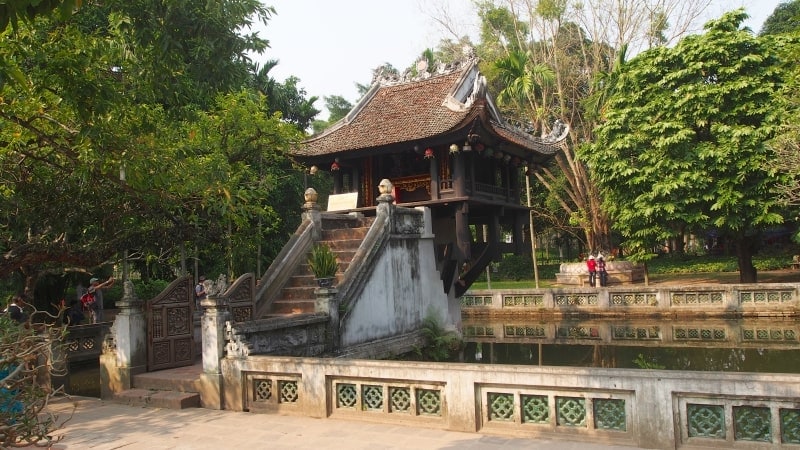
One Pillar Pagoda — known in Vietnamese as Chùa Một Cột and also called the One Pillar Temple or single pillar temple — is a small Buddhist shrine in the Ba Dinh area of Hanoi, first built in 1049 under King Lý Thái Tông. It is part of the Dien Huu Pagoda (Chùa Diên Hựu) complex, just behind the Ho Chi Minh Mausoleum, and is one of the most recognisable symbols of Hanoi.
One Pillar Pagoda is open daily from about 7:00 AM to 6:00 PM, and foreign visitors pay an entry fee of about 25,000 VND (≈ ₹92); the best time for photos is 7:00–8:30 AM on weekdays. The current structure is a 1955 reconstruction of the original design — a wooden pavilion about 3 m × 3 m sitting on a single stone pillar about 1.2 m in diameter, rising from a square lotus pond. This guide covers the founding legend, the lotus architecture and its Buddhist symbolism, practical entry information, and the Ba Dinh morning circuit that Indian tourists combine with the pagoda in a single visit.
One Pillar Pagoda at a glance (updated November 2026)
- Location: Chua Mot Cot Street, behind the Ho Chi Minh Mausoleum, Ba Dinh area, Hanoi — about 2.5 km from the Old Quarter.
- Entrance fee: about 25,000 VND (≈ ₹92) for foreign visitors; Vietnamese visitors enter free.
- Opening hours: daily, about 7:00 AM – 6:00 PM (some sources list a lunch break, so arrive in the morning).
- Dress code: cover shoulders and knees; no shorts, short skirts or sleeveless tops.
- Visit time: 20–30 minutes for the pagoda, or 2–3 hours with the Ho Chi Minh Mausoleum and nearby sites.
The Legend and History Behind One Pillar Pagoda
One Pillar Pagoda was built in 1049 by King Lý Thái Tông after the king dreamed that the Goddess of Mercy (Quan Âm Bồ Tát), seated on a lotus flower, handed him a baby son. The king, who had long been without an heir, consulted his court and ordered a shrine to be built in the shape of the lotus from his dream — a pavilion rising from water on a single stone pillar, like the lotus throne of the goddess.
According to tradition, the king soon after had a son. The shrine was called Liên Hoa Đài (Lotus Flower Platform), and the temple around it was named Diên Hựu Tự — the Pagoda of Extended Blessings — reflecting the king’s wish for lasting divine favour.
The lotus (padma), the seat of divine beings such as Goddess Lakshmi, Lord Brahma and the Buddha, is one of the most deeply shared symbols of the Hindu and Buddhist traditions that began in the Indian subcontinent. The pagoda’s lotus design expresses the same idea: the lotus rising from water as a symbol of purity and grace — something Indian visitors will recognise immediately from temple art and Buddhist sculpture back home.
The pagoda was restored many times over the following centuries. On 11 September 1954, withdrawing French forces destroyed the structure, and in 1955 the Vietnamese government rebuilt it following the traditional design.

Why One Pillar Pagoda Is Considered Vietnam’s Most Iconic Buddhist Temple
One Pillar Pagoda is considered Vietnam’s most iconic Buddhist temple because of its unique single-pillar lotus design, its 1049 royal origin, and its place at the heart of Hanoi’s historic Ba Dinh area. Few religious buildings anywhere stand on a single pillar, and its image appears on souvenirs, postcards and even Vietnam’s 5,000 VND coin.
Together with landmarks such as the Temple of Literature and the Imperial Citadel of Thăng Long, the pagoda tells the story of the Lý dynasty, which made Thăng Long (today’s Hanoi) its capital in 1010. For most visitors, it is a short but meaningful stop on a morning tour of the Ho Chi Minh Mausoleum area.
The 1955 Reconstruction and What Was Preserved
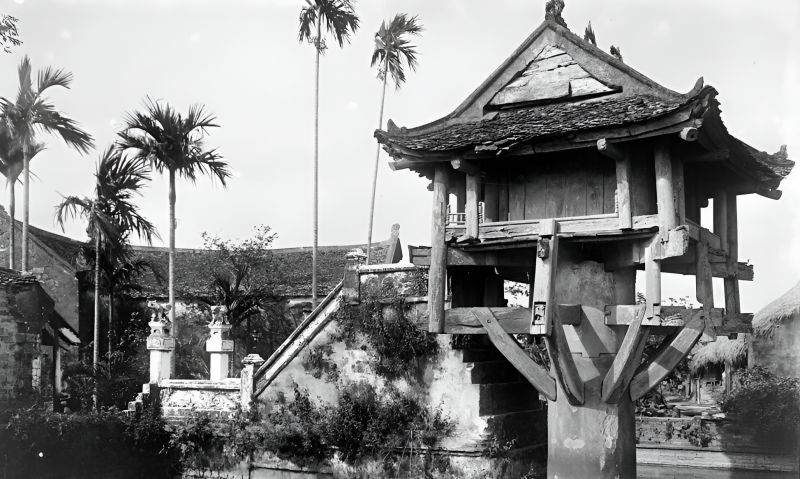
The current One Pillar Pagoda is a 1955 reconstruction that follows the traditional design: a single stone pillar supporting a small wooden shrine above a lotus pond. The structure destroyed in 1954 was itself the result of many earlier repairs, so the pagoda you see today keeps the form and proportions of the historic shrine rather than its original materials. The wooden shrine, tiled roof and curved brackets were rebuilt in the traditional style, and the pillar stands on the same spot in the middle of the pond.
The Architecture and Design of One Pillar Pagoda
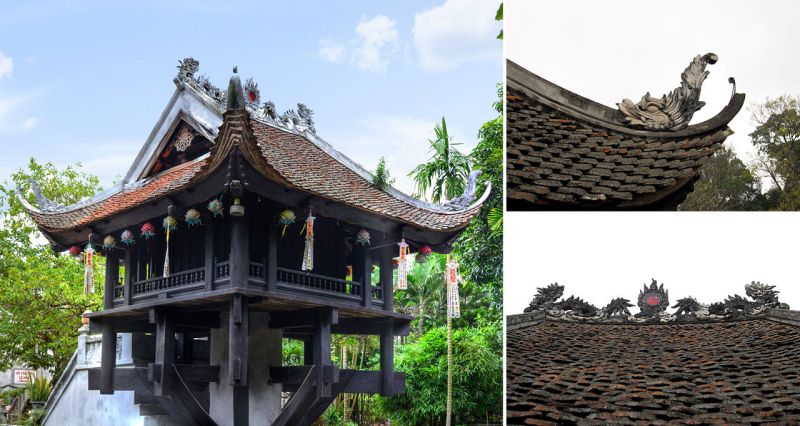
One Pillar Pagoda stands on a stone pillar about 1.2 metres in diameter and about 4 metres high above the ground, rising from a square pond. On top sits a square wooden pavilion about 3 metres on each side, with a tiled roof whose corners curve upward in classic Vietnamese style, and a pair of dragons on the roof ridge facing the moon. Wooden brackets spread out from the top of the pillar to hold the pavilion, like the petals of a flower.
Each element has a symbolic meaning: the pillar is the lotus stem, the pavilion is the lotus flower in bloom, and the pond represents the “sea of suffering” from which the lotus rises unstained. Together they express the Buddhist idea of purity emerging from suffering.
One Pillar Pagoda (Liên Hoa Đài), first built in 1049, is about 937 years older than the Bahá’í Lotus Temple in New Delhi (1986). Both place the lotus at the centre of their design as a symbol of purity — a fun comparison for Indian travellers.
The shrine is the centrepiece of the larger Dien Huu Pagoda complex, which includes a courtyard, gate and prayer hall beside the pond.
The Symbolism of the Single Pillar in Vietnamese Buddhist Art
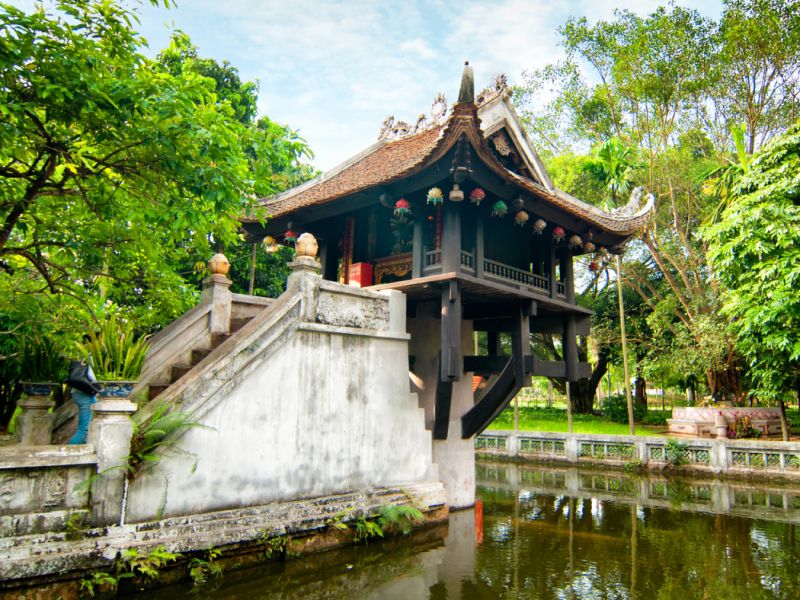
The single pillar can also be read as the axis of the universe — Mount Meru (núi Tu Di in Vietnamese) in Buddhist cosmology, the sacred mountain that connects heaven and earth. Indian visitors may see a link with the central post (yasti) of the Great Stupa at Sanchi in Madhya Pradesh, which also marks the world axis in Buddhist architecture. Built more than 1,300 years apart in two different countries, both structures share the same idea of a sacred centre rising upward.
How One Pillar Pagoda Compares to Other Hanoi Temples
One Pillar Pagoda is the smallest and quickest to visit of Hanoi’s famous temples, and the only one built on a single pillar. The table below compares it with other major Hanoi temples.
| Temple | Architecture | Entry fee | Visit duration | Distance from Old Quarter |
| One Pillar Pagoda (Chùa Một Cột) | Single-pillar lotus pavilion, 1049 | 25,000 VND (≈ ₹92) | 20–30 minutes | ~2.5 km |
| Temple of Literature (Văn Miếu) | Confucian courtyard complex, 1070 | 70,000 VND (≈ ₹256) | 45–60 minutes | ~2 km |
| Tran Quoc Pagoda (Chùa Trấn Quốc) | 11-storey stupa on a West Lake islet, founded in the 6th century | Free | 20–30 minutes | ~3.5 km |
| Quan Thanh Temple (Đền Quán Thánh) | Taoist temple with a large bronze statue, 11th century | 10,000 VND (≈ ₹37) | 20–30 minutes | ~2.5 km |
| Ngoc Son Temple (Đền Ngọc Sơn) | Temple on a Hoan Kiem Lake island, reached by a red bridge | 50,000 VND (≈ ₹183) | 20–30 minutes | In the Old Quarter area |
Fees follow Hanoi’s current sightseeing fee schedule and may change.
tran quoc pagoda is the oldest pagoda in Hanoi, and quan thanh temple sits just across the road from West Lake, so the two are easy to visit together after One Pillar Pagoda. For a bigger Buddhist pilgrimage, take a day trip to the perfume pagoda, about 60 km south of Hanoi, set inside a limestone cave and reached by boat.
One Pillar Pagoda Timings, Entrance Fee, and Dress Code
One Pillar Pagoda is open daily from about 7:00 AM to 6:00 PM, and the One Pillar Pagoda entrance fee is about 25,000 VND (≈ ₹92) per foreign visitor; Vietnamese citizens enter free. One source lists a lunch break from 11:30 AM to 1:30 PM, so a morning visit is the safest choice.
One Pillar Pagoda dress code: cover your shoulders and knees. Avoid shorts, short skirts, sleeveless tops and T-shirts with inappropriate prints — a dupatta or light scarf is useful if you are wearing a sleeveless kurta or top. The same dress code applies at the Ho Chi Minh Mausoleum next door, so you can visit both without changing.
Other rules: speak quietly, do not eat on the grounds, and do not climb on the railings or touch the altar. Photography is allowed around the pagoda; avoid flash at the altar and ask before photographing monks or worshippers.
A visit to the pagoda takes 20–30 minutes. With the Dien Huu Pagoda courtyard and the nearby Ba Dinh landmarks — the Ho Chi Minh Mausoleum, Presidential Palace area and Ho Chi Minh Museum — allow 2–3 hours.
How to Get to One Pillar Pagoda from Hanoi Old Quarter

One Pillar Pagoda is on Chua Mot Cot Street, behind the Ho Chi Minh Mausoleum and next to Ong Ich Khiem Street — about 2.5 km from Hanoi Old Quarter and 10–15 minutes by Grab or taxi.
4 transport options from Hanoi Old Quarter:
- Grab car or taxi: about 40,000–70,000 VND (≈ ₹147–256), 10–15 minutes — best for families and groups. The Grab app works like Ola or Uber, and you can pay in cash or by card.
- Grab bike (motorbike taxi): about 20,000–35,000 VND (≈ ₹73–128), 8–12 minutes — fine for solo travellers; the price is fixed in the app.
- Walking: free, 30–35 minutes — via Hoan Kiem Lake and the tree-lined streets of the French Quarter.
- City bus: about 8,000 VND (≈ ₹29), 20–25 minutes — several routes stop near the Mausoleum; check the BusMap app for the current route.
The One Pillar Pagoda, the Ho Chi Minh Mausoleum and the Ho Chi Minh Museum are within a few minutes’ walk of each other, so you only need one ride to see them all. The Vietnam Museum of Ethnology is about 5 km west in Cau Giay and needs a separate Grab ride.
Best Time to Visit One Pillar Pagoda for Photography and Avoiding Crowds
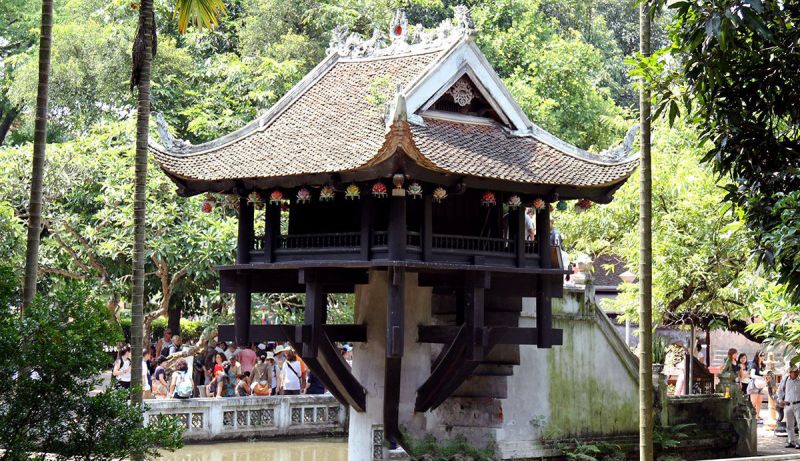
The best time to visit One Pillar Pagoda is between 7:00 AM and 8:30 AM on a weekday, before the tour groups arrive from the Ho Chi Minh Mausoleum.
Typical crowd levels by time of day:
- 7:00–8:30 AM on weekdays: quietest time, with soft light for photos.
- 9:00–11:00 AM: busiest, as groups arrive after visiting the Mausoleum; the stairs and the pond-side photo spots get crowded.
- Afternoons: moderately busy; weekends and holidays are busier than weekdays.
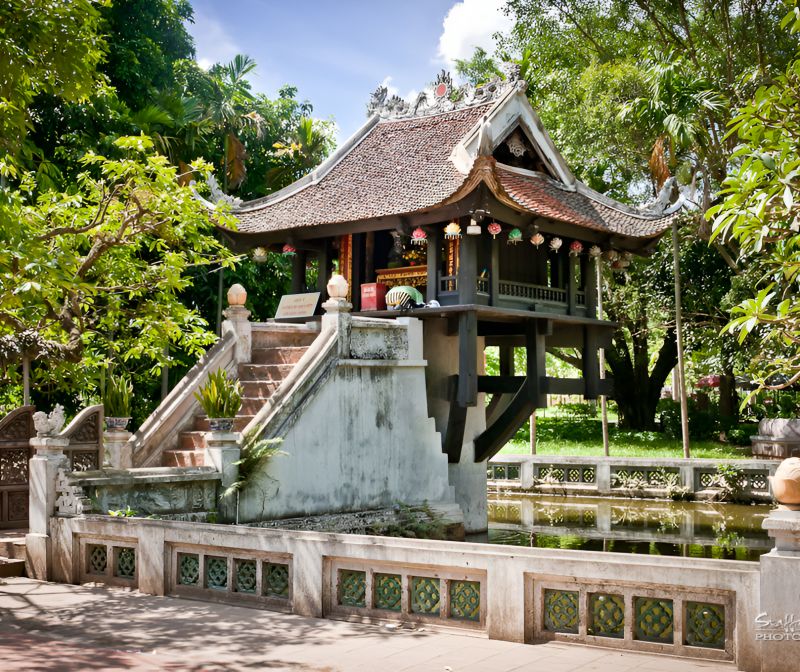
For the classic photo, stand at the front of the pond, opposite the stone staircase, so that the pillar, pavilion and pond fit in one frame.
Best months: October to April brings cooler, drier weather in Hanoi (about 15–25°C), with October–November and March–April the most comfortable for sightseeing. October–November also overlaps with Diwali (8 November 2026; 29 October 2027), a popular time for Indian families to visit. From June to August, Hanoi is hot and humid with frequent heavy showers, so go early in the morning — but this is also when the lotus flowers in the pond are in bloom.
During Tết (Lunar New Year, around late January to mid-February), Hanoi’s pagodas are very crowded with worshippers for about a week, though the festive atmosphere is worth seeing.
One Pillar Pagoda Entrance
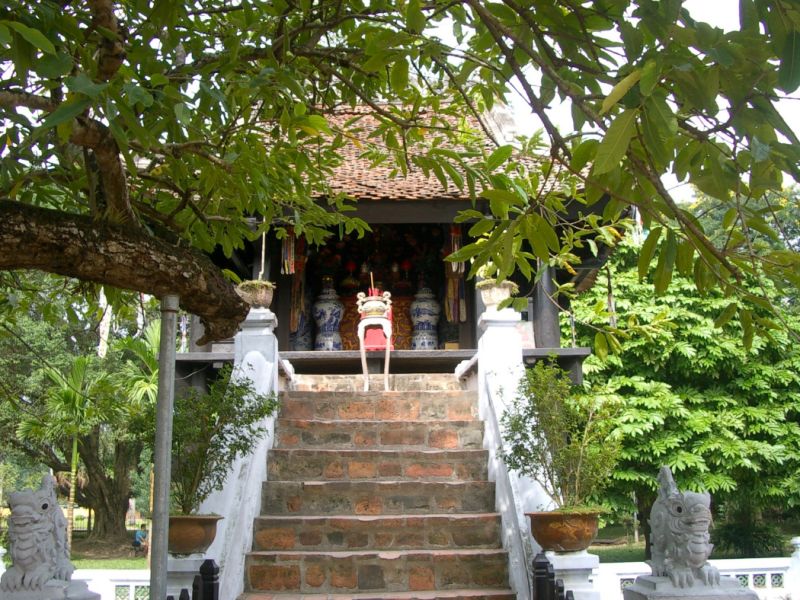
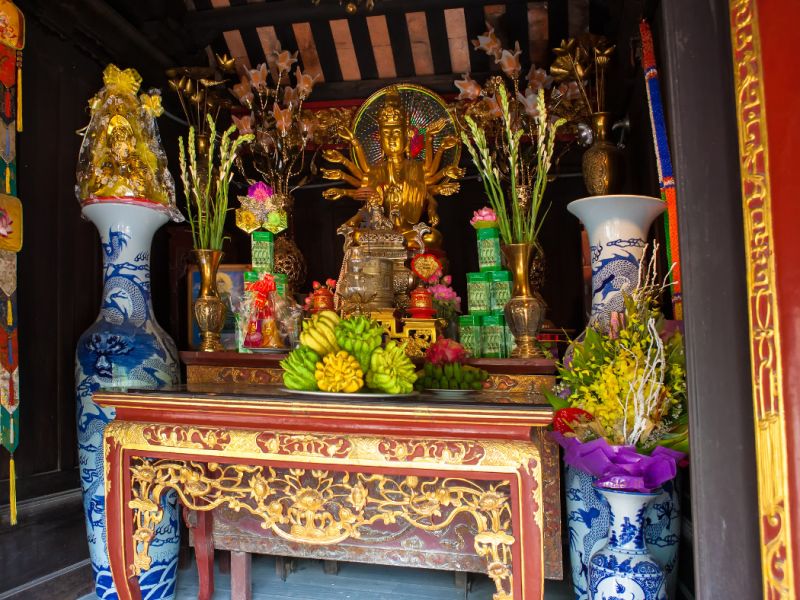
You enter One Pillar Pagoda through the gate of the Dien Huu Pagoda complex, pay the fee, then walk around the lotus pond to a steep brick staircase that leads up to a small platform in front of the shrine. The platform is narrow and holds only a few people at a time, so you may wait a few minutes at the bottom of the stairs during busy hours. From the top, you can look into the shrine and see the altar of Quan Âm, the Goddess of Mercy.
The stairs are steep, so take care with children and elderly family members, and hold the handrail.
One Pillar Pagoda Tour from Hanoi for Indian Tourists
Most Indian tourists visit One Pillar Pagoda as part of a Ba Dinh half-day circuit with the Ho Chi Minh Mausoleum, the Presidential Palace area, the Ho Chi Minh Museum and Ba Dinh Square — all within a short walk of each other.
A recommended Ba Dinh half-day sequence, starting at about 7:30–8:00 AM:
- Ho Chi Minh Mausoleum (from 7:30/8:00 AM): free entry. It opens on Tuesday, Wednesday, Thursday, Saturday and Sunday mornings only (closed Monday and Friday): about 7:30–10:30 AM from April to October and 8:00–11:00 AM from November to March, with an extra 30 minutes on weekends. It also closes for annual maintenance, usually from early September to early November (in 2026, it reopened on 3 November). Go here first, as the queue closes early.
- Presidential Palace area and Uncle Ho’s stilt house: separate ticket; about 45 minutes.
- One Pillar Pagoda: 25,000 VND (≈ ₹92); about 20–30 minutes.
- Ho Chi Minh Museum: separate ticket; right next to the pagoda.
- Ba Dinh Square: free and open at all times.
When the Mausoleum is closed, simply start with One Pillar Pagoda at 7:00 AM and continue to the Temple of Literature.
A full-day Hanoi heritage tour — the Ba Dinh circuit in the morning, followed by Hoan Kiem Lake, the Temple of Literature and the Old Quarter in the afternoon — costs about ₹1,800–2,500 per person for a private guided tour. For a family of 4, a private Hanoi day tour costs about ₹6,000–8,000 for the group (₹1,500–2,000 per person). To combine Hanoi with Ha Long Bay, Da Nang or Ho Chi Minh City, see our vietnam land packages.
What Else to See Near One Pillar Pagoda in Hanoi
Several of Hanoi’s top landmarks are within walking distance of One Pillar Pagoda, making it an easy starting point for a Ba Dinh morning.
- Ho Chi Minh Mausoleum: a few minutes’ walk, free entry — mornings only on Tuesday, Wednesday, Thursday, Saturday and Sunday.
- Ho Chi Minh Museum: right next to the pagoda; separate ticket.
- Ba Dinh Square: a few minutes’ walk, free and open at all times.
- Dien Huu Pagoda: the small temple directly beside the pond, part of the same complex.
- Temple of Literature: about 1.5 km away, 5 minutes by Grab, entry 70,000 VND (≈ ₹256).
- Imperial Citadel of Thăng Long: about 1 km away, a UNESCO World Heritage Site, entry 100,000 VND (≈ ₹366).
In the afternoon, head back to Hoan Kiem Lake and the Old Quarter, about 2.5 km away. Train lovers can catch a train passing through hanoi train street — check the train times and safety rules before you go. For more landmarks and travel tips across the vietnam capital, see our full Hanoi destination guide.
Want a private Hanoi city tour with an English-speaking guide and Indian or vegetarian lunch? Share your travel dates below.
FAQs About One Pillar Pagoda
What is the One Pillar Pagoda entrance fee?
Foreign visitors pay about 25,000 VND (≈ ₹92) per person; Vietnamese visitors enter free.
What are the One Pillar Pagoda timings?
The pagoda is open daily from about 7:00 AM to 6:00 PM. Visit between 7:00 and 8:30 AM for the fewest crowds.
What is the One Pillar Pagoda dress code?
Cover your shoulders and knees. Shorts, short skirts and sleeveless tops are not appropriate; carry a scarf or dupatta just in case.
Can you go inside One Pillar Pagoda?
You can climb the brick staircase to the small platform in front of the shrine and see the altar of the Goddess of Mercy, but the shrine itself is very small.
How old is One Pillar Pagoda?
It was first built in 1049, nearly 1,000 years ago. The current structure was rebuilt in 1955 after the pagoda was destroyed in 1954.
How long do you need at One Pillar Pagoda?
About 20–30 minutes for the pagoda itself, or 2–3 hours if you combine it with the Ho Chi Minh Mausoleum and nearby sites.
Entry fees, opening hours and practical details in this guide were last checked in November 2026.