
Sky diving in Vietnam is not available to tourists: no company holds a licence to sell skydives, the 1 civilian project near Da Nang is still waiting for permits, and the only parachuting in the country is run by military aviation clubs for Vietnamese citizens. The closest experiences that do exist are tandem paragliding in Mu Cang Chai and Sapa from about 2,190,000 VND (₹8,020), powered paragliding over Ha Long Bay, helicopter or seaplane flights over the bay when they are running, and a dawn hot-air balloon flight over the Mui Ne dunes.
This guide from Vietnamtour.in explains why skydiving in Vietnam is restricted, what the Skydive Vietnam project is, why Indian booking sites still list skydiving tours, and which licensed air experiences come closest. The table below sets out what is and is not open to visitors as of October 2026:
| Experience | Available to tourists? | Notes |
|---|---|---|
| Sky diving (jump from an aircraft) | No | No licensed commercial drop zone |
| Indoor skydiving (wind tunnel) | No | None in Vietnam |
| Skydive Vietnam, Da Nang | Not yet | “Coming soon” since 2023, permits pending, no bookings |
| Military parachute course | Vietnamese citizens only | 3–4 month course, ages 18–42, about 50–60 places a year |
| Tandem paragliding | Yes | Mu Cang Chai, Sapa; Son Tra and Ba Na suspended |
| Powered paragliding (paramotor) | Yes | Ha Long (Tuan Chau), Khau Pha |
| Helicopter / seaplane over Ha Long | Intermittent | Paused and resumed several times in 2025–2026 |
| Hot-air balloon | Yes, weather-dependent | Mui Ne, dawn flights year-round |
Each row is explained below, from the permit problem to the flights that do run.
Is There Sky Diving in Vietnam?
There is no commercial skydiving in Vietnam: airspace is controlled by the military, parachuting requires case-by-case clearance, and no company holds a licence to sell jumps to tourists, as of October 2026.
The “skydiving tours in Da Nang” or “Nha Trang skydives” that appear in search results turn out, on closer reading, to be paragliding flights or cable car rides. Unlike Thailand or Australia, Vietnam has no civilian drop zone where a visitor can book a tandem jump from an aircraft, so sky diving in Vietnam simply does not exist yet.
Why Sky Diving Is Restricted in Vietnam
Skydiving is restricted in Vietnam because every parachute jump needs clearance from both military airspace controllers and the civil aviation authority, and no framework yet exists to license a commercial operator.
Security and flight safety come first in Vietnamese airspace, which is managed largely by the military. A skydiving business would need its aircraft, pilots, rescue arrangements and insurance approved separately for the activity, and no operator has completed that process. Until a licensing route exists, even a well-funded company cannot sell a single jump to the public.
Skydive Vietnam: The Da Nang Project That Has Not Opened
Skydive Vietnam is a planned civilian tandem centre 1–2 hours from Da Nang that has displayed “coming soon” since 2023, is still waiting for permits and does not take bookings. The project began in 2020 with a target opening in spring–summer 2023, and 1 of its co-founders is a 7-time British skydiving champion. The plan was for tandem jumps from 4,500 m with about 60 seconds of free fall, led by USPA-rated instructors.
The company’s website lists a projected price of US$350, with photo and video add-ons from US$120 and a deluxe package at US$199, and some drop-zone directories still show a “tandem from 295” price, which is why many travellers believe the centre is already running. Travellers should treat any listing for Skydive Vietnam as a future possibility, not a bookable product, until the company announces an opening date.
The Only Real Parachuting: Military Aviation Clubs
The only people who parachute from aircraft in Vietnam are members of the Northern and Southern Aviation Clubs of the Air Defence–Air Force, and their civilian courses are open to Vietnamese citizens only.
The clubs run 3–4 month courses on weekends, usually 1–2 intakes a year with about 50–60 trainees in total, for applicants aged 18–42 who pass a criminal-record check and an aviation medical examination. Trainees jump with round parachutes from military aircraft and helicopters as part of national defence education, not as a commercial service, and since the 2025 restructuring of state agencies it is unclear whether civilian intakes will continue. Foreign visitors cannot join these courses, so this route does not apply to Indian travellers.
Why Indian Booking Sites List Sky Diving in Vietnam
Several Indian travel sites list “skydiving in Vietnam” with prices because their activity pages are generated from category templates, not from real operators. These pages group paragliding, cable cars and ziplines under a single “skydiving” heading, and some describe “drop zones in Da Nang and Nha Trang” that do not exist. A quick check separates a real skydive from a template listing:
- Operator name: a real listing names the company that runs the jump.
- Licence: the operator can show its permit to conduct parachute jumps.
- Airfield: the listing states the airfield or drop zone where the aircraft takes off.
A listing missing all 3 is not a skydive, whatever its title says, and the same check applies to any “skydiving Vietnam” or “sky diving Vietnam” offer found on social media.

4 Real Ways to Fly in Vietnam
The closest legal experiences to skydiving in Vietnam are tandem paragliding, powered paragliding, helicopter or seaplane flights, and a hot-air balloon over Mui Ne, all run by licensed operators with insurance.
Tandem Paragliding: Mu Cang Chai and Sapa
Tandem paragliding is the closest feeling to skydiving in Vietnam: a 10–25 minute flight with a licensed pilot from a mountain launch, no training needed.
At Khau Pha Pass in Mu Cang Chai, a tandem flight costs 2,190,000 VND (₹8,020) on weekdays, 2,590,000 VND (₹9,485) at weekends and 2,990,000 VND on festival days, including accident insurance of up to 100,000,000 VND, drinking water and a flight video. Flights last 10–25 minutes depending on the wind, and the best seasons are the rice harvest in September–October and the cloud season in November–December. In Sapa, flights launch from Hang Da village above the Muong Hoa Valley at 1,500–2,000 m, from 2,190,000 VND for 10–15 minutes in the air.

Son Tra Peninsula in Da Nang, once the most popular site, has been suspended since an accident in July 2025, and no reopening has been announced since; Ba Na Hills paragliding is also paused. Travellers combining a flight with the rice terraces can plan the trip with the guide to Sapa, and those who want height without a wing can ride the cable car to the summit of Fansipan, Indochina’s highest peak.
Powered Paragliding (Paramotor): Ha Long Bay and Khau Pha
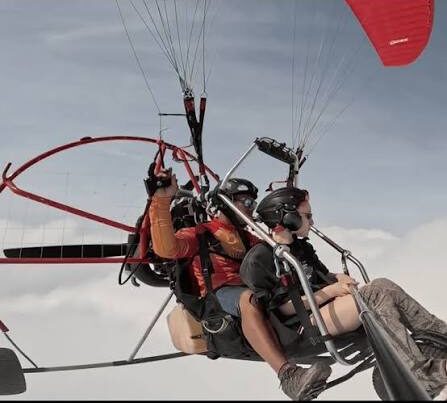
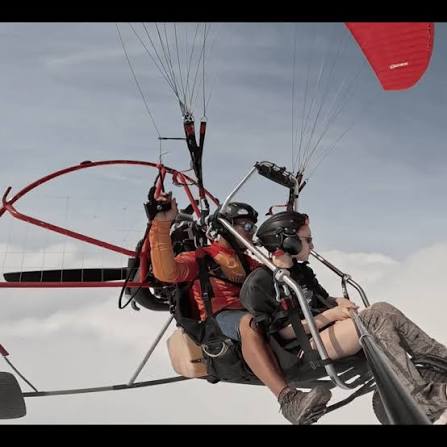
Powered paragliding lets non-flyers see Ha Long Bay from the air in a 15–20 minute tandem flight from Tuan Chau, with no hill launch and less dependence on wind.
Over Ha Long Bay, booking platforms list flights at about US$90–110 (₹8,550–₹10,450), including pickup. At Khau Pha, a paramotor flight costs 2,390,000 VND (₹8,755) for 10–25 minutes chosen in advance, with a ceiling of 2,000 m. The small engine on the pilot’s back means the flight takes off from flat ground, which suits travellers who would rather not run off a mountain slope.
Travellers adding a flight to a cruise can plan it with the guide to Ha Long Bay.
Helicopter and Seaplane Flights over Ha Long Bay
Helicopter and seaplane flights over Ha Long Bay are the only aircraft experiences open to tourists, but both have paused and resumed several times since 2023, so travellers must confirm availability on the booking day.
When running, helicopter flights from Tuan Chau are listed from 2,200,000 VND for 10 minutes, from 3,650,000 VND for 15 minutes and from 7,350,000 VND for 30 minutes, while a 25-minute seaplane flight costs about 1,500,000–2,000,000 VND. Helicopter tours were suspended nationwide after a crash in April 2023, resumed, and were reported paused again during 2026, and the seaplane operator has also changed its services. Vietnamtour.in checks the status of the operator before confirming either flight.

Hot-Air Balloon over Mui Ne
A hot-air balloon flight over the Mui Ne sand dunes is the calmest way to fly in Vietnam: a 1-hour dawn flight for up to 14 passengers, from about 3,500,000 VND (₹12,820) per person in a group.
Hotel pickup is at about 5:00 AM, the flight lasts about an hour, and the landing ends with a first-flight ceremony at around 7:00 AM, so the whole experience takes 3–4 hours. Solo travellers or groups under 5 pay 4,000,000 VND (₹14,650) and wait to be matched with other passengers, groups of 5 or more pay 3,500,000 VND, and groups of 14 pay 3,000,000 VND (₹10,990) each. Flights run year-round but depend on the wind, so a cancelled morning can be moved to the next day.

Families travelling with grandparents and children find this the easiest flight, since everyone stands in the basket with no thrill element. Mui Ne sits about 4 hours by road from Ho Chi Minh City, so the balloon fits best into a 1-night stay by the dunes.
Where Indian Travellers Can Actually Skydive Near Vietnam
Travellers who want a real tandem skydive on an Asia trip should look at Thailand or Dubai, where licensed drop zones run daily. Pattaya, south-east of Bangkok, has 1 of the nearest licensed drop zones to Vietnam. Many Indian travellers already combine Vietnam and Thailand on a single trip, so a skydive in Pattaya can sit at the end of a Vietnam itinerary without a separate journey.
Safety: Only Fly with Licensed Operators
The Son Tra accident in July 2025 happened because a pilot skipped the pre-flight harness check, which is why travellers should fly only with operators that show a sports business licence, pilot certificates and insurance. 4 questions before any flight in Vietnam separate a licensed operator from a risky one:
- Business licence: ask for the certificate that permits the company to run the sport commercially.
- Pilot credentials: ask for the pilot’s certificate and logged flying hours.
- Insurance: accident insurance should be included in the price, not sold as an extra.
- Weather call: no flight should go ahead in strong wind, even after payment.
Travellers wanting the full list of regulated options, from canyoning to kayaking, can use the guide to Vietnam adventure activities. The other big adrenaline trips are a motorbike ride on the Ha Giang loop, an expedition into Son Doong cave, and certified dives covered in the guide to scuba diving in Vietnam.
FAQs About Sky Diving in Vietnam
Travellers asking about sky diving in Vietnam most often want to know whether it exists, whether the Da Nang project is open, and how paragliding compares.
Is there sky diving in Vietnam?
No, as of October 2026 no company in Vietnam is licensed to offer sky diving to tourists. The closest experiences are tandem paragliding, paramotor and hot-air balloon flights.
Is Skydive Vietnam in Da Nang open?
No, Skydive Vietnam has shown “coming soon” since 2023, is still waiting for permits and is not taking bookings. No opening date has been announced.
Can foreigners join Vietnam’s parachute clubs?
No, the military aviation clubs accept Vietnamese citizens only, after a 3–4 month course. The courses are part of national defence education, not a tourist service.
Is paragliding the same as skydiving?
No, paragliding launches from a hill and glides under a wing for 10–25 minutes, while skydiving is a free fall from an aircraft. Paragliding is the only 1 of the 2 available to tourists in Vietnam.
Will sky diving open in Vietnam?
No date yet: it could open if the Da Nang project receives its permits, but no opening has been announced, so travellers should not plan a trip around it. The status will change only when the company confirms a start date.
Flying in Vietnam Without a Skydive
Vietnam cannot give travellers a skydive yet, but a paragliding flight over Mu Cang Chai’s terraces, a paramotor ride over Ha Long Bay or a dawn balloon over Mui Ne delivers the view without the wait. Each sits naturally in a northern or southern route, alongside Sapa, a Ha Long cruise or a night by the Mui Ne dunes, and travellers who prefer the sea to the sky can pick from the guide to the beaches in Vietnam.
The part that takes work is the timing: flying sites open and close with the season and the authorities, and the Ha Long aircraft run only when the operator confirms on the day. Vietnamtour.in, part of Seni World Travel, has arranged that for more than 428,000 travellers from India since 2015, with local experts in Vietnam and a team in Delhi, and every Vietnam tour package from India can include a licensed paragliding, paramotor or balloon flight, while beach holidays are covered by the Phu Quoc tour packages from Vietnamtour.in.
- Hanoi HQ: Floor 4, Bao Anh Building, 62 Tran Thai Tong, Cau Giay, Hanoi
- Delhi: A 10/1 Gujrawala Town Part 1, Main G T Karnal Road, Delhi 110009
- India hotline: +91 88502 95722
- Vietnam / WhatsApp: +84 948 333 087
- Email: [email protected]
Share the travel dates and the flight you want in the form below to check which operators are running.


