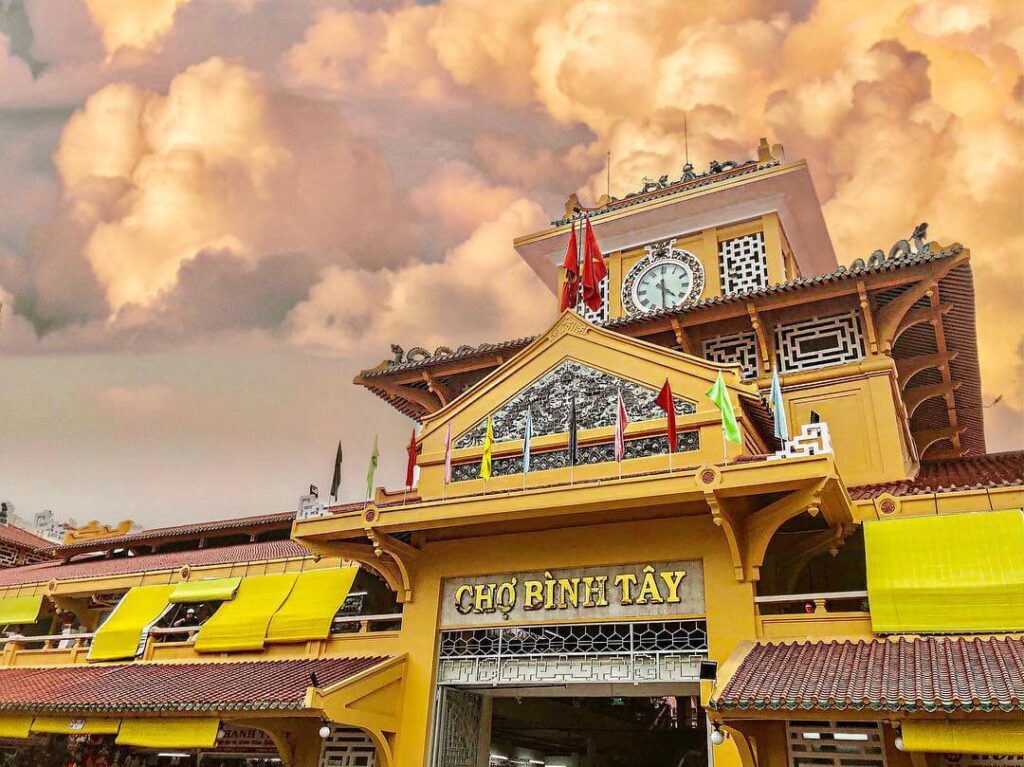
Binh Tay Market (Cho Binh Tay) is Ho Chi Minh City’s biggest wholesale market and the heart of Cho Lon, the city’s historic Chinatown. It is at 57A Thap Muoi Street, Binh Tay Ward (old District 6), about 6 km west of Ben Thanh Market, and is open every day from early morning, with most stalls trading from about 6:00 AM to 6:00 PM. Entry is free. Prices for souvenirs, dried goods and household items are usually lower than at Ben Thanh Market, but it is a busy local market rather than a tourist mall.
Built between 1928 and 1930 with money from Chinese merchant Quach Dam, the market is also a protected architectural monument. This Vietnamtour.in guide covers location and transport, history, what to buy with VND and ₹ prices (about 295 VND per ₹1), food nearby, a Cho Lon itinerary and practical tips for Indian travellers.
| Quick facts | Details |
|---|---|
| Address | 57A Thap Muoi Street, Binh Tay Ward (old District 6), Ho Chi Minh City |
| Opening hours | Most stalls about 6:00 AM – 6:00 PM daily (wholesale trading starts earlier) |
| Entry | Free |
| Best for | Dried goods, spices, tea, ceramics, conical hats, cheap souvenirs |
| Time needed | 1.5–2 hours |
| Getting there | Grab from District 1 (20–30 min) or city bus 01 |
Where Is Binh Tay Market?
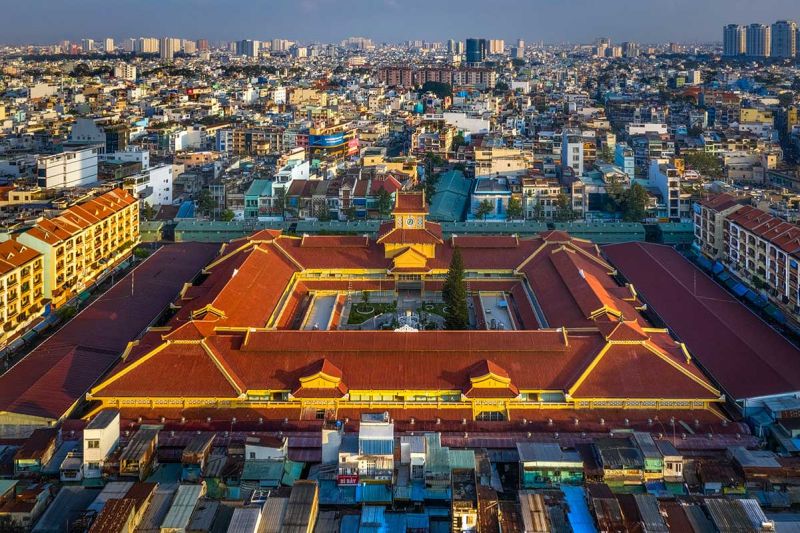
Binh Tay Market is in Cho Lon, Ho Chi Minh City’s Chinatown, about 6 km west of Ben Thanh Market.
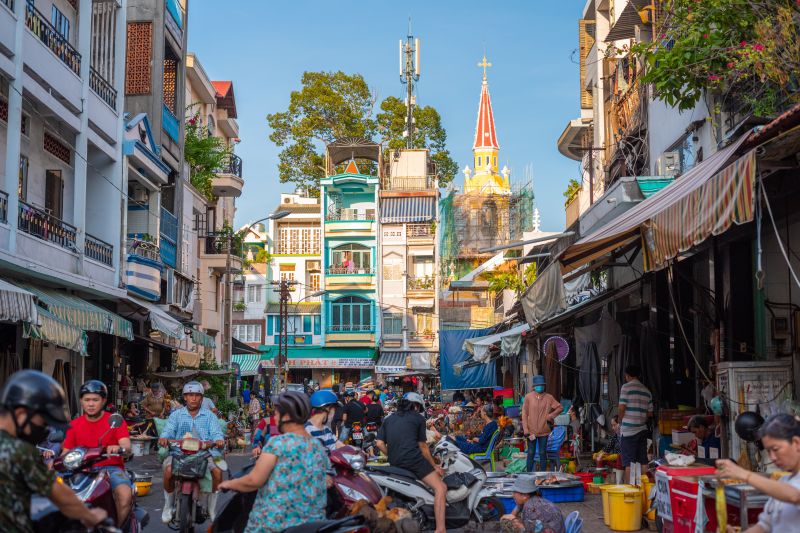
“Cho Lon” means “big market”, and Binh Tay is the commercial heart of this area, which has been home to Vietnam’s Chinese (Hoa) community for centuries. Most visitors to ho chi minh city come here for its atmosphere as much as its prices: the market mainly serves local traders, so you see everyday Vietnamese commerce up close. For many visitors, it is the most authentic Vietnam market experience in the city.
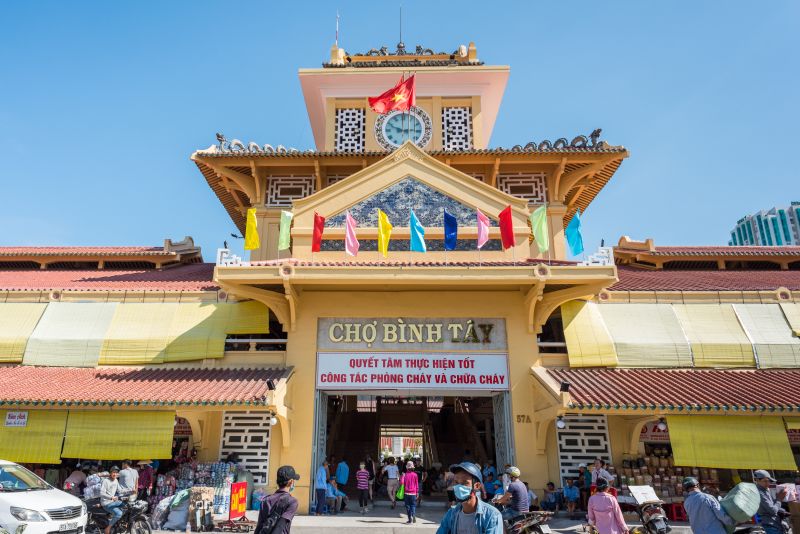
Cho Lon Market: the setting of Binh Tay Market
Locals often call it simply the Cho Lon market. Chinese migrants, mainly from Guangdong and Fujian, settled in Cho Lon from the 18th century. Today the area is full of Chinese temples, assembly halls, herbal medicine shops and signs in Chinese characters, a very different atmosphere from the French colonial streets of District 1. Many traders in Binh Tay Market are Hoa, and you may hear Cantonese or Teochew alongside Vietnamese.
How to get to Binh Tay Market from District 1
- Grab car: about 60,000–100,000 VND (₹205–340) one way, 20–30 minutes depending on traffic. Type “Chợ Bình Tây” in the app.
- Grab bike: about 30,000–45,000 VND (₹100–150), faster in traffic but not ideal if you plan to carry shopping.
- City bus 01: runs between Ben Thanh and Cho Lon (near Binh Tay Market) for a few thousand dong; it is the cheapest option and a good way to plan a Ho Chi Minh City itinerary using public transport, though slower.
Walking from District 1 is not practical, as it is a long route along busy roads.
Binh Tay Market History and Architecture
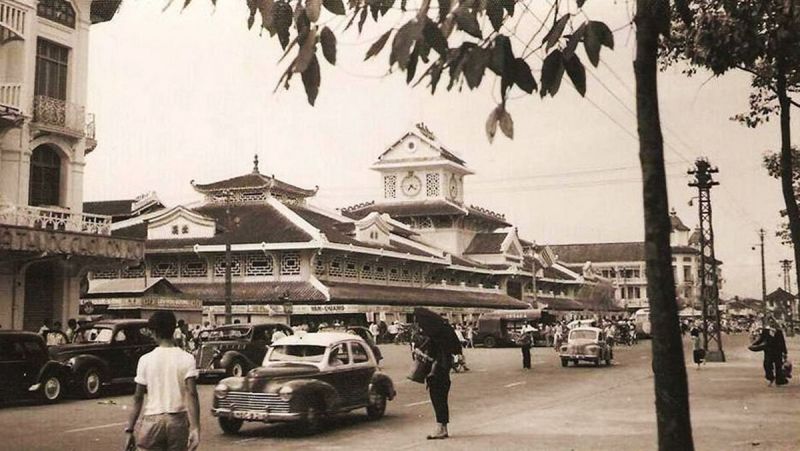
Binh Tay Market was built from 1928 to 1930, funded by the wealthy Chinese merchant Quach Dam, and is recognised as an architectural monument.
Quach Dam and the founding of the market
Quach Dam was one of Saigon’s richest traders, with a fortune built on rice and trade across the Mekong Delta. He paid for the new market to replace an older one and gave it to the city; it opened in 1930. His original bronze statue once stood in the central courtyard and is now kept at the Ho Chi Minh City Fine Arts Museum; a bust paid for by the traders stands in its place, where people still light incense today.
Architecture
The market combines a French colonial structure with Chinese decoration: tiled, curved roofs, a clock tower, and dragon and lion ornaments, built around a central courtyard. It covers about 2.5 hectares and was renovated in 1992 and again in 2016–2018. In 2015 it was recognised as an architectural and artistic monument.
Binh Tay Market Opening Hours and Layout
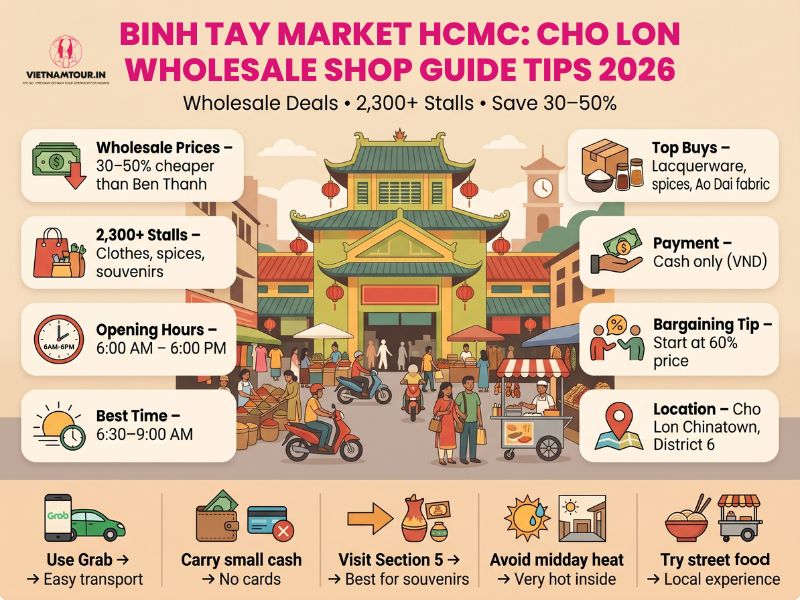
Most stalls open from about 6:00 AM to 6:00 PM every day, with wholesale trading starting even earlier; entry is free.
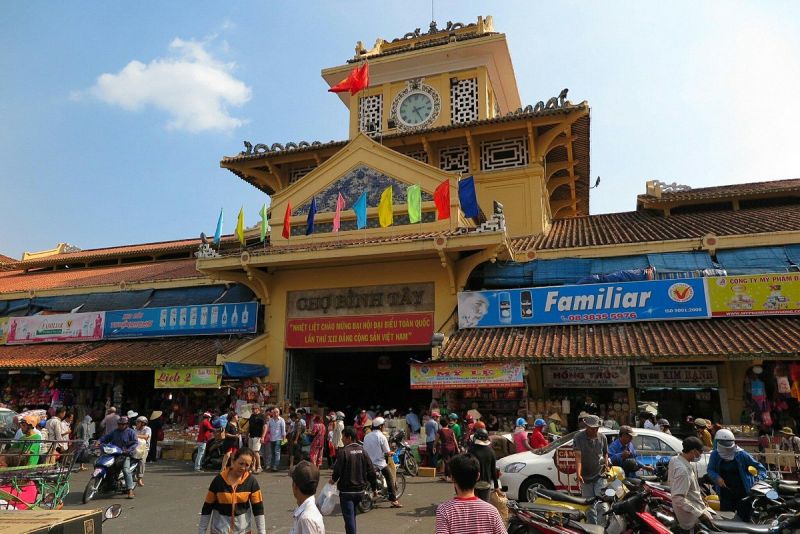
The market has around 1,500 stalls on the ground floor and upper floor, with entrances on Thap Muoi, Le Tan Ke, Tran Binh and Phan Van Khoe streets. Roughly:
- Thap Muoi side and ground floor: ceramics and crockery, incense, conical hats, bags, shoes and costume jewellery.
- Upper floor: groceries, sweets and ready-made clothes.
- Tran Binh side: spices, tea, coffee, dried seafood, fruit and flowers.
- Le Tan Ke side: dried goods, cooking oil, dried seafood and spices.
- Phan Van Khoe side: fresh meat, fish, tofu and eggs.
Shopping at Binh Tay Market
Binh Tay Market is best for dried goods, spices, tea, ceramics and cheap souvenirs; many stalls sell wholesale, but most will also sell single items.
Prices are usually lower than at Ben Thanh Market, especially if you buy several pieces. For more gift ideas, see our guide to the best vietnam speciality products to bring home.
What to buy at Binh Tay Market
- Vietnamese cinnamon (cassia): strong, sweet bark that Indian cooks can use like dalchini, about 40,000–100,000 VND (₹135–340) per pack.
- Tea and coffee: lotus tea, jasmine tea and Vietnamese coffee, from about 50,000 VND (₹170).
- Dried fruit, lotus seeds and nuts: longan, lotus seeds and cashews, sealed packs suitable for travel.
- Ceramics and tea sets: Chinese-style tea sets from about 150,000 VND (₹510).
- Conical hats (non la): from about 20,000–50,000 VND (₹70–170).
- Lacquerware and small souvenirs: bowls, boxes and keychains, often cheaper than in District 1.
- Fabric and clothing: cheap ready-made clothes upstairs; for ao dai fabric and tailoring, an dong market nearby has a wider choice.
Bargaining tips
Vendors often quote higher prices to tourists. Offer about 60% of the first price and settle around 70–80%. Buying several items from one stall gets a better rate. Pay in VND cash; carry small notes (20,000, 50,000 and 100,000 VND). Many traders speak little English, so use a calculator on your phone to show prices.
Wholesale buying
Wholesale stalls usually expect you to buy a dozen or more of each item, and the price drops as quantity rises. If you plan to buy in bulk for a business, a local guide helps with negotiation and with arranging shipping through freight agents in Cho Lon.
Food Near Binh Tay Market
Cho Lon is one of the best areas for Chinese-Vietnamese street food; vegetarians can find sweet soups, sesame doughnuts and Buddhist vegetarian restaurants nearby.
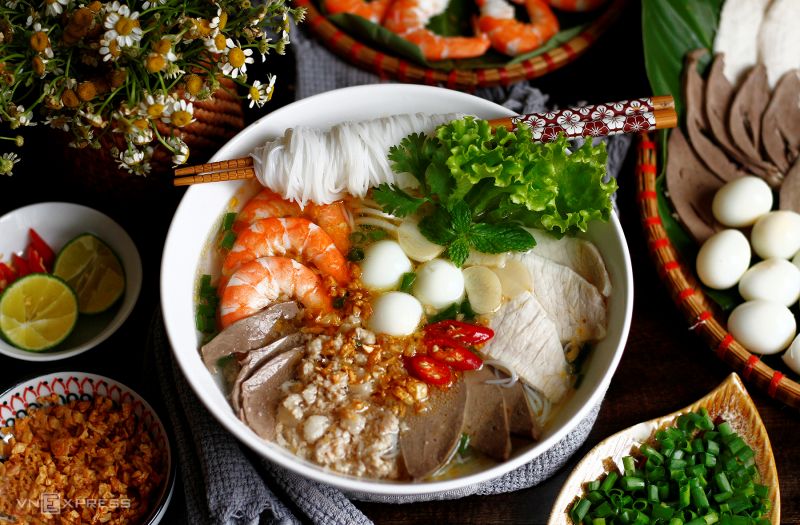
Cho Lon dishes to try
- Hu tieu Nam Vang: Phnom Penh-style noodle soup with pork and seafood (not vegetarian).
- Dim sum: Cantonese dumplings, served at several restaurants in Cho Lon in the morning (mostly pork or shrimp).
- Banh tieu: hollow fried sesame doughnuts, vegetarian, about 5,000–10,000 VND (₹20–35).
- Che (sweet soup): bean and coconut desserts, vegetarian, about 15,000–30,000 VND (₹50–100).
Vegetarian and Indian food
Look for “chay” (Buddhist vegetarian) restaurants in Cho Lon, which serve mock-meat versions of Vietnamese and Chinese dishes. There are no Indian restaurants in the immediate area; the main cluster is in District 1, around bui vien walking street and the city centre, 20–30 minutes away by Grab.
Binh Tay Market Tour: Half-Day Cho Lon Itinerary
Combine Binh Tay Market with Cho Lon’s temples and street food in a half day, ideally starting early in the morning.
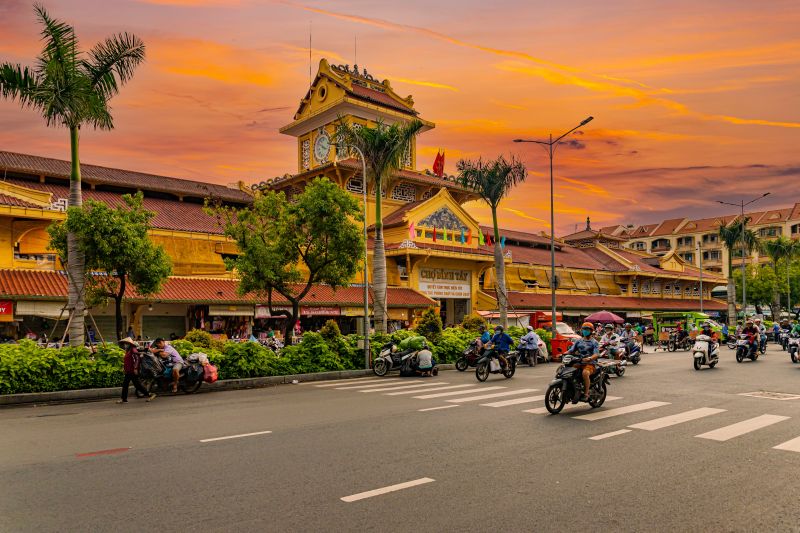
- Binh Tay Market (8:00 AM, 90 minutes): photograph the facade and courtyard, then browse the stalls before it gets too hot.
- Street food break (9:30 AM, 30 minutes): sesame doughnuts, sweet soup or noodle soup nearby.
- Thien Hau Temple (10:15 AM, 30 minutes): the famous 18th-century temple to the sea goddess on Nguyen Trai Street, a short Grab ride away; free entry.
- An Dong Market (11:00 AM, 60 minutes): clothes, fabric and tailoring.
A guide is useful for explaining the temples, Chinese traditions and helping with bargaining, as many vendors speak little English. For an overview of all the city’s markets, see Ben Thanh, An Dong and the colourful ho thi ky flower market, which is lively in the evening.
Binh Tay Market vs Ben Thanh Market: Which Is Better?
Binh Tay Market vs Ben Thanh Market, which is better? It depends on what you want.
Choose Binh Tay Market for lower prices, local atmosphere and dried goods; choose Ben Thanh Market for convenience, souvenirs in the centre and the night market.
| Binh Tay Market | Ben Thanh Market | |
|---|---|---|
| Location | Cho Lon, 6 km from centre | City centre |
| Customers | Mainly local traders | Mainly tourists |
| Prices | Lower, especially in bulk | Higher, tourist prices |
| Best for | Spices, tea, dried goods, ceramics | Souvenirs, coffee, quick shopping |
| English | Limited | Widely spoken |
You can visit both in one morning: Binh Tay Market first, then Ben Thanh Market by Grab in 20–30 minutes.
Best Time to Visit Binh Tay Market
Visit early in the morning (6:30–9:30 AM), ideally in the dry season from December to April.
Mornings are the busiest and most interesting time, when traders are loading goods and food stalls are open. The halls have no air conditioning and get hot by late morning. In the rainy season (May to November), afternoon downpours are common, so plan to be indoors by early afternoon.
6 Things Indian Tourists Should Know Before Visiting
Carry cash, go early, use the Vietnamese name in Grab and be ready to bargain.
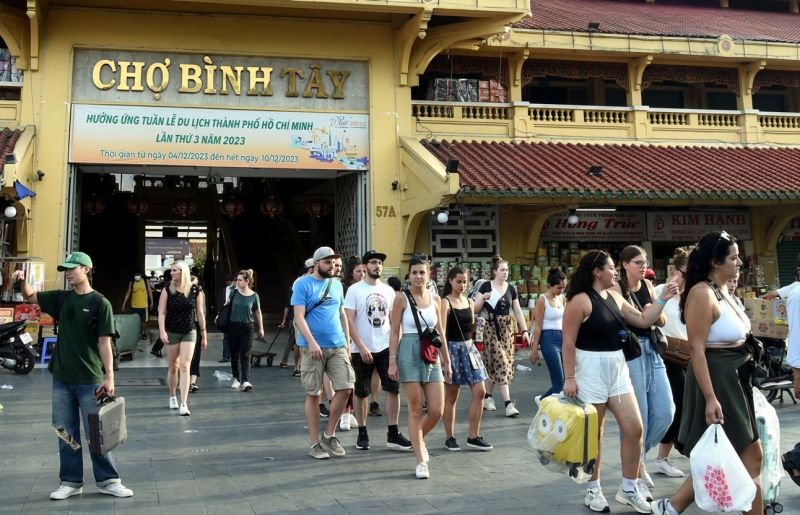
- Cash only: stalls accept VND cash; UPI does not work in Vietnam.
- Go early: arrive before 9:00 AM to avoid the heat and crowds.
- Use the Vietnamese name: search “Chợ Bình Tây” in Grab so you are not taken to Ben Thanh Market.
- Photography: it is generally fine, but ask before photographing vendors up close.
- Bring water: the market is hot and busy, with no air conditioning.
- Watch your belongings: keep bags in front in crowded aisles.
Plan Your Binh Tay Market Ho Chi Minh City Visit
Vietnamtour.in can include a guided Cho Lon tour with Binh Tay Market in your Ho Chi Minh City itinerary.
Ho Chi Minh City is the starting point for many of our tours: browse every vietnam trip from india, combine it with Angkor Wat on our vietnam and cambodia tour packages from india, or relax afterwards with our phu quoc island packages.
Tell us your travel dates, group size and departure city in India. A Vietnamtour.in travel expert will plan your Ho Chi Minh City days, arrange a guide for Cho Lon and the markets, and book vegetarian, Jain or Indian meals throughout your trip.
Frequently Asked Questions About Binh Tay Market
Is Binh Tay Market Vietnam’s best market for non-shoppers?
Yes. The historic building, the courtyard and the street life of Cho Lon make it one of the most interesting places in Ho Chi Minh City. Combine it with Thien Hau Temple for a short heritage walk.
Is Binh Tay Market cheaper than Ben Thanh Market?
Usually yes, especially for dried goods, spices, tea and household items, and when you buy several pieces. Ben Thanh is more convenient and more tourist-friendly.
What are Binh Tay Market’s opening hours?
Most stalls open from about 6:00 AM to 6:00 PM every day; wholesale trading starts before dawn. Entry is free.
How much should I budget for Binh Tay Market?
Allow about 120,000–200,000 VND (₹400–680) for a return Grab ride from District 1, plus 50,000–100,000 VND (₹170–340) for snacks and whatever you plan to spend on shopping.
Can I visit Binh Tay Market and Ben Thanh Market on the same day?
Yes. Start at Binh Tay Market early in the morning, then take a Grab to Ben Thanh Market, 20–30 minutes away.