
Buddha Park: Exploring A Journey Through Art and Belief
Xieng Khuan, or Buddha Park, is an exceptionally interesting cultural site in proximity to Vientiane, Laos. This destination is a large open-air…
Read article
1 article
Vientiane, the capital of Laos, is one of the most relaxed capital cities in Asia — a riverside town of golden stupas, French colonial streets and Mekong sunsets. For Indian travellers, it is an easy add-on to a Vietnam or Thailand holiday, and its Buddhist heritage feels familiar to anyone who has visited Bodh Gaya or Sarnath.
This Vientiane travel guide from Vietnamtour.in covers the best time to visit, how to get there from India, visa and currency, the top things to do with entrance fees, Indian and vegetarian food, and where to go next in Laos.
Vientiane at a glance (updated November 2026)
Vientiane is worth visiting for its golden Buddhist temples, its calm riverside atmosphere and its easy, affordable pace — you can see the main sights in one or two days without the crowds of Bangkok or Hanoi.
The city’s most sacred monument, Pha That Luang, is a national symbol of Laos, and its many temples reflect the Theravada Buddhism that Laos shares with Sri Lanka, Thailand and Myanmar. In the evenings, locals gather along the Mekong to watch the sunset over Thailand, exercise at open-air aerobics sessions and browse the night market. French colonial villas, bakeries and cafes add to the charm.
Vientiane is also the gateway to the rest of Laos: Vang Vieng’s limestone mountains, the UNESCO town of Luang Prabang and the 4,000 Islands in the south.
The best time to visit Vientiane is from November to February, during the cool dry season, when days are sunny and around 25–30°C and evenings are pleasant.
For Indian travellers, the October–November Diwali holidays (8 November 2026; 29 October 2027) fall right at the start of the best season.
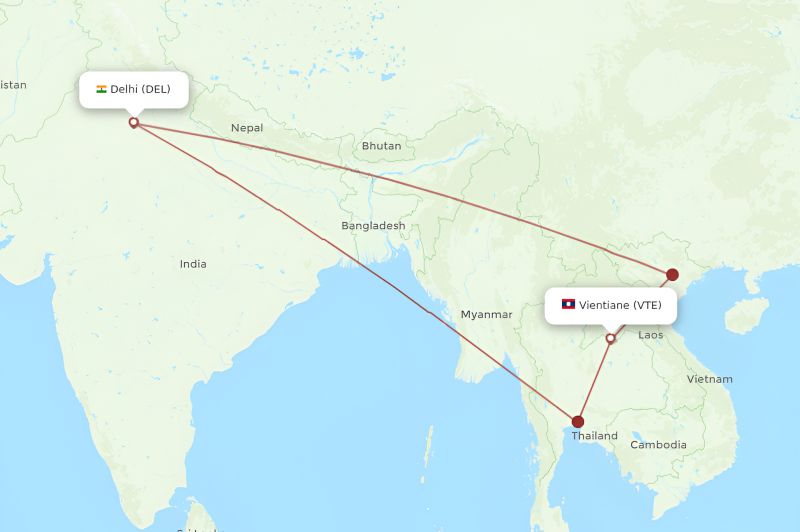
There are no direct flights from India to Vientiane; the quickest routes connect via Bangkok (about 1 hour 10 minutes to Vientiane), Hanoi, Kuala Lumpur or Singapore, with total travel time of about 8–12 hours. Round-trip fares from Delhi, Mumbai, Kolkata, Bengaluru or Chennai are typically about ₹25,000–45,000 when booked 2–3 months ahead. For routes, airlines and fares from each Indian city, read our guide on how to reach laos from india.
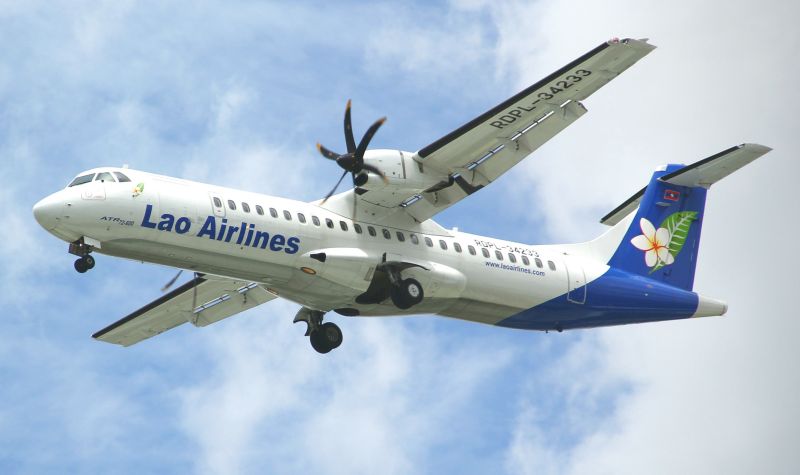
If you are already in Vietnam, Vietnam Airlines and Lao Airlines fly from Hanoi to Vientiane in about 1 hour 10 minutes — the easiest way to combine both countries.
The local currency is the Lao kip (LAK). In 2026, US$1 is roughly 21,000–22,000 kip, so ₹1 is about 225 kip. Indian rupees are not exchanged in Laos, so bring US dollars or Thai baht and change them at banks or exchange counters. Cards work in hotels and larger restaurants, but carry cash for tuk-tuks, temples and markets.
The top things to do in Vientiane are visiting Pha That Luang, climbing Patuxai, exploring Wat Si Saket and Haw Phra Kaew, seeing the sculptures of Buddha Park, and watching the sunset at the Mekong riverside night market.
| Attraction | Entrance fee | Opening hours | Time needed |
| Pha That Luang | About 30,000 kip (≈ ₹133) | About 8:00 AM–5:00 PM, closed at lunch | 45–60 min |
| Patuxai (Victory Monument) | About 30,000 kip (≈ ₹133) to climb | About 8:30 AM–5:00 PM | 30–45 min |
| Wat Si Saket | About 30,000 kip (≈ ₹133) | Daytime, closed at lunch | 30–45 min |
| Haw Phra Kaew | About 30,000 kip (≈ ₹133) | Daytime, closed at lunch | 30 min |
| Buddha Park (Xieng Khuan) | About 40,000 kip (≈ ₹177) | About 8:00 AM–5:00 PM | 1–1.5 hours + travel |
| COPE Visitor Centre | Free (donations welcome) | About 8:30 AM–4:00 PM | 45 min |
| Mekong riverside night market | Free | About 6:00–10:00 PM | 1–2 hours |
Fees and hours change from time to time; many temples close for lunch around 12:00–1:00 PM.
Pha That Luang is the most important monument in Laos and appears on the national emblem. The golden stupa, about 45 metres high, is believed to hold a relic of the Buddha; the present structure dates from the 16th century and was later restored. In the temple grounds nearby, a giant golden reclining Buddha is one of the most photographed spots in the city.

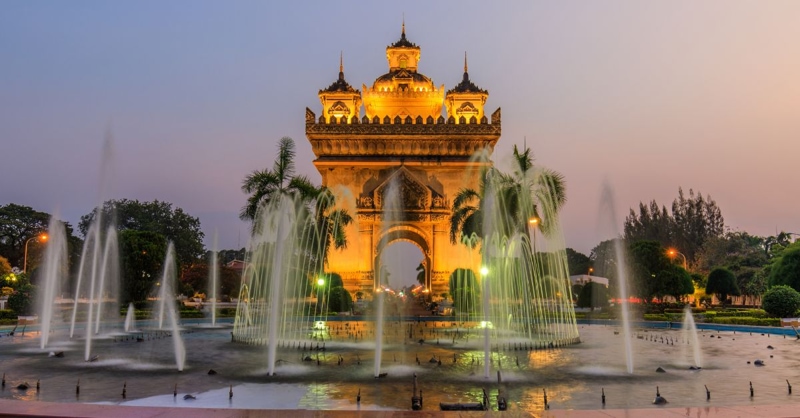
Often compared to the Arc de Triomphe in Paris, Patuxai is a large war memorial built in the 1960s, decorated with traditional Lao motifs, including kinnari — the mythical half-bird, half-woman figures found in both Buddhist and Hindu legend. Climb the stairs to the top for panoramic views of the city, then relax in the park and fountain square in front.

Wat Si Saket, built in 1818, is the oldest surviving temple in Vientiane, famous for the thousands of small Buddha images set into niches in its cloister walls. Across the road, Haw Phra Kaew is a former royal temple that once housed the Emerald Buddha and now serves as a museum of Buddhist art. Both are a short walk from the riverside, so visit them together in a morning.
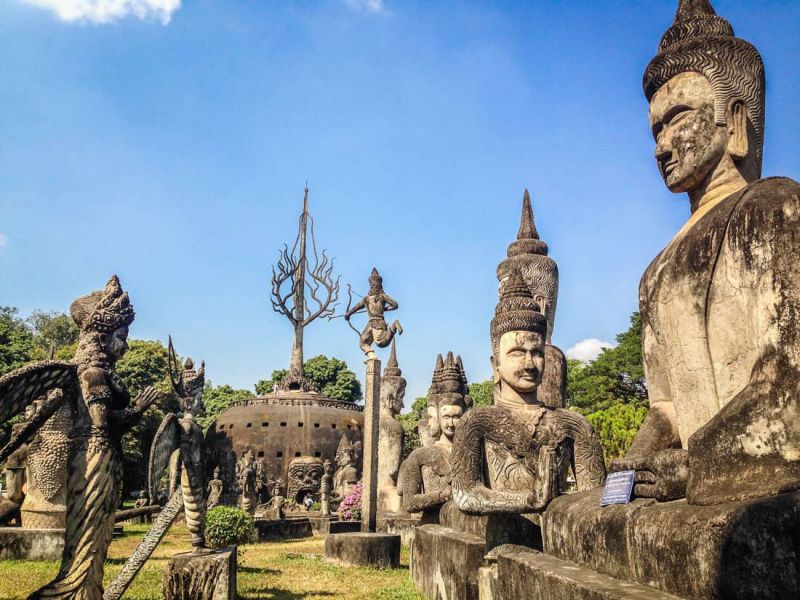
About 25 km southeast of the city, near the Thai border, Buddha Park is a riverside garden of more than 200 concrete sculptures of Buddhist and Hindu figures, including a huge reclining Buddha and statues of Shiva, Vishnu and other deities that Indian visitors will recognise. Take a tuk-tuk or taxi (about 45 minutes), or the local bus 14 from the Talat Sao bus station.
This small, moving museum explains the impact of unexploded bombs left in Laos after the Vietnam War and the work done to help survivors with prosthetic limbs. Entry is free, and donations support the centre’s work.
In the evening, head to Chao Anouvong Park on the riverfront. The night market sets up around 6:00 PM with clothes, handicrafts and snacks, while locals join outdoor dance-aerobics sessions and watch the sun set over Thailand across the Mekong.

Vientiane’s centre is compact and walkable; for longer trips, use tuk-tuks or the local ride-hailing apps.
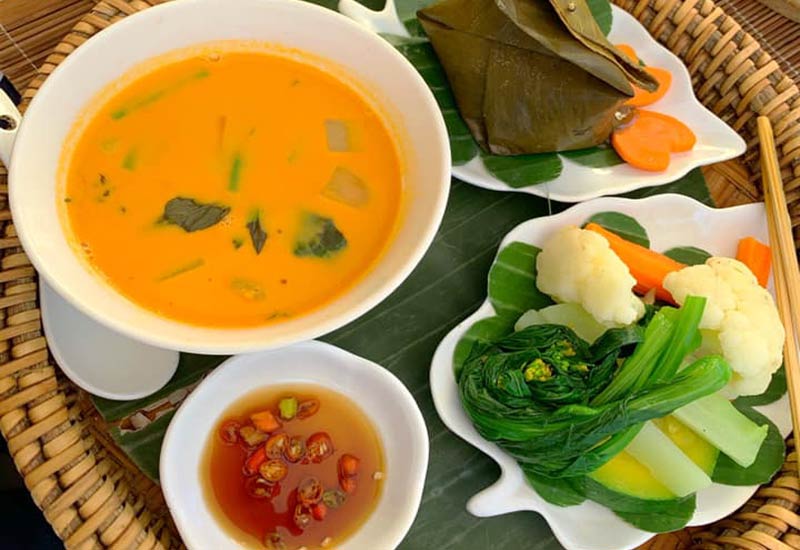
Vientiane is easy for Indian and vegetarian travellers: several Indian restaurants operate in the town centre, especially near the riverside and Nam Phou fountain, and many cafes offer vegetarian dishes. Long-running Indian restaurants such as Nazim serve North and South Indian food, including dal, paneer, biryani and dosa. Lao cuisine uses fish sauce in many dishes, so ask for “jay” (vegetarian) or “bor sai nam pa” (no fish sauce). Sticky rice, vegetable curries, stir-fried morning glory and fresh tropical fruit are good vegetarian options.
From Vientiane, the Laos–China Railway makes it easy to continue to Vang Vieng (about 1 hour) and Luang Prabang (about 2 hours), while flights connect to Pakse in the south and to Vietnam and Cambodia.
Train tickets sell out quickly in peak season; book through the official LCR app, a station ticket office, or your hotel or travel agent a few days ahead. Vientiane station is about 16 km from the city centre.

Many Indian travellers combine Laos with its neighbours. Our vietnam and laos tour packages pair Hanoi and Ha Long Bay with Vientiane and Luang Prabang, while a vietnam cambodia tour adds Angkor Wat. To compare itineraries and budgets, check our vietnam tour package price from india.
Two days are enough to see the main temples, Patuxai, Buddha Park and the riverside. Add more time for Vang Vieng or Luang Prabang.
Yes. Indian passport holders can apply for a Laos e-Visa (about US$50) or get a visa on arrival at Wattay Airport in Vientiane (about US$40), usually for up to 30 days.
No. Most travellers connect via Bangkok, Hanoi, Kuala Lumpur or Singapore, with a total journey of about 8–12 hours.
Yes. Vientiane is generally calm and safe. Watch your bag on busy streets at night and agree tuk-tuk prices in advance.
Yes. Several Indian restaurants operate in the town centre, and vegetarian dishes are widely available.
Visa fees, entrance fees and transport details in this guide were last checked in November 2026.
Xieng Khuan, or Buddha Park, is an exceptionally interesting cultural site in proximity to Vientiane, Laos. This destination is a large open-air…
Read article