
Explore Tad Fane Waterfall: Twin Waterfalls Plunging into the Jungle
Do you dare to face the challenge of drinking coffee suspended in mid-air at one of Laos’ most majestic waterfalls? Tad Fane…
Read article
1 article
Pakse is the main city of southern Laos, on the Mekong River in Champasak province, and the gateway to 3 highlights: the UNESCO-listed Khmer temple of Wat Phou about 40 km south, the coffee plantations and waterfalls of the Bolaven Plateau to the east, and the river islands of Si Phan Don (4,000 Islands) near the Cambodian border. Pakse International Airport (PKZ), about 3 km from the centre, has flights from Vientiane and some regional cities, which makes southern Laos an easy add-on to a Vietnam or Cambodia trip.
This Pakse travel guide from Vietnamtour.in covers where Pakse is, what it is known for, when to go, how to get there from India and Vietnam, getting around, the main sights, where to stay, food for vegetarian travellers, how many days to plan and what a trip costs.
| Fact | Detail |
|---|---|
| Country | Laos |
| Status | Capital of Champasak province, southern Laos |
| Location | Where the Xe Don River meets the Mekong |
| Airport | Pakse International (PKZ), about 3 km from the centre |
| From Vientiane | About 1 hr 15 min by air; about 670 km, 10–13 hr by bus |
| Best months | October to February |
| Known for | Wat Phou, Bolaven Plateau waterfalls and coffee, 4,000 Islands |
| Visa | Laos visa on arrival (about US$35–40) or e-Visa (about US$50) for Indian passport holders |
| Currency | Lao kip (LAK); prices shown as LAK (₹), at about ₹1 ≈ 245 LAK |
Each of these facts is expanded in the sections that follow, from the city’s location to a 3-day budget.
Pakse is in southern Laos, about 670 km south-east of Vientiane by road, on the east bank of the Mekong where the Xe Don River joins it, and about 150 km north of the Cambodian border. A long road bridge crosses the Mekong at the city, and Thailand’s Chong Mek border is about 45 km to the west.
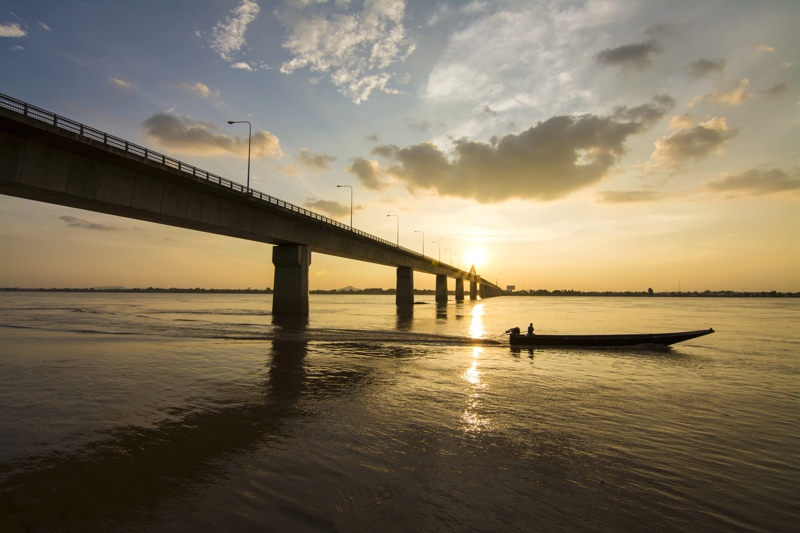
The city itself is small and relaxed, with a riverside, a large morning market and a few temples, and most travellers use it as a base for day trips and loops into the south.
Pakse is known as the base for Wat Phou, a pre-Angkorian Khmer temple and UNESCO World Heritage Site, the Bolaven Plateau with its waterfalls and coffee farms, and the 4,000 Islands, where the Mekong spreads into hundreds of islands and waterfalls. The highlights are:
Wat Phou is the only UNESCO World Heritage Site in southern Laos and the main cultural reason to visit.
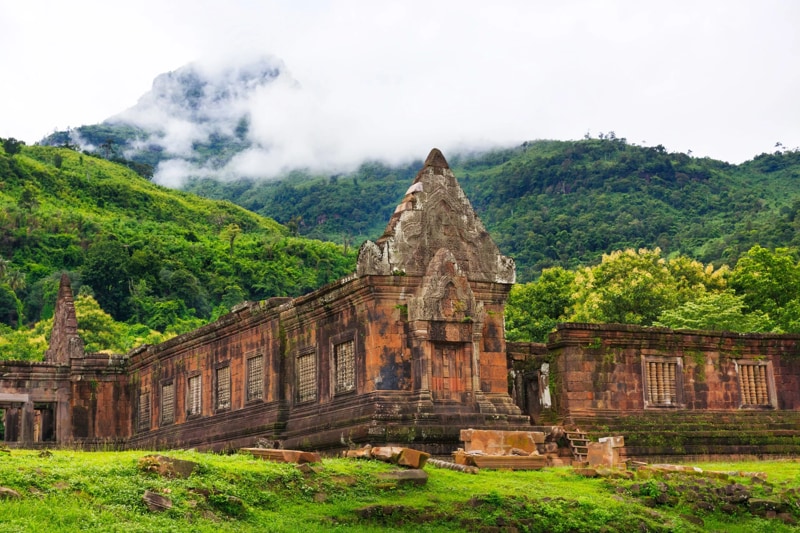
For Indian travellers, Wat Phou is especially interesting, as it was first a Hindu sanctuary dedicated to Shiva before becoming a Buddhist site, part of the same Khmer cultural world as Angkor.
The best time to visit Pakse is October to February, when the weather is dry and pleasant at about 25–30°C, the waterfalls are still full after the rains and the Bolaven Plateau is cool. March to May is hot, often above 35°C in the lowlands, and May to September is the rainy season, when roads to some waterfalls can be muddy. The seasons compare as follows:
| Months | Weather | Verdict |
|---|---|---|
| October – February | Dry, warm days, cool nights on the plateau | Best time to visit |
| March – April | Hot and dry; low waterfalls | Fine for Wat Phou and the islands |
| May – September | Rainy season; powerful waterfalls | Lower prices, muddy roads |
The Wat Phou Festival, held around the full moon of the third lunar month, usually in February, brings pilgrims, processions and traditional games to the temple.
There are no direct flights from India to Pakse, so Indian travellers usually fly to Bangkok, Hanoi or Ho Chi Minh City and connect to Pakse, or fly to Vientiane and take a 1 hour 15 minute domestic flight. The main options are:
The flight and visa options from Indian cities are compared in the guide on how to reach Laos from India, and the capital, where most routes connect, is covered in the guide to Vientiane.
Getting around Pakse is easy by tuk-tuk in the city, with a car and driver or a rented motorbike for Wat Phou and the Bolaven Plateau, and minivans and boats for the 4,000 Islands. The options compare as follows:
| Option | Cost | Best for |
|---|---|---|
| Tuk-tuk | About 20,000–40,000 LAK (₹80–₹165) for short rides | City, airport |
| Motorbike rental | About 120,000–200,000 LAK (₹490–₹815) a day | Bolaven Plateau loop, experienced riders |
| Car with driver | Half or full day | Families, Wat Phou and waterfalls |
| Minivan to 4,000 Islands | About 60,000–80,000 LAK (₹245–₹325), about 3 hr | Budget travellers |
The Bolaven Plateau loop is popular by motorbike, but a car with driver is safer for families and travellers new to riding in Laos.
The best things to do around Pakse are exploring the Wat Phou temple ruins, viewing the twin Tad Fane waterfall and swimming below Tad Yuang on the Bolaven Plateau, touring a coffee farm, and spending a night or 2 in the 4,000 Islands to see the Khone Phapheng Falls. The main sights and typical entry fees are:
The Bolaven Plateau waterfalls are at their fullest from September to November, just after the rains.
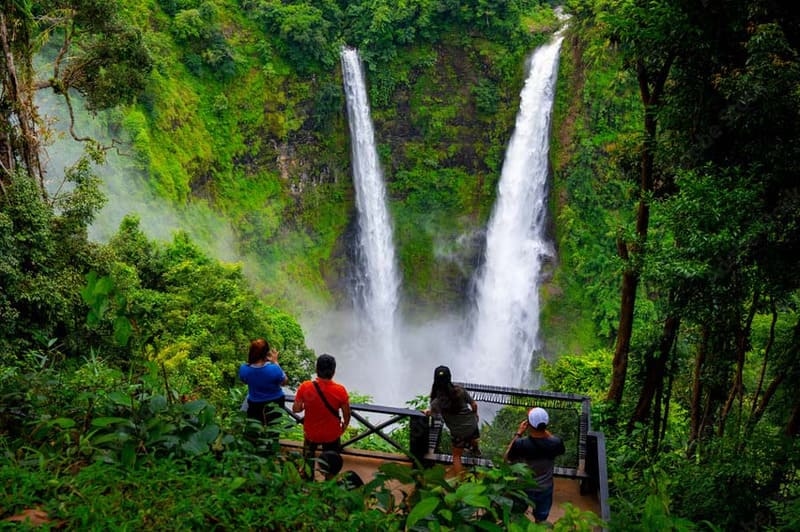
The waterfall, its zipline and the cliff-top café are covered in the guide to Tad Fane Waterfall, and the rest of the country, from Vang Vieng to the Plain of Jars, is ranked in the guide to the places to visit in Laos.
Pakse city centre suits travellers using the city as a base for day trips, Champasak town near Wat Phou suits a quieter riverside stay, the Bolaven Plateau has eco-lodges near the waterfalls, and the 4,000 Islands have guesthouses and resorts on the river. The areas compare as follows:
| Area | Vibe | Price band |
|---|---|---|
| Pakse centre | Hotels, restaurants, transport hub | Budget–Mid |
| Champasak | Quiet riverside, near Wat Phou | Budget–High |
| Bolaven Plateau | Eco-lodges near the waterfalls | Budget–Mid |
| 4,000 Islands | River guesthouses and resorts | Budget–High |
Hotels in Pakse start from about US$20–40 (₹1,900–₹3,800) a night, while riverside resorts in Champasak and the islands cost from about US$80 (₹7,600).
Pakse food centres on sticky rice, noodle soups, river fish and the excellent coffee of the Bolaven Plateau, and vegetarian food is available on request in the city’s restaurants and cafés. The morning market sells fruit, snacks and local coffee, and cafés along the riverside serve Lao and Western dishes.
Many Lao dishes use fish sauce or padaek (fermented fish), so vegetarian travellers ask for “jay” (vegetarian) food. Indian restaurants are scarce outside the city centre, so Indian travellers on longer trips often have meals arranged in advance.
2 days cover Wat Phou and a Bolaven Plateau waterfall trip, while 3–4 days add a night or 2 in the 4,000 Islands, which makes southern Laos a complete short trip. A Pakse itinerary by length of stay looks like this:
| Stay | What fits | Best for |
|---|---|---|
| 2 days | Wat Phou and the Bolaven Plateau waterfalls | A short add-on |
| 3 days | Adds 1 night in the 4,000 Islands | First visit |
| 4+ days | Adds the full Bolaven loop or the road to Cambodia | A longer southern route |
Pakse pairs well with the north of Laos, and the former royal capital is covered in the guide to Luang Prabang.
A 3-day trip around Pakse costs about ₹10,000–15,000 per person on a budget, ₹20,000–30,000 mid-range and ₹45,000–70,000 for luxury, excluding flights and the visa, covering hotels, transport, sightseeing and food. The table shows prices per person for 3 nights, based on 2 people sharing.
| Cost item | Budget | Mid-range | Luxury |
|---|---|---|---|
| Hotel per room per night | US$20–40 (₹1,900–₹3,800) | US$50–100 (₹4,750–₹9,500) | US$150–300 (₹14,250–₹28,500) |
| Transport | Minivans and motorbike | Car with driver for 2 days | Private car and guide throughout |
| Entry fees | About ₹400–600 | About ₹400–600 | About ₹400–600 with guide |
| Food per day | ₹600–1,000 | ₹1,500–2,500 | ₹3,500–6,000 |
| Total per person (3 nights) | ₹10,000–15,000 | ₹20,000–30,000 | ₹45,000–70,000 |
Figures are estimates; ₹1 ≈ 245 LAK and US$1 ≈ ₹95. Prices checked October 2026. Not included: flights, the Laos visa and travel insurance.
Indian travellers planning Pakse most often ask how to get there, what to see and how it fits with Vietnam and Cambodia.
Fly from India to Bangkok, Hanoi or Ho Chi Minh City, then connect to Pakse, or fly to Vientiane and take a 1 hour 15 minute domestic flight. Indian travellers need a Laos visa, available on arrival or as an e-Visa.
Pakse is famous as the base for Wat Phou, the UNESCO-listed Khmer temple, the Bolaven Plateau’s waterfalls and coffee, and the 4,000 Islands on the Mekong. The city itself is small and relaxed, with a large morning market.
Yes, Pakse combines well with Vietnam and Cambodia, as the 4,000 Islands are close to the Cambodian border and flights link Pakse with Ho Chi Minh City and Siem Reap on some schedules. Most routes combine Vietnam, then Cambodia’s Angkor Wat, then southern Laos, or the reverse.
Pakse and southern Laos fit into a Vietnam trip as a 2–4 night extension, best visited from October to February, with Wat Phou, the Bolaven Plateau and the 4,000 Islands as the highlights. Vietnamtour.in has planned trips for more than 428,000 Indian travellers since 2015, and every Vietnam Laos tour can include southern Laos with flights, visas, a private car and vegetarian or Jain meals arranged in advance.
Travellers adding Angkor Wat can compare a Vietnam Cambodia tour, while those focused on Vietnam can start with a Vietnam travel package. To plan your trip, share the travel dates, group size and departure city in the form below, and a Vietnamtour.in expert will build a route that includes Pakse and southern Laos at the right time of year.
Do you dare to face the challenge of drinking coffee suspended in mid-air at one of Laos’ most majestic waterfalls? Tad Fane…
Read article