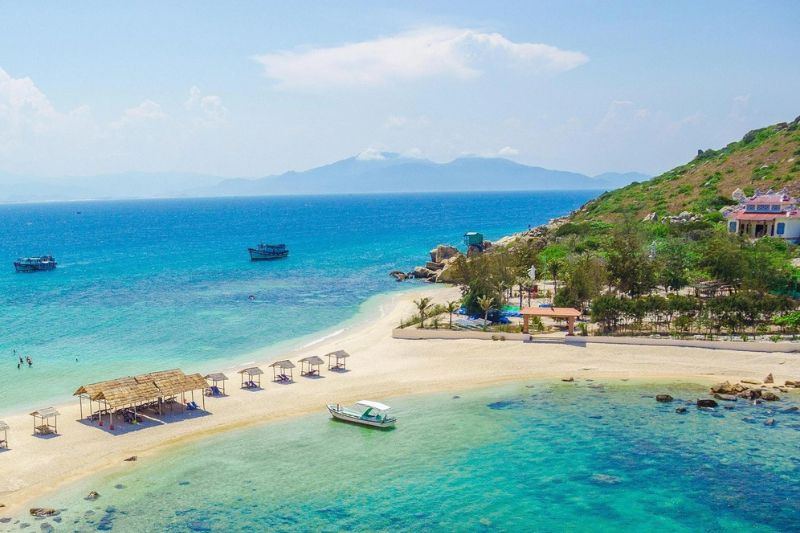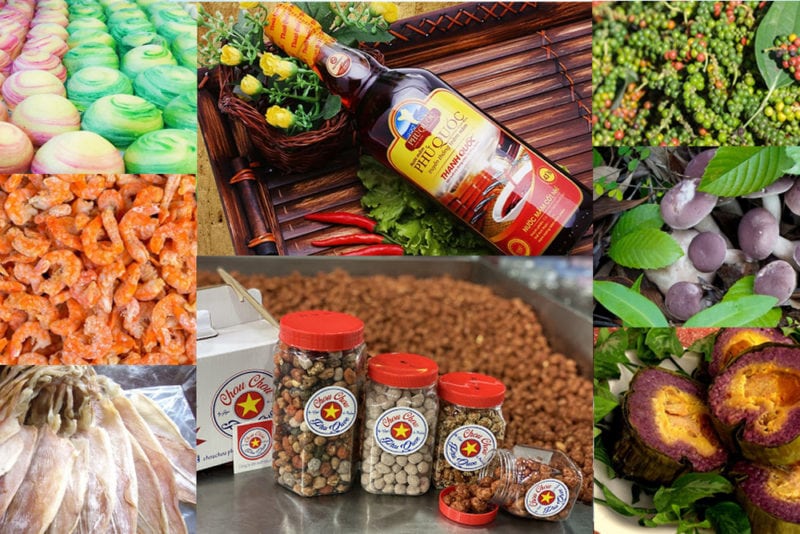
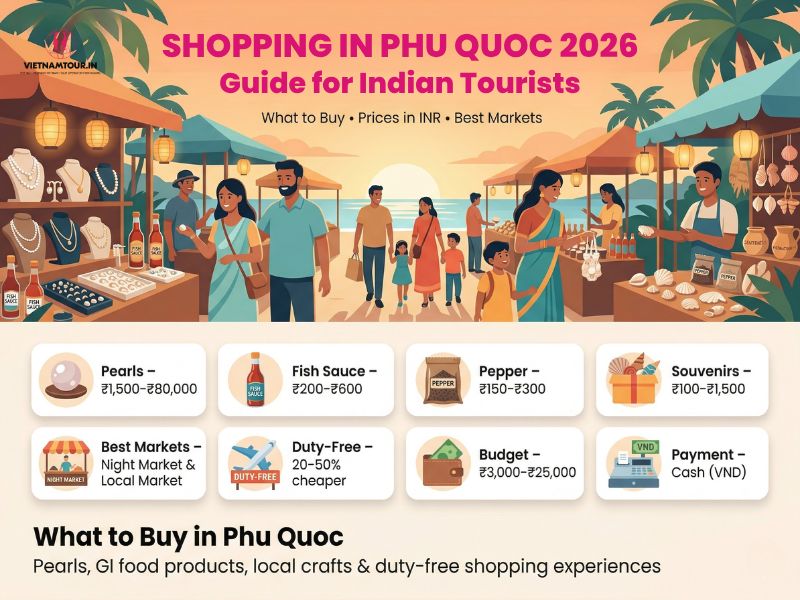
Phu Quoc offers 4 distinct shopping categories for Indian tourists — pearl jewelry, GI-protected food products (fish sauce and pepper), handcrafted souvenirs, and duty-free goods — across 4 dedicated shopping zones on Vietnam’s only Free Trade Zone island. Phu Quoc’s shopping experience is comparable in variety to Goa’s beach markets, but with one critical difference: the island’s geographically protected products — Phu Quoc’s pearl farms, fish sauce factories, and pepper estates — produce items that are genuinely unavailable anywhere else in the world, including India.
This travel guide from Vietnamtour.in, the No.1 premium Vietnam tour operator for Indian travellers, will cover pearls first, local food specialties second, handicrafts third, and then map out exactly where to buy everything and what to budget in INR. All prices in this article are verified against Vietnamtour.in field surveys conducted in March 2026 and listed in INR with VND in parentheses, using the 2026 exchange rate of approximately 1 INR ≈ 280 VND; market prices fluctuate seasonally, so Indian tourists should expect ±10% variance against listed figures.
Phu Quoc Pearls and Jewelry
Phu Quoc pearls are saltwater pearls cultivated in the island’s southern waters, priced from ₹1,500 (420,000 VND) for entry-level pieces to ₹80,000+ (22,400,000+ VND) for high-grade Akoya sets — 4 quality tiers serve 4 distinct buyer profiles.
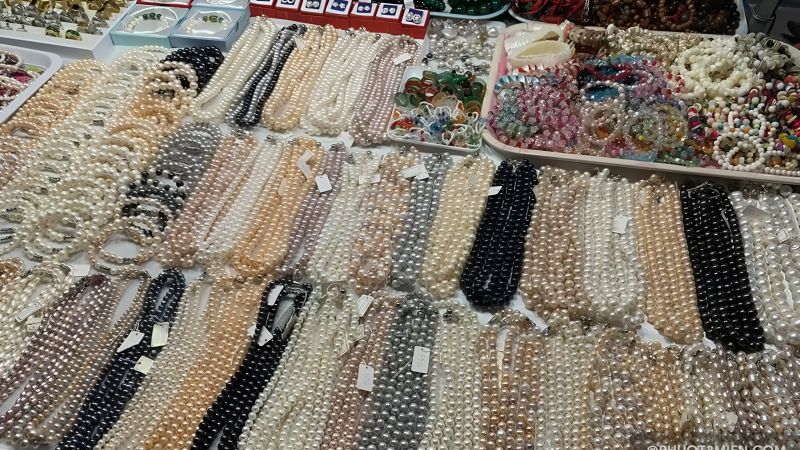
Pearl farming in Phu Quoc benefits from the protected, nutrient-rich waters of the Gulf of Thailand. What separates Phu Quoc saltwater pearls from the freshwater varieties widely sold in Indian jewellery markets is the cultivation environment: saltwater mollusks grow more slowly, producing pearls with denser nacre, deeper luster, and a characteristic orient — the iridescent glow visible under direct light — which freshwater pearls rarely achieve. Based on transaction data recorded by Vietnamtour.in travel consultants with 10 years of experience serving Indian tourists, pearl purchases in the ₹8,000–₹20,000 range (mid-grade Akoya) represent the most common buying segment among Indian travellers, balancing authenticity, gifting value, and ease of customs declaration.
When evaluating any pearl purchase, 4 attributes determine quality and price: luster (the depth and brightness of reflection), surface cleanliness (number of visible blemishes), shape (round commands the highest premium), and size (measured in millimeters — 7mm to 9mm is standard for necklace strands). A certificate of authenticity from a licensed Phu Quoc pearl farm must explicitly include these 4 metrics — luster, cleanliness, shape, and size — along with the farm’s official registration number to guarantee value. Ngoc Hien Pearl Farm and Long Beach Pearl are the 2 benchmark-quality operations on the island, where Indian tourists can both tour the cultivation process and purchase at direct farm-showroom prices, which reflect quality grading rather than tourist markup.
How to Tell Real Phu Quoc Pearls from Fakes
Real Phu Quoc pearls feel slightly gritty against teeth, stay cool to the touch, and show layered depth of color under light — fake pearls feel smooth, warm quickly in the hand, and appear uniformly bright without depth.
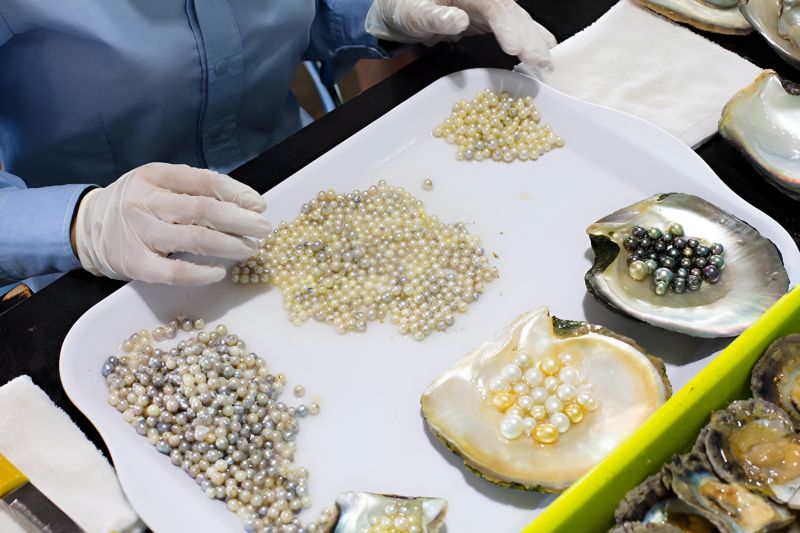
The 5 in-shop tests for real Phu Quoc pearls that require no equipment are:
- Tooth test: Rub the pearl lightly against your front teeth. Genuine nacre feels slightly sandy or gritty — this is the layered aragonite structure. Plastic or glass fakes feel perfectly smooth.
- Temperature test: Hold the pearl for 10 seconds. Real pearls remain cool for longer because nacre is a poor conductor of heat. Plastic warms immediately to body temperature.
- Surface inspection: Under the shop’s light, tilt the pearl slowly. Genuine surface shows micro-texture and subtle irregularity; fakes under magnification show a perfectly even, painted-on coating.
- UV light test: Certified pearl showrooms in Phu Quoc — including Ngoc Hien and Long Beach Pearl — keep UV lamps at the counter for buyer-led verification. Real pearls fluoresce with a soft blue or green tone; plastic fakes glow bright white or orange.
- Price as signal: A full pearl necklace priced under ₹500 (140,000 VND) is plastic. There is no scenario in which a genuine pearl strand costs less than the price of a cup of coffee in Mumbai.
For higher-value purchases — anything above ₹5,000 (1,400,000 VND) — visit Ngoc Hien or Long Beach Pearl, where each purchase comes with a graded certificate.
Pearl Prices in Phu Quoc
Entry-level freshwater pearl necklaces cost ₹1,500–₹4,000 (420,000–1,120,000 VND); mid-grade Akoya strands cost ₹8,000–₹20,000 (2,240,000–5,600,000 VND); premium South Sea pearl sets start at ₹45,000 (12,600,000 VND) and rise to ₹150,000+ (42,000,000 VND) for collector-grade pieces.
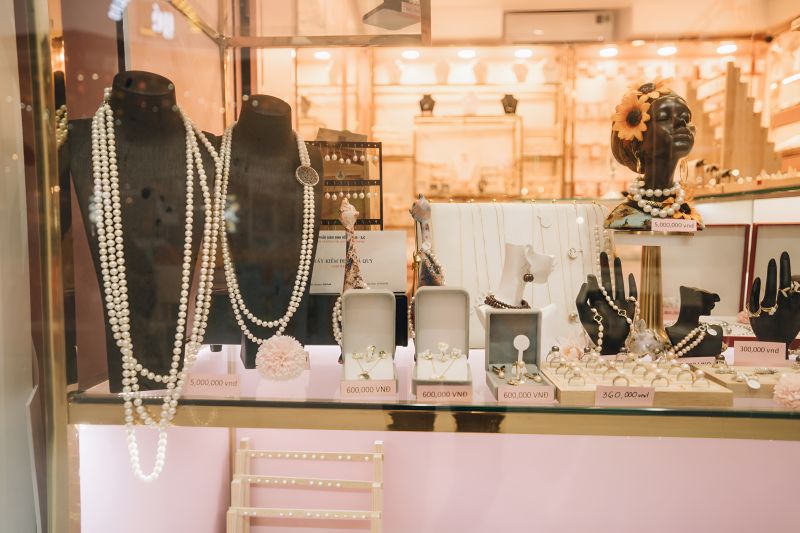
The 4 quality tiers each serve a different buyer profile:
- Tier 1 — Souvenir Grade (₹1,500–₹4,000): Small freshwater pearls, often in round or near-round shapes, suitable as gifts. These are widely available at Dinh Cau Night Market stalls. Not worth international shipping — buy as carry-on jewelry.
- Tier 2 — Mid-Range Gift (₹8,000–₹20,000): Akoya saltwater pearls, 6mm–8mm, with good luster and clean surfaces. These are the most popular purchase among Indian tourists buying for their families. Pearl showrooms at Tran Hung Dao Street stock this tier.
- Tier 3 — Fine Jewelry (₹20,000–₹80,000): High-luster Akoya or freshwater cultured rounds, often set in sterling silver or gold. Farm showrooms only — Dinh Cau stalls rarely carry authentic pieces at this price.
- Tier 4 — Collectible/Investment (₹80,000–₹150,000+): South Sea pearls, 10mm–14mm, collector-grade luster, often in 18k gold settings. These require a graded certificate for the Indian customs declaration.
Regarding Indian customs, pearl jewelry declared under personal-use exemption typically clears customs without additional import duty when each individual piece is below ₹50,000 (14,000,000 VND) and the total value of all combined purchases stays under the aggregate baggage allowance discussed in the Grand World section below.
Phu Quoc Fish Sauce and Pepper
Phu Quoc fish sauce (nước mắm Phú Quốc) holds official Geographical Indication protection since June 1, 2001, and Phu Quoc pepper (hồ tiêu Phú Quốc) received the same protection in 2011 — both registered with Vietnam’s Ministry of Science and Technology, the same designation that covers Darjeeling Tea and Alphonso Mangoes in India. This GI protection means that neither Phu Quoc fish sauce nor Phu Quoc pepper can be legally replicated or produced outside of their designated production zones on the island.
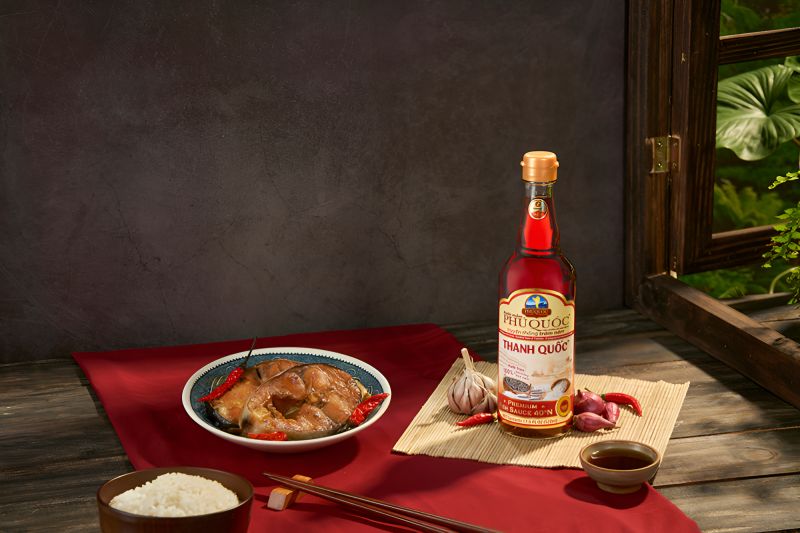
For Indian tourists, this Geographical Indication protection status is a useful frame of reference. Just as a bottle labelled “Darjeeling Tea” guarantees origin and production standards, authentic Phu Quoc fish sauce must come from Kien Giang Province and meet minimum standards for nitrogen content (at least 25°N for the premium grade). Phu Quoc pepper — specifically, the red variety harvested slightly early from the island’s northern farms — has carried the same legal protection since 2012 under Vietnamese law and recognition from the EU.
Sim wine (rượu sim), made from rose myrtle berries unique to Phu Quoc’s terrain, is not GI-protected but functions well as a supplementary gift item: sweet, low-alcohol, visually distinctive with its deep pink color, and unavailable anywhere in India.
Taking Phu Quoc Fish Sauce Back to India
Indian customs allow liquid food products in personal-use quantities — fish sauce bottles under 500ml pass without issue in checked baggage when factory-sealed, but fish sauce fails the IATA 100ml liquids rule and cannot travel in carry-on luggage under any circumstances.
The practical buying decision comes down to format and channel:
- Factory shops on the island (near Duong Dong Market and fishing village): 250ml bottles at ₹200–₹350 (56,000–100,000 VND); 500ml at ₹350–₹600 (100,000–170,000 VND).
- Airport departure lounge duty-free: Same brands, 250ml at ₹350–₹500 (100,000–140,000 VND) — convenient but 20–30% more expensive than island shops.
- Best format for travel: The 250ml bottle fits neatly inside a zip-lock bag inside checked baggage. Buy 3–5 bottles without concern — customs inspectors treat factory-sealed, labelled food products for personal use in these quantities.
The critical rule for Indian travellers is that all liquid food products go into checked baggage only. Placing fish sauce in your hand luggage gets it confiscated at security regardless of the quantity.
Phu Quoc Pepper vs Kerala Black Pepper
Phu Quoc red pepper (harvested early, before full maturation) delivers a sharper, fruitier heat compared to Kerala black pepper’s deeper, earthier profile — both are premium varieties, but they taste genuinely different, and most Indian home cooks describe Phu Quoc pepper as noticeably more aromatic when used fresh.
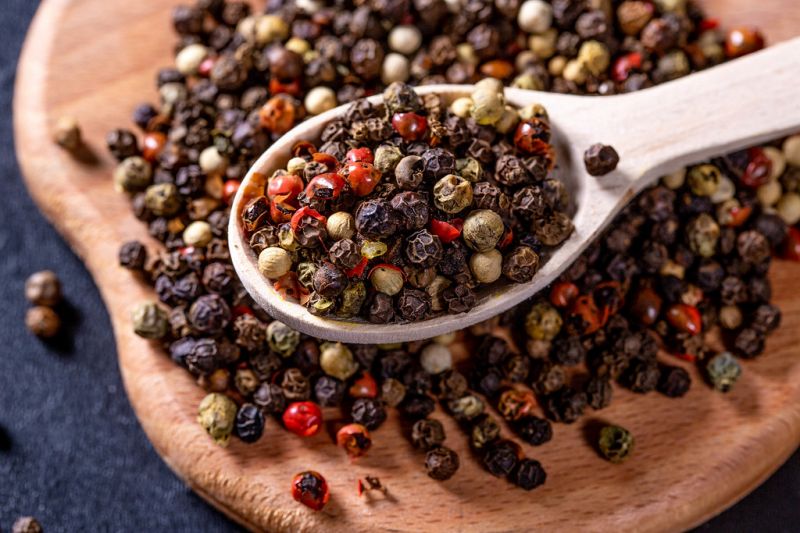
Kerala black pepper is harvested at full maturity and dried to develop its characteristic deep, piney heat. Phu Quoc red pepper is picked slightly early, preserving volatile aromatic compounds that fade during the full drying process. The result is a pepper that is brighter on the nose and sharper on the palate. For Indian cooking, it pairs particularly well with light dishes where pepper is a featured note rather than background heat.
Practical details for Indian travellers when buying Phu Quoc pepper are:
- Pepper price: A 100g vacuum-sealed pepper pouch costs ₹120–₹250 (34,000–70,000 VND) — the lower end at northern pepper farms, the higher end at Duong Dong Market and tourist shops in Duong Dong town.
- Best pepper format for travel: Vacuum-sealed pepper pouches, available at most island shops, pass airport security without issue in both carry-on and checked baggage.
- Where to buy Phu Quoc peppers: Pepper farms in the northern part of Phu Quoc offer the widest selection and freshest pepper stock; Duong Dong Market’s agricultural section sells the same pepper product at competitive prices.
Phu Quoc Souvenirs and Handicrafts
The most popular Phu Quoc souvenirs for Indian tourists are hand-painted seashell art, lacquerware boxes, woven rattan baskets, embroidered fabric pouches, and miniature fishing boat models — most items are priced between ₹200 and ₹1,500 (56,000–420,000 VND).
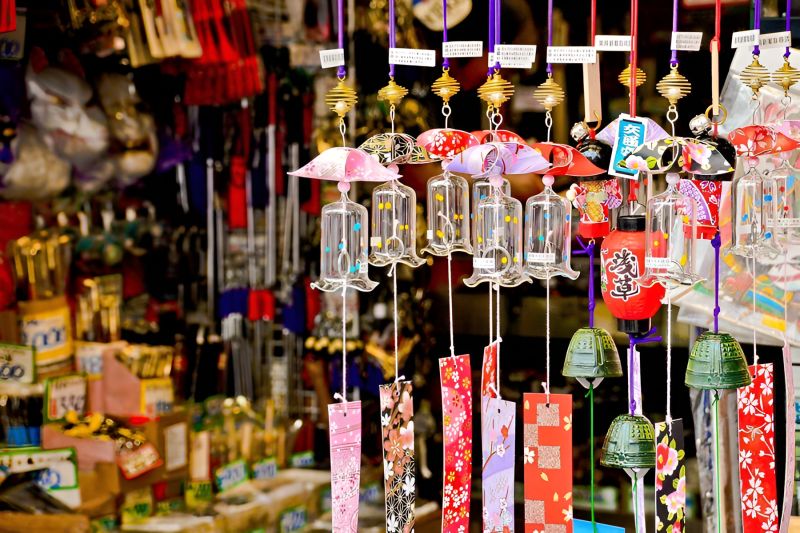
What distinguishes authentic Phu Quoc handicrafts from standard Vietnamese tourist merchandise is the island’s motif vocabulary: fishing boats, pearl oysters, coral formations, and the sim flower appear consistently in genuine island-made pieces. Factory-produced items sold across Vietnam use generic dragon and lantern motifs — you will see the same lacquerware box in Ho Chi Minh City souvenir shops as in Hanoi’s Old Quarter. The Phu Quoc island-specific imagery is a reliable authenticity indicator at mid-price points.
When Indian families choose Phu Quoc souvenirs, the 3 most important practical considerations are: items that pack flat to survive long-haul travel, small formats for easy distribution as gifts, and agricultural products like pepper or fish sauce that offer higher conversation value than generic decorative items.
Best Souvenirs Under ₹1,000 in Phu Quoc
For under ₹1,000 (280,000 VND) per item in Phu Quoc, Indian tourists can bring back 6 reliably-priced gift options: fish sauce (₹200–₹350), pepper pouches (₹150–₹300), Sim wine miniatures (₹400–₹600), seashell keychains (₹80–₹200), embroidered pouches (₹300–₹600), and lacquer fridge magnets (₹100–₹250) — all available at Dinh Cau Night Market.
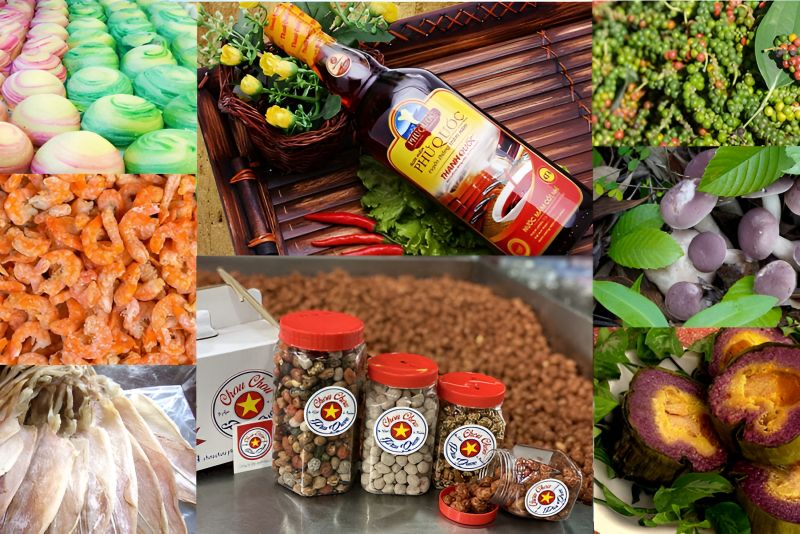
Organised by recipient:
- For parents: Fish sauce (250ml, factory-sealed) and a 100g pepper pouch are the most consistently appreciated gifts — practical, genuinely unavailable in India, and light enough to pack without concern.
- For siblings and friends: Sim wine miniatures (200ml format, widely available at ₹400–₹600) and embroidered coin pouches with island motifs.
- For children: Hand-painted seashell keychains (₹80–₹150) and miniature wooden fishing boats (₹200–₹400).
- For colleagues: Lacquer fridge magnets (₹100–₹250 each) — lightweight, flat, and appropriate for professional gifting at low cost.
One critical customs note for Indian travellers shopping in Phu Quoc: do not purchase live coral, intact conch shells, or any recognizable marine specimens. Indian customs enforces CITES (Convention on International Trade in Endangered Species) restrictions on protected marine items — these are confiscated at Indian airports regardless of purchase receipts.
Handmade vs Factory-Made Handicrafts in Phu Quoc
Handmade lacquerware and seashell art in Phu Quoc show slight irregularities in paint lines, uneven lacquer thickness at edges, and visible brush direction under angled light — factory-made items are perfectly uniform, noticeably lighter in weight, and often carry a faint plastic or lacquer-solvent smell.
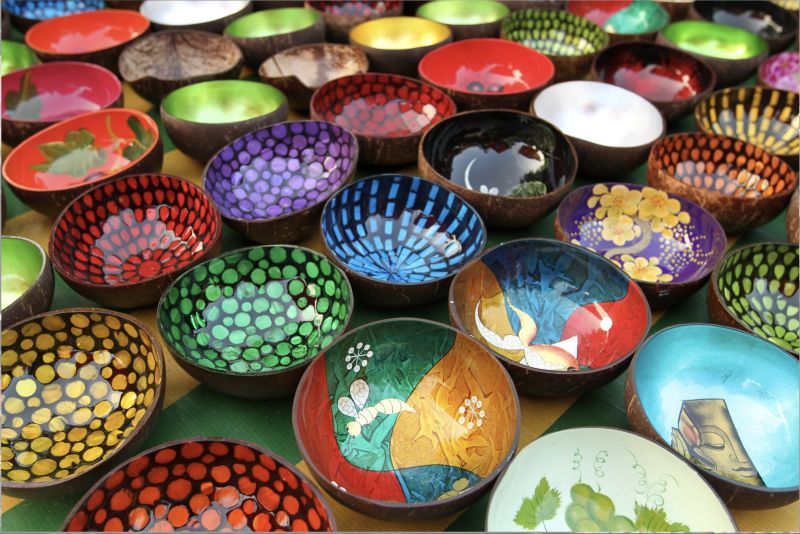
The 3 quick tests that work at any market stall in Phu Quoc are:
- Underside inspection: Turn the piece over. Handmade lacquerware shows slight variations in base coat coverage and occasionally has a maker’s mark scratched in. Factory items have a perfectly uniform, machine-applied undercoat with no variation.
- Weight: Genuine lacquerware uses a wooden base — it has density. Factory items often use compressed sawdust or plastic substrates that feel hollow when tapped lightly.
- Price threshold: Authentic handmade lacquerware boxes smaller than a wallet size cost a minimum of ₹400–₹600 (120,000–168,000 VND) at honest pricing. Anything presented as “handmade” for under ₹300 (84,000 VND) at a tourist stall is factory-produced — the labor alone to handpaint a lacquer piece exceeds the cost of that price point.
For purchases of handmade lacquerware and seashell art in Phu Quoc above ₹2,000 (560,000 VND), ask the stall operator for a certificate of origin — legitimate craft producers and some curated stalls at Dinh Cau Night Market do have them.
Where to Shop in Phu Quoc
Phu Quoc’s 4 main shopping zones are Dinh Cau Night Market (souvenirs, pearls, street food), Duong Dong Daytime Market (fish sauce, pepper, fresh local goods), Grand World and Phu Quoc Premium Outlets (branded goods, air-conditioned), and duty-free shops at Phu Quoc International Airport and licensed island retailers (liquor, cosmetics, electronics at Free Trade Zone prices).
These 4 Phu Quoc shopping zones are geographically distributed across the island: Dinh Cau Night Market and Duong Dong Daytime Market are both in Duong Dong town on the western coast, within 10 minutes of each other; Grand World is approximately 15 km south of the Ganh Dau area; the duty-free airport is at Phu Quoc International Airport on the eastern side.
For Indian tourists planning a full day of shopping in Phu Quoc, the most efficient sequence is: Duong Dong Market in the morning for fish sauce and pepper at factory prices → Grand World or Premium Outlets in the afternoon in air-conditioned comfort → Dinh Cau Night Market in the evening for souvenirs, pearl browsing, and street food. Vietnamtour.in tour groups have escorted over 800 Indian tourists across these 4 zones in the past 3 dry seasons, and this morning-to-evening routing consistently delivers the highest customer-satisfaction scores in post-trip surveys.
Dinh Cau Night Market
Dinh Cau Night Market opens daily from 5:00 PM to 11:00 PM on Tran Hung Dao Street, Duong Dong town. Dinh Cau is Phu Quoc’s single most concentrated shopping and dining location, with approximately 150 stalls covering pearls, dried seafood, clothing, handicrafts, and cooked street food.
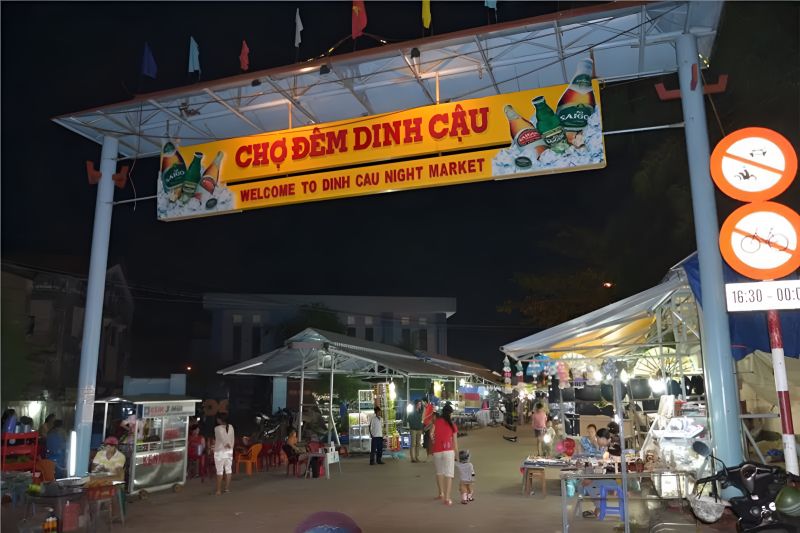
The Dinh Cau Night Market’s layout follows a consistent pattern: food stalls occupy the outer perimeter along the seafront side, while souvenir, handicraft, and clothing stalls fill the interior grid. Pearl showrooms and certified jewelry shops cluster along the Tran Hung Dao Street frontage, where foot traffic is highest — these are generally better-quality operations than stalls deeper inside the market.
For Indian tourists, 3 categories perform best at Dinh Cau: lacquerware and seashell handicrafts (concentrated in the interior stalls, price range ₹200–₹1,500), pearl jewelry at entry and mid-tier price points (Tran Hung Dao frontage, ₹1,500–₹20,000), and packaged local food products. Several long-running vendors in Dinh Cau Market — particularly those in the interior food-stall row near Tran Hung Dao Street — sell pre-packaged fish sauce and pepper specifically formulated for travel, with reinforced caps and printed English ingredient labels.
Payment tips for Indian shopping in Dinh Cau Night Market are to carry VND cash for all market shopping. Most souvenir and food stalls in Dinh Cau accept VND only. Pearl showrooms along the Tran Hung Dao Street frontage generally accept Visa and Mastercard; some also accept UnionPay. UPI does not function in Vietnam — Vietnamese payment infrastructure has no connection to India’s UPI network.
Duong Dong Daytime Market
Duong Dong Market operates from 6:00 AM to 6:00 PM daily and is the best location on the island for factory-direct fish sauce, fresh Phu Quoc pepper from local farmers, and dried squid at prices 20–40% below tourist shops.
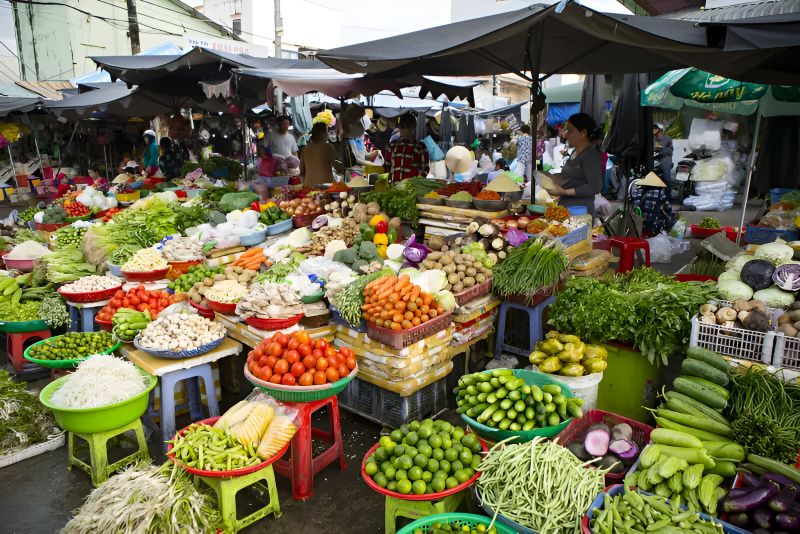
The Duong Dong market is a 10-minute Grab ride from the Long Beach resort area, costing approximately ₹80–₹120 (22,000–33,000 VND) one way. The layout of Duong Dong Market is divided into 2 sections: a fresh produce and seafood hall (avoid buying raw seafood for travel because it does not survive airport transit), and a packaged goods section that is directly relevant for Indian tourists buying fish sauce, pepper, dried fruits, and agricultural products.
Price comparison for fish sauce: the same 250ml bottle of Chin Su or Phu Quoc brand fish sauce costs ₹200–₹280 (56,000–78,000 VND) at Duong Dong Market versus ₹300–₹450 (84,000–125,000 VND) at Dinh Cau Night Market tourist stalls. For 5 bottles of fish sauce, this 30–40% differential is worth the morning trip.
Grand World and Phu Quoc Premium Outlets
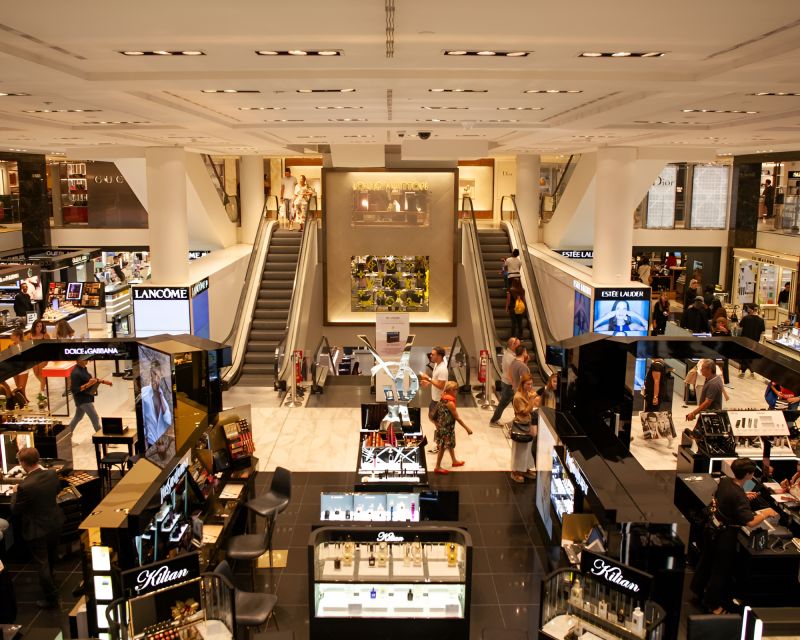
Phu Quoc’s Free Trade Zone status means alcohol, cosmetics, and electronics at licensed island retailers are priced 20–50% below standard Vietnamese retail — a bottle of Johnnie Walker Black Label costs approximately ₹1,800 versus ₹3,500+ in India; MAC foundation retails at ₹1,200–₹1,800 versus ₹2,500–₹3,500 in Indian markets.
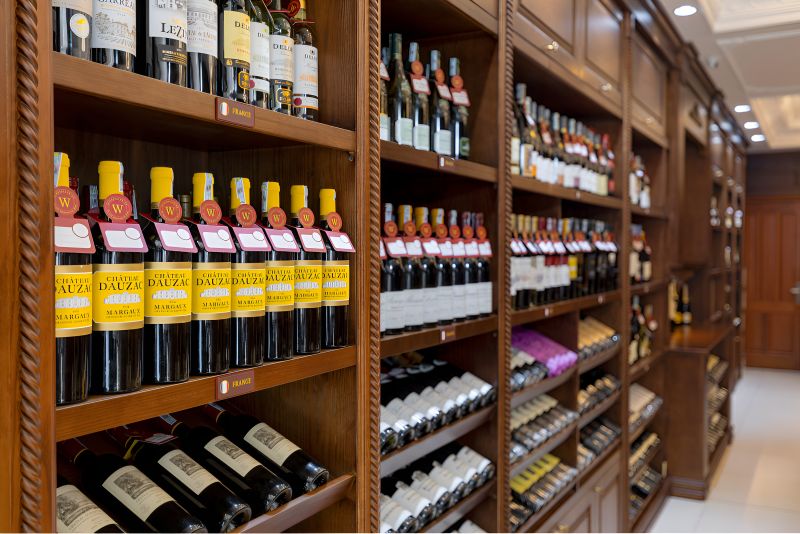
The practical advantage of Free Trade Zone shopping over airport duty-free is timing: you shop throughout your stay on the island rather than rushing through departure gates with limited time. The product selection at island retailers is also wider than airport shops, particularly for cosmetics and skincare.
Indian customs allows a duty-free aggregate baggage allowance of ₹50,000 (14,000,000 VND) per adult traveller returning from overseas after a stay of more than 3 days, under India’s Baggage Rules 2016. This is the combined ceiling for all goods — clothing, cosmetics, spirits, and consumer electronics combined — and is separate from the per-piece pearl-jewelry threshold discussed in the pearls section above. Plan your Grand World and duty-free purchases with this ₹50,000 limit in mind.
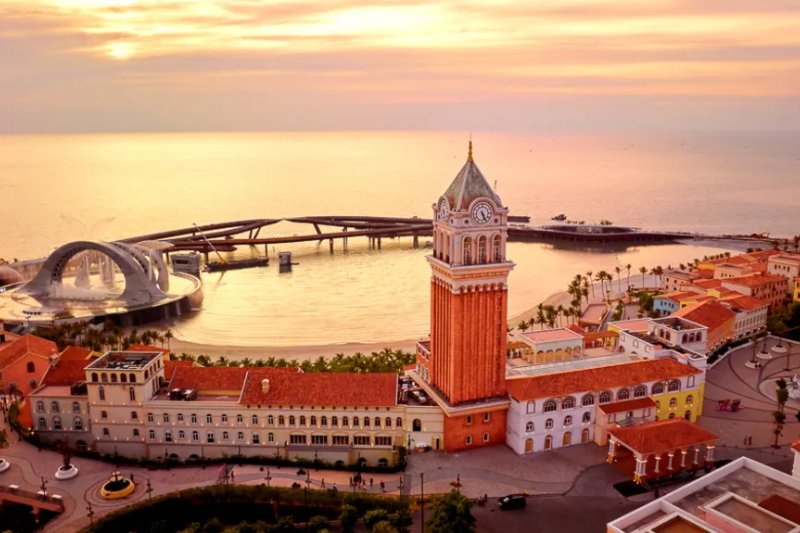
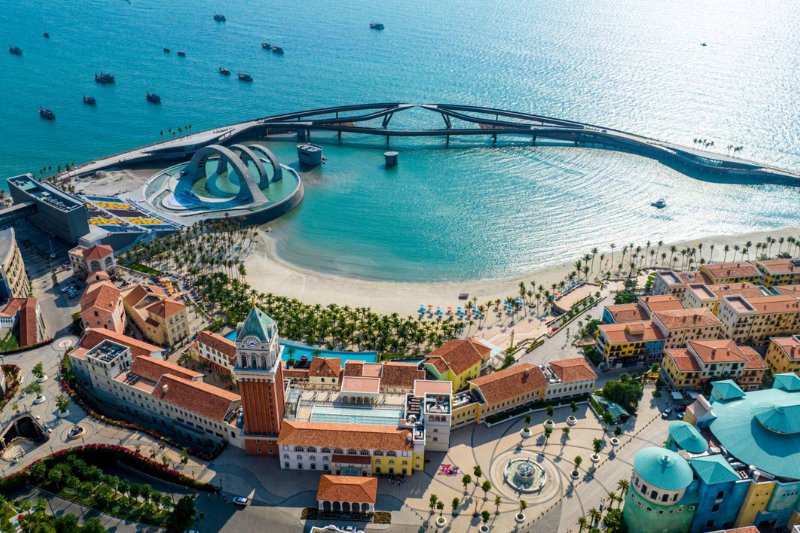
Grand World Night Market (open from 5:00 PM–2:00 AM on Indochine Street) is architecturally distinct from Dinh Cau and skews toward dining, branded retail, and entertainment. Grand World Night Market is not a replacement for Dinh Cau Night Market for souvenir shopping, but functions as a complementary evening destination for Indian tourists who prefer an air-conditioned, structured retail environment.
Best Time to Shop in Phu Quoc for Indian Tourists
The best time to shop in Phu Quoc is November to March — Phu Quoc’s 5-month dry season — when all 4 shopping zones in Phu Quoc operate at full capacity, pearl farm showrooms open daily, and Dinh Cau Night Market runs a complete 150-stall count every evening. April to October is the wet season in Phu Quoc: outdoor stalls count at Dinh Cau drop, and some pearl showrooms shift to shorter hours, though covered stalls and Grand World’s air-conditioned retail continue without interruption.
For Indian tourists, 3 national holidays align directly with Phu Quoc’s shopping calendar:
- Diwali (October–November) marks the start of peak season — markets are freshly stocked, weather turns reliably dry, and stall count at Dinh Cau is at its annual maximum; this is the single best window for shopping.
- Holi (March) falls in the final month of optimal season — dry weather holds through mid-March and all markets run at full capacity, making a Holi-break trip fully viable.
- Summer holidays (May–June) fall in wet season — afternoon rain is common, some outdoor vendors reduce hours, but covered and indoor retail operates normally; shopping remains possible with a modestly reduced selection.
Across all seasons, Duong Dong Daytime Market draws the most local agricultural sellers on weekends — Friday through Sunday, when vendors from the island’s northern pepper farms and fruit estates arrive directly with fresh stock at farm prices.
Shopping Budget for Phu Quoc
A typical Indian tourist spending 3 days in Phu Quoc allocates ₹8,000–₹25,000 (2,240,000–7,000,000 VND) for shopping, depending on whether pearl jewelry is included — without pearls, a complete souvenir haul (fish sauce, pepper, handicrafts, clothing) costs ₹3,000–₹6,000 (840,000–1,680,000 VND); with one pearl jewelry piece, budget ₹12,000–₹35,000 (3,360,000–9,800,000 VND) total.
The 3 budget tiers reflect different shopping priorities in Phu Quoc:
- Budget level (₹3,000–₹6,000): Covers 3–4 bottles of fish sauce, 2–3 pepper pouches, 1 bottle of Sim wine, seashell keychains, lacquer magnets, and 1–2 embroidered pouches — sufficient gifts for a family of 6–8 people with no single item exceeding ₹600.
- Mid-range level (₹8,000–₹15,000): The budget expands to include 1 pair of pearl earrings or a pendant at Tier 2 quality (₹5,000–₹8,000), 1 bottle of duty-free spirits from Grand World (₹1,500–₹2,500), and a lacquerware box (₹800–₹1,500).
- Premium level (₹20,000–₹50,000): A full Akoya pearl necklace set (₹12,000–₹30,000) anchors the budget, with duty-free cosmetics (₹3,000–₹8,000) and higher-end lacquerware filling the remainder.
Currency note: The 2026 exchange rate is 1 INR ≈ 280 VND — verify the live rate at your hotel desk on arrival, as airport exchange counters consistently run 5–8% below the interbank rate. Withdraw VND from ATMs on Tran Hung Dao Street directly; Vietnam ATMs charge fees per transaction rather than per amount, so withdrawing one larger amount is more cost-efficient than multiple small withdrawals.
7 Bargaining Rules for Shopping at Phu Quoc Markets
Bargaining is expected and accepted at Dinh Cau Night Market and Duong Dong Market for souvenirs, clothing, and unbranded handicrafts. Fixed-price venues — pearl farm showrooms, Grand World, and Premium Outlets — do not negotiate; the 7 rules below apply exclusively to market and stall shopping.
- Start at 50–60% of the asking price for souvenirs and handicrafts. A stall quoting ₹600 for a lacquer box expects an opening offer of ₹300–₹350 — this range is standard and causes no offence.
- Walk away slowly when multiple stalls nearby carry the same item. Sellers call back within 3–5 steps more often than not; this is the single most effective tactic in any market.
- Bundle 3–5 items from one stall to unlock a 15–25% total discount without confrontational negotiation — sellers prefer volume over margin at individual stall level.
- Pay in VND cash only. Quoting prices in INR or requesting INR pricing confuses sellers, slows negotiation, and consistently produces a less favorable rate than agreeing on a VND amount directly.
- Bargain after 9 PM at Dinh Cau Night Market. Sellers discount more readily in the final 90 minutes before closing to clear remaining stock.
- Never bargain for cooked food. Prices at night market food stalls are fixed and fair; attempting to negotiate on food is considered rude by local custom.
- Apply the pearl rule correctly: street stalls negotiate, certified farm showrooms do not. A street stall quoting ₹3,000 (840,000 VND) for a pearl necklace is negotiable and is selling Tier 1 freshwater pieces; a farm showroom quoting ₹15,000 (4,200,000 VND) for a certified Akoya strand prices by quality grade, not tourist margin.
Frequently Asked Questions — Shopping in Phu Quoc for Indian Tourists
Can Indian Tourists Use UPI or Pay by Card at Phu Quoc Markets?
UPI does not work in Vietnam — Vietnamese payment infrastructure has no technical connection to India’s UPI network. Vietnamtour.in pre-departure briefings for Indian travellers consistently highlight this limitation, with VND cash preparation listed as a mandatory step before any market visit on the island. Most souvenir stalls and market vendors in Phu Quoc accept VND cash only. Pearl showrooms, Grand World stores, Premium Outlets, and duty-free shops accept Visa and Mastercard; some larger pearl farms also accept UnionPay. For Phu Quoc market shopping, carry a minimum of 8,700,000–14,500,000 VND (approximately ₹31,000–₹51,700) in cash; withdraw from ATMs on Tran Hung Dao Street where machines are reliable and fees are standard.
Is It Safe to Buy Pearls in Phu Quoc Without a Certificate?
No — buying pearls without a certificate of authenticity in Phu Quoc creates 2 direct problems: accurate value declaration at Indian customs becomes difficult, and there is no recourse for quality disputes after purchase. Reputable pearl farms and certified showrooms issue a certificate with every purchase above 500,000 VND (approximately ₹1,780). Dinh Cau Night Market stalls do not provide certificates — stall purchases are appropriate for Tier 1 souvenir-grade pieces under ₹2,000 (560,000 VND), not for mid-range or fine jewelry.
How Many Fish Sauce Bottles Can Indian Tourists Bring Back?
3 to 5 factory-sealed bottles of 250ml each in checked baggage is the standard personal-use quantity that clears Indian customs without issue. Total food item value counts toward the ₹50,000 aggregate duty-free baggage allowance per adult traveller (Indian Baggage Rules 2016). Factory-sealed bottles with English-language ingredient labels clear customs fastest — bottles with handwritten or purely Vietnamese labels take longer to process.
What Is the Cheapest Thing Worth Buying in Phu Quoc?
Phu Quoc pepper — a 100g vacuum-sealed pouch at ₹120–₹250 — delivers the best value-to-authenticity ratio of anything sold on the island. Phu Quoc pepper is GI-protected, unavailable in this exact variety anywhere in India, weighs under 150g, packs flat, and costs less than a cup of coffee in Mumbai. Phu Quoc fish sauce at ₹200–₹350 for a 250ml bottle is the second-best value purchase: equally GI-protected, equally unavailable in India, and practical enough to use in an Indian kitchen the week you return.
Are There Any Vegetarian or Jain-Friendly Food Souvenirs at Phu Quoc Markets?
Yes — 5 categories of vegetarian food souvenirs are widely available at both Dinh Cau Night Market and Duong Dong Market: Phu Quoc pepper, Sim wine, dried tropical fruits (mango, jackfruit, starfruit), coconut candies, and cashew nuts. Fish sauce is not vegetarian — it is fermented with anchovies and should be avoided entirely. At Duong Dong Market, the agricultural goods section sits physically separate from the seafood hall; look for stalls displaying bagged dry goods, where all 5 vegetarian categories above are sold with printed ingredient labels.