
Incense Village Hanoi is an active craft village, famous for its colorful red incense sticks and rural ambiance. It also represents an opportunity for foreigners to learn about and experience Vietnamese spiritual culture and daily life.
Introduction to Incense Village Hanoi
Incense Village, also known as Quang Phu Cau Incense Village, is an unusual tourist destination located approximately 35 kilometers from the center of Hanoi. It boasts a rich cultural tradition because local people have been skillfully making incense there for more than a century. The quiet town is very famous for its colorful incense sticks made of red and yellow materials, which are carefully laid out and exposed to sunlight.
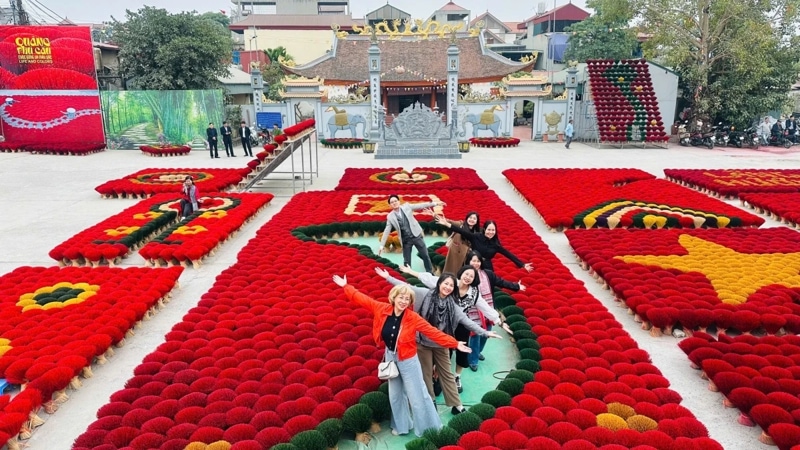
A visit to Incense Village will give you a unique perspective on a still thriving traditional trade that remains an integral part of Vietnamese culture and traditions. At Incense Village, you can watch artisans slit bamboo, color incense sticks with natural materials, and package incense stalks into colorful designs, all while learning about the role incense plays in Vietnamese traditions. It will be a welcome respite from the frenetic energy of Hanoi and an absolute ‘must-visit’ destination for any tourist traveling to Vietnam.
History Of Incense Village Hanoi
The origin of Incense Village Hanoi dates back more than a century. The traditional occupation of making incense at Incense Village Hanoi began at Phú Lương Thượng hamlet and then branched out into surrounding hamlets as people in these localities became skilled at making incense sticks for rituals. A local occupation on a limited scale for local consumption eventually became a thriving occupation with connections to Vietnamese culture and spirituality. At the same time, the colorful scenes of incense drying outside village courtyards have created a unique cultural landscape.

The main source of livelihood for residents at the start of the 20th century included basket weaving, fan weaving, and mat weaving. The breakthrough came when Le Xuan Vinh, Phu Luong Thuong, saw a peddler looking for incense sticks. He offered to cut split bamboo into incense cores, and thus began incense making. It began with family workshops and then branched out to Phú Lương Hạ, the hometown of his wife, and then finally to six hamlets.
The craft continued to prosper and develop, and more so after 2010 as a result of artisan Nguyen Huu Chuyen learning modern technologies and bringing these back home after visiting India on field trips. Today, incense-making has become the most vital source of livelihood as a result of dramatically increased production due to machine processing.
3 Unforgettable Experiences You Shouldn’t Miss
A visit to Incense Village Hanoi presents an opportunity that rarely occurs to be immersed in the midst of a traditional artisan village that dates back a century. All these activities will enable you to appreciate the artistic and cultural life at Incense Village.
3.1 Capture the Iconic Red Incense Drying Yards
Perhaps one of the most impressive things in Hanoi is watching incense sticks laid out in enormous circular shapes and exposed to the sun in courtyards and village streets. You are also permitted to walk among these courtyards and even take amazing pictures. You will find that they lay out the incense sticks in beautiful fan shapes so that taking pictures looks artistic and colorful. The best times to visit would be early morning and late afternoon.

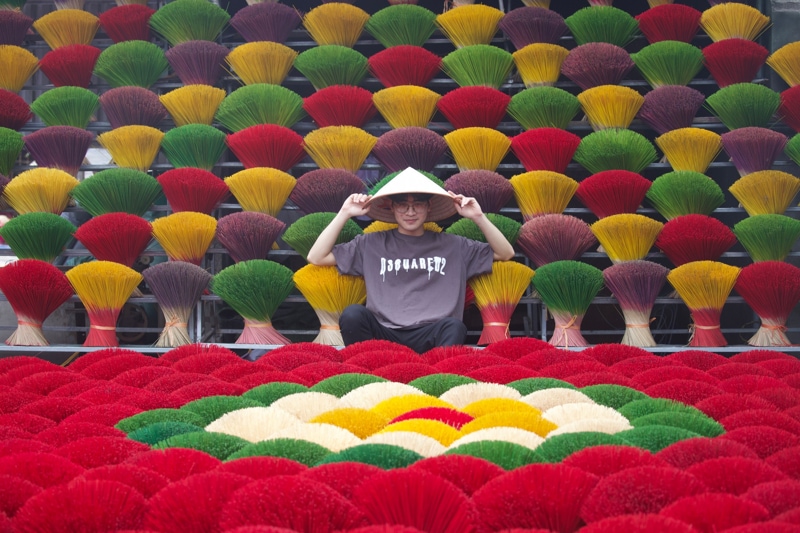
Don’t forget to pack colorful clothing that contrasts with the red and golden hues of incense if you are an Indian visitor who enjoys taking beautiful pictures like the locals. Vibrant hues like rich orange, royal blue, or deep yellow look great in photographs. Among the sunlit incense sticks, your photos can be made even more striking by wearing flowing dresses, scarves, or traditional Indian clothing.
3.2 Watch Local Artisans Craft Incense by Hand
A trip here will not be complete without taking time to observe how artisans produce incense sticks from bamboo. You will learn and see firsthand how incense sticks are made from cutting, coloration, and drying. It will be insightful and meaningful as you will appreciate the efforts required in making these incense sticks. To my surprise, some local households will extend an invitation for you to engage in conversations while watching artisans make these products.

3.3 Try Making Your Own Incense Sticks
However, if you are interested in having hands-on experience, several workshops within the village will enable you to make your own incense. You will learn how to dip bamboo sticks into incense paste and roll them evenly. You can then pick your preferred aroma, which may include agarwood, cinnamon, or jasmine. Although it seems very easy, it requires some practice before you can make your incense sticks smooth and well-balanced, just like the artisans.
Entrance Fee
The typical entry fee to Incense Village is free. This allows you to enjoy visiting the colorful drying areas outside at no cost. However, several private households and incense workshops charge a small entrance fee, with 50,000-100,000 VND ~ 155-310 INR to cover the cost of taking photographs inside the courtyard, accessing the more private areas where production occurs, and obtaining other services.
Best Time To Visit The Incense Village Hanoi
Incense Village Hanoi’s best times depend on what experience you are interested in. Towards the end of the year before Tet holiday, usually from November to December in the lunar calendar, Incense Village experiences its peak season in Hanoi. It is at this period that thousands of incense sticks will be seen laid out in courtyards and alleys, and it’s an experience you do not want to miss. It would be a great experience for people who want to learn more about incense and its importance in Vietnamese culture and religion.
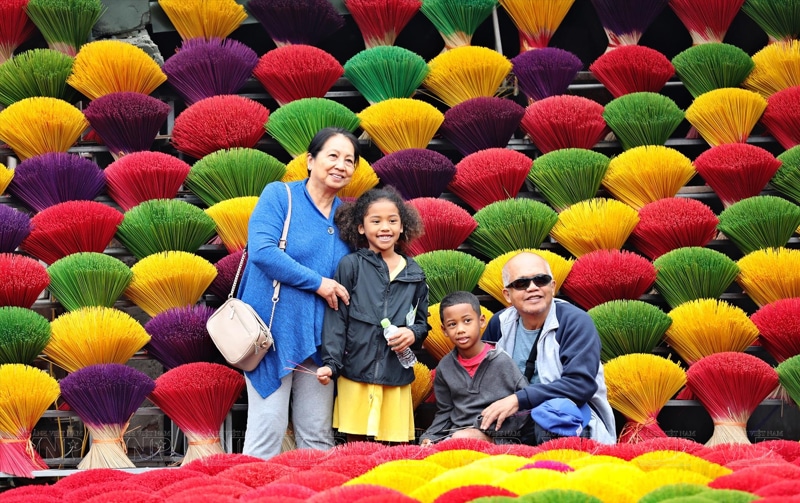
The optimal times within a day for capturing images of the village’s natural beauty would be early morning and late afternoon. During 7:00 and 9:00 AM, there would be soft and gentle illumination, with crisp air and an apparently peaceful village as people start their daily activities. During 3:00 and 5:00 PM, the golden shades brought about by the setting sun emphasize the red colors of incense sticks, thus making beautiful picture moments.
Things To Know Before Traveling To the Incense Village in Hanoi
Having some practical advice before visiting Incense Village Hanoi will help you get the most from your experience. As one of the active craft attractions in Hanoi, coming prepared to explore the village comfortably and with respect will enhance your visit.
-
Dress in light, breathable clothing, as you will be outside often, including being in direct sunlight while incense bundles are being dried outside.
-
If rain has recently occurred, do not visit immediately, as the places where incense is dried may be muddy and not look as colourful when photographed.
-
If you wish to take a close-up photo of a worker, ask first for the family’s permission; the families that work in the village often have a lot going on with production.
-
Be sure to bring cash with you when purchasing small items, such as incense bundles, souvenirs, and/or local foods; most families in the village do not accept any form of digital payments.
-
If possible, visit during the weekdays to have fewer crowds and feel like you are experiencing a more authentic countryside atmosphere.
-
Exercise caution when around drying racks and production tools, as certain areas are sharp or fragile.
-
Consider hiring a driver or booking a tour, as Incense Village is approximately 35 km from central Hanoi with relatively few public transport options available.
FAQs About Incense Village Hanoi
If you’re preparing for a visit to Incense Village Hanoi, it’ll be helpful for you to have the most common FAQs as a reference when you’re getting ready to plan your visit and how best to enjoy your experience at Incense Village Hanoi.
-
Where is Incense Village Hanoi located?
Incense Village Hanoi, known as Quang Phu Cau Incense Village, is located in Ung Hoa District, around 35km away from Central Hanoi. You can get to the village by car, motorcycle, or private tour. Depending on the traffic, travel times typically range from 45 minutes to one hour.
-
Where should I eat and stay at the Incense Village Hanoi?
There aren’t many Indian food options in the Incense Village because it’s a small village close to Hanoi. You can stay at neighboring homestays to get a taste of the local way of life. However, if you want to explore the Incense Village, Vietnamtour.in suggests taking a day trip there and coming back to Hanoi for dinner and lodging.
-
Can I take pictures anywhere I want in the village?
You can take pictures freely in local streets and shared drying areas. However, it is best to get permission first before taking pictures inside someone’s workshop or private residence. Always show respect and good manners when entering these areas.

-
Is Incense Village appropriate for families and children?
Yes, Incense Village is perfect for families, with vibrant colors and unique crafts that are often very appealing to young children. Just keep in mind to stay alert in the areas where incense is dyed and produced, since many of the tools used can be dangerous. Therefore, it’s best to keep your young children close to you.
Final Thoughts: Is Incense Village Hanoi Worth Visiting?
For those who wish to experience a quaint Vietnamese craft village blending traditional artisanship, bright colors, and authentic Vietnamese culture. The craft village is a photographer’s paradise as well as a “must-visit” destination for anyone interested in learning more about Vietnam’s spiritual heritage. The craft village is also an excellent destination for an enjoyable travelling experience or to experience Vietnamese craft culture. To ensure an enjoyable visit to this craft village, and for more comprehensive local knowledge, visit Vietnamtour.in and locate a private guide service.
