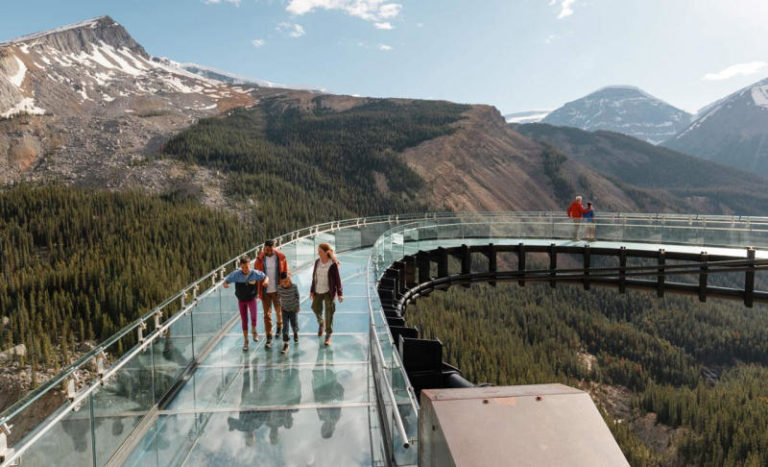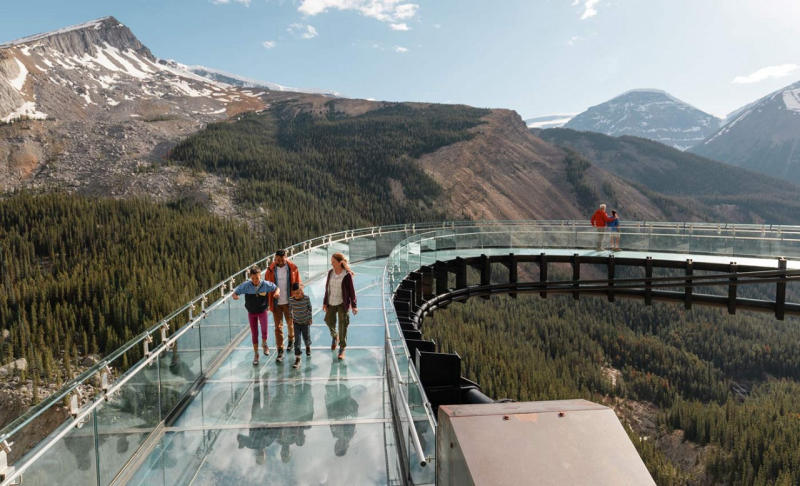
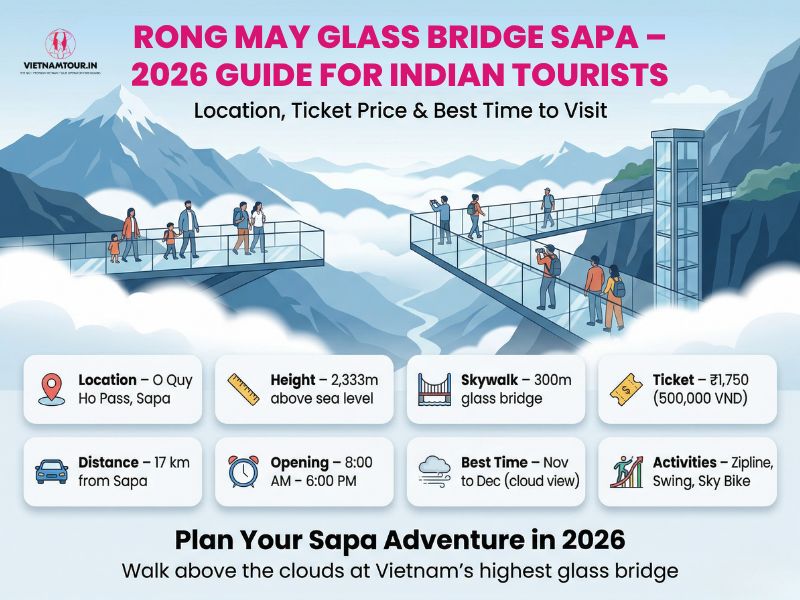
Rong May Glass Bridge is a 300-metre transparent glass skywalk built at 2,333 metres above sea level on O Quy Ho Pass, Lai Chau Province, located 17 km from Sapa town and accessible for Indian tourists with an entrance ticket of ₹1,750 (500,000 VND) per person in 2026.
What Is the Rong May Glass Bridge in Sapa?
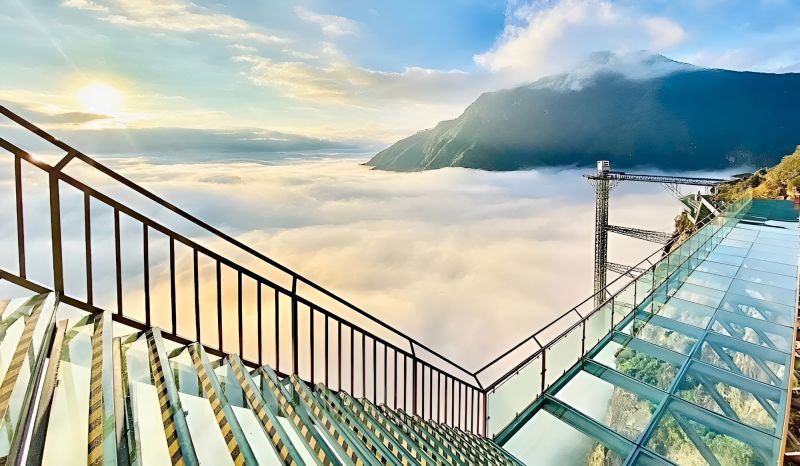
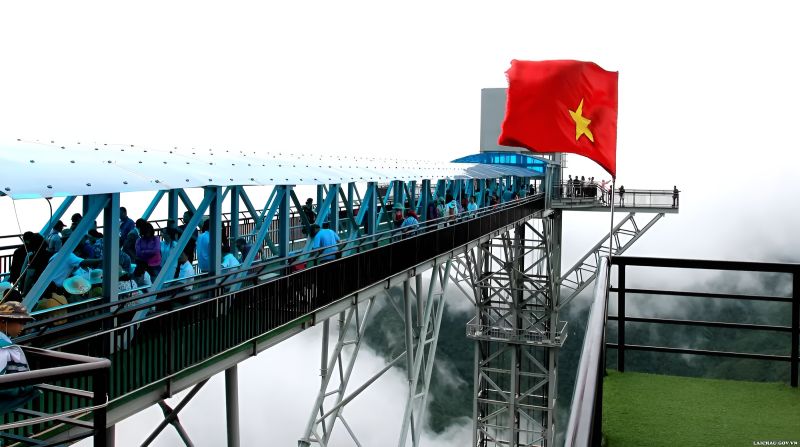
Rong May Glass Bridge is the highest glass bridge in Southeast Asia — a feat of engineering that sits 548.5 metres above the Hoang Lien Son mountain gorge and 2,333 metres above sea level. The name “Rồng Mây” translates directly to Dragon Cloud in English: Rồng means Dragon, Mây means Cloud — a name earned from the way morning fog wraps around the structure like a dragon moving through the sky.
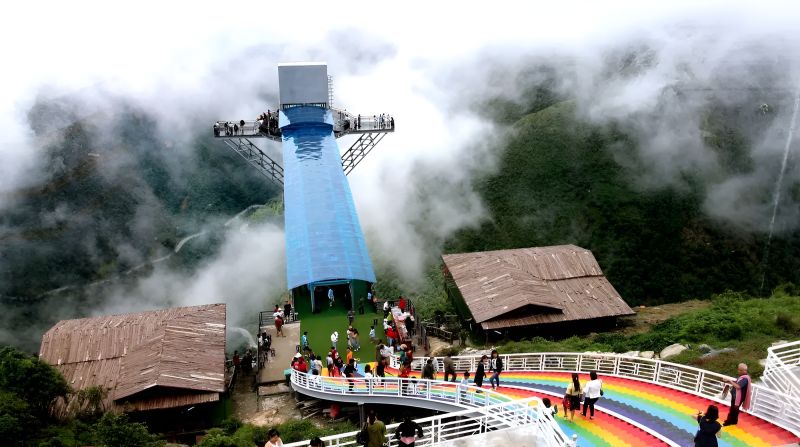
The glass elevator system — the first outdoor transparent glass elevator in Vietnam — rises 305 metres inside and out of the mountain cliff face, equivalent in height to a 102-storey building.
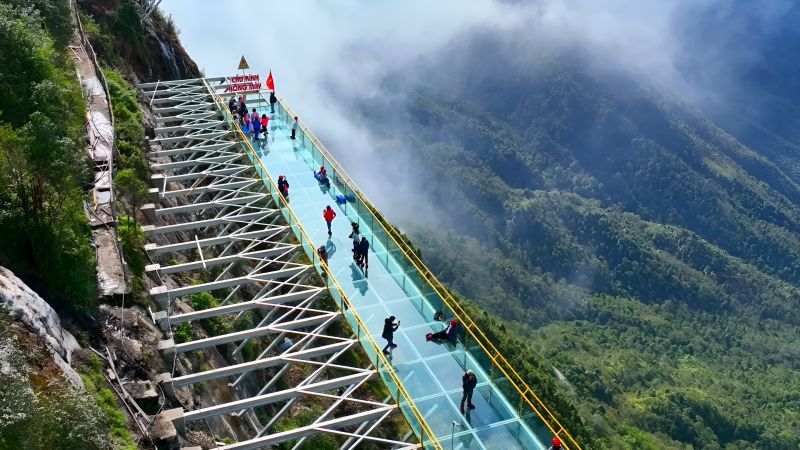
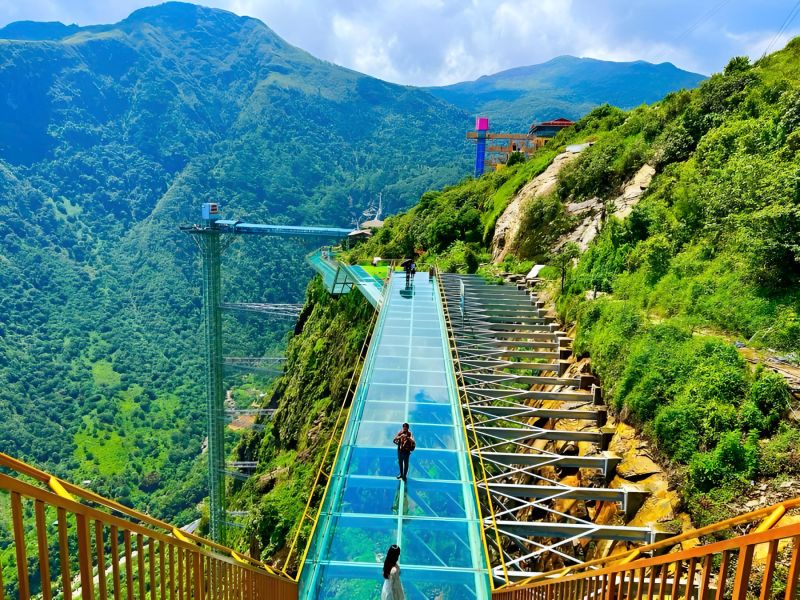
The bridge deck itself extends 60 metres out from the cliff as a transparent glass overhang, with 4 walkway corridors spreading in 4 cardinal directions so visitors can walk the full 300-metre circuit. Every glass panel on the Rong May bridge deck consists of 3 bonded layers of tempered glass with a combined thickness of 7 cm, manufactured to withstand sustained wind speeds above 100 km/h and a maximum operational load of 1,200 visitors per hour.
For altitude reference, 2,333 m is slightly higher than Munnar’s Top Station (2,200 m) and roughly two-thirds the altitude of Leh (3,500 m).
When Was Rong May Glass Bridge Built?
Rong May Glass Bridge construction began in 2017 with a total investment of 200 billion VND (~₹70 crore), and the bridge officially opened to the public in November 2019. The complex was developed as part of Vietnam’s strategy to diversify mountain tourism around Sapa beyond Fansipan Mountain, and Rong May Glass Bridge remains the only outdoor transparent glass elevator structure in Vietnam as of 2026.
Are Cloud Dragon Skywalk and Rong May Glass Bridge the Same?
Yes. Cloud Dragon Skywalk and Rong May Glass Bridge refer to the same structure on O Quy Ho Pass — both names point to the same 300-metre transparent skywalk inside the Rong May Tourist Complex in Tam Duong District, Lai Chau Province. “Cloud Dragon” and “Dragon Cloud” are alternative English translations of the Vietnamese name “Rồng Mây” (Rồng = Dragon, Mây = Cloud), and both translations are used interchangeably by Vietnamese and international tour operators. There is no separate “Cloud Dragon” bridge in Sapa.
Is Rong May Glass Bridge the Highest Glass Bridge in Vietnam?
Yes. Rong May Glass Bridge holds the verified position of the highest glass bridge in Vietnam at 2,333 metres above sea level, with the bridge deck suspended 548.5 metres above the Hoang Lien Son gorge floor. No other glass bridge in Vietnam — including Bach Long Glass Bridge in Moc Chau, which reaches 150 metres above its valley floor at around 200 metres above sea level — approaches the altitude or vertical exposure of Rong May Glass Bridge.
Indian travelers who want a comparative frame of reference can consider the adventure skywalks in Rishikesh, Uttarakhand: Rong May Glass Bridge operates at roughly 15 times the altitude of Rishikesh town, and the valley drop beneath the Rong May deck is around 9 times deeper than the gorge floor visible from Rishikesh’s fixed-line activities.
Once you understand what Rong May is structurally, the next practical question is where it sits on the map — and how that location shapes every transport and timing decision for your visit.
Where Is Rong May Glass Bridge Located?
Rong May Glass Bridge is located in Son Binh Ward, Tam Duong District, Lai Chau Province, on the summit ridge of O Quy Ho Pass — one of Vietnam’s four legendary mountain passes, collectively known as the “tứ đại đèo.” Rong May Glass Bridge sits on the Lai Chau Province side of the O Quy Ho Pass ridge, which forms the administrative boundary between Lai Chau Province and Lao Cai Province. Because Rong May Glass Bridge is positioned 17 km from Sapa town centre along National Highway 4D, the bridge is universally referred to, searched for, and marketed as “Sapa Glass Bridge” — despite the bridge itself belonging administratively to Lai Chau Province, not to Sapa’s Lao Cai Province.
The Google Maps coordinates for Rong May Glass Bridge are 22°19’14.6″N, 103°44’43.8″E. Indian tourists should save these coordinates offline before departure from Sapa town, because mobile data signals on O Quy Ho Pass are intermittent and GPS routing can be unreliable without a pre-downloaded offline map.
How Far Is Rong May Glass Bridge from Hanoi?
Rong May Glass Bridge is located around 400 km north of Hanoi. The standard driving route from Hanoi to Rong May Glass Bridge follows the Noi Bai – Lao Cai Expressway from Hanoi to Lao Cai city, continues to Sapa town, and then follows National Highway 4D westward for 17 km to the Rong May Tourist Complex entrance. Total driving time from Hanoi to Rong May Glass Bridge ranges from 6 to 7 hours, depending on Hanoi departure traffic and conditions on National Highway 4D above Sapa town.
How Far Is Rong May Glass Bridge from Sapa Town?
Rong May Glass Bridge is located 16 to 18 km from Sapa town centre along National Highway 4D, with a driving time of 30 to 45 minutes depending on road conditions. The National Highway 4D between Sapa town and Rong May Glass Bridge is a continuous mountain switchback road — visually spectacular, but not safe for self-driving by travelers without prior mountain driving experience in Vietnam.
How Far Is Rong May Glass Bridge from Fansipan Mountain?
Rong May Glass Bridge is located 19 km from Fansipan Cable Car Station via National Highway 4D — a 35 to 45-minute drive depending on O Quy Ho Pass conditions. Indian tourists who want to combine Rong May Glass Bridge and Fansipan Mountain in a single day should start at Fansipan in the early morning (cable car opens 7:30 AM) when the summit cloud cover is thinnest, then drive to Rong May Glass Bridge for a midday or afternoon visit when the O Quy Ho Pass fog typically clears. Both attractions can be paired in a Vietnamtour.in 1-day Sapa highlights package with a private vehicle and English-speaking guide.
Rong May Glass Bridge Ticket Price and Entrance Fee for Indian Tourists in 2026
The standard Rong May Glass Bridge adult entrance ticket costs 500,000 VND (~₹1,750) per person and includes the glass elevator in both directions — the ascent through the mountain tunnel and the descent back to the ground level. The 500,000 VND ticket is the ticket that Indian tourists should purchase, because the alternative walk-up ticket at 200,000 VND (~₹700) covers only a one-way uphill climb on a steep, exposed trail and does not include the glass elevator experience that defines the Rong May visit.
The 4 ticket categories available at Rong May Glass Bridge in 2026 are structured by visitor height rather than by age, as the table below shows:
| Visitor Category | Height/Age | Ticket Price (VND) | Ticket Price (₹ INR) | Includes Glass Elevator |
|---|---|---|---|---|
| Adult | Above 140 cm | 500,000 | ₹1,750 | Yes (round trip) |
| Child | 100 cm – 140 cm | 300,000 | ₹1,050 | Yes (round trip) |
| Infant/Toddler | Under 100 cm | Free | Free | Yes (with parent) |
| Walk-up Alternative | All heights | 200,000 | ₹700 | No (one-way uphill walk only) |
Each add-on adventure activity at the Rong May Glass Bridge — including a zipline, the death swing, the rope bike, and the suspension bridge walk — carries a separate ticket price of 150,000 VND (~₹525) per ride, payable in cash at the individual activity counter inside the complex.
Booking the main ticket to Rong May Glass Bridge online via vecaukinhrongmay.com saves 20,000 to 50,000 VND per ticket and eliminates the entry queue — a practical advantage during peak November and December, when queues at the walk-up counter can run 20 to 30 minutes. Your driver can also scan a QR code at pickup for a 20,000 VND discount. Carry cash in VND for all add-on activity counters, as card acceptance on-site is unreliable.
The 500,000 VND ticket also includes a 50,000 VND meal voucher redeemable at the on-site restaurant — use it for a drink or snack, and eat a proper meal in Sapa before you go, as food prices inside the complex are high.
Does the Rong May Glass Bridge Ticket Include the Glass Elevator?
Yes. The standard 500,000 VND adult ticket at Rong May Glass Bridge includes the glass elevator ride both up and down as a round trip. The glass elevator is not a separately charged service when the standard entrance ticket is purchased. The walk-up alternative at 200,000 VND explicitly does not include the elevator and requires a long uphill climb on foot.
Ticket pricing at Rong May Glass Bridge establishes the cost side of the visit — the next decision that shapes visit quality equally is timing, specifically which month provides the optimal weather conditions for the glass bridge experience that Indian tourists most commonly search for.
Rong May Glass Bridge Opening Hours and Best Time to Visit
Rong May Glass Bridge opens daily at 8:00 AM and closes at 6:00 PM throughout the year, including Vietnamese public holidays and the Tet Lunar New Year period. Indian tourists who want to experience the “walking on clouds” effect — the visual phenomenon created when morning fog wraps around the glass bridge deck — should arrive at the Rong May ticket counter by 7:30 AM to be among the first visitors on the bridge deck when the fog layer is at its thickest between 7:30 and 9:00 AM.
Best Months for Indian Tourists
The best months for Indian tourists to visit Rong May Glass Bridge are November and December. November and December offer the clearest skies, the most consistent morning fog at the bridge level, and temperatures between 10 and 16°C on the pass — cool but manageable with a jacket. The November–December window aligns directly with two major Indian travel periods: the post-Diwali break in late October through November, and the Christmas–New Year holiday window in late December. Indian families and groups who plan northern Vietnam itineraries around these windows find Rong May Glass Bridge at its most visually dramatic.
September through early November offers a secondary optimal window for visiting Rong May Glass Bridge: temperatures are comfortable, humidity is lower than the monsoon months, skies are clear for panoramic views, and Sapa hotel prices are lower than the December peak season. October through early November is the practical sweet spot for Indian tourists who want good conditions without competing with peak-season crowds in Rong May. To have a clear view and more details about the weather in Sapa, visitors can read this complete travel guide about the best time to visit Sapa.
Does Rong May Glass Bridge Close in Monsoon?
No. Rong May Glass Bridge does not close completely during Vietnam’s monsoon season. The glass bridge deck and elevator continue operating during light rain and low fog. Individual add-on activities — including zipline, the death swing, the rope bike, and the suspension bridge — are temporarily suspended by the on-site safety team when wind speeds exceed safe operating thresholds, when rain becomes heavy, or when lightning is detected in the O Quy Ho Pass area. These activity suspensions are standard weather-based safety holds and last between 30 minutes and 2 hours on most affected days. Indian tourists who arrive at Rong May Glass Bridge on a heavily fogged day should drive 5 minutes toward Sapa to visit Silver Waterfall (Thac Bac) first, then return to the bridge complex at 10:00 to 11:00 AM when the O Quy Ho Pass fog typically clears on days without sustained rainfall.
Is Rong May Glass Bridge Cold?
Yes. The temperature at Rong May Glass Bridge runs 3 to 5°C colder than Sapa town centre at the same hour, and 5 to 7°C colder on most winter mornings. Even in the May–August summer months, Indian tourists should carry a light jacket because wind speeds on the 60-metre overhang amplify the perceived cold significantly.
Opening hours and seasonal timing define when to visit Rong May Glass Bridge — the equally important logistics question is how Indian tourists travel from Hanoi or Sapa to the Rong May Tourist Complex entrance on National Highway 4D.
How to Reach Rong May Glass Bridge from Hanoi and Sapa
Indian tourists reach Rong May Glass Bridge through a 2-stage journey: first from Hanoi to Sapa town, then from Sapa town to the Rong May Tourist Complex entrance on National Highway 4D.
Stage 1 — Hanoi to Sapa Town
Limousine bus is the most commonly used transport option among Indian tourists traveling from Hanoi to Sapa: the limousine bus journey takes 5 to 6 hours, costs 300,000–600,000 VND (~₹1,050–₹2,100) per person one way, and departs from Hanoi’s My Dinh and Gia Lam bus stations on a frequent schedule.
The overnight sleeper train on the Hanoi–Lao Cai route is a second option: the train journey takes 8 hours, costs 300,000–700,000 VND (~₹1,050–₹2,450) per person depending on berth class, and saves one night of Sapa hotel cost for Indian tourists on tight itineraries.
Private car from Hanoi directly to the Rong May Glass Bridge entrance is the third option, taking 6 hours door-to-door at 8,000,000–12,000,000 VND (~₹2,800–₹4,200) for a 7-seat vehicle one way. This option suits Indian family groups of 4 or more, or groups traveling with senior members who prefer not to manage public transport transfers.
Stage 2 — Sapa Town to Rong May Glass Bridge
From Sapa town, Indian tourists follow National Highway 4D toward O Quy Ho Heaven’s Gate for 17 km to reach the Rong May Tourist Complex entrance. A taxi or private car from Sapa town to Rong May Glass Bridge costs 250,000–400,000 VND (~₹875–₹1,400) one way. Indian tourists should arrange a round-trip fare with the driver before departing Sapa town, because sourcing a return taxi on O Quy Ho Pass after visiting the bridge is unreliable — few empty taxis pass the complex on the return toward Sapa. A free shuttle bus operates between the main road pickup point on National Highway 4D and the glass elevator base station inside the Rong May complex.
Is There Direct Transport from Hanoi to Rong May Glass Bridge?
No direct bus or train service operates from Hanoi to Rong May Glass Bridge. All transport routes require a transfer in Sapa town. Indian tourists who want to avoid coordinating two separate transport bookings, a round-trip taxi arrangement, and add-on ticket purchases independently can book an organised tour package from vietnamtour.in that consolidates all of these logistics into a single pre-confirmed booking.
Rong May Glass Bridge Tour Packages from Hanoi for Indian Tourists
The Rong May Glass Bridge tour packages from Hanoi give Indian tourists a single-booking solution for transport, accommodation, entrance tickets, and guide services — eliminating the coordination effort of managing each component independently in a remote mountain location with limited English-language signage.
Vietnamtour.in — Vietnam’s No.1 premium tour operator for Indian tourists, with 428,000+ Indian tourists served across 46,000+ tours since 2015 — offers 3 Rong May Glass Bridge tour packages designed specifically for the Indian market. All 3 packages include English-speaking guides with experience managing Indian group travel preferences, festival travel windows, and dietary requirements specific to Indian families.
Package 1 — 3-Day Sapa + Rong May Glass Bridge Tour from Hanoi. The 3-Day Sapa + Rong May Glass Bridge Tour includes Hanoi–Sapa transport, 2 nights in a Sapa town hotel, Rong May Glass Bridge entrance with the glass elevator, Fansipan Mountain, and trekking through ethnic minority villages. The 3-Day Sapa Tour is best suited to Indian tourists visiting northern Vietnam for the first time who want the complete Sapa experience within a long weekend.
Package 2 — Rong May Glass Bridge Day Trip from Sapa. The Rong May Glass Bridge Day Trip from Sapa is designed for Indian tourists already based in Sapa town who need a single-day structured visit to the bridge. The Day Trip includes a round-trip vehicle between Sapa town and Rong May Glass Bridge, the entrance ticket with the glass elevator, and an English-speaking guide. The day trip can be added to any existing Sapa itinerary.
Package 3 — 5-Day Northwest Vietnam Loop (Sapa + Rong May Glass Bridge + Bac Ha). The 5-Day Northwest Vietnam Loop covers Rong May Glass Bridge, Fansipan by cable car, the Bac Ha Sunday market, and Silver Waterfall in a single premium circuit. The 5-Day Northwest Loop is best suited to Indian families and groups who want full depth in northern Vietnam rather than a single-highlight visit.
All packages include confirmed vegetarian and Jain meal options at every included meal stop. Vietnamtour.in maintains partnerships with Indian-cuisine restaurants staffed by Indian chefs in both Hanoi and Sapa — not standard Vietnamese restaurants with a vegetarian request attached. Halal options are available on request at the time of booking.
With tour logistics covered, the next decision for most Indian visitors is which activities inside the Rong May complex are worth the additional spend beyond the main bridge ticket.
5 Adventure Activities at Rong May Glass Bridge Beyond the Skywalk
Rong May Glass Bridge offers 5 distinct experiences within the Rong May Tourist Complex — the main glass skywalk, which is included in the 500,000 VND entrance ticket, and 4 paid adventure activities priced at 150,000 VND (~₹525) each. The 5 activities at Rong May Glass Bridge are summarised in the table below in order from most to least popular among Indian visitors, based on booking patterns observed by the Vietnamtour.in Sapa team.
| # | Activity | Price (VND / ₹) | Duration | Best For | Suitable For |
|---|---|---|---|---|---|
| 1 | Glass Skywalk | Included in 500,000 / ₹1,750 | 30–60 min | Everyone | All ages, all fitness |
| 2 | Death Swing | 150,000 / ₹525 | 5 min | Thrill-seekers | Not for heart conditions |
| 3 | Zipline (3 cables) | 150,000 / ₹525 | 45 min | Adventure | Min height/weight required |
| 4 | Invisible Bridge | 150,000 / ₹525 | 15 min | Families with kids 8+ | Most family-friendly add-on |
| 5 | Rope Bike | 150,000 / ₹525 | 20 min | Casual adventure | Easiest paid add-on |
Glass Skywalk — Included in 500,000 VND entrance ticket: The Rong May Glass Skywalk is the 60-metre transparent glass overhang that extends from the cliff face at 2,333 metres above sea level, with the valley floor 548.5 metres directly below the glass panels. The Rong May Glass Skywalk is suitable for all ages and all fitness levels, and is the experience that the majority of Indian visitors specifically travel to O Quy Ho Pass to complete.
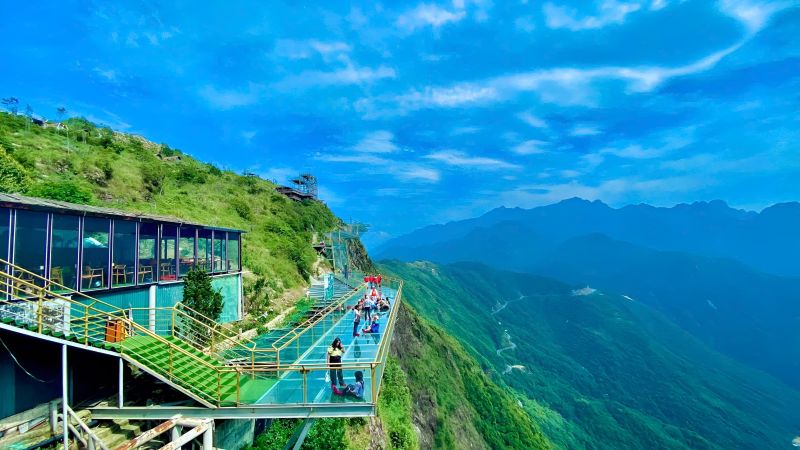
Death Swing (Extreme Swing) — 150,000 VND (~₹525) per turn: The Death Swing at Rong May Glass Bridge is a giant aerial swing launched from the cliff face at the O Quy Ho Pass summit, sending the rider outward over the open valley with no terrain below for the full arc of the swing. The Death Swing ticket price is 150,000 VND at the official counter; some counters add a VAT surcharge that brings the effective price to around 159,000 VND. The Death Swing at Rong May is not suitable for visitors with heart conditions, high blood pressure, or acute vertigo.
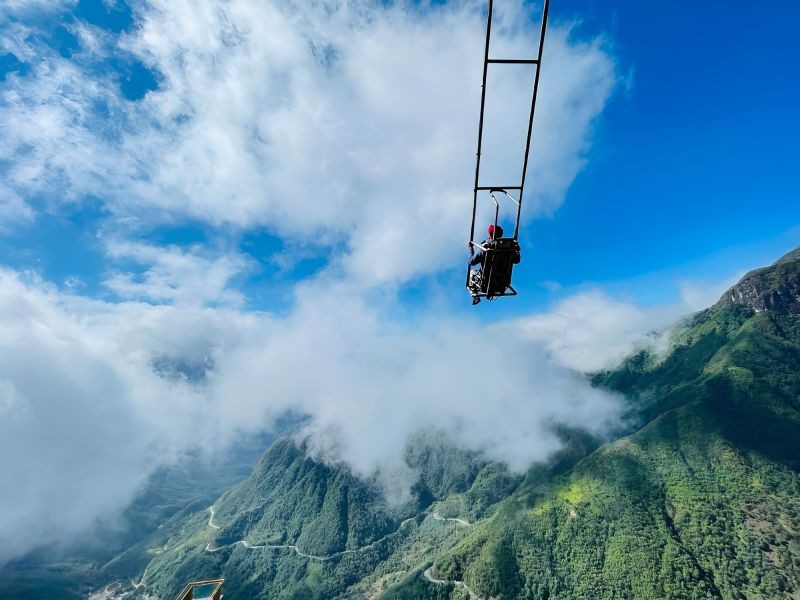
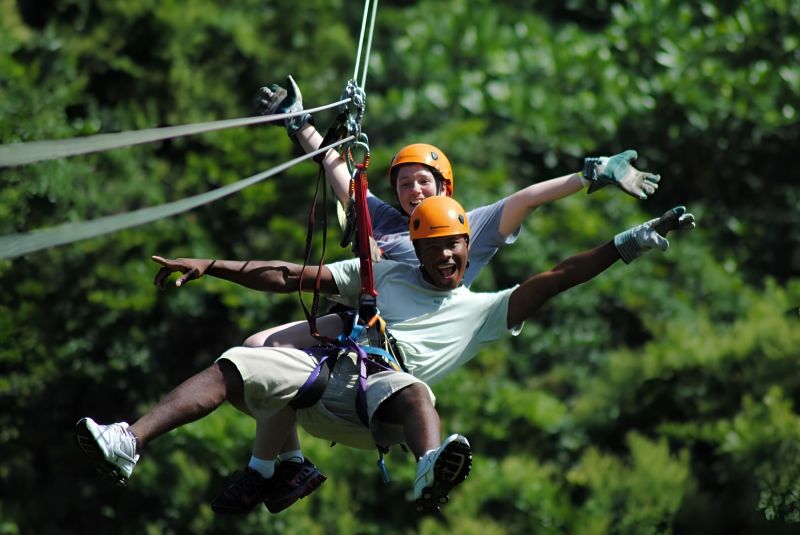
Zipline — 150,000 VND (~₹525) per run: The Rong May zipline system consists of 3 separate cable runs across the valley at an operating speed of 40 km/h. The full zipline experience at Rong May takes 45 minutes including safety briefing, harness fitting, and the 3 individual runs. The Rong May zipline gives Indian tourists a perspective of the O Quy Ho Pass valley that the glass bridge deck alone does not provide — flying above forest canopy and cliff edges rather than standing above them. Minimum height and weight requirements apply and are confirmed at the zipline counter.
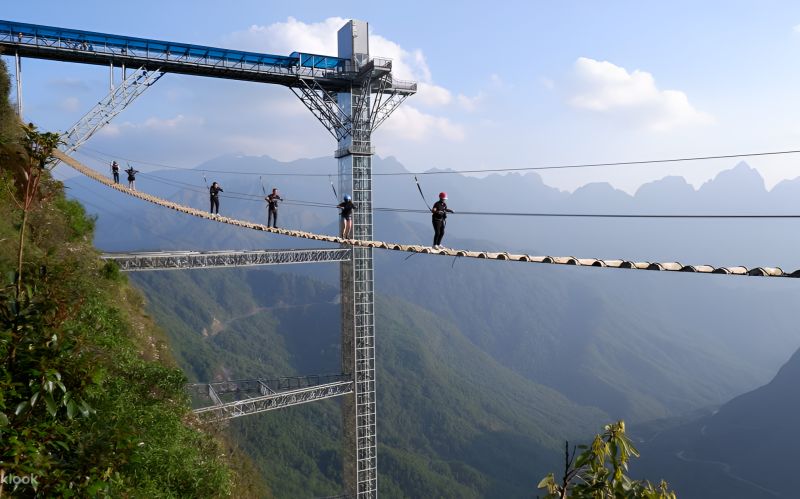
Invisible Bridge / Cloud Walk Suspension Bridge — 150,000 VND (~₹525): The Invisible Bridge at Rong May Glass Bridge is a 200-metre wooden suspension bridge that produces a swaying motion with each step above the forest canopy. The Invisible Bridge at Rong May is less intense than the Death Swing or zipline, but the sustained swaying motion creates a physical sensation that the rigid glass bridge deck does not replicate. The Invisible Bridge is the most family-appropriate paid add-on at Rong May for Indian groups traveling with children aged 8 and above.
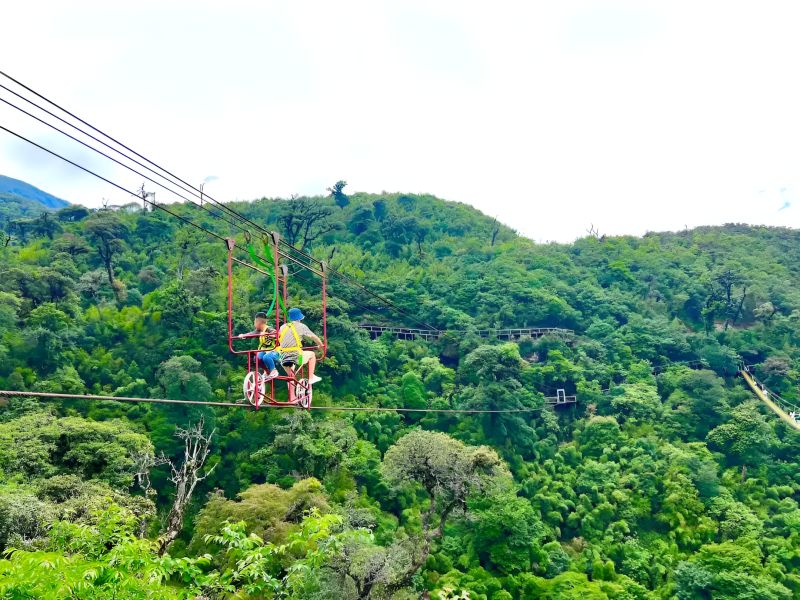
Rope Bike (Sky Bike) — 150,000 VND (~₹525): The Rope Bike at Rong May Glass Bridge is a cable-suspended bicycle that carries the rider above the open valley on a 20-minute circuit. The Rope Bike at Rong May is the most accessible of the 4 paid activities for Indian tourists who want to experience more than the glass skywalk but are uncertain about the intensity of the Death Swing or zipline.
Bungee jumping availability at Rong May Glass Bridge varies by season and operational status — Indian tourists should verify availability at the ticket counter on arrival before purchasing any bungee jumping ticket. When bungee jumping is operational at Rong May Glass Bridge, the price is 1,000,000 VND (~₹3,500) per jump from a platform at over 300 metres altitude. Bungee jumping at Rong May Glass Bridge is not suitable for visitors with heart conditions, hypertension, pregnancy, or spinal injuries. Age, height, and weight minimums for bungee jumping at Rong May are confirmed at the activity counter.
Is Rong May Glass Bridge Worth It for Indian Tourists?
Yes, Rong May Glass Bridge is worth visiting for Indian tourists who already include Sapa in their northern Vietnam itinerary and value altitude views, cloud photography, or adventure activities. The 500,000 VND (~₹1,750) entrance ticket includes the round-trip glass elevator ride — the only outdoor glass elevator in Vietnam — and access to the 60-metre transparent overhang at 2,333 metres above sea level. Indian families combining Rong May Glass Bridge with Fansipan Mountain and Silver Waterfall in a single Sapa day plan report the highest satisfaction in post-visit feedback collected by the Vietnamtour.in Sapa team between 2022 and 2025.
Rong May Glass Bridge is not worth a dedicated trip for Indian tourists who base only in Hanoi without a Sapa overnight, because the round-trip drive from Hanoi exceeds 12 hours and competes against shorter glass-bridge alternatives like Bach Long Glass Bridge in Moc Chau (4–5 hours from Hanoi).
The 5 activities and the worth-it verdict at Rong May Glass Bridge define what Indian tourists can do at the complex — the equally important question for Indian families and senior travelers considering the visit is whether the bridge is structurally and operationally safe.
Is the Rong May Glass Bridge Safe for Indian Tourists?
Yes, Rong May Glass Bridge is safe for Indian travellers. Rong May Glass Bridge has recorded zero serious structural or operational incidents since the bridge opened in November 2019. The safety record of Rong May Glass Bridge is produced by both the engineered specifications of the structure and the daily operational protocols enforced by the on-site management team.
The Rong May Glass Bridge deck is constructed from 3 layers of laminated tempered glass, each 2 cm thick, bonded with a specialised structural adhesive to a combined thickness of 7 cm — a glass thickness 3.5 times greater than a standard automotive windshield. The Rong May bridge steel frame and glass deck assembly is engineered to withstand sustained wind speeds above 100 km/h and carries a maximum operational capacity of 1,200 visitors per hour. The bridge deck is 1.5 metres wide across the full 300-metre circuit, with staff positioned at regular intervals to regulate visitor density during busy periods. Rong May Glass Bridge undergoes daily safety checks before the complex opens at 8:00 AM, and the full structure receives quarterly professional structural inspections.
Shoe cover enforcement at the Rong May Glass Bridge entrance gate has been strict on every visit with no exceptions observed, and the physical challenge for senior Indian travelers aged 65 to 72 has consistently been psychological rather than physical, not related to fitness or mobility — according to Mr. Anthony Ngo, Co-founder of Vietnamtour.in, who has guided Indian tourist groups to Rong May Glass Bridge since 2022.
In 2022, video footage purporting to show cracked glass panels at Rong May Glass Bridge circulated widely on social media. Vietnamese tourism authorities and the Rong May complex management confirmed that the footage did not originate from Rong May Glass Bridge’s main deck, and Rong May Glass Bridge continued regular operations without interruption throughout the period when the footage circulated.
Children from 100 cm to 140 cm in height pay 300,000 VND (~₹1,050) for the standard Rong May Glass Bridge entrance ticket, including the glass elevator. Children under 100 cm enter Rong May Glass Bridge at no charge. Parents must maintain physical contact with children on the glass bridge deck, particularly on the open overhang sections where the 548.5-metre drop to the valley floor is directly visible below the panels. Add-on activities at Rong May Glass Bridge — zipline, Death Swing, and bungee jumping — carry minimum age, height, and weight requirements that are confirmed at each individual activity counter before payment.
Rong May Glass Bridge Photos: 4 Best Spots for Instagram-Worthy Shots
Rong May Glass Bridge is one of the most photogenic locations in Vietnam and requires no editing filter to produce dramatic results. The 4 positions below produce the best outcomes at each stage of the visit.
| # | Spot | Best Time | Tip |
|---|---|---|---|
| 1 | Glass Elevator Ascent | 7:30–8:30 AM | Phone flat against glass to remove reflection |
| 2 | Bridge Centre (4-Way Junction) | 9:00–11:00 AM | Wide-angle for full structure |
| 3 | Death Swing Launch Point | Anytime | Drone footage from left platform |
| 4 | O Quy Ho Pass Viewpoint (100 m from entrance) | 7:00–8:30 AM | Free roadside access |
Spot 1 — Glass Elevator Ascent. The elevator’s transparent walls give a straight-down view of the valley as you rise 305 metres. The optimal 5-to-7-second window is when the elevator passes through the cloud layer — mist wraps the glass and clears almost instantly. Hold your phone horizontally, pressed flat against the glass to eliminate reflection. Best captured between 7:30 and 8:30 AM when cloud layers are lowest.
Spot 2 — Bridge Centre (4-Way Junction). The intersection of the 4 walkway corridors gives a 360-degree unobstructed view of the Hoang Lien Son range. On clear days, Fansipan — Vietnam’s highest peak at 3,143 metres — is visible to the northeast. Wide-angle shots from this position show the full structural geometry of the bridge. Best on clear days between 9:00 and 11:00 AM when direct light enters from the east.
Spot 3 — Death Swing Launch Point. Action shots from the swing capture the full valley perspective as the arc reaches maximum extension. If filming rather than riding, position yourself on the viewing platform to the left of the launch point. Drone footage from this position produces the most complete aerial view of the bridge structure and the pass below.
Spot 4 — O Quy Ho Pass Viewpoint (100 metres from the complex entrance). The only roadside angle where the entire bridge structure — all 4 corridors, the elevator shaft, and the cliff face — is visible in a single frame. Best shot between 7:00 and 8:30 AM when low morning light creates depth layers in the valley mist. This viewpoint is free to access from the roadside.
For drone users: on-site drone photography and videography services are available at 100,000–350,000 VND (~₹350–₹1,225). Check the regulations board at the ticket counter before flying with personal equipment, as airspace rules on O Quy Ho Pass can change.
Fog days and clear days produce equally compelling results with different aesthetics: fog delivers an ethereal, otherworldly atmosphere where the bridge appears suspended in white; clear days deliver the full panoramic scale shot with the Hoang Lien Son range as backdrop. If you have a 2-day window in Sapa, visiting the bridge on both a misty morning and a clear afternoon produces the complete visual range.
The photography section completes the core experiential questions about Rong May. Before moving to planning logistics and the supplementary sections, the one remaining decision most Indian tourists face is how Rong May compares to Vietnam’s other glass bridge — Bach Long in Moc Chau — and whether the extra distance from Hanoi is justified.
Rong May Glass Bridge vs. Bach Long Glass Bridge: Which Should Indian Tourists Choose?
Rong May Glass Bridge in Sapa and Bach Long Glass Bridge in Moc Chau are the 2 most-discussed glass bridges in northern Vietnam for Indian tourists, and the 2 bridges serve fundamentally different traveler priorities.
| Criterion | Rong May Glass Bridge (Sapa) | Bach Long Glass Bridge (Moc Chau) |
|---|---|---|
| Location | O Quy Ho Pass, Lai Chau (17 km from Sapa) | Moc Chau, Son La |
| Altitude above sea level | 2,333 m | ~200 m |
| Drop below deck | 548.5 m | 150 m |
| Bridge length | 300 m (4-corridor circuit) | 632 m (longest in world) |
| Ticket price 2026 (Adult) | 500,000 VND (~₹1,750) | 550,000–650,000 VND (~₹1,925–₹2,275) |
| Distance from Hanoi | ~400 km (6–7 h drive) | ~180 km (4–5 h drive) |
| Glass elevator | Yes (305 m, round trip) | No |
| Adventure add-ons | 4 (zipline, death swing, rope bike, suspension) | None |
| Best for | Altitude + cloud photography + adventure | World-record length + shorter drive |
One key update for 2026: Bach Long Glass Bridge’s ticket has risen to 550,000–650,000 VND — the price advantage Bach Long previously held over Rong May no longer exists. Indian tourists who prioritise altitude, cloud photography, and adventure add-ons should choose Rong May Glass Bridge. Indian tourists who prioritise the world’s longest glass walkway and a shorter drive from Hanoi should choose Bach Long Glass Bridge.
Rong May Glass Bridge Travel Tips for Indian Tourists: 7 Things to Know Before Going
The 7 tips below address the preparation gaps most consistently reported by Indian tourists after visiting Rong May Glass Bridge, based on post-visit feedback collected by the Vietnamtour.in Sapa team between 2022 and 2025.
Tip 1 — Carry VND cash for all add-on activity payments. All 4 paid activity counters at Rong May Glass Bridge require VND cash; card terminals are frequently offline. Indian tourists should withdraw enough VND in Sapa town to cover 4 activities at 150,000 VND each, totalling 600,000 VND (~₹2,100) per person beyond the entrance ticket.
Tip 2 — Dress for O Quy Ho Pass temperature, not Sapa town temperature. O Quy Ho Pass at Rong May Glass Bridge runs 3 to 5°C colder than the Sapa town centre at the same hour. Closed-toe shoes are mandatory at the entrance gate — sandals and open-toed footwear are not permitted on the glass deck. Indian tourists should carry a jacket regardless of the month, because the wind on the 60-metre overhang amplifies the ambient cold significantly.
Tip 3 — Book the main ticket online the night before. The Rong May Glass Bridge e-ticket at vecaukinhrongmay.com or Klook costs 20,000 to 50,000 VND less than the walk-up counter price and bypasses the queue, which runs 20 to 30 minutes during peak November and December weekends.
Tip 4 — Use the 50,000 VND meal voucher for a hot drink, not a meal. The 500,000 VND entrance ticket includes a 50,000 VND meal voucher redeemable at the on-site restaurant. Food prices inside the Rong May complex are substantially higher than in Sapa town — Indian tourists should eat a full meal in Sapa before departure and save the voucher for a hot tea or coffee at the summit.
Tip 5 — Check O Quy Ho Pass weather specifically, not the Sapa town forecast. The weather on O Quy Ho Pass diverges significantly from the Sapa town forecast on overcast days. Indian tourists who arrive to find the pass in thick fog should drive 5 minutes to Silver Waterfall first and return to Rong May Glass Bridge between 10:00 and 11:00 AM, when the pass fog most consistently clears on non-rain days.
Tip 6 — Take motion sickness medication 30 minutes before leaving Sapa town. National Highway 4D between Sapa town and Rong May Glass Bridge is 17 km of continuous mountain switchback with no straight sections. Indian tourists from flat-terrain cities — Delhi, Mumbai, Chennai, Hyderabad, and Bangalore — frequently experience car sickness on this road even at moderate speed.
Tip 7 — Confirm a round-trip taxi fare from Sapa before departure. Indian tourists should confirm a round-trip fare of 250,000–400,000 VND (~₹875–₹1,400) one way and instruct the driver to wait at the complex parking area for 2 to 3 hours. Return taxis from O Quy Ho Pass are difficult to source independently, and ride-hailing apps function poorly at the signal conditions on the pass.
Sapa Town: Base Camp for Your Rong May Glass Bridge Day Trip
Sapa town is the logistical base for every Rong May Glass Bridge visit — the overnight accommodation hub, the transport departure point, and the restaurant centre for the O Quy Ho Pass area. Rong May Glass Bridge sits 17 km from the Sapa town centre along National Highway 4D.
Sapa town sits at 1,640 metres above sea level, with a climate that Indian tourists consistently compare to Shimla and Darjeeling. Sapa town’s restaurant scene includes Indian-cuisine options with dedicated vegetarian and Jain menus — a practical advantage unavailable at most highland destinations in Southeast Asia.
Indian tourists visiting Rong May Glass Bridge typically stay 3 to 4 nights in Sapa to combine the glass bridge with Fansipan Mountain by cable car and Bac Ha Sunday Market. The Sapa tour packages for Indian tourists at Vietnamtour.in cover all 3 attractions in a single pre-confirmed booking with vegetarian meals and English-speaking guides throughout.
3 Attractions to Combine with Rong May Glass Bridge on the Same Day
Rong May Glass Bridge sits on National Highway 4D between Sapa town and O Quy Ho Pass summit, a route that passes 3 additional attractions within 5 minutes of the bridge complex. Indian tourists who structure the day as a full National Highway 4D itinerary can visit all 3 stops without significantly extending the return drive to Sapa.
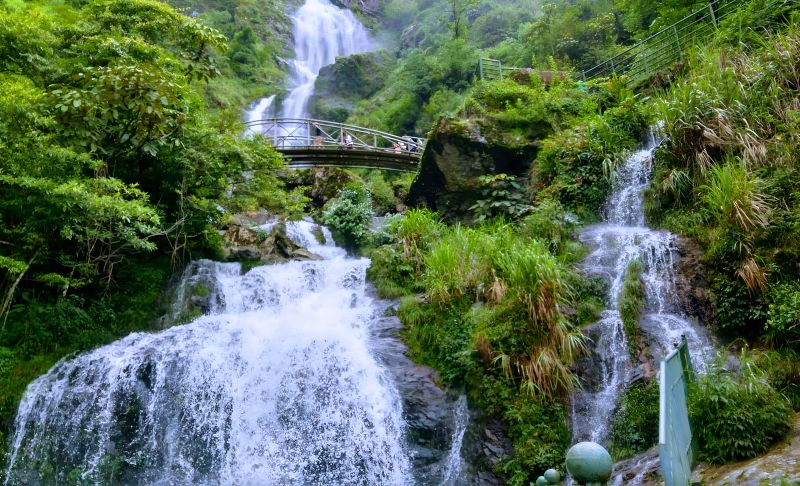
Silver Waterfall (Thac Bac) — 5 minutes from Rong May Glass Bridge. Silver Waterfall descends 200 metres down the O Quy Ho cliff face and requires a 10-minute flat walk from the roadside car park. Entrance fee is 40,000 VND (~₹140) per adult. Indian tourists who visit Silver Waterfall first on heavily fogged mornings and return to Rong May at 10:00 to 11:00 AM consistently report clearer bridge conditions on arrival.
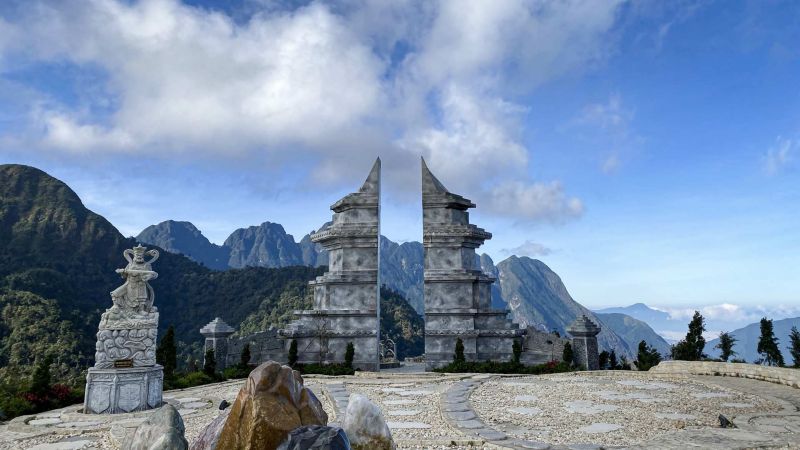
O Quy Ho Heaven’s Gate — 3 minutes from Rong May Glass Bridge. O Quy Ho Heaven’s Gate is the highest road-accessible viewpoint on the pass at 1,900 metres, offering a simultaneous panoramic view across both the Lao Cai and Lai Chau valley sides. Accessible from National Highway 4D at no charge.
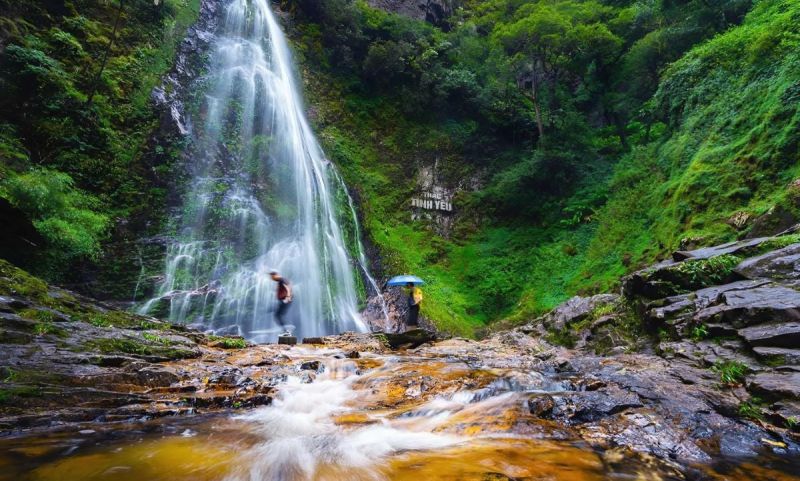
Love Waterfall (Thac Tinh Yeu) — 3 km from Sapa town. Love Waterfall is a 100-metre tiered waterfall set within pine forest on National Highway 4D — a natural final stop on the return from Rong May Glass Bridge. Entrance fee is 80,000 VND (~₹280) per adult.
For Indian tourists visiting Cat Cat Village in the same Sapa itinerary, the village is best paired with Rong May Glass Bridge on a 2-day plan — Cat Cat in the morning of day 1, Rong May on the morning of day 2 when O Quy Ho Pass fog conditions are most predictable.
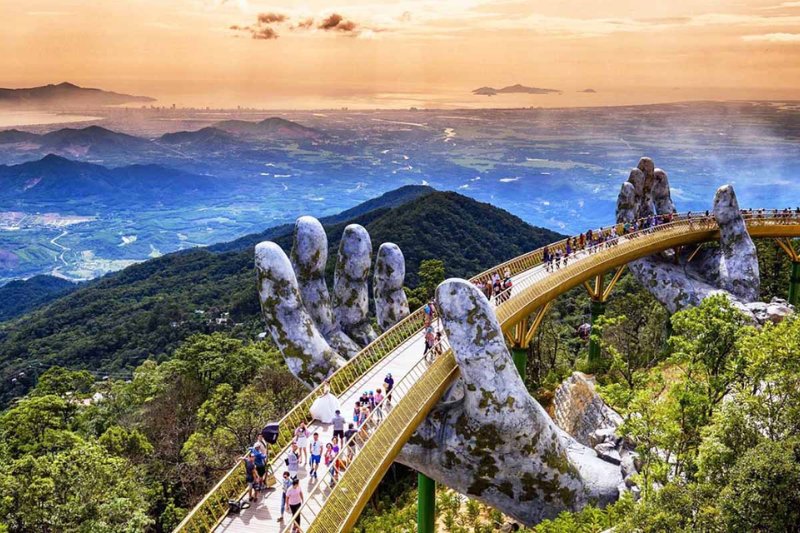
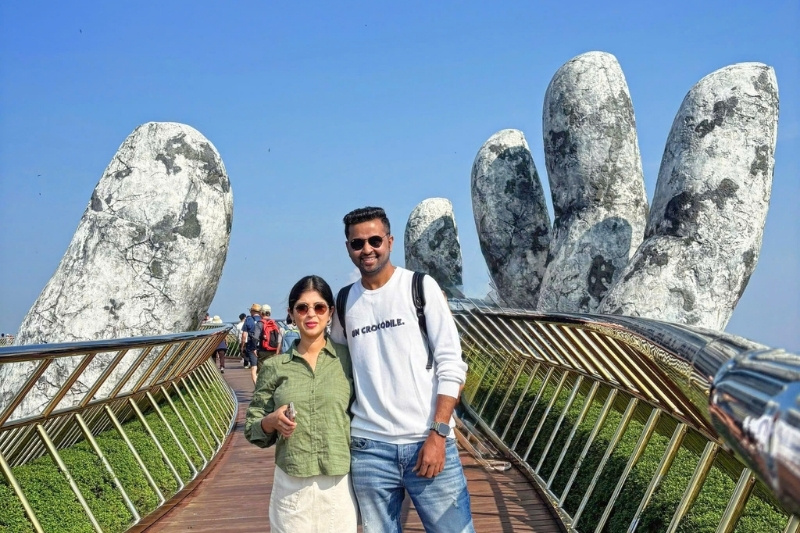
Indian tourists combining Sapa with Da Nang in a single Vietnam itinerary can add the Golden Bridge at Ba Na Hills via the Ba Na Hills day tour from Da Nang — architecturally distinct from Rong May Glass Bridge and accessible without mountain driving.
Is the Rong May Glass Bridge Suitable for Senior Indian Travelers and Families with Young Children?
Yes. Rong May Glass Bridge is suitable for senior Indian travelers and families with young children, provided the visit excludes high-intensity add-on activities. The glass elevator carries all visitors from ground level to the bridge deck without stair climbing or exposed outdoor walking. The bridge deck is flat across the full 300-metre circuit, hand-railed throughout, and shoe covers at the entrance gate reduce slip risk on the glass panels.
Senior Indian travelers aged 65 to 72 have completed the Rong May Glass Bridge skywalk via the elevator without physical difficulty on multiple group visits — the challenge at Rong May Glass Bridge is psychological, not physical — according to Mr. Max Nguyen, Director of Sales at Vietnamtour.in.
Children from 100 cm to 140 cm pay 300,000 VND (~₹1,050), and children under 100 cm go free to the Rong May Glass Bridge. Parents must maintain physical contact with children on the open overhang sections. The Invisible Bridge is the most family-appropriate paid add-on for children aged 8 and above.