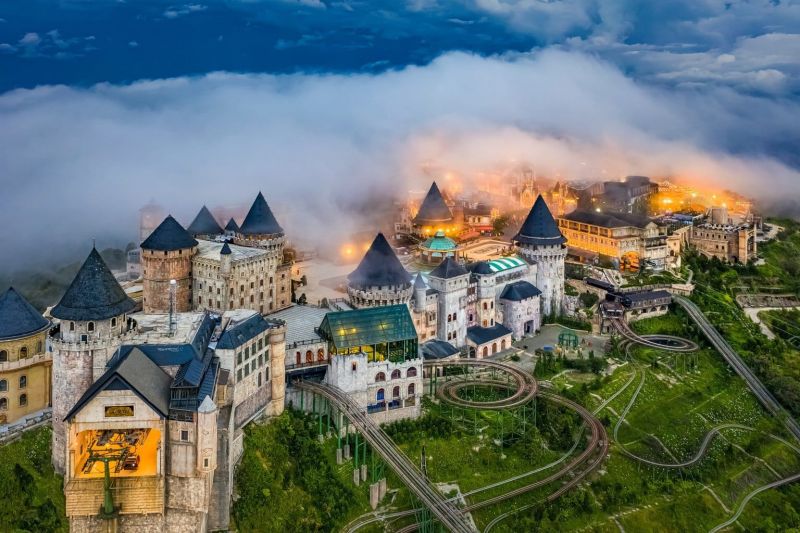

Ba Na Hills is a mountain resort at 1,487 m (4,879 ft) elevation above Da Nang, where summit temperatures run 10–15°C cooler than the city below — making Ba Na Hills the closest Central Vietnam equivalent to Ooty or Munnar for Indian tourists seeking a cool-climate escape from coastal heat. This guide covers Ba Na Hills ticket prices in INR, opening hours, the Golden Bridge, best photography spots, the Worth Visiting verdict, the French Village, Fantasy Park, the cable car, weather by season, how to reach Ba Na Hills from Da Nang and Hoi An, and the best months to visit.
Key facts for Indian tourists planning a Ba Na Hills visit: adult admission costs ₹3,508 (1,000,000 VND); Ba Na Hills opens at 8:00 AM daily; the cable car is the only way to reach the summit; a full visit takes 6–8 hours; and from January 2026, all Ba Na Hills tickets are valid for 3 consecutive days.
Ba Na Hills Ticket Price for Indian Tourists in 2026
Ba Na Hills admission costs ₹3,508 (1,000,000 VND) per adult and ₹2,807 (800,000 VND) per child between 1 m and 1.4 m tall — children under 1 m enter Ba Na Hills free of charge. Unlike Indian parks like Imagica, Ba Na Hills uses height-based pricing rather than age bands. The standard Ba Na Hills ticket includes round-trip cable car travel, Golden Bridge access, Fantasy Park rides, and entry to the French Village.
Ba Na Hills applies height-based pricing, not age-based pricing — any visitor 1.4 m and above pays the adult rate regardless of age. Indian amusement parks, including Imagica and Wonderla, use age bands; Ba Na Hills does not. Measure children’s height before purchasing to select the correct ticket tier.
The Ba Na Hills standard ticket includes a round-trip cable car, Golden Bridge access, the French Village, Debay Wine Cellar entry, Le Jardin d’Amour gardens, most Fantasy Park rides, and the funicular train between zones. The Ba Na Hills standard ticket excludes the Alpine Coaster, prize games, and select premium Fantasy Park experiences. Unlike Imagica or Wonderla, where rides are à la carte, Ba Na Hills bundles most experiences into the entry price — making the ₹3,508 adult ticket a strong value for a 6–8 hour day.
The Lunch Buffet Combo at 1,300,000 VND (₹4,643) adds a seated buffet at the Four Seasons Restaurant, with seatings at 10:30 AM–12:00 PM or 12:30–3:00 PM. Vegetarian food options at the Four Seasons Restaurant are covered in the French Village section below.
Critical 2026 policy: From 1 January 2026, all Ba Na Hills cable car tickets are valid for 3 consecutive days — not a single day. Indian tourists staying in Hoi An can visit Ba Na Hills on Day 1 and return on Day 2 at no additional cost, making the ₹3,508 ticket one of the best-value multi-day passes in Central Vietnam.
The WOW Pass Silver adds skip-the-line cable car access; WOW Pass Gold adds skip-the-line access plus restaurant and game credits inside Fantasy Park. Both WOW Pass options are worth considering during peak Indian travel periods — Diwali, Christmas, and Holi — when Ba Na Hills cable car queues are longest.
Purchase Ba Na Hills tickets online at booking.sunworld.vn — the ticket line at the Ba Na Hills gate adds 45–60 minutes on peak days. Buy 1–2 days in advance to avoid the queue entirely.
Ba Na Hills Opening Hours and Operating Schedule
Ba Na Hills is open every day from 8:00 AM to 10:00 PM — no weekly closures and no seasonal shutdown. Officially branded Sun World Ba Na Hills, the resort operates a year-round schedule.
Ba Na Hills operates 2 entry sessions. The Day Session runs from 8:00 AM to 10:00 PM on a standard ticket. The Night Combo runs from 3:00 PM to 10:00 PM at a lower price point, suited to visitors who want the sunset and evening lighting on the Golden Bridge without a full-day visit.
Peak crowd hours at Ba Na Hills are 10:00 AM to 3:00 PM daily, with Friday and Saturday the busiest days of the week. Indian tourists should arrive at Ba Na Hills by 8:30 AM to board the first cable car and reach the Golden Bridge before queue lines build at the stone hands. The last cable car ascending for day-session guests departs at 5:00 PM.
Fantasy Park inside Ba Na Hills operates from 8:00 AM to 5:00 PM — a tighter window than the overall park schedule. Indian families with children should prioritise Fantasy Park between 8:00 and 11:00 AM before moving to the Golden Bridge and French Village after lunch.
The Golden Bridge at Ba Na Hills
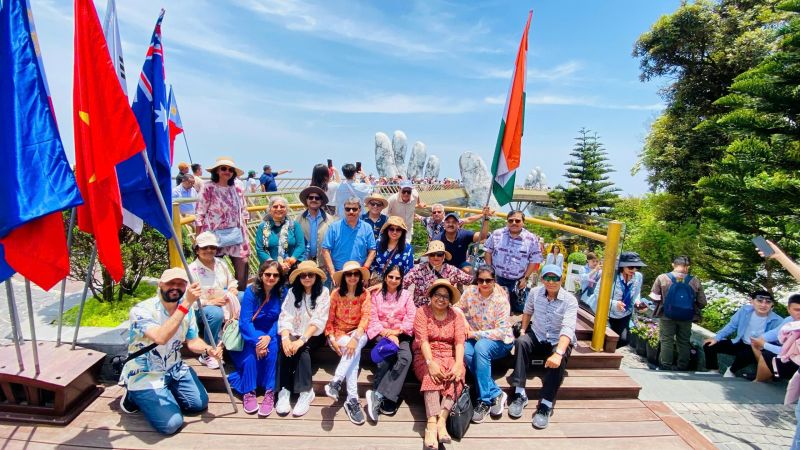
The Golden Bridge is a 150-metre pedestrian walkway held aloft by two giant stone hands at 1,400 m (4,593 ft) elevation. The Golden Bridge is consistently ranked as the No.1 most photographed and most shared experience in Vietnam by Indian travellers, especially among couples and first-time visitors.
The Golden Bridge appears to float above a sea of clouds, with hands sculpted to look ancient and mossy as if emerging from the mountain itself. The golden railings contrast against the green forest below and the blue sky above — a visual combination that has no equivalent in India. The Ghats at Rishikesh run through river gorges; the Golden Bridge runs above clouds, giving Indian visitors a horizontal suspended landscape that Indian hill stations do not replicate.
The best time to photograph the Golden Bridge is between 8:00 and 9:30 AM, when morning fog drifts beneath the Golden Bridge. By midday, cloud cover typically burns off, and the atmospheric mist disappears. Use portrait mode to frame the stone hands up close; switch to wide-angle to capture the full valley drop below. The most viral angle — used consistently by Indian travel creators on Instagram Reels — is standing at the far end of the Golden Bridge and shooting back toward the stone hands with the valley behind as a backdrop.
The Golden Bridge is included in the standard Ba Na Hills ticket with no separate charge. Photography queues at the stone hands peak between 10:00 AM and 2:00 PM — arriving before 9:00 AM eliminates queue time.
Best Photography Spots in Ba Na Hills
Ba Na Hills has 5 best photography spots, each producing a different type of image at a different time of day: the Golden Bridge far end, the Golden Bridge midpoint, Linh Ung Pagoda area, Le Jardin d’Amour terraces, and the cable car gondola during ascent.
- The Golden Bridge far end faces back toward the stone hands — the widest composition available, best captured between 8:00 and 9:00 AM with morning fog filling the valley below the Golden Bridge walkway.
- The Golden Bridge midpoint captures both stone hands symmetrically in one frame — most effective between 8:00 and 9:00 AM before crowds fill the walkway and before morning fog dissipates.
- The Linh Ung Pagoda area near the Lunar Castle offers dramatic stone temple architecture set against the open sky — the least crowded photography location on the Ba Na Hills summit before 9:30 AM.
- The Le Jardin d’Amour garden terraces provide elevated views back toward the French Village facades — best in late afternoon light between 3:00 and 5:00 PM for couples and family portraits of European-style architecture.
- The cable car gondola during ascent allows downward photography of forest canopy and valley — shoot within the first 10 minutes of the cable car ascent before the gondola enters cloud level on the upper section of the Thác Tóc Tiên – L’Indochine line (Line 3).
Night Combo visitors find the Golden Bridge under warm artificial lighting — a completely different visual mood from daytime fog photography, with near-zero light pollution at Ba Na Hills elevation creating clear night sky conditions above the Golden Bridge walkway.
French Village at Ba Na Hills
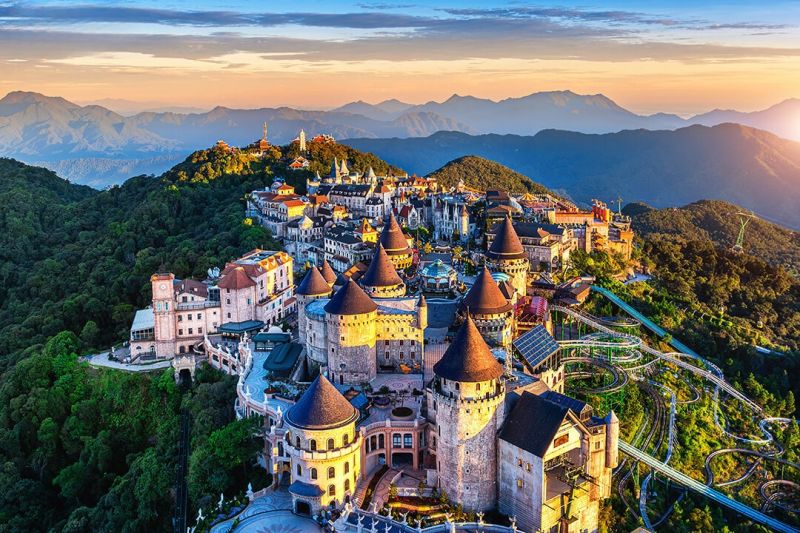
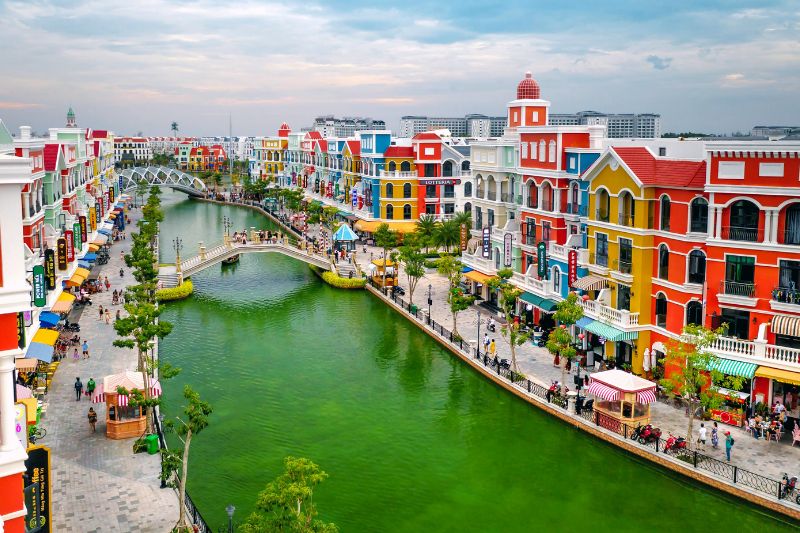
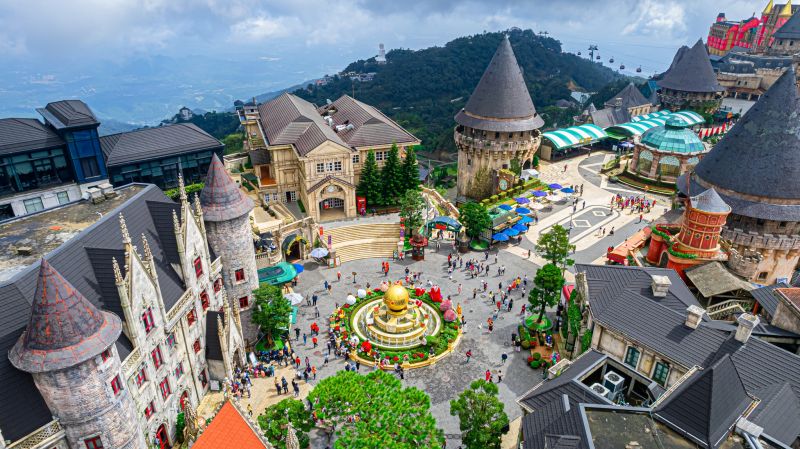
The French Village at Ba Na Hills is a full-scale replica of a French medieval hilltop town containing the main restaurants, Debay Wine Cellar, Le Jardin d’Amour gardens, a replica cathedral, cobblestone squares, and the Lunar Castle — all included in the standard Ba Na Hills ticket.
Ba Na Hills was originally developed as a hill station by French colonists beginning in 1919 as a cool-climate retreat from Da Nang’s coastal heat, driven by the same cool-climate motivation that led the British to build Shimla and Ooty in India. Sun Group recreated this colonial aesthetic at scale when redeveloping Ba Na Hills after 2010, resulting in the French Village as it stands today. For Indian tourists familiar with Shimla’s colonial Mall Road or Pondicherry’s French Quarter, the French Village at Ba Na Hills feels immediately legible — cobblestone lanes, arched doorways, and stone facades — but amplified to theme-park scale with mountain fog rolling through the streets as a backdrop.
The French Village at Ba Na Hills rewards a minimum of 1.5 to 2 hours — walk the cobblestone main square, photograph the cathedral facade from the square’s opposite end, eat lunch at the Four Seasons Restaurant, and walk the Le Jardin d’Amour garden terraces before moving to Fantasy Park.
Debay Wine Cellar at Ba Na Hills
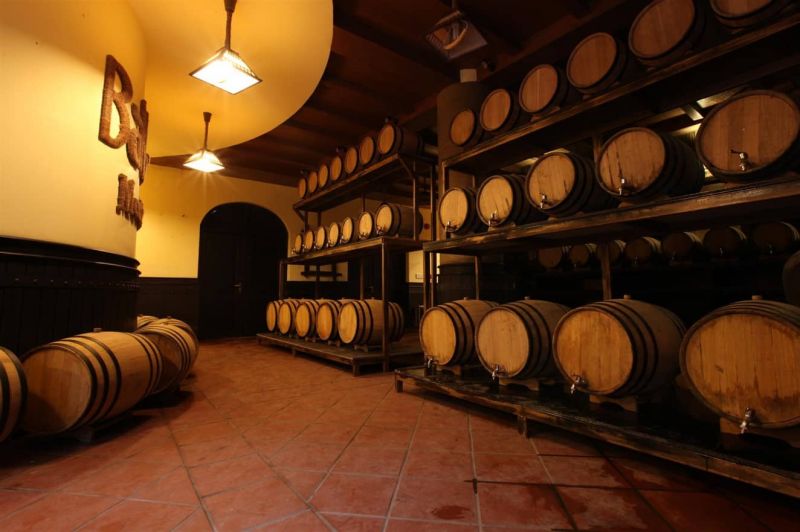
The Debay Wine Cellar is a stone tunnel carved into the Ba Na Hills mountainside in 1923 and now serves as a wine tasting venue and atmospheric walkthrough experience inside the French Village zone — a separate add-on ticket costs 100,000 VND (~₹360) per adult.
The Debay Wine Cellar interior runs at a constant 16–18°C — noticeably cooler than the Ba Na Hills summit air outside. Stone-lined arched walls, wine racks, dim warm lighting, and French colonial artifacts line the 30-minute walkthrough route. Non-alcoholic beverages are also served inside the Debay Wine Cellar, making the experience suitable for teetotallers. For Indian tourists, stepping from the mountain air into a cool stone tunnel at 1,400 m elevation is the primary draw — the architectural and temperature experience rather than the wine itself.
Le Jardin d’Amour
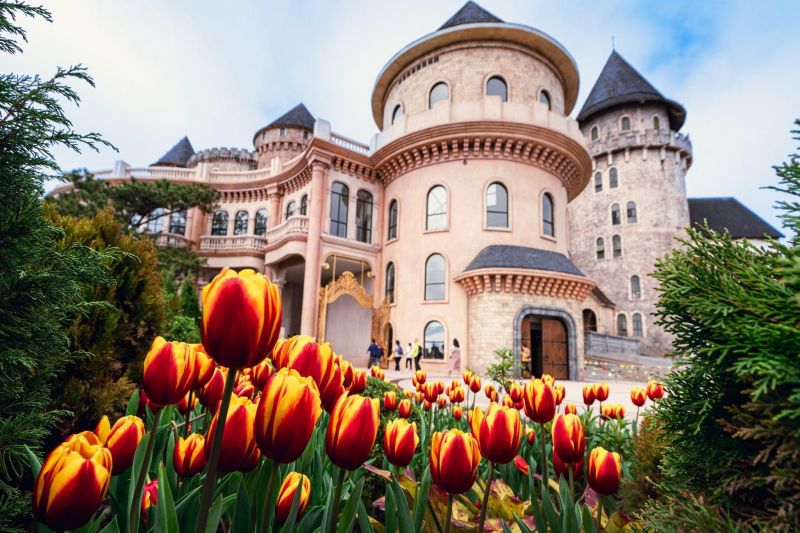
Le Jardin d’Amour is a 9-zone terraced garden complex inside the French Village at Ba Na Hills, featuring rose gardens, water features, topiary, and mountain views — included in the standard Ba Na Hills ticket.
Each of the 9 zones in Le Jardin d’Amour carries a distinct themed name and planting scheme. Walking all 9 zones takes 45–60 minutes at a relaxed pace. The elevated terrace view back toward the French Village facades makes Ba Na Hills look most like a genuine European hilltop town rather than a constructed replica — the best angle for French Village photography at any time of day.
The best season for Le Jardin d’Amour is February to April, when flowers across all 9 garden zones are in peak bloom. This window aligns directly with Holi season travel from India, making February and March the optimal months for Indian tourists who want both Golden Bridge photography and garden colour in a single Ba Na Hills visit.
Fantasy Park
Fantasy Park is Asia’s largest indoor amusement park by ride count — entirely enclosed and weatherproof, operating from 8:00 AM to 5:00 PM daily inside the Lunar Castle at Ba Na Hills.
Fantasy Park’s fully enclosed weatherproof format makes Ba Na Hills the essential destination on foggy or rainy days, and a core attraction in its own right for Indian families. For Indian families, Ba Na Hills is the only destination in Central Vietnam where children and adults are equally engaged — adults at the Golden Bridge and French Village, children inside Fantasy Park — making Ba Na Hills a genuinely unanimous family choice rather than a compromise between adult and child interests.
Most Fantasy Park rides — over 80 of the 100+ attractions — are included in the standard Ba Na Hills cable car ticket. The Alpine Coaster, prize-arcade games, and a small set of premium VR pods are paid add-ons. The WOW Pass Gold adds game credits inside Fantasy Park for Indian tourists who want to extend arcade time beyond the standard Ba Na Hills ticket game credits. Fantasy Park is appropriate for children from 1 m tall; height requirements are posted at each attraction entrance.
Fantasy Park Rides and Indoor Attractions
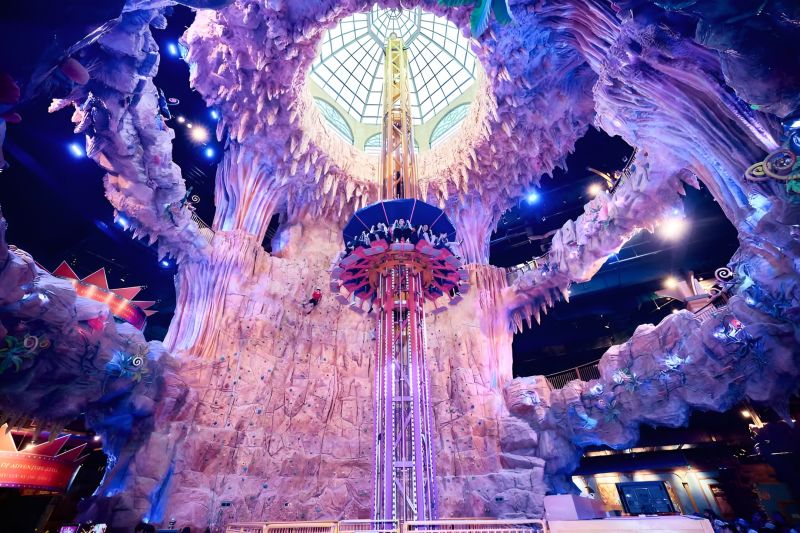
Fantasy Park at Ba Na Hills contains over 100 rides and games across 4D cinema, virtual reality, bumper cars, drop towers, carousels, arcade games, and indoor roller coasters — all under one roof inside the Lunar Castle.
For Indian teenagers and adults, the priority rides are the drop tower, indoor roller coasters, and VR experiences. For younger children of 1 m tall, the carousels, family coasters, and gentle indoor attractions provide a full morning of activity. Arcade and prize games — available at an additional cost — suit all ages and fill time between major rides.
With 9 hours of Fantasy Park time available from 8:00 AM to 5:00 PM, Indian families can cover all priority rides before the 11:00 AM lunch crowd without rushing. Locate the Fantasy Park map at the cable car exit and plan a ride route before entering — the multi-floor layout inside the Lunar Castle is not intuitive on a first visit.
Alpine Coaster
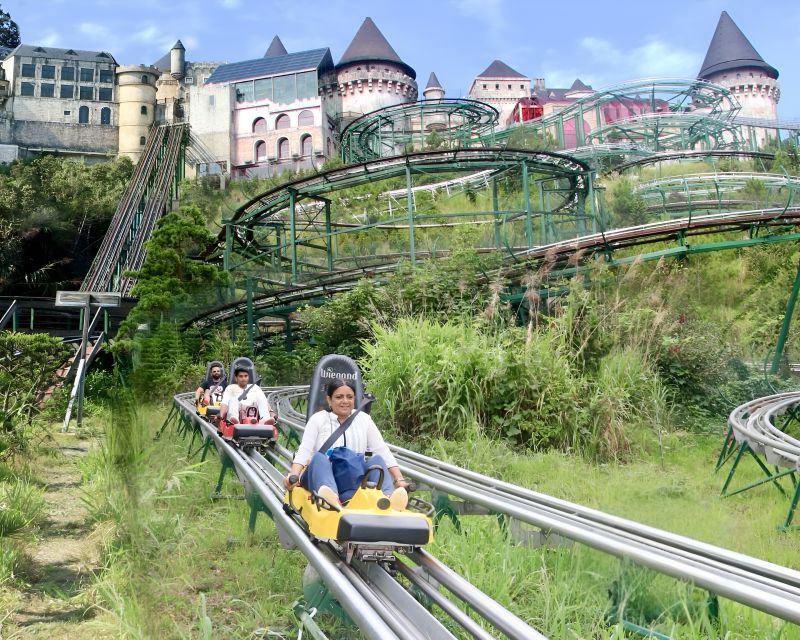
The Alpine Coaster at Ba Na Hills is a single-rail mountain coaster descending 410 metres down the hillside — a paid add-on at approximately 95,000 VND (₹339) per ride during peak hours, with a lower Golden Hour price between 4:30 and 5:30 PM.
The Alpine Coaster operates across 2 time slots: Golden Hour (4:30–5:30 PM) at a reduced rate, and Peak Hours (8:30 AM–4:30 PM) at the full Alpine Coaster rate. The experience is comparable to a ski-slope luge, but set in tropical mountain forest — nothing equivalent exists anywhere in India, making the Alpine Coaster a genuine novelty for Indian visitors. The Alpine Coaster is recommended for Indian teenagers and adults; a minimum height requirement applies — verify the current requirement on booking.sunworld.vn before visiting.
Ba Na Hills Cable Car
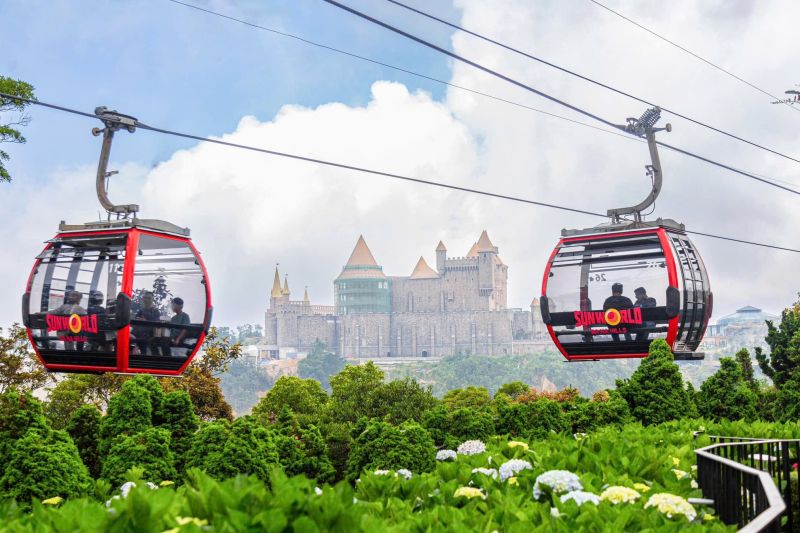
The Ba Na Hills cable car is the only way to reach the summit — the standard entry ticket includes a round-trip ride, and no road access exists for visitors.
The Thác Tóc Tiên – L’Indochine line (Line 3) is the main cable car route at Ba Na Hills, spanning 5,771 m (18,936 ft) from the base station to the summit. Ba Na Hills cable car lines have held multiple Guinness World Records, including longest non-stop single-track cable car, greatest difference in elevation on a cable car system, and most cabins on a single cable car line — verify current record status on sunworld.vn, as Guinness records are periodically updated.
The Ba Na Hills cable car journey from base to summit takes approximately 20 minutes. Each Ba Na Hills cable car gondola holds 8 passengers with floor-to-ceiling glass panels on all sides. Forest canopy passes close below during the first half of the Thác Tóc Tiên – L’Indochine line (Line 3) ascent; mist drifts through the cable car gondola window as elevation increases; temperature drops noticeably in the final minutes before the Ba Na Hills summit station. The Ba Na Hills cable car ascent is more immersive than the Gulmarg gondola or Nainital ropeway — the sheer forest density and elevation change across 5,771 m has no direct Indian equivalent.
The first Ba Na Hills cable car departs at 8:00 AM. The last upward Ba Na Hills cable car for day-session guests departs at 5:00 PM. The last downward Ba Na Hills cable car runs at approximately 10:00 PM. Ba Na Hills cable car gondola doors close automatically — no standing during the cable car ride; luggage must fit under the seat; strollers are permitted if folded flat.
Ba Na Hills Weather and Temperature
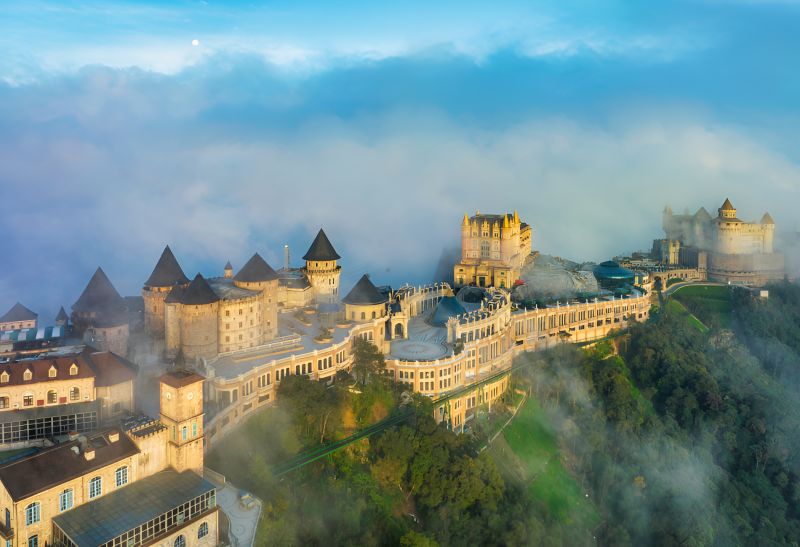
At 1,487 m elevation, Ba Na Hills runs 10–15°C cooler than Da Nang city at all times of year — while Da Nang sits at 28–35°C on the coast, the Ba Na Hills summit typically runs 15–25°C, with temperatures below 18°C common between November and February.
The same packing list that works for a Da Nang beach trip is inadequate for Ba Na Hills. A light jacket or windbreaker is mandatory at the summit regardless of the season. Jeans or trousers are more comfortable than shorts at Ba Na Hills elevation; layers allow adjustment as Indian tourists move between the cool outdoors, the heated interiors of Fantasy Park, and the Debay Wine Cellar tunnel. The packing logic is identical to preparing for Manali or Shimla in the shoulder season.
Summit temperature by season (Ba Na Hills only):
- October–November (Diwali season): 18–22°C, fog and possible light drizzle. Atmospheric Golden Bridge photography window.
- December–January (Christmas, New Year): 15–18°C — the coldest window of the year. Pack a proper jacket. Christmas decorations across the cathedral square, Lunar Castle facade, Le Jardin d’Amour entrance, and French Village main square create the most festive atmosphere of the year.
- February–March (Holi, spring break): 18–22°C, clear skies, Le Jardin d’Amour’s 9 garden zones in peak bloom. The best overall weather window.
- April–June (summer holidays, Tamil New Year): 22–26°C, clear and comfortable. Da Nang beaches at their best simultaneously.
- July–September (rainy season): Heaviest fog and rain of the year. Golden Bridge outdoor visibility limited; Fantasy Park’s enclosed format carries the experience.
How to Get to Ba Na Hills from Da Nang
Ba Na Hills is located 40 km west of Da Nang city centre — approximately 45 to 50 minutes by road — and no public bus service connects Da Nang to Ba Na Hills; Indian tourists travel by private car, Grab, or booked tour.
The Ba Na Hills mountain highway includes hairpin bends in the final 10 km of the ascent. Indian tourists susceptible to motion sickness should request the front seat of the transfer vehicle and avoid reading or using a phone during the Ba Na Hills mountain highway section of the drive.
A booked shared group tour from Da Nang to Ba Na Hills costs approximately 1,340,000 VND (₹4,820) per person and includes round-trip transfer plus Ba Na Hills entry ticket and guide assistance.
Ba Na Hills Package from Da Nang
A standard Da Nang–Ba Na Hills day package from an Indian operator includes hotel pickup, round-trip AC transfer, Ba Na Hills entry ticket, English-speaking guide or assistant, and hotel drop-off by 6:00–7:00 PM.
The Lunch Buffet Combo add-on is worth including for Indian families visiting Ba Na Hills — the Four Seasons Restaurant buffet removes the need to navigate food options independently. Price expectations for an Indian-operated Ba Na Hills tour from Da Nang run from 1,340,000 VND (₹4,820) per adult all-inclusive; premium private options run 4,200,000–4,760,000 VND (₹15,000–₹17,000) per person.
Indian tourists who want to understand the full logistics of the Da Nang to Ba Na Hills route — including departure timing, intermediate stops, and what the mountain drive involves — should read the dedicated Da Nang to Ba Na Hills guide before booking.
Getting to Ba Na Hills by Grab — Self-Arranged Option
Grab to Ba Na Hills costs approximately 300,000–400,000 VND (₹1,080–₹1,440) one way for independent Indian travellers — the ride takes 45 to 50 minutes from Da Nang city centre.
Set the Grab destination as “Sun World Ba Na Hills cable car station” — entering “Ba Na Hills” alone causes some Grab drivers to default to a secondary Ba Na Hills entry gate rather than the cable car base station. Book a return Grab from inside the Ba Na Hills park on arrival rather than asking the driver to wait — waiting fees on a 6–8 hour visit add significantly to the total cost.
The self-arranged Grab option saves approximately 550,000–1,110,000 VND (₹2,000–₹4,000) per person compared to a booked tour but comes without hotel pickup, guide assistance, or ticket inclusion. Grab to Ba Na Hills suits Indian solo travellers and couples who can comfortably navigate independently. The Grab option is not recommended for Indian families with young children or first-time Vietnam visitors unfamiliar with the Ba Na Hills zone layout.
Ba Na Hills Tour from Hoi An
A Ba Na Hills tour from Hoi An works as a comfortable full-day trip — 60 km / 75–90 minutes each way by road — and is one of the most frequently booked day trips by Indian tourists staying in Hoi An.
A Ba Na Hills full-day tour with pickup from Hoi An costs from 1,590,000 VND (₹5,679) per person for an Indian-operated group tour. The standard itinerary for Hoi An-based Indian tourists runs as follows: depart Hoi An at 7:00–7:30 AM, arrive at the Ba Na Hills base station by 9:00–9:30 AM, complete a full Ba Na Hills visit from 9:30 AM to 4:30 PM (7 hours on the mountain), and return to Hoi An by 6:30–7:00 PM.
Many Hoi An-based Ba Na Hills tours include a Marble Mountains stop on the return leg — adding approximately 1.5 hours to the day and covering a second major Central Vietnam attraction without a separate trip. The Marble Mountains sit directly on the return route between Ba Na Hills and Hoi An, making the Ba Na Hills and Marble Mountains combination logical and efficient on a single day.
The Hoi An–Ba Na Hills tour costs 250,000 VND (₹893) more than the equivalent Da Nang tour due to the greater transfer distance — this premium is standard and reasonable given the additional 40 minutes of driving each way.
Da Nang functions as the regional transport hub for Central Vietnam, connecting Ba Na Hills, the Marble Mountains, Hoi An, and Hue within a 90-minute radius. Indian tourists planning the full Central Vietnam circuit should read the Da Nang guide for itinerary frameworks covering multi-day stays in the region.
Best Time to Visit Ba Na Hills for Indian Tourists
The best months for Indian tourists to visit Ba Na Hills are February, March, and April — clear skies, summit temperatures of 18–24°C, and Le Jardin d’Amour’s 9 garden zones in full bloom.
- February–March (Holi, February school holidays): The best overall window — clear summit views for Golden Bridge photography, all 9 garden zones blooming simultaneously, comfortable temperatures.
- April–June (summer holidays, Tamil New Year): Excellent conditions — slightly warmer at the summit but still comfortable. Combine with Da Nang beach mornings.
- October–November (Diwali): Mist and fog create the most atmospheric Golden Bridge photographs of the year. Book tickets 3–5 days in advance during Diwali week.
- December–January (Christmas, New Year): Coldest window at 15–18°C. French Village Christmas decorations make this the most festive month. Popular with Indian honeymooners.
- July–September (rainy season): Outdoor visibility limited. Treat Ba Na Hills primarily as a Fantasy Park indoor day.
Other Da Nang Attractions to Combine with Ba Na Hills
Indian tourists combining Ba Na Hills with 3–4 days in Da Nang have 4 additional attractions that complete a comprehensive Central Vietnam experience without requiring a separate city base: the Marble Mountains, Da Nang’s beaches, Dragon Bridge, and Hoi An Ancient Town.
The Marble Mountains are 5 marble and limestone outcrops located 13 km south of Da Nang city, containing Buddhist sanctuaries, Am Phu Cave, and panoramic coastal views. A Marble Mountains visit takes half a day and fits directly onto the Ba Na Hills return route toward Hoi An.
Da Nang’s beaches — Non Nuoc and My Khe — are among the cleanest in Vietnam, with warm water year-round and consistent surf conditions between April and August. A Da Nang beach morning before a Ba Na Hills afternoon, or a Da Nang beach day following a Ba Na Hills visit, fills a 3-day Da Nang stay without dead time.
Dragon Bridge on the Han River breathes fire and water every Friday and Saturday night at 9:00 PM — free to watch from the Da Nang riverbank. The Dragon Bridge fire show is a natural end to any Ba Na Hills day trip for Indian tourists already in Da Nang for the evening.
Hoi An Ancient Town is 30 km south of Da Nang — a UNESCO World Heritage site consistently rated by Indian tourists as the single most memorable destination in Vietnam. Indian tourists who base themselves in Da Nang for 3–4 days take Ba Na Hills as a day trip and Hoi An as a second day trip, completing Central Vietnam’s two headline experiences from a single hotel base.
For the complete list of places to visit in Da Nang, the Da Nang attractions guide provides a full ranked overview with visit durations and transport connections.
Ba Na Hills FAQ — Quick Answers for Indian Tourists
Is Ba Na Hills worth visiting?
Yes. Ba Na Hills ranks among the top 3 highest-rated Vietnam experiences for Indian tourists, delivering a world-record cable car, a French colonial hilltop town at 1,487 m, and Asia’s largest indoor amusement park in a single ₹3,508 ticket.
How much is a Ba Na Hills ticket?
Adult admission is ₹3,508 (1,000,000 VND); child admission (1 m to 1.4 m height) is ₹2,807 (800,000 VND); children under 1 m enter free. From January 2026 the ticket is valid for 3 consecutive days.
Can you stay overnight in Ba Na Hills?
Yes — overnight stays at the Mercure Bana Hills French Village hotel inside the resort are available, but require a separate booking via Sun World. Most Indian tourists visit as a day trip from Da Nang or Hoi An.
Is Ba Na Hills colder than Da Nang?
Yes. Ba Na Hills summit runs 10–15°C cooler than Da Nang city year-round — 15–25°C at the summit vs 28–35°C on the coast. A light jacket is required at the summit regardless of season.
How long do you need at Ba Na Hills?
6–8 hours for a comfortable full visit covering the cable car ride, Golden Bridge, French Village, Le Jardin d’Amour, and Fantasy Park.
For Indian travellers planning a Central Vietnam itinerary, Vietnamtour.in provides end-to-end packages covering Ba Na Hills, the Golden Bridge, Hoi An, and Da Nang — built on real travel data from 428,000+ Indian guests and optimised for Indian food, pacing, and cultural preferences. From the 1,487 m summit cable car to the Golden Bridge cloud walk, Ba Na Hills is the inland anchor of any Central Vietnam trip. Contact Vietnamtour.in for a custom quote based on your travel dates and group size.