Vietnam is famous for 7 defining experiences that span seascape, heritage, mountain landscape, street food, coffee culture, river agriculture, and wartime history — all accessible within a single 10–14 day itinerary from India. Direct flights from Delhi, Mumbai, and Chennai connect to Hanoi and Ho Chi Minh City in 4–7 hours, and Vietnam welcomed a record 21.2 million international visitors in 2025. Ha Long Bay leads the list as the highest-demand experience among Indian travelers, followed by Vietnamese street food, Hoi An’s ancient tailoring town, Sapa’s rice terraces, Vietnamese coffee, Mekong Delta river tours, and Cu Chi Tunnels.
Ha Long Bay Cruises
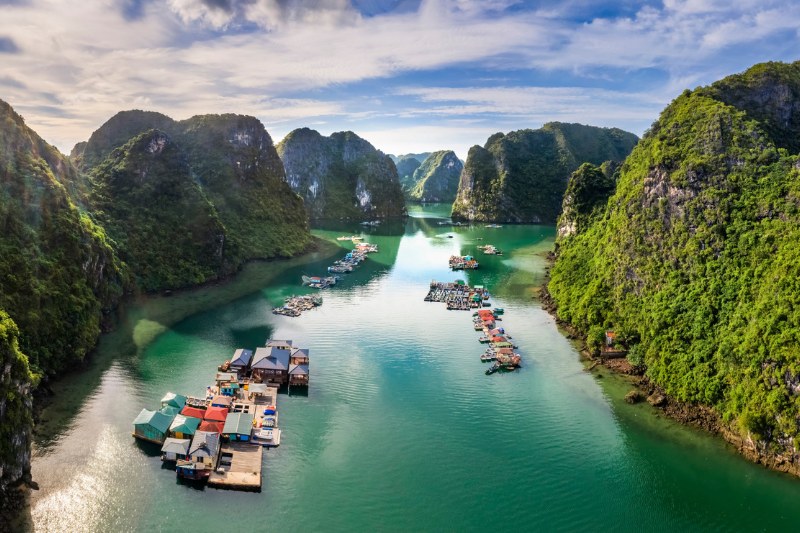
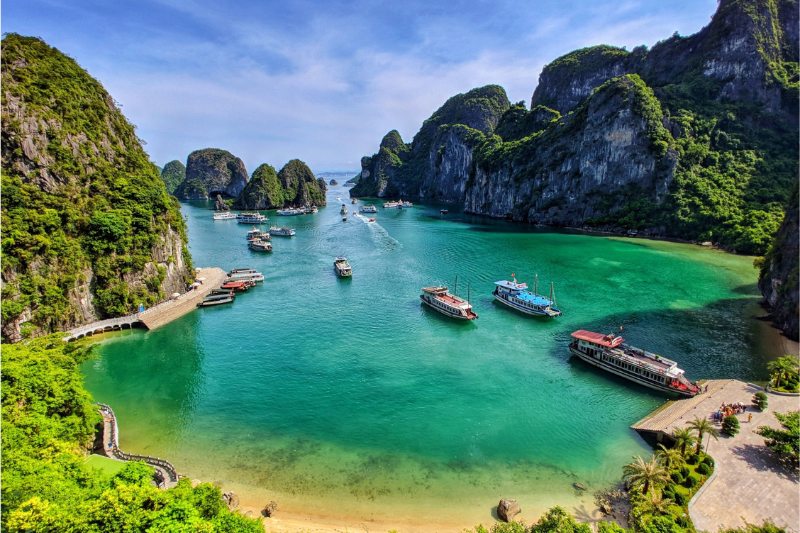
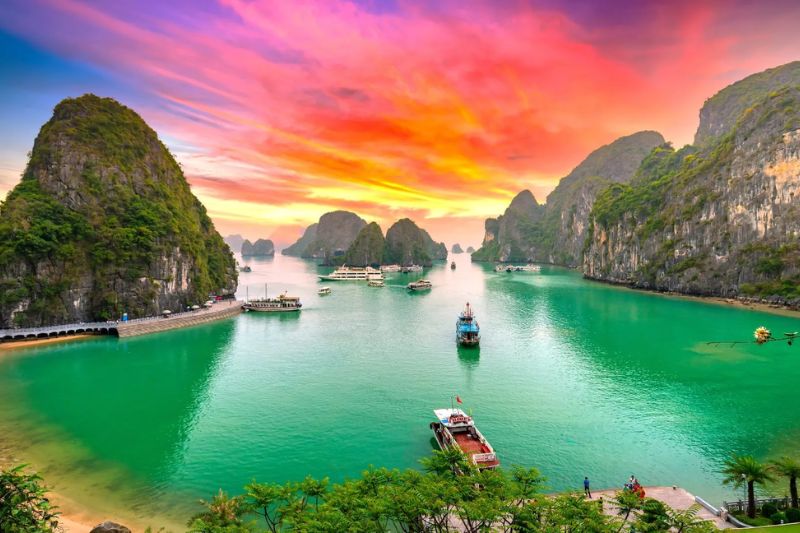
Ha Long Bay is a UNESCO World Heritage Site covering 1,553 km² with 1,969 limestone islands, rising from the Gulf of Tonkin in northern Vietnam. The bay sits 165 km from Hanoi — approximately 3.5 hours by road — and operates as a year-round cruise destination with an optimal visiting window between October and April.
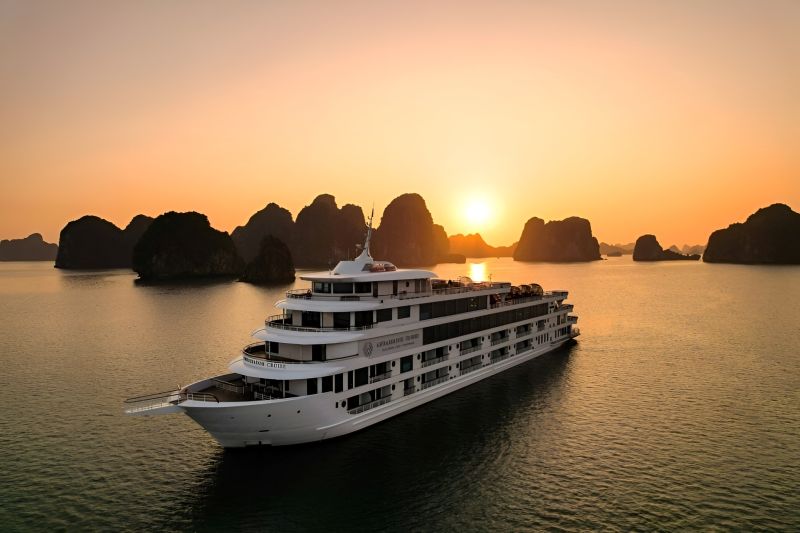
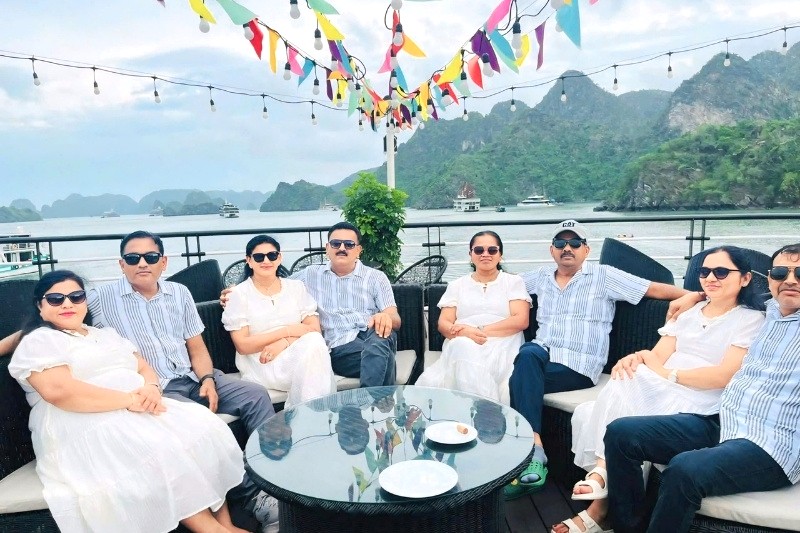
For Indian travelers, the Ha Long Bay overnight cruise experience closely parallels houseboat stays on Dal Lake in Kashmir or Kerala backwaters — the same principle of sleeping on water, surrounded by natural scenery. The scale, however, is categorically different: open ocean, karst limestone formations rising 100–200 meters above the waterline, and the option to kayak through hidden lagoons and sea caves accessible only at low tide. A 2-night, 3-day cruise is the standard recommendation, allowing visits to Sung Sot Cave (the largest grotto in the bay), a kayaking session through Luon Cave, and a sunrise on deck. Cruise pricing ranges from ₹18,400 (budget 3-star junk) to ₹84,000+ (luxury 5-star) per person, with all meals, guided excursions, and Hanoi transfers included. Indian vegetarian meals are available on request.
Ha Long Bay cruise packages include all meals onboard, but stepping off the boat onto Vietnam’s streets introduces a culinary landscape where a full meal costs less than a single appetizer on the cruise — and where Indian dietary needs require specific navigation.
Vietnamese Street Food and Pho
Pho (rice noodle soup) is the dish the world associates most with Vietnam, served in two regional styles — northern pho (Hanoi) with a clear, lighter broth, and southern pho (Ho Chi Minh City) with a sweeter, more complex broth and wider garnish variety. Beyond pho, Vietnamese street food spans bánh mì (baguette sandwiches), bún chả (grilled pork with noodles), gỏi cuốn (fresh spring rolls), and dozens of regional specialties — all available from ₹80–₹350 per meal at street-level stalls and local restaurants.
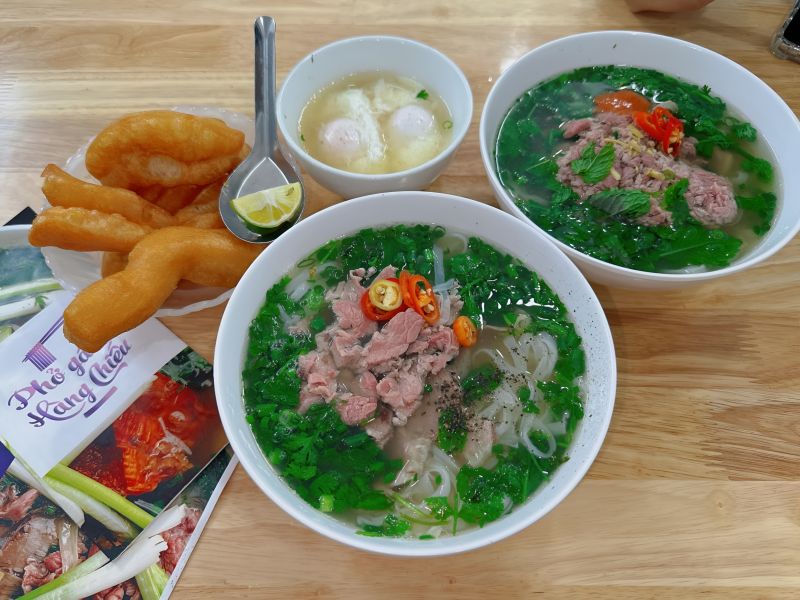
For Indian travelers, the key dietary consideration is fish sauce (nước mắm), which appears as a base seasoning in the majority of Vietnamese dishes — invisible in the final plate but present throughout the cooking process. Buddhist vegetarian restaurants (nhà hàng chay) in Hanoi, Hoi An, and Ho Chi Minh City serve fully plant-based menus free of fish sauce, accommodating vegetarian, Jain (không hành, không tỏi — no onion, no garlic), and vegan requirements. Halal-certified restaurants are concentrated in Ho Chi Minh City’s District 1.
Buddhist vegetarian restaurants in Hoi An serve some of Vietnam’s most refined plant-based cooking — but food is only one reason Indian travelers spend 2–3 days in this UNESCO Ancient Town.
Hoi An Ancient Town and Tailors
Hoi An Ancient Town is a 30-hectare UNESCO World Heritage Site established as a major trading port in the 15th century, with 1,107 preserved heritage structures spanning Japanese merchant houses, Chinese assembly halls, French colonial buildings, and Vietnamese tube houses along the Thu Bon River. The town remains one of Southeast Asia’s best-preserved examples of a complete trading settlement.
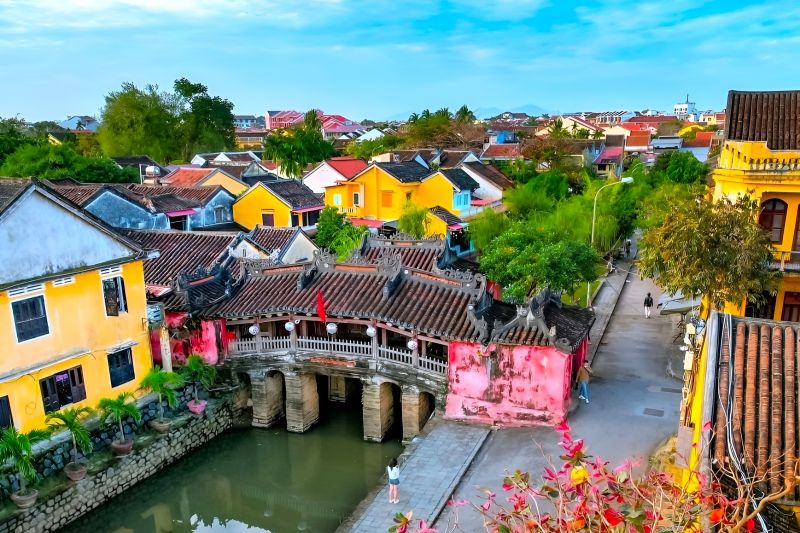
For Indian travelers, Hoi An delivers two distinct draws within a single destination: architectural heritage comparable to Rajasthan’s walled cities, and a live tailoring industry of 400+ shops that produces custom clothing within 24–48 hours. Custom garments range from ₹2,500 (Ao Dai traditional dress) to ₹16,000 (silk suit), with Indian female travelers frequently comparing the experience to Jaipur’s bazaars or Delhi’s Chandni Chowk — familiar artisan pricing, executed with Vietnamese precision and a 48-hour turnaround. Hoi An is consistently rated one of Southeast Asia’s safest destinations for solo female travelers, with a pedestrianized Ancient Town zone operating between 8 AM and 9 PM.
Hoi An’s custom tailoring shops can produce a fleece jacket in 24 hours — useful preparation for Sapa’s mountain temperatures, where elevation at 1,600 meters drops conditions to 5°C–25°C year-round.
Sapa Rice Terraces and Trekking
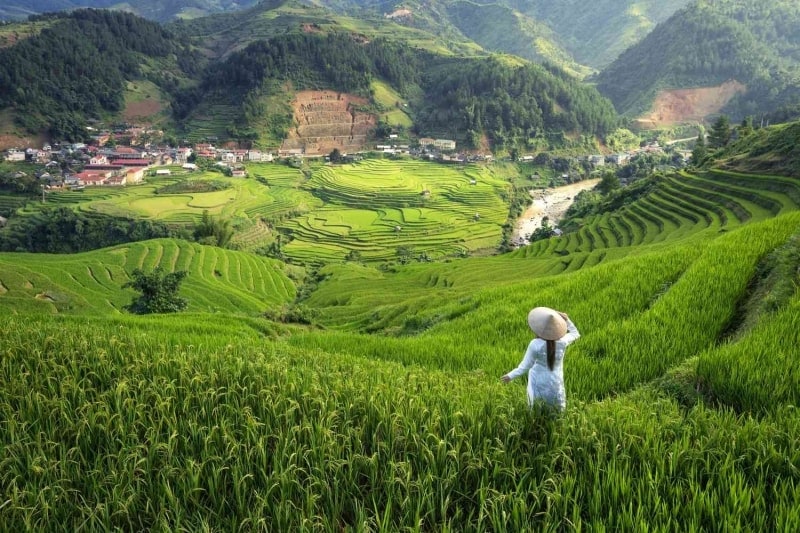
Sapa’s rice terraces span 350,000 hectares across the Hoàng Liên Sơn mountain range in northwestern Vietnam, 380 km from Hanoi. The terraces were carved into steep mountain slopes by Hmong, Dao, Tày, and Giáy ethnic minority communities over several centuries, creating one of Asia’s most photographed agricultural landscapes.
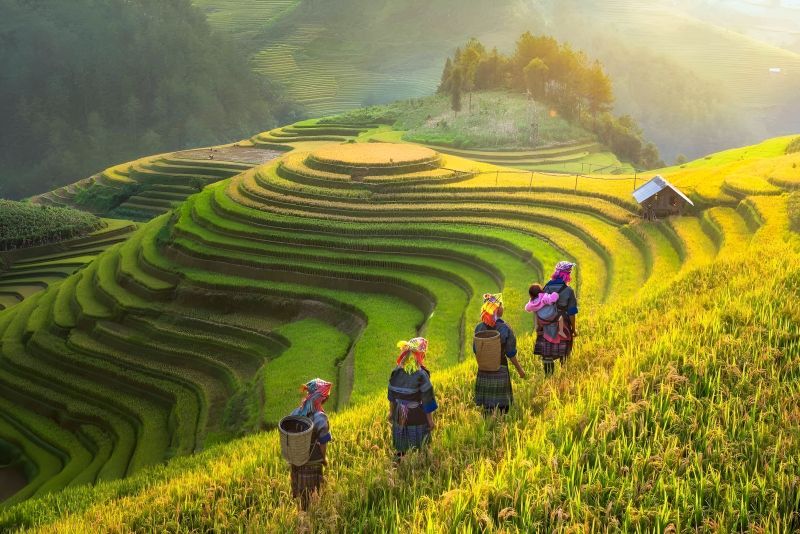
Indian hikers familiar with Manali, Shimla, or Munnar treks will find Sapa comparable in elevation but distinct in cultural immersion — trekking routes pass directly through ethnic minority villages where Hmong women in traditional embroidered clothing serve as trek guides. Routes range from 4 km (Cat Cat Village, 2 hours, suitable for families) to 19–22 km (Fansipan Summit at 3,143 meters, Vietnam’s highest peak, over 2 days). Sapa’s climate at 1,600 meters (5°C–25°C) draws Indian travelers seeking relief from summer heat, with September–October (golden harvest terraces) and March–May (green terraces, peach blossoms) as the best visiting windows.
Sapa’s Hoàng Liên Sơn range sits at the northern edge of Vietnam’s agricultural highlands — the same Central Highlands system that produces the majority of Vietnam’s Robusta coffee beans 1,200 km to the south in Đắk Lắk province.
Vietnamese Coffee Culture
Vietnam is the world’s second-largest coffee producer after Brazil, exporting 1.65 million metric tons annually. Robusta beans comprise 97% of production, cultivated primarily in the Central Highlands province of Đắk Lắk — and Vietnamese Robusta appears in the majority of globally traded instant coffee blends, including several Indian brands.
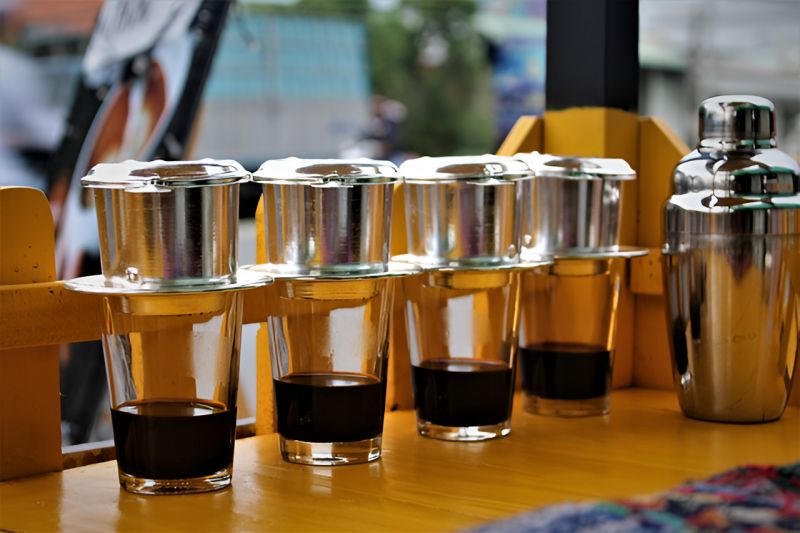
For Indian travelers from South India — where filter coffee culture (kaapi) is a daily ritual — Vietnamese coffee offers an immediately relatable but distinctly different experience. The signature preparation uses a single-serve drip filter (phin) extracting a concentrated shot directly into sweetened condensed milk, producing a thick, intensely sweet-and-bitter combination unique in the coffee world. Three signature drinks define the culture: cà phê sữa đá (iced milk coffee, ₹40–₹120), cà phê trứng (egg coffee — a Hanoi specialty with whisked egg yolk foam resembling liquid tiramisu, ₹80–₹150), and cà phê dừa (coconut coffee, ₹80–₹130). The café culture itself — centered on slow drinking and people-watching — aligns closely with Indian chai-stall culture in social function.
Vietnamese coffee beans travel from the Central Highlands to Ho Chi Minh City for export — and 170 km further southwest, the Mekong Delta’s river system feeds Vietnam’s largest agricultural region.
Mekong Delta River Tours
The Mekong Delta covers 40,577 km² across 13 Vietnamese provinces, where the Mekong River splits into nine distributaries before reaching the South China Sea. The Delta produces 50% of Vietnam’s rice and 70% of its fruit, with tourism centered on floating markets, coconut candy factories, orchid gardens, and homestays with farming families.
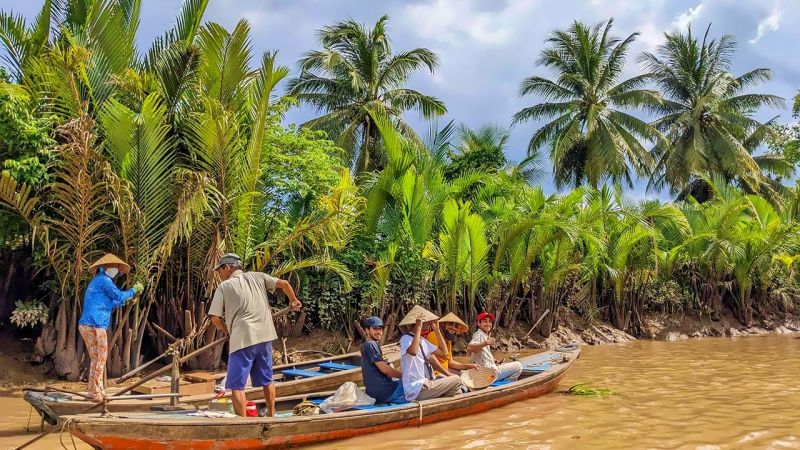
For Indian travelers, the Mekong Delta offers a waterway experience distinct from Ha Long Bay’s open-ocean cruising — here, narrow sampan boats navigate through active rice paddies, coconut groves, and floating market activity where vendors sell produce directly from their vessels. Can Tho, the Delta’s primary tourist hub, sits 170 km southwest of Ho Chi Minh City. Day tours from the city run ₹1,500–₹3,500 per person (half-day to full-day), with overnight homestay options at ₹12,000–₹16,000 including a sunrise visit to Cai Rang floating market — the Delta’s largest, operating 5 AM–9 AM.
Mekong Delta day tours return to Ho Chi Minh City by early afternoon — and 70 km in the opposite direction from the city center, the Cu Chi Tunnel network documents two decades of wartime engineering that shaped modern Vietnam.
Cu Chi Tunnels and War Museums
The Cu Chi Tunnel network spans 250 km beneath the Củ Chi district, 70 km northwest of Ho Chi Minh City. Constructed over two decades beginning in the 1940s and expanded during the Vietnam War (1955–1975), the tunnels housed 16,000 fighters, field hospitals, weapons workshops, and living quarters across three underground levels — the deepest at 10 meters below the surface.
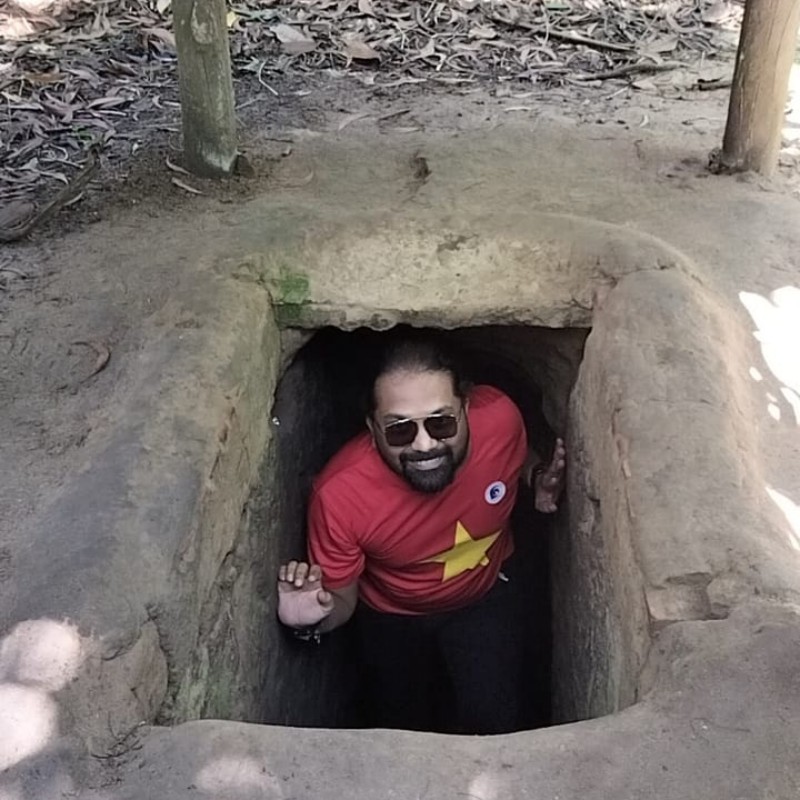
For Indian travelers, the Cu Chi Tunnels carry particular resonance with India’s own colonial resistance narrative. The site operates at two access points: Ben Dinh (more touristic, closer to the city) and Ben Duoc (larger, more authentic, less crowded). Tours run 45 minutes to 2 hours on-site, with entry at ₹300–₹380. A 120-meter section of tunnels is accessible to visitors, widened from the original 80 cm width. The War Remnants Museum in District 3 complements the tunnels with 20,000 artifacts across three floors documenting the conflict. Indian senior travelers who cannot enter the tunnels can experience 70–80% of the site’s value through above-ground sections — bomb crater displays, village reconstructions, and documentary screenings.
Cu Chi Tunnels complete the seventh experience on Vietnam’s defining list — covering all seven within a single trip requires an e-visa, domestic flights between Hanoi and Ho Chi Minh City, and a north-to-south routing.
How to Experience All 7 Famous Vietnam Attractions as an Indian Traveler
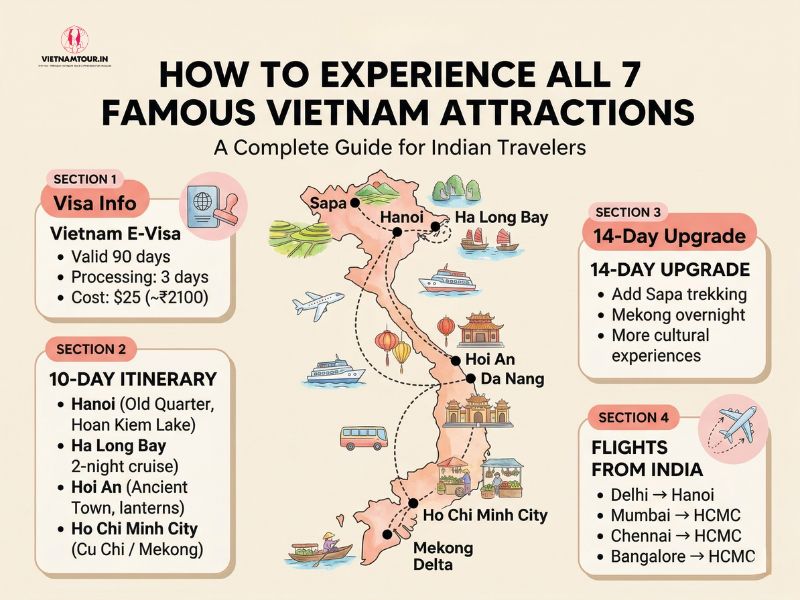
Indian passport holders require a Vietnam e-visa, valid for 90 days with single or multiple entry options, processed in 3 business days at a cost of $25 (approximately ₹2,100). The e-visa is applied for online through the official Vietnam Immigration Department portal and eliminates the need for a visa on arrival or embassy appointment.
Recommended itinerary structures for Indian travelers:
The 10-day Vietnam itinerary covers the core 7 experiences with a north-to-south or south-to-north routing:
- Days 1–2: Hanoi (city orientation, Old Quarter, Hoan Kiem Lake)
- Days 3–5: Ha Long Bay (2-night cruise, departure and return via Hanoi)
- Day 6: Travel from Hanoi to Hoi An via Da Nang (1-hour domestic flight)
- Days 7–8: Hoi An (Ancient Town, tailoring, My Son Sanctuary optional)
- Day 9: Travel from Hoi An to Ho Chi Minh City (1-hour domestic flight)
- Day 10: Cu Chi Tunnels or Mekong Delta day trip
The 14-day itinerary adds Sapa (2–3 days) at the beginning of the trip before Ha Long Bay, and expands the Mekong Delta to an overnight tour. It also allows a full day for the War Remnants Museum and Ben Thanh Market in Ho Chi Minh City.
Direct flight options from India to Vietnam (2026):
- New Delhi (DEL) → Hanoi (HAN): IndiGo, Vietnam Airlines — 7 hours direct
- Mumbai (BOM) → Ho Chi Minh City (SGN): IndiGo, VietJet — 5.5 hours direct
- Chennai (MAA) → Ho Chi Minh City (SGN): IndiGo — 4 hours direct
- Bangalore (BLR) → Ho Chi Minh City (SGN): IndiGo, VietJet — 4.5 hours direct
For Indian travelers seeking a complete, India-specific itinerary covering all 7 famous Vietnam experiences, Vietnamtour.in’s Vietnam travel guide for Indians covers visa, currency, SIM cards, and cultural preparation in detail. Beyond itinerary planning, Indian travelers researching Vietnam consistently ask the same practical questions — from safety and visa processing to food options and daily budgets.
Frequently Asked Questions — Vietnam Famous Experiences for Indian Tourists
Is Vietnam safe for Indian tourists?
Yes. Vietnam consistently ranks among Asia’s safest destinations for international travelers, with low rates of violent crime and strong tourist infrastructure in all major destinations. Standard travel precautions apply: use reputable transportation, secure valuables in hotel safes, and exercise standard awareness in crowded markets. The Vietnam visa for Indian travelers page covers documentation and entry requirements in detail.
Do Indians need a visa for Vietnam?
Yes. Indian passport holders require a Vietnam e-visa for all visits. The e-visa costs $25 (approximately ₹2,100), is valid for 90 days, and is processed online in 3 business days through the official Vietnam Immigration Department portal. No embassy appointment or physical document submission is required.
What is Vietnam’s most famous food?
Pho (rice noodle soup) is Vietnam’s most internationally recognized dish and the food most associated with Vietnamese culinary identity. Within Vietnam, Bánh Mì (Vietnamese sandwich), Bún Bò Huế (spicy beef noodle soup from Hue), and Cơm Tấm (broken rice with grilled pork) are equally foundational to the national food culture. For Indian travelers, a full overview of the best Vietnamese food options with vegetarian, Jain, and Halal guidance is available on the Vietnamtour.in food guide.
Is Vietnam expensive for Indian travelers?
No. Vietnam is one of Southeast Asia’s most affordable destinations for Indian travelers. A comfortable mid-range daily budget — covering 3-star hotel accommodation, three meals, local transportation, and entry fees — runs ₹3,500–₹5,500 per person per day. Budget travelers can manage on ₹1,800–₹2,800 per day. Luxury experiences (5-star hotels, premium Ha Long Bay cruises, fine dining) are available at ₹10,000–₹20,000 per day.
Can Indian tourists drink tap water in Vietnam?
No. Tap water in Vietnam is not safe to drink directly. Bottled water (₹20–₹40 per 500ml bottle) is universally available. All hotels provide complimentary bottled water.
What language do people speak in Vietnam?
Vietnamese is the official language. English is widely spoken at hotels, restaurants, tour operators, and shops in Hanoi’s Old Quarter, Ho Chi Minh City’s District 1, Hoi An, and all major tourist areas. In rural areas and local markets, limited English capability is common, but smartphone translation apps and gesture-based communication handle most situations. Hindi is not spoken in Vietnam outside of Indian restaurant operators in Ho Chi Minh City.
Vietnam delivers on its 7 famous experiences, but not every attraction marketed to international tourists meets Indian traveler expectations at the same level.
What Are the Most Overrated Things About Vietnam?
Vietnam earns its reputation across all 7 famous experiences, but three aspects of the destination are frequently overrated relative to Indian traveler expectations.
Ba Na Hills (Golden Bridge) near Da Nang receives significant social media attention for the giant stone-hand-supported bridge. In practice, the 45-minute cable car ride, ₹3,200–₹3,400 entry fee, and theme park atmosphere surrounding the bridge disappoint travelers expecting a natural or heritage experience. The Golden Bridge visual is impressive in photographs; the wider Ba Na Hills complex is a commercial amusement park environment.
Nha Trang beach is frequently marketed as Vietnam’s premier beach destination. The reality for Indian travelers: Nha Trang’s main beach is heavily developed, the offshore snorkeling has degraded due to tourist volume, and the city itself is oriented toward Russian and Chinese mass tourism rather than Indian traveler preferences.
Vietnamese food spiciness is consistently overestimated by Indian travelers who assume Southeast Asian cuisine will match Indian chili heat levels. Vietnamese food is largely mild to medium in base spice, with heat added tableside. Indian palates accustomed to Tamil Nadu or Andhra Pradesh cuisine will find standard Vietnamese street food significantly milder than expected — which is either a relief or a disappointment depending on individual preference.
These overrated aspects aside, Indian travelers weighing Vietnam against Southeast Asia’s most popular alternative — Thailand — find the comparison increasingly favors Vietnam on value and cultural depth.
Vietnam vs. Thailand for Indian Tourists
Thailand is more globally famous than Vietnam, but Vietnam offers higher experiential value per rupee for Indian travelers in 2026. Thailand draws approximately 28–35 million international tourists annually compared to Vietnam’s 21.2 million in 2025, reflecting greater global brand recognition. For Indian travelers specifically, the calculation shifts.
Vietnam’s advantages over Thailand for Indian tourists:
- Cost: Vietnam’s average daily tourist expenditure (₹3,500–₹6,000 all-inclusive) runs 20–30% lower than Thailand’s equivalent (₹4,500–₹8,000) for comparable accommodation and meal quality
- Crowd factor: Popular Vietnam sites — Hoi An, Ha Long Bay, Sapa — operate at lower tourist density than Phuket, Bangkok’s Grand Palace, or Chiang Mai’s temples, creating a more immersive experience
- Culinary accessibility: Vietnamese Buddhist vegetarian restaurant infrastructure is more developed and geographically distributed than Thailand’s equivalent options
- Historical depth: Vietnam’s war history, ethnic minority cultures, and UNESCO heritage density exceeds Thailand’s within a comparable itinerary length
Thailand’s advantages over Vietnam for Indian tourists:
- Beaches: Thailand’s Andaman and Gulf coast beaches (Phuket, Krabi, Koh Samui) are globally superior to Vietnam’s coastal offerings for Indian travelers seeking pure beach holidays
- Indian community infrastructure: Bangkok and Phuket have larger established Indian restaurant and community networks, reducing dietary concern for Jain and conservative vegetarian travelers
- Direct connectivity: More Indian cities have direct or 1-stop flights to Bangkok compared to Vietnam’s Hanoi and Ho Chi Minh City
For Indian travelers choosing their first Southeast Asia trip, Vietnam scores higher on heritage, value, and authentic cultural immersion. Thailand scores higher on beaches and Indian community comfort. Many Indian travelers choose both — a 7-day Vietnam itinerary combined with 4–5 days in Bangkok — as their first Southeast Asia trip. For a detailed breakdown, the Vietnam trip cost from India guide compares both destinations across budget categories.
What Makes Vietnam Worth the Trip from India
Vietnam’s 7 famous experiences — Ha Long Bay, street food, Hoi An, Sapa, coffee culture, Mekong Delta, and Cu Chi Tunnels — represent a travel destination that delivers cultural contrast, natural scale, and historical depth within a geographically compact, accessible, and affordable country. For Indian travelers, the combination of direct flight connectivity, established vegetarian and Halal dining infrastructure, India-specific tour operator support, and a 90-day e-visa accessible in 3 business days removes most of the friction that historically made Vietnam seem more distant than it is.
RELATED ARTICLES


RECOMMENDED VIETNAM ITINERARIES
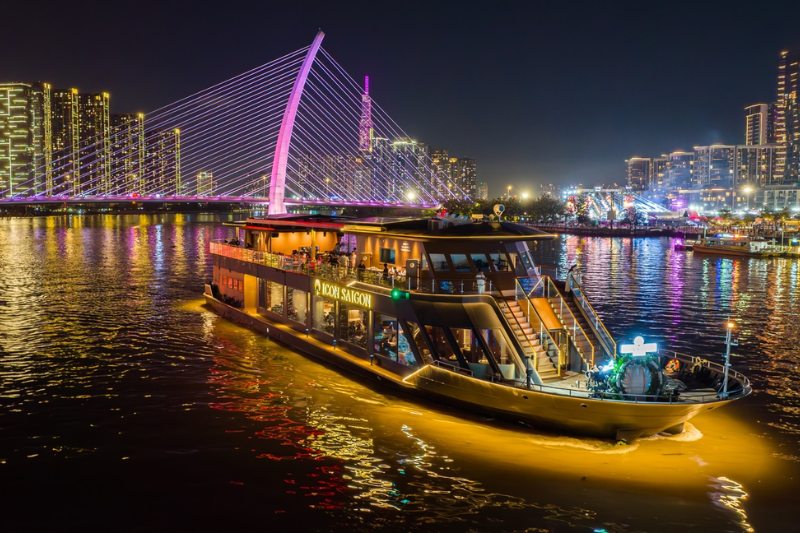
Hanoi · Ninh Binh · Halong Bay · Da Nang · Hoi An · Ho Chi Minh City · Mekong Delta
Ho Chi Minh City · Mekong Delta · Hanoi · Ninh Binh · Halong Bay
Hanoi · Ninh Binh · Halong Bay · Da Nang · Hoi An
Hanoi · Ninh Binh · Sapa · Halong Bay · Da Nang · Hoi An · Ho Chi Minh City · Mekong Delta
Hanoi · Ninh Binh · Halong Bay · Da Nang · Hoi An · Ho Chi Minh City · Mekong Delta
Hanoi · Ninh Binh · Halong Bay · Phu Quoc
Hanoi · Halong Bay · Ho Chi Minh City · Mekong Delta
Hanoi · Halong Bay · Da Nang · Hoi An · Phu Quoc