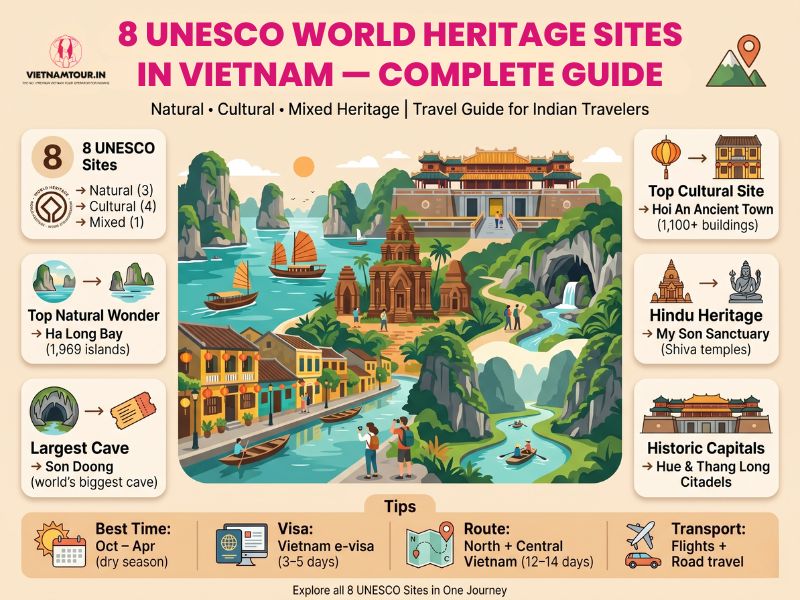
The 8 UNESCO World Heritage Sites in Vietnam include Ha Long Bay, Phong Nha-Ke Bang, Trang An, Hue Citadel, Hoi An Ancient Town, My Son Sanctuary, Thang Long Citadel, and the Ho Dynasty Citadel — comprising 3 natural properties, 4 cultural properties, and 1 mixed site.
This guide covers all 8 properties site-by-site, the 2 recommended Northern and Central Heritage Circuits, Vietnam e-visa requirements for Indian passport holders, dress codes at religious sites, and the best months for Indian travelers to visit each property — November to April being the optimal window across all 8. Indian travelers can visit all 8 properties with a single Vietnam e-visa, valid for 90 days, with a processing time of 3 to 5 business days.
Ha Long Bay
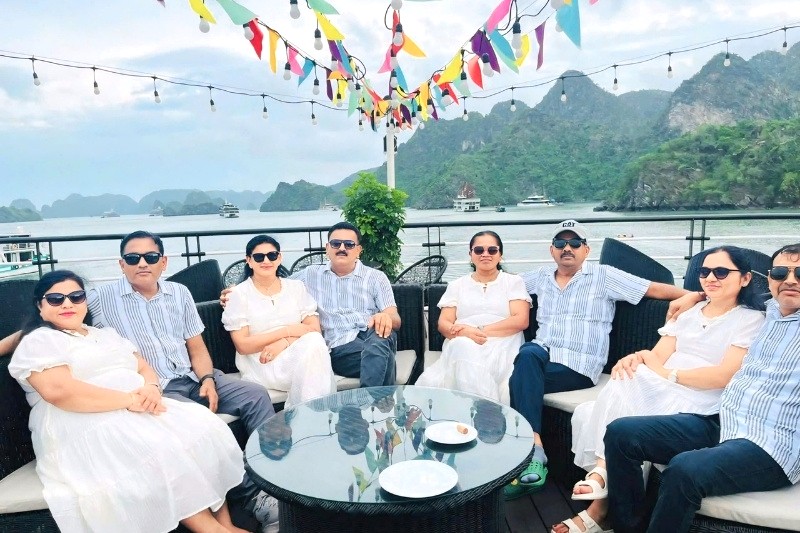
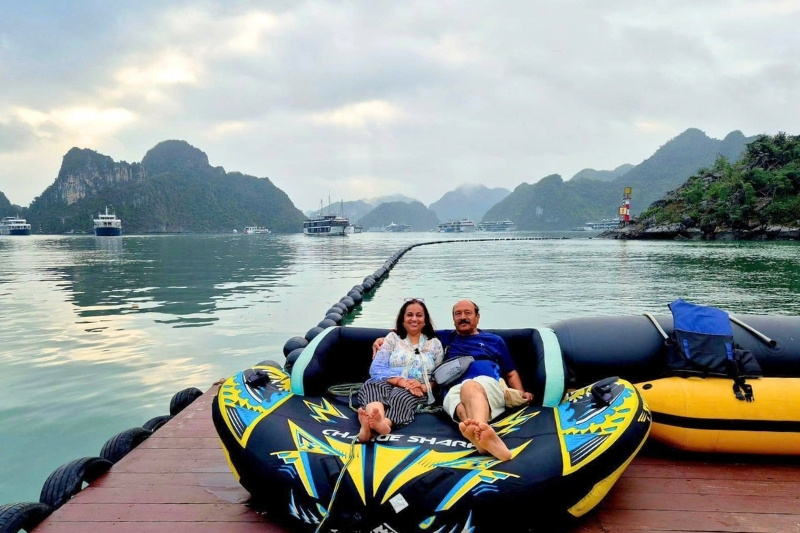
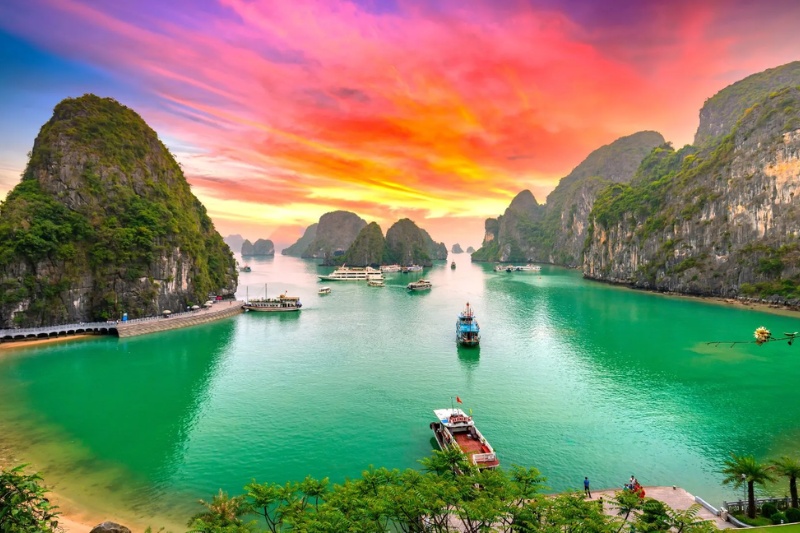
Ha Long Bay holds a UNESCO triple inscription cycle — first recognized in 1994, extended in 2000 for geological criteria, and extended again in 2023 to include the Cat Ba Archipelago — bringing the inscribed area to 1,553 km² of limestone karst seascape across Quang Ninh and Hai Phong provinces in northern Vietnam. UNESCO inscribed Ha Long Bay for its superlative natural beauty and outstanding geological significance as one of the world’s most complete records of karst formation.
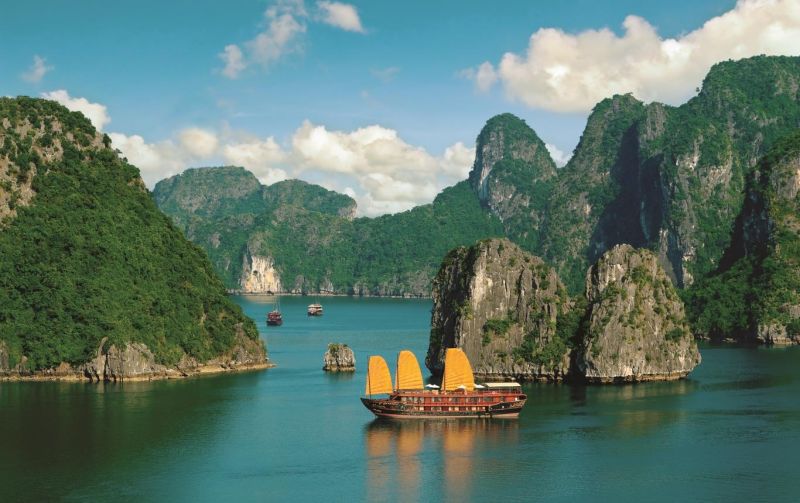
UNESCO recognized Ha Long Bay for 2 distinct reasons. First, for superlative natural beauty: over 1,969 limestone islands and islets rise from emerald-green water across a 1,553 km² seascape, forming the most-visited natural UNESCO site in Vietnam with annual arrivals exceeding 3.5 million. Second, for outstanding geological significance: the karst topography formed over 500 million years of limestone deposition and erosion, representing a complete geological record of karst development found nowhere else in Southeast Asia at this scale. The inscribed area is structured as a 434 km² core zone plus a 1,119 km² buffer zone — 1,553 km² in total.
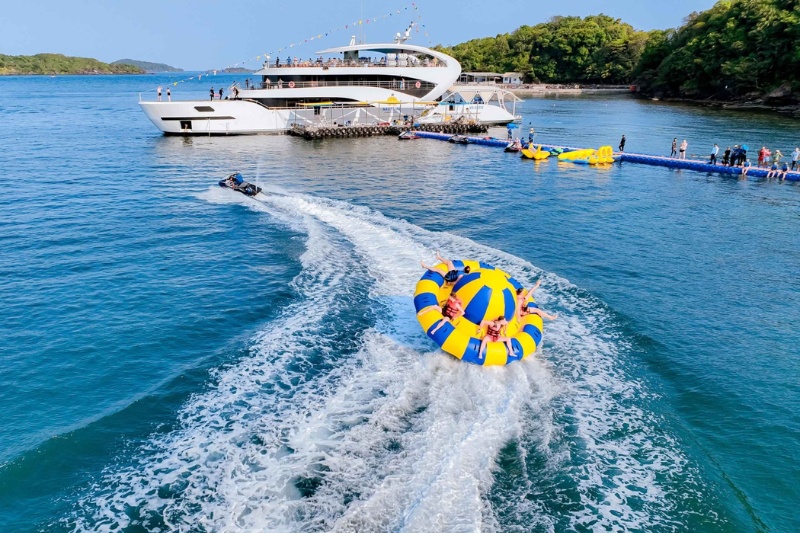
Indian travelers at Ha Long Bay have 4 primary experiences: an overnight cruise on a traditional junk boat, kayaking through limestone cave archways, sunrise viewing from the upper deck, and visiting Cua Van floating fishing village — one of the oldest inhabited fishing communities in the bay, with approximately 300 residents living across 100 floating homes.
Phong Nha-Ke Bang
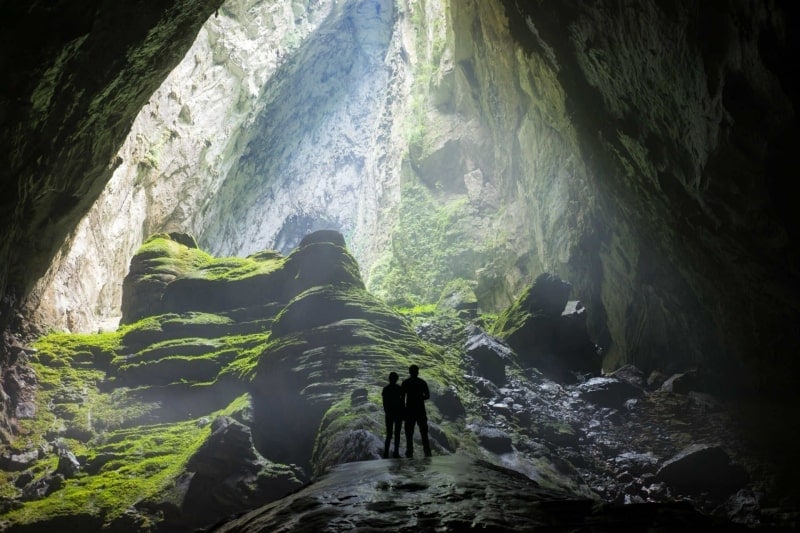
Phong Nha-Ke Bang National Park received UNESCO inscription in 2003, extended in 2015, recognizing it as the world’s most significant karst ecosystem and the location of Son Doong Cave — the largest known cave on Earth by volume at 38.5 million cubic meters. UNESCO inscribed Phong Nha-Ke Bang for its outstanding geological age, exceptional natural beauty, significant ecological processes, and extraordinary biodiversity across 123,326 hectares.
UNESCO recognized Phong Nha-Ke Bang for 4 documented reasons. First, for outstanding natural beauty across ancient karst mountains, underground rivers, and primary jungle covering 123,326 hectares of largely intact wilderness. Second, for geological significance: Phong Nha-Ke Bang is the oldest karst formation in Asia at approximately 400 million years old — 100 million years older than Ha Long Bay’s karst system. Third, for significant ongoing ecological processes: the ecosystem has remained undisturbed for millions of years, with 300+ caves still being actively explored and documented. Fourth, for exceptional biodiversity: the park serves as habitat for 140 mammal species, 302 bird species, and 81 reptile species, including numerous species found nowhere else on Earth.
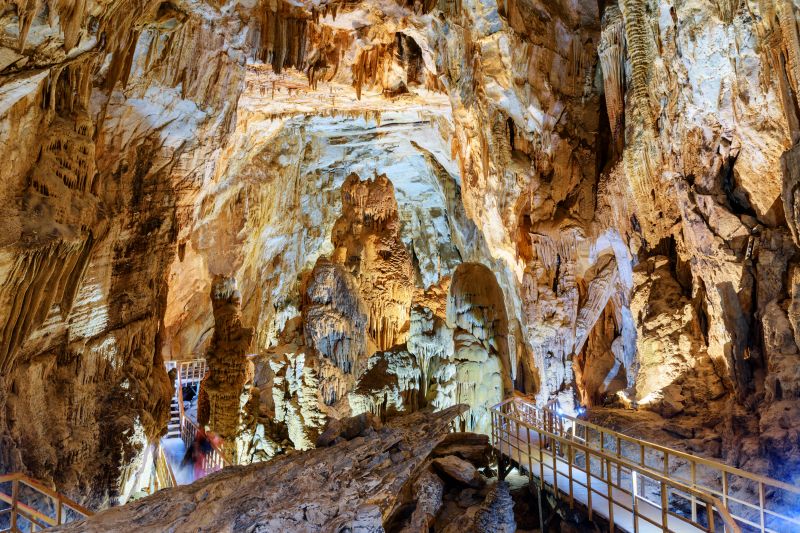
Indian travelers at Phong Nha-Ke Bang choose between 3 experience levels: a standard boat tour through Phong Nha Cave (half-day, entry from 150,000 VND), a guided trek into Paradise Cave (full-day, entry 270,000 VND), or the 6-day Son Doong Cave expedition — the most exclusive and logistically demanding cave journey available anywhere in the world, requiring a support team of 40+ guides, porters, and cooks per group.
Trang An Landscape Complex
Trang An Landscape Complex is Vietnam’s only mixed World Heritage Site — the sole property in Vietnam recognized simultaneously for outstanding natural landscape and exceptional cultural significance. UNESCO inscribed Trang An in 2014 for its extraordinary record of human interaction with the natural environment, its exceptional natural beauty, and its geological significance as an ancient submerged karst landscape. Archaeological evidence within the complex documents continuous human habitation spanning 30,000 years — the longest continuous habitation record of any UNESCO site in Vietnam.

UNESCO recognized Trang An for 3 documented reasons. First, as an outstanding record of human interaction with the natural environment: 30+ archaeological cave sites within the complex document 30,000 years of continuous habitation, spanning from the Stone Age through to the 2nd millennium BCE. Second, for exceptional natural beauty: limestone karst towers rising from flooded valleys linked by 48 cave passages form a landscape with no equivalent in mainland Southeast Asia — a setting that earned Trang An its role as a filming location for the 2017 Hollywood production Kong: Skull Island. Third, for geological significance: the Trang An karst massif was submerged under sea level approximately 10,000 years ago during post-glacial flooding, then re-emerged intact, preserving a complete stratigraphic record of sea-level change across the Holocene period.
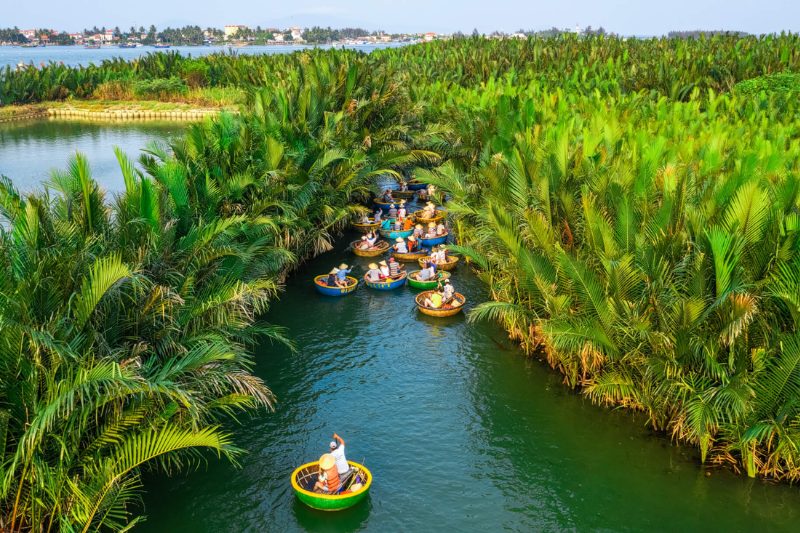
Indian travelers in Trang An can experience 3 distinct layers in one visit: a traditional rowing boat journey through cave archways, exploration of Hoa Lu — the 10th-century ancient capital of Vietnam that preceded Hanoi as the seat of national power — and a visit to Bai Dinh Pagoda, a 539-hectare Buddhist complex comparable on spiritual scale to major pilgrimage sites in Bodh Gaya and Sarnath that Indian travelers recognize.
Imperial Citadel of Hue
The Imperial Citadel of Hue served as the political, cultural, and religious centre of unified Vietnam under the Nguyen Dynasty from 1802 to 1945 — the last imperial dynasty in Vietnamese history, ruling for 143 years across 13 emperors. UNESCO inscribed the Central Sector of the Imperial Citadel of Hue in 1993 — making it the first Vietnamese property added to the World Heritage List — recognizing it as an exceptional testimony to the Nguyen Dynasty civilization and as an outstanding example of a feudal East Asian imperial capital.
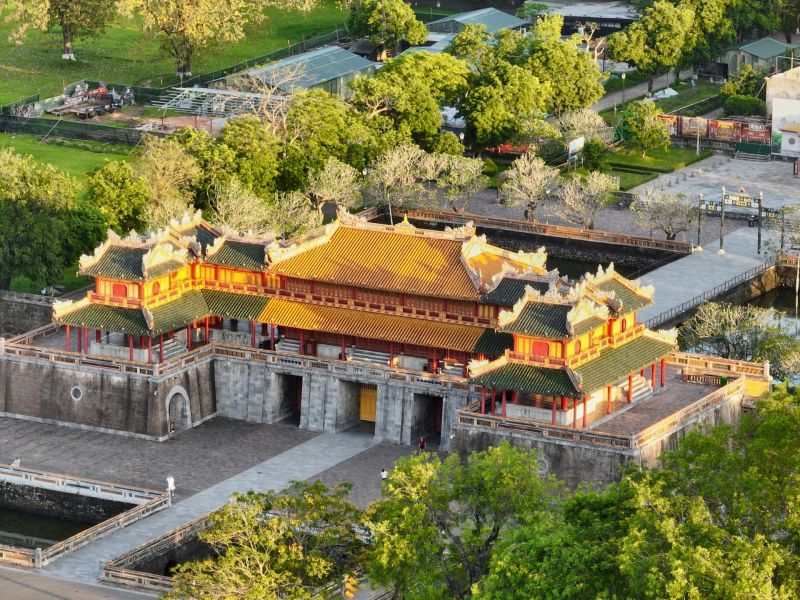
UNESCO recognized the Imperial Citadel of Hue for 2 reasons. First, as an exceptional testimony to the Nguyen Dynasty civilization: 13 emperors ruled from this 520-hectare citadel across 143 years, producing a concentration of imperial architecture, ritual spaces, and royal mausoleums unmatched in scale anywhere in Southeast Asia. Second, as an outstanding example of a feudal East Asian imperial capital: the entire complex was designed on Feng Shui principles, precisely aligned with the Huong (Perfume) River and Ngu Binh Mountain — the most complete surviving expression of Vietnamese royal urban planning in existence.
Indian travelers at the Imperial Citadel of Hue explore 4 architectural zones within a single complex: the Citadel Walls and moat forming a 10 km outer perimeter, the Imperial Enclosure with Ngo Mon Gate as its ceremonial entrance, the Forbidden Purple City residential quarters reserved for the emperor and his immediate family, and the 7 Royal Mausoleums of Nguyen emperors located 3 to 16 km south of the citadel — each mausoleum representing a distinct architectural statement by the emperor who built it.
Hoi An Ancient Town
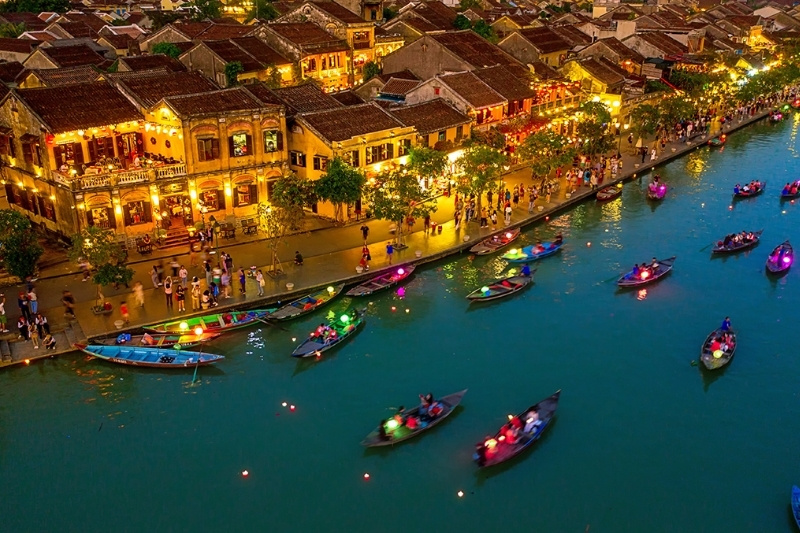
Hoi An Ancient Town is the only surviving example of a traditional Asian trading port in Southeast Asia that retains its original 15th–19th century urban fabric, street layout, and heritage building stock intact. UNESCO inscribed Hoi An in 1999, recognizing it for outstanding cultural exchange across 4 centuries of international commerce and as an exceptional example of a traditional Asian trading port with no equivalent remaining in the region.
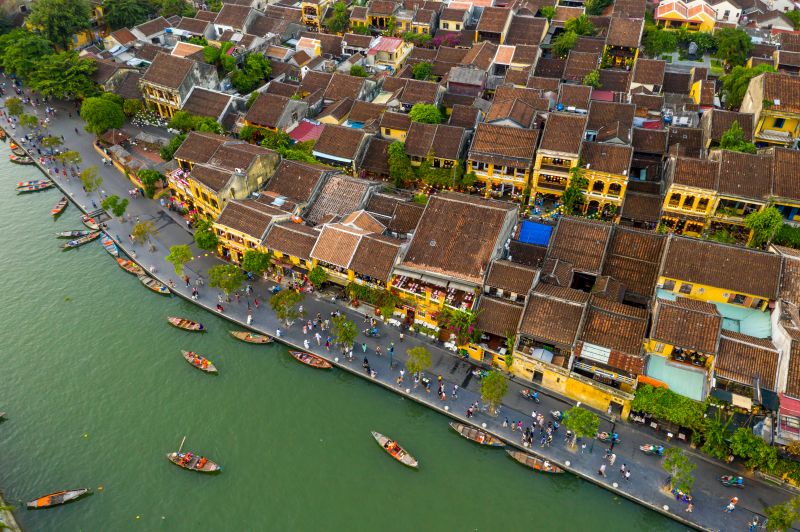
UNESCO recognized Hoi An Ancient Town for 2 reasons. First, for outstanding cultural exchange: the architectural fusion of Vietnamese, Chinese, Japanese, and French colonial styles coexists within a single 2 km² zone, representing 4 centuries of mercantile interaction between Asia and Europe — with 1,107 individual heritage buildings surviving intact across 30 hectares. Second, as an exceptional example of a traditional Asian trading port: Hoi An is the only port town in Southeast Asia where the original 15th–19th century merchant streetscape, assembly halls, covered bridge, and residential architecture survive together as a functioning urban environment, not a reconstructed museum.
Indian travelers at Hoi An Ancient Town navigate 4 distinct cultural layers within a walkable 2 km zone: Vietnamese merchant architecture along Tran Phu Street, Chinese assembly halls on Nguyen Thai Hoc Street, the Japanese Covered Bridge on the western edge of the old town — the only covered bridge of Japanese construction remaining in Southeast Asia — and French colonial facades along the Thu Bon riverside. All 4 layers are accessible on foot within a single half-day, with no transportation required between sites.
My Son Sanctuary
My Son Sanctuary is the most important Hindu religious complex in Southeast Asia, built by the Champa Kingdom between the 4th and 13th centuries CE in honor of Lord Shiva. UNESCO inscribed My Son in 1999, recognizing it for outstanding cultural exchange between Indian Hindu civilization and Southeast Asian architectural tradition, and as an exceptional testimony to the Champa civilization — the only major culture in Southeast Asia that adopted Hinduism as its state religion. My Son is the only UNESCO World Heritage Site in Vietnam with direct cultural continuity to Indian Hindu civilization.
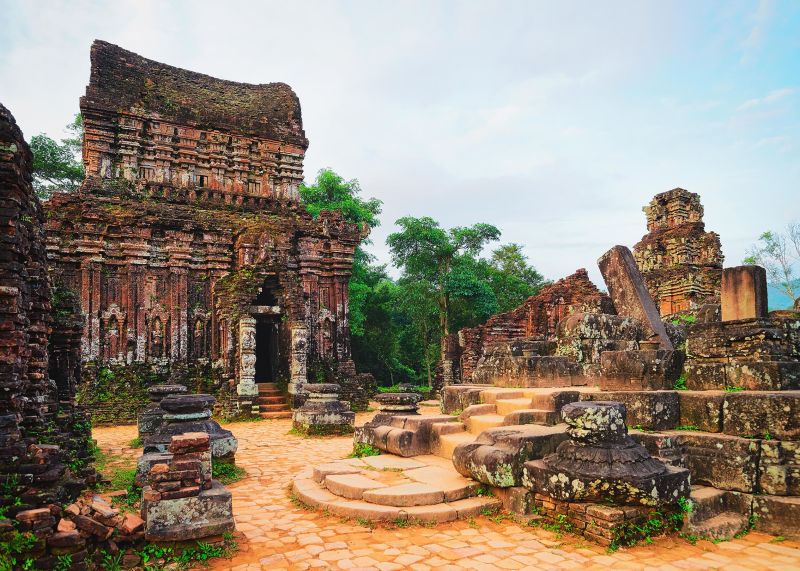
UNESCO recognized My Son Sanctuary for 2 reasons. First, for outstanding cultural exchange: the Champa civilization adopted Indian Hindu architectural traditions — specifically Shaivism — and developed them into a uniquely Southeast Asian architectural form across 9 centuries of continuous construction, producing 70+ temple towers across 9 distinct architectural groups originally. Second, as an exceptional testimony to a lost civilization: the Champa Kingdom was the only sustained Hindu state in Southeast Asia, and My Son preserves the most complete surviving record of Champa royal and religious architecture — a record with no equivalent anywhere else in the region.
Indian travelers at My Son Sanctuary recognize 3 direct connections to Indian Hindu heritage: Shiva-linga altar installations identical in form to those found at South Indian Shaiva temples, Sanskrit inscriptions on 9th-century stone pillars that Indian visitors with classical language knowledge can partially read, and Apsara dance reliefs carved across tower facades — a visual tradition shared directly with Odissi and Bharatanatyam classical Indian dance forms.
Imperial Citadel of Thang Long
The Imperial Citadel of Thang Long served as the political center of Vietnam for over 13 centuries — from the 7th century CE through to 1810, when the Nguyen Dynasty relocated the capital to Hue. UNESCO inscribed the citadel in 2010, recognizing it for outstanding cultural exchange across 13 centuries of dynastic rule, as an exceptional testimony to Vietnamese civilization through its multi-dynasty archaeological record, and for its direct association with events of outstanding universal significance during the 20th century.
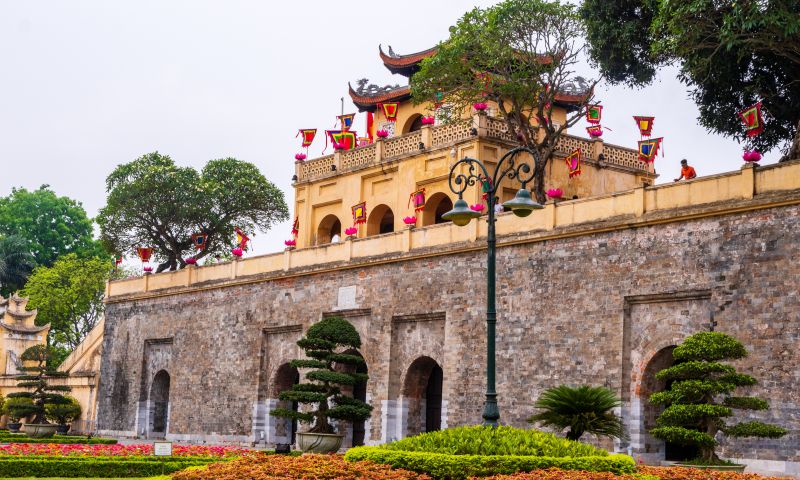
UNESCO recognized the Imperial Citadel of Thang Long for 3 reasons. First, for outstanding cultural exchange: the site preserves architectural and archaeological evidence of Chinese, Vietnamese, and French colonial influence layered across 13 uninterrupted centuries within a single 10-hectare urban location — a concentration of continuous political history with no parallel in mainland Southeast Asia. Second, as an exceptional testimony to Vietnamese civilization: excavations conducted between 2002 and 2004 uncovered archaeological layers from 7 successive dynasties, producing over 1 million artifacts and making Thang Long one of the most significant archaeological discoveries in Southeast Asian history. Third, for direct association with events of outstanding universal historical significance: the D67 underground bunker within the complex served as the command headquarters of General Vo Nguyen Giap and the Vietnamese People’s Army throughout the American War from 1954 to 1975.
Indian travelers at the Imperial Citadel of Thang Long walk through 3 chronological layers of Vietnamese history within a single 10-hectare site: the ancient royal palace foundations of the Ly and Tran dynasties from the 11th to 14th century, the restored Doan Mon Gate and Kinh Thien Palace terrace of the Le Dynasty from the 15th century, and the D67 underground war bunker — a 2-level concrete structure where General Vo Nguyen Giap directed the Tet Offensive of 1968 and the Ho Chi Minh Campaign of 1975.
Ho Dynasty Citadel
The Ho Dynasty Citadel is the first and only Vietnamese citadel constructed entirely from large-cut stone blocks rather than brick, built in 1397 CE and completed in just 3 months — a construction speed and engineering scale with no precedent in Southeast Asia at the time. UNESCO inscribed the Ho Dynasty Citadel in 2011, recognizing it for outstanding cultural exchange between Chinese governance models and Vietnamese military architecture, and as an outstanding example of a building type that represented a singular and unrepeated stage in Vietnamese history.
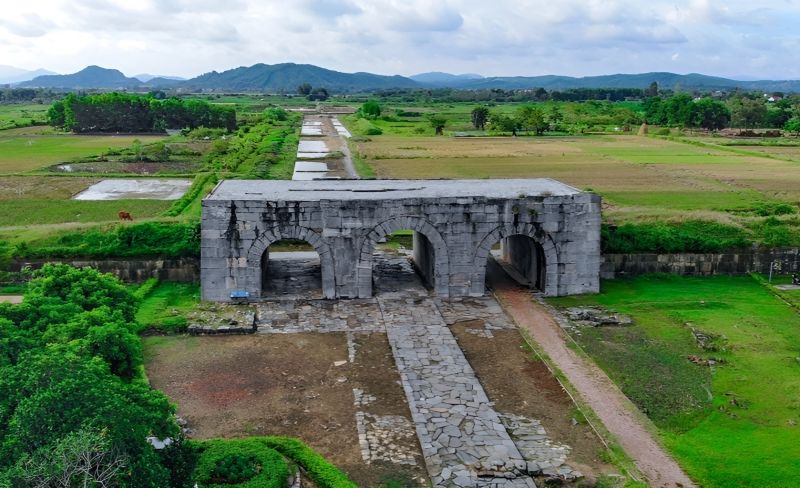
UNESCO recognized the Ho Dynasty Citadel for 2 reasons. First, for outstanding cultural exchange: Ho Quy Ly synthesized Chinese Neo-Confucian governance models with Vietnamese military fortification techniques into a completely new architectural form — the result is a citadel with the political philosophy of Chinese imperial administration expressed through a distinctly Vietnamese stone construction method found nowhere else in the region. Second, as an outstanding example of a building type representing a significant stage in history: the Ho Dynasty Citadel is the only Vietnamese citadel built entirely from cut stone, with individual blocks weighing up to 26 tonnes (57,320 lb) and walls extending 870 to 883 m on each of its 4 sides — a structural achievement that has remained intact for 629 years.
Indian travelers at the Ho Dynasty Citadel explore 2 primary features not replicated at any other Vietnamese UNESCO site: the 4 intact stone gates — each carved from single monolithic stone blocks without mortar binding — and the surrounding 5 km² moat system that remains structurally intact after 629 years. The stone engineering scale is directly comparable to medieval Indian fort construction at Gwalior and Chittorgarh, giving Indian travelers an immediate architectural reference point for appreciating the citadel’s significance.
How to Visit All 8 UNESCO World Heritage Sites in Vietnam from India
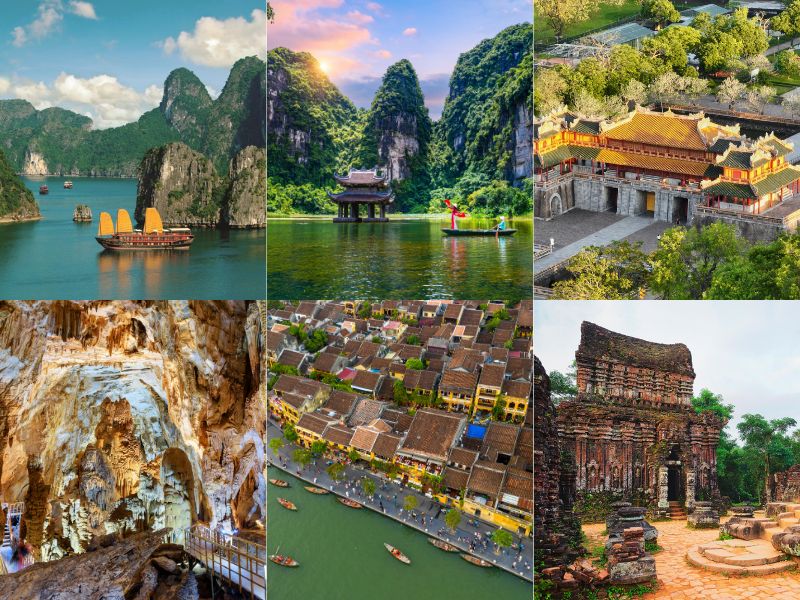
Indian travelers visit all 8 UNESCO World Heritage Sites in Vietnam by combining 2 geographic circuits — a Northern Heritage Circuit covering Hanoi, Ha Long Bay, and Trang An, and a Central Heritage Circuit covering Hue, Hoi An, My Son, Phong Nha, and the Ho Dynasty Citadel — within a recommended 12 to 14-day itinerary.
Northern Heritage Circuit
The Northern Heritage Circuit covers the Imperial Citadel of Thang Long, Ha Long Bay, and Trang An Landscape Complex, using Hanoi as the base city across 5 to 6 days. Transportation connects Hanoi to Ha Long Bay in 3.5 hours by road and to Trang An in 2 hours. The Imperial Citadel of Thang Long is a half-day visit within Hanoi itself — located 1.2 km from Ho Chi Minh Mausoleum and 1.5 km from One Pillar Pagoda in Ba Dinh District, placing all 3 landmarks within a single walkable zone requiring no additional transportation.
Central Heritage Circuit
The Central Heritage Circuit covers the Imperial Citadel of Hue, Hoi An Ancient Town, My Son Sanctuary, Phong Nha-Ke Bang, and the Ho Dynasty Citadel across 7 to 8 days, using Hue (2 nights) and Da Nang (3 nights) as base cities. Key transportation distances: Da Nang Airport to Hue is 100 km (2 hours by road); Da Nang to Hoi An is 30 km (40 minutes); Hoi An to My Son is 60 km (1 hour 10 minutes); Phong Nha is 160 km from Hue (3 hours). The Ho Dynasty Citadel in Thanh Hoa Province sits 150 km south of Hanoi and 200 km north of Hue — a position directly on National Highway 1A that makes it a same-day transit visit between the two circuits, adding under 4 hours to the total overland journey.
Visa and Entry Requirements for Indian Travelers
Indian travelers require a Vietnam e-visa (single or multiple entry), with a processing time of 3 to 5 business days and 90-day validity. No additional site permits are required at any of the 8 UNESCO properties except the Son Doong Cave expedition, which requires advance booking 6 to 12 months prior through Oxalis Adventure — the only licensed operator — with 2026 departures fully sold out. Apply directly at evisa.xuatnhapcanh.gov.vn.
Which Vietnam UNESCO World Heritage Site Should Indian Travelers Visit First?
Indian travelers visiting Vietnam for the first time choose Ha Long Bay most frequently as their first UNESCO site, based on annual visitor arrivals exceeding 3.5 million — the highest of all 8 inscribed properties. The 3 UNESCO sites with the highest relevance to Indian travel priorities, based on natural uniqueness, cultural continuity, and walkability, are:
- Ha Long Bay — a natural seascape of 1,969 limestone islands with no geographic equivalent in India or South Asia, accessible as a 2-night cruise from Hanoi starting at USD 120 per person (₹10,000 approx.).
- Hoi An Ancient Town — a 2 km² heritage zone containing 1,107 timber-framed buildings across 4 distinct cultural layers, fully walkable within a single half-day, with entry at 120,000 VND (₹420 approx.) covering 5 self-selected heritage sites.
- My Son Sanctuary — the only UNESCO site in Southeast Asia built for Shiva worship, containing 70+ Champa temple towers (20–25 standing today) with Sanskrit inscriptions and Apsara reliefs directly continuous with South Indian Hindu architectural tradition, with entry at 150,000 VND (₹525 approx.).
Practical Tips for Visiting Vietnam’s UNESCO Sites as an Indian Traveler
Entry Tickets and Costs in INR
Vietnam’s 8 UNESCO sites charge individual entry tickets ranging from 40,000 VND (₹140) for the Ho Dynasty Citadel — the lowest of all 8 — to 300,000 VND (₹1,050) for the Trang An Landscape Complex, which increased its price on 1 January 2026. The Imperial Citadel of Thang Long increased to 100,000 VND (₹350) on 1 January 2025. The Son Doong Cave expedition costs USD 3,000 (₹2,50,000) per person — 2026 slots are fully sold out, and 2027 bookings require 6 to 12 months advance reservation through Oxalis Adventure, the only licensed operator.
Best Time to Visit for Indian Travelers
November to April is the dry season across both Northern and Central Vietnam — the optimal window for visiting all 8 sites simultaneously. This period aligns directly with India’s primary holiday travel windows: Diwali (October–November), Christmas and New Year (December–January), and Holi (March). Avoid June to September for Central Vietnam sites including Hue, Hoi An, My Son, and Phong Nha — this is the active typhoon season in Quang Nam and Quang Binh provinces, with an average of 2 to 3 typhoons affecting the region annually. Ha Long Bay and Trang An operate year-round but experience reduced visibility and rougher seas from July to September due to the northern monsoon.
| Site | Best Months | Avoid |
|---|---|---|
| Ha Long Bay | October–April | July–September (monsoon) |
| Phong Nha-Ke Bang | February–August | September–November (typhoon) |
| Trang An | Year-round, best March–May | September–October (flood) |
| Hue Citadel | February–April | September–November |
| Hoi An | February–April | October–November |
| My Son | February–August | October–November |
| Thang Long | October–April | — |
| Ho Dynasty | October–April | — |
Dress Code at UNESCO Sites
Modest dress covering shoulders and knees is required at 4 of the 8 UNESCO sites: My Son Sanctuary, Bai Dinh Temple within the Trang An complex, and the Imperial Citadels of Hue and Thang Long. Indian travelers observing dress codes at Hindu, Jain, and Buddhist pilgrimage sites — including temples requiring covered shoulders and below-knee clothing — meet the Vietnam UNESCO dress requirements without additional preparation.
Are There New UNESCO Sites Being Considered in Vietnam?
Vietnam has submitted 4 properties on the UNESCO Tentative List as of 2026, none of which have received full inscription. These 4 nominated properties are: Co Loa Citadel in Hanoi — an Iron Age spiral citadel dated to the 3rd century BCE and considered the oldest citadel site in Vietnam; Oc Eo Culture Sites in the Mekong Delta — a Funan Kingdom trading port active between the 1st and 7th centuries CE; Cham Islands Marine Reserve in Quang Nam Province — a biosphere reserve 18 km offshore from Hoi An; and the Central Highlands Biosphere Reserve covering Kon Tum and Dak Lak provinces. No inscription timeline has been confirmed for any of these 4 candidates. Indian travelers visiting Vietnam in 2026 can explore Co Loa Citadel — located 16 km north of Hanoi’s Old Quarter and reachable in 30 minutes — as a half-day addition to a Northern Circuit itinerary, independent of its UNESCO candidacy status.