
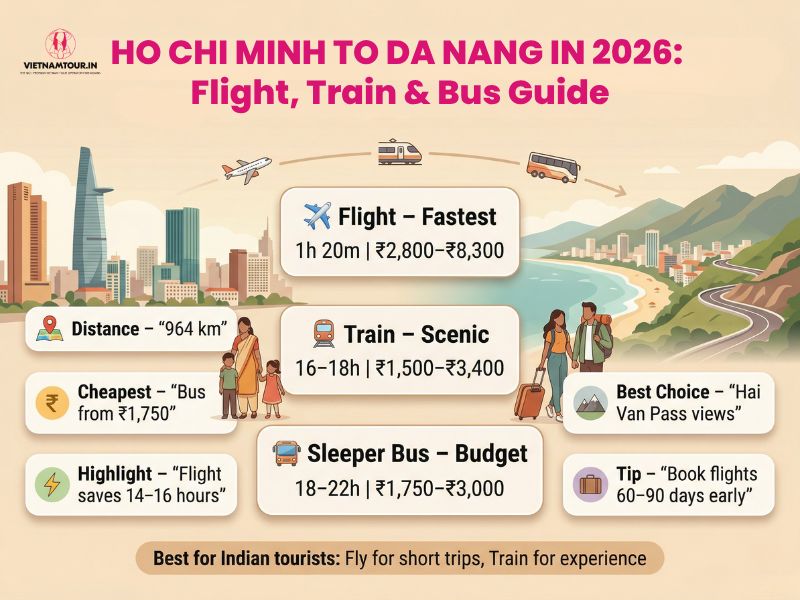
The four ways to travel from Ho Chi Minh City to Da Nang are by flight (1 hour 20 minutes), by Reunification Express train (15 hours 40 minutes – 19 hours 8 minutes), by sleeper bus (18–22 hours), and by private limousine (16–18 hours), covering a route of 964 km by road between Vietnam’s commercial capital and the gateway city to Central Vietnam. A flight is the fastest option; the overnight train via the Hai Van Pass is the most scenic; the sleeper bus is the lowest-cost option at ₹1,750–₹3,000; the private limousine offers door-to-door comfort for families.
This guide from Vietnamtour.in — Vietnam’s No.1 Premium Tour Operator for Indians, with 428,000+ Indian travellers planned since 2015 — covers the Ho Chi Minh City to Da Nang route distance (964 km road, 1,072 km rail, 791 km aerial), all four transport modes with INR pricing, the four train classes from Hard Seat AC (₹1,525) to 4-Berth VIP Sleeper (₹3,390), the best months to travel (February–May, September–October), and a decision framework matched to Indian itinerary length and family size.
Last updated: May 2026. Flight, train, and bus prices on the Ho Chi Minh City to Da Nang route are seasonal and subject to operator pricing changes — verify on dsvn.vn (train), Skyscanner (flight), and Phuong Trang official site (bus) within 7 days of booking.
How Far Is Ho Chi Minh City to Da Nang?
Ho Chi Minh City to Da Nang is 964 km by road, 791 km as a straight-line aerial distance, and approximately 1,072 km by rail along the Reunification Express route.
The road distance of 964 km follows National Highway 1A (Quốc lộ 1A), Vietnam’s primary north-south arterial road running the full length of the country. The rail route is longer at 1,072 km because the Reunification Express line curves inland through the Central Highlands terrain between Nha Trang and Da Nang, adding approximately 108 km compared to the straight coastal road alignment.
Da Nang sits at the geographic midpoint between Ho Chi Minh City and Hanoi — approximately 964 km north of Ho Chi Minh City and 759 km south of Hanoi. This central position makes Da Nang the natural pivot point on a south-to-north Vietnam itinerary. Understanding the distance across all four transport modes — road, air, and rail — sets the foundation for comparing journey time and cost across the four travel options below.
Flight from Ho Chi Minh City to Da Nang
Direct flights from Ho Chi Minh City to Da Nang take 1 hour 20 minutes, with 15–20 daily departures operated by Vietnam Airlines, VietJet Air, Bamboo Airways, and Pacific Airlines.

Flights depart from Tan Son Nhat International Airport (SGN) in Ho Chi Minh City and arrive at Da Nang International Airport (DAD). SGN is located approximately 8 km northwest of Ho Chi Minh City’s District 1 centre — taxi or Grab transfers from SGN to District 1 take 30–45 minutes depending on traffic. Da Nang International Airport (DAD) sits 3 km west of Da Nang city centre, making DAD one of Vietnam’s most conveniently located airports relative to its host city.
Advance booking fares on the Ho Chi Minh City to Da Nang route range from ₹2,800–₹8,300 (VND 790,000–2,350,000) when booked 60–90 days ahead. Peak-season fares during Tet, summer school holidays, and Indian festival travel windows reach ₹7,000–₹12,000. Indian travellers booking the Ho Chi Minh City to Da Nang route can compare fares across carriers on Skyscanner and the individual airline websites — VietJet Air runs periodic flash sales that bring Ho Chi Minh City to Da Nang fares to ₹1,800–₹2,500 (VND 530,000–740,000).
Baggage allowance on the Ho Chi Minh City to Da Nang route varies by airline and fare class: Vietnam Airlines domestic economy includes 20 kg checked baggage on Standard fare and 23 kg on Flex fare; VietJet Air and Pacific Airlines base fares are carry-on only (7 kg), with 20 kg checked baggage purchased as an add-on at ₹700–₹1,400 per bag.
Is flying the best way to get from Ho Chi Minh City to Da Nang? Yes, for Indian tourists with 10 days or fewer in Vietnam, the 1-hour 20-minute flight saves 14–16 hours compared to the train, which is time better spent at the destination rather than in transit.
Train from Ho Chi Minh City to Da Nang — Reunification Express
The Reunification Express (SE trains) runs daily from Saigon Station to Da Nang Station, covering the 1,072 km route in 15 hours 40 minutes – 19 hours 8 minutes depending on the train number.
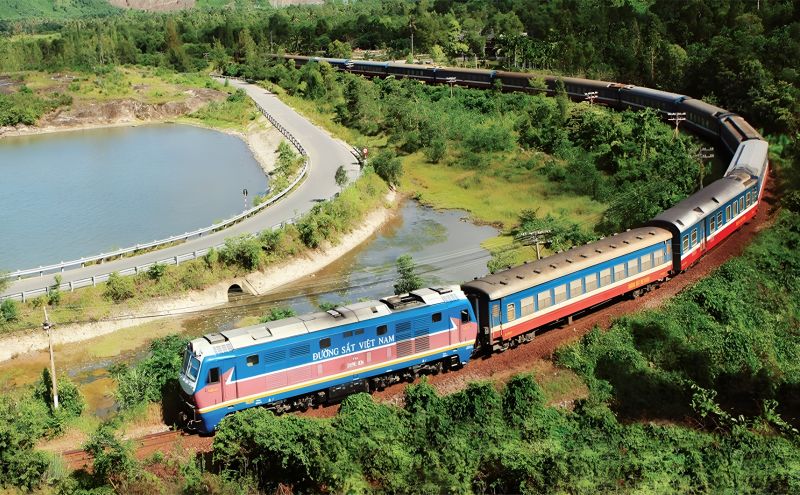
The fastest service on the Ho Chi Minh City to Da Nang route is SE2, departing Saigon Station at 21:55 and arriving Da Nang at 13:35 the following day in 15 hours 40 minutes. The slowest service is SE10, departing at 14:40 and arriving at 09:48 the following day in 19 hours 8 minutes. The full daily schedule from Saigon Station to Da Nang Station is as follows:
| Train | Depart Saigon | Arrive Da Nang | Duration |
|---|---|---|---|
| SE2 | 21:55 | 13:35 (+1) | 15h 40m |
| SE4 | 19:45 | 12:29 (+1) | 16h 44m |
| SE6 | 09:00 | 02:00 (+1) | 17h 00m |
| SE8 | 06:00 | 23:25 | 17h 25m |
| SE22 | 11:40 | 06:55 (+1) | 19h 15m |
| SE10 | 14:40 | 09:48 (+1) | 19h 08m |
For Indian tourists prioritizing overnight travel on the Ho Chi Minh City to Da Nang route, SE4 (departs 19:45) and SE2 (departs 21:55) are the two most practical departure choices. SE4 and SE2 both arrive in Da Nang between 12:29 and 13:35 the next day, allowing a full evening in Ho Chi Minh City before departure and a usable afternoon upon arrival in Da Nang. All SE trains depart from Saigon Station (Ga Sài Gòn), located at 1 Nguyễn Thông, District 3, Ho Chi Minh City — approximately 3 km from District 1 and reachable by Grab in 10–15 minutes.
4-seat and Berth Classes Train from Ho Chi Minh City to Da Nang
The Reunification Express offers 4-seat and berth classes on the Ho Chi Minh City to Da Nang route, ranging from air-conditioned seated options to private 4-berth sleeping cabins. Class selection depends on journey duration preference, budget, and whether the Ho Chi Minh City to Da Nang trip is taken as an overnight or daytime service.
Hard Seat AC — ₹1,525–₹2,050 (VND 450,000–600,000)
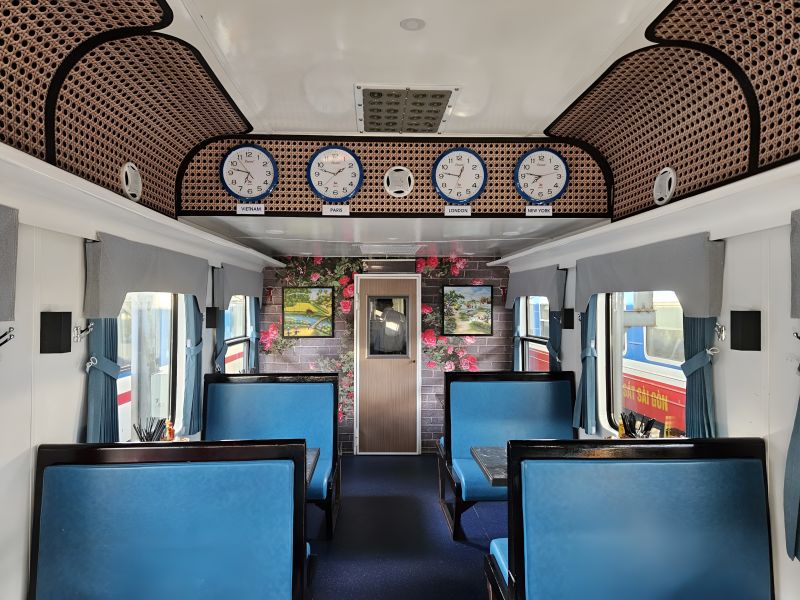
The hard seat AC class is the lowest-cost train option on the Ho Chi Minh City to Da Nang route, with air-conditioning but no reclining function. Hard seat AC is serviceable for daytime journeys of 4–6 hours, but becomes uncomfortable over the full 15–19 hour duration — seats do not recline, making rest difficult on overnight departures. The Hard Seat AC class is best suited for budget travellers who prioritise cost over comfort and are travelling during daylight hours on a shorter segment of the Ho Chi Minh City to Da Nang route.
Soft Seat AC — ₹2,035–₹2,375 (VND 600,000–700,000)
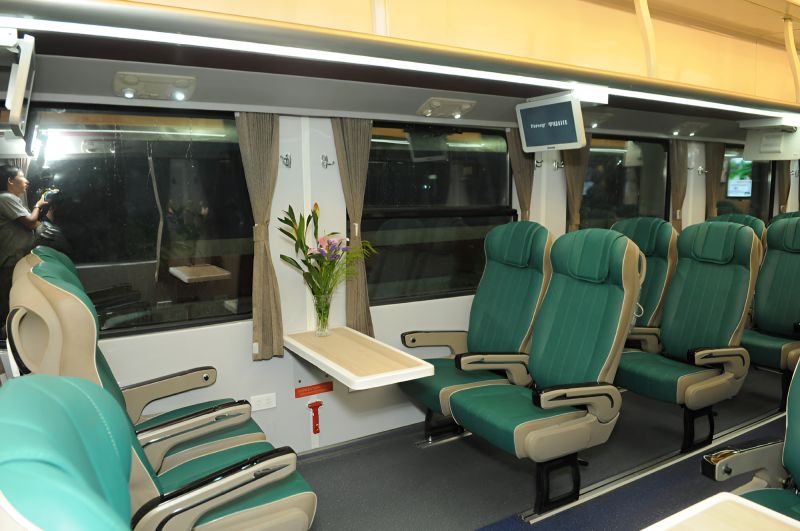
The soft seat AC class offers padded seating with a slight recline, making it more comfortable than hard seat AC for daytime travel on the Ho Chi Minh City to Da Nang route. Soft seat AC is a reasonable option for travellers taking a morning departure on the Ho Chi Minh City to Da Nang route — SE8 at 06:00 or SE6 at 09:00 — who do not need to sleep during the journey. For overnight departures on SE4 or SE2, the soft seat AC partial recline remains insufficient for genuine rest over 15–17 hours; the 6-berth sleeper class is the recommended upgrade for overnight travel at a modest price difference.
6-Berth Sleeper — ₹2,375–₹3,050 (VND 700,000–900,000)
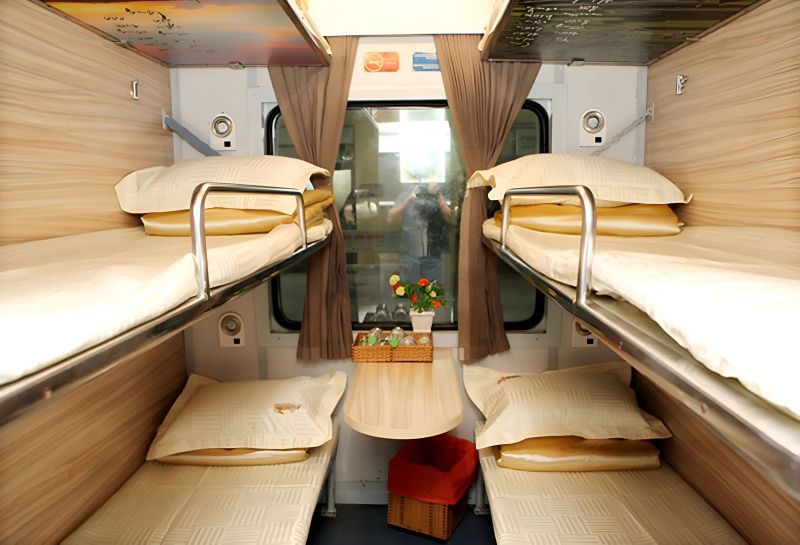
The 6-berth sleeper is the most popular class for overnight travel on the Ho Chi Minh City to Da Nang route, offering a flat sleeping berth in an open 6-bed configuration at a price point accessible to most Indian travellers. The cabin has 3 tiers of berths on each side — lower, middle, and upper. Lower berths are the most comfortable and the most in-demand on the Ho Chi Minh City to Da Nang route; book lower berths specifically when purchasing tickets. The 6-berth configuration does not have a lockable door, so valuables should be kept in a bag used as a pillow or secured under the mattress during overnight hours.
4-Berth Sleeper VIP — ₹3,050–₹3,390 (VND 900,000–1,000,000)
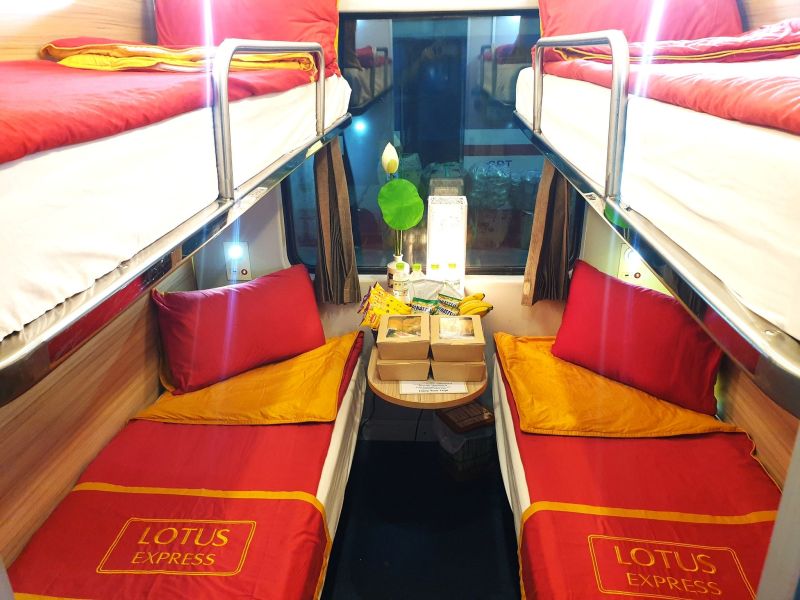
The 4-berth VIP sleeper is the recommended class for Indian families and small groups travelling overnight from Ho Chi Minh City to Da Nang, offering a private lockable cabin with 4 berths, more space per passenger than the 6-berth option, and significantly greater privacy. A family of 4 booking all 4 berths in a Ho Chi Minh City to Da Nang VIP cabin pays ₹12,200–₹13,560 (VND 3,600,000–4,000,000) total for a fully private overnight cabin — an efficient cost-per-person outcome for groups. The 4-berth VIP cabin is the most comfortable train option on the Ho Chi Minh City to Da Nang route and the closest equivalent to a private overnight travel experience.
Tips for Indian Travellers when Travelling from Ho Chi Minh City to Da Nang by Train
The most important practical considerations for Indian tourists on the Ho Chi Minh City to Da Nang train are booking platforms, food preparation, passport requirements, and train selection for the Hai Van Pass.
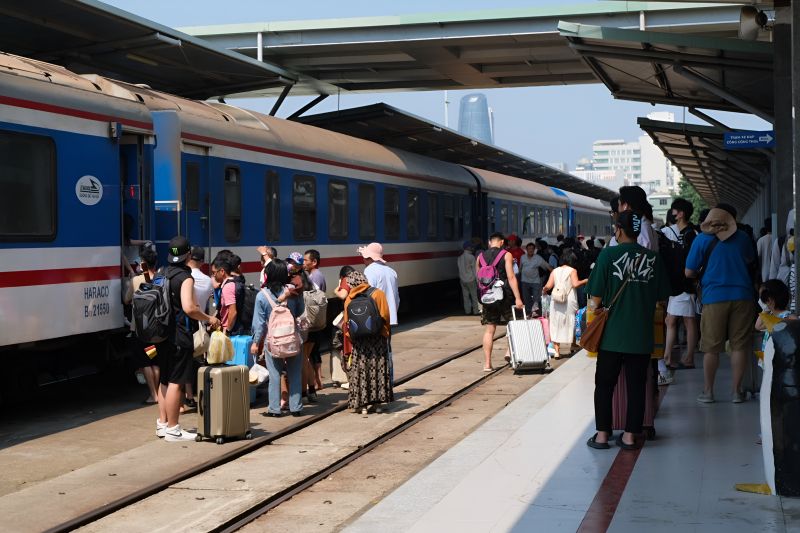
Train tickets for the Ho Chi Minh City to Da Nang route are bookable online via dsvn.vn (Vietnam Railways official site), 12go.asia, and Baolau.vn — all three platforms accept international credit and debit cards, including Indian-issued Visa and Mastercard. Book lower berths specifically when selecting seats in the 6-berth or 4-berth sleeper classes on the Ho Chi Minh City to Da Nang route, as lower berths are wider, easier to access, and the first to sell out on popular departure dates.
Passport verification occurs at the time of boarding; carry your passport for this check. No separate visa or domestic travel permit is required — the Vietnam e-visa issued to Indian passport holders covers all domestic movement within Vietnam, including the Ho Chi Minh City to Da Nang rail route.
Onboard meal options on the Reunification Express are limited and not reliably vegetarian. Anthony Ngo, Co-founder of Vietnamtour.in, highlights a critical logistics gap: onboard train meals are rarely compliant with strict Indian dietary laws. To address this, he suggests that Indian travellers — especially those requiring Jain or pure vegetarian (no onion, no garlic) options — should source packaged meals from Ho Chi Minh City’s specialised Indian restaurants or supermarkets like Co.opmart before boarding. This expert tip ensures a “home-cooked taste” experience even during an 18-hour rail journey.
The Hai Van Pass — a 21 km coastal mountain crossing between Hue and Da Nang — is the most scenic segment of the Ho Chi Minh City to Da Nang rail journey. Top Gear’s 2008 Vietnam Special, viewed by an estimated 350 million people globally, featured the Hai Van Pass and brought international recognition to this segment. The Hai Van Pass is best experienced in daylight: SE8 (departs 06:00) passes through the Hue–Da Nang segment in the late afternoon, making it the most reliable choice for viewing the Hai Van Pass in full daylight. Evening departures on SE4 (19:45) and SE2 (21:55) reach the Hai Van Pass in the early morning hours when visibility is limited.
On overnight departures, the 4-berth VIP sleeper cabin on the Ho Chi Minh City to Da Nang route has a lockable door for full security. Travellers in the 6-berth open cabin should keep valuables secured under the mattress or in a bag used as a pillow during overnight hours.
Sleeper Bus from Ho Chi Minh City to Da Nang
Sleeper buses from Ho Chi Minh City to Da Nang take 18–22 hours and cost ₹1,750–₹3,000 (VND 500,000–850,000). The sleeper bus is the most budget-friendly transport option on the Ho Chi Minh City to Da Nang route.
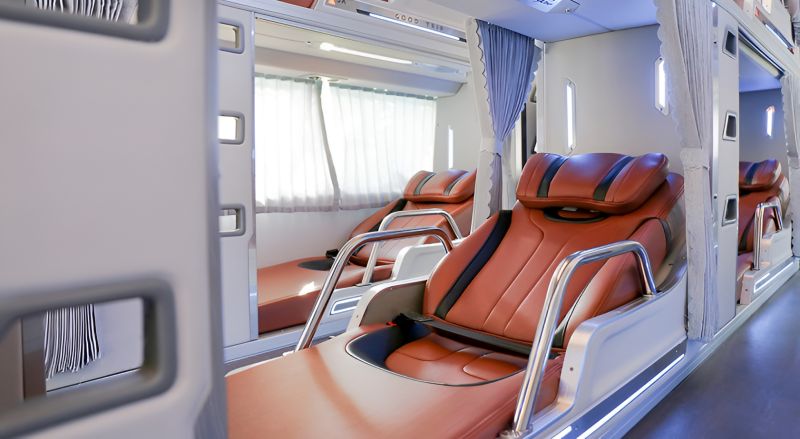
The main operators on the Ho Chi Minh City to Da Nang sleeper bus route are Phuong Trang (FUTA Bus Lines), Hoang Long, and The Sinh Tourist. Buses depart from Mien Dong Bus Station (Bến xe Miền Đông), located in Binh Thanh District, approximately 6 km northeast of Ho Chi Minh City’s District 1 — reachable by Grab in 20–30 minutes from Ho Chi Minh City centre. Sleeper bus configurations on the Ho Chi Minh City to Da Nang route are flat-bed reclining seats in a 2-1 layout with approximately 40 berths per vehicle.
The Ho Chi Minh City to Da Nang sleeper bus is significantly less comfortable than the soft sleeper train on the same route over an 18–22 hour journey — road quality on National Highway 1A is inconsistent, and bus suspension makes sleep more difficult than a Reunification Express train berth. The sleeper bus is best suited for extreme-budget travellers or those with very flexible schedules. Food stops en route are not guaranteed to have vegetarian options — carry sufficient food for the full 18–22 hour Ho Chi Minh City to Da Nang journey duration.
Limousine and Private Car from Ho Chi Minh City to Da Nang
Private limousine vans and cars from Ho Chi Minh City to Da Nang take 16–18 hours and cost ₹8,500–₹15,300 (VND 2,500,000–4,500,000) per vehicle for up to 9 passengers. The limousine is the most comfortable road transport mode on the Ho Chi Minh City to Da Nang route, with reclining individual seats, USB charging, Wi-Fi, and door-to-door pickup and drop-off.
Limousine operators on the Ho Chi Minh City to Da Nang route include Hoang Long Limousine, Phuong Trang VIP, and Queen Cafe Bus. Operators offer 9-seat and 16-seat configurations with flat-bed reclining seats — significantly more comfortable than the standard sleeper bus on the same route. The Ho Chi Minh City to Da Nang limousine is best suited for Indian families of 4–6 travelling together who want road transport without the standard sleeper bus crowding, particularly when train sleeper berths are sold out during peak Tet or Indian holiday windows.
A 9-seat private limousine fully booked by a family of 6 brings the per-person cost to ₹1,400–₹2,550 — undercutting both the sleeper bus and the train sleeper for groups, while delivering significantly higher comfort and door-to-door service from any Ho Chi Minh City hotel to any Da Nang hotel.
Ho Chi Minh City to Da Nang Travel Cost Comparison for Indian Tourists (INR)
Travel costs from Ho Chi Minh City to Da Nang range from ₹1,525 (VND 450,000) by hard-seat AC train to ₹15,300 (VND 4,500,000) for a private limousine, with peak-season flight fares reaching ₹12,000 depending on booking window and travel period.
| Mode | Duration | Lowest fare | Highest fare | Best for |
|---|---|---|---|---|
| Flight (advance, 60–90 days) | 1h 20m | ₹2,800 (VND 790,000) | ₹8,300 (VND 2,350,000) | 10-day trips, time-tight |
| Flight (peak/Tet) | 1h 20m | ₹7,000 | ₹12,000 | Avoid — book 120 days ahead |
| Train Hard Seat AC | 15–19h | ₹1,525 (VND 450,000) | ₹2,050 (VND 600,000) | Daytime, extreme budget |
| Train Soft Seat AC | 15–19h | ₹2,035 (VND 600,000) | ₹2,375 (VND 700,000) | Morning departures |
| Train 6-Berth Sleeper | 15–19h | ₹2,375 (VND 700,000) | ₹3,050 (VND 900,000) | Solo overnight |
| Train 4-Berth VIP | 15–19h | ₹3,050 (VND 900,000) | ₹3,390 (VND 1,000,000) | Families of 4 |
| Sleeper Bus | 18–22h | ₹1,750 (VND 500,000) | ₹3,000 (VND 850,000) | Extreme budget, flexible time |
| Limousine (9-seat private) | 16–18h | ₹8,500 (VND 2,500,000) | ₹15,300 (VND 4,500,000) | Families of 6, door-to-door |
Two hidden costs apply to all transport modes on the Ho Chi Minh City to Da Nang route and should be factored into the total door-to-door travel budget. Airport transfers on the Ho Chi Minh City to Da Nang flight route add ₹305–₹510 (VND 90,000–150,000) each way by Grab — applicable to both SGN departure and DAD arrival. Train travellers pay ₹100–₹205 (VND 30,000–60,000) by Grab from District 1 to Saigon Station; transfer from Da Nang Station to Da Nang city centre accommodation adds a similar ₹100–₹205. Limousine fares already include door-to-door pickup, so no transfer cost applies.
The most cost-efficient strategy for low flight fares on the Ho Chi Minh City to Da Nang route is booking 60–90 days in advance on a weekday departure. VietJet Air flash sales — announced via email subscription and the VietJet app — periodically bring Ho Chi Minh City to Da Nang fares to ₹1,800–₹2,500 (VND 530,000–740,000), overlapping with sleeper bus pricing while saving 16–17 hours of transit time.
Best Time to Travel from Ho Chi Minh City to Da Nang
The best months to travel from Ho Chi Minh City to Da Nang are February to May and September to October, when Da Nang experiences dry weather and average daytime temperatures of 25–32°C.
Da Nang’s weather is the primary planning variable for the Ho Chi Minh City to Da Nang route — Ho Chi Minh City maintains stable weather year-round with a dry season from November to April. Da Nang’s rainy season runs from October to December, with typhoon activity concentrated in October and November bringing the highest risk of disrupted outdoor plans and flooding near the coast. Indian tourists planning beach time at My Khe Beach or activities at Ba Na Hills in Da Nang should avoid the October–November typhoon window specifically.
The Tet holiday period (late January to mid-February) brings the highest travel demand on all Vietnam domestic routes — flights and trains on the Ho Chi Minh City to Da Nang corridor sell out 6–8 weeks in advance, with prices increasing 2–3x above standard rates. Indian tourists travelling during Tet should book Ho Chi Minh City to Da Nang transport a minimum of 8 weeks ahead.
Indian holiday travel windows that align with the optimal Da Nang weather period include Christmas and New Year in December — note that Da Nang is approaching the tail end of its rainy season in December; book with awareness of weather risk — Pongal (mid-January), Makar Sankranti (14 January), and Holi (March 14, 2026), the latter falling squarely within Da Nang’s best weather window. For all Indian peak holiday travel on the Ho Chi Minh City to Da Nang route, 90 days ahead is the minimum booking lead time.
Flight vs. Train — Which Indian Tourists Should Choose from Ho Chi Minh City to Da Nang?
Indian tourists with 10 days or fewer in Vietnam should fly; those with 14 or more days gain more value from the overnight train, saving ₹340–₹5,300 (VND 100,000–1,560,000) compared to a standard advance-booked flight while experiencing the Hai Van Pass — one of Southeast Asia’s most scenic rail segments.
Based on itinerary planning patterns across 46,000+ Vietnamtour.in tours for Indian travellers, most 10-day Vietnam itineraries use domestic flights from Ho Chi Minh City to Da Nang to save time. Longer 12–14 day itineraries more frequently use overnight trains, allowing travellers to reduce one hotel night while experiencing the Hai Van Pass.
To simplify your planning, Mr. Max Nguyen, the Director of Sales at Vietnamtour.in, has developed a decision framework used by Vietnamtour.in’s 70+ travel specialists to optimise itineraries for thousands of Indian families:
- Itineraries of 10 days or fewer in Vietnam → Indian tourists should fly from Ho Chi Minh City to Da Nang. The 14–16 hours saved in transit compared to the overnight train translates directly to an additional half-day in Da Nang or Hoi An.
- Itineraries of 14 days or more in Vietnam → Choose the overnight train (4-berth VIP or 6-berth sleeper). The cost savings of ₹340–₹5,300 compared to a flight can fund a full day of activities in Da Nang, and the Hai Van Pass segment is a genuine travel highlight.
- Families of 4 travelling together → The 4-berth VIP sleeper cabin at ₹12,200–₹13,560 total for a private lockable cabin is a strong value proposition compared to purchasing 4 individual flight tickets at ₹10,700–₹31,900 (VND 3,160,000–9,400,000) combined — particularly on longer itineraries where time pressure is lower.
- Families of 6 travelling together → A 9-seat private limousine at ₹8,500–₹15,300 fully booked brings the per-person cost to ₹1,400–₹2,550 — undercutting train sleeper berths while delivering door-to-door service.
- Extreme budget travellers → The sleeper bus from Ho Chi Minh City to Da Nang is available at ₹1,750–₹3,000, though the 18–22 hour journey and road quality make this the most tiring option.
The Vietnam e-visa issued to Indian passport holders covers all domestic movement within Vietnam — no separate permit or documentation is required to travel between Ho Chi Minh City and Da Nang by any mode of transport. A practical itinerary structure for Indian tourists on a 10–14 day Vietnam trip is Ho Chi Minh City (3–4 days) → Da Nang and Hoi An (3–4 days) → Hanoi and Ha Long Bay (3–4 days), with the Ho Chi Minh City to Da Nang leg taken by flight on trips of 10 days or fewer and by overnight train on trips of 14 days or more.
Frequently Asked Questions about Ho Chi Minh City to Da Nang
Is There a Direct Train from Ho Chi Minh City to Da Nang?
Yes — the SE2, SE4, SE6, SE8, SE10, and SE22 services all complete the Ho Chi Minh City to Da Nang route without passengers needing to change trains at any intermediate station, with departure times spanning from 06:00 to 21:55 daily from Saigon Station.
Can Indian Tourists Book Vietnam Train Tickets Online?
Yes — Vietnam train tickets for the Ho Chi Minh City to Da Nang route are bookable online through dsvn.vn, 12go.asia, and Baolau.vn, all of which accept international Visa and Mastercard issued by Indian banks. Before booking transport in Vietnam, Indian travellers should confirm their travel documents are valid for the full duration of the trip. For complete visa requirements and entry documentation for Indian passport holders, the guide to Vietnam visa for Indian travellers covers e-visa eligibility, application steps, and processing times.
Do I Need a Separate Visa to Travel from Ho Chi Minh City to Da Nang?
No — the India e-visa for Vietnam covers all domestic travel within the country, including the Ho Chi Minh City to Da Nang route by flight, train, bus, or limousine. No additional permit, internal travel document, or check-in procedure beyond standard passport verification applies to domestic movement between Vietnamese cities.
How Early Should I Book Flights from Ho Chi Minh City to Da Nang?
Book Ho Chi Minh City to Da Nang flights 60–90 days in advance for standard travel periods; Tet and summer school holiday departures require 120 days advance booking, as fares increase 2–3x and seats sell out on preferred timings. Budget planning for the full Ho Chi Minh City to Da Nang journey — including accommodation, transfers, and activities — is an important planning step for Indian travellers on this route. For a full breakdown of what Vietnam travel costs from India across transport, hotels, food, and tours, the Vietnam trip cost from India guide covers all expenditure categories with INR pricing.
What to Do After Arriving in Da Nang from Ho Chi Minh City?
Transfer from Da Nang International Airport (DAD) or Da Nang Station to Da Nang city centre costs ₹200–₹400 by Grab and ₹300–₹600 by metered taxi — Grab is the more reliable option for confirmed pricing without negotiation.
Four attractions within easy reach of Da Nang city centre are typically prioritized by Indian tourists on arrival: My Khe Beach, Dragon Bridge, Ba Na Hills and the Golden Bridge, and Hoi An Ancient Town.
My Khe Beach is Da Nang’s primary beach, located 3 km east of Da Nang city centre — a 10-minute Grab ride from most hotels. My Khe Beach is a 9 km stretch of white sand consistently ranked among Asia’s best urban beaches, with calm waters from March to August.
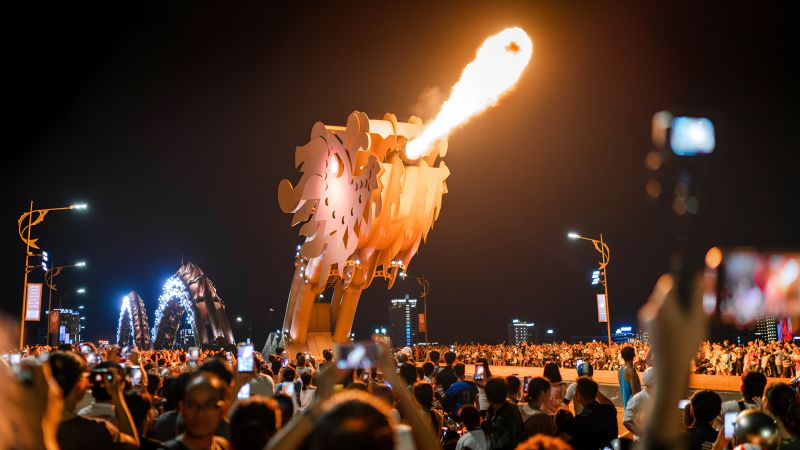
Dragon Bridge (Cầu Rồng) is Da Nang’s most photographed landmark — a 666-metre bridge shaped as a dragon spanning the Han River. Fire and water shows at Dragon Bridge run every Saturday and Sunday at 9:00 PM, making Saturday night the optimal arrival evening for first-time visitors.
Ba Na Hills and the Golden Bridge is a mountain resort at 1,487 m elevation, accessible by cable car from the Ba Na Hills base station 25 km west of Da Nang. The Golden Bridge — a 150-metre pedestrian walkway held by two giant stone hands — is the most-photographed attraction in Central Vietnam. Plan a full day for Ba Na Hills; the Ba Na Hills cable car journey alone takes 20 minutes each way.
Hoi An Ancient Town is a UNESCO World Heritage Site located 30 km south of Da Nang — a 45-minute drive by Grab or day-tour vehicle. Hoi An Ancient Town is the most visited destination in Central Vietnam and is best experienced in the early morning or evening when lanterns are lit along the Thu Bon River.
Indian tourists who want to see everything Da Nang and Central Vietnam offers — from Marble Mountains to Cham Island — will find the complete attraction list with opening hours and INR pricing in places to visit in Da Nang. For everything Hoi An offers Indian travellers — from tailor shops to lantern festivals and cooking classes — the full destination guide is at Hoi An.
What Is the Cheapest Way to Get from Ho Chi Minh City to Da Nang?
The cheapest way to travel from Ho Chi Minh City to Da Nang is the hard-seat AC train at ₹1,525–₹2,050, marginally undercutting the sleeper bus at ₹1,750–₹3,000. VietJet Air flash-sale flights at ₹1,800–₹2,500 close the gap further while saving 14–17 hours of transit time — the recommended choice when flash sales are live.
For travellers comparing all transport options across Vietnam — not just the Ho Chi Minh City to Da Nang corridor — the complete guide to transportation in Vietnam covers domestic flights, trains, buses, and private transfers with INR pricing across all major routes. Indian travellers who want transport, accommodation, and Da Nang experiences bundled into a single planned itinerary can review Vietnam tour packages for private and customized options designed specifically for Indian tourists.
