
If there is one place where nature and ancient structures are at their very best, it is none other than Ta Prohm, a hidden treasure deep within the Cambodian jungle. This travel guide will help you understand the history, architecture, and things you must see at the Ta Prohm temple, making the entire experience an incredible one.
Introduction to Ta Prohm Temple
Ta Prohm, located inside Angkor Archaeological Park, is a magnificent temple that feels like there is a mystical element to it because of how it combines ancient architecture with an open, wild and exotic environment.
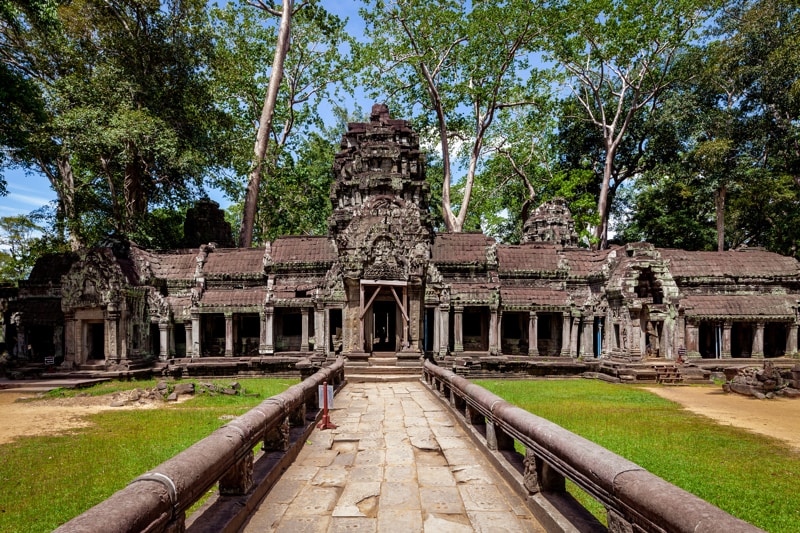
Most temples within Angkor have been restored and appear exactly as they did when they were originally built; however, Ta Prohm has not been completely restored; it has most of the natural growth that was there at the time of discovery. Ta Prohm allows visitors to see how Angkor appeared at the time it was rediscovered.
Where Is Ta Prohm Located?
-
Address: inside Angkor Archaeological Park, 6 km from Siem Reap city Center, Cambodia
Ta Prohm, which is located in the eastern section of the Angkor area, is approximately 1 kilometre east of Angkor Thom and 6 kilometres north of Siem Reap’s downtown area. Due to its prime location, Ta Prohm is very accessible and is included in most sightseeing tours of Angkor.
Ta Prohm is located on the Small Circuit, the most used route for visiting Angkor. Therefore, Ta Prohm is frequently visited alongside other famous landmarks like Angkor Wat, Bayon Temple, and Angkor Thom in one day.
History of Ta Prohm
The original name was Rajavihara or “Royal Monastery”. Ta Prohm was built during the reign of King Jayavarman VII in the late 12th century as a tribute to his mother and was one of the largest Buddhist temples during that time period.
At one time, Ta Prohm housed over 12,000 individuals, including monks, teachers, and other scholars. After the Khmer Empire began to decline in the 15th century, the temple slowly fell into obscurity, and many of the structures of the temple fell into ruin and were reclaimed by the jungle.
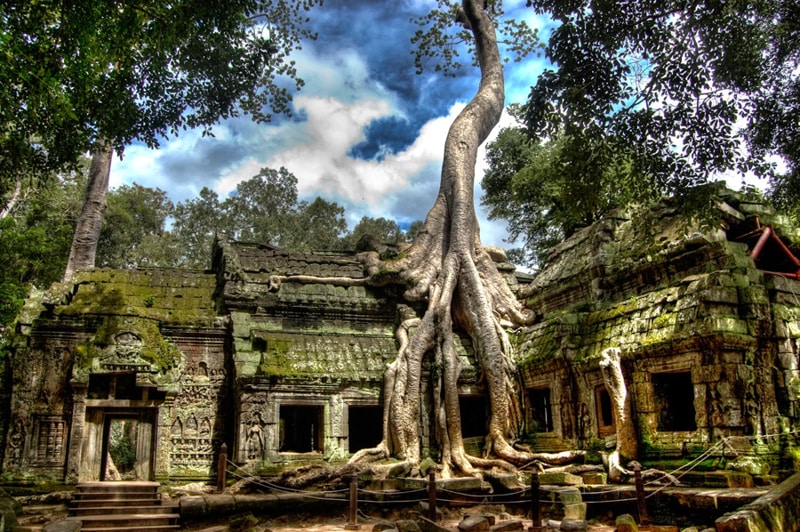
The temple of Ta Prohm suffered great damage from wars over the years, while many others were completely overtaken by banyan trees and fig trees. Although the temple appeared to be “dead” at one time. Although the temple appeared to be “dead” at one time, it has since been restored to life by the spectacular natural surroundings.
It was not until the early part of the 20th century that archaeologists from France rediscovered the temple of Ta Prohm and decided to conserve the temple in its current condition, without further restoration, thus preserving the temple’s natural, dilapidated looks.
Ta Prohm Entrance Fees and Opening Hours
-
Ta Prohm is generally open daily from 7:30 AM to 5:30 PM.
To visit Ta Prohm and other attractions within the Angkor Complex, tourists need to purchase a ticket. The ticket type is called “Angkor pass.” Indian tourists are allowed to visit any temple within this complex by using a ticket, including Ta Prohm
Angkor pass is divided into 3 types, and here is the detail about the price:
|
Ticket Type
|
Price per person
|
Duration
|
Note
|
|
1-day
|
$37
|
1 day
|
This ticket is suitable for those who want a short visit to Ta Prohm or Angkor Wat with a tight schedule
|
|
3-day
|
$62
|
3 days (non-consecutive use allowed)
|
Most travellers choose to visit for 3 days to have a relaxed exploration. The ticket is valid for 10 days from the date of purchase.
|
|
7-day
|
$72
|
7 days (non-consecutive use allowed)
|
If you want to explore the Angkor Complex more deeply and more relaxed, you should choose to buy this 7-day ticket. The ticket is valid for 1 month from the date of purchase, allowing you to visit the Angkor Wat complex for any 7 days within that 1 month.
|
Why Ta Prohm Is One of the Most Famous Temples in Angkor
The beauty of the ruins at Ta Prohm, with their imaginative craftsmanship and physical labour, will draw you in with both an awe-inspiring admiration and a sense of loss for what they once were. Unlike many of the temples where restoration has taken place to return to their original appearance, Ta Prohm is unique as it remains in a natural state and is integrated with its environment. It is this rawness and atmospheric feeling that will make your visit to the temple unforgettable.
A Unique Jungle Temple in Angkor
Ta Prohm is sometimes described as being the “jungle temple” because its foliage has started to overtake it. The atmosphere at Ta Prohm differs from that of Angkor Wat or Bayon. There are no large open spaces or reconstructed towers. The approaches through winding passageways, created from crumbled walls and covered courtyards, create a tranquil and somewhat mysterious ambience.
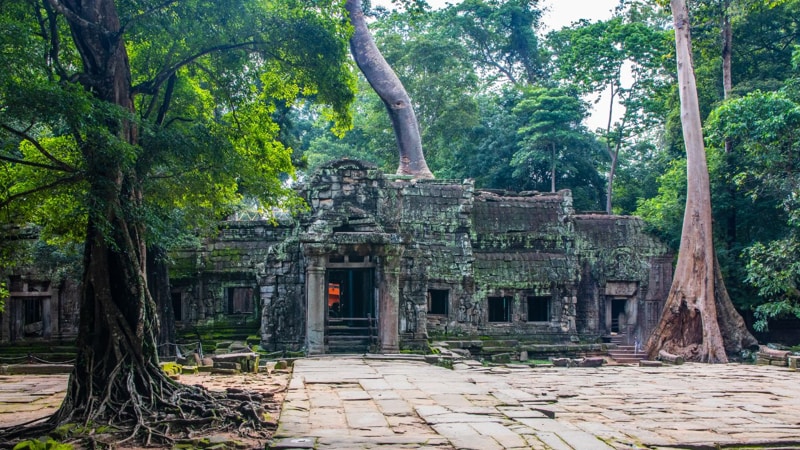
The contrast between Ta Prohm, Angkor Wat, and Bayon is one of the reasons people are drawn to these locations. Angkor Wat is grand and monumental; Bayon is symbolic and spiritual; and Ta Prohm has a more intimate and almost untouched feeling.
Nature and Ruins – The Giant Trees of Ta Prohm
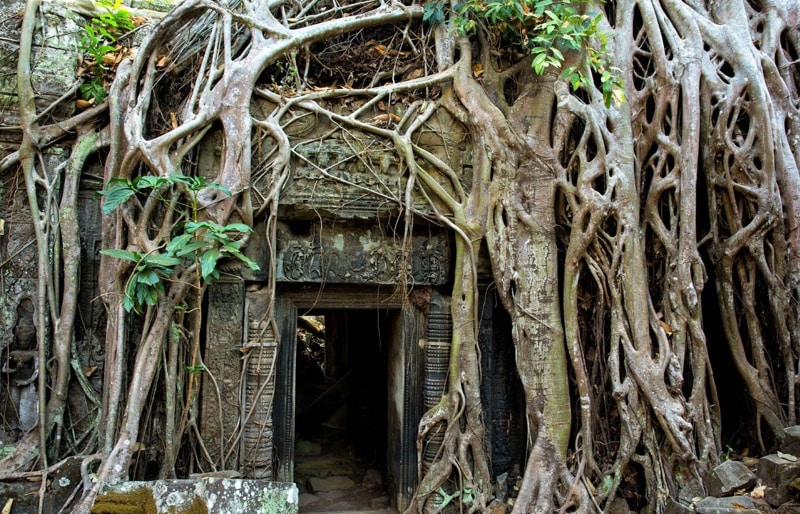
One of Ta Prohm’s most defining features is the extensive number of large trees that grow continuously throughout the temple. A major part of this temple’s character is comprised of the roots of these trees wrapping around the walls and other openings (windows and doors) of the temple. The layering of all the roots forms a fantasy-like picture.
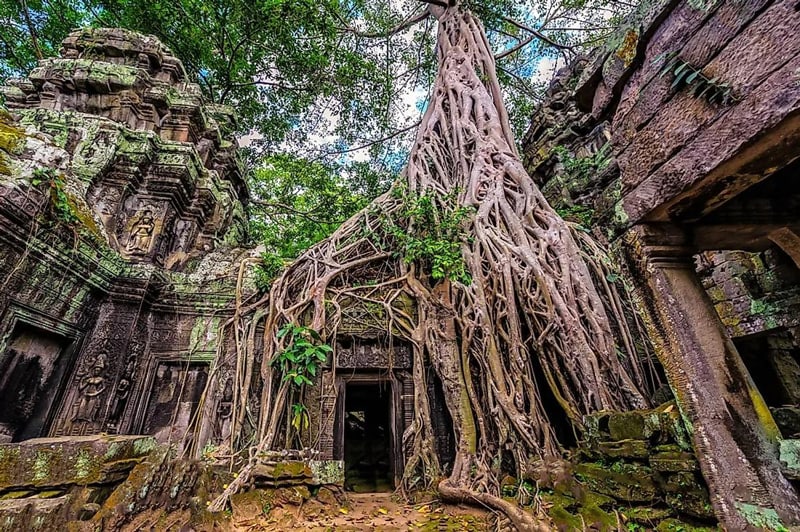
According to local folklore about Ta Prohm, the birds from the jungle took seeds from the jungle and dropped them onto the abandoned temple. After months and years of rain and soil collecting on them, those seeds developed into immense trees that surrounded Ta Prohm with their massive roots and branches. It may be just folklore, but the idea adds to the aura of Ta Prohm.
The combination of the trees surrounding Ta Prohm creates an incredible sense of atmosphere to view Ta Prohm. It reminds people of how patient and persistent nature is, and that nature will continue to grow despite how long it might take, and no matter how great a civilisation is, at some point, all civilisations will ceas
Ta Prohm and the Tomb Raider Effect
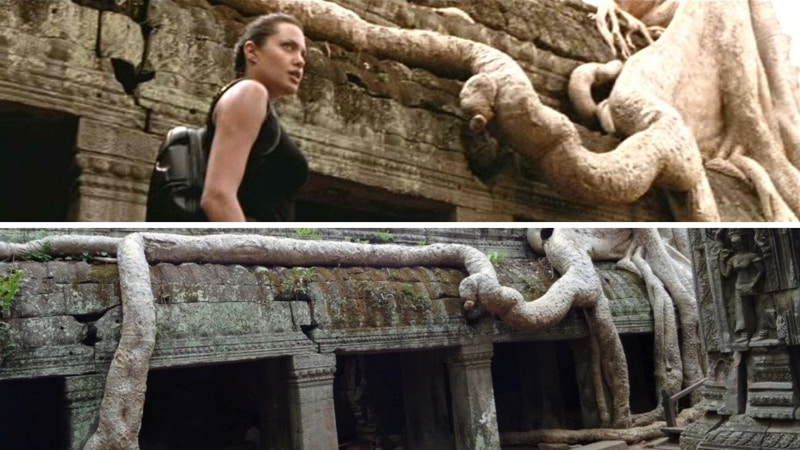
The movie Tomb Raider, released in 2001, made Ta Prohm internationally recognised as one of the most photogenic temples within Angkor by showcasing it everywhere on Earth how impressive Ta Prohm truly is.
The film also helped generate interest among tourists wanting to visit the temple after watching it. This remains true today; many travellers still refer to the temple as “Tomb Raider Temple”.
Architecture Shaped by Time and Nature
Ta Prohm was originally a large monastery complex instead of just one single temple. It had a big central tower surrounded by numerous smaller towers, galleries, and courtyards all around it. Much of the temple has fallen over time, but it still indicates its importance during the Angkor Empire period.
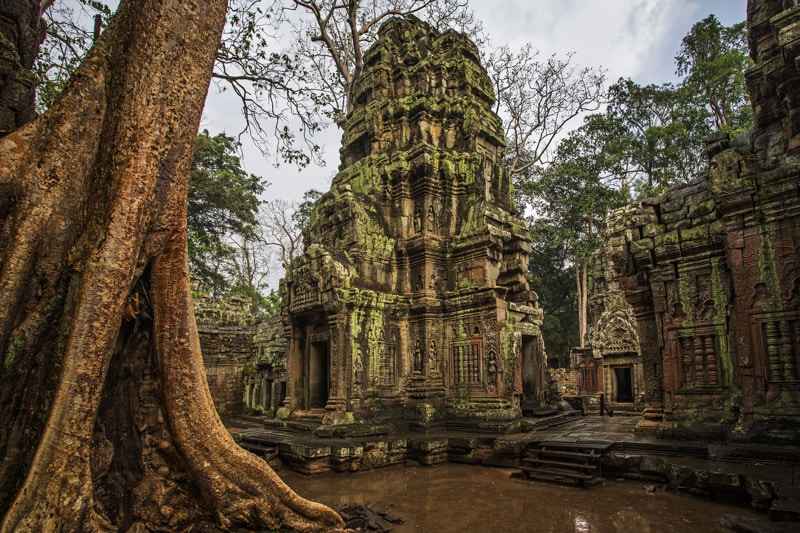
Like many other temples in Angkor, Ta Prohm was built out of sandstone and laterite, but as centuries have passed, trees and roots have pushed stones out of place, broken roofs, and changed the shape of hallways. This gradual transformation is why Ta Prohm has a unique look today and is one of the most memorable temples in Angkor.
Prayer Rooms and Reliefs
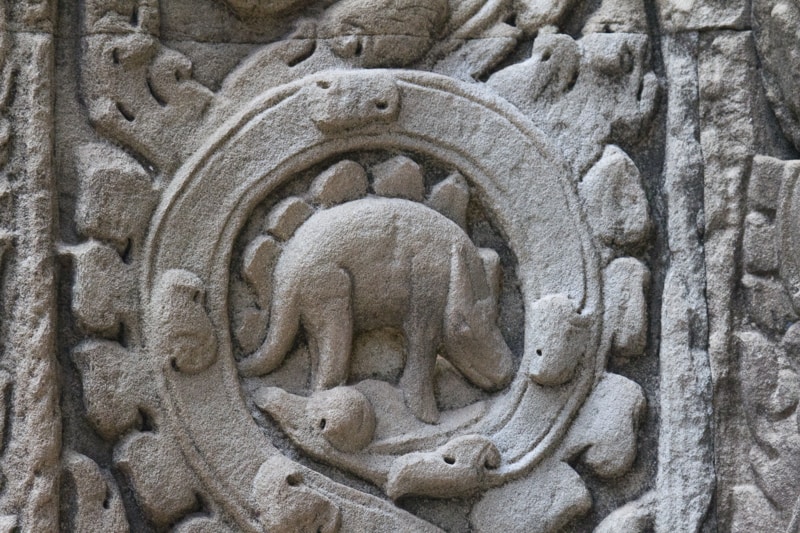
The prayer rooms in the Ta Prohm temple still retain many exquisitely carved statues of Buddha and Hindu deities. The reliefs on the walls depict scenes of daily life and religious beliefs of the ancient Khmer people, helping visitors to understand more about the religious culture of this empire.
Ta Prohm Compared to Other Angkor Temples
While both Ta Prohm and Angkor Wat have unique elements they share, by comparing them, we can see how different these two temples really are.
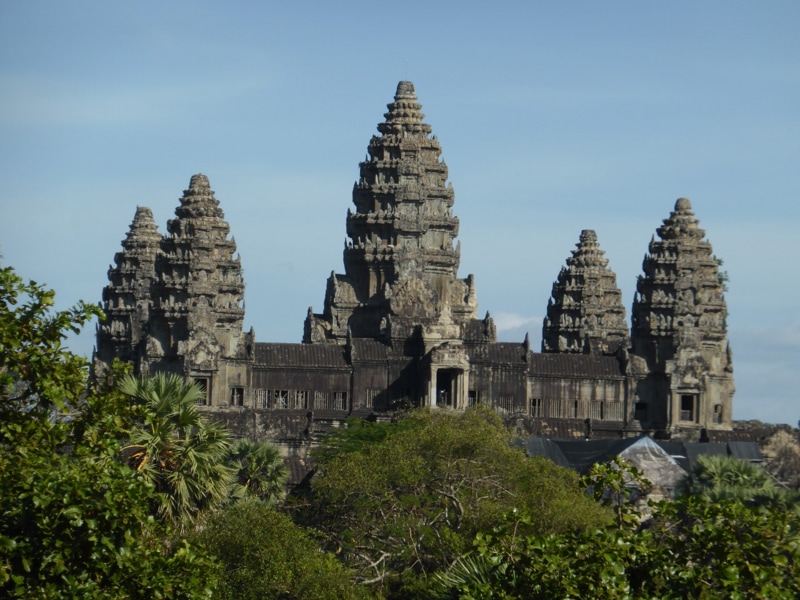
When visiting Angkor Wat, you will see a vast open area with large buildings that have been restored, which represent the power and size of the Khmer Empire, whereas Ta Prohm has much smaller buildings that are encased in trees and that have fallen into ruins with very narrow pathways through them. Both feel very different because of how you experience them; Angkor Wat is a grand place to visit, but Ta Prohm has a peaceful and tranquil atmosphere about it.
Ta Prohm also differs from the Bayon Temple even further. Although Bayon is well known for its many stone faces and clearly defined religious symbolism, Ta Prohm has much less stone carving and little decorative relief sculpture. However, the mystery created at Ta Prohm far exceeds that at Bayon. While Bayon has a very busy atmosphere and is quite monumental, Ta Prohm is more peaceful and immersive.
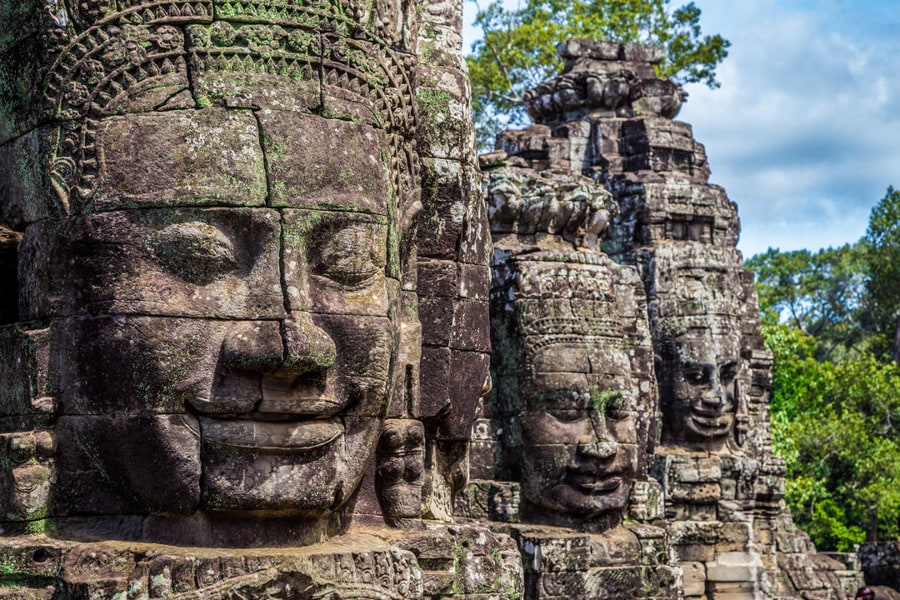
If you love nature, photography, and a special atmosphere, then you will absolutely love coming to Ta Prohm. This is a great choice for people who like to explore at a slower pace, allowing them to enjoy more of the emotional and memorable aspects of Angkor, rather than just its physical size and scale.
Best Time to Visit Ta Prohm
The best time to visit Ta Prohm is during the dry season, from November to March. During these months, it will be cooler, with minimal rain; thus, being outside at the temple will not be as hot and uncomfortable. This is indeed the high season, so the site might be quite crowded in December and January.
For fewer visitors, April and May are quiet, yet the weather is not good at all-it’s really hot. Visiting early in the morning is highly recommended to avoid the heat.
The rainy season, from June to October, brings lush greenery and makes Ta Prohm look even more dramatic and jungle-like. However, paths can be slippery after rain, and some places may be muddy.
Regardless of the season, the Ta Prohm Temple is best viewed early in the morning, from 7:00 to 9:00 AM, or late in the afternoon when the sun is soft, and there are fewer people.
How to Get to Ta Prohm Temple
The Ta Prohm Temple is situated within the Angkor Archaeological Park, which is found approximately 6 km north of the City Centre (Siem Reap) and just east of Angkor Thom. Compared to other major temples around the Small Circuit, getting to Ta Prohm is very easy, so it is common for visitors to visit it in conjunction with other major temples located on the Small Circuit.
Depending on your financial means and personal comfort, there are many transport options that allow you to reach Ta Prohm.
-
By Tuk Tuk
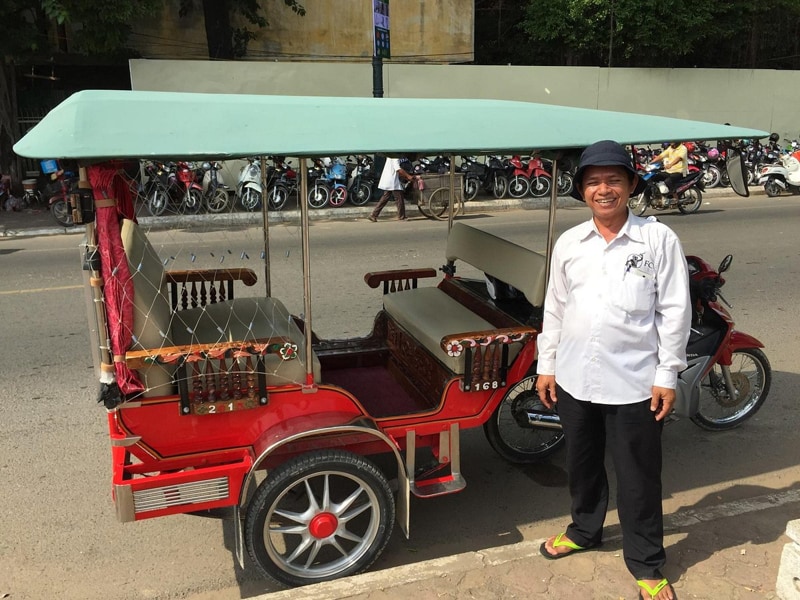
Using a tuk-tuk to travel in Siem Reap is both affordable and reliable for many travellers visiting this area. They are readily available, have many routes, and can easily drop you off at other temples along the route if you decide to visit others.
Normally, a tuk-tuk ride from Siem Reap to Ta Prohm takes from 20 to 30 minutes, depending on traffic.
Cost estimate: $15-$25 (you can take a half-day tour of Angkor Wat and all the temples along the tour).
-
Using a Taxi
For those who want a little more comfort while visiting Ta Prohm, or if it’s too hot or humid outside to enjoy a tuk-tuk ride to get there, taking a taxi is a good alternative. You will have air conditioning, so you can sit back and relax comfortably with family or friends while you enjoy the ride to Ta Prohm.
Travel time will be about the same as a tuk-tuk, but you will have more comfort going to your destination.
Cost estimate: $25-$40
-
By Bicycle
For those who want to be active and see Ta Prohm at their own pace, the option of riding a bicycle to get there is very good. The biking on the way is mostly flat with plenty of scenic views, and you will be able to ride through tree-shaded bike paths as you proceed to visit Ta Prohm.
You can expect to ride your bike from Siem Reap city centre to Ta Prohm in about 30-45 minutes.
Cost estimate: You will pay about $2-$5 per bicycle rental.
-
By Guided Tour
The easiest way to visit Ta Prohm is to opt for a guided tour from a reliable tour operator such as Vietnamtour.in. This option is best when you are a first-time visitor to Angkor Wat. A tour is conducted by a reliable tour operator, and a guide is made available. The route is efficiently planned by covering major temples in the Complex.
Tips for Visiting Ta Prohm for First-Time Visitors
Visiting Ta Prohm can be an unforgettable experience, especially for first-time visitors to Angkor. To make your trip smoother and more enjoyable, here are some practical tips to keep in mind.
-
Clothing Policy
As Ta Prohm is part of the Angkor temple complex, you must wear appropriate clothing. Your clothes must cover your shoulders and knees to comply with these regulations. Given that Ta Prohm has a very hot and humid climate, it is recommended to wear loose-fitting, lightweight, and breathable clothing. Good walking shoes are also crucial, as many of the paths are made of uneven stones and sand.
-
Safety When Touring Ta Prohm
Some of Ta Prohm is only partially standing, and large roots of trees cover the ruins. Therefore, it is essential to travel cautiously, especially over the many stone steps and narrow hallways. Do not engage in any activity in structures that are unstable or in areas that are prohibited. In the rainy season, please be cautious as many surfaces may be extremely slippery, and provide extra care for foot placement.
-
Suitably Behaving While Visiting the Temple
Ta Prohm is both a historical site and a sacred place. While visiting the site, you must be respectful of the monument. Avoid touching the intricate carvings on the temple walls, do not sit on any fragile structures of the temple, and refrain from littering the area. Avoid making noisy sounds and try to stick to the designated path while walking.
-
Photography Tips at Ta Prohm
Ta Prohm is one of the best-photographed temples in Angkor, with its dramatic tree roots and ancient ruins. The best time to photograph this temple is at dawn or late afternoon when the light is not harsh, and the number of tourists is minimal.
Suggested One-Day Angkor Itinerary Including Ta Prohm
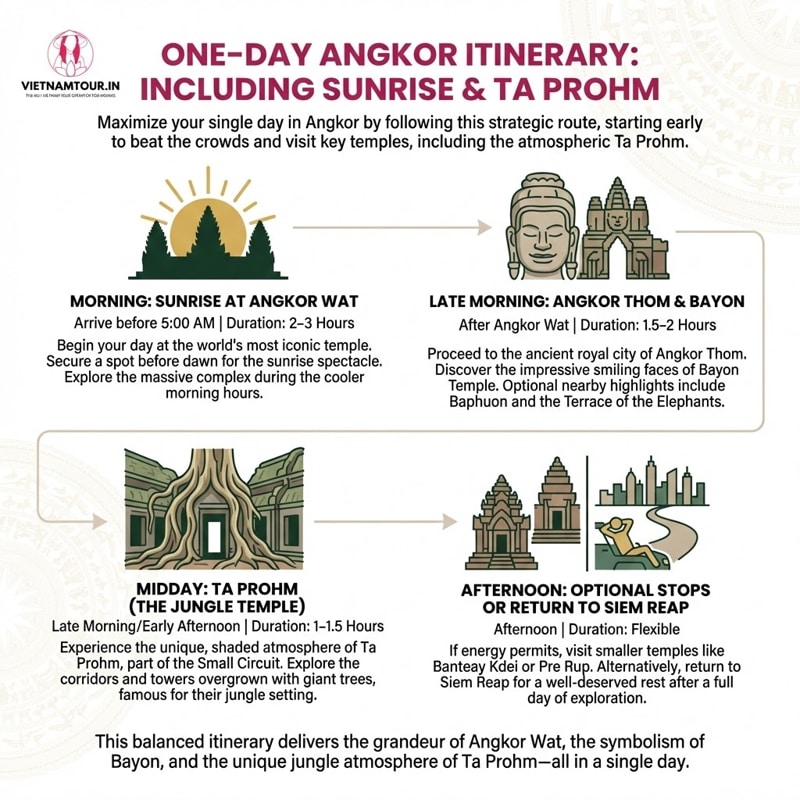
If you are limited on time or have only one day to explore the magnificence of Angkor, then it is possible to visit Ta Prohm and still see most of the major temples in Angkor. The trick is to arrive early and follow logical reasoning that makes sense as a way to avoid large crowds and save time.
-
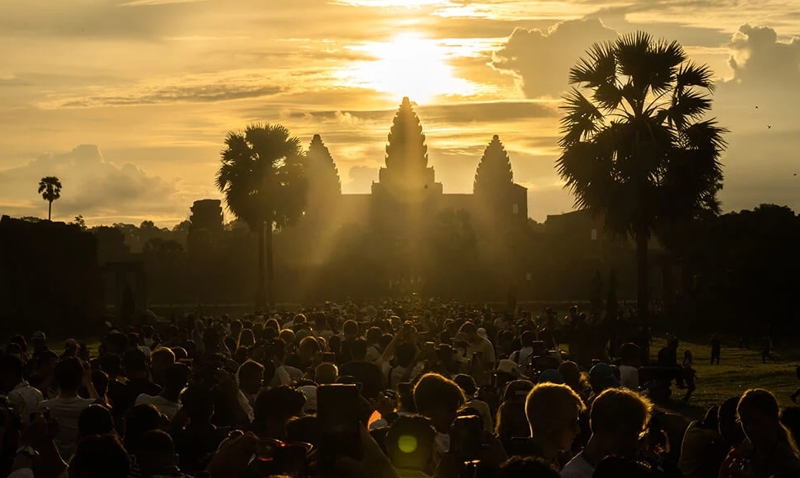
Morning: Sunrise at Angkor Wat.
Start your day early at the most popular temple in Cambodia, Angkor Wat, for sunrise. Get there before 5:00 AM so that you will be able to find a good spot to view the sunrise. After watching the sunrise, you’ll have approximately 2–3 hours of cooler temperatures during which to explore the Angkor Wat temple complex.
-
Late Morning: Visit Angkor Thom and Bayon Temple.
After exploring Angkor Wat, head to the ancient royal city of Angkor Thom and explore the incredible Bayon Temple, famous for its many smiling stone faces. Other nearby attractions include Baphuon and the Terrace of the Elephants. Allow approximately 1.5–2 hours here.
-
10:00 – 11:00 AM: Ta Prohm
After visiting Angkor Thom, the next destination is Ta Prohm on the Small Circuit. Ta Prohm can become crowded around noon, so the shaded jungle provides a cooler alternative to the open air of many other temples. Plan on spending between one and one and a half hours exploring the hallways and towers, as well as the famous trees that wrap around the building.
-
12:00 – 12:30 PM: Optional Stops Return to Siem Reap
If you still have enough energy, consider stopping at one of the smaller temples, such as Banteay Kdei or Pre Rup, on the way back from Ta Prohm to Siem Reap. Otherwise, you are ready to return to Siem Reap now to relax from a long day of visiting temples.
This one-day plan gives you a good balance in experiencing some of the most popular features of the Angkor temples: the grandeur of Angkor Wat, the symbolism of Bayon, and the unique atmosphere of the jungle surrounding Ta Prohm, making for an excellent single-day trip!
FAQs About Visiting Ta Prohm
-
Is Ta Prohm worth visiting?
Yes, it’s one of the most unique temples in Angkor due to its exciting combination of large trees growing over the walls of the temple. It has a very different feel to it compared with either Angkor Wat or Bayon.
-
How much time do you need at Ta Prohm?
Most visitors will find they spend between 1 and 1.5 hours exploring the site. This should give you plenty of time to visit the main areas and shoot pictures at the tree-root locations.
-
Is Ta Prohm included with the Angkor Pass?
Yes, since Ta Prohm is located within the Angkor Archaeological Park, it will be included with your standard Angkor Pass (1-day, 3-day, or 7-day).
-
Is Ta Prohm Included in the Small Circuit?
Yes, it is one of the well-known temples on what is called the “Small Circuit,” which also includes Angkor Wat, Bayon, and a number of other important temple sites in Siem Reap.
-
Can You Visit Ta Prohm Alone?
Yes, you can explore Ta Prohm without a guide; however, it would be beneficial to hire a guide to gain a better understanding of the history and the many lesser-known aspects of the temple.
-
Is there a lot of climbing to do at Ta Prohm?
There’s not an abundance of climbing at Ta Prohm like other temples; overall, most areas have very limited incline, however, ground surfaces are inconsistent with rock and narrow pathways.
-
Can you see where Tomb Raider was filmed at Ta Prohm?
Yes, there is a famous filming location in which they shot a specific scene (i.e., tree roots). You can take your picture where the filming occurred whenever you would like, or most guides will point out where it was filmed.
Conclusion
Ta Prohm Temple is one of the most captivating temples in Cambodia, not only for its ancient architectural beauty but also for its magical blend of nature and man-made wonders. Here, visitors can explore the history of the Khmer Empire and admire mysterious sights, as if transported to another world. If you’re looking for a truly special trip to Cambodia, don’t forget to visit Ta Prohm Temple to experience its mystical and ancient charm.
