
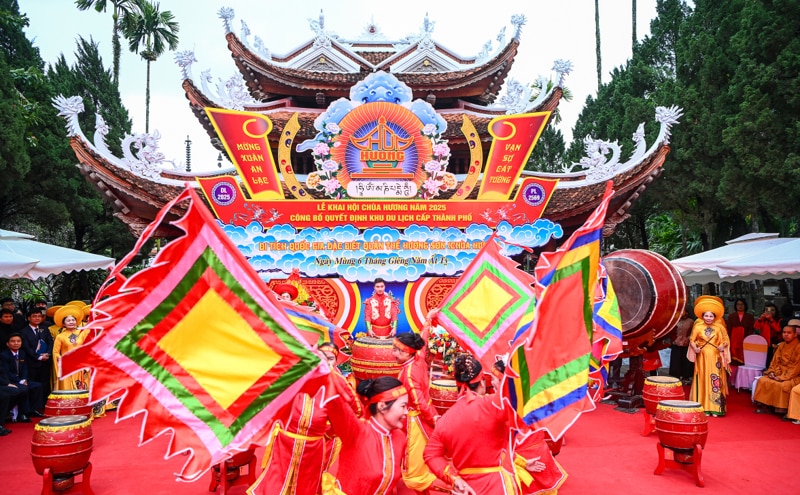
Located in the middle of the peaceful limestone mountains of the North, Perfume Pagoda (Huong Pagoda) is an ancient spiritual complex, distinguished by beauty in perfect harmony with nature. Caves, pagodas, temples, and the poetic Yen stream intertwine, bringing a journey of admiring the beautiful scenery of mountains and rivers, while also imbued with a sacred atmosphere.
Every festival season, Perfume Pagoda is more brilliant and bustling than ever, welcoming millions of visitors from all over to pray for peace, enjoy the scenery and experience long-standing traditional cultural values.
Where is the Perfume Pagoda
Perfume Pagoda is located in My Duc district, about 60 km southwest of Hanoi city centre. This area is in the middle of a limestone mountain valley, surrounded by rivers, streams, and forests, creating a quiet space completely separate from the hustle and bustle of the city. Thanks to being not too far from Hanoi, this pagoda has become a convenient destination for tourists, including Indians who want to combine nature sightseeing and cultural experiences on the same day.
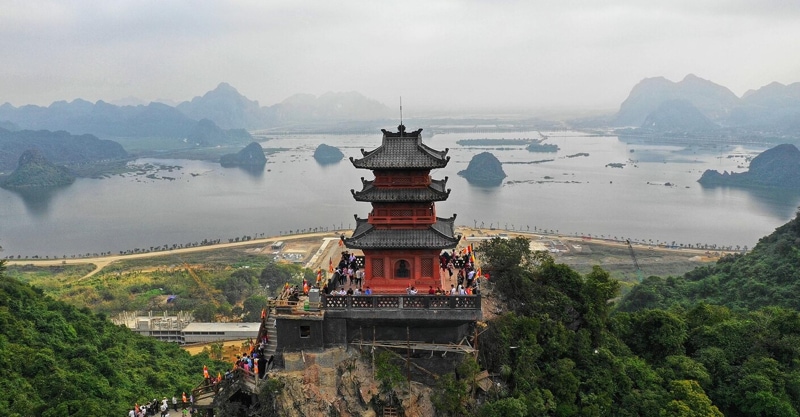
History of the Perfume Pagoda
Many people mistakenly believe that Huong Pagoda was built in the 17th century, but in fact, this complex began to take shape in the 15th century. According to legend, around the end of the 15th century (during the reign of King Le Thanh Tong), three Zen masters discovered Huong Tich cave and built Thien Tru hermitage (now Thien Tru pagoda).
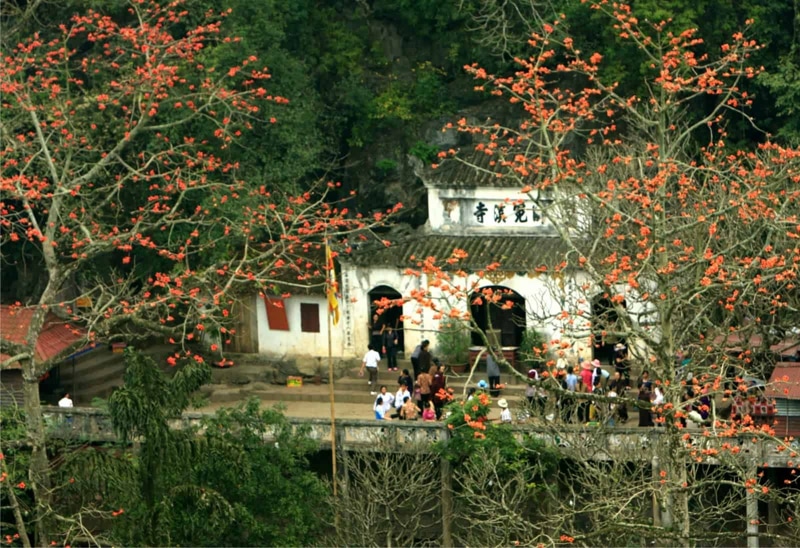
However, during the resistance war against the French in 1947, the Perfume Pagoda complex was severely damaged. It was not until the late 1980s, especially from 1988 to 1990, that the restoration of Huong Pagoda was carried out on a large scale under the direction of the State and the active participation of monks and nuns, headed by Venerable Thich Vien Thanh and the late Venerable Thich Thanh Chan. Thanks to that, Huong Pagoda gradually regained its ancient beauty and became a famous pilgrimage and tourist destination in the country.
Unique Architecture of Perfume Pagoda
The Huong Pagoda Complex is not just one pagoda, but a system of more than 50 pagodas, temples, caves, and shrines of varying sizes, stretching across the Huong Son limestone mountain range and the nearly 4-kilometre-long Yen Stream valley. All of them form a unique Buddhist architectural complex, a religious site, and a scenic spot unlike any other in Vietnam.
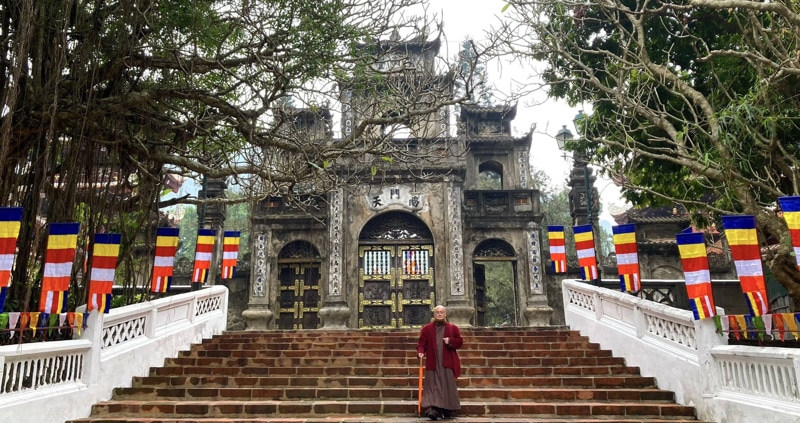
The overall architecture of the Huong Pagoda Complex is divided into three distinct layers, connected by the Yen Stream waterway and mountain roads.
Specifically, the outermost layer consists of traditional above-ground structures, including large pagodas located at the entrance, such as Trinh Temple, Thien Tru Pagoda (Outer Pagoda), Giai Oan Pagoda, Tuyet Son Cave, Long Van Shrine… These are traditional Vietnamese architectural works from the Nguyen Dynasty: triple gates, front halls, main halls, ancestral halls, and mother goddess halls built of brick, laterite stone, and ironwood, with curved tile roofs, round or square wooden columns, and simple, rustic dragon, phoenix, and leaf motifs.
The middle layer consists of semi-natural, semi-man-made caves.
The innermost layer is Huong Tich Cave, a temple within a rock cave with architecture almost entirely natural: rock arches as roofs, stalactites as columns, and water droplets as bells.
Perfume Pagoda Festival – Best Time to Visit
The Perfume Pagoda Festival takes place from January to the end of March of the lunar calendar and is considered the biggest pilgrimage season in Northern Vietnam. This is considered the best time to visit Hanoi, including the Perfume Pagoda. During this time, the entire Yen Stream valley becomes more bustling: boats are bustling back and forth, chanting sounds echo from worshipping places, and the incense sticks blend with the scent of the mountains and forests to create a very special atmosphere.
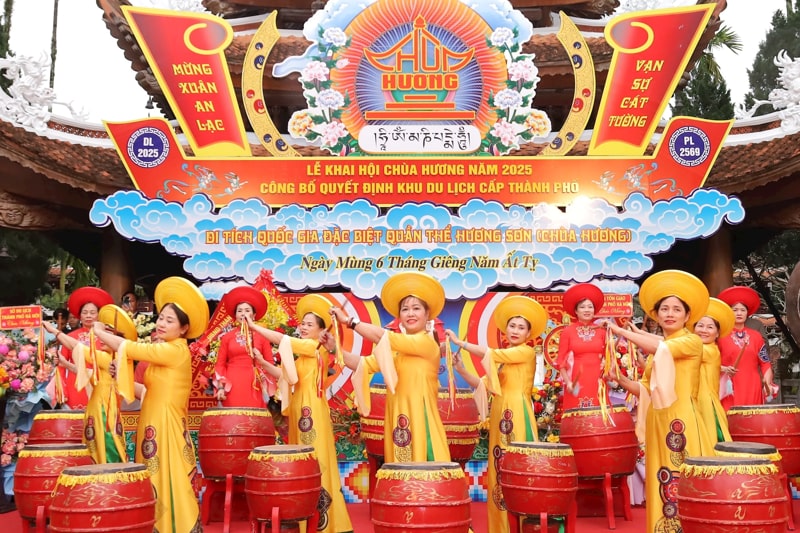
What makes the festival special is the combination of folk beliefs, Buddhism and long-standing agricultural culture. Vietnamese people come here to pray for luck, peace, and a prosperous new year. For international tourists, including many Indians, the festival offers a very different experience: observing local spiritual life, taking a boat ride on a peaceful stream and immersing themselves in the festival atmosphere that lasts for many months.
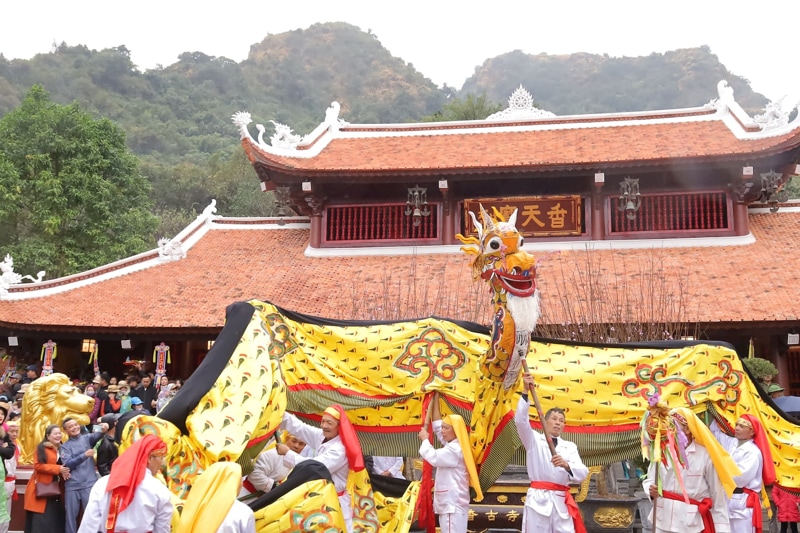
Despite the crowds, the festival season still retains the inherent sacredness of Huong Pagoda. This is an ideal time for those who want to learn more about Vietnamese religious culture and feel the spiritual vitality of an entire mountainous region.
Must-Visit Attractions in the Perfume Pagoda Complex
During the journey to explore Perfume Pagoda, Indian tourists can stop at many sacred and scenic spots to explore and take souvenir photos. Each place has its own story, contributing to a gentle yet very typical experience of Northern Vietnam.
Duc Wharf (Ben Duc)
Ben Duc (Duc Wharf) is the main gateway to the Perfume Pagoda complex (Huong Pagoda). Located about 60 km southwest of Hanoi, this is where visitors board small rowing boats to begin their journey along the Yen Stream. The wharf is nestled among dramatic limestone mountains and stunning natural scenery.
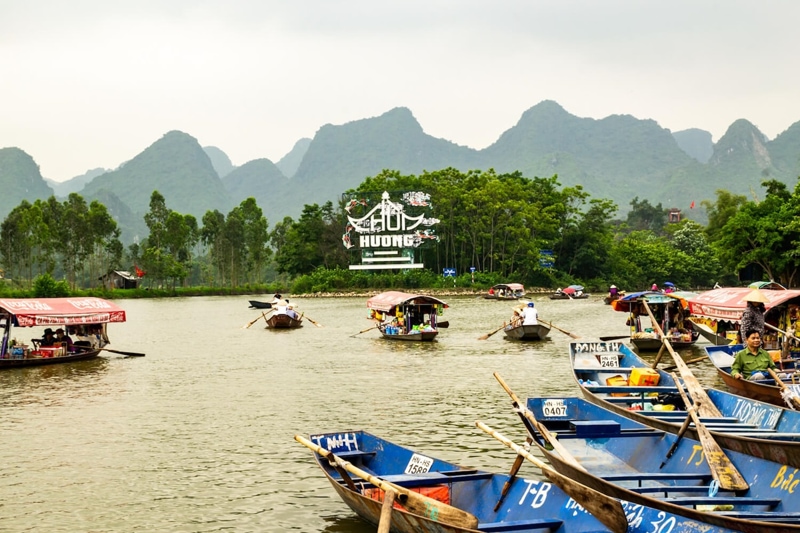
From Duc Wharf, boats take visitors to the key sites, including Thien Tru Pagoda and the sacred Huong Tich Cave. The leisurely boat ride itself is one of the highlights: gliding quietly along the water, you’re surrounded by towering green peaks, fields of lotus flowers (in season), and an almost unreal sense of tranquillity.
Poetic Yen Stream
Yen Stream, also known as Yen Vi, is one of the most typical and poetic landscapes of the Huong Pagoda tourist area. This stream is about 4km long, winding around mountains, forests and grasslands, creating a picturesque natural scene. Visitors will take a boat along Yen Stream to Thien Tru Pagoda and other locations in the Perfume Pagoda complex. In spring, both sides of the stream are covered with bright red cotton flowers, creating a romantic and peaceful scene.
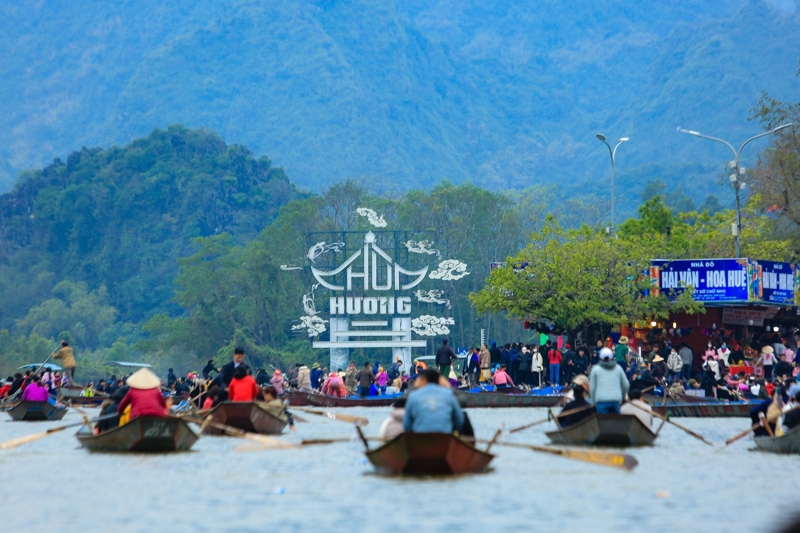
During the festival season, thousands of small boats line up on the stream, creating a bustling scene while still maintaining the tranquillity of nature. Many people consider boating on Yen stream an indispensable part of the journey to Perfume Pagoda, because this trip helps visitors immerse themselves in nature, forgetting all the worries of daily life.
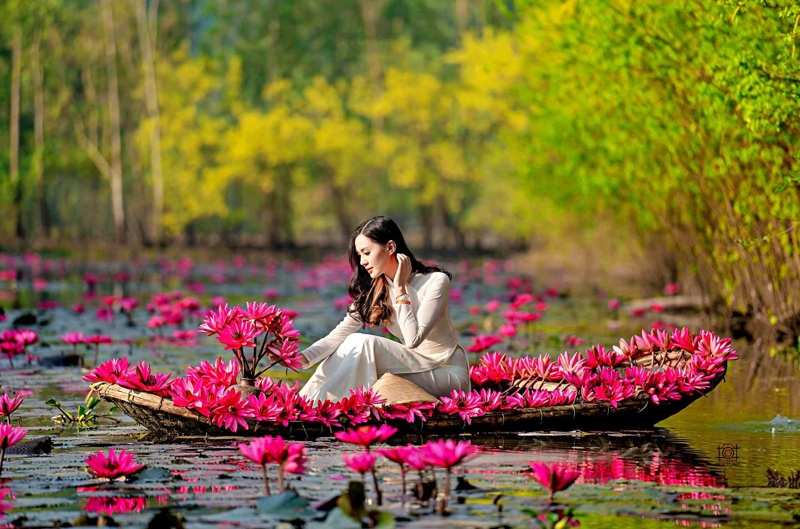
Huong Tich Cave – Most Sacred Cave in the South
Huong Tich Cave, which is more commonly known as “Nam Thien De Nhat Dong”, meaning “The Most Sacred Cave in the South”, is the most famous and sacred tourist destination that belongs to the Perfume Pagoda complex. Being deep in the mountains, about 2.5km from the Thien Tru Pagoda, it is considered the main destination on the pilgrimage journey. In visiting the cave, one must climb over more than 120 stone steps that serve both as a physical challenge and a meaningful spiritual journey.
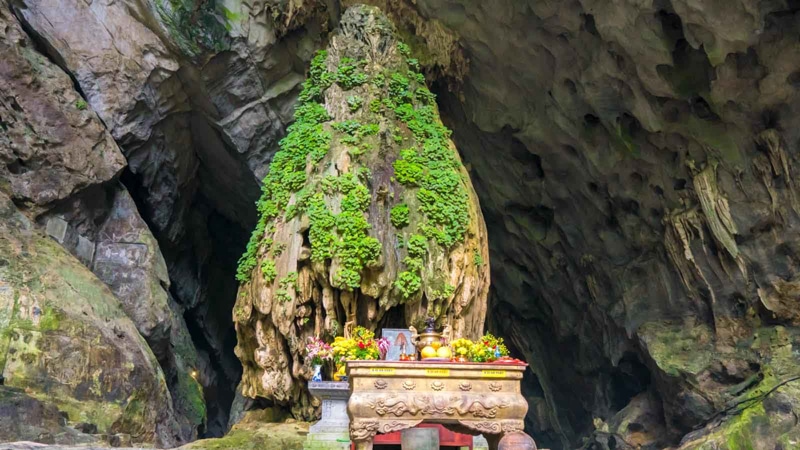
Outside the door of the cave, a famous ancient parallel sentence is carved on the cliff by Lord Trinh Sam himself in 1770, affirming the magnificent beauty of this place. The entrance to the cave is surrounded by lush green trees, bringing fresh air and tranquillity to visitors. When entering, Huong Tich Cave appears as a large cave with magical stalactites carved by nature over thousands of years.
Thien Tru Temple – Symbol of Abundance and Prosperity
Thien Tru Pagoda is the most salient attraction of the Huong Pagoda complex. Dating back to the 15th century, the pagoda displays bold ancient architecture with a large gate, an immense brick courtyard, and a three-storey bell tower. It is located in an open space, surrounded by majestic mountains and lush green trees, creating a pure and peaceful atmosphere.
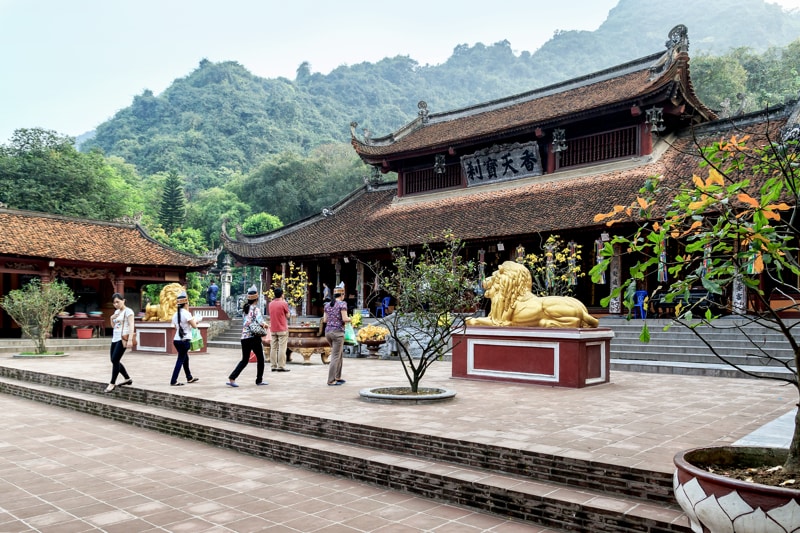
The name “Thien Tru” means “Heaven’s Kitchen”, showing respect and gratitude towards the gods. It is regarded as the centre of festival and worship activities in this area. Thousands of Buddhists and tourists around the world flock here to burn incense and pray every year, especially in the peak season of the Huong Pagoda festival. Considered a symbol of abundance and prosperity, Thien Tru Pagoda is regarded as an indispensable destination on a pilgrimage trip.
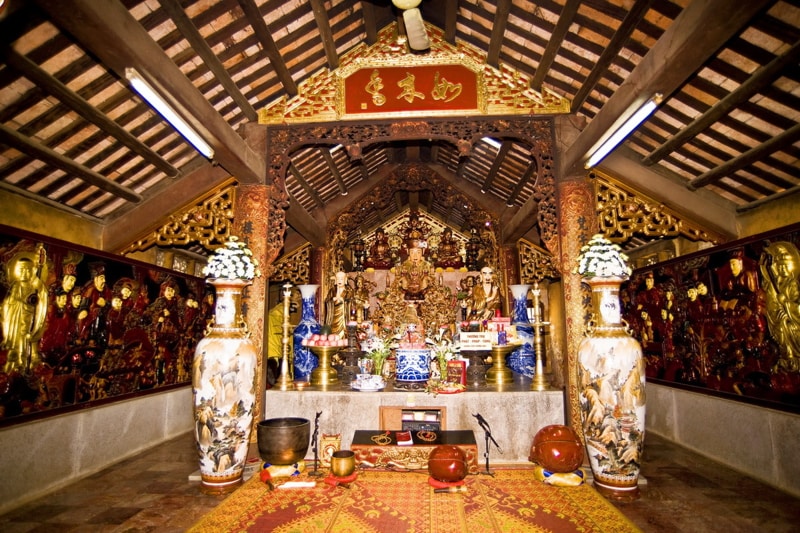
Trinh Temple
Located right at the beginning of the road leading to the relic site, Trinh Temple acts as a sacred “welcome gate” where visitors “present” themselves before officially entering the Buddha realm. According to folk beliefs, “presenting” at Trinh Temple, where the Mountain Gods who govern the mountains and forests are worshipped, means asking the gods for permission to allow visitors to worship Buddha and visit the relic sites inside the Huong Pagoda complex in Hanoi.
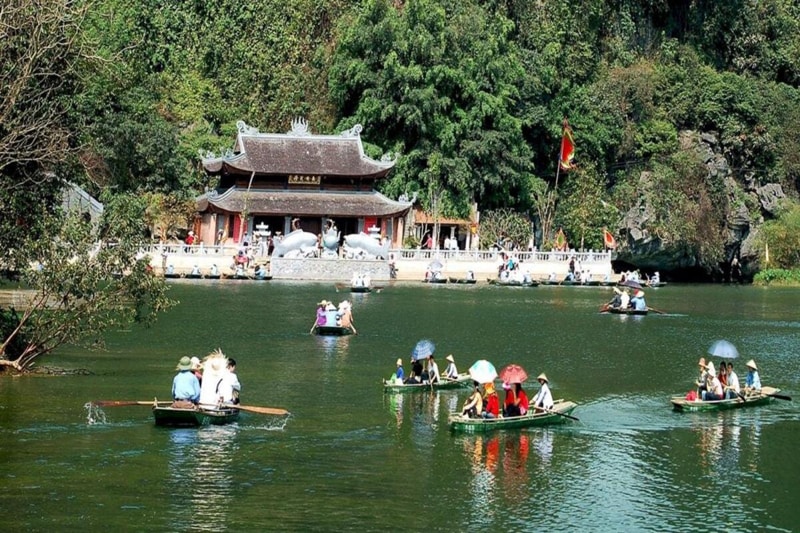
The architecture of Trinh Temple is imbued with traditional features with curved tiled roofs, sophisticated decorative motifs such as dragons, phoenixes, lotus flowers, and the four sacred animals, etc., meticulously carved on pillars, rafters, and parallel sentences bearing cultural values. Visitors coming here often burn incense, pray for peace and luck for themselves and their families, while admiring the ancient architecture and the peaceful natural scenery before continuing their journey to explore Huong Pagoda in Hanoi.
How to Get to Perfume Pagoda from Hanoi
Perfume Pagoda must be accessed via a two–step process: first, you travel by land to the main entrance of the site; second, you take a boat on the Yen Stream to get closer to the actual pagoda complex itself. There is no direct access to the pagoda complex by vehicle.
Step 1: Hanoi to Duc Wharf (Ben Duc)
From the centre of Hanoi, travelling to Duc Wharf (Ben Duc) is quite convenient with many means of transport. Here are some suggestions for Indian tourists suitable for their time and preferences.
By Motorbike
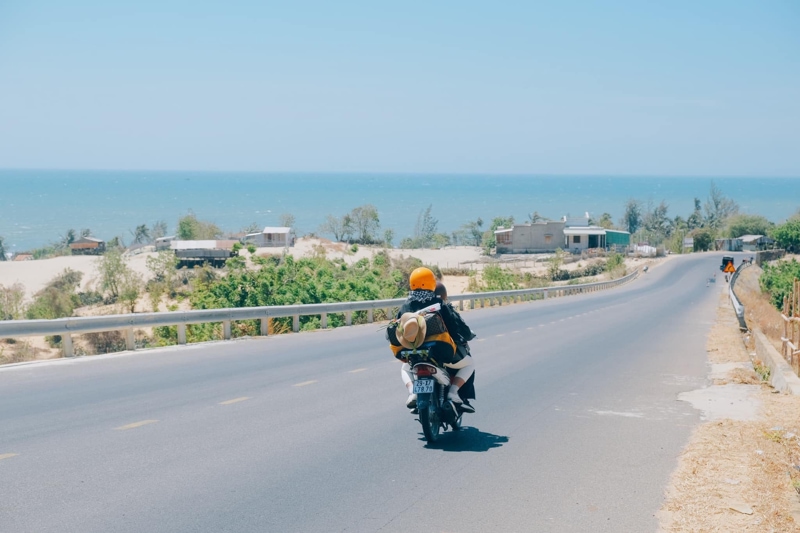
Many young tourists choose motorbikes to comfortably enjoy the scenery along the way. From Hanoi, you go in the direction of National Highway 21B for about 60 km. The route is not too difficult and quite easy to find.
Private car or taxi
This is the most convenient option, especially for families or groups of friends. It only takes about 1.5 hours to get to the Yen Stream boat station. The round-trip taxi fare is usually reasonable and saves a lot of time.
Have a Day Tour from Hanoi with Vietnamtour.in
For many Indian tourists, package tours are a popular choice as they include transportation, Yen Stream boat tickets, and tour guides. You don’t need to worry about the route or buying tickets, let Vietnamtour.in experts handle it all.
Step 2: Boat Ride on the Yen Stream to Main Attractions
From Duc Wharf, visitors buy a boat ticket and board a small rowing boat
Visitors will take a boat ride along the Yen Stream (approximately 3 to 4 km long), which takes 30 to 45 minutes. The boat will stop at Thien Tru pier (Outer Pagoda). From there, you can walk or take the cable car up to Huong Tich Cave.
Opening Hours & Entrance Fee
Perfume Pagoda welcomes visitors throughout the year, but activities are busiest during the festival season
1. Opening Hours: 6:00 AM – 6:00 PM daily
2. Perfume Pagoda Ticket Prices (Updated)
| Service | Adults | Children / Priority Groups | Notes |
|---|---|---|---|
| Integrated Entrance & Boat Ticket
(Yen Stream to Huong Tich Route) |
230,000 VND
~ 790 INR |
65,000 VND
~ 223 INR |
Includes entrance fee + rowing boat service on the main route. |
| Long Van – Tuyet Son Route | 85,000 VND
~ 292 INR |
50,000 VND
~ 171 INR |
Alternative route, quieter and less crowded. |
| Cable Car – Round Trip
(Thien Tru to Huong Tich Cave) |
260,000 VND
~ 893 INR |
180,000 VND
~ 618 INR |
Saves time and reduces the steep climb to Huong Tich Cave. |
| Cable Car – One Way | 180,000
~ 618 INR |
120,000
~ 412 INR |
Suitable for travellers who want to hike one way. |
3. Transport & Parking Fees at Perfume Pagoda
| Service | Fee | Notes |
|---|---|---|
| Electric Shuttle Car
(Parking Area → Duc Wharf) |
20,000 VND ~ 68 INR/ person | Flat rate for all passengers. |
| Parking Fees | 30,000 VND – 50,000 VND ~ 103 INR – 171 INR | 30,000 VND ~ 103 INR for cars with under 9 seats
50,000 VND ~171 INR for cars with 10+ seats. |
Tips for Visiting Perfume Pagoda in Hanoi
Visiting Perfume Pagoda is an unforgettable experience; however, there are a few key things to remember to have an enjoyable and respectful visit:
- Huong Pagoda is not only a tourist destination but also a sacred place in Buddhist cultural beliefs, so when you come here, you need to choose appropriate, polite, and discreet clothing.
- When entering the shrines, instead of entering from the main door, you should use the side door and should not step on the threshold to step over.
- When taking a boat trip to Yen stream, remember to limit littering in the water.
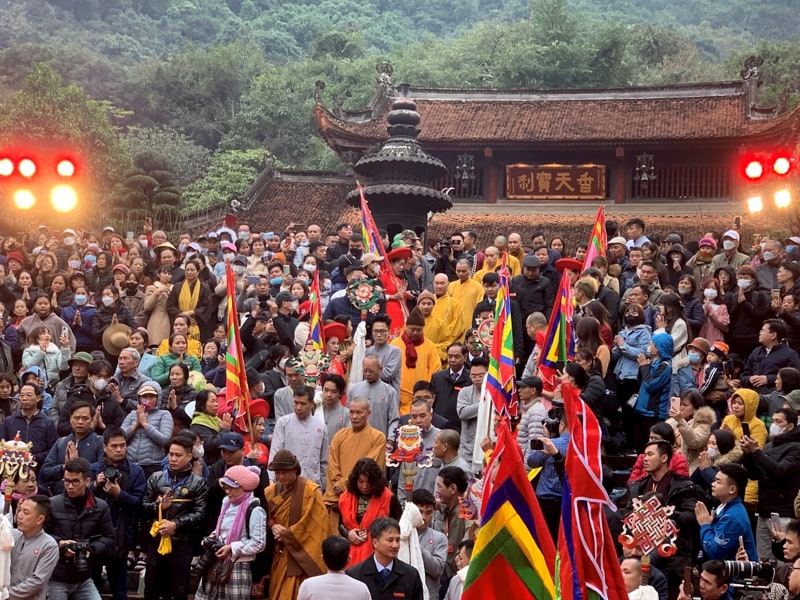
- If you come during the festival season, the number of visitors will be very large, so leave early to avoid crowds and have a more pleasant experience.
- When visiting the Huong Pagoda complex, you will encounter many people selling traditional medicine along both sides of the road. Before buying and using them, you should carefully check the origin of these traditional medicines!
- Don’t forget to try some specialities in the Perfume Pagoda, such as Che Cu Mai, Che Lam, Banh Ngu Coc, or Rau Sang. You can also buy them as a local gift for your friends and family.
Conclusion
Visiting Perfume Pagoda is not just a sightseeing trip but rather feels like a peaceful spiritual break from the busy rhythm of Hanoi. The generally preferred combination of mountains, caves, and temples, together with the quiet flow of the Yen Stream, contributes to a very serene and meaningful atmosphere for many Indian travellers.
If you want a smooth, well-planned experience without worrying about tickets or transport, let Vietnamtour.in helps you arrange a comfortable and hassle-free journey!
