
Angkor Wat is not simply a complex of Buddhist temples; it is the heart of Cambodia, a symbol of immense pride for generations of its people. Exploring Angkor Wat, the jewel of the Khmer Empire, you will be overwhelmed by the brilliance and grandeur of this architectural wonder.
Introduction to Angkor Wat
- Address: Angkor Wat, Krong Siem Reap, Siem Reap Province, Cambodia
Angkor Archaeological Park, one of the UNESCO World Heritage sites, is the largest religious temple complex in the world, covering an area of 162.6 hectares. Originally intended as a Hindu temple of the Khmer Empire, dedicated to the god Vishnu, the Angkor Wat complex was later converted to Buddhist worship due to the introduction and strong development of Buddhism.
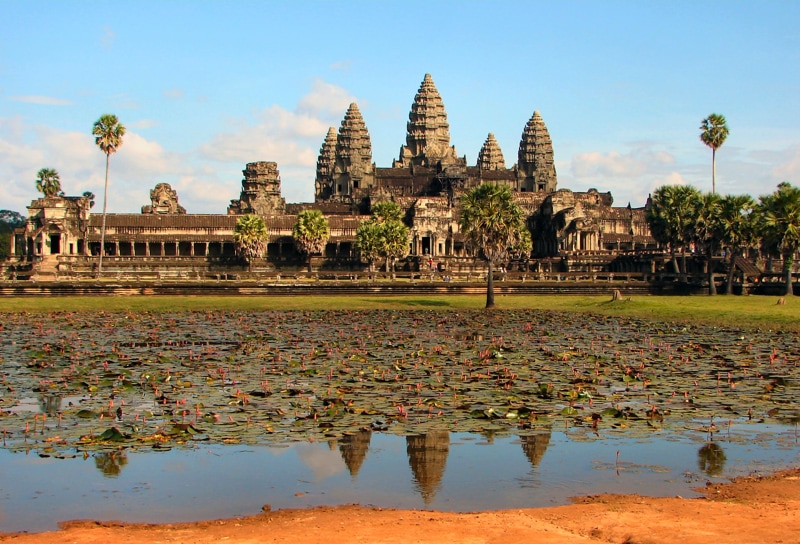
Angkor Wat temple is the most famous temple in Cambodia within the Angkor Archaeological Park, which also includes Angkor Thom, Bayon Temple, Ta Prohm, and many other ancient sites, about 6 km north of Siem Reap, and was built by King Suryavarman II in the first half of the 12th century. Viewed from above, Angkor Wat is surrounded by a moat, a common defensive arrangement for ancient capitals.
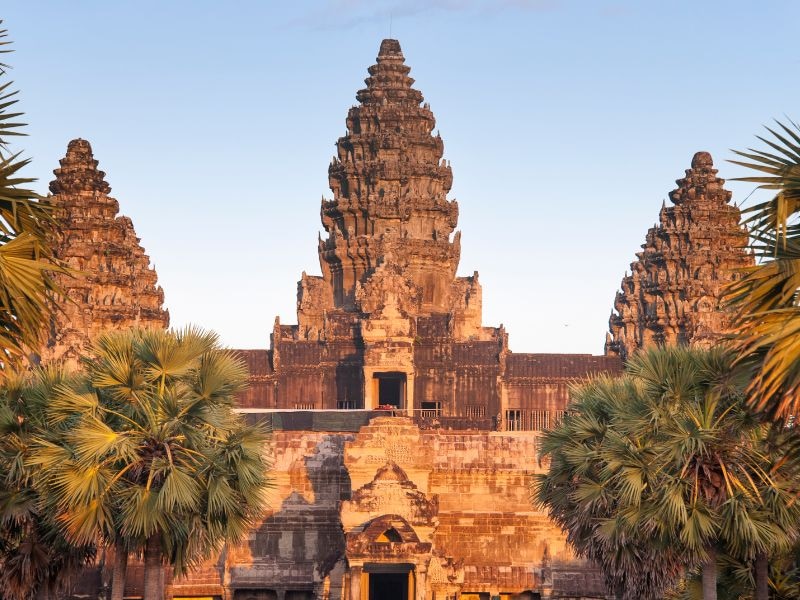
Angkor Wat has 398 rooms, connected by 1,500 meters of corridors. Above, five interconnected towers are built in three tiers, with the tallest tower reaching 65 meters and the four smaller towers 40 meters high. Each tower is divided into three levels: the first level represents hell or the earth, the second level represents humanity, and the third level represents the gods.
History of Angkor Wat
The design and construction began in the first half of the 12th century, during the reign of King Suryavarman II. Legend says that Angkor Wat was built on the orders of Indra to serve as a palace for his son.
However, in the late 14th and early 15th centuries, Angkor Wat transformed from a Hindu center into a center for Buddhist worship under the reign of King Ang Chan. The Hindu statues were therefore replaced with Buddhist statues.
Angkor Wat was not completely abandoned by the end of the 17th century and continued to function as a Buddhist temple. Japanese Buddhist pilgrims may have made a small settlement there, as evidenced by fourteen inscriptions dating from the 17th century.
António da Madalena was the first European to visit and described it as an extraordinary structure beyond description. It featured towers and decorations of every level of sophistication imaginable.
The temple is truly a source of pride for Cambodia. The image of Angkor Wat has appeared on the country’s national flag since its unveiling in 1863. Nominated as a World Heritage Site by UNESCO in 1992, Angkor Wat has played a significant role in shaping the modern concept of cultural heritage and the globalization of cultural heritage.
Cultural and Spiritual Meaning of Angkor Wat
Angkor Wat may have originally served as an ancient Hindu temple, but over time it has grown into something much more; it embodies the religious beliefs, identity, and spiritual core of the Cambodian people. Today, Angkor Wat continues to symbolize how significant faith is to its people as both an active site for Buddhist worship (now its primary use) and as a historic landmark reflecting the importance of ancestral beliefs.
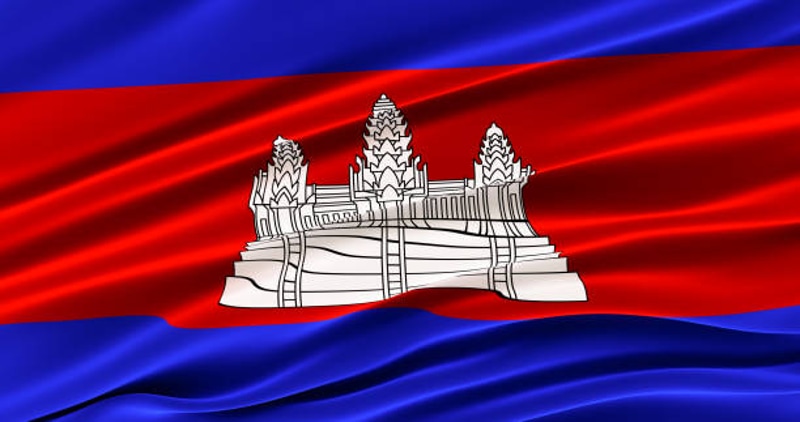
To the Cambodian people, Angkor Wat also serves as a dynamic representation of Cambodian nationalism, having become the central feature of the Cambodian Flag. It is representative of pride, heritage, and cultural identity among the Cambodian people through both historical and present-day means.
In addition to being a significant religious site, Angkor Wat holds deep spiritual and cultural value. It demonstrates the relationship between humans, the environment, and belief; thus, Angkor Wat is not only a historical artifact, but also very much alive in the hearts of Khmers.
Angkor Wat vs Angkor Thom vs Angkor Complex
Many people get confused with the names of the places: Angkor Wat temple, Angkor Thom temple, and Angkor. The reason is that they are usually used interchangeably, but in fact, they mean different things. At the same time, they are connected.
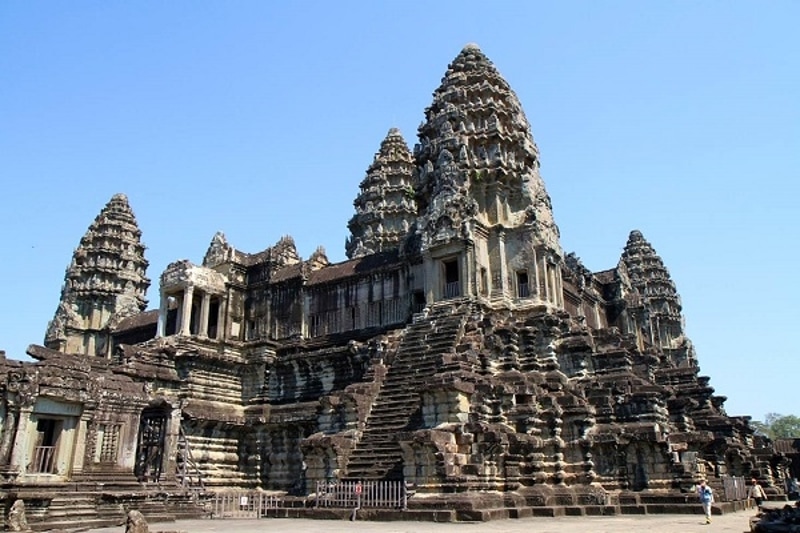
Angkor Wat is a temple. It is the most famous temple in Cambodia and the country’s symbol. When people discuss visiting Angkor Wat, they usually mean visiting the temple with five towers.
Angkor Thom is not a temple but a historical place. It was the capital of the Khmer Empire. There are several significant temples inside the territory of Angkor Thom: Bayon Temple, Baphuon Temple, the Terrace of the Elephants, etc. Angkor Thom is a separate place from the temple of Angkor Wat, but it is still a part of the same zone.
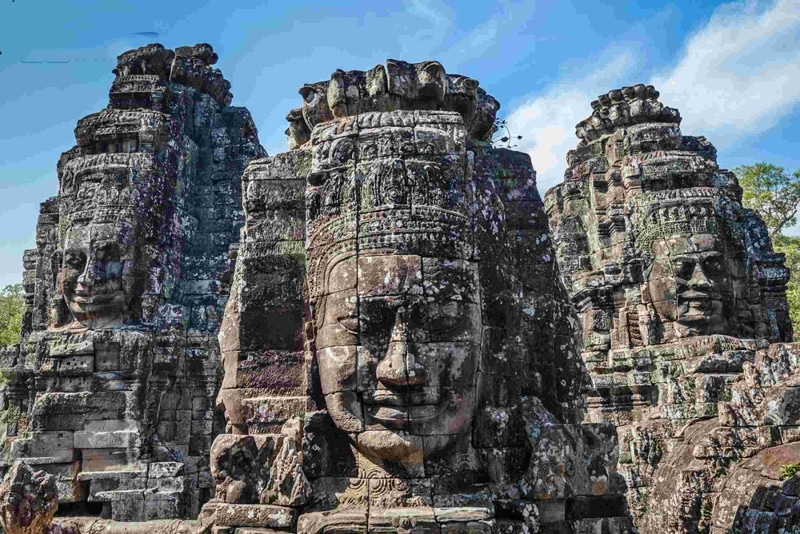
The Angkor Complex is the name of the territory that comprises the entire area of the protected zone: Angkor Wat, Angkor Thom, and many other temples located in a wide territory near the town of Siem Reap.
In simple terms:
Angkor Wat is a temple.
Angkor Thom is an ancient city.
The Angkor Complex is the whole area that contains all the temples and ruins.
Extraordinary Architecture of Angkor Wat
The architecture of Angkor Wat is more than aesthetics and grandeur. It is also about meaning. Each building, walkway, and stone detail was placed to reflect the religious and spiritual beliefs of the Khmer people, making the temple a materialization of the Khmer worldview and a must-visit destination in Cambodia.
Ancient Khmer Architectural Style
Angkor Wat representative exemplifying the classical Khmer architectural style, showing tremendous engineering capacities as well as artistic abilities. The temple is basically comprised of sandstone blocks; even after hundreds of years of exposure to nature, it was built with such precision that for the naked eye, the joints in between each block would appear to be undetectable.
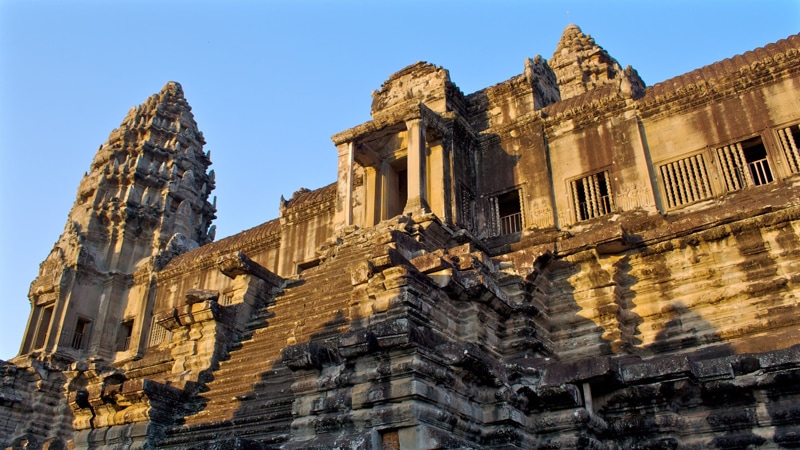
This architectural style can be described as exhibiting equal amounts of symmetry, balance, and harmony; however, the primary purpose of this type of construction was not just for aesthetic purposes but also for designing a sacred place to bring together humans, gods, and the Universe. In this way, Angkor Wat is more than just a monumental structure; it is also an important spiritual building based on its associated religious philosophy.
Overall Layout of Angkor Wat
The whole site is organized symmetrically along the central axis, which serves to guide visitors from the entry point of the temple to its centre. As you transition into the interior of the temple, the layers of architecture increase in height, providing a sense of coming closer to the divine through progression, from living in the temporal realm to existing in a place of worship, in this case, Angkor Wat.
Each level represents a transition from the temporal to the divine via the sacred core and thus reaffirms that Angkor Wat is not only a place of visitation but also provides a spiritual experience for our souls.
Central Tower and The Symbol of Mount Meru
Five stone towers form the hub of Angkor Wat, with the tallest tower at the core. This central tower is intended as the representation of Mount Meru, the mountain believed by Hindus to be home to the gods and considered sacred.
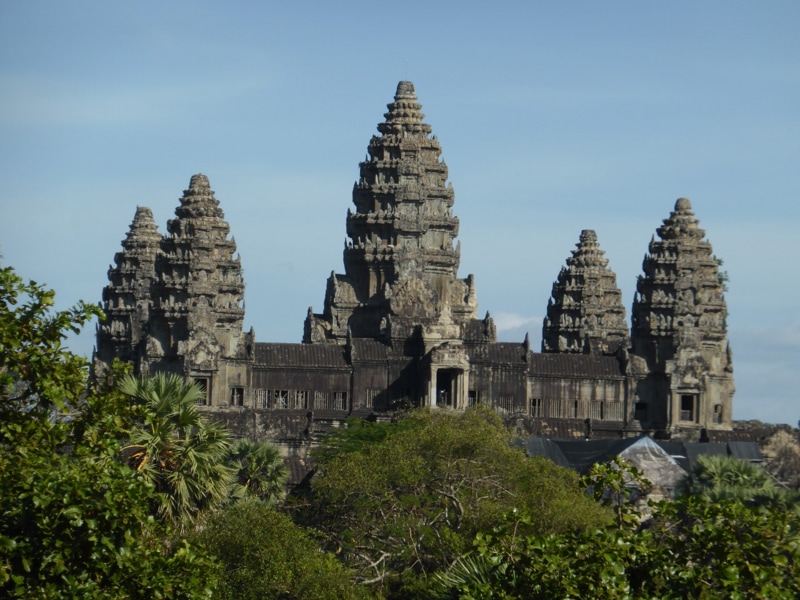
The remaining towers represent the four heaven-down peaks that surround Mount Meru that comprise the complete model of the Universe. As such, the temple acts as a three-dimensional representation of spiritual enlightenment, an architectural representation of the universe.
Water Moat, Walls, and Entrance Gates.
The water-filled moat surrounds Angkor Wat and has both a practical and spiritual function. From a practical perspective, the moat protects the temple and stabilizes the foundation. The moat also has spiritual significance to Hindus as the cosmic ocean that separates creation from the world of humanity.
The stone walls and monumental entrance gates guide visitors into the temple complex, and the long stone walkway over the water establishes an impressive visual transition that represents the journey from the physical world to a divine realm.
Bas-Reliefs and Stone Carvings
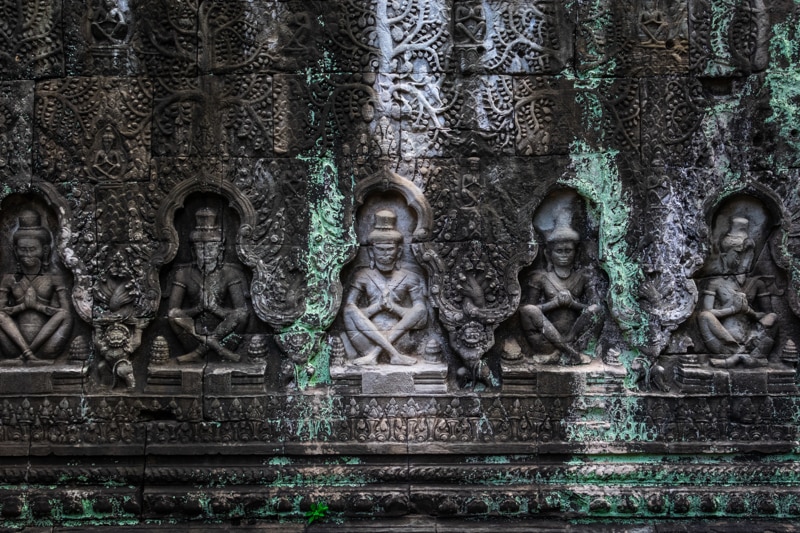
Angkor Wat has one of the largest collections of bas-relief sculptures known as karlok, which are carved directly on the surface of stone walls throughout the site. The carvings portray the stories of the Hindu faith, commemorate royal martyrs and their rituals, document religion, and describe the daily life of Khmer people living in the great kingdom of Cambodia during the 12th century.
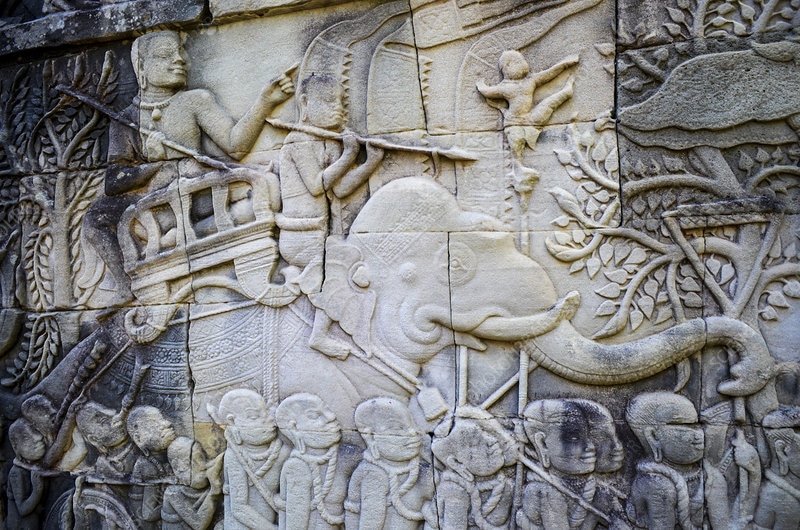
The carvings at Angkor Wat are not only very detailed artistically, but they also serve as a historical record of the past, demonstrating the importance of religion and cultural heritage to society and providing evidence for researchers studying the ancient Khmer civilization.
Religious Symbolism and Hindu-Buddhist Cosmology
Originally constructed to worship the Hindu god Vishnu, Angkor Wat has also become a significant place for practising Buddhism, resulting in a very unique blending of the two religions.
The architecture of Angkor Wat shows the beliefs of both Hinduism and Buddhism about the cosmos. Mount Meru is located at the centre of the universe, the water circumjacent to Mount Meru is the cosmic ocean, and the upraised levels of the temple indicate a person’s moving upward spiritually towards enlightenment.
Angkor Wat was not built just as a place of worship. It was built as a model of the universe that illustrates the Khmer people’s belief system and how they viewed their place in the universe, the nature of Deity, and their relationship to the entire cosmos.
Main Attractions Inside Angkor Complex
The Angkor Complex contains a large number of significant temples, all of which have various roles, histories, and feelings associated with them. When combined, they create an overall representation of how the Khmer civilisation, its religion, and its monarchy once operated.
Angkor Wat Temple
- Open Time: 5:00 AM to 5:30 PM
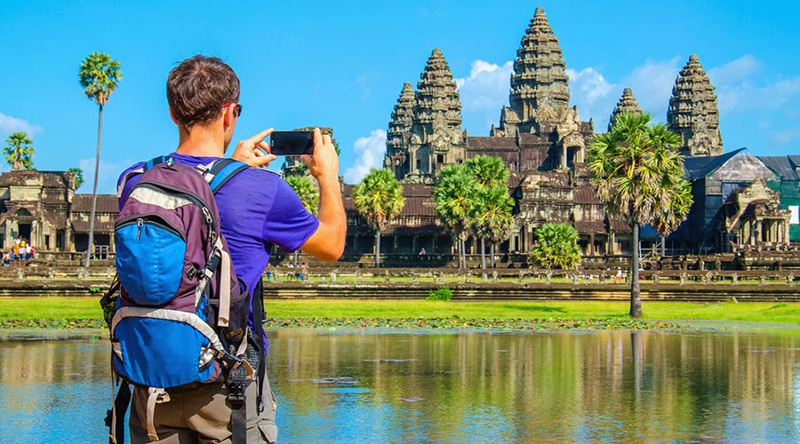
Angkor Wat is unique because it is the world’s largest religious structure, with thousands of religious figures and stories meticulously carved into its walls. This creates an impressive and captivating space for visitors, helping them better understand the history and culture of Cambodia when visiting Siem Reap. Besides walking around and climbing the steps, watching the sunrise over the lotus pond at Angkor Wat is an unmissable experience when visiting Cambodia, allowing you to enjoy the stunning natural scenery.
Angkor Thom
- Open Time: usually 7:30 AM to 5:30 PM
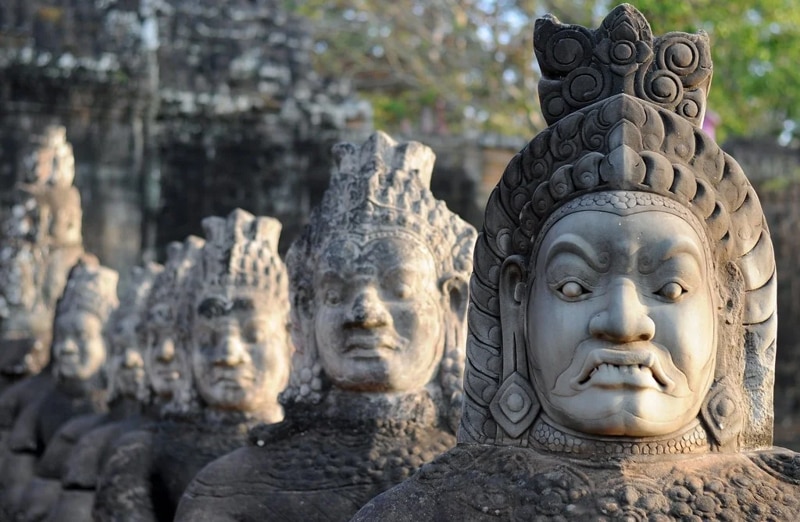
Angkor Thom was the last and longest-lasting capital city of the Khmer Empire, built in the late 12th century by King Jayavarman VII. Covering an area of 9 square kilometers with four walls stretching 3 kilometers, Angkor Thom is much larger than Angkor Wat and is one of the most magnificent and unique cities, boasting exquisite architecture and indescribable beauty. To enter Angkor Thom, you must follow a path along a moat leading to the gates. Each path is flanked by 54 statues on each side, for a total of five paths.
Bayon Temple
- Open Time: usually 7:30 AM to 5:30 PM
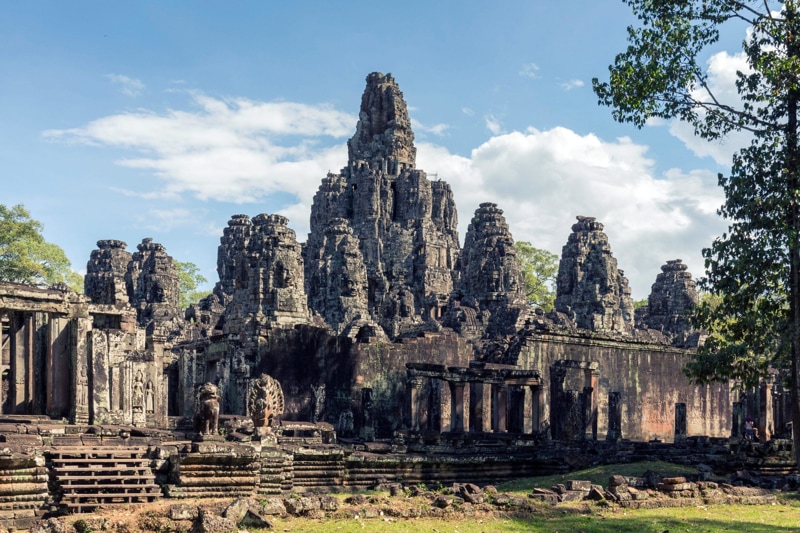
Located in the heart of the Angkor complex, the Bayon Temple was built in the 12th century by King Jayavarman VII. Nestled within a dense jungle, it is surrounded by numerous monuments depicting Cambodian history and legends, and two very long walls. This mountain temple, built as a symbol of the universe in Hindu and Buddhist teachings, is renowned for its mystical and unique beauty. Beyond its exquisite architecture, the Bayon Temple also embodies the beliefs, values, and strength of the Khmer Empire.
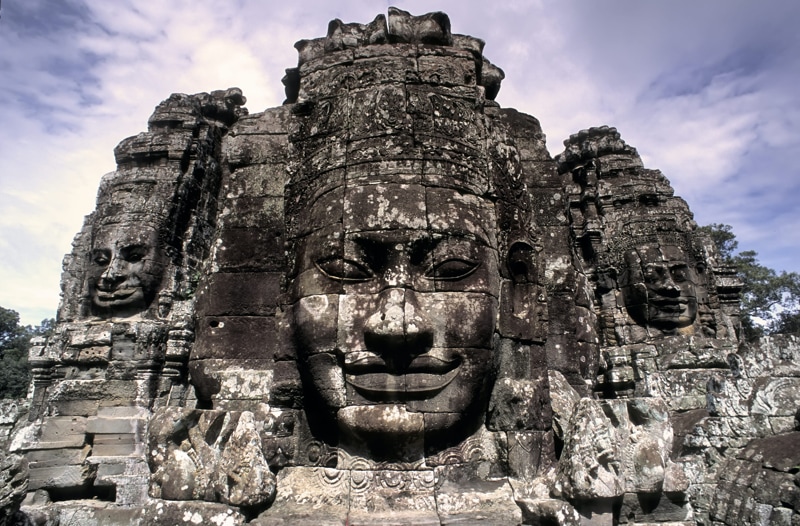
With its unique architecture, the 256 mysterious and enchanting smiling human heads atop the towers, and its sacred atmosphere, a visit to the Bayon Temple is an opportunity to understand the history and culture of ancient Cambodia.
Ta Prohm
- Open Time: usually 7:30 AM to 5:30 PM
Not far from Angkor Wat temple, Prasat Ta Prohm is also a popular destination for adventurers and tourists from all over the world. Ta Prohm offers the beauty of unspoiled wilderness and magnificent architecture, showcasing the power of the jungle and making it a worthwhile destination for those who love ancient architecture.
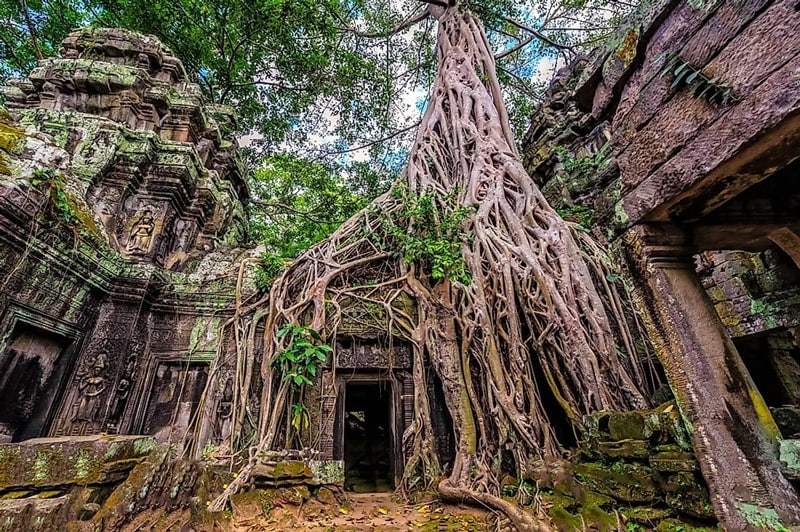
The special feature of this tourist site is the combination of ancient architecture and the natural growth of giant tree roots, creating a magical and impressive landscape. The traces of giant trees piercing through the walls or roofs of the ancient towers create a rare sight.
Banteay Kdei
- Open Time: usually 7:30 AM to 5:30 PM
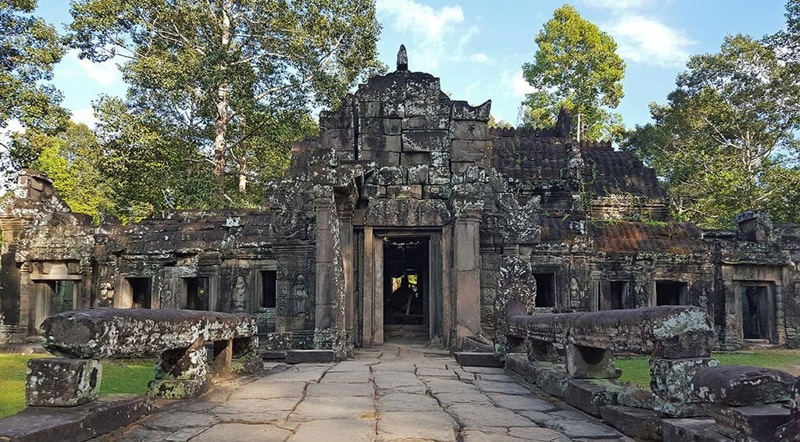
Banteay Srei Temple is also known as a special spiritual and cultural destination in Cambodia. It is a place of worship for female warriors of the Angkor dynasty and for the god Shiva. This creates a sacred and mystical space for visitors to explore and learn about the history and culture of Cambodia. At the same time, the temple attracts visitors with its ancient beauty and the wonder of its unique, exquisitely carved statues.
Preah Khan
- Open Time: usually 7:30 AM to 5:30 PM
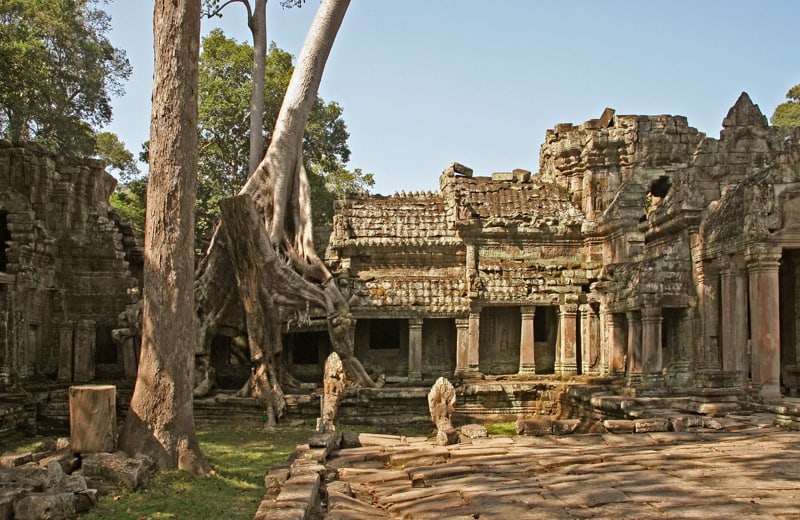
The temple, whose Cambodian name means “sacred sword,” is located northeast of Angkor Thom and just west of Jayatataka. Preah Khan was built west of Baray on elevated ground along a terraced path, with the temple’s ends facing west-east towards a lake. It is one of the must-visit temples when you visit Siem Reap, with its unique architecture and significant historical importance, as it houses a statue of King Dhara Nindravarman II in the form of the Bodhisattva Jayavarmesvara.
Angkor Wat Sunrise and Sunset Experience
The two most beautiful times in Angkor Wat are at sunrise and sunset. Not only is the light beautiful, but the peaceful and cool ambiance, combined with the sense of reverence for a temple complex that has been around for so long, makes for a wonderful experience.
- Sunrise at Angkor Wat is a classic experience
Most people go around 5 am and stand by the lake in front of the temple, waiting for the sun to slowly rise behind the spires. As the first light of day reflects on the water, Angkor Wat is both majestic and peaceful – a breathtaking sight.
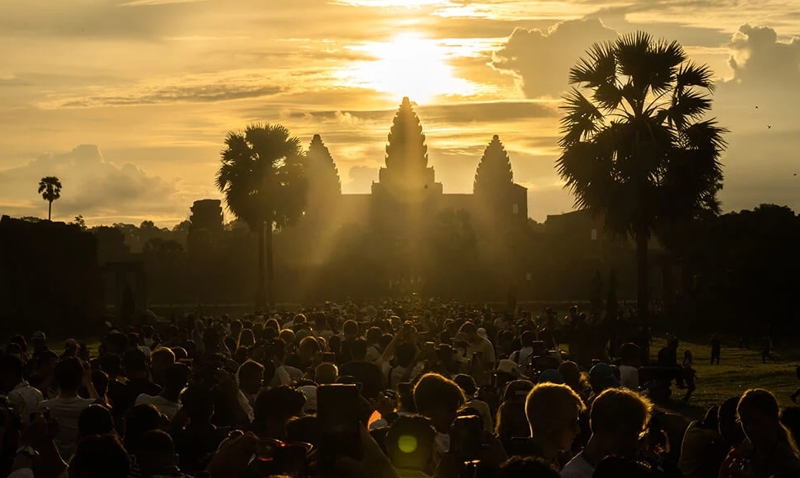
- Sunset at Phnom Bakheng or Angkor Thom is a different experience altogether
From 5:30 PM to 6 PM, the golden rays of the sun filter through the forest, temples, and ancient walls, providing a relaxed ambience. Phnom Bakheng is crowded, whereas Angkor Thom is quiet and peaceful. To avoid crowds, go early, and do not just focus on the popular spots. Take your time to soak in the beauty of Angkor, rather than just trying to get some snaps.
Best Time to Visit Angkor Wat
There are two seasons in Siem Reap: the dry season, which extends from November to April, is suitable for travelling as the weather is sunny and warm; the rainy season, which extends from May to October, is cool and green, although the heavy rainfall sometimes makes walking difficult.
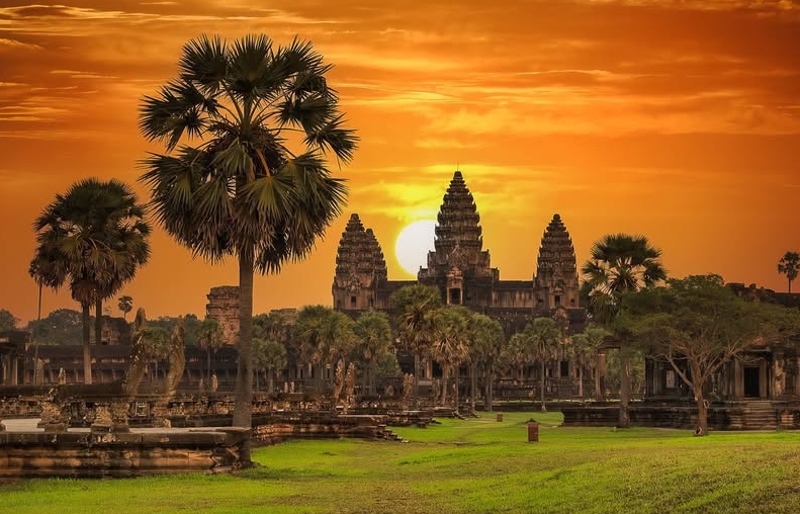
The dry season is the best time to visit Angkor Wat. The most suitable time to visit is from December to February, as the weather is cool, the air is light, although this is the busiest time of the year. Either at sunrise or sunset, as this will provide the most beautiful atmosphere and the most memorable experiences.
During the day, each moment brings a different feeling. Sunrise is quiet, cool, and peaceful, perfect for slow walks and photography. Daytime is brighter and busier, but good for exploring many temples in one day. Sunset feels calm and emotional, with warm light covering the ancient stones and trees.
Angkor Wat Tickets Price & Notes
To visit Angkor Wat temple and the temples inside the Angkor Complex, travellers need an official Angkor pass (ticket). With this ticket, you can visit all the attractions inside, including Angkor Wat, Angkor Thom, and all major temples.
Ankor Pass/ Ticket Price
| Ticket Type | Price per person | Duration | Note |
| 1-day | $37 | 1 day | Travellers who want a short visit to Angkor Wat with a tight schedule |
| 3-day | $62 | 3 days (non-consecutive use allowed) | Most travellers choose to visit for 3 days to have a relaxed exploration. The ticket is valid for 10 days from the date of purchase. You can use the ticket to visit Angkor Archaeological Park for any 3 days within those 10 days. |
| 7-day | $72 | 7 days (non-consecutive use allowed) | If you want to explore the Angkor Complex more deeply and more relaxed, you should choose to buy this 7-day ticket. The ticket is valid for 1 month from the date of purchase, allowing you to visit the Angkor Wat complex for any 7 days within that 1 month. |
Important Rules
- Always have your Angkor Pass with you.
- The pass is not transferable to another person.
- The pass should be protected from water and damage.
- In case you lose your pass, you need to purchase a new one.
- Children below a certain age/height may enter for free (ID/passport required).
- Purchase your pass from authorized counters to avoid being scammed.
- Arriving early at the pass office will save you from lining up, especially during peak season.
How to Buy The Angkor Pass/ Ticket
Tickets can be purchased at the official Angkor Ticket Center in Siem Reap or at authorized entrances to the park. After buying the ticket, your photo is taken and printed directly on the pass.
How to Get to Angkor Wat (from Siem Reap City Center)
From the center of Siem Reap, Angkor Wat is only about 6 to 7 kilometres away, making the journey short and easy. You can choose one of these modes of transportation to reach Angkor Wat:
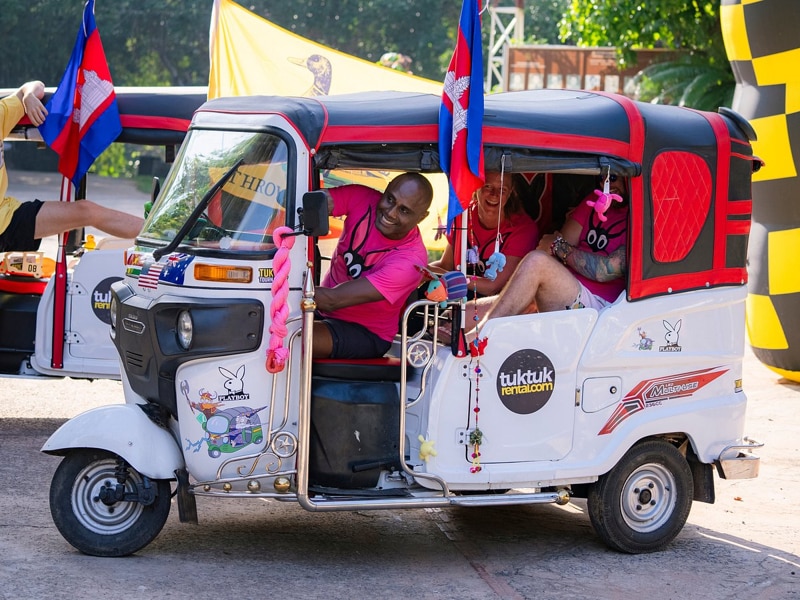
- In Cambodia, the most popular choice is a tuk-tuk. A one-way trip usually costs around 5 to 8 USD, depending on the time of day and season. For a full-day temple route, drivers often offer packages from 15 to 25 USD, including waiting times at different temples. This option is flexible, affordable, and perfect for most travellers.
- Bicycles are another peaceful way to reach Angkor Wat, especially in the early morning. Bike rentals in Siem Reap usually cost around 2 to 5 USD per day. The road is flat and scenic, making the ride enjoyable and calm.
- For more comfort, taxis or private cars are a good option. A one-way trip normally costs about 10 to 15 USD, while a full-day private car with a driver ranges from 25 to 40 USD, depending on the route and number of temples.
How to Travel in The Angkor Wat Complex
Visiting Angkor Wat is much easier when you have a simple plan. Knowing which routes to follow, how many days to spend, and how to move between temples helps you save time, avoid fatigue, and enjoy the experience more comfortably.
Temple Routes (How to Move Around)
Because the Angkor area is very large, you should follow set routes to ensure that your visit is efficient. Normally, there are two routes to discover Angkor Wat: the Small Circuit and the Grand Circuit.
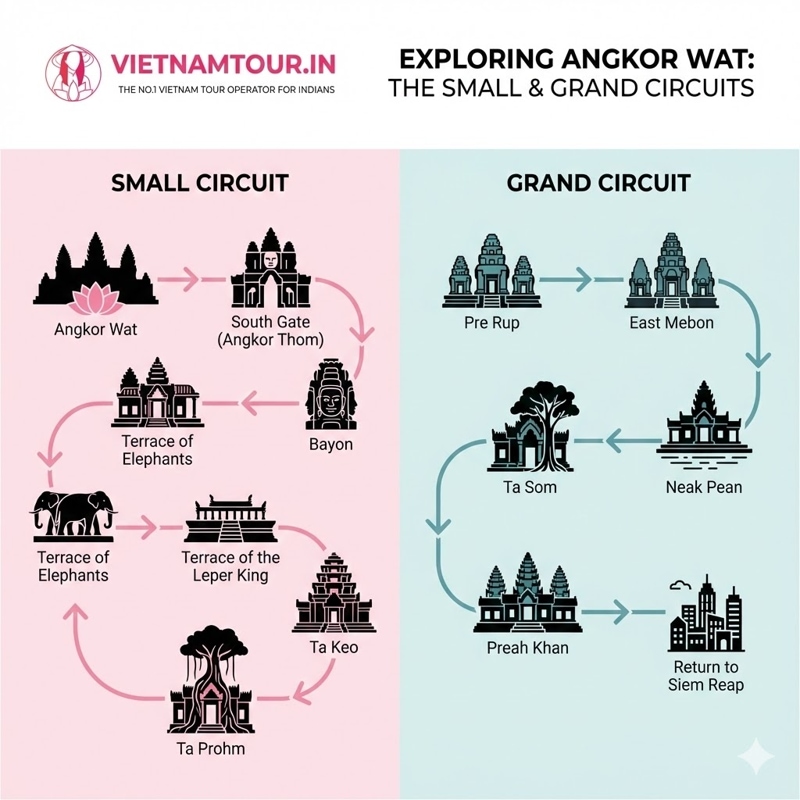
- The Small Circuit is the best route for first-time visitors. It connects the main temples, including Angkor Wat, Angkor Thom, Bayon, Ta Prohm, and nearby sites. This route is short, logical, and covers the most important highlights.
- The Grand Circuit goes further into the complex and includes larger and less-visited temples. It is better for travellers who have more time and want to explore beyond the main tourist areas.
Suggested Angkor Wat Visit Plans Based on The Number of Days
If you have 1 day, focus only on the main highlights: Angkor Wat temple, Angkor Thom, Bayon, and Ta Prohm. This gives a complete experience without rushing too much.
With 2 days, you can slow down. Combine major temples with quieter ones, such as Banteay Kdei and Preah Khan, for a more balanced visit.
With 3 days, the visit becomes comfortable and flexible. You can explore at a relaxed pace, take breaks, and experience the Angkor Complex without pressure.
Guided Tour or Independent Visit
A guided tour is the best option if you wish to know the history and background of the temples.
An independent visit is the better option if you prefer to have freedom and a flexible pace of your own.
Both options are good. The choice depends on whether you prefer information or independence.
Things You Should Notice Before Travelling to Angkor Wat
The visit to Angkor Wat doesn’t only include viewing magnificent temples; it also includes giving regard to this holy area and ensuring that you are ready for a respectful, pleasurable visit. By following a few simple rules and developing good habits, you can create a smoother, safer, and ultimately more meaningful experience at Angkor Wat.
Dress Code and Respectful Behaviour
Because Angkor Wat is a sacred/spiritual location for both Buddhists and Hindus, visitors must dress modestly when entering the temples. When visiting the temples, visitors must cover their shoulders and knees. Visitors should wear lightweight and breathable clothing as the temperature can be hot at times.
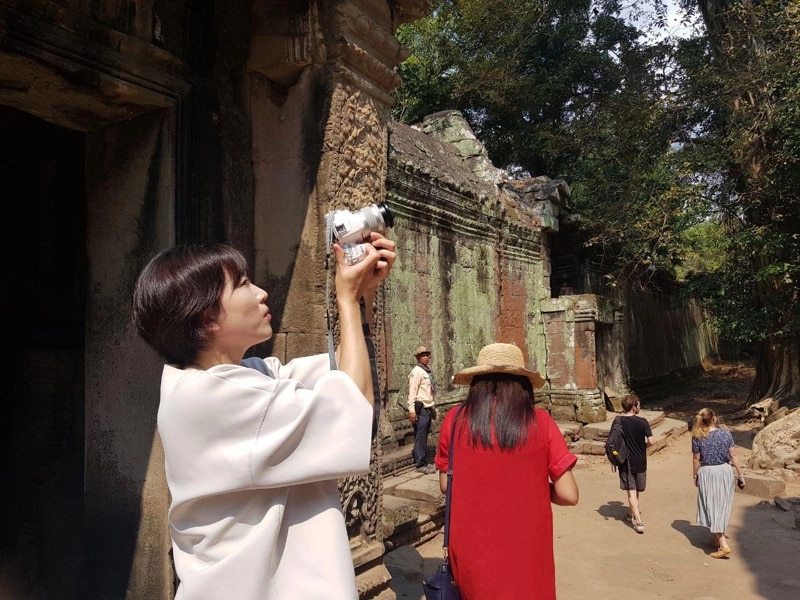
Visitors should act respectfully by remaining quiet while in the temples, not yell/talk loudly, and not behaving in a way that disrupts others. Visitors must not climb on the ruins, touch carvings, or go into restricted areas within the temples.
Visitors are allowed to take photos of the temple, but visitors should show respect to fellow patrons (monks and worshippers) and within the patron’s religious area.
Other Advice
- Begin your trip early in the morning to escape the heat and crowds.
- Remember to carry drinking water with you, especially during hot weather.
- Apply sunscreen lotion, wear a hat, and prefer light-colored clothes to protect yourself from the sun.
- Wear comfortable walking shoes, as you will be walking extensively on uneven stone pathways.
- Try to avoid temple walks during peak sun hours whenever possible.
- Be courteous and amicable with the locals, and steer clear of pushy street vendors or unorganized tour operators.
- The best light for photos is during sunrise and sunset, when the temples look soft and golden. Please note that you are not allowed to climb on ruins or restricted areas just to take photos.
Where to Stay When Visiting Angkor Wat
Choosing the right place to stay makes visiting Angkor Wat much easier and more comfortable. Most visitors stay in Siem Reap, the main tourist town near the Angkor Complex, where you can find all types of accommodation.
Hotels in Siem Reap are the most popular option, offering good comfort, easy transport, and many services. From budget hotels to boutique stays, this is the easiest choice for most travellers.
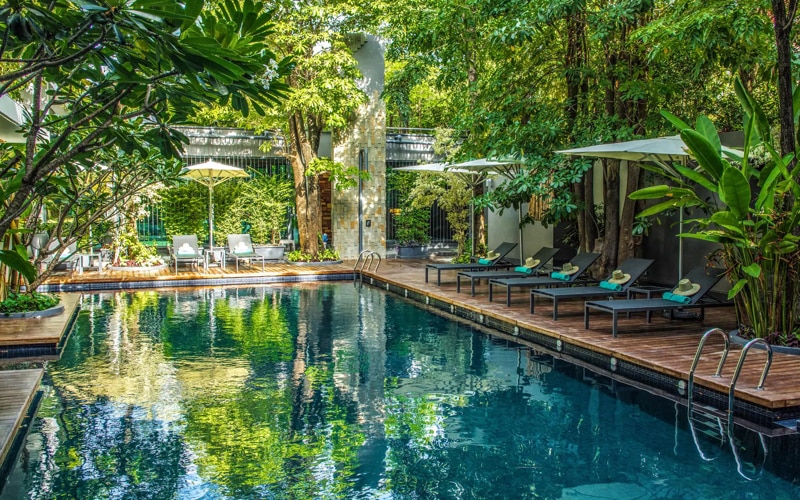
Homestays are great for those who want a local experience and a quieter atmosphere. They offer simple comfort and a more personal connection with local life.
Resorts provide privacy, space, and relaxation. Many are located slightly outside the town center, making them ideal for travellers who want peace after a long day of temple visits.
The best area to stay in is central Siem Reap, close to the Old Market and Pub Street. From here, transport is easy, restaurants are nearby, and getting to Angkor Wat is quick.
FAQS About Visiting Angkor Wat
Is Angkor Wat The Same as Angkor Complex?
No. Angkor Wat is one temple, while the Angkor Complex (Angkor Archaeological Park) is the whole temple area that includes Angkor Wat, Angkor Thom, Bayon, Ta Prohm, and many others.
How Much Time Do I Need to Visit Angkor Wat?
At least half a day for Angkor Wat alone. For the main temples in the Angkor Complex, 1–3 days is ideal.
Do I Need a Guide to Visit Angkor Wat?
No, but a guide helps you understand history and symbolism. You can visit independently if you prefer freedom and flexibility.
Can I Visit Angkor Wat for Sunrise Without a Ticket?
No. You must have a valid Angkor Pass to enter the complex, even for sunrise.
What Is The Best Time of Day to Visit Angkor Wat?
Early morning and late afternoon are best for light, temperature, and fewer crowds.
Is Angkor Wat Still a Religious Site?
Yes. It is still a sacred place used for worship and religious activities.
Can Children Visit Angkor Wat?
Yes. It is family-friendly, and young children may enter for free depending on age/height rules.
Is Angkor Wat Suitable for Elderly Visitors?
Yes, but there is a lot of walking and stairs. Comfortable shoes and slow pacing are important.
Is Angkor Wat Safe for Solo Travellers?
Yes. Siem Reap and the Angkor Complex are generally safe for solo visitors.
Can I Visit Angkor Wat in One Day?
Yes, but you will only see the highlights. A longer visit gives a better experience.
Conclusion
Angkor Wat is more than a destination. It is an experience with history, belief, beauty, and quiet meaning that leaves a lasting impression long after you leave. We hope that with the above detailed instructions, you will have an impressive trip filled with unforgettable memories as you admire one of humanity’s most magnificent monuments.
If your journey through Angkor inspires you to explore more of Southeast Asia, a Cambodia-Vietnam journey is a natural next step.
Continue your journey with Vietnamtour.in, a leading travel brand in Vietnam for Indians, trusted for authentic and meaningful travel experiences!
