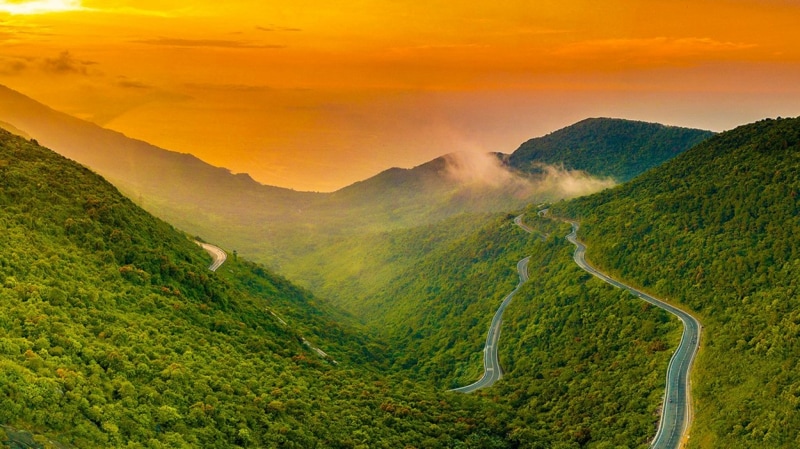
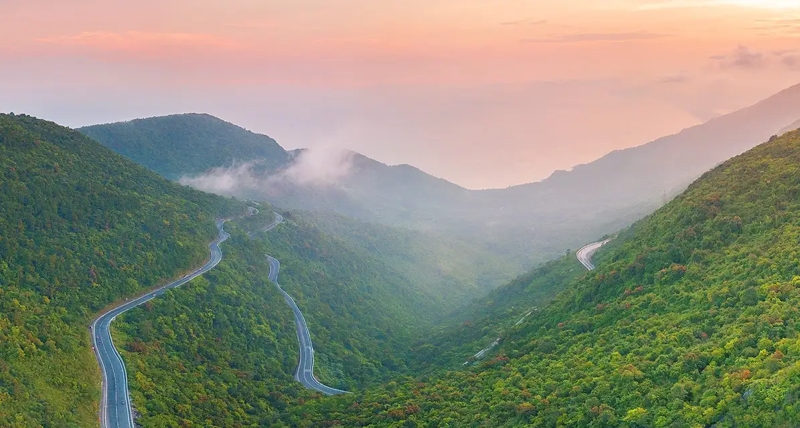
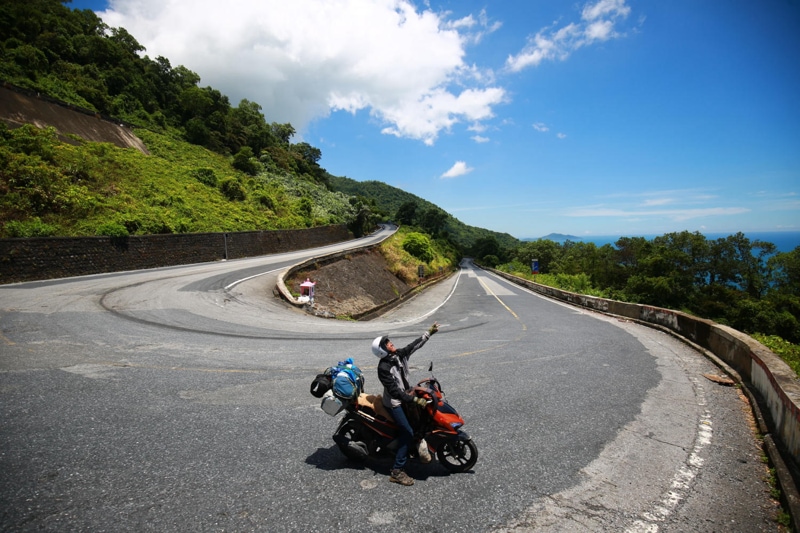
Hai Van Pass, a road once named one of the most beautiful roads in the world by The Guardian, is famous for its enchanting, unspoiled beauty and dangerous hairpin bends. In today’s article, Vietnamtour.in will take you on a journey to conquer this legendary pass. Let’s go!
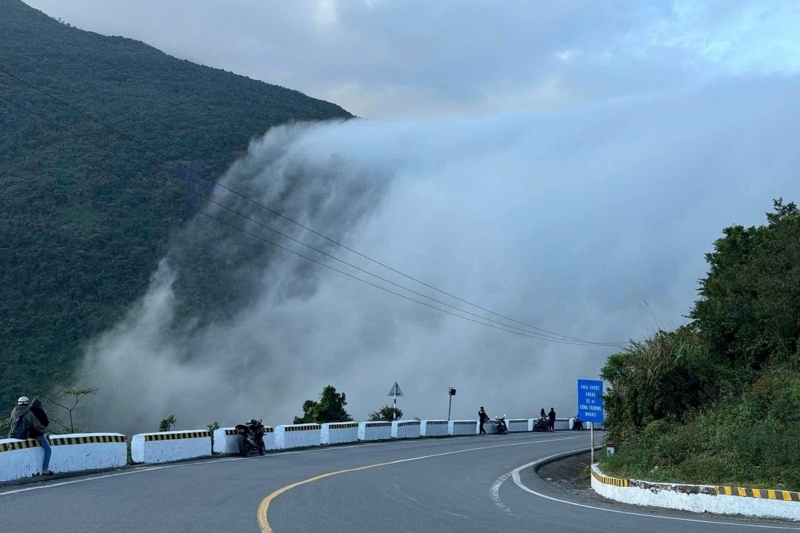
Hai Van Pass, also known as Cloud Pass (because the pass summit is often covered in clouds) or Ai Van Pass (because there used to be a gate at the summit), is located atop a high mountain and is perpetually shrouded in white clouds.
Where is Hai Van Pass
Hai Van Pass connects Thua Thien Hue province with Da Nang city, located about 20-30km north of Da Nang city centre and about 80km south of Hue. This nearly 21km long pass winds along a majestic branch of the Truong Son mountain range, rising to an altitude of almost 500m above sea level, embracing the beautiful Lang Co Bay below.
Hai Van Pass Connects Thua Thien Hue Province with Da Nang City
On one side are lush green forests and towering mountains, on the other is the sparkling turquoise sea. It’s no exaggeration to say this is the most beautiful coastal road in Vietnam, and a “dream” for many motorbike travellers wanting to conquer its breathtaking natural beauty!
History of Hai Van Pass
Before becoming a famous tourist route as it is today, Hai Van Pass was intertwined with the many historical ups and downs of Central Vietnam.
Before 1306, this land belonged to the Champa kingdom, a strategically important location between mountains and the sea. In 1306, the Champa king offered the two provinces of O and Ly (including Hai Van Pass) a dowry to marry Princess Huyen Tran of the Tran dynasty. From then on, Hai Van Pass became the official border between Dai Viet and Champa.
The Top of Hai Van Pass
In 1402, the Ho dynasty invaded the South, forcing the Champa king to cede the Chiem Dong and Co Luy regions to sue for peace. As a result, Hai Van Pass was entirely within the territory of Dai Ngu – the predecessor of present-day Vietnam.
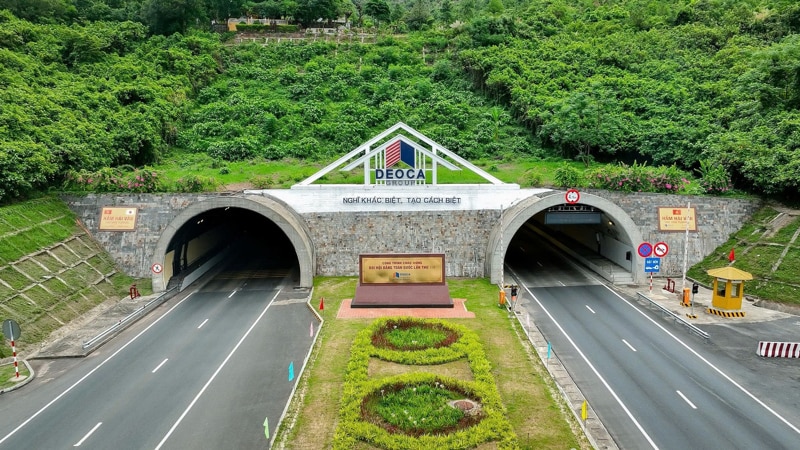
In modern times, a major milestone was June 5, 2005, when the Hai Van road tunnel officially opened to traffic. At over 12km long, this was once the longest road tunnel in Southeast Asia, significantly shortening travel time between Hue and Da Nang.
Experiences You Can’t Miss When Visiting Hai Van Pass
Driving through Hai Van Pass isn’t just a simple journey from Da Nang to Hue or vice versa. What most people remember most are the moments of stopping along the way, gazing in awe at the unexpected beauty that unfolds, their emotions changing with each bend in the road. Below are some typical stops and experiences that contribute to the unique charm of this pass.
Conquering the Hai Van Pass – Da Nang – Hue Route
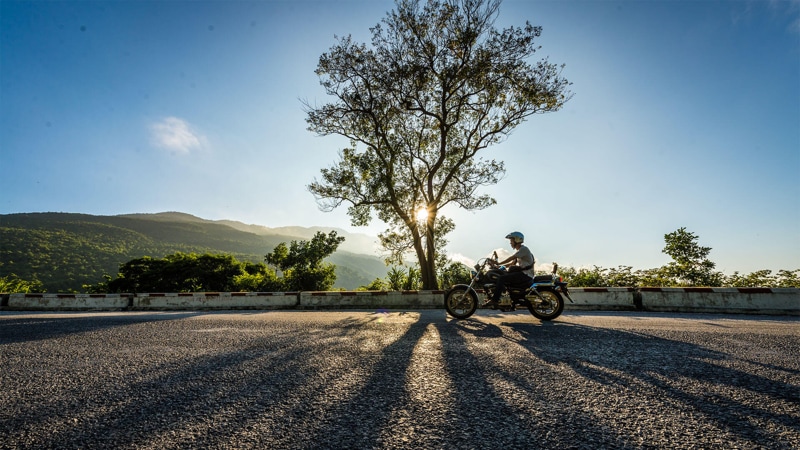
The Hai Van Pass route is only 20km long, but it guarantees an unforgettable road trip for travellers. Throughout the journey, there are treacherous curves and impressive uphill and downhill sections that challenge your driving skills.
Conquering the Hai Van Pass – Da Nang – Hue Route
Accompanying you to this conquest are the wind, the clouds, and the majestic natural landscape, like a watercolour painting of mountains, sea, and sky. On one side of the road is a green corridor of lush forests, on the other side is a long stretch of beach touching the sky.
Tien Sa Port in Da Nang, Vietnam
Upon reaching the summit of the pass, the most impressive landscapes of Hue and Da Nang will unfold before your eyes. Looking south, you’ll see Da Nang city with Tien Sa port, Cham Island, and Son Tra peninsula. Looking north, you’ll encounter the romantic scenery of fishing villages and the long stretches of beach in Lang Co Bay.
Visiting Hai Van Quan – “The First Magnificent Pass Under Heaven”
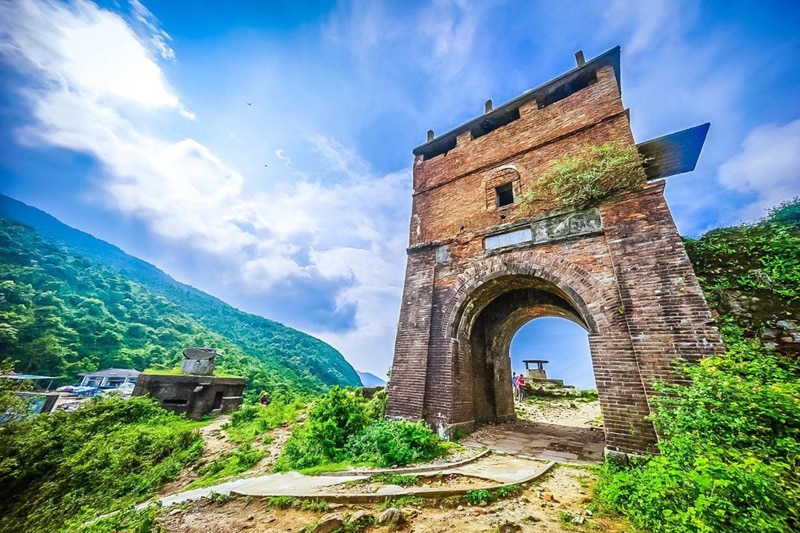
One of the most iconic landmarks on Hai Van Pass is Hai Van Quan, famously engraved with the words “Thien Ha De Nhat Hung Quan” (The First Magnificent Pass Under Heaven). Built in 1826 during the reign of King Minh Mang of the Nguyen Dynasty, Hai Van Quan once served as an important military gateway protecting the boundary between Hue and Da Nang.
Hai Van Quan – “The First Magnificent Pass Under Heaven”
From here, travellers can admire Lang Co Bay stretching endlessly below, while on the opposite side lies Da Nang city, Son Tra Peninsula, and the vast East Sea. This spot is especially popular among photographers and history lovers, making it a must-stop point when conquering Hai Van Pass.
Cloud Hunting at the Hai Van Pass Terrace
One of the most anticipated activities when visiting Hai Van Pass is cloud hunting. Besides the names Hai Van and Ai Van, it’s also known as Cloud Pass. Due to its high altitude and consistently low temperatures year-round, the pass is often filled with impressive stretches of swirling clouds.
Cloud Hunting at the Hai Van Pass Terrace
One of the popular spots for cloud hunting on the pass is the Hai Van Pass terrace. Not far from the pine forest, the terrace has a relatively flat and open terrain, ideal for sightseeing, cloud hunting, and camping. From the Hai Van Pass terrace, you can gaze far into the distance, taking in a breathtaking view unlike any other in the world. Travellers can come camp overnight here with their friends and loved ones, hunt for clouds in the evening, and watch the stunning sunrise in the morning!
Exploring Hai Van North Station and Don Ca Arch Bridge
Beyond the pass and tunnels, Hai Van Pass also features the North-South railway line, with trains leaving a lasting impression on many Vietnamese through the song “My Train Passes Through the Mountains” (Tau Anh Qua Nui). Hai Van North Station is located at the top of the pass, connecting Da Nang and Hue. At first glance, travellers will be captivated by the impressive natural scenery with cascading waterfalls, majestic mountains, and the ancient bridge.
Check in Don Ca Arch Bridge in Hai Van Pass
Hai Van North Station is known for its tranquillity, like a fairy oasis in the heart of the mountains. The rustling leaves, the cool breeze, and the pristine nature create a peaceful space, isolated from all the noise.
Don Ca Arch Bridge, a railway track, is also a unique architectural masterpiece. Built from 1902 to 1906 using stone, the bridge features four arches, creating a majestic and beautiful scene. The sturdy rock formations and pristine nature at the foot of the bridge will provide the perfect backdrop for capturing memorable moments during your exploration of Hai Van Pass.
Hai Van Tunnel – A Faster and Safer Alternative
Taking Photos of the Lonely Pine Tree
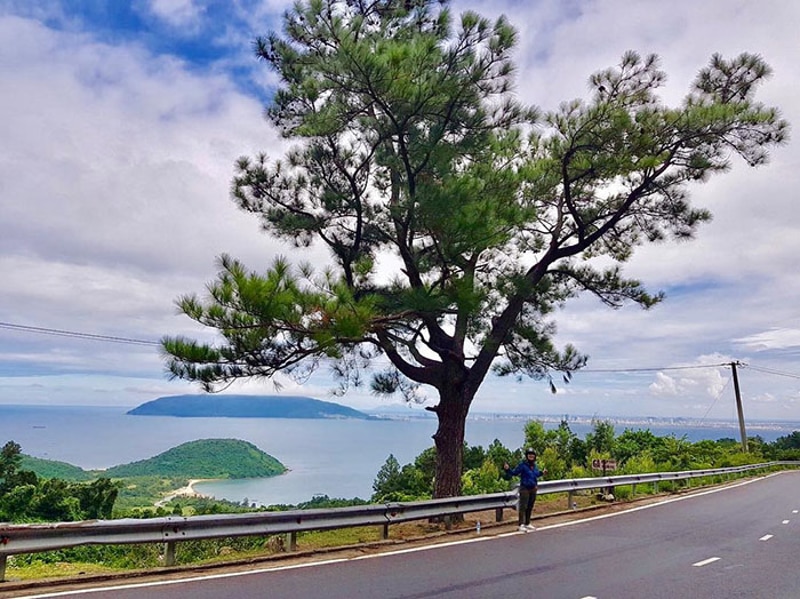
The lonely pine tree is located about 2km from the top of the pass, with a wide canopy and the vast sea and sky as a backdrop. No matter the angle, and whether you’re a professional photographer or not, you can create stunning photos here.
Check in the Lonely Pine Tree in Hai Van Pass
Besides photography, you can also enjoy the peaceful scenery of the dreamy Lang Co Bay, where the vast sea meets the deep blue sky. If you want to rest and relax while admiring the natural scenery, there are also several cafes nearby. Vietnamtour.in notes that this is a busy road, so please be mindful of safety when posing for photos and moving around!
Enjoying Coffee at Turtle Rock
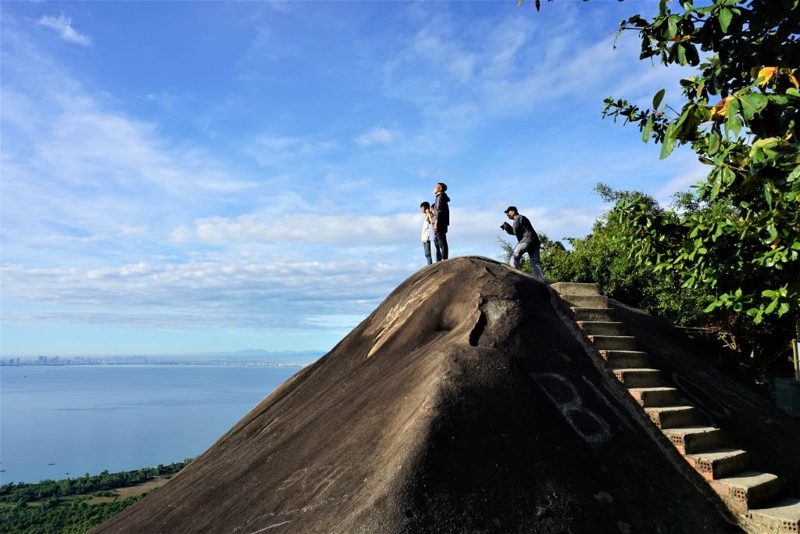
Turtle Rock, located at an altitude of 500m on Hai Van Pass, is a beautiful and unique tourist spot on Hai Van Pass. Here, you can immerse yourself in the majestic natural scenery with the breathtaking views of the mountains, forests, and the dreamy sea of Da Nang.
Check in the Turtle Rock in Hai Van Pass
The rock resembles a turtle’s head, hence its name, Turtle Rock. It’s also a super attractive check-in spot for travel enthusiasts. With just a phone, you can capture the romantic beauty of this place and take stunning photos of the Hai Van mountains and forests as a backdrop.
Check in Turtle Rock in Hai Van Pass
In particular, in front of the Turtle Rock formation, there’s a charming café called Turtle Rock Café (Cafe Cu Rua in Vietnamese). It’s an ideal place to enjoy delicious coffee amidst pristine nature. The café is simply decorated with cosy wooden tables and chairs. With a hot cup of coffee in hand, you can let your mind wander in the tranquil atmosphere, immersed in the stunning natural scenery.
Driving Challenge: U-Shaped Curves
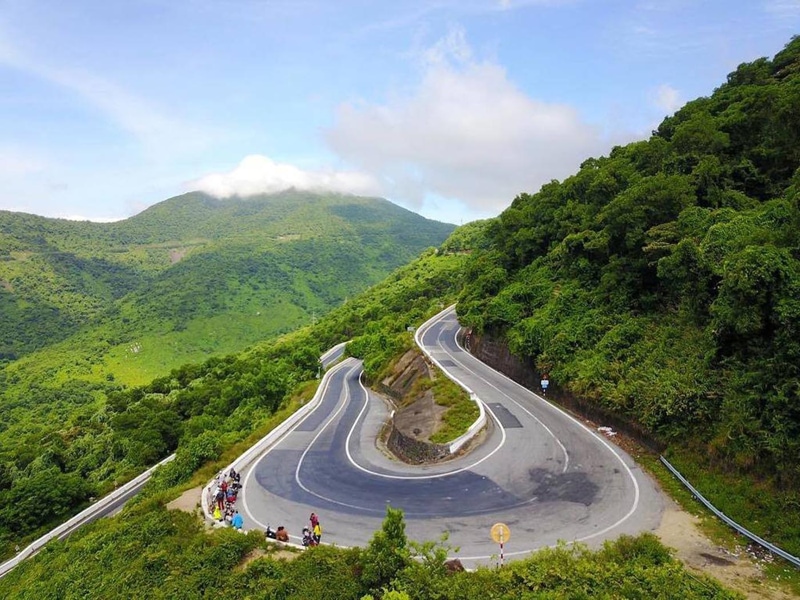
Challenging your driving skills on the U-shaped curves of Hai Van Pass is an essential part of this unique travel experience. Many travellers consider it an exciting challenge. U-shaped curves, especially sharp turns, require intense concentration and high-level driving skills.
Ride through the U-shaped curves of Hai Van Pass
However, once you overcome your fear, you’ll be rewarded with stunning coastal and pristine mountain scenery. These deadly curves become a fantastic backdrop for unique and impressive photos. Because of the dangerous nature of these curves, you must always pay close attention and ensure the safety of yourself and other vehicles!
Passing Through the Hai Van Tunnel
Besides conquering Hai Van Pass by road, experiencing the Hai Van Tunnel offers a completely different perspective of this legendary route. Once recognised as the longest road tunnel in Southeast Asia, the Hai Van Tunnel plays a crucial role in connecting Da Nang and Hue while showcasing Vietnam’s impressive engineering achievements.
Hai Van Tunnel
Passing through the tunnel allows travellers to feel the dramatic contrast between the rugged mountain above and the smooth, modern infrastructure below. The journey through the tunnel only takes about 10–15 minutes, but it highlights how challenging the Hai Van terrain truly is when viewed from a different angle.
Camping in the Village at the Foot of the Hai Van Pass
Camping at Van Village, a peaceful village at the foot of the Hai Van Pass, is a wonderful experience for those who love the unspoiled and tranquil beauty of nature. Van Village is considered a “forgotten land” in bustling Da Nang, offering a completely different atmosphere.
Camping in the Village at the Foot of the Hai Van Pass
Here, you can camp under a starry sky, breathe in the fresh air, and gaze at the endless expanse of the azure sea. BBQ parties at Van Village are a favourite activity for visitors. Sit by the romantic beach, enjoy delicious food, and share joy with friends and family.
Van Village is far from the hustle and bustle of Da Nang city, offering peace and relaxation. You can immerse yourself in the clear and cool seawater, or try the exhilarating experience of canoeing. This is truly an ideal destination for those who want to escape the hectic life and immerse themselves in the natural beauty of Hai Van Pass and Van Village.
Best Time to Visit Hai Van Pass
According to the experiences of many travellers, tourists should visit Hai Van Pass during the dry season from March to August when the weather is pleasant, with gentle sunshine and little fog or rain. This makes the journey easier and safer.
In addition, tourists should come here at sunrise from 4:00 AM to 6:00 AM or at sunset from 4:00 PM to 6:00 PM to admire the sky amidst the majestic nature.
Best Time to Visit Hai Van Pass is the Dry Season
How to Get to Hai Van Pass
Depending on your starting point, Indian travellers will have different transportation options to conquer the Hai Van Pass. In this “How to go to Hai Van Pass” section, Vietnamtour.in will guide you on the way to travel from the two most popular locations: Da Nang and Hue.
Go to the Hai Van Pass from Da Nang
From the centre of Da Nang, getting to Hai Van Pass is quite convenient with different options depending on each person’s time and travel style. With the distance being around 30 km, motorbikes are a favourite among tourists due to the feeling of freedom and the ability to stop and admire the scenery along the way. However, this option is best suited when the weather is stable, and the driver is familiar with the roads.
Go through the Hai Van Pass from Da Nang
The second option is to travel by car or taxi. It helps you save energy and is especially suitable for families or those who don’t want to drive themselves on steep and winding roads. For reference, a round-trip taxi or private car from Da Nang to Hai Van Pass usually costs around 1,200,000 to 1,600,000 VND ~ 4100 to 5467 INR.
Go to the Hai Van Pass from Hue
The journey from Hue to Hai Van Pass (around 50 km) is slightly longer than from Da Nang. However, the scenery along the way is quite beautiful, and the route is easy to navigate.
Travel time usually ranges from about an hour to over an hour, depending on the vehicle and the number of stops. Tourists can ride a motorbike if they want to fully experience the coastal route and stop taking photos. Private cars or taxis are suitable for more relaxed trips, especially when travelling with elderly people or young children. If you choose travelling by taxi, the round trip from Hue to Hai Van Pass is approximately 1,800,000 to 2,500,000 VND ~ 6151 to 8543 INR.
Vietnamtour.in No.1 Vietnam Tour Operator For Indians
Alternatively, for a more relaxed trip with a pre-arranged and customizable itinerary, travellers can opt for a package tour with Vietnamtour.in. This option is suitable for those visiting the area for the first time or who want to combine visits to several nearby attractions without worrying about transportation, sightseeing locations, accommodation, or meals, etc.
Notes You Should Know before Travelling to the Hai Van Pass
To ensure a safe and enjoyable trip across Hai Van Pass, travellers should note a few important things before departure.
Before starting your journey across Hai Van Pass, checking the weather forecast is the first thing to do. The weather on the pass can change quite quickly, especially with fog and sudden rain, significantly affecting visibility and safety.
In addition, travellers should fill up their gas tank before going up the pass, especially when travelling by motorbike, as there are not many gas stations along the route.
Maintain a steady speed and pay close attention when going through the pass sections to ensure safety.
Avoid going up Hai Van Pass at night or during heavy rain, as visibility is very limited and the road will be slippery, easily leading to accidents.
Prepare a light jacket and hot water, as the air will be colder in the middle or at the top of the pass compared to the bottom.
Conclusion
We hope our travel guide has been helpful in providing useful travel advice for visiting Hai Van Pass. You will be able to have a great experience regardless of whether you choose to travel by yourself or with a group, as long as you do some appropriate planning.
If you prefer a more simplified and seamless travel itinerary, feel free to reach out to us at Vietnamtour.in. We’ll be glad to make things easier and more memorable for you!
Anthony Ngo
Hi, I'm Anthony - Co-founder of Vietnamtour.in. With me, traveling is an intense passion and promoting the charming beauty of Vietnam to international friends is a glory mission.