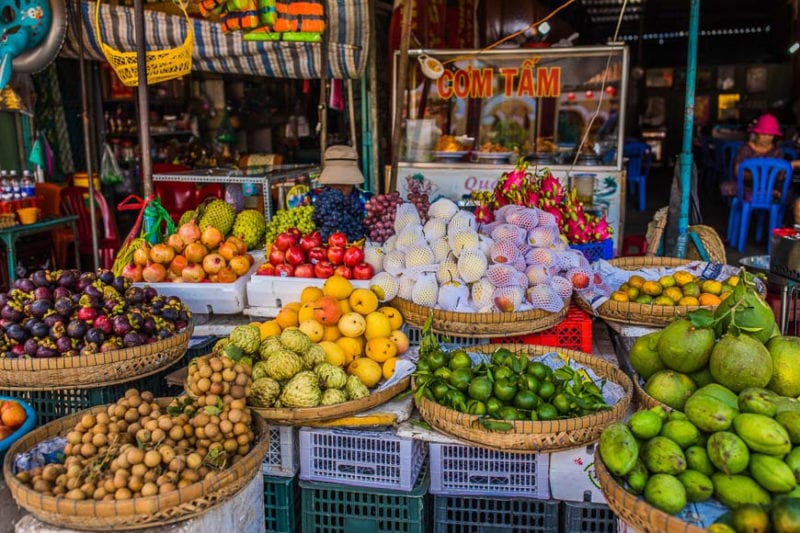
Vietnam is a tropical country and a paradise for fruit lovers, with different fruits in season across its northern, central and southern regions. The most famous fruits in Vietnam include durian, star apple (milk fruit), dragon fruit, mangosteen, rambutan and mango, and most cost only about 20,000–100,000 VND (≈ ₹73–366) per kg at local markets. Dried fruits such as dried jackfruit and mango also make easy gifts to take home after your holiday.
In this blog, Vietnamtour.in suggests the top 13 fruits in Vietnam, with 2026 price ranges, seasons, how to eat each one and useful tips for buying fruit from locals. Let’s start the fruit-tasting journey!
Fruits in Vietnam at a glance (updated November 2026)
- Most famous Vietnam fruits: durian, star apple (vu sua), dragon fruit, mangosteen, rambutan, mango and longan.
- Vietnam fruit price: most local fruits cost about 20,000–100,000 VND (≈ ₹73–366) per kg; premium durian and Hoa Loc mango can cost more.
- Best fruit season: May to August in the south (durian, mangosteen, rambutan); July to August for longan in the north; December to March for star apple.
- Where to buy: local markets (Dong Xuan in Hanoi, Ben Thanh in Ho Chi Minh City), fruit stalls, supermarkets and the Cai Rang floating market in the Mekong Delta.
- Flying home: fresh durian is not allowed in the cabin; dried fruit is the easiest gift to take to India.
Vietnam Fruit Price and Season Guide 2026
This table shows approximate 2026 retail prices and main seasons for the 13 most popular fruits in Vietnam. Prices change with the season, city and quality, and drop sharply at the peak of the harvest.
| Fruit (Vietnamese name) | Approx. price per kg | Main season |
|---|---|---|
| Durian (Sau Rieng) | 50,000–120,000 VND (≈ ₹183–440) | April–August (south); August–October (Central Highlands) |
| Star apple / milk fruit (Vu Sua) | 50,000–100,000 VND (≈ ₹183–366) | December–March |
| Dragon fruit (Thanh Long) | 10,000–40,000 VND (≈ ₹37–147) | All year, peak May–August |
| Lady finger banana (Chuoi Tay) | 20,000–35,000 VND (≈ ₹73–128) | All year |
| Rambutan (Chom Chom) | 20,000–40,000 VND (≈ ₹73–147) | May–August |
| Custard apple (Mang Cau) | 40,000–80,000 VND (≈ ₹147–293) | Summer, with some all year |
| Mangosteen (Mang Cut) | 40,000–80,000 VND (≈ ₹147–293) | May–August |
| Mango (Xoai) | 30,000–150,000 VND (≈ ₹110–549) | March–June |
| Jackfruit (Mit) | 15,000–40,000 VND (≈ ₹55–147) | All year, peak in summer |
| Longan (Nhan) | 40,000–100,000 VND (≈ ₹147–366) | July–August |
| Star fruit (Khe) | 20,000–40,000 VND (≈ ₹73–147) | All year |
| Rose apple (Roi / Man) | 30,000–60,000 VND (≈ ₹110–220) | All year |
| Passion fruit (Chanh Leo / Chanh Day) | 20,000–40,000 VND (≈ ₹73–147) | All year |
Prices are approximate retail prices at markets and fruit shops in 2026; tourist areas and supermarkets may charge more.
What Is the Most Famous Fruit in Vietnam?
Durian is the most famous fruit in Vietnam and is known as the “king of fruits”; other Vietnam famous fruit picks for foreign visitors are dragon fruit, star apple (vu sua) and mangosteen. The south, especially the Mekong Delta, grows the widest variety of tropical fruits, while the north is famous for longan and lychee in summer.
Indian travellers will recognise several fruits, such as mango, banana, custard apple (sitaphal) and jackfruit, but Vietnamese varieties often taste different. Below are the 13 fruits of Vietnam you should try, with prices, seasons and how to eat them.
1. Durian – Sau Rieng
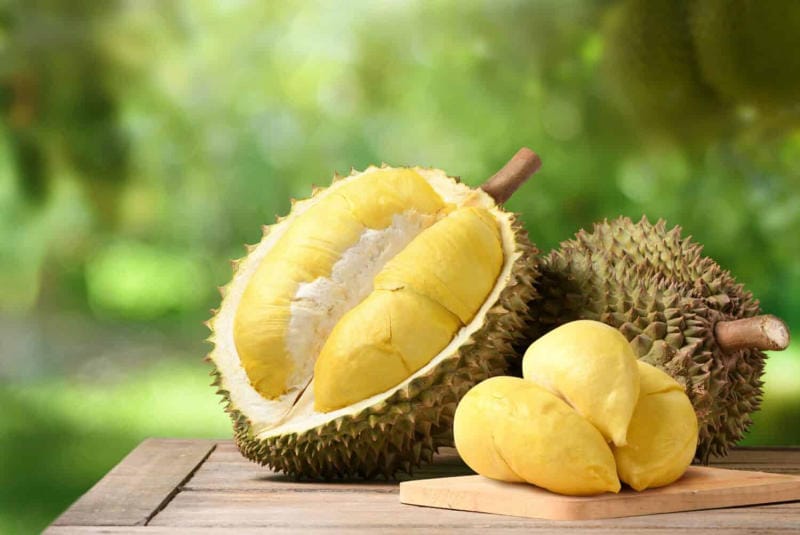
Durian, the “king of fruits”, with its creamy yellow flesh.
Durian is the most famous fruit in Vietnam, known for its rich flavour and very strong smell. The creamy flesh is protected by a hard, spiky shell that can hurt your hands if you are not careful. Its custard-like texture is sweet with a slightly savoury note; people either love it or avoid it.
Because of its strong smell, durian is banned in many hotels and is not allowed in aircraft cabins. If you want to take durian home as a gift, try durian products such as Banh Pia pastries or dried durian instead.
- Price range: about 50,000–120,000 VND (≈ ₹183–440) per kg; Ri6 is usually cheaper than Monthong.
- Season: April to August in the south; August to October in the Central Highlands.
- How to eat: Ask the seller to open it for you, or wear gloves and use a knife to split the shell along its seams.
2. Milk fruit (Star apple) – Vu Sua
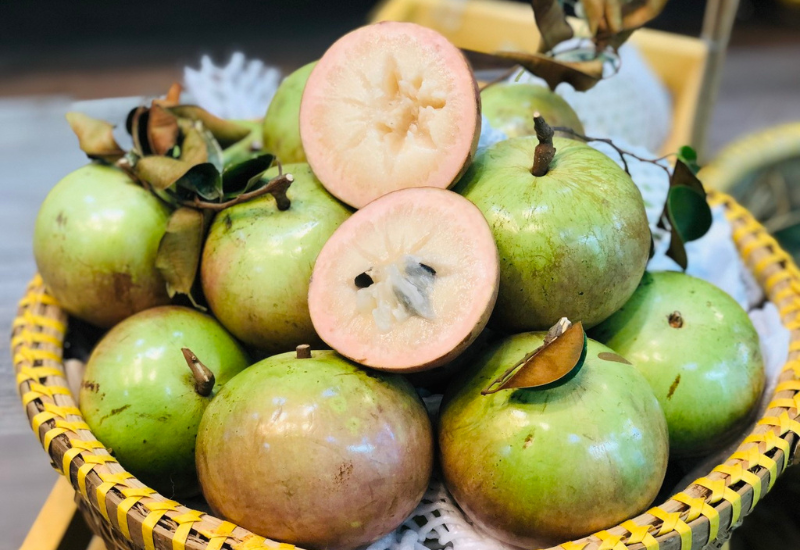
Vu Sua (star apple), named for its milky white juice.
You will see plenty of milk fruit (vu sua) in the Mekong Delta, especially the famous Lo Ren variety from Vinh Kim. It is about the size of an orange, with shiny green or purple skin. When cut, it shows a star pattern and soft, milky-sweet flesh.
- Price range: about 50,000–100,000 VND (≈ ₹183–366) per kg.
- Season: December to March, with early fruit from October.
- How to eat: Cut it in half and scoop out the white pulp with a spoon, avoiding the bitter skin.
3. Dragon fruit – Thanh Long
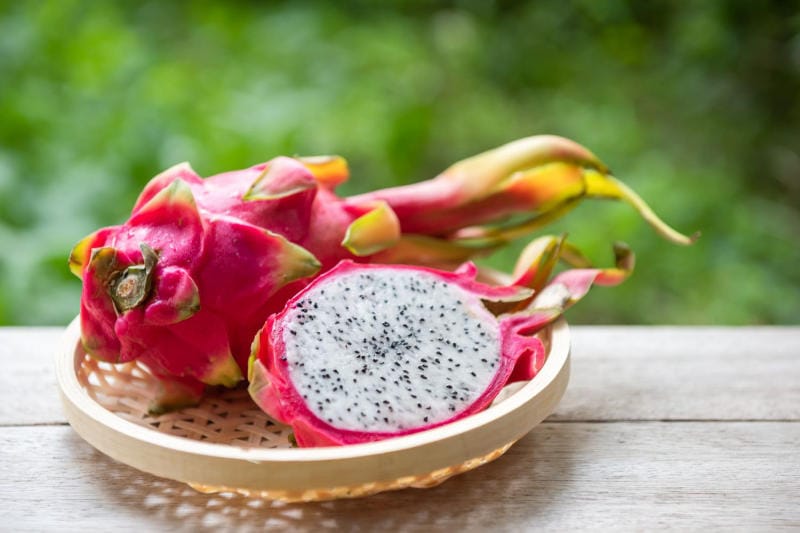
White-flesh dragon fruit, grown widely in southern Vietnam.
Dragon fruit is one of Vietnam’s best-known fruits and a major export, grown mainly in the former Binh Thuan area (now part of Lam Dong Province) and the Mekong Delta. It is rich in vitamin C and fibre. First-time visitors love its bright pink skin and white or red flesh, which tastes mildly sweet and refreshing.
- Price range: about 10,000–40,000 VND (≈ ₹37–147) per kg; red-flesh is usually more expensive than white-flesh.
- Season: all year, with the main harvest from May to August.
- How to eat: Cut it into slices or halves, then peel off the skin or scoop out the flesh.
4. Lady Finger Banana – Chuoi Tay
[Image to source] Bunches of Vietnamese lady finger bananas (chuoi tay) at a local fruit stall in Vietnam.
Alt: Bunches of lady finger bananas at a fruit stall in Vietnam
Caption: Chuoi Tay, a sweet everyday banana sold all over Vietnam.
Bananas are as popular in Vietnam as in India. Everywhere in Vietnam you can buy “Chuoi Tay”, a sweet, fragrant banana with fairly thick skin. It is eaten fresh and also used in desserts such as grilled banana and banana coconut pudding.
- Price range: about 20,000–35,000 VND (≈ ₹73–128) per kg.
- Season: all year.
- How to eat: Peel and eat fresh.
5. Rambutan – Chom Chom
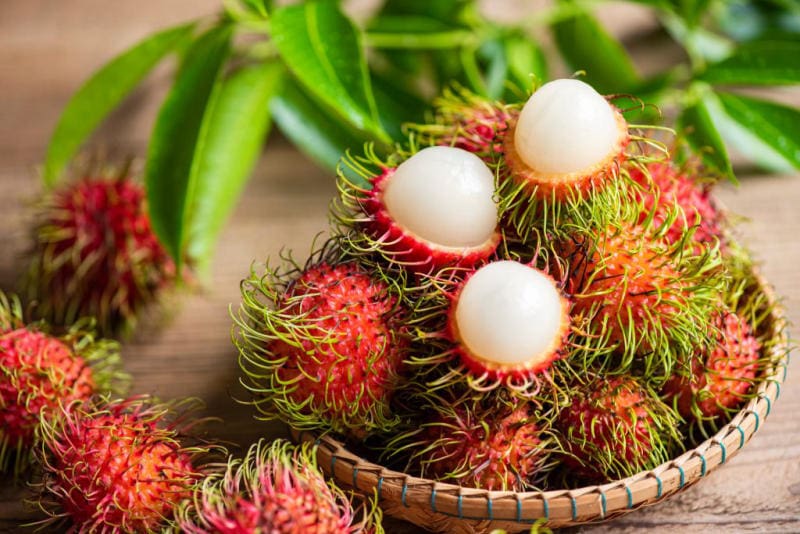
Rambutan, the “hairy” fruit with juicy white flesh.
Rambutan stands out with its red, hairy skin covering juicy white flesh. If you have a sweet tooth, don’t miss it: the flavour is sweet with a light sour note.
- Price range: about 20,000–40,000 VND (≈ ₹73–147) per kg.
- Season: May to August.
- How to eat: Twist or cut the skin open, eat the flesh and discard the seed.
6. Custard Apple – Mang Cau
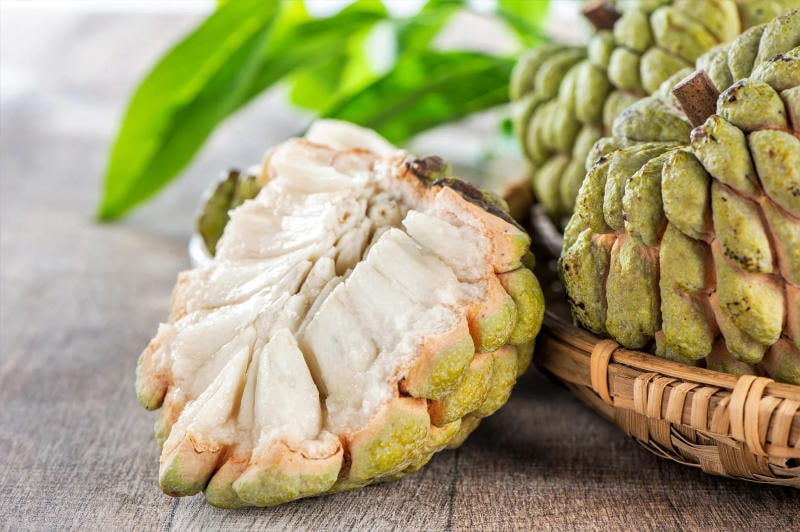
Custard apple, familiar to Indian travellers as sitaphal.
Custard apple, known in India as sitaphal, is a well-loved fruit in Vietnam with a delicate, sweet taste and soft flesh. When ripe, its segments open slightly to show the white flesh inside. Vietnamese families often place it on the five-fruit tray at Tet, as “cau” sounds like the word for “wish”.
- Price range: about 40,000–80,000 VND (≈ ₹147–293) per kg.
- Season: mainly summer; some regions, such as Tay Ninh, harvest most of the year.
- How to eat: Break it open and eat the flesh with a spoon, spitting out the black seeds.
7. Mangosteen – Mang Cut
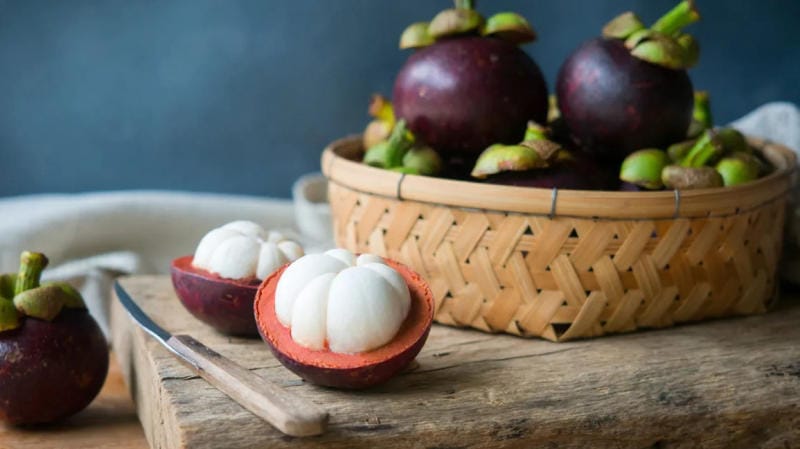
Mangosteen, the sweet-sour “queen of fruits”.
Mangosteen, often called the “queen of fruits”, has thick purple skin and soft white segments with a sweet, slightly sour taste. Look for it at local markets in the south from late spring to summer.
- Price range: about 40,000–80,000 VND (≈ ₹147–293) per kg in season; much more expensive out of season.
- Season: May to August.
- How to eat: Press the skin gently with both hands until it cracks, then lift out the white segments.
8. Mango – Xoai
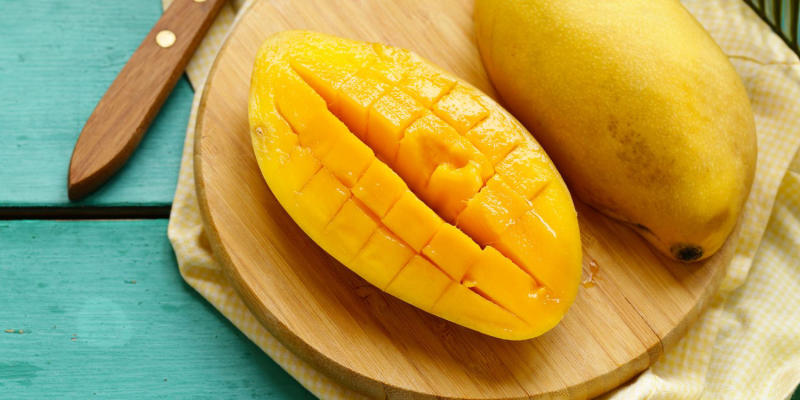
Ripe Vietnamese mango, best from March to June.
Like in India, mango is one of the most loved fruits in Vietnam. Vietnamese people eat ripe mangoes as a dessert and green mangoes as a snack with chilli salt. The famous Hoa Loc mango from the Mekong Delta is sweet and fragrant. Mango is also used in mango sticky rice and other sweets; read more in our guide to desserts in vietnam.
- Price range: about 30,000–50,000 VND (≈ ₹110–183) per kg for everyday mangoes; premium Hoa Loc mango up to about 150,000 VND (≈ ₹549).
- Season: March to June.
- How to eat: Slice the cheeks off around the seed and score the flesh, or eat green mango with chilli salt.
9. Jackfruit – Mit
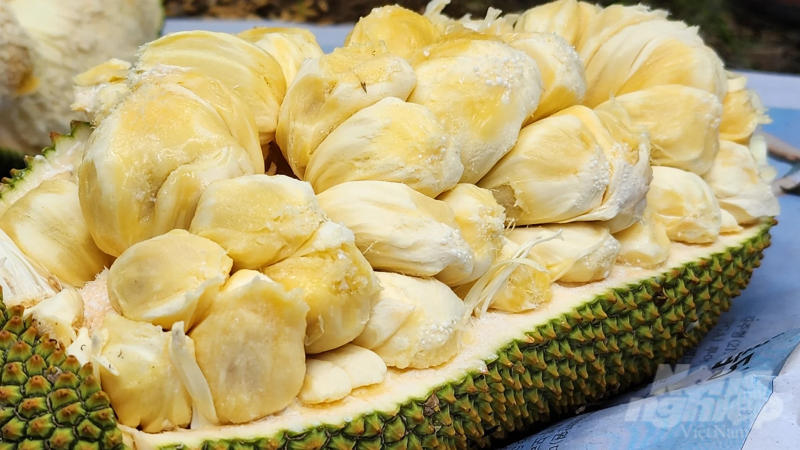
Jackfruit bulbs, sweet and fragrant.
Jackfruit is one of the most common fruits in Vietnam, with sweet yellow bulbs and a strong aroma. A whole jackfruit can weigh 10–20 kg, so sellers usually sell it in ready-cut portions.
Don’t miss “Mit Say” (dried jackfruit chips), sold everywhere from local markets to supermarkets at affordable prices, and a popular gift to take home.
- Price range: about 15,000–40,000 VND (≈ ₹55–147) per kg for whole fruit; cut portions cost more.
- Season: all year, peak in summer.
- How to eat: Buy ready-cut bulbs and remove the seed before eating.
10. Longan – Nhan
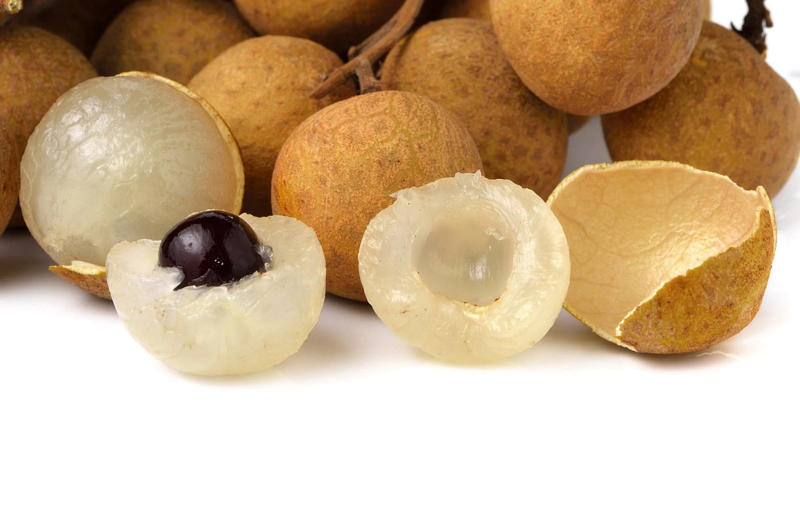
Longan, the “dragon eye” fruit of northern Vietnam.
Longan has thin brown skin, translucent sweet flesh and a shiny black seed. The best-known variety is “Nhan Long” from Hung Yen in northern Vietnam, once offered to the royal court. In season, you can visit longan gardens and pick fruit with local farmers.
- Price range: about 40,000–100,000 VND (≈ ₹147–366) per kg for Hung Yen longan.
- Season: July to August.
- How to eat: Peel off the brown skin, eat the flesh and discard the seed.
11. Star Fruit – Khe
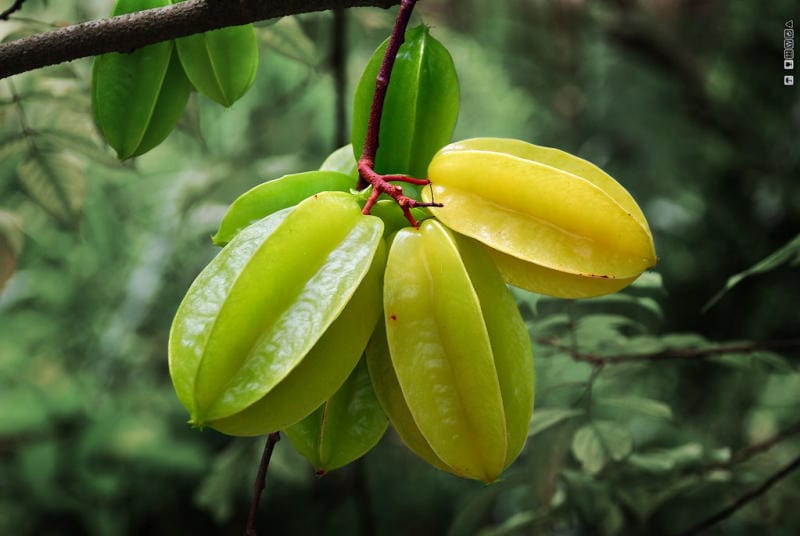
Star fruit (khe) turns golden when ripe.
When ripe, star fruit turns golden yellow and tastes sweet and sour. Vietnamese people often use it in soups and dipping sauces, and its star-shaped slices make a pretty garnish. It fruits several times a year, so you can find it in most seasons.
- Price range: about 20,000–40,000 VND (≈ ₹73–147) per kg.
- Season: all year.
- How to eat: Trim the edges and slice crosswise into stars.
12. Rose Apple – Qua Roi in the North and Qua Man in the South
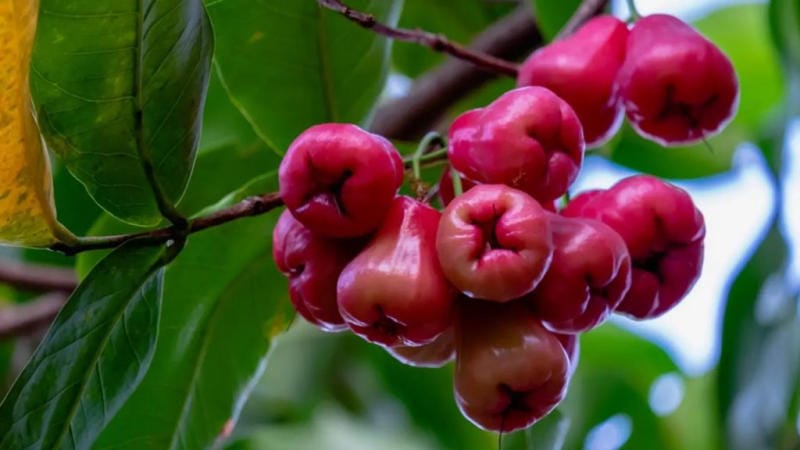
Rose apple, known as roi in the north and man in the south.
Rose apple is found all over Vietnam, with a bell shape and bright red or green skin. Northerners call it “Qua Roi”, while southerners call it “Qua Man”. It is crisp, juicy and refreshing, and tastes best with a little chilli salt.
- Price range: about 30,000–60,000 VND (≈ ₹110–220) per kg.
- Season: all year.
- How to eat: Wash and eat whole, or slice into pieces.
13. Passion Fruit – Chanh Leo
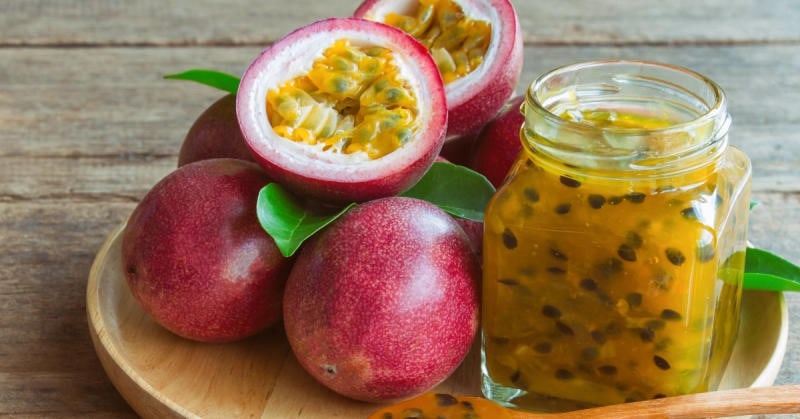
Passion fruit, a favourite for juices and smoothies.
Passion fruit (chanh leo in the north, chanh day in the south) is sour with a light sweetness and a strong aroma. It is cheap in Vietnam, especially in the Central Highlands where much of it is grown. Passion fruit juice is one of the most popular drinks in Vietnam; see more in our guide to vietnam beverage.
- Price range: about 20,000–40,000 VND (≈ ₹73–147) per kg.
- Season: all year.
- How to eat: Cut in half and scoop out the pulp, or mix it with water, sugar and ice for juice.
Where to Buy Fruits in Vietnam
The best places to buy fruits in Vietnam are local markets, fruit stalls and supermarkets, while early-morning wholesale and floating markets show how Vietnam’s fruit and vegetable trade works.
- Hanoi: Dong Xuan Market and Old Quarter fruit stalls for retail; Long Bien Market is a wholesale fruit and vegetable market that is busiest between about 2 AM and 4 AM.
- Ho Chi Minh City: Ben Thanh Market for convenience; Thu Duc wholesale market for fruits and vegetables, with retail sales roughly 6 AM to noon.
- Mekong Delta: Cai Rang floating market in Can Tho (best from about 5 AM to 8 AM) and fruit orchards where you can pick fruit in season.
- Cafés and juice bars: fresh fruit smoothies (sinh to) are on almost every café menu; check the oasis cafe vietnam menu for a fun koi-pond café in Ho Chi Minh City.
The south also has plenty of tropical fruit on the islands; many travellers combine Mekong orchards with a beach stay on our phu quoc travel packages.
Tips for Trying Fruits in Vietnam
- Buy fruit at busy local markets or fruit shops, and check the price per kg before the seller weighs it.
- Bring cash in small notes and bargain politely at markets.
- Avoid bruised, overripe or damaged fruit, and wash fruit before eating.
- Fresh durian is not allowed in aircraft cabins; Vietnam Airlines allows up to 5 kg in checked baggage only if tightly sealed, and other airlines may not.
- India’s plant quarantine rules restrict bringing fresh fruit into the country, so dried fruits (jackfruit, mango, banana chips) and durian pastries are the safest gifts.
- Follow your local guide’s advice on the best seasonal fruits (contact Vietnamtour.in).
Want to taste fresh fruit at Mekong Delta orchards and local markets on your trip? Share your travel details and our team will plan it for you.
FAQs About Fruits in Vietnam
What is the most famous fruit in Vietnam?
Durian is Vietnam’s most famous fruit, known as the “king of fruits”; dragon fruit, star apple (vu sua) and mangosteen are also very famous.
How much do fruits cost in Vietnam?
Most local fruits cost about 20,000–100,000 VND (≈ ₹73–366) per kg; durian costs about 50,000–120,000 VND (≈ ₹183–440) per kg depending on variety and season.
When is the best fruit season in Vietnam?
May to August is the best fruit season, especially in the south, when durian, mangosteen, rambutan and longan are all available.
Can I take Vietnamese fruits back to India?
Fresh fruits face plant quarantine rules in India and durian is restricted on flights, so dried fruits and packaged fruit snacks are the easiest to take home.
Where can I buy fruits and vegetables in Vietnam?
Local markets such as Dong Xuan (Hanoi) and Ben Thanh (Ho Chi Minh City), wholesale markets such as Long Bien and Thu Duc, and the Cai Rang floating market in the Mekong Delta.
Fruit prices, seasons and travel rules in this guide were last checked in November 2026 and may change.
Final thoughts
Our blog has reviewed the must-try fruits in Vietnam, from north to south. If you want to buy vietnam souvenirs for family, dried fruits keep longer and are easy to pack. Plan a fruit-filled trip with our vietnam holiday packages, and we look forward to welcoming you!
RELATED ARTICLES





RECOMMENDED VIETNAM TOURS

Hanoi · Ninh Binh · Sapa · Halong Bay · Da Nang · Hoi An

Hanoi · Halong Bay · Da Nang · Hoi An · Phu Quoc

Hanoi · Ninh Binh · Halong Bay · Da Nang · Hoi An · Phu Quoc · Ho Chi Minh City · Mekong Delta
Hanoi · Ninh Binh · Halong Bay · Da Nang · Hoi An · Phu Quoc

Hanoi · Ninh Binh · Sapa · Halong Bay
Ho Chi Minh City · Mekong Delta · Phu Quoc · Da Nang · Hoi An · Hanoi · Sapa · Ninh Binh · Halong Bay

Ho Chi Minh City · Mekong Delta · Da Nang · Hoi An · Hanoi · Halong Bay

Hanoi · Halong Bay · Da Nang · Hoi An · Phu Quoc · Ho Chi Minh City