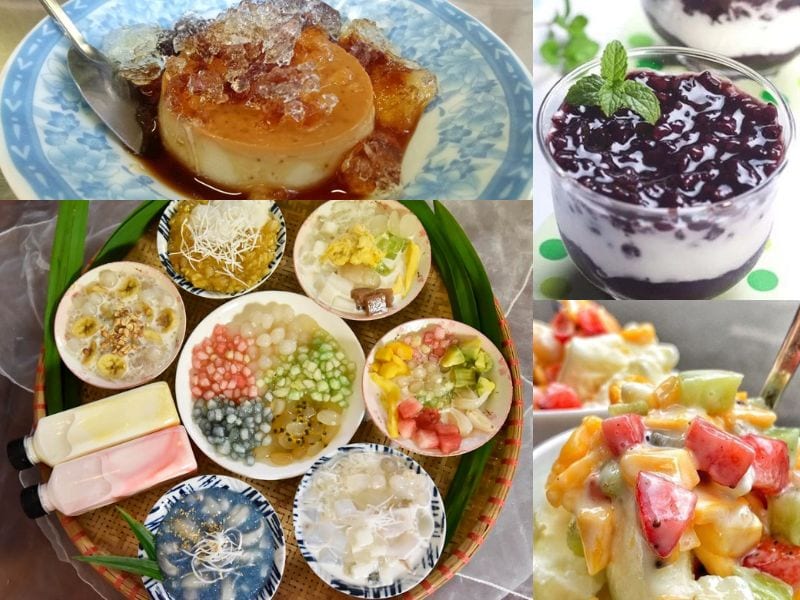
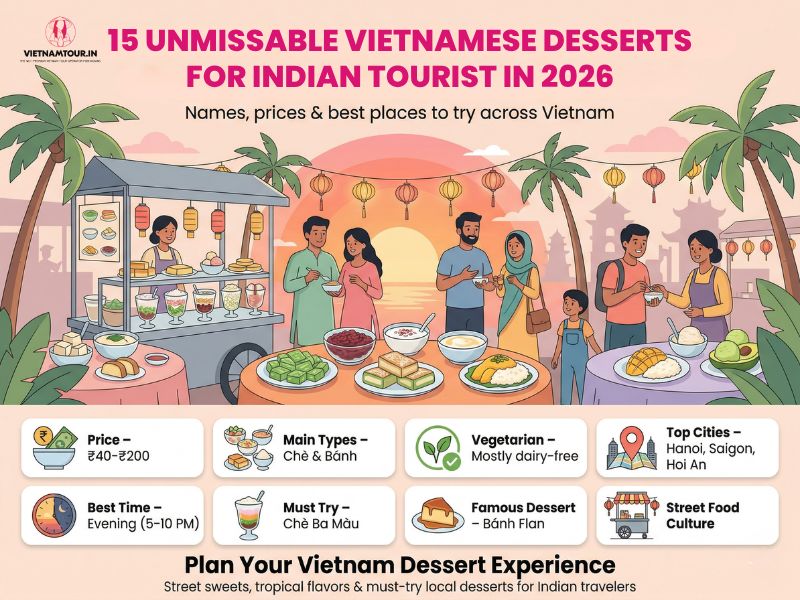
Vietnam has two primary dessert families — Che (sweet soups and puddings) and Banh (cakes and pastries) — plus a third world of street sweets that belongs to neither category. Most Vietnamese desserts use coconut milk, pandan, mung beans, and tapioca starch, which makes the majority of them naturally dairy-free and safe for Indian vegetarians. Prices range from ₹40 to ₹200 (VND 10,000–50,000) per serving, and the primary context is street food, not restaurants.
This guide from Vietnamtour.in covers all 15 desserts by category, identifies where to find them in Hanoi, Saigon, and Hoi An, and explains how a culinary food tour connects all three cities in a single trip. The 8 sections below cover, in order: Che sweet soups, Banh cakes and pastries, street desserts beyond Che and Banh, the 4 core ingredients (coconut milk, pandan, mung beans, tapioca), the best cities for desserts in Vietnam (Hanoi, Saigon, Hoi An), Vietnam dessert food tours, 8 dessert options safe for vegetarian and Jain travellers, and FAQs covering price, vegetarian status, and city variety.
Che — The Vietnamese Sweet Soup
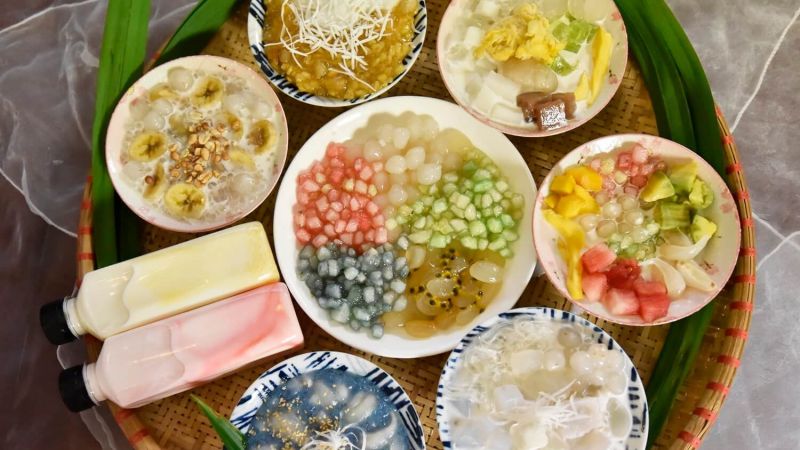
Che is a family of Vietnamese sweet soups and puddings made from beans, grains, and coconut milk — the most popular dessert category in Vietnam, served hot or cold at street stalls across the country for ₹40–₹120 (VND 10,000–30,000). The category of Che includes over 50 regional varieties, but Indian tourists consistently return to the same 7 — starting with Che Ba Mau and then branching outward.
Che Ba Mau
Che Ba Mau is a layered iced dessert with three components — mung bean jelly, yellow mung bean paste, and red kidney beans — topped with coconut cream and crushed ice. Each layer of Che Ba Mau has a distinct texture: the pandan jelly is firm and slippery, the mung bean paste is smooth and dense, and the red beans are soft with a mild sweetness. Che Ba Mau is served in a tall glass or bowl, and the color contrast between all three layers is visible before the first spoonful, which is why it is the most photographed Vietnamese dessert among first-time visitors.
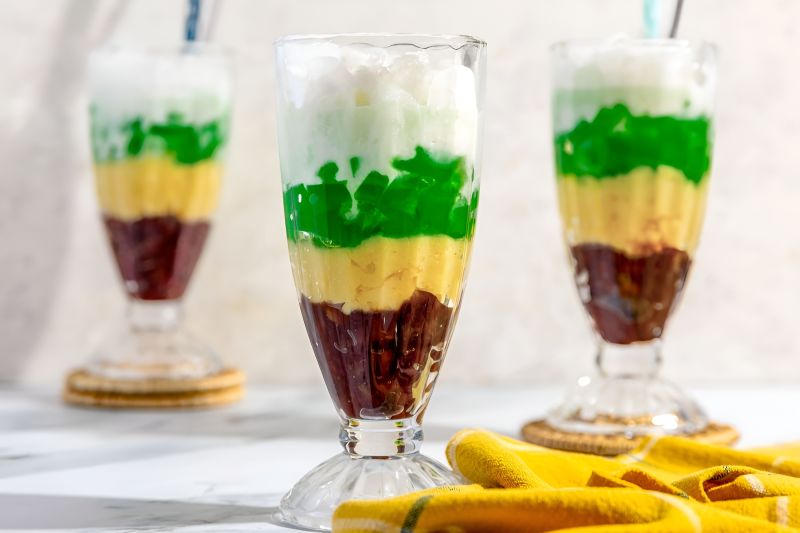
The street stall price of Che Ba Mau is about ₹60–₹120 (VND 15,000–30,000). No spoon is required for the first sip of Che Ba Mau — the glass is tilted, and the crushed ice and coconut cream are consumed directly. Che Ba Mau is fully vegetarian and dairy-free in every standard preparation.
6 Other Che Varieties Indian Tourists Order After Che Ba Mau
After Che Ba Mau, Indian tourists most commonly order these six Che varieties — each one distinct in texture, ingredient, and temperature:
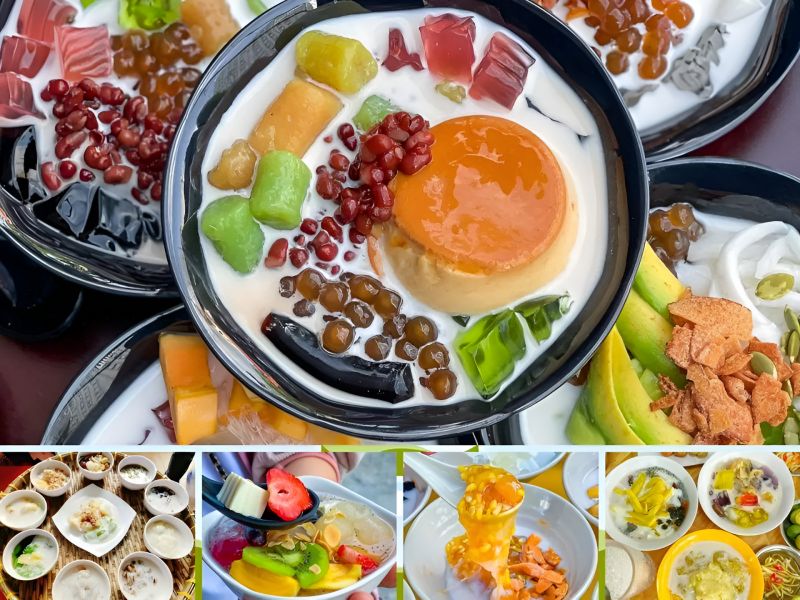
- Che Chuoi is banana coconut pudding; banana slices simmered in coconut milk with tapioca pearls; warm, mild, and the least sweet of the six. Che Chuoi price is about ₹40–₹80.
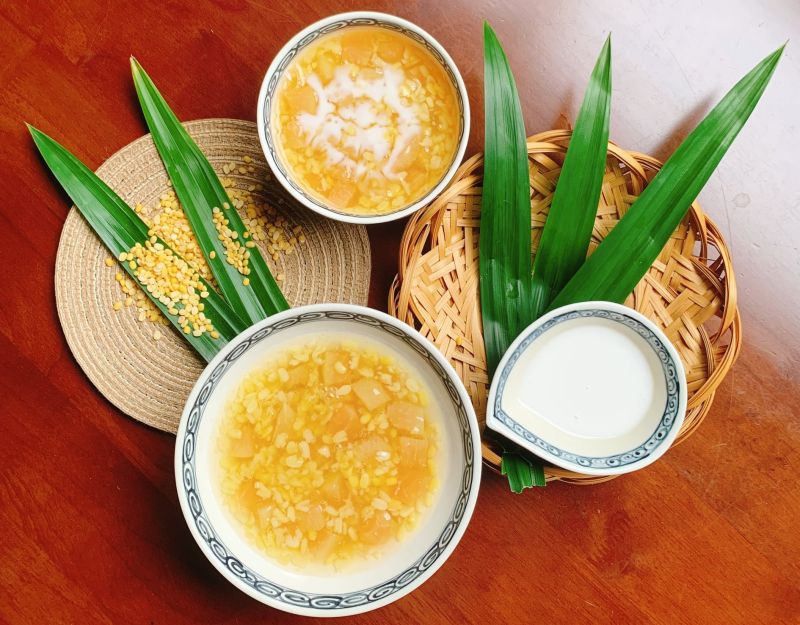
- Che Dau Xanh is mung bean sweet soup; split mung beans cooked until soft in lightly sweetened water with coconut milk poured over the top. Che Dau Xanh price is about ₹40–₹70.
- Che Troi Nuoc is glutinous rice balls filled with mung bean paste, served in warm ginger syrup with toasted sesame and coconut milk. Che Troi Nuoc price is about ₹50–₹90.
- Che Khuc Bach is an almond jelly and lychee dessert; white almond-flavored jelly cubes served cold in clear lychee syrup with fresh or canned lychee. Che Khuc Bach price is about ₹80–₹120.
- Che Bap is sweet corn pudding; whole corn kernels in thin coconut milk with a light sugar base; the Hoi An version is notably thicker and sweeter than the Hanoi one. Che Bap price is about ₹50–₹80.
- Sua Chua Nep Cam is plain yogurt layered over black fermented sticky rice; tart, purple, slightly tangy, and mildly fermented; the dessert Indian tourists most frequently photograph because of its unusual color. Sua Chua Nep Cam price is about ₹60–₹100. Dairy note: Sua Chua Nep Cam contains yogurt and is not dairy-free — Hindu lacto-vegetarians can eat it, but it is excluded from the dairy-free list later in this guide.
Banh — Vietnamese Cakes and Pastries
Banh is the Vietnamese category covering all steamed, baked, and fried cakes and pastries — priced ₹40–₹100 (VND 10,000–25,000) per slice or piece, and significantly expanded during 19th-century French colonization with items like Banh Flan (crème caramel) alongside older native creations such as Banh Da Lon. Unlike Che, which is always liquid-based and served in a bowl or glass, Banh is solid — sliced, plated, or held in hand. The two categories cover the full range of what the Vietnamese define as dessert, and understanding the difference means you can navigate any street stall menu in the country.
Banh Flan
Banh Flan is Vietnam’s version of crème caramel — adopted during the 19th-century French colonization — made with condensed milk and eggs, often served with a shot of Vietnamese drip coffee poured directly over the top. The coffee addition of Banh Flan is uniquely Vietnamese and does not exist in French cuisine, transforming the dessert from a mild European pudding into something distinctly local — the bittersweet coffee cuts through the sweetness of the caramel and creates a two-flavor contrast in every spoonful.
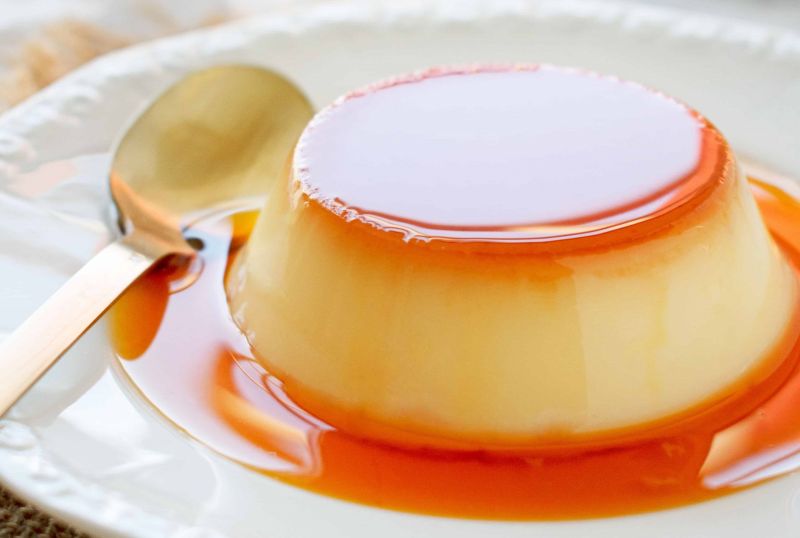
The original French Flan version used fresh cream; the Vietnamese adaptation replaced it with condensed milk, producing a denser, sweeter custard with a more pronounced caramel flavor. The price for a Banh Flan is about ₹50–₹100 (VND 12,000–25,000). Indian travellers can find Banh Flan in street stalls throughout Saigon, cafés in Hanoi’s Old Quarter, and Ben Thanh Market’s food court. Note for Indian tourists: Banh Flan contains eggs and is not suitable for egg-free vegetarians.
Banh Da Lon and Banh Cam
Banh Da Lon is a steamed, layered green-and-yellow pandan cake made from tapioca and rice flour — chewy, translucent, and sold by slice for ₹40–₹80 (VND 10,000–20,000). The alternating green (pandan) and yellow (mung bean) layers are visible when sliced, and the texture is firm enough to hold its shape but soft enough to pull apart with fingers. Indian tourists familiar with modak describe the skin texture as similar but denser.
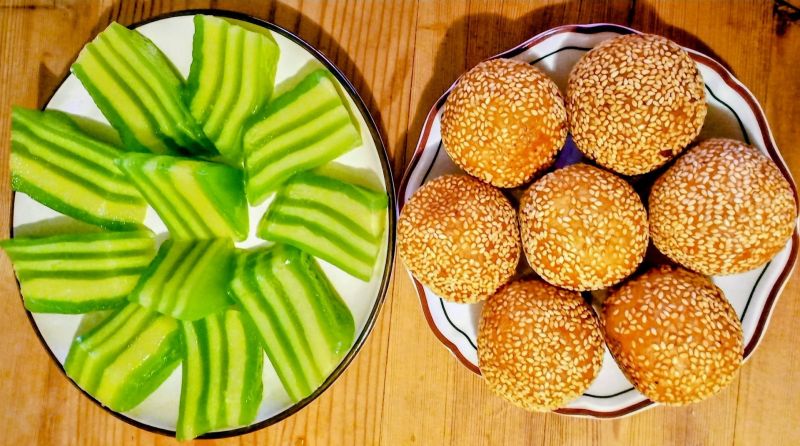
Banh Cam is a fried glutinous rice ball coated in sesame seeds, filled with sweetened mung bean paste, and served warm. The outer sesame coating is conceptually similar to til laddoo, but with a crispy fried shell instead of a soft bound exterior.
Both Banh Da Lon and Banh Cam are fully vegetarian — no meat or egg in standard preparation. The price range for both Banh Da Lon and Banh Cam is about ₹40–₹100 (VND 10,000–25,000).
Vietnamese Street Desserts Beyond Che and Banh
Beyond Che and Banh, the Vietnamese street dessert culture includes 5 sweets — sticky rice ice cream (Kem Xoi), avocado ice cream (Kem Bo), Trang Tien ice cream (Hanoi’s iconic dairy-based brand), silky tofu pudding (Tao Pho), and sweet spring rolls (Bo Bia Ngot) — all available from ₹40–₹160 (VND 10,000–40,000) at outdoor stalls after 5 pm. These five street sweets complete the 15 desserts promised in this guide and represent the most distinctly Vietnamese eating experiences — informal, outdoor, and ordered by pointing rather than reading a menu.
Kem Xoi, Kem Bo, and Trang Tien Ice Cream
Kem Xoi (sticky rice ice cream) costs ₹60–₹100 (VND 15,000–25,000) and combines coconut-flavored ice cream scooped into a bowl of warm sticky rice topped with peanuts and dried shrimp floss — a savory-sweet combination that is unfamiliar to most Indian tourists. The contrast between warm sticky rice and cold ice cream is intentional, and the entire bowl of Kem Xoi is eaten together, not separately. Vegetarian note: standard preparation includes dried shrimp floss as a topping; it can be requested without — say “không có ruốc tôm” (no shrimp floss) at the stall.
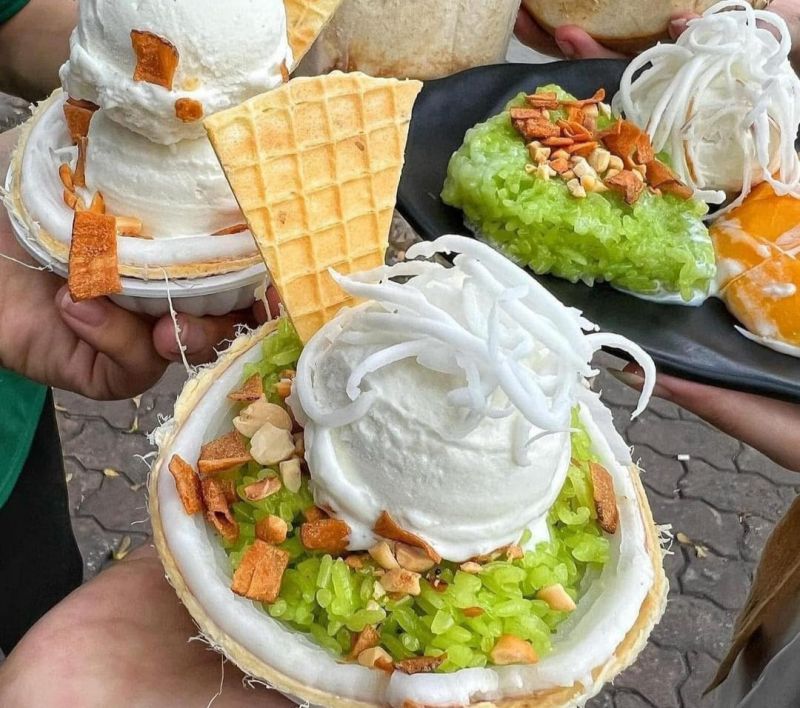
Kem Bo is avocado ice cream — creamy, mild, pale green, and consistently described by Indian tourists as the most accessible Vietnamese dessert for those who find Vietnamese sweets too light. The price to enjoy Kem Bo is about ₹80–₹150 per cup. Best Kem Bo found in Saigon, where the avocado supply from the Central Highlands is consistent year-round.
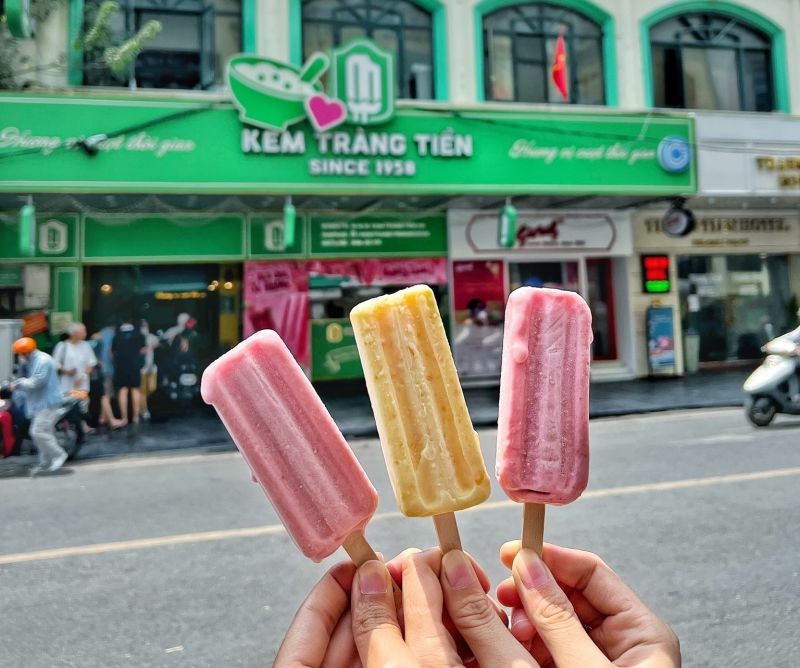
Trang Tien Ice Cream is Hanoi’s most iconic ice cream brand, operating since 1958 on Trang Tien Street near Hoan Kiem Lake — a 67-year continuous run that makes it one of Vietnam’s oldest ice cream institutions. A single-scoop cone of Trang Tien Ice Cream costs ₹40–₹60 (VND 10,000–15,000). The brand Trang Tien sells dairy-based flavors in wafer cones — simple by design — and remains a Hanoi institution that has operated continuously for over 65 years.
Tao Pho and Bo Bia Ngot
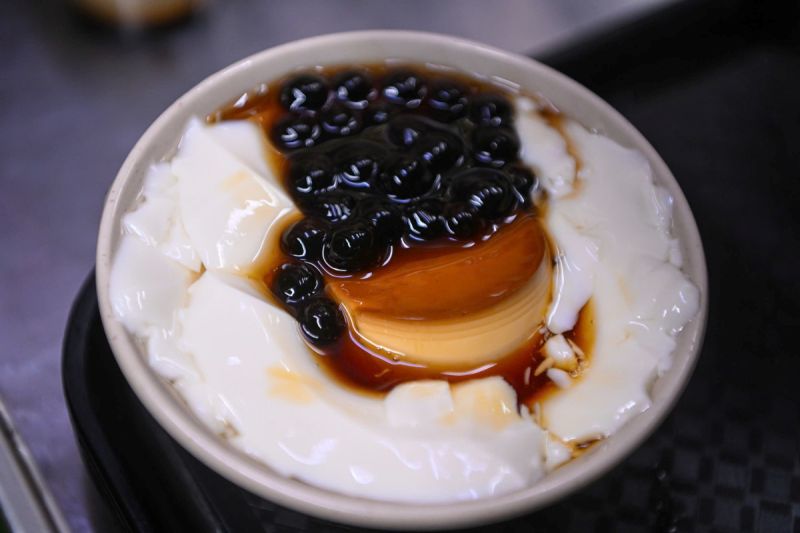
Tao Pho is a silky tofu pudding served warm in ginger sugar syrup for ₹40–₹80 — the Vietnamese equivalent of soya ka halwa in texture, though considerably lighter and less sweet. Tao Pho is sold by street vendors with portable carts, primarily in Hanoi in the mornings, and the reason Indian tourists miss it is the absence of English signage at most stalls. The ordering method for Tao Pho is direct: point at the cart and hold up fingers for quantity. Tao Pho is fully vegetarian and dairy-free.
Bo Bia Ngot is a sweet spring roll filled with coconut flakes, sesame seeds, and maltose candy, rolled into a thin rice paper wrapper and sold for ₹30–₹60 per roll. Unlike the savory Bò Bía, this Bo Bia Ngot is a dessert version with no meat, no vegetables, and no sauce — just sweetened filling in a delicate wrapper. Both Tao Pho and Bo Bia Ngot are fully vegetarian and dairy-free.
4 Core Ingredients That Appear in Every Vietnamese Dessert Category
Coconut milk, pandan leaves, mung beans, and tapioca starch appear across all three Vietnamese dessert categories — Che, Banh, and street sweets — and are the reason most Vietnamese desserts are naturally dairy-free and vegetarian. Understanding these four ingredients means you can decode any Vietnamese dessert menu and identify which items are safe for your dietary requirements before ordering.
Coconut Milk and Pandan
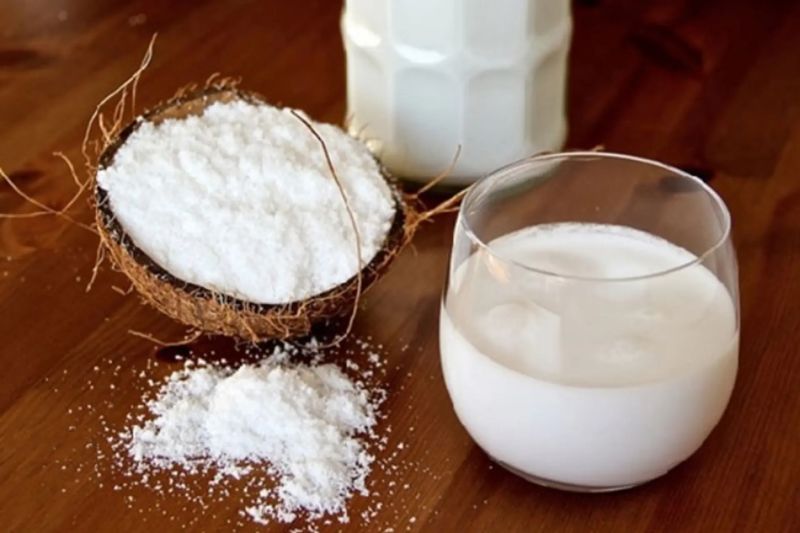
Coconut milk provides a creamy, mildly sweet liquid base found in nearly all Che varieties and many Banh. In Vietnamese desserts, coconut milk is typically thinner than coconut cream — poured over the top of a finished dessert rather than cooked into the base — and because coconut milk is entirely plant-based, this is the primary reason that the majority of Vietnamese desserts are dairy-free. Indian tourists with lactose intolerance or dairy restrictions can order most Che and street sweets without concern; the creamy texture comes from coconut, not milk.
Pandan leaves provide a bright green color and vanilla-like fragrance used in Banh Da Lon, Che Ba Mau, and dozens of other Vietnamese sweets. The flavor profile of Pandan sits between vanilla and fresh grass, with a mild floral note. Indian tourists often recognize pandan flavor immediately because of its similarity to kewra (screwpine extract) — a flavoring used in Indian biryani, kheer, and gulab jamun.
Mung Beans, Tapioca, and Tropical Fruits as the Texture Foundation
Mung beans (Dau Xanh) are the most common filling and base ingredient in Vietnamese desserts — present in Che Ba Mau, Che Dau Xanh, Banh Da Lon, and Banh Cam, among others. Indian tourists recognize mung beans immediately from 3 familiar Indian preparations — moong dal halwa, moong dal kheer, and mung bean laddoo — though the Vietnamese preparation is less spiced and lighter in sweetness. Tapioca pearls add the chewy, slightly bouncy texture found in many Che varieties — comparable to sabudana used in Indian fasting foods (vrat ka khana).
Tropical fruits — mango, jackfruit, banana, and longan — serve as both filling and topping across all dessert categories. Vietnamese preparations are lighter and less sweet than Indian versions of the same fruit. Durian appears in some Che varieties in Saigon; Indian tourists are advised to try it cautiously due to Sầu Riêng’s strong smell, particularly if ordering in an enclosed space.
With the 4 core ingredients understood, the next question is geography — which Vietnamese city has the strongest dessert scene for Indian tourists, and what each city does best.
Where Indian Tourists Find the Best Vietnamese Desserts by City
The best cities for Vietnamese desserts are Hanoi (Che and ice cream on the Old Quarter’s pedestrian streets), Ho Chi Minh City/Saigon (the widest variety, including Banh Flan and tropical fruit desserts), and Hoi An (unique regional sweets unavailable elsewhere in the country). Each city has a distinct dessert identity shaped by its climate, regional agriculture, and culinary history — and the differences are significant enough that dessert-focused travellers find all three cities worth visiting separately.
The Vietnamese food scene in Hanoi and the street food in Hanoi extend well beyond desserts — savory dishes anchor most evening food walks — but dedicated dessert routes exist in every city for visitors who want to focus specifically on sweets.
Hanoi Dessert Street Food
Hanoi’s best dessert spots for Indian tourists are concentrated in the Old Quarter — Hang Giay Street for Che, Trang Tien Street for ice cream, Đinh Liệt Street for Banh stalls, and Pho Co night market for mixed sweet vendors — all within 800 metres of each other. The concentration in the Old Quarter means a self-guided dessert walk through the Old Quarter covers all four spots in under 90 minutes (1.5 hours) without a guide.
Che Pho Co and Kem Trang Tien
At Che Pho Co stalls on Hang Giay Street, Indian tourists order Che Ba Mau (₹60–₹100) and Che Khuc Bach (₹80–₹120) most frequently. At Kem Trang Tien — Hanoi’s iconic ice cream brand operating since 1958 — a single-scoop cone costs ₹40–₹60 (VND 10,000–15,000). Both Hang Giay Street and Kem Trang Tien operate daily from 3 pm to 10 pm, and are busiest from mid-afternoon to late evening, although Kem Trang Tien typically opens from morning and Che Pho Co from late morning.
The Hanoi Old Quarter night market runs on weekends and adds additional dessert vendors to the area, making Friday and Saturday evenings the best time for maximum variety.
Best Time to Eat Hanoi Street Desserts for Indian Tourists
Dessert stalls in Hanoi typically operate from 3 pm to 10 pm daily, with the busiest hours falling between 6 pm and 9 pm when the weather becomes cooler and more comfortable. During this time, temperatures range from 20–28°C (68–82°F), making cold desserts like Che and ice cream especially refreshing after a day of sightseeing. Hanoi’s cooler season from October to April also coincides with major Indian travel periods such as Dussehra, Diwali, Christmas, and winter school holidays, making it a preferred time for many Indian visitors.
The best time to visit Hanoi from India is November to March — the same months when Che stalls are most crowded, and the outdoor dessert experience is at its most comfortable.
Saigon Dessert Street Food
Saigon’s two main dessert zones for Indian tourists are Nguyen Thuong Hien Street (the “dessert street” with 40+ stalls in 200 metres) and Ben Thanh Market’s inner food court — both open daily from noon to 10 pm with prices from ₹40–₹180 (VND 10,000–45,000). Saigon (Ho Chi Minh City) has the widest dessert variety of any Vietnamese city, driven by its larger population, proximity to Mekong Delta tropical fruit supply, and the 19th-century French-colonial culinary legacy that introduced Banh Flan and other dairy-adapted sweets.
Ben Thanh Market is the most accessible entry point for first-time visitors to try Saigon dessert street food: air-conditioned, centrally located, and well-signed in English.
Nguyen Thuong Hien Dessert Street vs. Ben Thanh Market
Nguyen Thuong Hien Street offers authentic street-stall Che at ₹40–₹100 in open-air settings; Ben Thanh Market’s food court offers the same desserts in an air-conditioned environment at ₹80–₹180. Indian tourists travelling in large family groups — particularly those with elderly members or young children — consistently prefer Ben Thanh for its seating, cleanliness, and English-language signage. Nguyen Thuong Hien is best for Che Ba Mau, Che Khuc Bach, and Kem Bo. Ben Thanh is better for Banh Flan, Kem Xoi, and mixed dessert trays.
3 Saigon Desserts That Have No Equivalent in Indian Cuisine
The 3 Saigon desserts most unlike anything in Indian cuisine are: Sua Chua Nep Cam (yogurt with black fermented sticky rice — tart, purple, and mildly fermented, though Indian tourists who know mishti doi from Bengali cuisine find it the least unfamiliar of the three), Banh Pia (a durian-and-mung-bean-filled flaky pastry from Soc Trang province — dense, layered, and sold vacuum-packed as a souvenir), and Xi Ma (black sesame sweet soup with a thick, dark appearance and a nutty, earthy sweetness with no Indian equivalent).
For everything to do beyond dessert, the full guide on things to do in Ho Chi Minh City covers the broader itinerary.
Hoi An Dessert Specialties
Hoi An has 5 desserts not found in Hanoi or Saigon — Banh It La Gai (black glutinous rice cake wrapped in banana leaf), Che Bap Hoi An (a sweeter, thicker sweet corn pudding unique to the region), Banh Dap (crispy rice paper with sweet toppings), a sweet variation of Mi Quang, and White Rose cake in dessert form — all available within 500 metres of the Japanese Covered Bridge. The regional specificity is a function of Hoi An’s agricultural identity: the ancient town sits in Quang Nam province, where a particular variety of waxy corn, black sticky rice, and river rice paper create flavors that cannot be replicated in northern or southern Vietnam.
Banh It La Gai and Che Bap
Banh It La Gai is sold primarily on Trần Phú Street near the Japanese Covered Bridge for ₹50–₹80 per piece. Banh It La Gai is a dark, almost black, glutinous rice cake made with lá gai (ramie leaf) — which gives the cake its distinctive color — wrapped tightly in banana leaf and filled with sweetened coconut or mung bean.
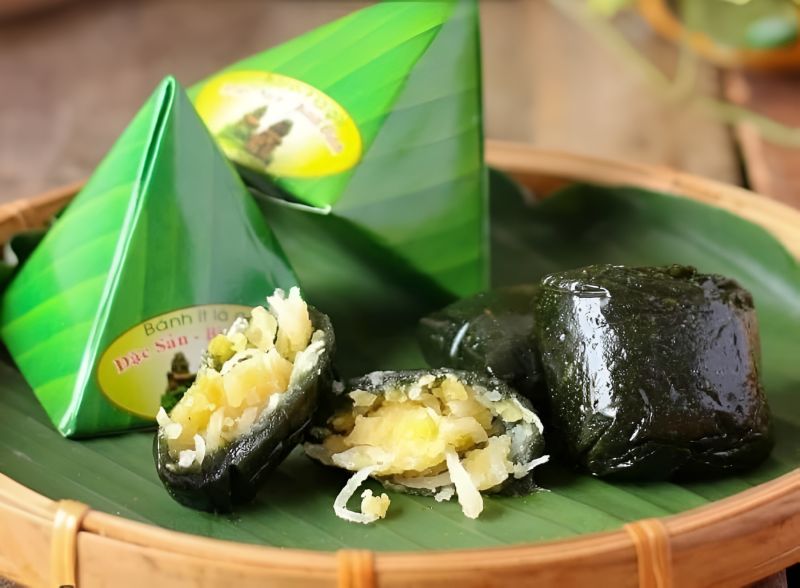
Che Bap Hoi An is sold by the bowl at the Hoi An Night Market on Nguyen Hoang Street for ₹60–₹100 (VND 15,000–25,000). The Hoi An version of Che Bap is notably thicker and sweeter than Saigon’s, with a starchier texture from the local corn variety.
Indian tourists visiting during the Hoi An Lantern Festival find both Banh It La Gai and Che Bap at higher availability — more vendors set up during festival nights, and the market area extends further along the riverside.
Best Time for Indian Tourists to Try Hoi An Desserts During Peak Season
The Hoi An Night Market — where most unique dessert stalls operate — runs daily from 5 pm to 10 pm. Indian tourists visiting the Hoi An Night Market on the 14th of the lunar month (Hoi An Lantern Festival night) find significantly more dessert vendors operating than on regular nights. The Lantern Festival dates frequently align with Indian festival months: the October–November window covers Dussehra and Diwali, and the January dates align with Pongal and Makar Sankranti.
The full guide on places to visit in Hoi An covers the broader Ancient Town itinerary, including the night market’s location and walking routes.
8 Vietnamese Desserts That Are Naturally Vegetarian and Dairy-Free for Indian Tourists
8 Vietnamese desserts are fully vegetarian and dairy-free by default — Che Dau Xanh, Che Ba Mau, Che Chuoi, Che Bap, Banh Da Lon, Tao Pho, Bo Bia Ngot, and Che Troi Nuoc — because they use coconut milk instead of dairy cream and contain no meat or egg in standard preparation. This list covers all 8 in a single confirmed reference point for vegetarian and Jain travellers planning their dessert itinerary.
Coconut Milk Desserts Safe for Vegetarian and Jain Indian Tourists
All Che varieties that use coconut milk as their base are safe for Hindu vegetarians and Jain tourists who avoid dairy. As established in the ingredients section, coconut milk is fully plant-based and the primary liquid in most Vietnamese sweets — the dairy-free quality of these Vietnamese desserts is structural, not incidental.
Jain caveat: Che Troi Nuoc contains ginger in its syrup base — acceptable for most Jain tourists unless they observe strict no-root-vegetable rules.
Egg alert: Banh Flan contains eggs and is not suitable for egg-free vegetarians. To ask for an egg-free version, say “không có trứng” at the stall. Safe ordering phrases for all dietary restrictions: “không có thịt” (no meat) | “không có sữa bò” (no cow’s milk).
Vietnamese Sweet Dishes That Match Familiar Indian Flavor Profiles
Indian tourists find 4 strong flavor parallels between Vietnamese and Indian desserts: Che Dau Xanh ↔ moong dal halwa (same ingredient, different technique); Tao Pho ↔ soya halwa (silky, lightly sweetened, served warm); Che Troi Nuoc ↔ til gud modak (glutinous rice balls in syrup); and Kem Bo ↔ sitaphal ice cream (avocado richness comparable to custard apple). These 4 parallels are the fastest reference points for Indian first-time travellers deciding what to order from a Vietnamese dessert menu.
Frequently Asked Questions — Vietnamese Desserts for Indian Tourists
Are All Vietnamese Desserts Vegetarian?
No — 2 popular items contain non-vegetarian ingredients: Kem Xoi (dried shrimp floss topping) and Banh Flan (eggs). The 8 fully vegetarian and egg-free desserts are listed in detail in the section “8 Vietnamese Desserts That Are Naturally Vegetarian and Dairy-Free for Indian Tourists” above. When in doubt at a stall, say “không có thịt, không có trứng, không có hải sản” (no meat, no egg, no seafood) — this covers all three major non-vegetarian categories in one phrase.
Is Che Ba Mau the Same as an Indian Fruit Chaat?
No — Che Ba Mau and Indian Fruit Chaat differ in structure, ingredients, and intent. Che Ba Mau is a fixed, layered dessert served in a set portion with a defined, unchanging flavor profile — green pandan jelly, yellow mung bean paste, red kidney beans, coconut cream, crushed ice, in that sequence. Indian fruit chaat is a loose, customizable mix of seasonal fruits seasoned with chaat masala, black salt, and lime. The only similarity is that both Che Ba Mau and Indian Fruit Chaat are typically served cold in a bowl. The preparation method, ingredient logic, and eating experience of Che Ba Mau and Indian Fruit Chaat are entirely different.
How Much Do Vietnamese Street Desserts Cost in Indian Rupees?
Vietnamese street desserts cost ₹40–₹200 (VND 10,000–50,000) per serving. A bowl of Che Ba Mau costs ₹60–₹100; Banh Flan costs ₹50–₹100; Kem Xoi costs ₹80–₹120; a Banh Da Lon slice costs ₹40–₹80; and a Tao Pho bowl costs ₹40–₹80. Prices at Ben Thanh Market run 20–30% higher than the equivalent item at an open-air street stall — the premium reflects air conditioning and formal seating rather than a difference in ingredient quality.
Which City in Vietnam Has the Most Dessert Variety?
Ho Chi Minh City (Saigon) has the most dessert variety — driven by Saigon’s larger population, 19th-century French-colonial culinary legacy, and proximity to Mekong Delta tropical fruit supply. Hanoi has the most refined Che culture, with older recipes, fewer toppings, and a slower, more deliberate eating culture. Hoi An has the most regionally unique desserts unavailable elsewhere — a smaller selection, but one that cannot be replicated in any other Vietnamese city.
Can Indian Tourists with Nut Allergies Eat Vietnamese Sweet Dishes?
Peanuts appear as a topping in Kem Xoi, Che Troi Nuoc, and Bo Bia Ngot — all three can be requested without peanuts by saying “không có lạc” (no peanuts). Cashews appear occasionally in Hoi An desserts as a garnish. Tree nuts are not a base ingredient in any standard Vietnamese dessert — the nut presence is always as a finishing topping, which means every dish on this list can be ordered nut-free without changing the fundamental preparation.