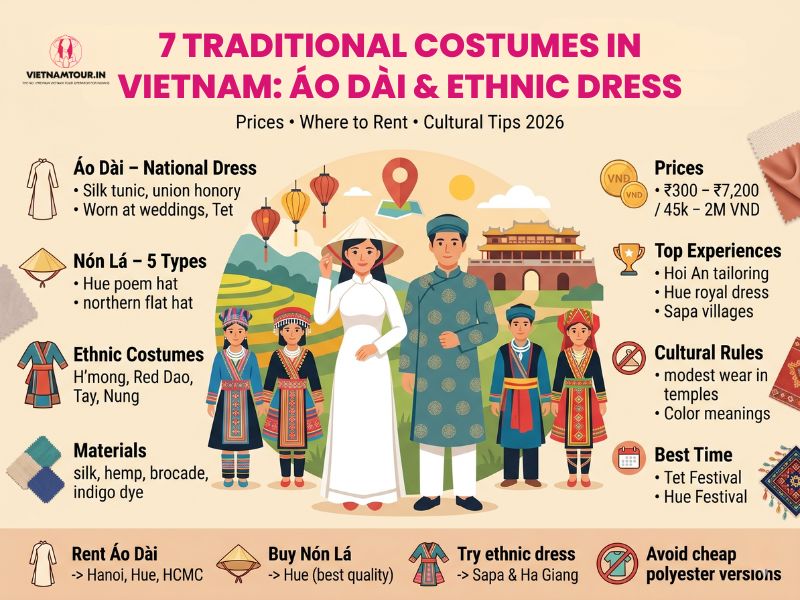
Vietnam’s traditional costume system spans 7 distinct garment traditions rooted in geography, ethnicity, and dynastic history, anchored by the Ao Dai as the national dress recognised across all 3 regions of Vietnam — Northern, Central, and Southern — each producing a distinct regional variant in cut, fabric weight, and collar height. The full costume system includes the Ao Dai in 3 regional variants, the Non La conical hat in 5 regional types, the imperial court dress of the Nguyen Dynasty, and the hemp-and-brocade textile traditions of 54 officially recognised ethnic minority groups, including the H’mong, Red Dao, Tay, and Nung.
This guide to traditional costumes in Vietnam covers everything from Ao Dai and Non La to ethnic minority dress, ceremonial wear, rental experiences, and a direct comparison with Indian traditional attire. Ao Dai is Vietnam’s national costume in 3 regional variants; Non La exists in 5 regional types; Vietnam’s 54 ethnic minority groups maintain parallel dress traditions in hemp, brocade, and batik; and Hoi An delivers the best tailored Ao Dai at ₹2,000–₹6,500 with 24-hour turnaround.
Vietnam’s 3 direct connections to Hindu textile traditions shared with the Indian subcontinent — active Sanskrit-era weaving techniques, natural indigo dyeing identical to Rajasthani traditions, and cross-stitch embroidery comparable to Punjabi phulkari — make traditional Vietnamese costume culture directly legible to Indian tourists even before entering a single museum or rental shop.
Ao Dai — Vietnam’s National Costume
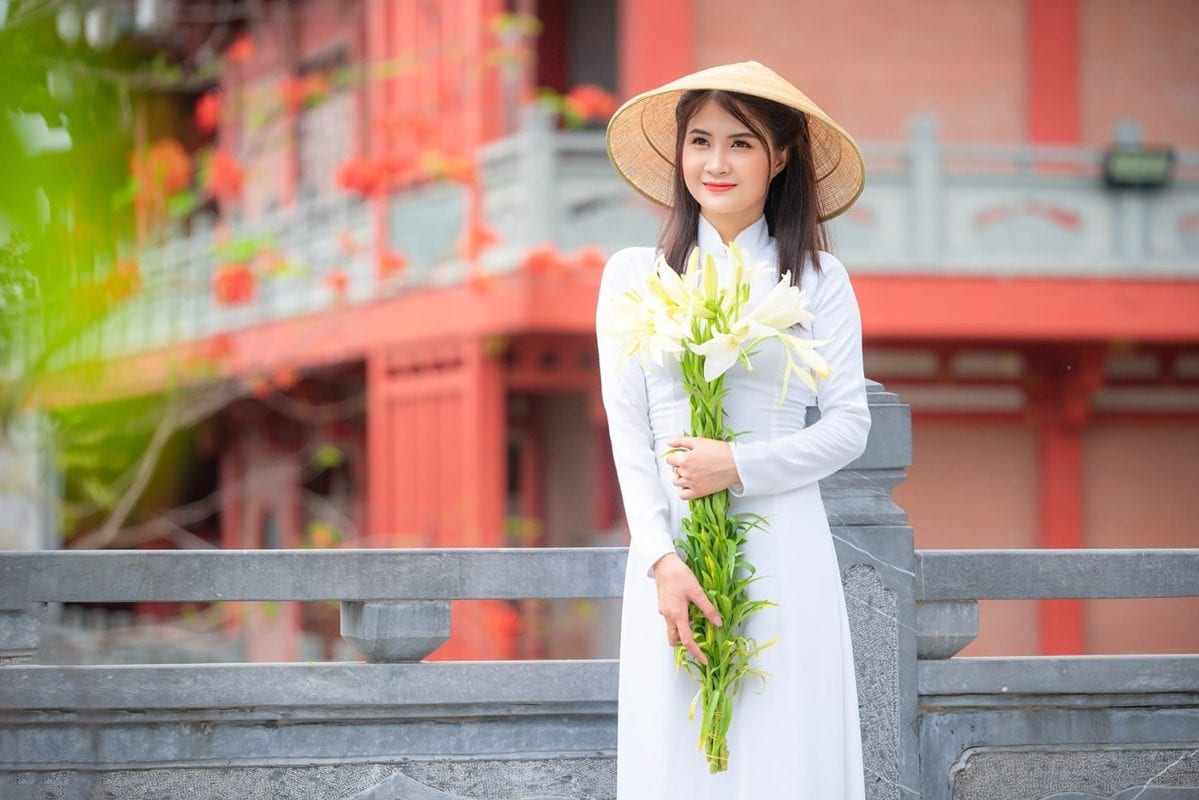
Ao Dai is Vietnam’s national costume — a long silk tunic worn over wide-leg trousers, designated as the defining symbol of Vietnamese femininity and cultural identity by the Vietnamese Ministry of Culture. Ao Dai is worn at Tet celebrations, weddings, school graduations, official government ceremonies, and as required daily formal dress for Vietnamese airline cabin crew and government office staff.
Ao Dai was standardised during the Nguyen Dynasty in the 19th century, developing from the áo giao lĩnh — a crossover-collar robe documented in Vietnamese court records from the 17th century. The modern fitted Ao Dai silhouette emerged from the Lemur design reforms of 1934, placing the current form at 90 years of continuous wear. Before the Nguyen Dynasty standardisation, Ao Dai regional variants differed in collar type, sleeve width, and hem length across Northern, Central, and Southern Vietnam.
The Ao Dai’s construction follows 3 fixed measurements: a standing mandarin collar of 3–4 cm in height, a form-fitted bodice cut to the body’s measurements, and two side slits beginning at the waist and running to the hem. Ao Dai fabric is selected by occasion — silk for formal and ceremonial wear (custom-tailored Ao Dai in silk costs ₹1,786–₹7,143 / 500,000–2,000,000 VND), chiffon for daily formal wear, and velvet for winter ceremonies in northern Vietnam. Ao Dai colour follows occasion-specific conventions: white for students and unmarried women, red for brides and Tet celebrations, and yellow for imperial and ceremonial contexts.
Regional Variations of Ao Dai Across Vietnam’s 3 Regions
Vietnam’s 3 Ao Dai regional variants differ in collar height, fabric weight, and hem length — each reflecting the climate and cultural tradition of its region.
| Region | Defining Features | Availability for Tourists |
|---|---|---|
| Northern (Hanoi) | Highest collar (4–4.5 cm), heaviest silk or brocade fabric, longest hem — reflects Confucian formality and cooler northern climate | Van Phuc Silk Village, Hanoi Old Quarter tailors |
| Central (Hue) | Distinctive purple tones, medium collar height, direct connection to Nguyen Dynasty royal court tradition — the most historically significant regional form | Hue Imperial City shops, An Hoi Street tailors (Hoi An) |
| Southern (Ho Chi Minh City) | Most commercially available variant; lighter chiffon fabric, slightly shorter hem, wider colour range — the dominant form at international tourist rental shops | Ho Chi Minh City rental shops, Hoi An An Hoi Street |
Southern-style Ao Dai is the most commercially available regional variant for international tourists, with rental shops, ready-made sizes, and tailoring studios across Ho Chi Minh City and Hoi An predominantly producing this variant. Hue-style Ao Dai is the most historically significant of the three regional forms, distinguished by distinctive purple tones and a direct connection to the Nguyen Dynasty royal court tradition. Northern-style Ao Dai features the most structured collar height (4–4.5 cm), heavier silk or brocade fabric, and the longest hem — reflecting Hanoi’s Confucian formality tradition and cooler northern climate.
Ao Dai Colour Symbolism and Occasion Dressing Rules
White Ao Dai is the designated school uniform colour across Vietnam, worn by female secondary and university students as a symbol of purity — white Ao Dai is the most widely seen Ao Dai colour in Vietnamese daily street life.
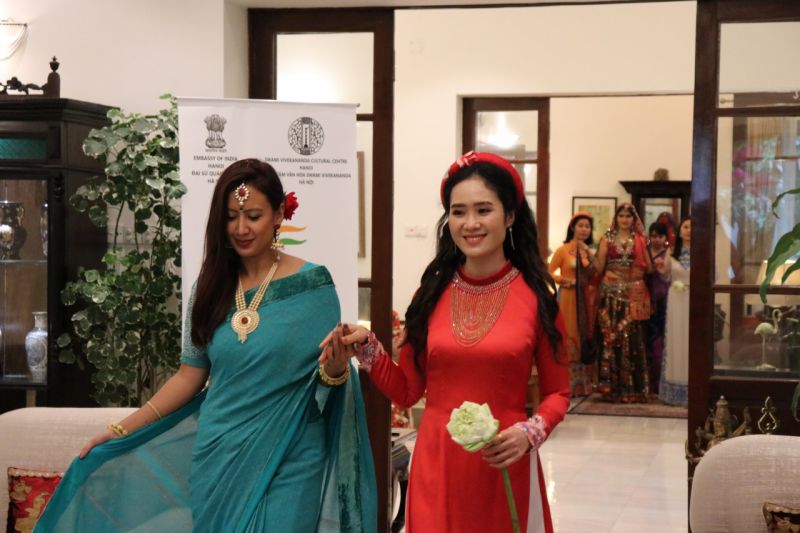
Red and gold Ao Dai are worn at weddings and Tet celebrations, carrying auspicious meaning in Vietnamese cultural tradition equivalent to the red-and-gold bridal lehenga and saree palette in Indian wedding dress — both Vietnamese and Indian wedding dress traditions assign identical ceremonial significance to red and gold as colours of prosperity and auspicious beginning.
Purple Ao Dai is the regional colour of Hue, associated with Nguyen Dynasty royal heritage and court tradition. Purple Ao Dai carries no ceremonial significance outside Central Vietnam’s historical sites and cultural events.
Black Ao Dai is worn at formal ceremonies and is the dominant colour in contemporary Vietnamese fashion, having moved from funeral association into mainstream formal wear over the past two decades — black Ao Dai is now standard at corporate events, formal dinners, and urban professional settings across Vietnam.
Yellow Ao Dai is reserved for imperial and royal ceremonial contexts, specifically within Hue’s historical sites. Yellow was the exclusive colour of the Nguyen Dynasty emperor and remains restricted to ceremonial performances and historical reenactments at Hue Imperial City.
Men’s Ao Dai — Áo Gấm and Áo The
Men’s Ao Dai exists in two distinct forms: Áo Gấm, a brocade robe worn by royalty and high officials, and Áo The, the commoner’s version in plain silk or cotton — both Áo Gấm and Áo The remain worn today at traditional Vietnamese weddings, Tet family ceremonies, and formal cultural events. Men’s Ao Dai was standard Vietnamese formal dress until the mid-20th century.
The men’s Ao Dai silhouette differs from the women’s version in 3 measurable ways: the hem reaches 5–10 cm below the knee rather than floor-length, the cut is straight rather than fitted at the waist, and men’s Ao Dai is worn with the Khăn Xếp — a layered silk turban folded into a structured cylindrical form. The Khăn Xếp is exclusive to men’s Ao Dai tradition and does not appear in women’s Ao Dai styling.
Non La — Vietnam’s Conical Hat and Traditional Accessories
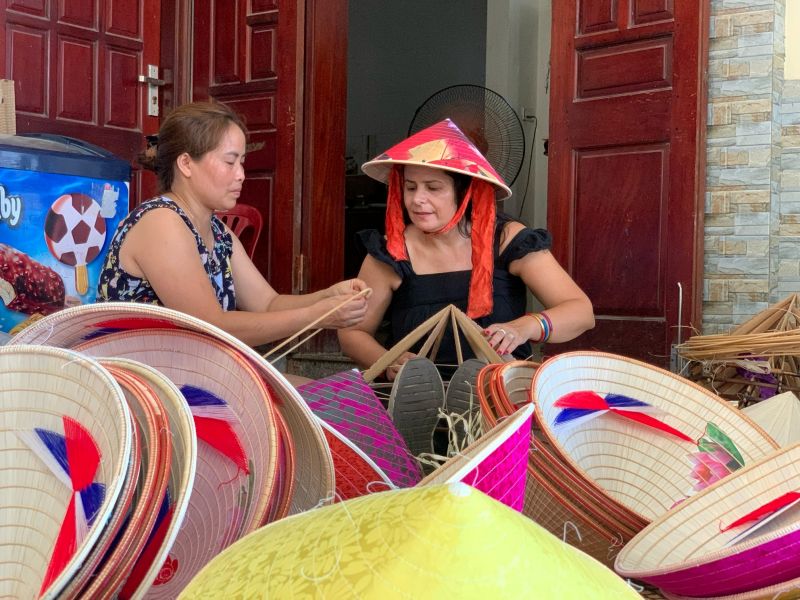
Non La is Vietnam’s conical palm-leaf hat, documented in Vietnamese cultural records dating back 3,000 years and worn as sun protection, rain cover, and a symbol of Vietnamese cultural identity recognised by the Vietnamese Ministry of Culture. Non La is constructed from lá cọ (Latania palm leaves) layered over bamboo ribs and hand-stitched into a conical form — a process requiring skilled artisans 3–5 days per hat and producing a translucency and structural balance that machine-produced Non La does not replicate. Hand-made Non La sells for ₹161–₹714 (45,000–200,000 VND) depending on leaf grade and stitching density; machine-produced Non La sells for ₹82–₹125 (23,000–35,000 VND).
Non La is the primary accessory pairing for Ao Dai. Non La and Ao Dai appear together in every canonical cultural representation of Vietnam, from tourism imagery to official diplomatic events. Non La’s national significance is confirmed by its placement on the Vietnamese 200 VND banknote — a denomination reserved for Vietnamese cultural heritage symbols alongside the Temple of Literature and Hoan Kiem Lake.
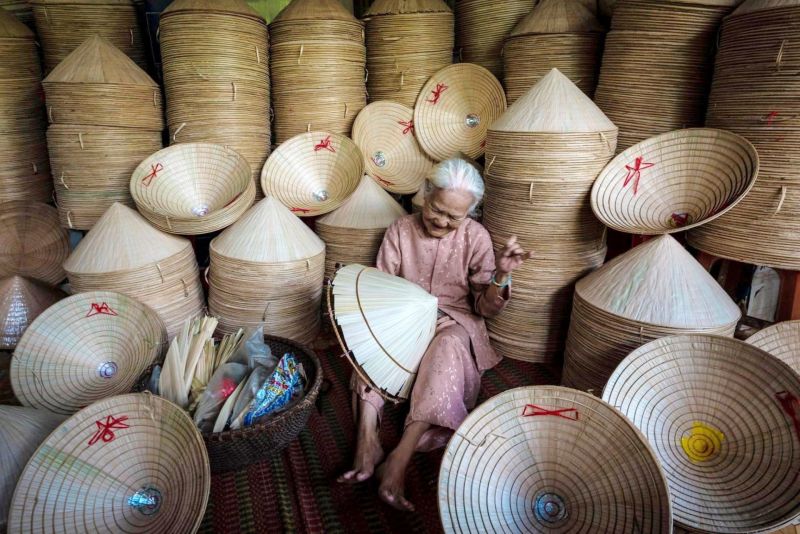
5 Regional Types of Non La Across Vietnam
Vietnam has 5 regional types of Non La, each produced from different leaf materials and designed for distinct climatic and ceremonial functions: Non La Chuối from the Northern highlands, Nón Bài Thơ from Hue, Nón Quai Thao from Northern Vietnam, Nón Dấu from historical military tradition, and Non La Buôn Ma Thuột from the Central Highlands.
Non La Chuối (Banana Leaf Hat) — Northern highlands variant constructed from banana leaf sections rather than Latania palm, producing a coarser weave and heavier weight of 200–300 g compared to 100–180 g for standard Latania-leaf Non La. Non La Chuối is more durable for agricultural use and less refined in surface finish than Central and Southern Non La variants. Price: ₹125–₹286 (35,000–80,000 VND) at Northern highland markets.
Nón Bài Thơ (Poem Hat) — Hue’s signature conical hat, semi-transparent when held up to light, with poetry verses or landscape silhouettes visible through the leaf layers. Nón Bài Thơ is the most purchased Non La variant among Indian tourists visiting Vietnam. Price: ₹304–₹821 (85,000–230,000 VND) at Hue craft markets.
Nón Quai Thao — Northern Vietnam variant distinguished by a flat brim rather than a full cone, traditionally worn by women at Northern folk festivals, particularly Quan Ho singing events in Bac Ninh province. Nón Quai Thao is not produced for the souvenir market and is purchased primarily at Bac Ninh provincial craft fairs. Price: ₹357–₹714 (100,000–200,000 VND) at Bac Ninh craft markets.
Nón Dấu — Originally a soldier’s field hat from Vietnam’s Lê Dynasty military period, now worn exclusively at ceremonial reenactments at Hue Imperial City and Hanoi’s Temple of Literature. Nón Dấu weighs 250–350 g due to its layered bamboo-and-leaf construction — 40–70% heavier than standard Latania Non La. Price: ₹482–₹964 (135,000–270,000 VND) at Hue Imperial City souvenir stalls.
Non La Buôn Ma Thuột — Central Highlands variant woven from locally available palm species rather than Latania, with a broader brim diameter of 50–60 cm compared to the standard 40–45 cm of Hue-style Non La — designed for the Central Highlands’ combination of intense sun and heavy seasonal rain. Price: ₹161–₹411 (45,000–115,000 VND) at Buôn Ma Thuột market stalls.
For Indian tourists purchasing Non La as a souvenir, the Nón Bài Thơ from Hue is available at ₹161–₹821 (45,000–230,000 VND) and is the most visually distinctive of the five types.
Other Traditional Vietnamese Accessories Worn with Ao Dai
4 traditional Vietnamese accessories are worn with Ao Dai at formal ceremonies and cultural events: Khăn Xếp (layered silk turban), Guốc Mộc (lacquered wooden clogs), Quai Thao Headband (red silk forehead ribbon), and Thắt Lưng (silk sash belt).
Khăn Xếp is the primary male accessory in traditional Vietnamese formal dress, worn at weddings, Tet ceremonies, and official cultural events, and priced at ₹357–₹893 (100,000–250,000 VND) at Hanoi’s Old Quarter traditional dress shops. Khăn Xếp is constructed by folding a length of silk into a structured cylindrical form that sits flat on the crown of the head — a construction method distinct from the wrapped and pinned turban technique used in Sikh Dastar and Rajasthani Safa traditions.
Guốc Mộc (lacquered wooden clogs) were the standard footwear paired with Ao Dai before Western-style heels became dominant in the 20th century, and now appear at traditional festivals and folk performance venues rather than daily wear. Guốc Mộc lacquered surfaces use the same urushi resin technique as Vietnamese decorative lacquerware, and sell for ₹714–₹2,143 (200,000–600,000 VND) per pair at Hanoi craft shops.
Quai Thao Headband is a red silk ribbon worn across the forehead at Northern Vietnamese festivals, particularly associated with Quan Ho folk singing traditions in Bac Ninh province, 50 km northeast of Hanoi. Quai Thao Headband is a performance-specific accessory worn exclusively during Quan Ho festival performances — Quai Thao Headband does not appear in standard daily or formal Ao Dai dress.
Thắt Lưng is a silk sash belt worn over Ao Dai at formal ceremonies, typically in red or gold silk, and priced at ₹286–₹714 (80,000–200,000 VND) at Vietnamese traditional dress shops. Thắt Lưng silk sash signals ceremonial formality in Vietnamese dress in the same structural role as a heavily embroidered zari border that distinguishes a Banarasi ceremonial saree from a casual cotton saree in Indian dress conventions.
Ethnic Minority Traditional Costumes in Vietnam’s Northern Highlands
Vietnam’s 54 officially recognised ethnic groups each maintain distinct traditional costume traditions, concentrated in the northern highland provinces of Lào Cai (Sapa), Hà Giang, and Cao Bằng. Ethnic minority costume traditions are structurally separate from the Ao Dai system — governed by different textile materials (hemp, brocade, and batik), different production methods, and different social occasions, with no shared textile lineage or production technique.
Ethnic minority dress in Vietnam is not a regional variant of Ao Dai — the two systems are parallel and non-overlapping: Ao Dai is a court-derived national garment standardised in the 19th century, while ethnic minority costumes predate national standardisation and are governed by individual group textile codes varying by clan, marital status, and ceremony type.
Indian tourists from Gujarat, Rajasthan, and Punjab identify H’mong mirror-work embroidery, Red Dao brocade borders, and Tay indigo-dyed hemp as directly comparable to Gujarati bandhani, Rajasthani gota patti, and Punjabi phulkari. Authentic ethnic minority costume fabrics sell for ₹357–₹3,571 (100,000–1,000,000 VND) per metre at Sapa and Ha Giang markets — compared to ₹179–₹714 (50,000–200,000 VND) for mass-produced imitations at Hanoi Old Quarter souvenir shops.
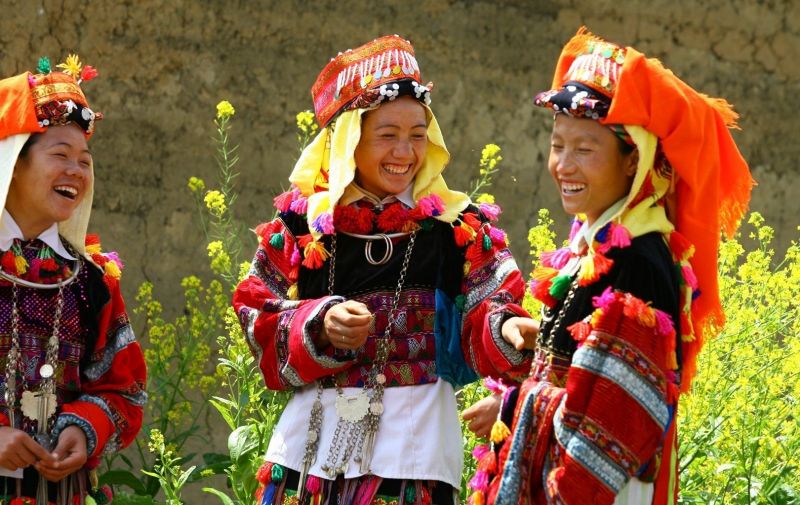
H’mong Traditional Costumes — The Most Visible Ethnic Dress in Sapa
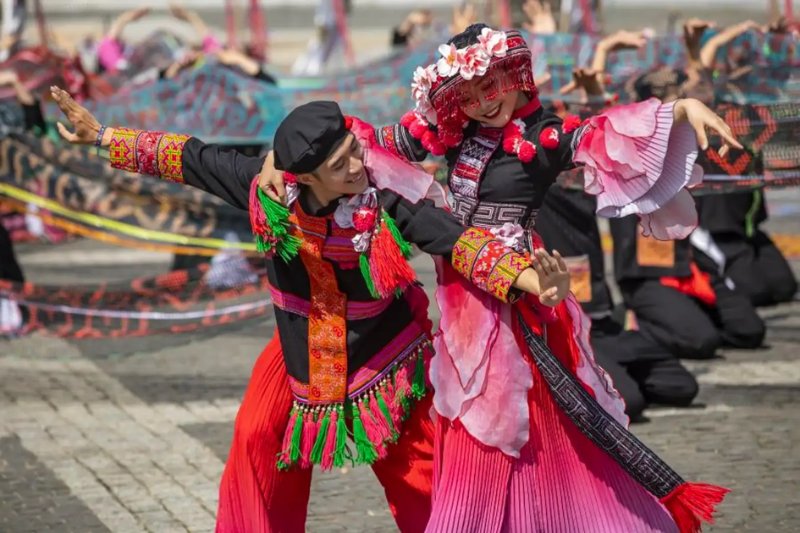
Black H’mong women’s dress is the most frequently encountered ethnic minority costume for tourists visiting Sapa, consisting of indigo-dyed hemp fabric, batik-resist geometric patterns, heavily embroidered apron panels at the front and back, and fitted leggings with decorative ankle wraps — with silver neck rings, bracelets, and earrings completing the full ceremonial Black H’mong dress. Authentic Black H’mong handwoven hemp fabric sells for ₹714–₹2,143 (200,000–600,000 VND) per metre at Sapa market stalls.
Vietnam’s 3 most visually distinct H’mong sub-groups each wear a recognisably separate costume system. Black H’mong, the most common sub-group in Sapa town and surrounding villages, wear predominantly indigo fabric with embroidered geometric borders. Flower H’mong, concentrated in Ha Giang’s Dong Van and Meo Vac districts, wear multicolor pleated skirts in red, blue, green, and yellow with elaborate headdresses — the most visually vivid H’mong costume variant. White H’mong wear a simpler palette of white and pale tones with less surface embroidery.
A single H’mong dress requires 3–6 months of hand production — encompassing hemp fibre processing, natural indigo dyeing, wax-resist batik application, and cross-stitch embroidery — placing the full costume’s production value at ₹7,143–₹17,857 (2,000,000–5,000,000 VND) for a complete hand-produced set. H’mong women in Sapa and Ha Giang wear full traditional H’mong costume as daily clothing, not as performance dress for tourist audiences — H’mong traditional costume observed at Cat Cat Village and Ta Van Village is authentic daily wear, not a cultural demonstration staged for visitors.
Red Dao, Tay, and Nung Traditional Costumes in Ha Giang
Red Dao (Dao Đỏ), Tay, and Nung traditional costumes are the 3 most encountered ethnic minority dress traditions in Ha Giang province, each distinguished by a separate textile material, colour system, and production technique.
Red Dao dress is defined by a large red embroidered headpiece (bọc đầu) requiring 2–3 months to hand-embroider, sold for ₹1,786–₹5,357 (500,000–1,500,000 VND) at Ha Giang craft markets. The Red Dao jacket is indigo-dyed with red cross-stitch panels across the chest and sleeves — the red-on-indigo contrast is the most visually distinctive colour combination of any costume in Vietnam’s northern highlands. Ta Phin Village, 12 km from Sapa, is where authentic Red Dao dress is worn daily and sold directly by producers.
Tay dress — indigo-dyed cotton in a blue-black palette with minimal surface decoration — prioritises durability over embroidery density, producing a simpler visual profile than H’mong or Red Dao costumes. Tay fabric sells for ₹357–₹893 (100,000–250,000 VND) per metre at Cao Bang and Ha Giang markets. Tay people form Vietnam’s most populous ethnic minority group at approximately 1.9 million, concentrated in Cao Bang and Ha Giang provinces.
Nung dress is distinguished from Tay dress by two features: heavier cotton weight and silver button closures rather than fabric ties. Nung silver-buttoned jackets sell for ₹1,429–₹3,571 (400,000–1,000,000 VND) at Ha Giang craft markets.
4 Key Textile Techniques Used in Vietnamese Ethnic Minority Costumes
4 textile techniques define Vietnamese ethnic minority costume production: batik wax-resist dyeing, brocade weaving, cross-stitch embroidery, and natural indigo dyeing — each technique is associated with specific ethnic groups and produces a distinct surface pattern identifiable at market stalls in Sapa and Ha Giang.
Batik (wax-resist dyeing) — Used by H’mong groups. Heated beeswax is applied to hemp fabric using a copper tool (jaw) to create resist patterns before indigo dyeing — beeswax prevents dye penetration, leaving geometric white or light-toned designs against the dark background. H’mong batik hemp fabric sells for ₹714–₹2,143 (200,000–600,000 VND) per metre at Sapa market stalls. Indian textile parallel: Ajrakh block printing of Kutch, Gujarat uses a resist-paste method to achieve comparable geometric negative-space patterns on cotton fabric.
Brocade weaving — Used by Thai and Muong groups. Geometric patterns are woven directly into the fabric structure on a backstrap loom during production — the brocade pattern is integral to the weave, not applied after weaving. Thai and Muong brocade fabric sells for ₹893–₹3,571 (250,000–1,000,000 VND) per metre at Ha Giang craft markets. Indian textile parallel: Patan Patola double ikat weaving from Gujarat builds the design into the thread itself before weaving begins — the same structural principle as Vietnamese brocade weaving.
Cross-stitch embroidery — Used by Red Dao and Flower H’mong groups. Thread density of 15–20 stitches per cm² produces the tightly packed surface patterns covering apron panels and jacket borders — Red Dao and Flower H’mong embroidered panels sell for ₹1,429–₹5,357 (400,000–1,500,000 VND) per completed panel. Indian textile parallel: Phulkari embroidery of Punjab uses a similar counted-thread cross-stitch technique on cotton base fabric — Phulkari works from the reverse side while Vietnamese ethnic minority cross-stitch works from the front.
Natural indigo dyeing — Used by H’mong and Tay groups. Deep black-blue colour requires 20–40 separate dye baths using fermented indigo paste, with each dye bath followed by oxidation in open air. Indigo-dyed colour deepens with wear and washing over the years — older indigo-dyed garments show greater colour saturation than newly produced indigo-dyed fabric, making older pieces more valuable at Sapa and Ha Giang textile markets.
Traditional Vietnamese Costumes for Ceremonies, Weddings, and Festivals
Vietnamese ceremonial costume covers 3 distinct occasion types — weddings, imperial court ceremonies, and Tet festival — each governed by separate colour rules, outfit change sequences, and garment combinations.
Traditional Vietnamese Wedding Attire for Bride and Groom
Vietnamese wedding costumes follow a multi-outfit structure: the bride wears a red or gold Ao Dai for the primary ceremony and changes outfits 2–3 times across the wedding day; the groom wears an Áo Gấm brocade robe paired with a Khăn Xếp silk turban. Custom-embroidered bridal Ao Dai costs ₹5,357–₹17,857 (1,500,000–5,000,000 VND); Áo Gấm for grooms costs ₹3,571–₹10,714 (1,000,000–3,000,000 VND) at Hanoi and Hoi An wedding dress shops.
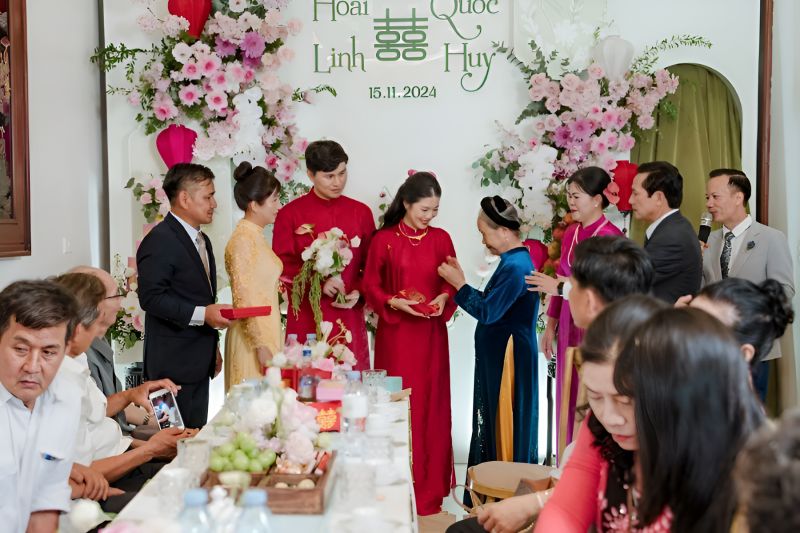
The bridal Ao Dai features a hand-embroidered phoenix motif on the front panels — the phoenix is the female symbol in Vietnamese cosmology, paired with the dragon motif on the groom’s Áo Gấm. In northern Vietnam, traditional ceremonies additionally feature the áo tứ thân (four-panel robe) worn for the morning ritual before the main ceremony Ao Dai. The bride’s 2–3 outfit changes across a Vietnamese wedding — from ceremony Ao Dai to reception colour to evening dress — follow the same structural logic as lehenga-to-saree changes at North Indian weddings, where each outfit change marks a transition between ceremony stages.
The groom’s Áo Gấm comes in blue, burgundy, or gold brocade — Áo Gấm and Khăn Xếp silk turban together form the male formal equivalent of the bride’s embroidered Ao Dai in Vietnamese wedding dress convention.
Hue Imperial Costumes and Royal Court Clothing
Hue Imperial City is where tourists rent replica Nguyen Dynasty court robes for photography inside the Forbidden Purple City at ₹357–₹714 (100,000–200,000 VND) per session — the only location in Vietnam offering imperial costume rental inside an architecturally authentic historical throne room. The Nguyen Dynasty court garment system (1802–1945) follows entirely different construction rules and a colour-ranked hierarchy that visually identified every official’s rank at court gatherings.
The Nguyen Dynasty emperor’s court robe was exclusively yellow (màu vàng hoàng gia) — a 12-symbol embroidered dragon robe featuring the 5-clawed dragon motif reserved for the emperor alone. A 4-clawed dragon indicated a prince; 3 claws indicated a high mandarin. Mandarin robes were colour-ranked by administrative grade: Ranks 1–3 wore crimson, Ranks 4–6 wore blue, and Ranks 7–9 wore green — a system that made every official’s rank immediately legible from robe colour and dragon claw count alone.
The Hue Royal Antiquities Museum within Hue Imperial City displays authentic Nguyen court robes. Replica imperial robes covering emperor, prince, and mandarin ranks are available at the Hue Imperial City costume rental stalls located at the Ngo Mon Gate entrance.
Traditional Festival Costumes at Tet and Vietnam’s Major Celebrations
Tet Nguyen Dan (the Lunar New Year), Hue Festival, and Lim Festival are the 3 major Vietnamese celebrations where traditional costume wearing is concentrated, with Tet generating approximately 3–4 million new Ao Dai purchases across Vietnam in the weeks before the holiday — new Tet Ao Dai sells for ₹893–₹5,357 (250,000–1,500,000 VND) at ready-to-wear shops nationwide.
Ao Dai for Tet Nguyen Dan follows colour conventions by age group: red and yellow for children, bright seasonal colours for women, and darker tones for elderly family members. Ao Dai for the Lunar New Year is gifted and purchased specifically for Tet. Ao Dai for Tet is not repurposed for other occasions.
Hue Festival, held every two years along the Perfume River, is the largest traditional costume event in Vietnam — imperial processions feature full Nguyen Dynasty court dress replicas, the most concentrated display of historical Vietnamese costume outside a museum setting. Hue Festival 2026 is the next scheduled edition, running in April 2026 across Hue Imperial City and the Perfume River corridor.
Lim Festival in Bac Ninh province, held on the 13th day of the first lunar month (January or February), features Quan Ho folk singers performing in áo tứ thân — the four-panel robe predating modern Ao Dai as the standard northern Vietnamese women’s garment. Lim Festival is one of 2 public contexts in Vietnam where áo tứ thân is worn outside museum demonstrations, alongside the Hue Festival imperial processions.
Indian tourists visiting Vietnam during Tet experience the most concentrated display of traditional costume across the country — from the new Ao Dai worn at family ceremonies to festival dress at temple celebrations.
How Indian Tourists Can Engage With Vietnam’s Traditional Costume Culture
Three cities — Hanoi, Hue, and Ho Chi Minh City — offer organised Ao Dai rental experiences for tourists, with prices ranging from ₹161 to ₹893 (45,000–250,000 VND) depending on fabric quality and rental duration. Northern highland provinces (Sapa, Ha Giang) offer ethnic minority costume encounters ranging from daily-wear observation to photography rentals.
Where to Rent and Experience Traditional Vietnamese Costumes
Ao Dai Rental in Hanoi
Ao Dai rental in Hanoi is concentrated in the Hoan Kiem Lake and Old Quarter area, where a standard 2-hour rental including Non La, matching trousers, and basic jewelry costs ₹304–₹911 (85,000–255,000 VND) for ready-made sizes — visitors requiring custom fitting need 24 hours additional lead time at the same rental shops.
Van Phuc Silk Village in Ha Dong district, 14 km from Hanoi city centre, is where Hanoi’s silk Ao Dai fabric is manufactured — Indian tourists visit Van Phuc Silk Village to observe active weaving workshops and commission made-to-measure Ao Dai directly from producers. Van Phuc Silk Village tailoring turnaround is 24–48 hours, with custom Ao Dai priced at ₹1,518–₹4,071 (425,000–1,140,000 VND) per complete piece.
Photography studios near Hoan Kiem Lake offer Ao Dai rental and professional photography packages at ₹1,214–₹2,536 (340,000–710,000 VND) for a 30–60 minute session with digitally edited photographs. Indian tourists book Ao Dai photography packages at Temple of Literature and Ngoc Son Temple — both heritage sites accept Ao Dai photography sessions without an additional photography permit fee.
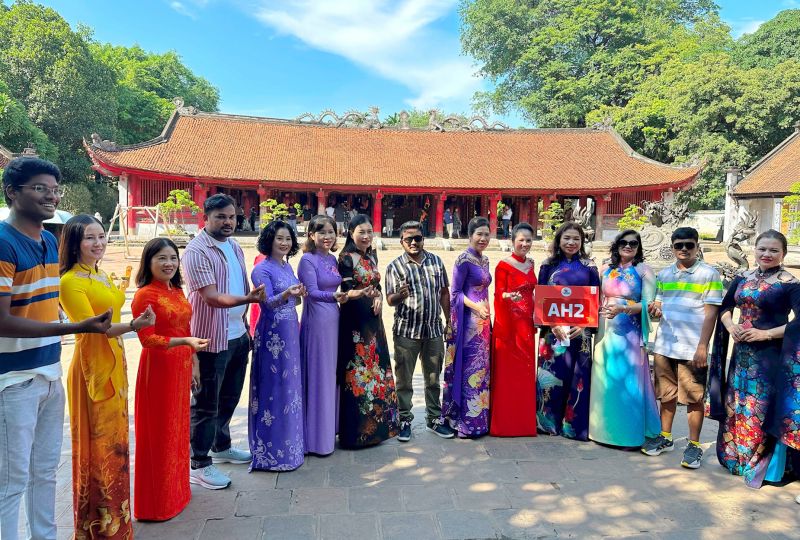
Ethnic Minority Costume Experiences in Sapa and Ha Giang
Sapa and Ha Giang offer 2 distinct types of ethnic minority costume encounters: daily-wear observation at active village communities, and costume rental for photography sessions.
Cat Cat Village (3 km from Sapa town, entry fee ₹102 / 28,500 VND) and Ta Van Village (8 km from Sapa town, no entry fee) are where H’mong and Giay women wear full traditional dress in daily life — cooking, weaving, working in fields, and trading at markets. Cat Cat Village and Ta Van Village costume encounters are authentic daily-wear observations, not staged performances.
Ha Giang’s Dong Van Market and Meo Vac Market both operate on Sundays, drawing Red Dao and H’mong communities from surrounding villages in full traditional dress for weekly trading — Ha Giang highland markets have no mass-tourism infrastructure and no entry fee, making Ha Giang the least mediated traditional costume encounter available to Indian tourists in northern Vietnam.
H’mong and Red Dao outfit rentals for photography sessions are available at Sapa town rental shops for ₹214–₹607 (60,000–170,000 VND) per outfit — rental shops are concentrated on Cau May Street and Fansipan Street in Sapa town centre.
Hue — The Royal Costume Capital of Vietnam
Hue is Vietnam’s royal costume capital, with Hue Imperial City (Đại Nội) offering replica imperial robe rental inside the Forbidden Purple City — the yellow emperor robe, crimson mandarin robes, and queen’s ceremonial dress are available for photography sessions at ₹357–₹714 (100,000–200,000 VND) per session. Hue Imperial City is the only location in Vietnam where tourists photograph themselves in imperial-grade costume within architecturally authentic throne rooms and dynastic halls.
The 2026 Hue Festival features an imperial procession with full Nguyen Dynasty court dress along the Perfume River — the next biennial edition after the 2024 festival, scheduled for April 2026 across Hue Imperial City and the Perfume River corridor. Indian tourists visiting Hue in April 2026 encounter Nguyen Dynasty emperor robes, mandarin dress, and court ceremonial costume worn in public procession — a public display of the full imperial costume hierarchy unavailable outside Hue Festival years.
Tay Ho Village, 4 km from Hue city centre, is where Hue’s Nón Bài Thơ (Poem Hat) artisans produce the semi-transparent poem-inscribed conical hat by hand — Nón Bài Thơ purchased directly at Tay Ho Village workshops costs ₹304–₹911 (85,000–255,000 VND), compared to ₹500–₹1,214 (140,000–340,000 VND) at Hue city souvenir shops.
Vietnamese Traditional Costumes as Souvenirs
Four traditional costume items consistently top the purchase lists of Indian tourists leaving Vietnam: Nón Bài Thơ (Poem Hat), silk Ao Dai scarves, ethnic minority embroidered bags, and traditional lacquered accessories.
| Item | Where to Buy | Price Range (INR) | Price Range (VND) | Best City |
|---|---|---|---|---|
| Nón Bài Thơ (Poem Hat) | Tay Ho Village, Hue craft markets | ₹304–₹821 | 85,000–230,000 | Hue |
| Silk Ao Dai scarves | Hoi An An Hoi Street, Van Phuc Village | ₹500–₹2,500 | 140,000–700,000 | Hoi An / Hanoi |
| Ethnic minority embroidered bags | Cat Cat Village, Sapa market, Ha Giang markets | ₹714–₹3,571 | 200,000–1,000,000 | Sapa / Ha Giang |
| Traditional lacquered accessories | Hanoi Old Quarter, Ben Thanh Market | ₹214–₹893 | 60,000–250,000 | Hanoi / Ho Chi Minh City |
Vietnamese Traditional Dress vs Indian Traditional Attire
Vietnamese and Indian traditional dress systems differ in 4 structural dimensions: national signature garment, governing construction principle, ethnic dress diversity, and wedding colour convention.
| Dimension | Vietnamese Dress | Indian Dress |
|---|---|---|
| National signature garment | Ao Dai — long silk tunic with wide-leg trousers | Saree (women) / Kurta-Sherwani (men) — no single national garment |
| Construction principle | Tailored fit — form-fitted to body measurements | Draping technique — uncut fabric length arranged on the body |
| Ethnic dress diversity | 54 officially recognised ethnic groups, each with distinct textile codes | 28+ regional textile traditions (Banarasi, Kanjeevaram, Phulkari, Bandhani, Patola, etc.) |
| Wedding colour convention | Red and gold — identical auspicious meaning as Indian tradition | Red and gold — identical ceremonial significance across North Indian wedding dress |
Vietnamese and Indian dress traditions share 3 structural parallels: red and gold carry identical auspicious meaning in both Vietnamese and North Indian ceremonial dress; both systems distinguish between ethnic or regional dress and nationally recognised formal dress; and both Vietnamese and Indian ceremonial occasion wear places silk as the primary fabric, with cotton occupying daily and informal use. Vietnamese traditional dress and Indian traditional dress differ most fundamentally in construction method — Ao Dai is defined by tailored fit, while the Indian saree is defined by draping technique applied to an uncut fabric length.
6 Facts About Vietnamese Traditional Costumes Indian Tourists Frequently Get Wrong
The 6 most common misconceptions about Vietnamese traditional costume among Indian tourists concern Ao Dai gender, Non La variety, ethnic minority dress status, Ao Dai age, purple colour symbolism, and tourist market Ao Dai quality.
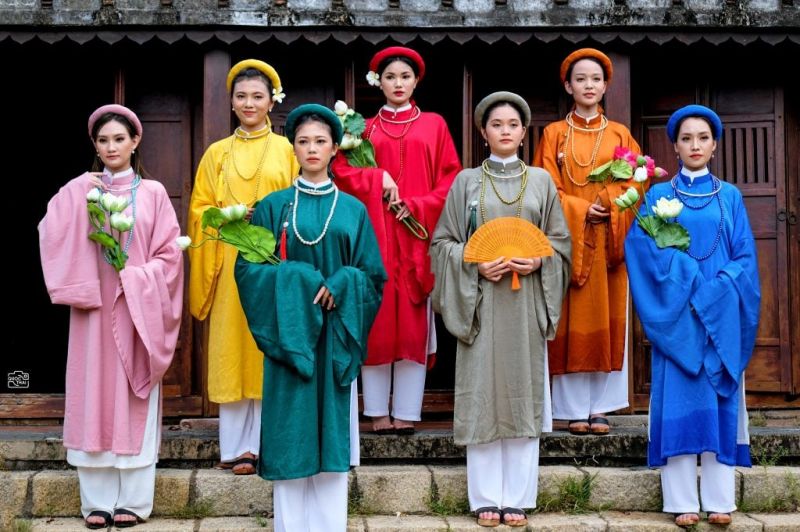
Misconception 1: Ao Dai is exclusively a female garment. Men’s Ao Dai — in the forms of Áo Gấm (brocade robe) and Áo The (plain silk version) — was standard formal dress for Vietnamese men until the mid-20th century, and men’s Ao Dai remains worn today at traditional weddings, Tet family ceremonies, and formal cultural events. Tourist imagery predominantly shows the women’s Ao Dai silhouette, producing a gender-exclusivity assumption that Vietnamese dress history does not support.
Misconception 2: Non La is a single hat type. Vietnam has 5 structurally and culturally distinct regional hat types — Nón Bài Thơ (Hue), flat-brimmed Nón Quai Thao (Northern Vietnam), Non La Chuối (Northern highlands), Nón Dấu (historical military hat), and Non La Buôn Ma Thuột (Central Highlands). Each Non La regional type differs in leaf material, brim construction, and ceremonial function — the 5 types are not interchangeable, in the same way that a Sikh Dastar, Rajasthani Safa, and Marathi pheta are not interchangeable Indian turban types.
Misconception 3: Ethnic minority costumes are performance dress for tourists. H’mong and Red Dao women in Sapa and Ha Giang wear traditional dress as daily clothing — cooking, farming, trading at markets, and raising children in the same garments that tourists photograph. H’mong and Red Dao traditional dress at Cat Cat Village and Ta Van Village is authentic daily wear, not a cultural demonstration organised for visitor schedules.
Misconception 4: Ao Dai is an ancient garment. The current fitted Ao Dai silhouette was standardised during the Lemur design reforms in Hanoi in 1934 — the modern Ao Dai is approximately 90 years old. The áo giao lĩnh crossover robe, Ao Dai’s antecedent garment, dates to the 17th century, and the Nguyen Dynasty imperial court dress that preceded modern Ao Dai was an entirely different construction with no fitted waist or side slits.
Misconception 5: Purple is a royal colour across all of Vietnam. Purple (màu tím Huế) is specifically the regional colour identity of Hue, associated with the Nguyen royal court and Hue’s historical position as the imperial capital from 1802 to 1945. In southern Vietnam, purple Ao Dai carries no royal association and is worn as an ordinary colour without ceremonial significance.
Misconception 6: Inexpensive Ao Dai sold at tourist markets is traditional. Authentic Ao Dai uses 100% silk or high-grade chiffon with hand-stitched seams along the collar and side slits, priced from ₹1,786 (500,000 VND) upward for genuine fabric construction. Tourist market Ao Dai priced at ₹214–₹536 (60,000–150,000 VND) uses polyester fabric with machine seams — polyester tourist market Ao Dai replicates the silhouette but is a different product category from traditional Ao Dai in both material and construction method.
Frequently Asked Questions — Traditional Costumes in Vietnam for Indian Tourists
Is Ao Dai Available in Plus Sizes for International Tourists?
Yes — made-to-measure Ao Dai tailors in Hoi An and Hanoi accommodate all body types with a standard turnaround of 24–48 hours, at prices from ₹2,036 (570,000 VND) for standard silk. Ready-made rental Ao Dai in Vietnam runs 1–2 sizes smaller than Indian sizing — sizes labelled L or XL in Vietnamese sizing correspond to Indian M or L. Indian tourists who find rental sizes restrictive commission made-to-measure Ao Dai from Hoi An or Hanoi Old Quarter tailors at ₹2,036–₹6,607 (570,000–1,850,000 VND) — a price point ₹300–₹600 above standard rental that produces a garment sized to body measurements rather than a standard template.
Can Indian Tourists Wear Ao Dai Inside Vietnamese Temples and Pagodas?
Yes — Ao Dai is accepted as respectful attire at Vietnamese temples and pagodas across all regions of Vietnam, with the full-length, long-sleeve silk version universally accepted at all Vietnamese religious sites including older pagodas with formal dress requirements. Sleeveless and short-sleeve Ao Dai are not accepted at pagodas built before 1900, where shoulder and arm coverage is required. Ao Dai rental shops adjacent to Hanoi’s Temple of Literature, Ngoc Son Temple, and Hue’s Thien Mu Pagoda stock full-sleeve versions as standard inventory because of this dress requirement.
How Much Does a Custom Ao Dai Cost in Hoi An in 2026?
A custom Ao Dai in Hoi An costs ₹2,036–₹6,607 (570,000–1,850,000 VND) for standard silk with 24-hour turnaround, and ₹5,089–₹12,214 (1,425,000–3,420,000 VND) for high-grade silk with hand embroidery and 48-hour turnaround. Hoi An’s An Hoi Street has the highest concentration of Ao Dai tailors in Vietnam — 300+ shops within a 500-metre stretch — producing price competition that makes equivalent-quality Ao Dai 20–30% less expensive in Hoi An than at Hanoi Old Quarter or Ho Chi Minh City tailors.
Which City Has the Best Traditional Costume Shopping for Indian Tourists?
The best city for traditional costume shopping depends on costume type: Hoi An for tailored Ao Dai, Hue for Nón Bài Thơ and imperial costume artifacts, Sapa for ethnic minority embroidery, Hanoi’s Van Phuc Village for silk Ao Dai at source pricing, and Ho Chi Minh City’s Ben Thanh Market for ready-made volume selection.
Hoi An delivers the best price-to-quality ratio for tailored Ao Dai at ₹2,036–₹6,607 (570,000–1,850,000 VND) with 24-hour turnaround and 300+ tailors on An Hoi Street. Hue Imperial City is the only location in Vietnam for imperial robe rental inside an authenticated historical site, with Nón Bài Thơ available at Tay Ho Village workshops for ₹304–₹911 (85,000–255,000 VND). Sapa’s Cat Cat Village and Ta Van Village markets sell hand-stitched H’mong bags and Red Dao embroidered panels directly from producers at ₹714–₹3,571 (200,000–1,000,000 VND) per piece. Hanoi’s Van Phuc Silk Village produces made-to-measure silk Ao Dai at ₹1,518–₹4,071 (425,000–1,140,000 VND) — source pricing that removes the Old Quarter retail margin. Ho Chi Minh City’s Ben Thanh Market carries the widest ready-made Ao Dai selection, with 80%+ of items machine-produced rather than handcrafted.
Are Traditional Vietnamese Costumes Allowed in Carry-On Luggage on Flights from Vietnam to India?
Yes — Ao Dai and Non La are permitted in both carry-on and checked baggage with no import restrictions for personal-use quantities entering India. Non La requires a rigid hat box to prevent crushing during transit — Hue shops provide custom Non La hat boxes for ₹50–₹150 (14,000–42,000 VND) per box, with hat boxes provided free of charge for Nón Bài Thơ purchases above ₹911 (255,000 VND) at most Tay Ho Village workshops. Ao Dai folds flat without structural damage — place tissue paper between Ao Dai silk layers to prevent creasing during transit.