The War Remnants Museum is the most-visited museum in Ho Chi Minh City, drawing 3 million visitors annually, according to Tuoi Tre News. Originally named “Exhibition House for US and Puppet Crimes” when it opened on September 4, 1975, the museum was renamed twice — first in 1990 to “Exhibition House for Crimes of War and Aggression,” then in 1995, following the normalization of US–Vietnam diplomatic relations — before receiving its current name.
The War Remnants Museum stands at 28 Võ Văn Tần Street, District 3, Saigon — one of the most emotionally powerful war history sites in Southeast Asia. The War Remnants Museum is a non-negotiable stop for Indian tourists visiting Ho Chi Minh City — not just for its scale, but for the perspective it offers on modern warfare that no textbook provides.
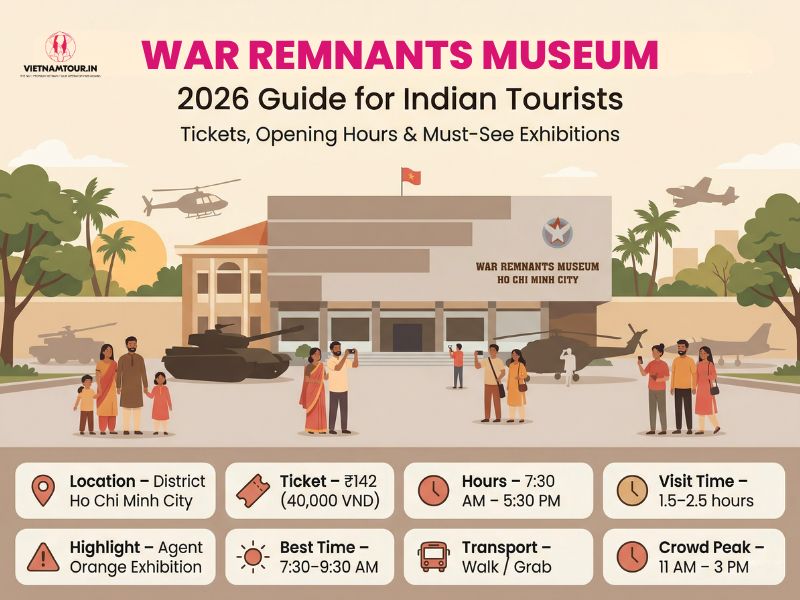
The War Remnants Museum is open 7:30 AM to 5:30 PM every day with adult tickets at ₹142 (40,000 VND). Indian tourists need 2 to 2.5 hours to cover 8 permanent exhibitions across 3 floors plus the outdoor courtyard. The museum sits at 28 Võ Văn Tần Street, District 3 — a 10-to-12-minute walk from Ben Thanh Market, or a ₹30–₹60 Grab ride from any District 1 hotel. The Agent Orange exhibition is the most internationally recognised section and the one that resonates most deeply with Indian visitors because of its parallel to the Bhopal Gas Tragedy of 1984.
War Remnants Museum Opening Hours and Ticket Price for Indian Tourists
The War Remnants Museum is open every day of the week from 7:30 AM to 5:30 PM, with no weekly closure and no lunch break. The ticket counter closes at 5:00 PM, so plan your arrival accordingly.
The War Remnants Museum’s adult entrance fee is ₹142 (40,000 VND) — paid directly at the official ticket counter on-site, with no advance booking required. Children aged 6 to 15 years pay ₹71 (20,000 VND), a 50% discount on the standard adult rate. Children under 6 years old enter the War Remnants Museum for free. War veterans, people with disabilities, and low-income individuals also receive free entry. There are no separate photography fees — cameras and smartphones are permitted throughout all indoor exhibition halls and the outdoor courtyard of the War Remnants Museum.
To put this in perspective for Indian visitors: the adult entrance fee to the War Remnants Museum is less than a single-journey Mumbai Metro token. Among major war history sites in Southeast Asia, the War Remnants Museum in Vietnam offers the most accessible pricing for the depth of content it delivers.
How Long to Spend at the War Remnants Museum
Most visitors spend 1.5 to 2 hours at the War Remnants Museum, according to Google Popular Times data. Indian tourists who want to engage with the full historical context — reading captions, spending time in the Agent Orange section, and moving through the Requiem Exhibition carefully — need 2.5 hours at the War Remnants Museum.
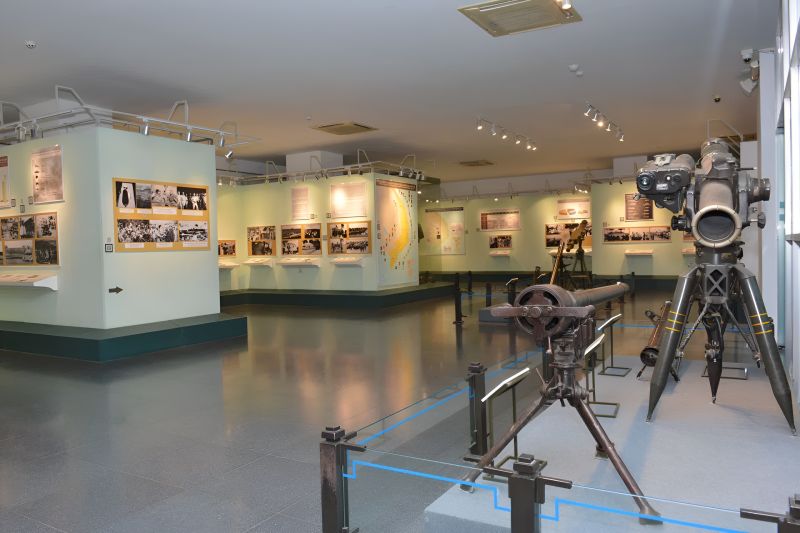
Peak crowd hours for visiting the War Remnants Museum are 11 AM to 3 PM, when business scores reach 80 to 100 on a 100-point scale. The best arrival time is 7:30 AM to 9:00 AM: the temperature is at its lowest (28–30°C / 82–86°F versus 34°C+ / 93°F+ at midday), the halls are quietest, and the emotional weight of the exhibits lands more fully without the distraction of large crowds.
The dress code is not strictly enforced at the War Remnants Museum entrance, but respectful attire is recommended — covered shoulders and knees, following the same courtesy you would extend when visiting an Indian temple or a war memorial.
War Remnants Museum Location and How to Identify the Entrance
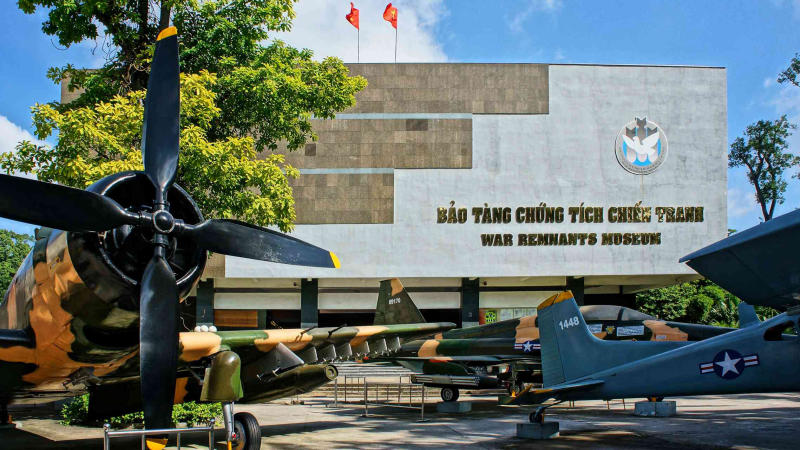
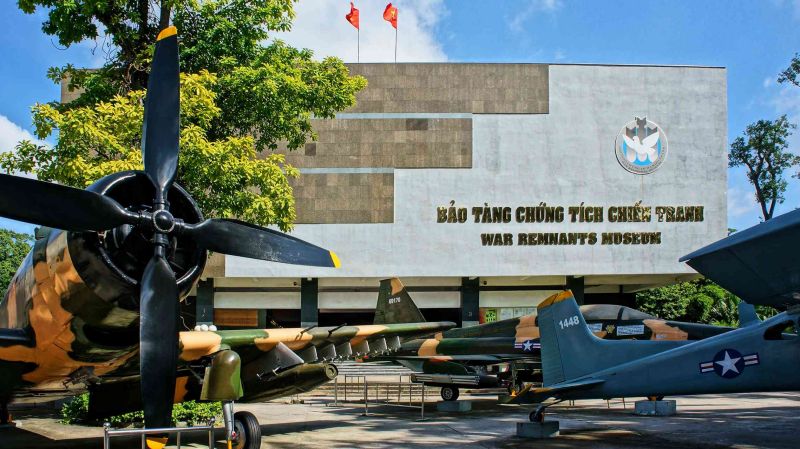
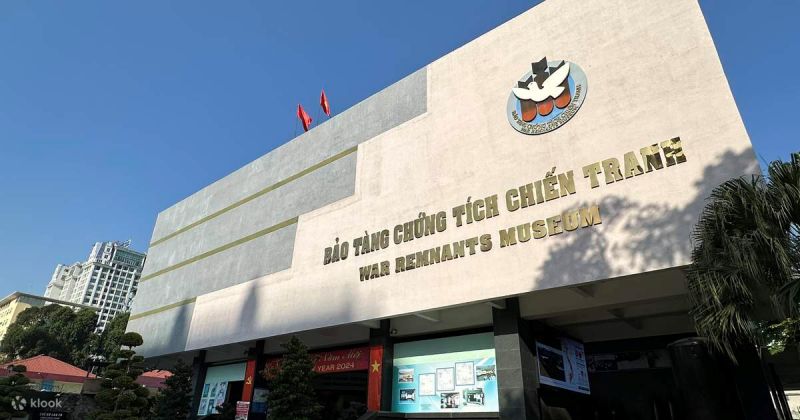
The War Remnants Museum is located at 28 Võ Văn Tần Street, Ward 6, District 3, Ho Chi Minh City, and is visible directly from the road — there is no hidden entrance or complex approach. The War Remnants Museum’s building exterior displays the full Vietnamese name “Bảo tàng Chứng tích Chiến tranh” prominently above the entrance gate, making it straightforward to identify even without a local guide. Directions and transport options from the city center are covered in full in the How to Reach section below.
The Agent Orange Exhibition
The Agent Orange exhibition is the most internationally recognised section of the War Remnants Museum, and the one that leaves the deepest impression on the vast majority of visitors. Agent Orange was a chemical herbicide and defoliant deployed by the US military between 1961 and 1971. 76 million litres of Agent Orange were sprayed across Vietnam during this period (U.S. Department of Veterans Affairs figures), targeting forests and agricultural land used by the North Vietnamese and National Liberation Front forces.
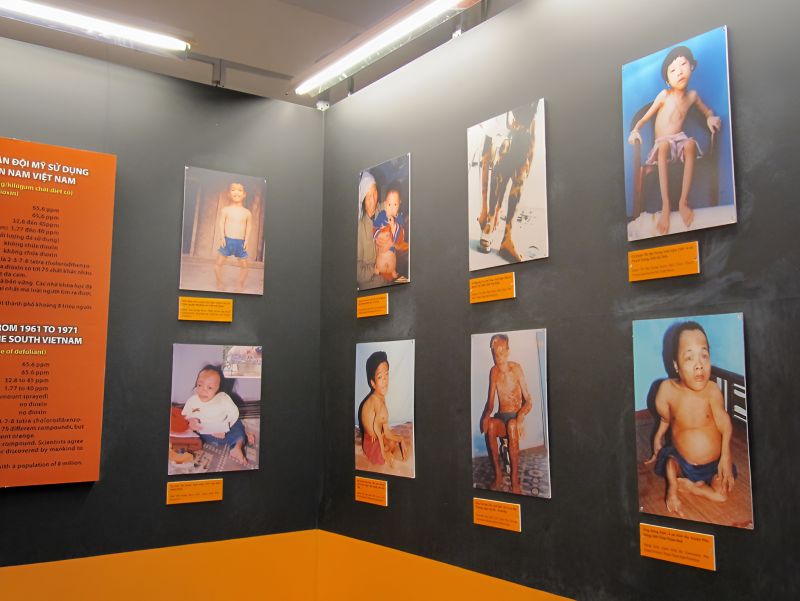
Agent Orange effects are still visible in Vietnamese families today — the exhibition documents third-generation victims born as recently as the 2020s. The displays include photographs of birth defects, preserved medical specimens, documentation of affected regions, and records of international legal proceedings that followed the war’s end. The evidence of Agent Orange’s chemical impact is presented without softening, and without content warnings posted at the exhibition entrance.
The Bhopal Gas Tragedy of 1984 is the most immediate parallel for Indian tourists visiting the museum. Both the Bhopal Gas Tragedy of 1984 in India and Agent Orange in Vietnam represent mass civilian harm resulting from industrial or military chemical agents. The communities that absorbed the damage continued to carry consequences across generations, while corporate and government accountability remained contested for decades. That parallel between the Bhopal Gas Tragedy of 1984 and Agent Orange is not incidental, and it is the reason this exhibition resonates so specifically with Indian visitors in a way it may not for other nationalities.
Parents of children under 10 should review the ground floor before bringing children into this Agent Orange section. The photographs of deformities are displayed at eye level and without warning panels in individual display cases.
The War Photographs Exhibition
The War Remnants Museum holds one of the most significant collections of Vietnam War photography in the world. The Vietnam War photography collection at the War Remnants Museum includes work by international war correspondents whose images directly shifted public opinion in the United States and across Europe during the 1960s and 1970s.
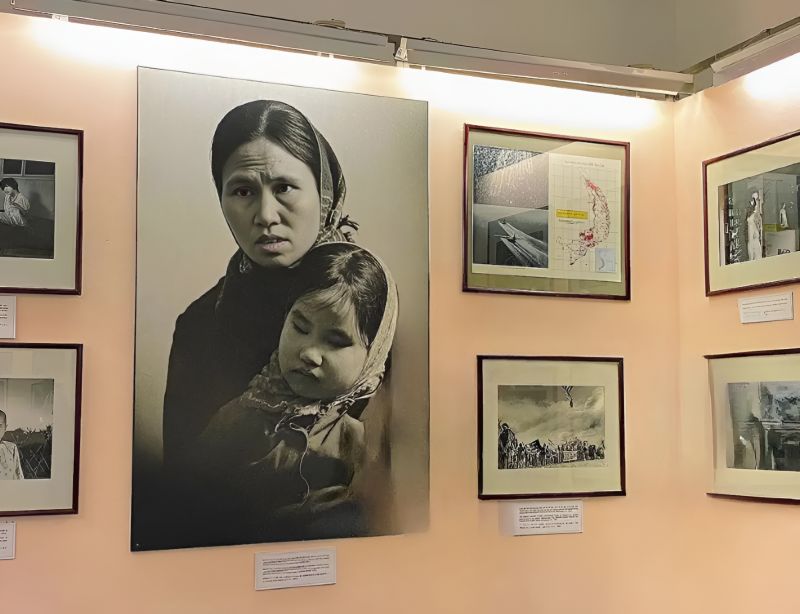
Notable photographers represented include Nick Ut (1972 “Napalm Girl” photograph), Eddie Adams (1968 Saigon execution photograph), Larry Burrows (Life magazine, killed 1971 in Laos), and Henri Huet (AP photographer, killed 1971 in Laos). The exhibition spans multiple floors, with each floor covering a distinct phase of the conflict or a specific correspondent’s body of work. All photographic captions are displayed in both Vietnamese and English, making the collection fully accessible to international visitors without a guide.
The photographs carry an additional layer of resonance for Indian tourists with awareness of press freedom and media censorship. India’s Emergency period from 1975 to 1977 — the same years the Vietnam War was ending — raised similar questions about what journalists could document and publish. The War Remnants Museum treats photography as primary evidence, not illustration, and the collection reflects that.
The Requiem Exhibition
The Requiem Exhibition is a permanent installation dedicated to photographers who were killed during the Vietnam War. The collection documents journalists from 11 countries, including both Vietnamese photographers and international correspondents who entered the conflict zone and did not return.
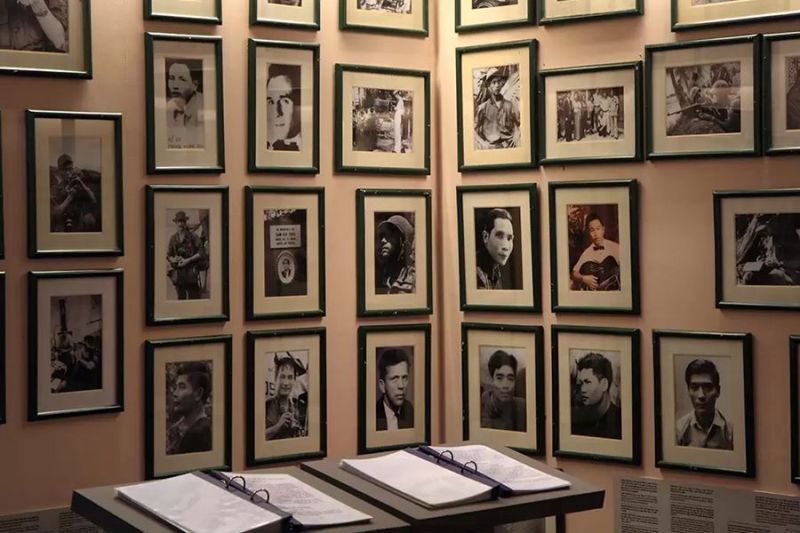
134 photographers from 11 countries are represented in the Requiem collection. No equivalent installation to the Requiem Exhibition exists anywhere else in Southeast Asia. The parallel is direct for Indian visitors who remember coverage of the Kargil War or India’s role in the 1971 Bangladesh Liberation War: these were journalists doing the same work as Indian war correspondents, facing the same risks, with cameras instead of weapons.
8 Permanent Exhibitions on 3 Floors
The 8 permanent exhibitions inside the War Remnants Museum are: (1) Historical Truths, (2) Agent Orange Aftermath, (3) War Crimes, (4) Requiem — Photographers Killed Covering the War, (5) International Solidarity, (6) Vestiges of Prison Regime, (7) Children in War, and (8) the Outdoor Military Equipment Courtyard. These exhibitions span 3 floors plus an open-air courtyard at 28 Võ Văn Tần Street, District 3.
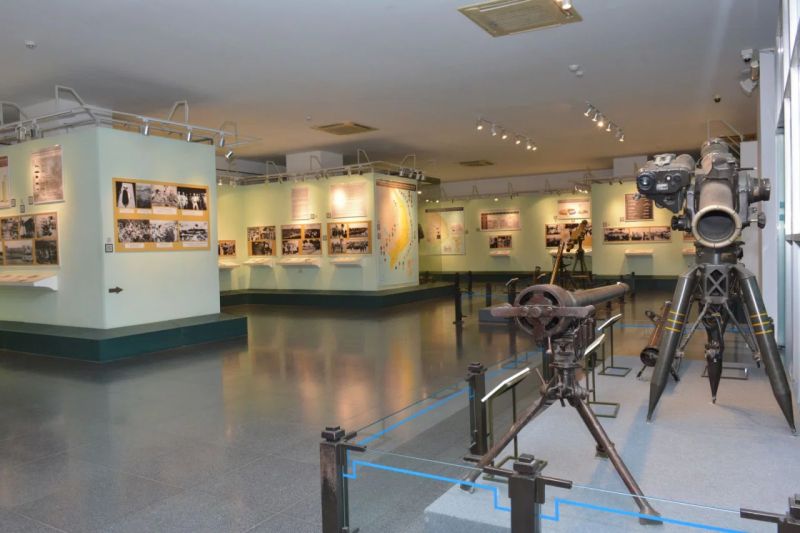
The War Remnants Museum presents the Vietnam War exclusively from the Vietnamese perspective. Exhibits are framed as testimony from people defending their land against foreign military aggression, not as neutral documentation of a conflict between two sides. Indian tourists will understand this framing immediately if they have engaged with accounts of British colonial rule in India or visited sites like Jallianwala Bagh in Amritsar. The War Remnants Museum operates on the same principle: it is a memorial and a record, not an arbitration.
The Outdoor Courtyard at ground level displays US military aircraft, tanks, and artillery pieces captured or abandoned during the war. Equipment on display includes an M48 Patton tank, an F-5A fighter jet, a UH-1 Huey helicopter, and an A-37 Dragonfly attack bomber. This is the most photographed section of the museum and is accessible before entering the ticketed indoor building. It is also the most suitable section for children — open air, no graphic imagery, full freedom to photograph.
Floor 1 houses the Historical Truths exhibition and the Agent Orange exhibition, covered in depth above.
Floor 2 covers the War Crimes exhibition, which documents specific military operations and their recorded impact on civilian populations, including the My Lai massacre and the use of napalm and white phosphorus bombs.
Floor 3 presents the International Solidarity exhibition, which documents global anti-war movements from the 1960s and 1970s — including protests and conferences in India and other Non-Aligned Movement nations. For Indian visitors, finding their own country’s name in this exhibition is a notable moment.
The English audio guide costs ₹107 (30,000 VND) per visitor at the entrance ticket counter, verified by Vietnamtour.in’s May 2026 on-site audit. The recommended route for self-guided visitors is: outdoor courtyard → Floor 1 → Floor 2 → Floor 3, completing the visit with the Agent Orange section last. The outdoor-courtyard-to-Floor-3 sequence builds emotional and historical context progressively for visitors and takes 2 hours at a measured pace.
In terms of scale, the museum is comparable to the National War Memorial in New Delhi, but the content is significantly more personal and graphic. The War Memorial documents sacrifice; the War Remnants Museum documents consequence.
The Outdoor Military Equipment Display
Start your visit at the outdoor military equipment display, before entering the indoor exhibitions. The outdoor display is visually grounding — seeing an M48 Patton tank or a UH-1 Huey helicopter at close range gives immediate physical scale to a conflict that can otherwise feel abstract. The courtyard is best visited early in the morning before 10 AM, when the open-air environment is still manageable in temperature and humidity. After 10 AM, the combination of direct sun and high humidity makes prolonged time in the courtyard uncomfortable.
Families from Indian defence backgrounds will recognize several of these equipment types from post-war military surplus documentation. The placards on each exhibit are written in Vietnamese and English and explain the equipment’s operational role during the conflict.
How to Reach the War Remnants Museum from Ho Chi Minh City Center
The War Remnants Museum is located at 28 Võ Văn Tần Street, District 3 — within easy walking distance from District 1, the primary hotel and tourist district for Indian visitors to Ho Chi Minh City.
The first way to reach the War Remnants Museum from the Ho Chi Minh City Center is walking. Walking from Ben Thanh Market to the War Remnants Museum takes 10 to 12 minutes heading northwest through commercial streets that are safe, well-lit, and straightforward to navigate. Walking from Notre Dame Cathedral takes 8 minutes. From the Bui Vien and De Tham Street area, the most common Indian tourist hotel cluster in HCMC, the walk to the War Remnants Museum is 15 minutes, or a ₹40 Grab ride.
Another way to reach the War Remnants Museum from Ho Chi Minh City is by Grab. The Grab fare from most District 1 hotels to the War Remnants Museum runs between ₹30 and ₹60 (15,000–25,000 VND) for a 5-to-8-minute ride. Grab accepts international credit cards and debit cards directly through the app; no cash or local SIM is required to use it. No advance booking is needed — the app operates reliably throughout District 1 and District 3 at all hours.
There is no direct metro access to the War Remnants Museum as of 2026. HCMC Metro Line 1, which opened in 2024, serves the eastern corridor of the city and does not reach District 3. Comparing this to Indian cities, reaching the War Remnants Museum from your hotel in District 1 is comparable to navigating from Connaught Place to India Gate in Delhi — short, walkable, and fully manageable with an app-based taxi as backup.
Indian tourists looking for the full range of activities and cultural experiences across the city can explore the complete guide to things to do in Ho Chi Minh City, covering food, day trips, nightlife, and neighbourhood walks beyond the war history circuit.
Best Time to Visit the War Remnants Museum for Indian Tourists
The best time to visit the War Remnants Museum is between 7:30 AM and 9:30 AM during the dry season from November to April. For Indian tourists, the November-to-February window is optimal because it aligns with Diwali and the Christmas–New Year holidays.
At 7:30 AM opening time, the temperature in Ho Chi Minh City is 28–30°C (82–86°F) — a manageable climate for both the outdoor military equipment courtyard and the walk between indoor sections. By midday, temperatures regularly exceed 34°C (93°F), making the outdoor areas uncomfortable.
Avoid the War Remnants Museum during the following high-congestion windows to ensure an uninterrupted experience:
- Friday, 2:00 PM to 4:00 PM: Google Popular Times data records business scores of 97 to 100, indicating maximum capacity.
- Saturday, 11:00 AM to 2:00 PM: Business scores range from 96 to 98.
- Monday and Wednesday mornings: Lowest crowd scores across the weekly cycle for Indian tourists.
7 Things Indian Tourists Must Know Before Visiting the War Remnants Museum
- The War Remnants Museum presents the Vietnam War exclusively from the Vietnamese perspective. This is a site of testimony, not neutral documentation. Approach the War Remnants Museum as you would visit Jallianwala Bagh in Amritsar: it documents atrocities from the perspective of survivors. There is no “both sides” framing, and understanding this allows you to engage with the exhibits on your own terms.
- The Agent Orange section at the War Remnants Museum is extremely graphic. Parents of children under 10 should walk through the ground floor independently before bringing children in, as exhibits begin immediately without a content warning.
- Photography is permitted throughout all War Remnants Museum exhibition halls. Avoid flash photography near fragile documents and original photographic prints. All outdoor military equipment in the War Remnants Museum courtyard can be photographed freely.
- An English audio guide at ₹107 (30,000 VND) adds substantial depth to the War Remnants Museum visit. Vietnamtour.in recommends a self-directed route: Courtyard → Floor 1 → Floor 2 → Floor 3 (Agent Orange section) to build historical context in a logical 2-hour sequence.
- Visit the outdoor War Remnants Museum courtyard before 10:00 AM to avoid extreme heat. Temperatures and humidity in the open-air military equipment area become uncomfortable midday. Carry at least 500 ml (17 oz) of water and apply sunscreen before entering.
- The War Remnants Museum gift shop offers high-quality educational materials. Books, DVDs, and reproduction photographs sold here are more reliable than souvenirs from street vendors, and proceeds support the museum directly.
- Finish your museum visit by 4:30 PM if you want to reach dinner comfortably before 7:00 PM. No food or beverages are available inside the War Remnants Museum. The nearest vegetarian-friendly dining options for Indian tourists are located 1.0 to 2.0 km away. Vegetarian restaurant details are covered in the FAQ below.
Frequently Asked Questions — War Remnants Museum for Indian Tourists
Is the War Remnants Museum open every day of the week?
Yes. The War Remnants Museum operates 7 days a week with no fixed weekly closure, including all Vietnamese public holidays such as Tết. The War Remnants Museum opening hours are from 7:30 AM to 5:30 PM, though the ticket counter closes at 5:00 PM. This accessibility distinguishes it from other HCMC attractions like the Independence Palace, which may close on national holidays.
Is the War Remnants Museum worth visiting for Indian tourists?
Yes — the War Remnants Museum is the most emotionally significant site in Vietnam for international visitors. Tripadvisor ranks it as a “Best of the Best” destination with a 4.5-star rating from over 26,000 reviews. This museum resonates deeply with India’s historical memory of resistance against colonial aggression. Most Vietnamtour.in guests report this as the single most memorable stop in their Vietnam itinerary.
How much does the War Remnants Museum ticket cost in Indian Rupees?
The adult entrance fee for the War Remnants Museum is ₹142 (40,000 VND), verified by the latest Vietnamtour.in price audit. Children aged 6 to 15 pay ₹71 (50% discount), while children under 6 enter for free. Tickets must be paid in cash directly at the official entrance. There are no additional fees for photography or hidden charges.
Can I visit the War Remnants Museum without a guide?
Yes, the War Remnants Museum is entirely self-navigable as all exhibition panels carry full English captions. The recommended self-guided route is outdoor courtyard first, then Floor 1, then Floor 2, then Floor 3, with the Agent Orange section visited last. This sequence covers all 8 permanent exhibitions in under 2 hours and builds emotional and historical context progressively — significantly more effective than entering through the ground-floor indoor entrance and encountering the Agent Orange section first.
What is the nearest vegetarian restaurant to the War Remnants Museum?
The nearest reliable vegetarian options for Indian tourists are located 1.0 to 2.0 km from the museum: Hare Krishna restaurant on Lê Thị Riêng Street (pure South Indian thali and sattvic meals), Govinda’s Vegetarian on Nguyễn Văn Trỗi (North Indian thali and curries), and Saigon Vegan on Phạm Ngũ Lão (Vietnamese vegetarian, accessible from Bui Vien). For North Indian cuisine specifically, multiple restaurants on Bui Vien Street are accessible within a 15-minute Grab ride.
The War Remnants Museum delivers what no textbook can: direct evidence of what modern warfare costs, presented through 8 exhibitions, 134 Requiem photographs, and an outdoor courtyard of captured US military hardware. For Indian tourists, this is the single most emotionally significant stop in any Ho Chi Minh City itinerary.