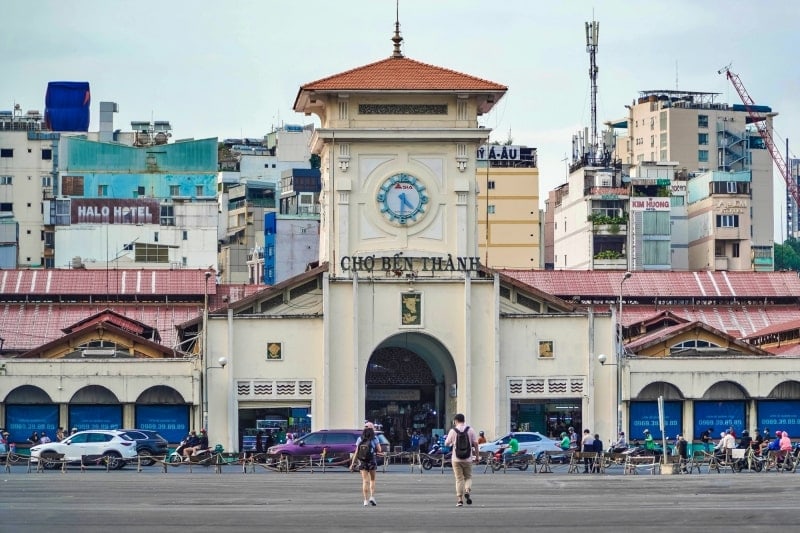
Ben Thanh Market (Chợ Bến Thành) is a 110-year-old covered marketplace in District 1, Ho Chi Minh City, housing over 1,400 vendor stalls across 13,056 square metres — and the single most visited shopping destination for Indian tourists in southern Vietnam. The market sits at the intersection of four major roads in the city centre, making it reachable from any District 1 hotel in under 15 minutes.
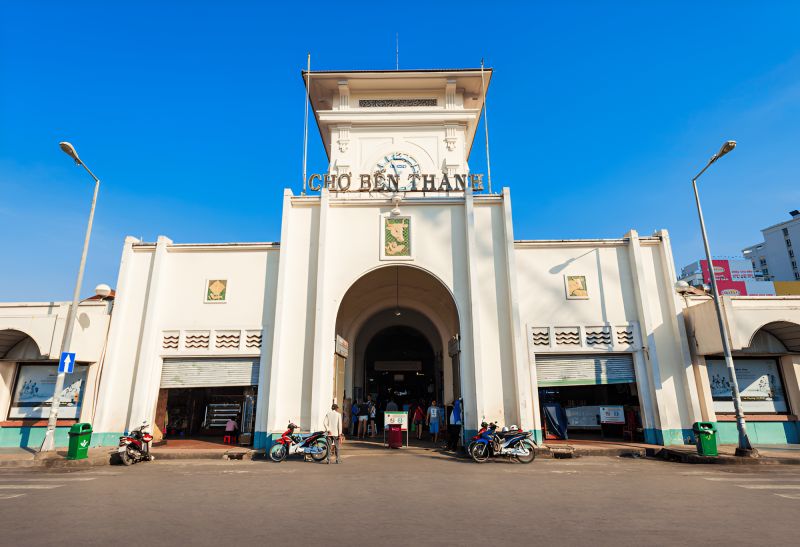
Ben Thanh Market opens 6:00 AM–6:00 PM daily, with the night market running 6:00 PM–midnight on the surrounding streets. The 7 best items Indian tourists buy here are Vietnamese lacquerware, silk scarves, Trung Nguyên coffee, dried spices, handcrafted souvenirs, linen clothing, and freshwater pearl jewellery — priced ₹50–₹4,000 (14,000–1,120,000 VND). The food court has 12+ vegetarian (chay) stalls serving Buddhist-tradition meals compatible with Indian dietary needs. Bargaining is expected; opening at 40% of the quoted price typically settles at 55–65%.
This Vietnamtour.in travel guide covers everything Indian tourists need before visiting Ben Thanh Market: definition, history, location and transport options, opening hours, what to buy with INR/VND prices, authentic Vietnamese stalls, vegetarian and non-vegetarian food, bargaining strategy, common scams, the night market experience, comparison with other HCMC markets, and practical tips.
What Is Ben Thanh Market in Ho Chi Minh City?
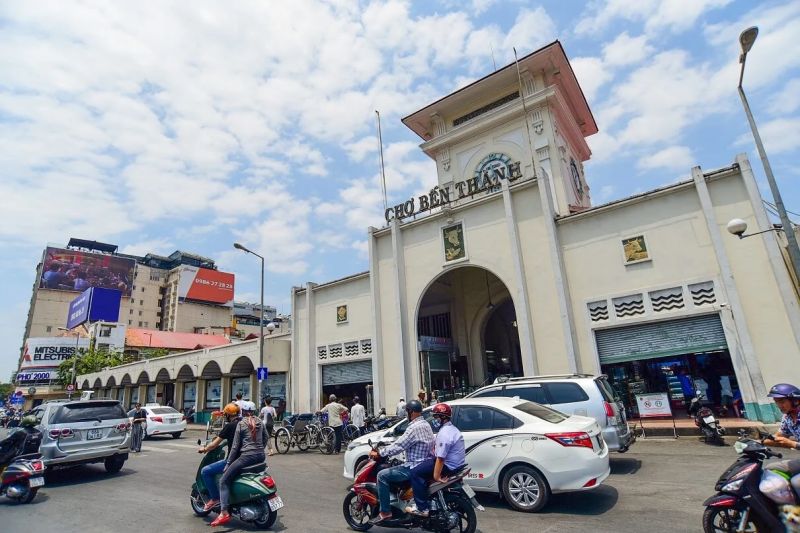
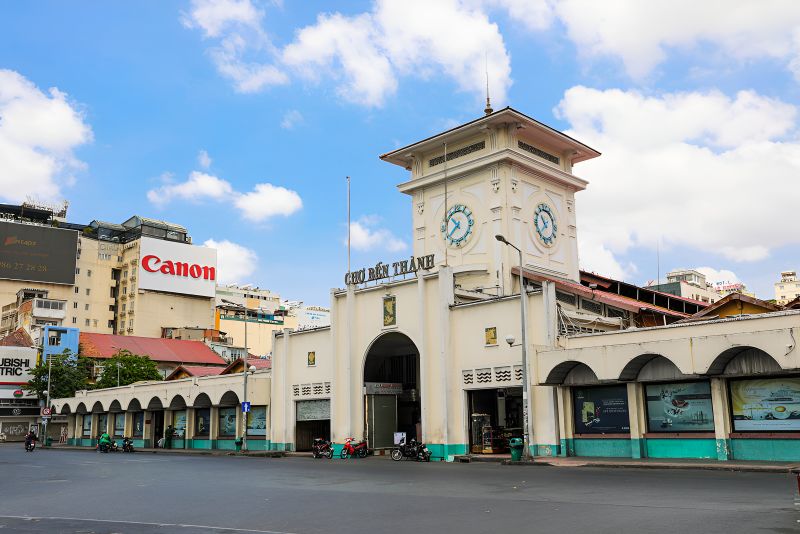
Ben Thanh Market is a covered permanent marketplace and cultural landmark in the heart of District 1 — recognised by its iconic clock tower facade and four entrance gates (north, south, east, and west), and considered Saigon’s most iconic central market alongside Cho Lon’s Binh Tay Market and District 5’s An Dong Market. The structure spans 13,056 square metres and contains over 1,400 stalls selling fresh produce, spices, lacquerware, silk, and street food.
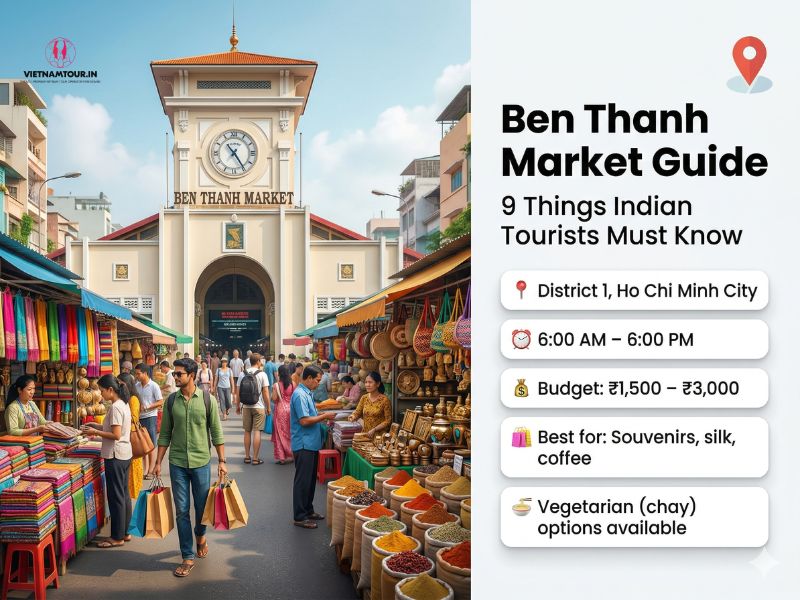
Beyond its commercial function, Chợ Bến Thành serves as one of Ho Chi Minh City’s most photographed symbols — appearing on city maps, tourism campaigns, and postcards as a primary identifier of the city itself.
What Is the History of Ben Thanh Market?
Ben Thanh Market was built by French colonial authorities in 1914, replacing an earlier market that had occupied the same site since 1859, according to the Ho Chi Minh City Department of Tourism heritage registry. The 1914 structure introduced the iconic clock tower and the four-gate covered layout that visitors recognise today. A major renovation in 1985 modernised the interior infrastructure (electrical wiring, drainage, ventilation) without altering the building’s exterior appearance. The 110-year continuity of Ben Thanh Market makes this site one of the oldest functioning commercial landmarks in southern Vietnam.
Where Is Ben Thanh Market and How Do Indian Tourists Get There?
Ben Thanh Market is located on Lê Lợi Street, Bến Thành Ward, District 1, Ho Chi Minh City, at the convergence point of four major roads in the city centre. Indian tourists reach Ben Thanh Market through 4 main routes from hotels in District 1, District 3, or District 7:
- Grab taxi — fastest option, ₹120–₹200 (33,600–56,000 VND) from most District 1 hotels; 8–15 minutes door-to-door
- Ben Thanh Metro Station (Line 1) — operational since late 2024; the station connects directly to the market’s main entrance, ₹20–₹70 (5,600–19,600 VND) from any station on Line 1
- Walking — Indian tourists staying near Bùi Viện or Phạm Ngũ Lão are within a 5–8 minute walk of the south entrance
- Xe ôm (motorbike taxi) — cheapest option at ₹60–₹100 (16,800–28,000 VND); not recommended for tourists unfamiliar with HCMC traffic
Ben Thanh Market Opening Hours: When Does It Open and Close?
Ben Thanh Market opens at 6:00 AM and closes at 6:00 PM, seven days a week, including Sundays and Vietnamese public holidays. The 3 best time windows to visit Ben Thanh Market are:
- 7:00 AM – 9:00 AM — coolest indoor temperature (28–30°C), freshest produce, lowest crowd density
- 11:00 AM – 1:00 PM — peak food court hours with all 50+ stalls open and full menus available
- 4:00 PM – 6:00 PM — late-afternoon vendors discount unsold items 15–25% before closing
Ben Thanh Market operates 7 days a week, including Sundays and all Vietnamese national holidays. Indian tourists visiting during the Diwali season (October–November) or the New Year period find the market fully operational on every day of their trip.
7 Best Things to Buy at Ben Thanh Market (With INR and VND Prices)
Based on Vietnamtour.in’s experience serving over 428,000 Indian travellers to Vietnam since 2015, the 7 product categories most relevant for Indian tourists at Ben Thanh Market are:
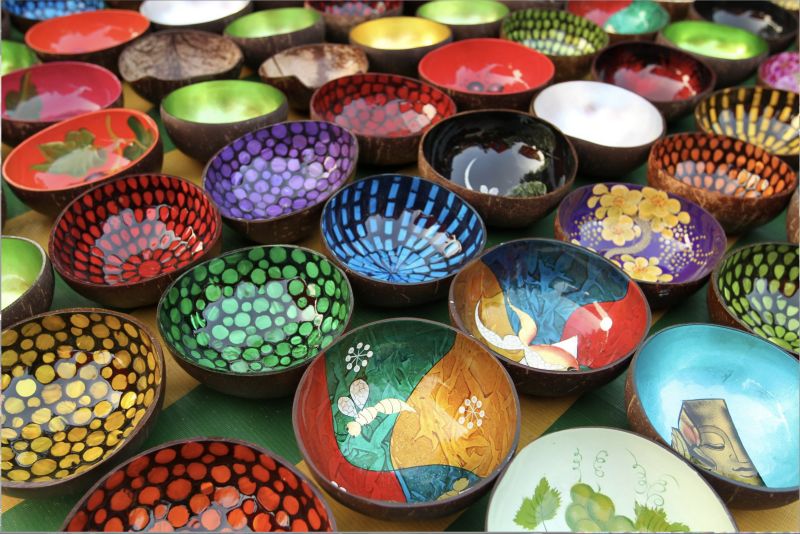
- Vietnamese lacquerware — ₹400–₹2,500 (112,000–700,000 VND); hand-painted bowls, trays, and decorative pieces; check for the “made in Vietnam” stamp on the base
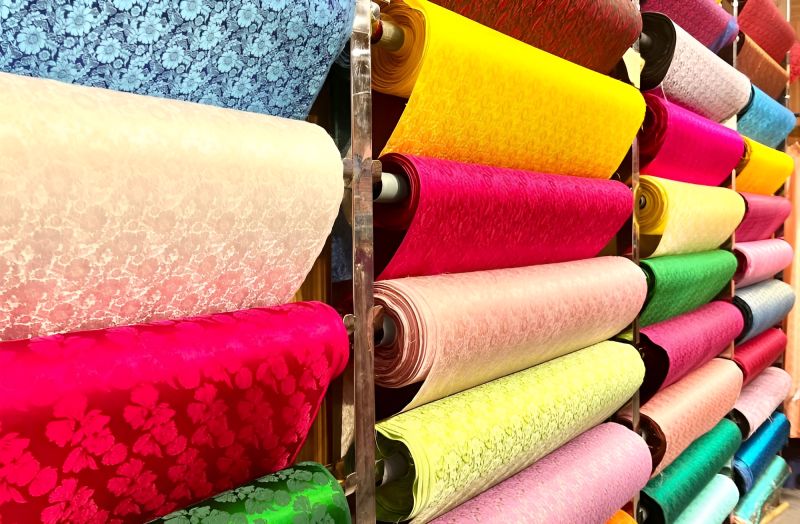
- Silk scarves and áo dài fabric — ₹600–₹3,200 (168,000–896,000 VND); raw silk from Hội An and Đà Lạt is available; ask the vendor to confirm silk content before buying
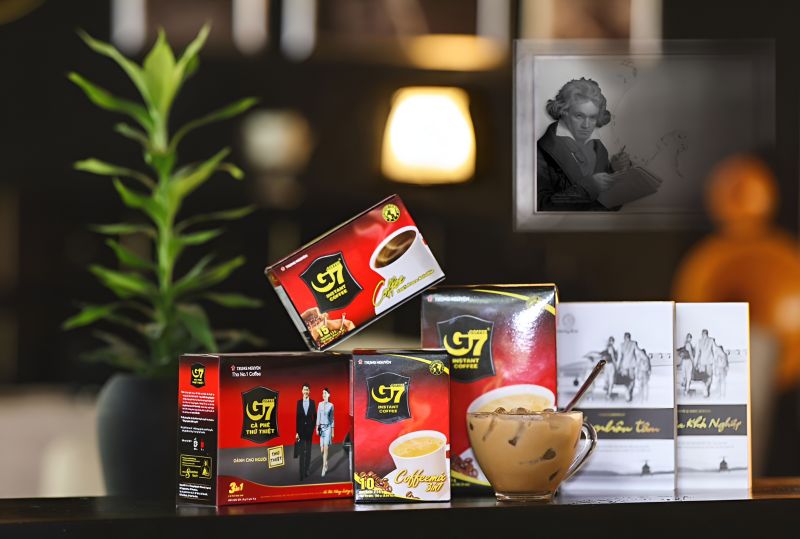
- Vietnamese coffee and tea — ₹200–₹800 (56,000–224,000 VND) per 250g pack; Trung Nguyên and Highlands Coffee branded packs are authentic; the pre-ground G7 blend at ₹280 (78,400 VND) per pack is the best-value option for Indian tourists
- Dried spices, lemongrass, and star anise — ₹80–₹300 (22,400–84,000 VND); the north entrance spice section offers ingredients found in Indian masala blends; prices are 40–60% lower than airport shops
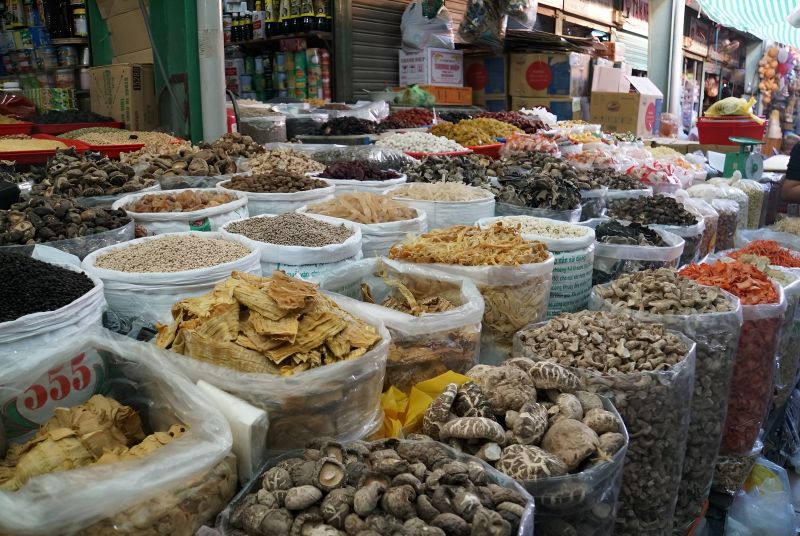
- Handcrafted souvenirs (keychains, magnets, wooden gifts) — ₹50–₹200 (14,000–56,000 VND); buying 5+ identical items from one stall drops the per-unit price by 30–40%

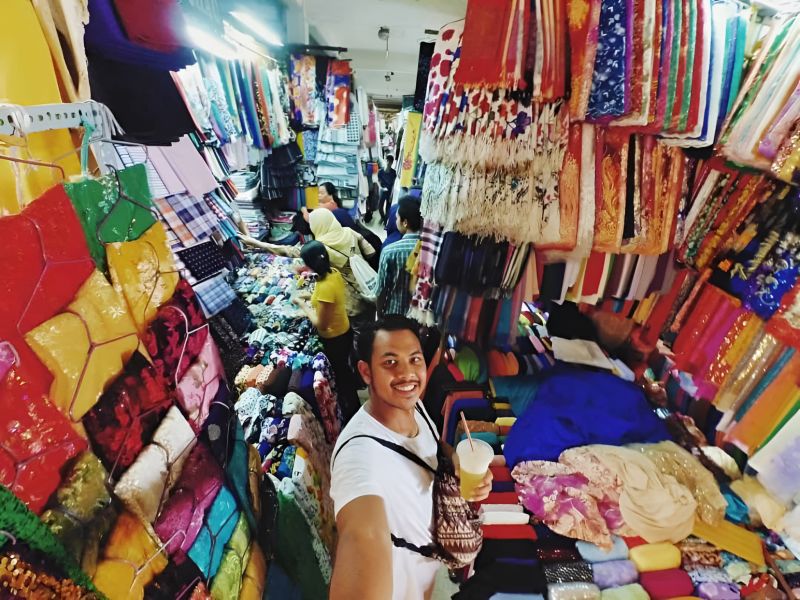
- Linen clothing and traditional embroidered shirts — ₹300–₹1,200 (84,000–336,000 VND); the eastern textile zone has the widest selection; sizes run small compared to Indian standard sizing — try before buying
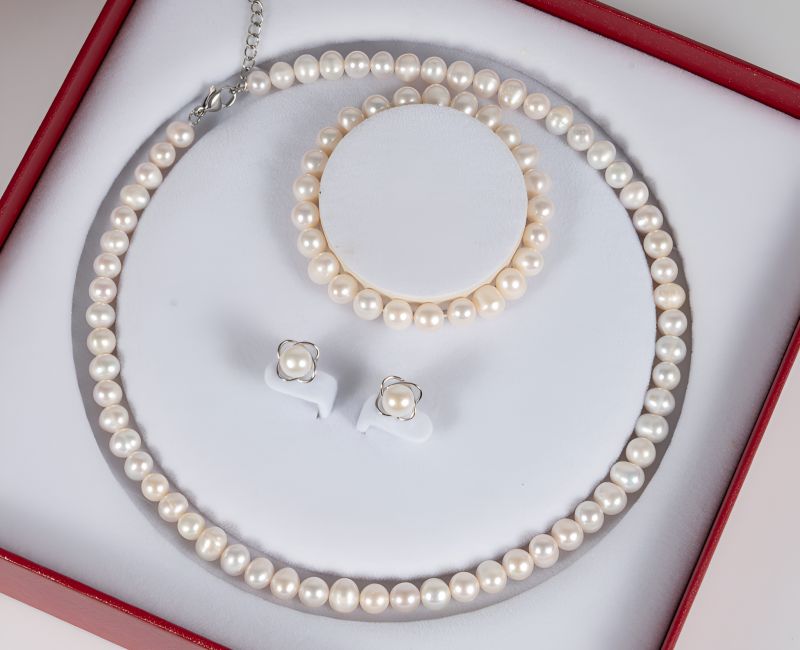
- Pearl and stone jewellery — ₹500–₹4,000 (140,000–1,120,000 VND); freshwater pearl sets and Vietnamese jade bracelets are the most popular purchases among Indian women tourists
Items Indian Tourists Should NOT Buy at Ben Thanh Market
Items Indian tourists should avoid buying at Ben Thanh Market are electronics and mass-produced branded goods. For electronics, Nguyen Kim or Phong Vu stores offer verified products at transparent prices. For branded fashion, Vincom Centre on Lê Thánh Tôn Street (700 metres from Ben Thanh) is the better alternative.
Which Ben Thanh Market Stalls Sell Authentic Vietnamese Products?
Ben Thanh Market stalls selling authentic Vietnamese products are concentrated at the north entrance — fresh produce, dried spices (lemongrass, star anise, cinnamon), and locally sourced lacquerware sold here come directly from Vietnamese suppliers and carry “made in Vietnam” stamps. The south and west entrances of Ben Thanh carry mixed authenticity: genuine lacquerware sits alongside mass-produced Chinese equivalents. The east entrance textile stalls have the most consistent “made in Vietnam” labelling.
The 2 practical identification tips for Indian tourists at Ben Thanh Market are:
- Check the underside of lacquerware for a country-of-origin stamp; Vietnamese-made pieces carry a clear “made in Vietnam” mark, while Chinese imports often lack any stamp or carry a small “PRC” mark
- Smell the spice products before buying — fresh Vietnamese star anise has a sharp, distinct fragrance that synthetic or low-grade imitations cannot replicate; the same applies to cinnamon bark (cassia) and dried lemongrass
Food at Ben Thanh Market: Vegetarian and Non-Vegetarian Options for Indian Tourists
Does Ben Thanh Market Have Vegetarian Food?
Yes — Ben Thanh Market has a dedicated food court section with over 50 stalls, of which 12+ stalls offer full vegetarian (chay) menus concentrated on the eastern food court row. Stalls labelled “chay” (菜) serve dishes prepared without meat, seafood, or fish sauce — the Vietnamese Buddhist vegetarian tradition that overlaps closely with Indian vegetarian requirements.
Non-Vegetarian Options at Ben Thanh Market
Non-vegetarian options in Ben Thanh Market include:
- Phở (traditional Vietnamese noodle soup) — ₹90–₹140 (25,200–39,200 VND)
- Cơm tấm (broken rice with grilled pork) — ₹100–₹160 (28,000–44,800 VND)
- Fresh seafood prepared to order — ₹150–₹300 (42,000–84,000 VND) at stalls in the eastern food court section
Identification Tips for Indian Vegetarian Travellers
Stalls labelled “chay” (菜) at Ben Thanh Market are vegetarian. Indian tourists who do not consume eggs confirm “không trứng” (no eggs) with the vendor before ordering. Indian tourists following Jain diets confirm “không hành tỏi” (no onion or garlic) directly with the vendor, as Vietnamese vegetarian traditions may still include root vegetables.
Hygiene Guidance at Ben Thanh Market Food Court
Ben Thanh Market’s food court is among the most inspected in District 1 — vendors hold municipal licences and are subject to regular checks by HCMC’s Food Safety Authority. Indian tourists order from stalls with visible food turnover (queues, hot dishes being refilled frequently) and avoid pre-plated dishes that have been sitting uncovered.
How to Bargain at Ben Thanh Market: 6 Proven Tips for Indian Tourists
Prices at Ben Thanh Market are not fixed — every listed price is a starting point, and vendors expect negotiation. The first quoted price is typically 2x–3x the fair market value; a counteroffer of 40% of the asking price is a reasonable opening position. Indian tourists find bargaining at Ben Thanh Market familiar because the bargaining process operates on the same principles as Chandni Chowk or Sarojini Nagar markets, where the asking price is a ceiling, not a reflection of value.
The 6 rules below produce the best results for Indian tourists bargaining at Ben Thanh Market:
- Start at 40% of the asking price — for a ₹500 (140,000 VND) quoted item, open at ₹200 (56,000 VND); a fair settlement is typically ₹280–₹320 (78,400–89,600 VND)
- Buy in quantity for deeper discounts — buying 3+ items from the same stall consistently yields 20–35% off the per-item price
- Walk away slowly — if the vendor’s counter-offer is still too high, begin walking; vendors at Ben Thanh Market call you back at the lower price in 7 out of 10 cases (based on Vietnamtour.in’s tour leader observations from 2018–2025)
- Use Vietnamese phrases — “Đắt quá” (too expensive) and “Bao nhiêu?” (how much?) signal cultural respect and consistently soften vendor pricing
- Do not bargain at food stalls — food prices inside the market are fixed, fair, and already among the lowest in District 1
- Pay in VND, not USD — paying in US dollars gives vendors a built-in exchange markup of 8–15%; carry small VND notes (₹500 = ~140,000 VND in 50,000 and 100,000 denominations)
3 Common Scams at Ben Thanh Market and How Indian Tourists Can Avoid Them
Scam 1 — Unmarked Taxis Outside the Main Entrance
Drivers stationed outside Ben Thanh Market’s main gate routinely charge 3x–5x the standard fare and refuse to use a meter. Indian tourists book all transport via Grab before leaving the market building and avoid negotiating with drivers who approach on the street.
Scam 2 — Fake “Final Offer” Pressure Tactics
Some vendors escalate quoting with urgency cues — “last one,” “special price only for you,” “price goes up tomorrow.” These statements are scripted; Indian tourists ignore the urgency entirely and walk away if the price is not acceptable. The vendor’s next offer is typically 20–30% lower.
Scam 3 — Chinese-Manufactured Goods Labelled as Vietnamese Handicrafts
Mass-produced lacquerware, embroidered items, and wooden decorations imported from China are sold across souvenir stalls at Ben Thanh. Indian tourists check the “made in Vietnam” stamp on the base of every item before purchasing; the absence of the stamp is the clearest signal that the product is not locally made.
Ben Thanh Night Market: Opening Hours, Food, and What to Expect
The Ben Thanh Night Market is a separate outdoor experience that opens at 6:00 PM daily on the streets surrounding the main building. While the daytime market focuses on goods, the night market is almost entirely food-centred, drawing a mixed crowd of local residents, Vietnamese youth, and international tourists. The energy is comparable to Delhi’s Chandni Chowk night bazaar — dense, lively, and lit by the glow of competing stalls.
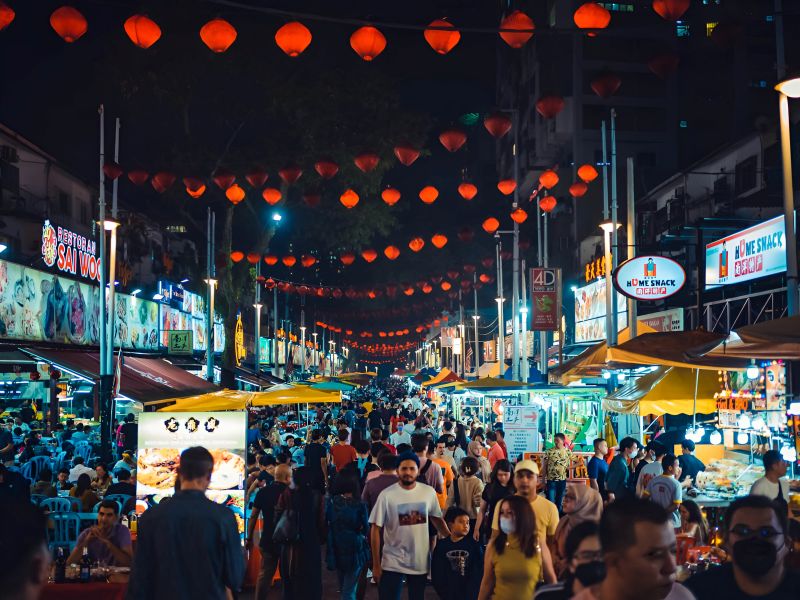
Ben Thanh Night Market Details
- Location: Phan Bội Châu Street, Phan Chu Trinh Street, and Thủ Khoa Huân Street — the three roads forming a triangle around the main market building
- Hours: 6:00 PM – midnight, daily
- Admission: Free
- Character: Outdoor street stalls, predominantly food-focused, lower prices than daytime vendors, local crowds mixed with tourists
5 Must-Try Night Market Items for Indian Tourists
The 5 must-try Ben Thanh Night Market items for Indian tourists are:
- Bánh xèo chay (vegetarian Vietnamese pancake) — ₹100–₹140 (28,000–39,200 VND) per plate; crispy turmeric-batter pancake stuffed with mushrooms and bean sprouts
- Fresh sugarcane juice (Nước mía) — ₹40–₹70 (11,200–19,600 VND) per glass; pressed on the spot, served chilled with lime
- Grilled corn with scallion oil (Bắp nướng mỡ hành) — ₹50–₹90 (14,000–25,200 VND) per piece
- Vegetarian pho (Phở chay) — ₹110–₹160 (30,800–44,800 VND) per bowl; mushroom-based broth with rice noodles and fresh herbs
- Fresh tropical fruit platters — ₹120–₹200 (33,600–56,000 VND) per plate; mango, dragon fruit, rambutan, and mangosteen with chilli salt
Ben Thanh Market vs. Other Ho Chi Minh City Markets: Which Should Indian Tourists Visit?
Ben Thanh Market is highly accessible, but it is not the best choice for budget shoppers — Ben Thanh’s central District 1 location, English-speaking vendors, and established tourist infrastructure make it the default first visit, but pricing reflects that positioning, with souvenir prices running 30–50% higher than equivalent items at other HCMC markets.
| Market | Best For | Price Level | Best For Indian Tourists |
|---|---|---|---|
| Ben Thanh Market | Souvenirs, central location, English-speaking vendors | High (tourist-priced) | First-time HCMC visitors, 1.5–2.5 hour visit |
| Binh Tay Market (Chinatown) | Wholesale, dried goods, herbs | Low | Budget bulk shoppers, dried-spice runs |
| An Dong Market | Textiles, áo dài fabric | Medium | Áo dài tailoring orders |
| Saigon Square | Branded knock-offs, casual fashion | Medium-High | Fashion shoppers seeking branded styles |
Indian tourists who want to explore beyond Ben Thanh Market and visit all of HCMC’s must-see markets find a broader selection — from Chinatown’s Binh Tay Market to the wholesale lanes of An Dong Market — in Vietnamtour.in’s complete guide to markets in Ho Chi Minh City.
5 Practical Tips for Indian Tourists Visiting Ben Thanh Market
Indian tourists who prepare for Ben Thanh Market before arrival spend less, buy smarter, and avoid the 3 most common pricing traps that cost unprepared visitors ₹500–₹1,200 (140,000–336,000 VND) in unnecessary overpayment. From the ground-level experience of Vietnamtour.in’s guides accompanying Indian tourists through HCMC markets daily since 2015, the 5 tips that make the most consistent difference are:
- Carry small VND notes — bills of 50,000 and 100,000 VND are the most practical denominations; vendors at Ben Thanh Market frequently claim to lack change when customers pay with large bills, effectively retaining the overpayment
- Arrive before 9:00 AM or after 4:00 PM — midday heat inside the covered market reaches 34–37°C in peak months (March–May); morning and late-afternoon visits are significantly more comfortable for Indian tourists not yet acclimatised to HCMC humidity
- Wear comfortable, closed footwear — market floors near the food court section are wet and slippery; sandals increase the risk of slipping on the tile surface
- Download the Grab app before leaving your hotel — the area outside Ben Thanh Market’s main entrance is a known zone for unmarked taxis charging 3x–4x standard fares; Grab eliminates this risk and costs ₹120–₹200 (33,600–56,000 VND) to any District 1 destination
- Budget ₹1,500–₹3,000 (420,000–840,000 VND) for a complete visit — this covers ₹400–₹800 (112,000–224,000 VND) for food, ₹600–₹1,500 (168,000–420,000 VND) for souvenirs, and ₹200–₹400 (56,000–112,000 VND) for transport; Indian tourists planning a full HCMC shopping day find the complete guide to shopping in Ho Chi Minh City useful for budgeting across all districts
Is Ben Thanh Market Worth Visiting for Indian Tourists?
Yes — Ben Thanh Market is worth visiting for Indian tourists spending any amount of time in Ho Chi Minh City, not only as a shopping destination but as one of the city’s most recognisable cultural landmarks. The 3 specific advantages for Indian visitors are:
- Dedicated chay (vegetarian) stalls serve Indian dietary requirements without improvisation or planning — 12+ stalls in the food court offer Buddhist-tradition vegetarian dishes
- Bargaining is expected and culturally familiar in a way that mirrors the bazaar experience at Chandni Chowk, Sarojini Nagar, and Crawford Market
- Central District 1 location means no dedicated trip is required — Ben Thanh fits into any HCMC itinerary as a 2-hour add-on between hotel and dinner
Indian tourists who want to explore all major markets across Ho Chi Minh City’s districts find a complete breakdown in Vietnamtour.in’s guide to markets in Vietnam.
Frequently Asked Questions About Ben Thanh Market
Is Ben Thanh Market Free to Enter?
Yes — Ben Thanh Market has no entry fee. All 4 entrances (north, south, east, and west) are open to the public at no charge during operating hours.
Can Indian Tourists Pay in Indian Rupees at Ben Thanh Market?
No — Ben Thanh Market vendors accept Vietnamese Dong (VND) only. USD is occasionally accepted at tourist souvenir stalls, but always at an unfavourable exchange rate. Indian tourists exchange INR to VND at a licensed money exchange counter before entering — the going rate is approximately 1 INR = 280 VND.
Is There an ATM Near Ben Thanh Market?
Yes — 6 ATMs from Vietcombank, BIDV, and Techcombank are located within 150 metres of the main entrance on Lê Lợi Street. Withdrawal fees for international cards are approximately ₹180–₹250 (50,400–70,000 VND) per transaction.
Is Ben Thanh Market Safe for Indian Tourists?
Yes — Ben Thanh Market is safe for Indian tourists during operating hours. The market is in central District 1, the most well-policed area in Ho Chi Minh City. Standard precautions apply: keep bags zipped and positioned in front of the body, and stay aware of pickpocketing risk in the food court during peak hours (11:00 AM – 1:00 PM).
How Long Does a Visit to Ben Thanh Market Take?
A thorough visit to Ben Thanh Market takes 1.5–2.5 hours. Indian tourists who include the adjacent night market extend their total visit to 3–4 hours.