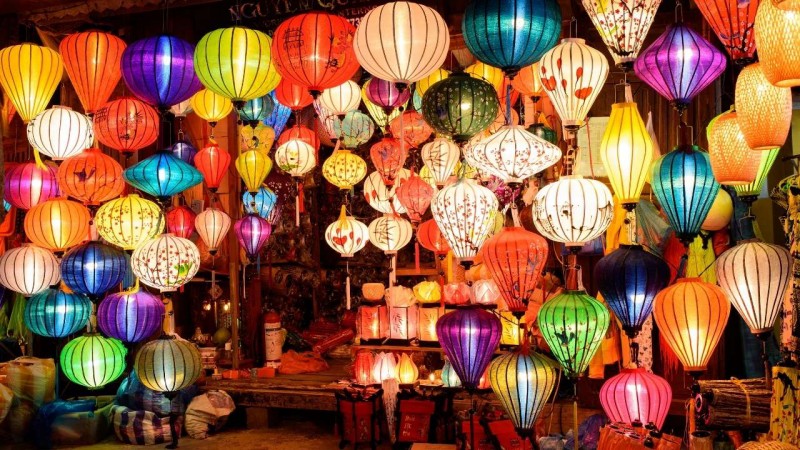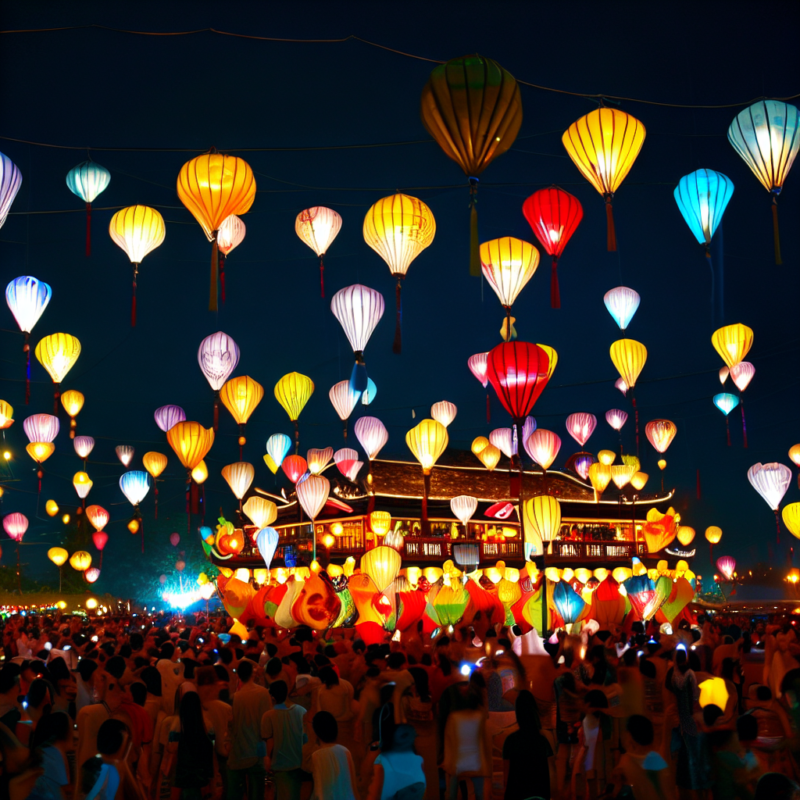
The Hoi An Lantern Festival is a monthly full moon celebration held on the 14th day of every lunar calendar month in Hoi An’s UNESCO-listed Ancient Town — a tradition dating back to the 16th-century merchant era when Japanese and Chinese traders used lanterns to mark full moon nights for spiritual and commercial gatherings. On each festival night, electricity shuts off across the 400-year-old Ancient Town at 6:00 PM, over 1,000 silk lanterns illuminate the shophouse-lined streets, and paper lanterns (hoa đăng) float on the Thu Bon River as offerings and wishes.
The Hoi An Lantern Festival occurs 13 times in 2026, with the most popular dates for Indian tourists falling in October (Dussehra alignment) and November (post-Diwali travel window). For Indian travelers, the lantern release tradition shares a cultural resonance with Diwali — a celebration of light that feels both foreign and familiar.
Hoi An Lantern Festival Full Moon Dates 2026
In 2026, the Hoi An Lantern Festival falls on 13 full moon nights — one more than most years, due to a lunar leap month in the Vietnamese calendar. The 13 dates are:
- January 2, 2026
- February 1, 2026 — Lunar New Year proximity
- March 2, 2026 — Lantern Festival (Nguyên Tiêu) — the biggest festival night of the year
- April 1, 2026
- April 30, 2026
- May 30, 2026
- June 28, 2026
- July 27, 2026
- August 26, 2026 — Vu Lan Festival
- September 24, 2026 — Mid-Autumn Festival
- October 23, 2026 — Dussehra alignment; highest Indian demand
- November 22, 2026 — post-Diwali travel; ideal weather 22–26°C
- December 22, 2026 — Christmas holiday season
On each of these nights, the Ancient Town undergoes a visual transformation unlike any other destination in Vietnam.
How the Hoi An Ancient Town Transforms on Lantern Festival Night
At 6:00 PM on every full moon night, electricity across Hoi An Ancient Town shuts off entirely, replacing electric light with over 1,000 silk lanterns hung across shophouse facades, temple gates, and street-crossing wires on Nguyen Thai Hoc Street and Tran Phu Street.
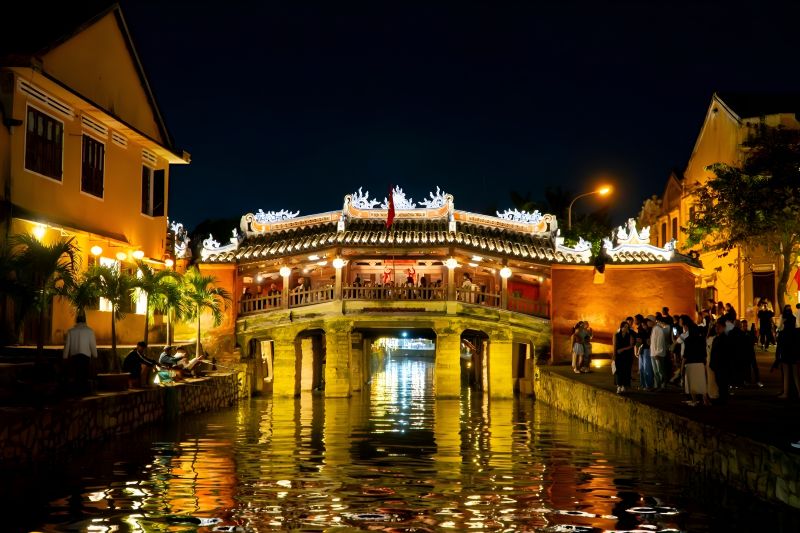
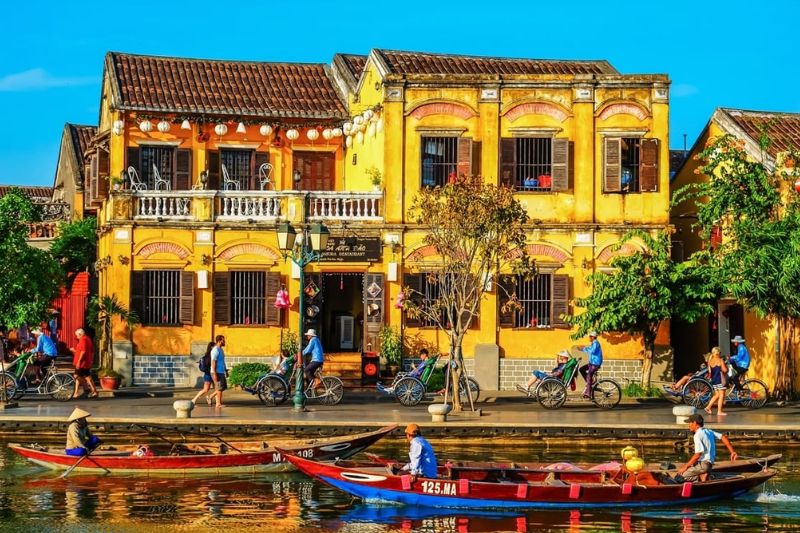
The 400-year-old Ancient Town — covering 30 hectares of preserved merchant architecture — is navigable only by lantern light and candlelight from this point. The Japanese Covered Bridge (Cầu Nhật Bản), built in 1593, becomes the most photographed single structure of the night, framed by dozens of silk lanterns in red, gold, and yellow. Candle-lit shophouses along Bach Dang Riverside reflect onto the Thu Bon River, producing the mirror-image lantern reflections that define Hoi An’s most recognisable imagery.
This transformation of the Ancient Town sets the stage for the most iconic moment of the festival night: the lantern release on the Thu Bon River.
Lantern Release on Thu Bon River
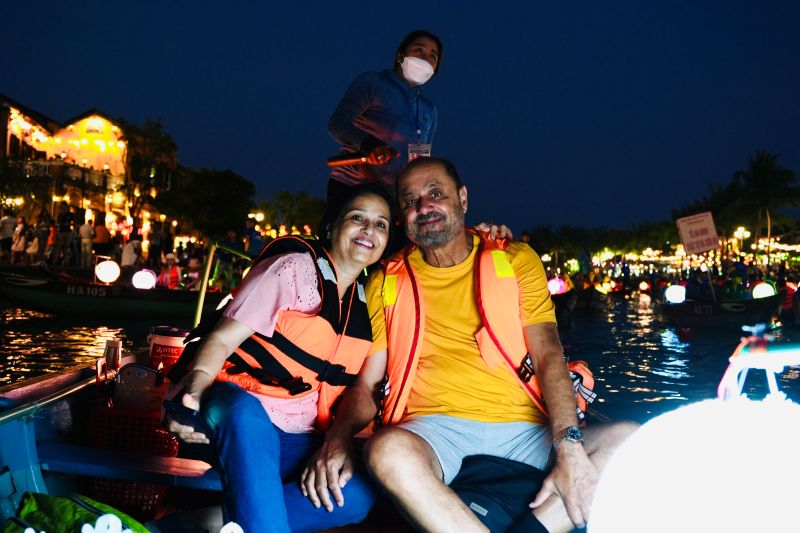
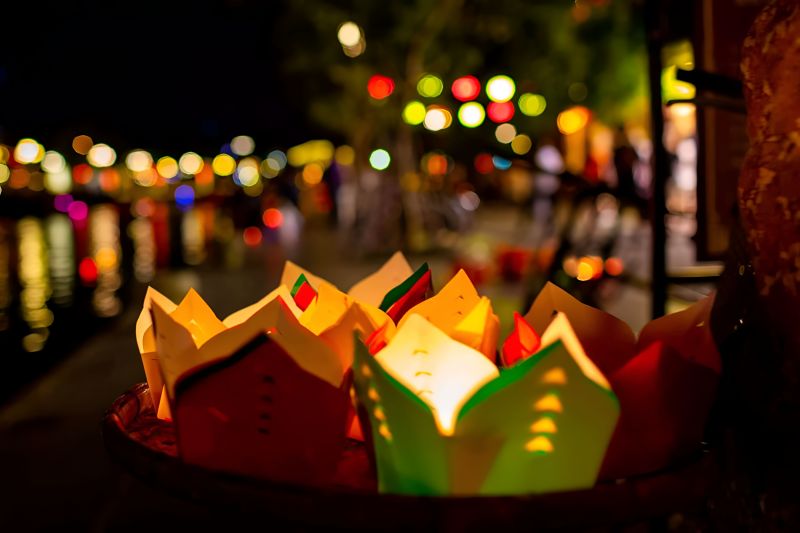
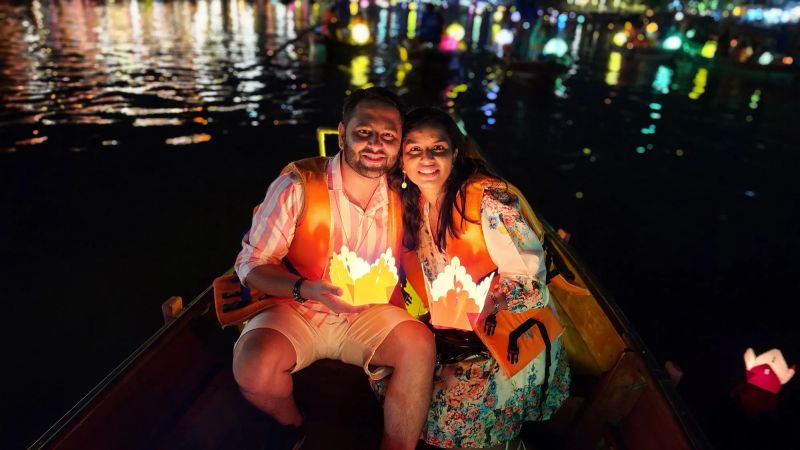
There are 3 steps to join in lantern releasing on the Thu Bon River: lighting the candle inside the folded paper lantern (hoa đăng), making a silent wish, and placing the lantern on the river surface from the riverside walkway or from a boat.
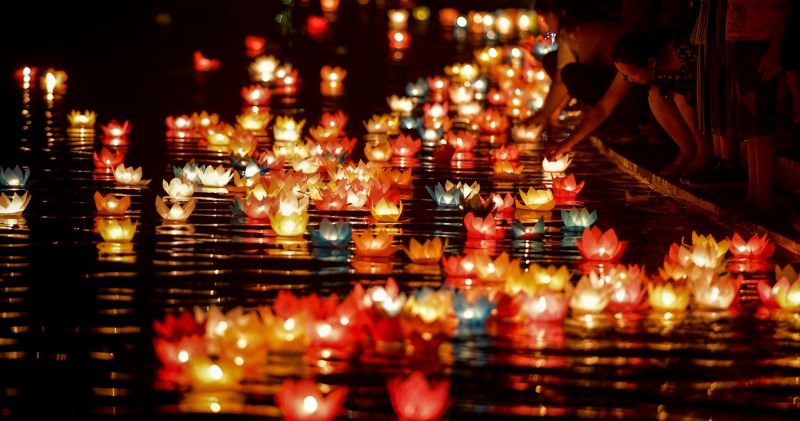
Releasing a paper lantern on the Thu Bon River during Hoi An’s full moon festival costs approximately ₹17–₹35 (5,000–10,000 VND) per lantern, purchased from vendors stationed along Bach Dang Street from 6:30 PM onwards. Guided boat rides on the Thu Bon River during the lantern festival cost approximately ₹345–₹520 (100,000–150,000 VND) per person for a 30-minute experience — the river-level view of floating lanterns covering the water surface is not replicable from the riverside promenade and is the superior photography position.
The floating lantern tradition mirrors the Hindu practice of deepdaan — offering light to water — practiced during Chhath Puja and Dev Diwali, making the ritual immediately meaningful for Indian participants without cultural translation. Capturing the lantern release and the illuminated Ancient Town requires knowing which locations offer the strongest visual compositions.
Best Photography Spots at Hoi An Lantern Festival
The 7 best Hoi An Lantern Festival photography spots are ranked below by visual impact and accessibility for first-time visitors:
- Bach Dang Riverside Promenade — floating lanterns on water with shophouse reflections; best position from 19:00–20:30
- Japanese Covered Bridge (Cầu Nhật Bản) — 400-year-old bridge framed by silk lanterns; widest-angle composition from the north bank
- Nguyen Thai Hoc Street — the highest lantern density in Ancient Town; ideal for street-level colour photography
- Thu Bon River by Boat — river-level view of floating lanterns covering the water; not achievable from shore
- Hoi An Market Bridge — crowd, colour, and lantern reflections in a single composition
- Old House Rooftop Cafés — elevated wide-angle shots of the illuminated Ancient Town; book a café table by 17:30 to secure a position
- Tan Ky Old House Courtyard — intimate lantern photography against 18th-century Chinese merchant architecture; open to visitors until 21:00
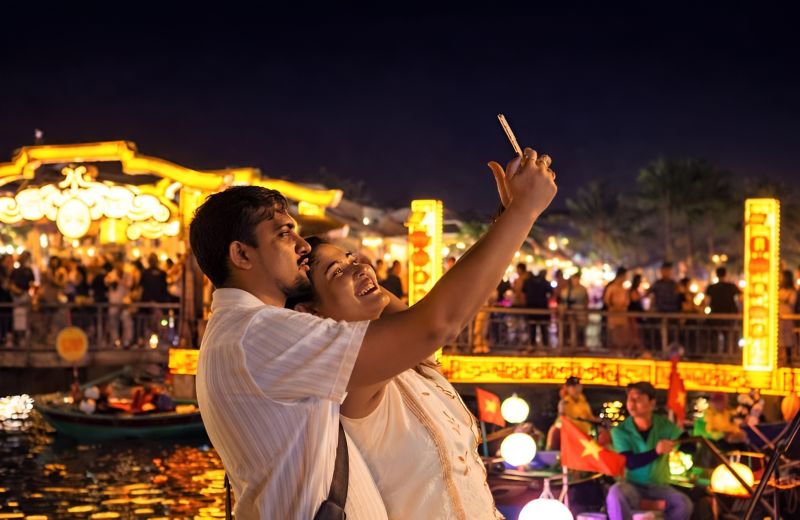
Photography timing: The golden hour window runs 6:30 PM – 7:30 PM, when lantern light overlaps with the last ambient daylight — the 60-minute window producing the richest lantern-against-sky colours of the night. Camera setting guidance: ISO 800–1600, aperture f/2.8–f/4, shutter speed 1/30–1/60 for handheld lantern shots. Between photography sessions, the festival’s cultural performances provide a different way to experience the night.
Hoi An Lantern Festival Cultural Performances: Traditional Music, Folk Games, and Street Theatre
There are 4 cultural performance types that occur on Hoi An Lantern Festival nights: Bai Choi singing games, Quan Ho folk songs, traditional dance, and lantern-making workshops.
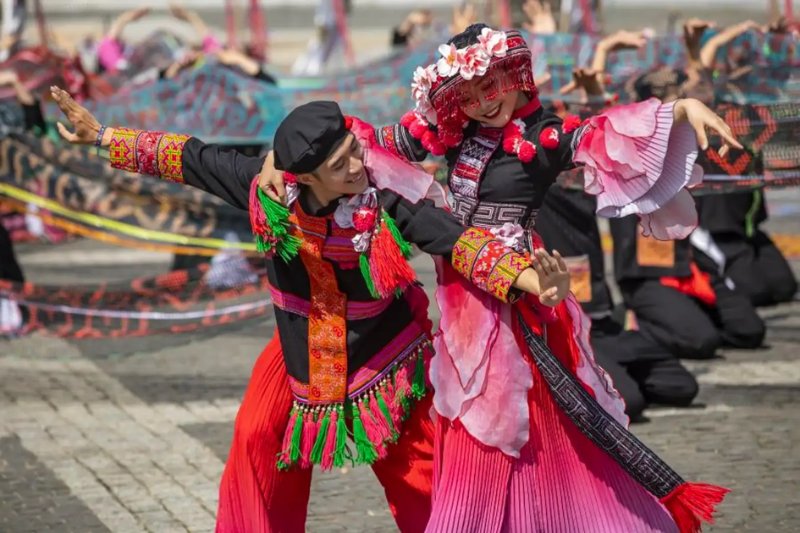
Bai Choi is the most significant, a UNESCO-recognised Vietnamese folk singing game in which a caller sings verses while participants hold cards matching the sung descriptions. Performances run 45–60 minutes starting at 7:00 PM at the Hoi An Cultural Center and on open-air stages along Nguyen Hoang Street.
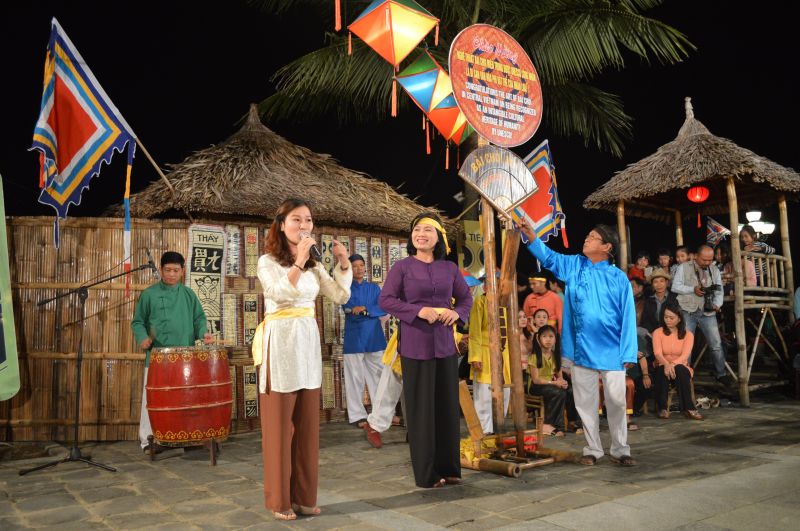
Street performances are free. To participate as a player, visitors purchase a Bai Choi card for ₹70 (20,000 VND) per card. Lantern-making workshops for children cost ₹345–₹690 (100,000–200,000 VND) and run from 5:00 PM to 7:00 PM at craft shops on Le Loi Street. Fitting the lantern release, photography, and performances into a single evening requires a structured walking route through the Ancient Town.
Hoi An Lantern Festival Night Walk Itinerary
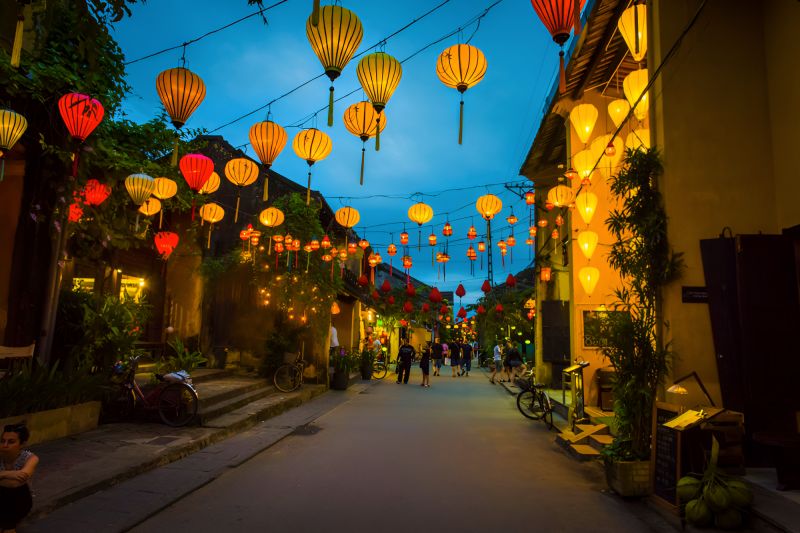
Indian tourists should arrive in the Ancient Town before 5:00 PM to cover these 6 key stops across the Ancient Town over approximately 3–4 hours:
- 5:00–6:00 PM — Arrive in Ancient Town; explore while shops are still electrically lit. Purchase lanterns from Bach Dang Street vendors while the stock is full.
- 6:00–6:30 PM — Electricity blackout begins. Navigate by lantern light south along Tran Phu Street from the Japanese Covered Bridge.
- 6:30–7:30 PM — Photography golden hour at the Japanese Bridge and Nguyen Thai Hoc Street. Secure a riverside café table for the boat-reflection view.
- 7:30–8:00 PM — Release paper lanterns at Bach Dang Riverside or board a 30-minute river boat (book from riverside vendors at 7:00 PM).
- 8:00–9:00 PM — Watch Bai Choi performance at the Hoi An Cultural Center or open-air stage on Nguyen Hoang Street.
- 9:00–10:00 PM — Dinner at an Ancient Town restaurant followed by night market stalls on Le Loi Street.
Families with elderly parents or young children complete a shorter 2-hour version focusing on the lantern release and the photography strip between the Japanese Bridge and Bach Dang Street. To experience any of these itinerary options, Indian tourists first need to reach Hoi An — which starts with a flight to Da Nang.
Hoi An Lantern Festival Tour from India
Indian tourists reach Hoi An by flying into Da Nang International Airport (DAD), located 30 km from Hoi An Ancient Town, with a taxi transfer time of approximately 45 minutes.
Flight routes from India to Da Nang: Delhi–Da Nang via IndiGo and AirAsia (4.5–5 hours, from ₹8,000–₹15,000 one way), Mumbai–Da Nang via IndiGo and VietJet (5–5.5 hours, from ₹9,000–₹18,000 one way), and Bangalore–Da Nang via AirAsia (5–5.5 hours, from ₹9,000–₹17,000 one way). Most routes involve one stop; direct seasonal flights operate on select dates.
Vietnam e-visa for Indian citizens: Indian passport holders obtain a Vietnam e-visa online within 3 business days, valid for 90 days with multiple entry. The fee is approximately USD 25 (₹2,000–₹2,500).
Da Nang to Hoi An transfer costs: private taxi ₹1,200–₹1,380 (350,000–400,000 VND); shared tourist transfer ₹345–₹520 (100,000–150,000 VND). 3-night Hoi An packages for Indian tourists — including festival night, accommodation, and Da Nang transfers — start from approximately ₹25,000–₹45,000 per person.
Where to Stay in Hoi An for the Lantern Festival
The best area to stay for Hoi An Lantern Festival is within 500 metres of Hoi An Ancient Town, allowing walking access to all festival streets without taxi dependency on festival night when the town perimeter fills with visitors.
There are 3 accommodation tiers for Indian travelers:
- Budget (₹1,000–₹3,500/night | 290,000–1,015,000 VND): Guesthouses on Le Loi Street and Phan Chu Trinh Street — 5–10 minutes walk to the Ancient Town entry points
- Mid-range (₹3,500–₹7,700/night | 1,015,000–2,233,000 VND): Boutique hotels within 400m of the Ancient Town, including properties on Tran Hung Dao Street with river views
- Premium (₹12,000–₹40,000+/night | 3,480,000–11,600,000+ VND): Silk Sense Hoi An River Resort and La Siesta Resort — riverside locations with direct Thu Bon River views of festival lanterns from private balconies
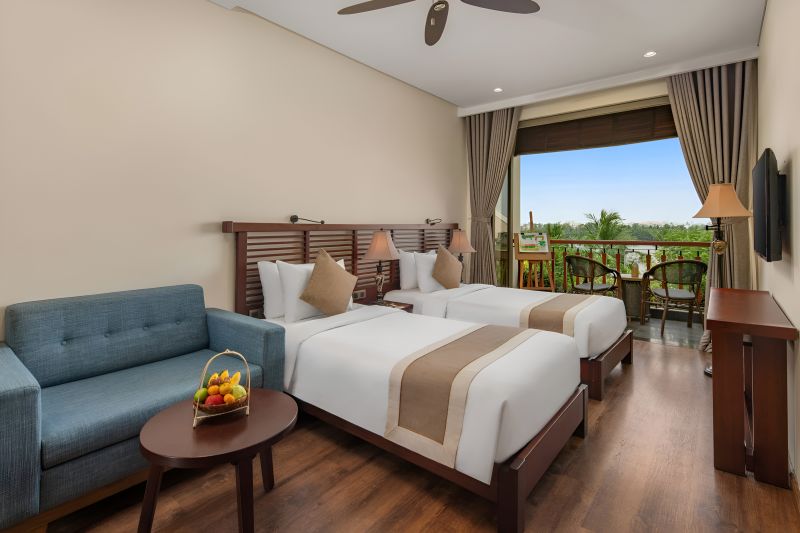
Most mid-range and premium hotels in Hoi An provide Indian vegetarian breakfast options upon request — confirm at booking, as this is not listed as a default menu item at most properties. Festival night accommodation in Hoi An books out 4–6 weeks in advance, particularly for October and February full moon dates, which carry the highest Indian tourist demand. Beyond hotel dining, the festival night itself offers street food options along the Ancient Town’s riverside and market streets.
What to Eat at Hoi An Lantern Festival Night: 5 Street Foods Indian Tourists Should Try
There are 5 significant street foods available on festival nights along Bach Dang Riverside and Le Loi Street stalls:
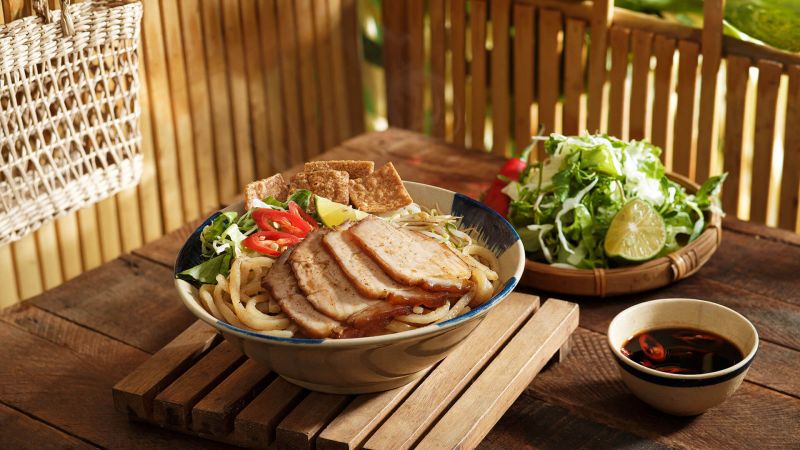
- Cao Lau (₹120–₹180 | 35,000–52,000 VND): Hoi An’s signature noodle dish — thick rice noodles with pork, bean sprouts, and local herbs. Pork-based; not vegetarian.
- White Rose Dumplings / Banh Bao Vac (₹80–₹150 | 23,000–43,500 VND): Steamed rice dumplings in a translucent wrapper with shrimp filling. Non-vegetarian.
- Banh Mi (₹60–₹100 | 17,000–29,000 VND): Vietnamese baguette sandwich. Vegetarian version available — request “banh mi chay” (tofu and vegetables filling).
- Che Dessert Soups (₹60–₹120 | 17,000–35,000 VND): Sweet cold dessert soups with red beans, coconut milk, jelly, and tapioca. Fully vegetarian. Widely available from dessert stalls along Nguyen Hoang Street.
- Coconut Rice / Xoi Dua (₹80–₹130 | 23,000–37,700 VND): Sticky rice cooked in coconut milk, served with sesame and sugar. Fully vegetarian. Suitable for Jain travelers avoiding onion and garlic.
Street food stalls near Bach Dang Riverside are staffed by regular vendors with established hygiene practices — the area is one of the highest-traffic tourist zones in Hoi An and operates under municipal food safety monitoring. With food, accommodation, and flights covered, the remaining preparation points below help Indian tourists avoid the most common festival-night mistakes.
Hoi An Lantern Festival Travel Tips for Indian Tourists
The 9 most important preparation points for Indian tourists attending the Hoi An Lantern Festival are listed below in order of practical priority:
- Enter from the south gate (Bach Dang side) — the north gate near Japanese Bridge fills first on festival nights; southern entry points remain accessible 15–20 minutes longer. Aim to arrive by 5:00 PM.
- Carry small VND denominations — 10,000 and 20,000 VND notes (₹35–₹70 each) for lantern purchases; vendors do not provide change for 100,000+ VND notes reliably
- Book accommodation 4–6 weeks ahead — October and February full moon dates sell out first among Indian travelers
- Wear flat, closed-toe shoes — cobblestone streets are uneven and slippery after light rain; heeled footwear is impractical
- Carry a portable phone charger — 3–4 hours of festival photography drains a standard smartphone battery to under 20% without a power bank
- Download Hoi An offline maps — Google Maps works offline for navigation; internet connectivity in the Ancient Town degrades during peak festival hours due to crowd density
- Exchange INR to VND before arrival — Da Nang Airport exchange counters and Hoi An town center banks offer rates 5–8% better than hotel front desks
- Avoid flash photography near Thu Bon River lantern vendors — paper lanterns are fire-sensitive; most vendors display “no flash” signs; respect this restriction
- Check typhoon risk for September–mid October dates — Central Vietnam’s typhoon season peaks between September and mid-October, with Da Nang and Hoi An on the direct path of South China Sea storm tracks. The September 24, 2026 festival night carries the highest weather disruption risk of all 13 dates.
Indian families traveling with elderly parents or young children have additional considerations for navigating the festival comfortably.
Is the Hoi An Lantern Festival Suitable for Families with Children and Elderly Parents?
Yes — the Hoi An Lantern Festival is highly suitable for families with children and elderly parents. The festival requires walking at a leisurely pace on flat town streets with no ticketed entry, no scheduled start time, and no crowd barriers that restrict movement.
Wheelchair and mobility aid access is limited in the cobblestone inner zone of the Ancient Town; the most accessible route for elderly visitors is the Bach Dang Riverside path (smooth paved surface) running parallel to the Thu Bon River. The lantern release point on Bach Dang Street is reachable without entering the cobblestone streets.
Children aged 5–14 can join lantern-making workshops on Le Loi Street, producing a take-home silk lantern in 45–60 minutes which they frequently float on the river at the end of the session. These handmade lanterns are also among the most popular souvenirs to bring back from the festival.
What to Buy at Hoi An Lantern Festival: Souvenirs and Silk Lanterns for Indian Homes
Silk lanterns are the primary souvenir purchase at Hoi An Lantern Festival, priced at ₹350–₹1,200 (100,000–348,000 VND) per lantern depending on size (15cm–45cm diameter) and pattern complexity. Hoi An silk lanterns are handmade at workshops on Le Loi Street and carry patterns in red, gold, blue, and green that complement warm-toned Indian home interiors — particularly in living rooms using traditional Indian lighting aesthetics.
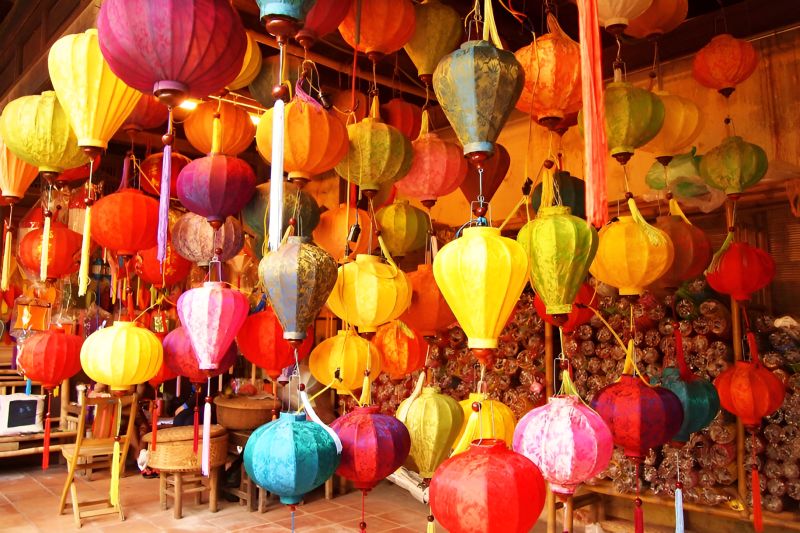
3 additional souvenir categories available on festival nights:
- 24-hour custom tailoring: Hoi An’s tailoring district on Nguyen Thai Hoc and Tran Phu Streets accepts orders on festival nights for next-day pickup. Ao Dai tailoring costs ₹2,500–₹8,000 (725,000–2,320,000 VND); custom dress and suit tailoring costs ₹3,000–₹16,000 (870,000–4,640,000 VND).
- Vietnamese lacquerware: Decorative bowls and trays ₹800–₹2,500 (232,000–725,000 VND) from Old Quarter shops open through festival night.
- Hand-painted silk artwork: Rolled silk paintings ₹800–₹3,000 (232,000–870,000 VND) — lightweight and transport-safe for Indian tourists managing economy baggage allowances.
Night market stalls on Nguyen Hoang Street operate until 11:00 PM on festival nights, extending shopping access beyond the lantern release window. For a complete calendar of festivals in Hoi An beyond the monthly lantern event, the destination guide covers all annual cultural events with dates and venue details. With 13 festival nights spread across the year, choosing the right month depends on weather conditions and alignment with the Indian holiday calendar.
When Is the Best Time for Indian Travelers to Visit Hoi An for the Lantern Festival?
The best months for Indian travelers to visit Hoi An for the Lantern Festival are October, November, and February, combining favorable weather with Indian holiday calendar alignment and the most visually vibrant festival conditions.
- October 23, 2026 (Dussehra alignment): Average rainfall drops to 100–150mm — the lowest in Central Vietnam’s second half of the year. Dry season fully established, with 3–4 rain-free evenings per week.
- November 22, 2026 (post-Diwali window): Temperatures 22–26°C with humidity below 75% — the most comfortable outdoor walking conditions of the year. Hotel rates remain 15–20% lower than peak December pricing.
- February 1, 2026 (Lunar New Year proximity): Tet (Vietnamese New Year) proximity creates a festive city atmosphere alongside the lantern festival; note that accommodation prices surge 20–30% around Tet dates and availability is limited.
Indian tourists timing their trip around Vietnam’s broader festival calendar — including Tet, Mid-Autumn Festival, and regional cultural events — can use the guide to festivals in Vietnam to align multiple experiences within a single itinerary.
Plan Your Hoi An Lantern Festival Trip from India
The Hoi An Lantern Festival is Vietnam’s only monthly full moon celebration, transforming the UNESCO-listed Ancient Town into a glowing landscape of silk lanterns, candlelit streets, and floating wishes on the Thu Bon River 13 times in 2026. October and November offer the strongest combination of ideal weather, Indian holiday alignment, and dry-season conditions for Indian travelers.
Vietnamtour.in’s Hoi An Lantern Festival packages include private transfers from Da Nang Airport, festival night guided walks with an English-speaking guide, and hotel pre-booking assistance tailored for Indian families, including vegetarian meal arrangements. Explore Vietnam tour packages structured around the October and November full moon dates for Indian travelers.
ITINERARY WITH HOI AN